4.4: renal function & micturition
 Call Kai
 Learn
Learn Practice Test
 Spaced Repetition
 Match
Match Flashcards
 Knowt Play
1/11

There's no tags or description
Looks like no tags are added yet.
Name | Mastery | Learn | Test | Matching | Spaced | Call with Kai | Chat |
|---|
No analytics yet
Send a link to your students to track their progress
12 Terms
evaluation of renal function
-through analysis of ____
-diagnose/ evaluate/ monitor ______
primary measurements:
-____
-_____
-through analysis of blood & urine
-diagnose/ evaluate/ monitor kidney disease
primary measurements:
-renal clearance
-glomerular filtration rate
renal clearance
-volume of _______ in 1 minute
→ measured by ____
equation for renal clearance:
-volume of blood plasma that’s completely removed of substance in 1 minute
→ measured by comparing concentration in plasma to concentration in urine
equation for renal clearance:
(glomerular filtration of substance) + (amount added by tubular secretion) - (amount removed by tubular reabsorption)
renal clearance
-clearance of ____ used to measure ___
→ ex: inulin
→ clearance will be
-comparing clearance of other substances to inulin:
-clearance of substance not secreted or reabsorbed can be used to measure GFR
→ ex: inulin
→ clearance will be equal to GFR
-comparing clearance of other substances to inulin:
Csubstance < Cinulin → reabsorbed
Csubstance > Cinulin → secreted
Csubstance = Cinulin → no net reabsorption or secretion
Csubstance = 0 → not filtered or 100% reabsorbed
renal insufficiency
nephrons can:
-____
-____
1 kidney sufficient to meet body’s needs
-insufficiency: ____
-due to hypertension, chronic infections, trauma, etc
-kidneys unable to ____
nephrons can:
-regenerate after short-term injuries
-hypertrophy to compensate for loss of function elsewhere
1 kidney sufficient to meet body’s needs
-insufficiency: kidneys unable to maintain homeostasis
-due to hypertension, chronic infections, trauma, etc
-kidneys unable to adequately excrete wastes or modulate urine concentration
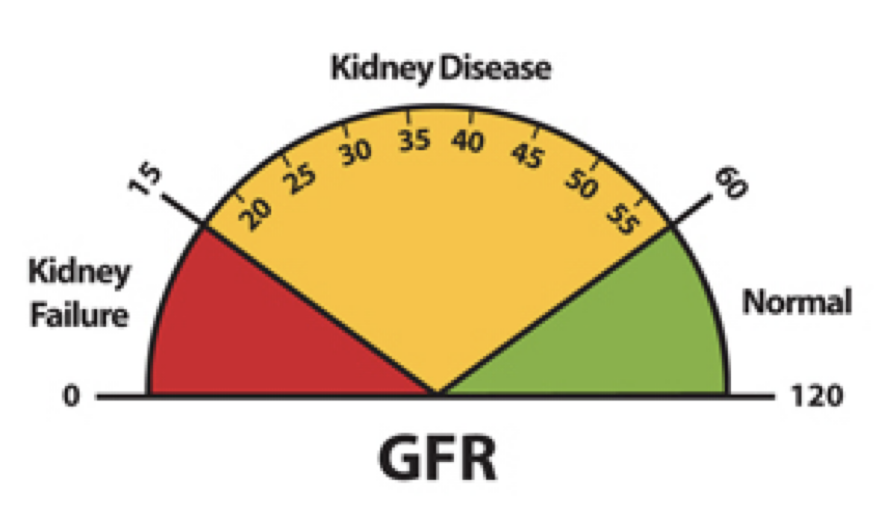
renal disorders
-chronic renal disease
→ GFR < ____
→ ____ build up in blood
-renal failure
→ GFR < ___
-chronic renal failure
→ _____
→ progresses in stages
-acute renal failure
→ _____
→ cased by hypoxia, physical trauma
-requires transplant or dialysis
-chronic renal disease
→ GFR < 60 mL/min for at least 3 months
→ nitrogenous wastes build up in blood
-renal failure
→ GFR < 15 mL/min
-chronic renal failure
→ long term renal degeneration
→ progresses in stages
-acute renal failure
→ sudden onset
→ cased by hypoxia, physical trauma
-requires transplant or dialysis
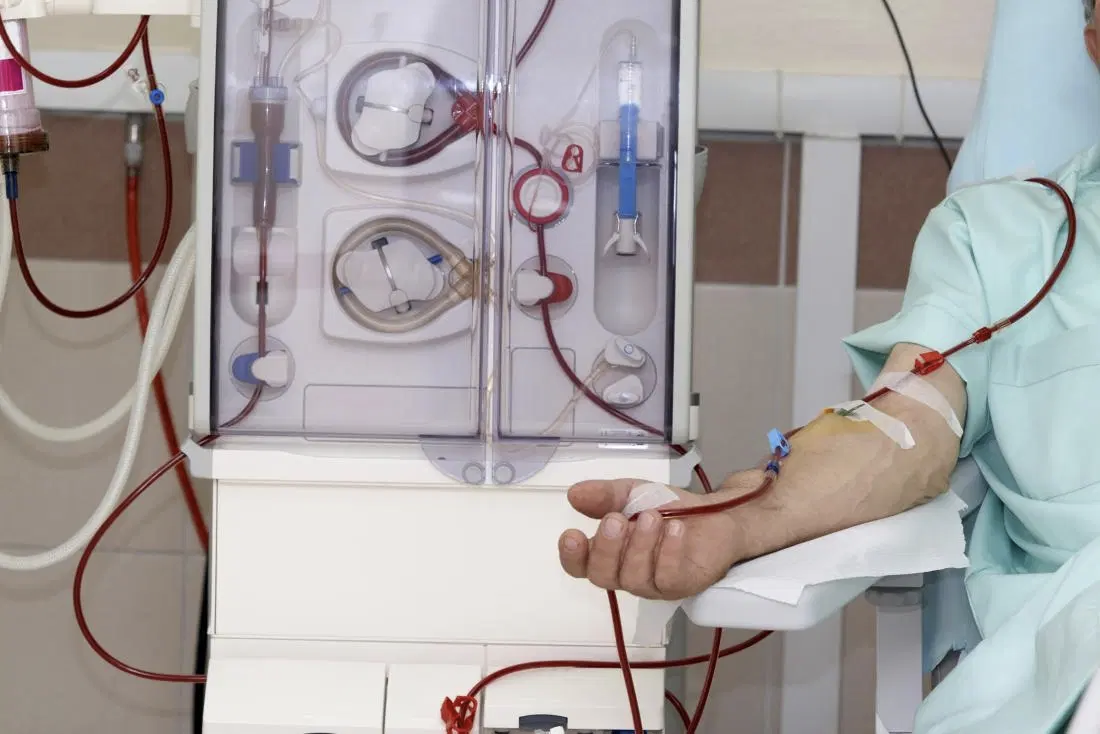
hemodialysis
-blood pumped from _____
→ flows through ___ traveling through dialysis fluid
→ ________ into surrounding fluid
-nutrients, drugs can be administered via fluid
→ ex: erythropoietin, heparin
-blood returns via ____
-blood pumped from radial artery in forearm into dialysis machine
→ flows through semipermeable tube traveling through dialysis fluid
→ wastes diffuse through tube into surrounding fluid
-nutrients, drugs can be administered via fluid
→ ex: erythropoietin, heparin
-blood returns via cephalic vein in forearm
continuous ambulatory peritoneal dialysis (CAPD)
-_____ introduced to abdominal cavity via ____
-peritoneum acts as _____
-fluid drained and replaced 4-5x daily
-more convenient but less efficient, more prone to infection
-dialysis fluid introduced to abdominal cavity via catheter
-peritoneum acts as semipermeable membrane
-fluid drained and replaced 4-5x daily
-more convenient but less efficient more prone to infection
micturition
at rest:
-sympathetic stimulation ____
-somatic motor stimulation ____
→ via pudendal nerve
micturition
1) detrusor ___
2) internal sphincter ___
3) external sphincter ___
each need to happen simultaneously
at rest:
-sympathetic stimulation relaxes detrusor, closes internal urethral sphincter
-somatic motor stimulation closes external urethral sphincter
→ via pudendal nerve
micturition
1) detrusor contracts
2) internal sphincter relaxes
3) external sphincter relaxes
each need to happen simultaneously
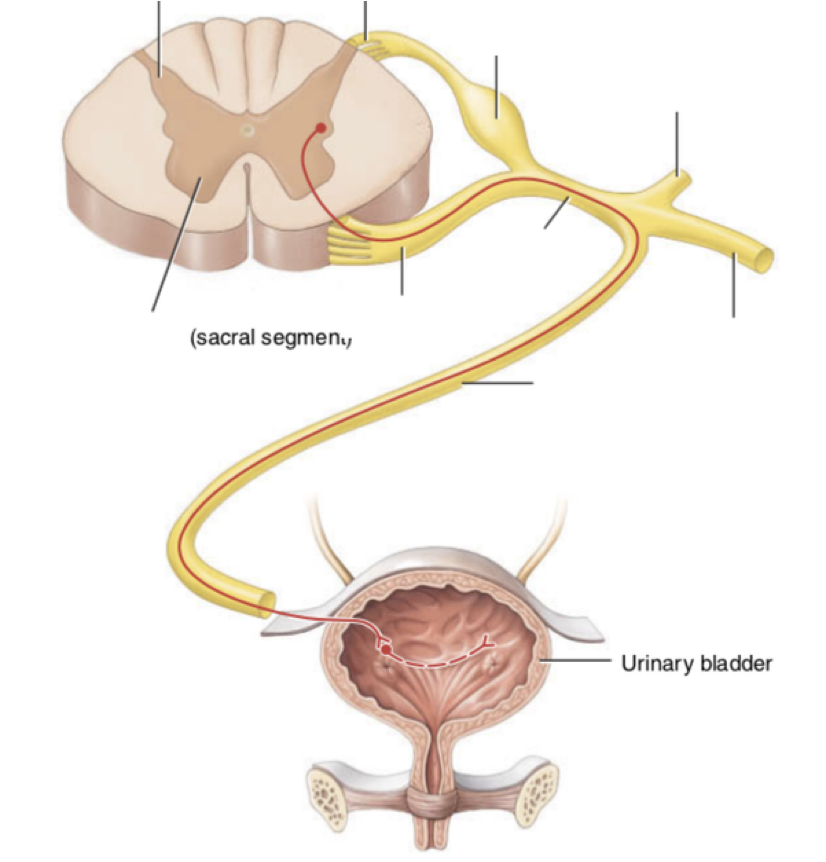
reflexive micturition
-controlled by ____
-stimulated by ____
-___ nerves carry:
→ ____
→ ___
-detrusor contracts, internal sphincter relaxes
-controlled by spinal micturition reflex
-stimulated by stretch of bladder
-pelvic splanchnic nerves carry:
→ sensory info to sacral spinal cord
→ parasympathetic signal back to bladder
-detrusor contracts, internal sphincter relaxes
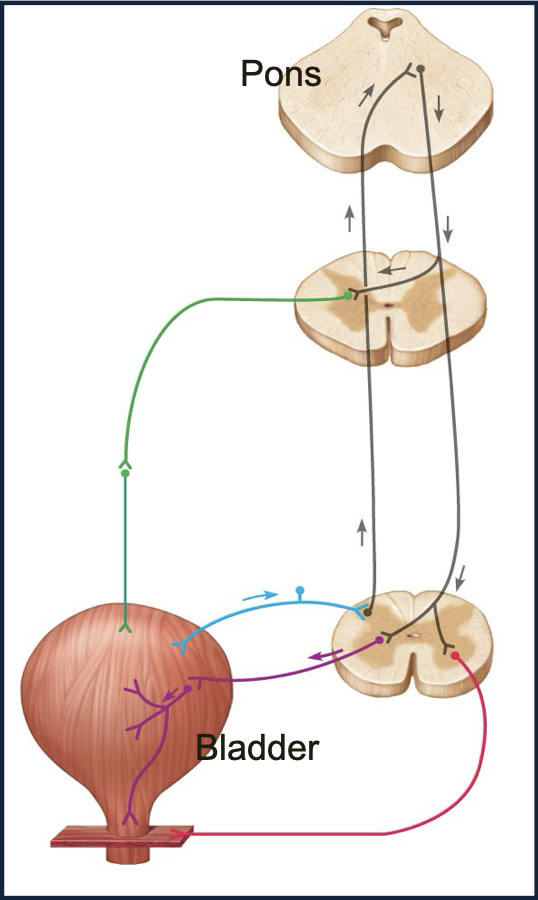
voluntary micturition
-controlled by ___
→ storage center: ___
→ micturition center: ___
1) micturition center in pons receives ___
-integrates info from higher brain centers
2) parasympathetic signal via ____
-contracts ___
-inhibits ___ input: relax internal sphincter
3) cerebral motor cortex voluntarily relaxes external sphincter
-controlled by pons
→ storage center: suppress parasympathetics, increase sympathetics
→ micturition center: coordinates urination
1) micturition center in pons receives stretch signal
-integrates info from higher brain centers
2) parasympathetic signal via pelvic splanchnic nerves
-contracts detrusor
-inhibits sympathetic input: relax internal sphincter
3) cerebral motor cortex voluntarily relaxes external sphincter
voluntary micturition
-voluntary ___
-external sphincter remains ___
-stretch stimulus temporarily ___
-urge to void gradually increases over time
-voluntary suppression
-external sphincter remains closed
-stretch stimulus temporarily stops being transmitted
-urge to void gradually increases over time
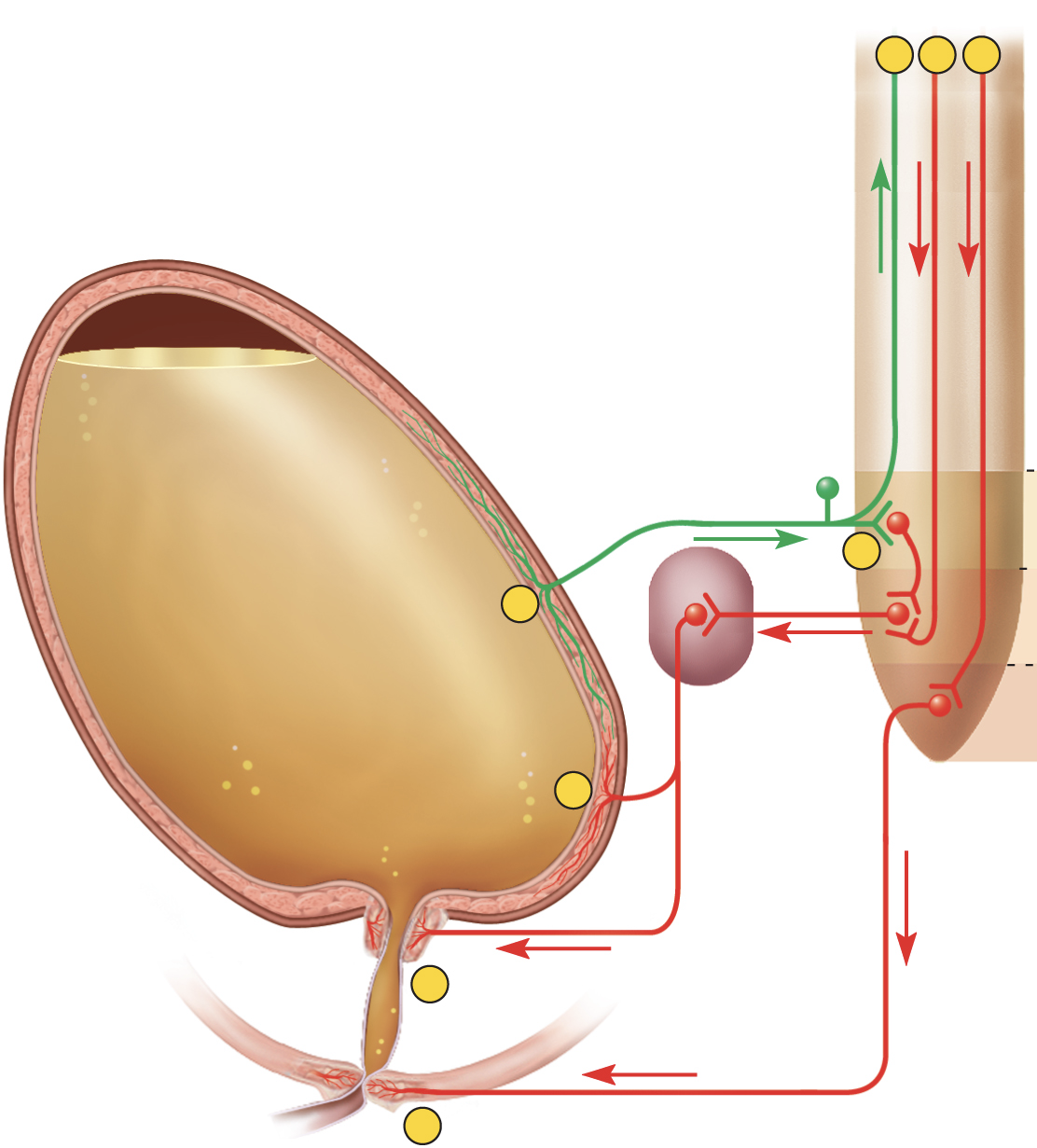
neural control of micturition
stretch receptors detect ____
___ cord
___ in pons
___ returns to bladder
detrusor ___
____ relaxes
motor cortex _____
external urethral sphincter ____
stretch receptors detect bladder fullness
sacral spinal cord
micturition center in pons
parasympathetic signal returns to bladder
detrusor contracts
internal urethral sphincter relaxes
motor cortex reduces signal from pudendal nerve
external urethral sphincter relaxes