Assessment of Voice and Resonance in Speech-Language Pathology
 Call Kai
 Learn
Learn Practice Test
 Spaced Repetition
 Match
Match Flashcards
 Knowt Play
1/26

There's no tags or description
Looks like no tags are added yet.
Name | Mastery | Learn | Test | Matching | Spaced | Call with Kai | Chat |
|---|
No analytics yet
Send a link to your students to track their progress
27 Terms
What is the primary focus of voice assessment?
To be thorough and individualized, including a comprehensive client history.
What types of information should be included in a voice assessment?
Demographic information, nature and duration of the problem, substance use, medications, surgical history, and current vocal changes.
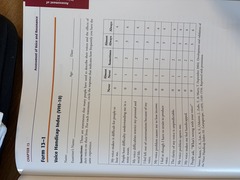
What does VHI stand for and what does it assess?
Voice Handicap Index; it assesses the psychological consequences of a voice disorder.
What are the two main types of assessments for voice?
Perceptual and instrumental assessments.
What is the purpose of an orofacial examination in voice assessment?
To evaluate the physical structures involved in voice production.
What are the categories of voice disorders?
Functional, organic, neurogenic, structural, and psychogenic disorders.
What is the role of a multidisciplinary team in voice assessment?
To manage the client's care, involving professionals like Otolaryngologists, SLPs, and other specialists.
What is the CAPE-V?
Consensus Auditory-Perceptual Evaluation of Voice, which evaluates overall severity, roughness, breathiness, strain, pitch, and loudness.
What does the S/Z ratio measure?
It measures respiratory and phonatory efficiency, indicating laryngeal pathology.
What is the significance of Maximum Phonation Time (MPT)?
It measures glottic efficiency by assessing how long a person can sustain a vowel sound.
What are common vocal quality descriptors?
Aphonia, hoarse, falsetto, fry, tremor, and wet.
What are resonance disorders?
Disorders that result in faulty sound vibration in the oral, nasal, and/or pharyngeal cavities.
What is hypernasality?
A resonance disorder characterized by excessive nasal resonance during speech.
What is the purpose of the nasal listening device in resonance assessment?
To evaluate nasal airflow and resonance during speech.
What are the three primary options for alaryngeal speech?
Artificial larynx, esophageal speech, and tracheoesophageal speech.
What is the primary responsibility of an SLP post-laryngectomy?
To help the client establish adequate postoperative means of communication.
What factors should be considered when assessing clients with cleft lip and/or palate?
Articulation, resonance, feeding concerns, and the type of cleft.
What is the importance of a case history in voice assessment?
It provides critical background information necessary for accurate diagnosis and treatment planning.
What does the term 'vocal hygiene' refer to?
Practices that promote healthy vocal production, such as adequate hydration and avoiding vocal strain.
What is the impact of vocal intensity on voice assessment?
It is measured in decibels (dB) and indicates the amplitude of vocal vibrations.
What are perceptual measures in voice assessment?
Subjective evaluations of voice characteristics such as severity, pitch, loudness, quality, and resonance.
What is the significance of assessing pitch in voice evaluation?
Pitch is influenced by vocal fold vibration speed and is crucial for determining vocal health.
What is the role of instrumental measures in voice assessment?
To provide objective data to supplement perceptual assessments, including acoustic and aerodynamic evaluations.
What is the role of the Voice and Communication Assessment for transgender clients?
To tailor voice and communication strategies to align with the client's gender identity.
What is the purpose of the Great Ormand Street Speech Assessment?
To evaluate speech and resonance in clients with cleft lip and/or palate.
What is the importance of client cooperation in voice treatment?
Without the client's active participation, progress in treatment is unlikely.
What does the term 'compensatory articulation' refer to?
Articulation adjustments made to compensate for velopharyngeal dysfunction.