MR. EDSALL FANPAGE AWESOME UNIT 5 REVIEW
 Studied by 0 people
 Call Kai
 Learn
Learn Practice Test
 Spaced Repetition
 Match
Match Flashcards
 Knowt Play
1/61

There's no tags or description
Looks like no tags are added yet.
Name | Mastery | Learn | Test | Matching | Spaced |
|---|
No study sessions yet.
62 Terms
Welcome to the first part (5.0) out of 8...better get working...I know you wanna procrastinate but like.......you have no choice here
sorry

Enlightened Absolutism
a system in which rulers tried to govern by Enlightenment principles while maintaining their full royal powers
Enlightment Ideas
-Social Contract
-Natural Rights
-Individual Freedoms (like freedom of speech)
-Free & Fair Public Elections
-Separation of Powers
-rationalism
-progress
-tolerance
Louis XIV
(1638-1715) Known as the Sun King, he was an absolute monarch that completely controlled France (look at that hair man).
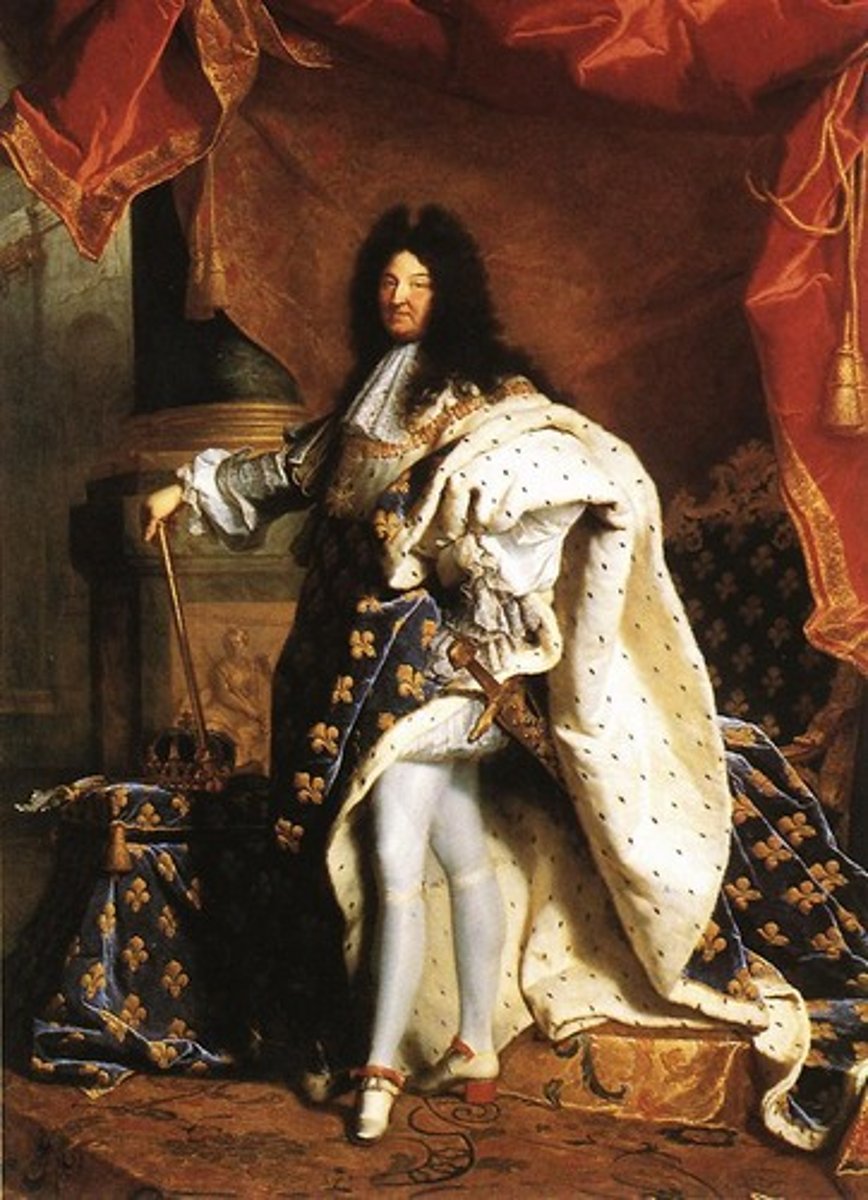
Louis XIV accomplishments
-his wars
-palace of Versailles
-absolute freakin monarchy
-hes insane
-spider king
-made france fall in debt
-sun king
-but he was a patron of the arts so thats nice
William Pitt the Elder
WHO??!?!??!
As secretary of state in charge of the Seven Years' War, this British official sent tons of troops to confront the French in Canada. Proved instrumental in helping Great Britain emerge as a world power from the war. He helped them win the war A LOT.
Joseph the second
Austrian emperor who was a radical Enlightened despot and was referred to as "the Peasant Emperor".
Joseph the sequel achievements
-traveled among subjects in disguise to learn about their problems (as you do)
-toleration to protestants and jews in his catholic empire
-tried to bring catholic church under royal control
-build hospitals from monasteries
-abolished serfdom (harsh slave conditions)
-but it doesnt matter cause many of this stuff got canceled after he perished
7 years war
Fought in both continental Europe and also in overseas colonies between 1756 and 1763; resulted in Prussian seizures of land from Austria, English seizures of colonies in Indian and North America; first world war; happened cause neighboring countries decided to attack Maria Theresa who was the new empress of Austria after her father died
Patronage
One of the key inducements used by party machines. A patronage job, promotion, or contract is one that is given for political reasons rather than for merit or competence alone (stuff you do to get support and JUST to get support).
Frederick William the Great Elector
This was the man who starting absolutism in Prussia by uniting the three provinces of Prussia under one ruler.
Catherine the Great (Catherine the second)
ruled Russia from 1762 to 1796, added new lands to Russia, encouraged science, art, literature, Russia became one of Europe's most powerful nations. And continued the path that Peter the Great had set for Russia.
Louis 15th (XV)
took over the thrown was a weak ruler liked to party and gamble. got into multiple wars which put France in debt, had unstable men ruling the army because they were friends eventually France had to raise taxes to pay for the debt which made the people angry (path to FR).
George I, II, III
George I- The first Hanoverian king of Great Britain who did not speak English and did not have much familiarity with the British system, allowing for his chief minister to handle parliament.
George II-The Hanoverian king who did not have much familiarity with the British system and allowed for his chief minister to handle parliament. Many historians believe that this exercise of ministerial power was an important step in the development o the modern cabinet system in British government.
George III- A Hanoverian king who dismissed William Pitt the Elder and replaced him with Lord Bute. Discontent over the electoral system and the loss of the American colonies led to public criticism of the king and in 1780 the house of commons affirmed that the influence of the crown had increased and should be diminished, leading to the new prime minister William Pitt the Younger who helped avoid parliamentary change through gaining the support of the merchants, industrial classes, and the king.
Frederick II
"Frederick The Great"-1712-1786; King of Prussia, aggressive in foreign affairs. Used military to increase power. Encouraged religious tolerance and legal reform. Sparked war of Austrian Succession and 7 years war
Balance of Power
Condition of roughly equal strength between opposing countries or alliances of countries.
War of Austrian Succession
series of wars in which various European nations competed for power in Central Europe after the death of Hapsburg emperor Charles VI and their unwant by the salic law (no women on throne) to have Maria Theresa on the throne
Reason of State
the principle that a nation should act on the basis of its long-term interests and not merely to further the dynastic interests of its ruling family (people > self).
Robert Clive
This man was a British soldier who established the military and political supremacy of the East India Company in Southern India and Bengal. He is credited with securing India, and the wealth that followed, for the British crown (any question to do with India just go with this dude as a safe bet).
7 years war causes
-war of austrian succession — austria wants silesia (land) back from prussia
-mercantilism
-disputes between english and french over land in america
7 years war effects
-Britain is in debt
-Austria looses Silesia
-France in debt
-American Revolution
-debt
-debt cause its war and wars are expensive
-but there is trade from Britain
Primogeniture
right of inheritance belongs exclusively to the eldest son
cottage industry
a method of production in which tasks are done by individuals in their homes
infanticide
act of killing an infant (cause like parents could not take care of them cause debt and stuff so we be here killing babies i guess...happens)
Tithe
A family's payment of one-tenth of its income to a church (cause life sucks)
Agricultural Revolution
A time when new inventions such as the seed drill and the steel plow made farming easier and faster. The production of food rose dramatically.

changes in agriculture, finance and industry in 18th century
agriculture:
-agricultural revolution
-more food
-more farmland
-healthier lifestyle
-better climate
-lots of plants
-machinery
finance:
-debt
industry:
-stock investments
-textile industries (Britain and France)
-cottage industry
Constitution
A document which spells out the principles by which a government runs and the fundamental laws that govern a society (france 3rd estate wants thus ya know...revolution)
Decleration of the Rights of Man and Citizen
National Assembly adopted a statement of revolutionary ideas that ended special rights of 1st and 2nd estates, allowed french equal rights, and gave the power to the state over the church. Many apposed revolutionary reforms.
Three Estates
1st (Clergy and royalty, 1%) LOTS OF LAND, 2nd (Nobility 2%), 3rd (Everyone else 97%) NOT LOTS OF LAND ((also also FRANCE))
Marquis de Lafayette
French soldier who joined General Washington's staff and became a general in the Continental Army (American Revolution).
Society of Thirty
A club composed of people from the Paris Salons, they were "Lovers of Liberty," and embraced enlightenment and American ideas of individual liberties, republicanism, and popular sovereignty. Lafayette returned from his duties during the American Revolution and joined the club.
Causes of the American Revolution
1. Taxation
2. Revocation of Royal Charters
3. Enforcement of Navigation Acts
4. British Demands for Colonists to pay for cost of French and Indian War.
5. Oppression by King
6. Interference of Parliament in Colonial Affairs.
7. No Representation in Parliament.
8. No good rights
Results of the American Revolution
1. England survived and prospered
2. France was decimated
3. The thirteen colonies got their independence
4. The political ideas of the enlightenment worked
How did the American Revolution impact Europe?
provided new arrangements in international politics, proved Enlightenment ideas were not crazy and that America would become the most formidable power in the world
long term causes of french revolution
Enlightenment ideals brought to life in the American Revolution; Crop failures and bread scarcity; Unequal class system/ unfair tax privileges
short term causes of french revolution
Bread shortages (higher prices, starvation), new taxes on the Third Estate, debt, great fear and the stalemate at the Estates General.
"are we done yet? my neck hurts!!..."
"thats rough buddy"
"oh come onnnnn"
"ok, heres a cookie and a heat compress now go."

Old Order/Ancien Regime
the political and social system of France in the eighteenth century before the Revolution
Estates General
An assembly of representatives from all three of the estates, or social classes, in France.
political problems at start of french revolution
-bad representation of 3rd estate
-Marie Antoinette and Louis XVI are jerks
-weak rulers
-dont know whats happening around them
economic problems at start of french revolution
debt.
National Assembly
French Revolutionary assembly (1789-1791). Called first as the Estates General, the three estates came together and demanded radical change. It passed the Declaration of the Rights of Man in 1789.
Constitution of 1791
Constitution created by the French Revolution that had a limited monarchy
Tennis Court Oath
A pledge made by the members of France's National Assembly in 1789, in which they vowed to continue meeting until they had drawn up a new constitution (tennis lovers club)
Paris Commune
A brief Parisian government hailed as the first government of the working class.
National Convention
A national meeting of delegates elected in primaries, caucuses, or state conventions who assemble once every four years to nominate candidates for president and vice president, ratify the party platform, elect officers, and adopt rules.
Dechristianization
The lessening of the Church's authority or membership. This term is used to refer to the efforts by the revolutionaries to diminish the Church's power during the French Revolution.
Republic of Virtue
The belief of what would happen when all the internal enemies were purged (government). France would be a stronger nation.
main events of french revolution
-Tennis Court Oath 1789 (the beginning)
-Storming of the Bastille 1789 (hungry people with weapons)
-Abolition of Feudalism 1789 (peasants have land and dont need to pay tithe)
-deceleration of the rights of man and citizen 1789 (equal rights between people and state power over the church's power)
-women's march to Versailles 1789 (moms mad cause kids starve)
-execution of king Louis XVI and Marie Antoinette 1793
-Reign of Terror 1794 (lots of deaths cause everyone should be on the same boat)
-coup of 18th Brumaire 1799 (end of French Revolution)
What role did each of the following play in the French Revolution: Lawyers, peasants, women, the clergy, the Jacobins, the Sans-culottes, the French Revolutionary Army, and the Committee of Public Safety?
-Lawyers:
The Lawyers in the French Revolution formulated a Constitution and set certain laws.
-Peasants:
The peasants had to pay heavy taxes and also in the estates general they were denied equal representation. This resulted in peasant rebellions.
-Women:
demanded equality and started forming women's clubs like Society for Revolutionary Republican Women.
-The clergy:
The clergy was responsible for most of the works in the society like education and keeping records.
-The Jacobins:
The French revolution was dictated by the Jacobins, who put an end to the national convention and initiated the directory.
-The Sans-Culottes:
These were mostly the urban laborers who were the main driving force behind the French Revolution and they demanded direct democracy.
-The French Revolutionary Army:
The characteristics of the French revolutionary Army was their large numbers, poor equipment and their revolutionary ardor. They terminated many foreign powers from France and also controlled the neighboring nations.
-The Committee of Public Safety:
This committee was responsible for the protection of France from the domestic and foreign powers and also led to the formation of the French Revolutionary Army.
Napoleon Bonaparte
Overthrew French Directory in 1799 and became emperor of the French in 1804. Failed to defeat Great Britain and abdicated in 1814. Returned to power briefly in 1815 but was defeated and died in exile.
Prefects
Officials appointed by the central government to oversee all aspects of a local government during the reign of Napoleon.
Nationalism
A strong feeling of pride in and devotion to one's country
Civil Code (Napoleonic Code)
The articles included equality of all people, freedom of religion, workers were legally subordinate to their employers and unable to strike, workers were required to have small passports, and family was the most important thing besides the state and the individual. It also addressed the legal status of women: women were not equal to men.
Germaine de Stael
founder of French Romanticism, she wrote many works that attacked the tyranny of Napoleonic rule.
Elba and St. Helena
The respective first and second locations of Napoleon's banishment. Elba is off the Italian coast, and St. Helena is in the South Atlantic.
the grand empire
The empire over which Napoleon and his allies ruled, encompassing virtually all of Europe except Great Britain and Russia.
Continental System
Napoleon's policy of preventing trade between Great Britain and continental Europe, intended to destroy Great Britain's economy.
Which aspects of the French Revolution did Napoleon preserve and which did he destroy?
kept:
-principle of equality of all citizens before law
-abolition of serfdom and feudalism
-religious toleration
-property rights protected
-equality
took away:
-divorce equal for men and women
-women being counted as equal in general
-liberty -> benevolent despotism
-newspapers shut down
-manuscripts subjected to gov. scrutiny before published
-mail opened by gov. police
done?
YAAAAS now go and sleep because you probably have only around 2 hours and 14 minutes an you know that you still didnt finish your math homework so you are gonna do them wither on the way to school or support or if you are really on fire then nutrition but like...good luck with that man...anywayz bye bye im ded.