A&P 1 Lecture - Ch. 6 Bone Tissue
 Call Kai
 Learn
Learn Practice Test
 Spaced Repetition
 Match
Match Flashcards
 Knowt Play
1/90

There's no tags or description
Looks like no tags are added yet.
Name | Mastery | Learn | Test | Matching | Spaced | Call with Kai | Chat |
|---|
No analytics yet
Send a link to your students to track their progress
91 Terms
Osseous tissue
bone tissue
a type of connective tissue consisting of a variety of cells and a hard, calcified matrix
Compact bone
densely packed, smooth osseous tissue that encases the entirety of bones forming a hard shell
consists of structural units called osteons
Spongy bone
Consists of a honeycomb of spicules (rods or spines) and trabeculae (thin plates) of osseous tissue
adds strength but minimal weight to bone
Bone marrow
delicate, highly organized organ that fills the spaces between osseous tissue
2 types - red and yellow
Osteogenic stem cells
mitotically active stem cells that can differentiate (mature) into osteoblasts (bone-building cells), or bone-lining cells
found associated with the endosteum and periosteum
Osteoblasts
bone-building cells
function in bone deposition - depositing osteoid into the bone matrix
secrete osteoid (unmineralized bone matrix containing collagen and calcium-binding proteins)
Deposition
the process in which material is laid down
Osteocytes
mature bone cells maintaining the health of the bone matrix
found within lacunae (little-houses) connected to other osteocytes by canaliculi (little canals)
function as mechanical stress sensors and communicate to osteoblasts and osteoclasts to remodel bone
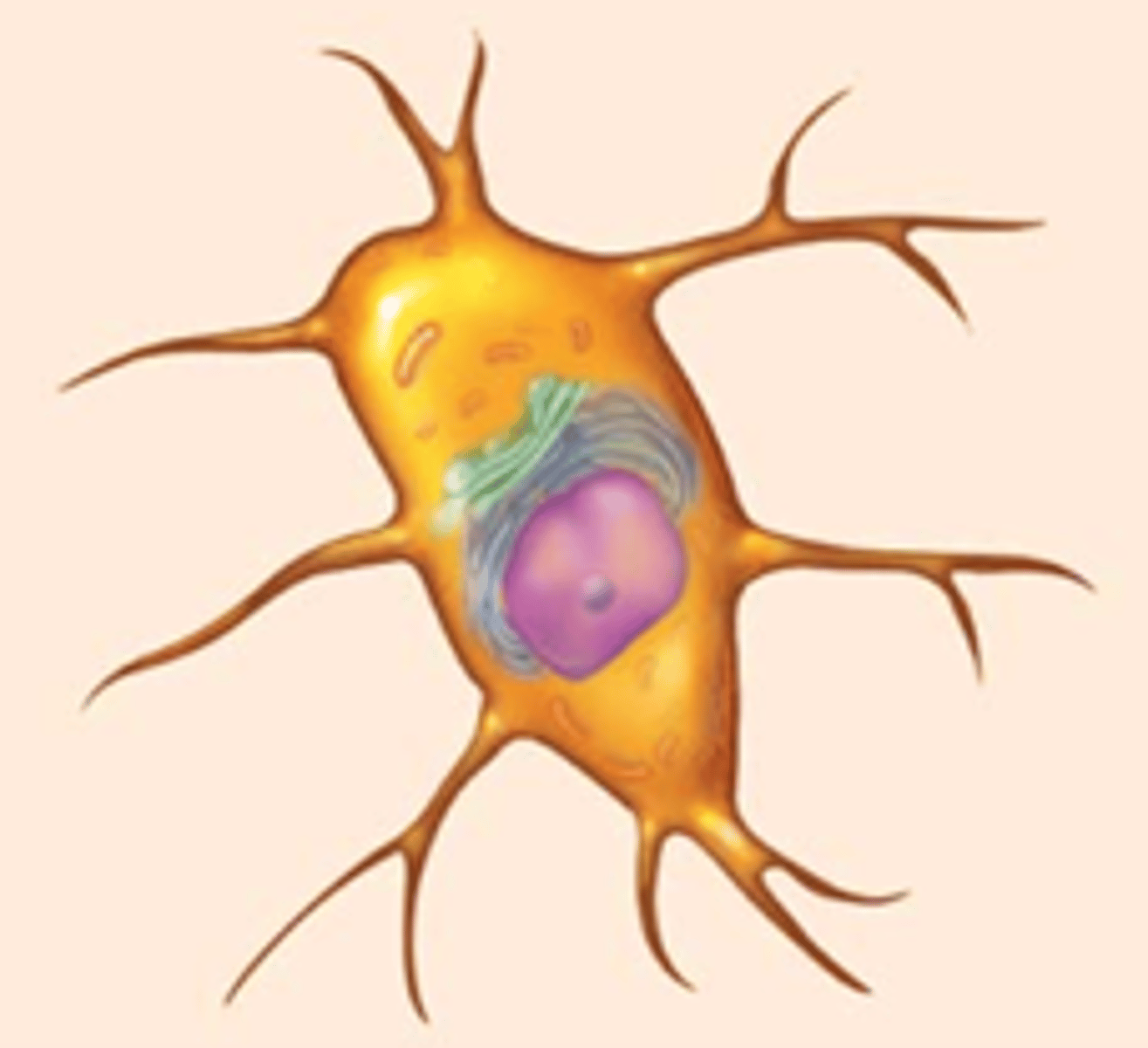
Osteoclasts
giant, multinucleated cells
bone-dissolving cells which breakdown bone matrix and allow the resorption of calcium into the bloodstream
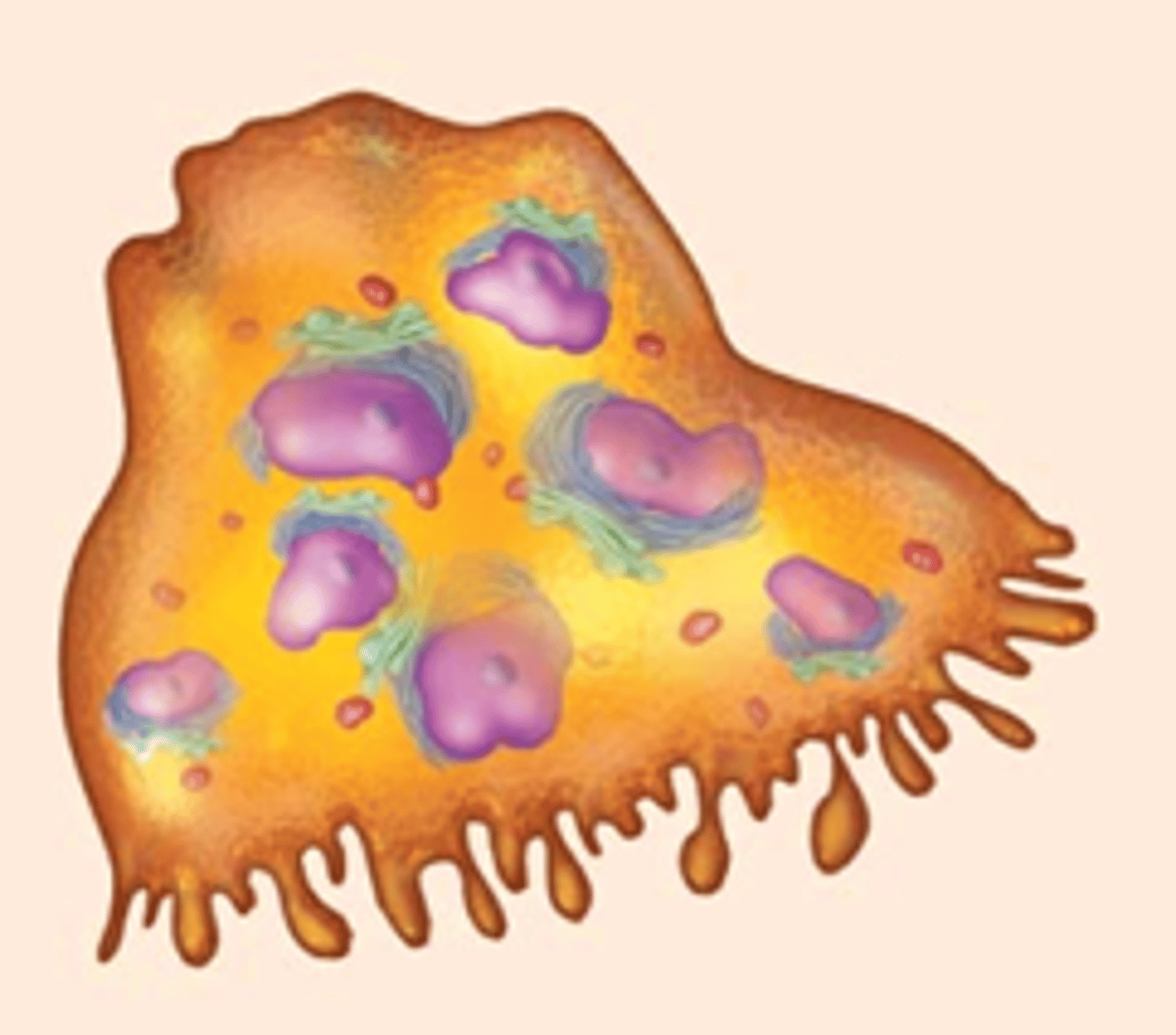
Resorption
the process or action by which something is reabsorbed
Bone-lining cells
cells of the periosteum and endosteum
Osseous tissue matrix
1/3 consists of organic matter (osteoid)
2/3 consists of inorganic matter (calcium and other minerals)
Organic matter of osseous tissue matrix
makes up 1/3 of the matrix
consists of osteoid - substances produced by osteoblasts
includes collagen, glycosaminoglycans, proteoglycans, and glycoproteins
provides flexibility and high tensile strength
organic meaning it's synthesized by living cells
Inorganic matter of osseous tissue matrix
makes up 2/3 of matrix
compounds and minerals that provide hardiness of bone
includes hydroxyapatite (calcium phosphate salt), calcium carbonate, and other minerals
inorganic meaning it's not synthesized by living cells, these minerals are obtained from the environment and diet
Osteomalacia
softening of bone tissue due to a lack of inorganic bone matrix (calcium salts)
caused by a deficiency of vitamin D and/or a deficiency in calcium
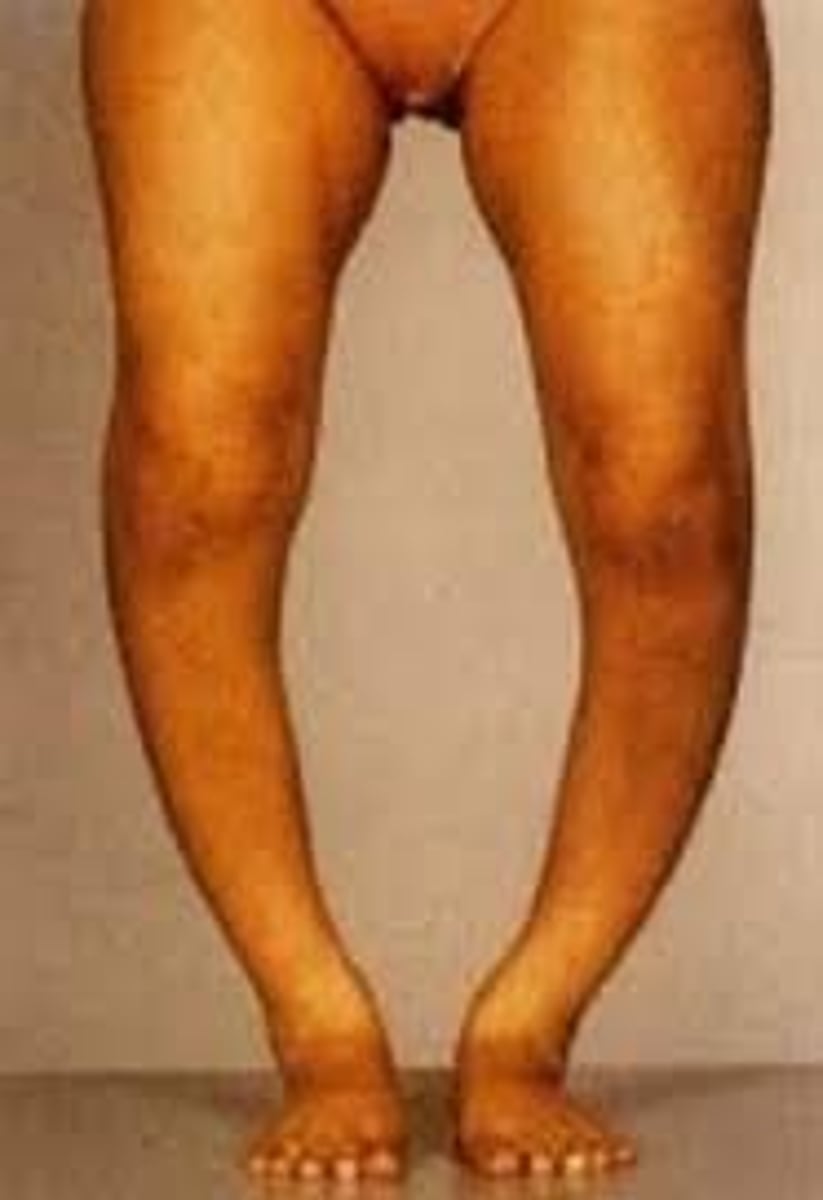
Rickets
osteomalacia in children
typically results in bowed legs and other bone deformities
caused by a deficiency of vitamin D and/or a deficiency in calcium
Osteoporosis
literally means porous bone
a deterioration of bone matrix that occurs when bone resorption exceeds bone deposit
mostly affects spongy bone
vertebrae and the neck of the femur become highly susceptible to fractures
commonly in the elderly and 4 times more likely in women due to estrogens association with bone density
Shapes of bones
4 types
long
short
flat
irregular
Examples of long bones
limb bones - humerus, radius, ulna, metacarpals, femur, tibia, fibula, metatarsals, phalanges
Examples of short bones
carpals, tarsals, patella
Examples of flat bones
sternum, scapulae, ribs, skull bones
Examples of irregular bones
vertebrae, coxal bones, some skull bones
Diploe
a special name for spongy bone of short, irregular, and flat bones that is sandwiched between two layers of compact bone on either side
Diaphysis
tubular shaft of a long bone
Medullary cavity
space within the diaphysis of a long bone that contains marrow
Epiphyses
enlarged ends of a long bone
where spongy bone is found filled within marrow
Articular cartilage
hyaline cartilage found at the epiphyses where a bone forms a joint (articulation)
Epiphyseal line
a calcified line that divides the epiphyses from the diaphysis
remnants of childhood epiphyseal (growth) plate
Epiphyseal plate
growth plate of hyaline cartilage found between the epiphyses and diaphysis of a long bone in a growing child
Endosteum
reticular connective tissue that covers the internal surface of bones
covers trabeculae of spongy bone, lines the medullary cavity, and lines canals that pass through compact bone
contains osteogenic stem cells that can differentiate (mature) into other bone cells
Periosteum
double-layered membrane found on the external surface of bones
absent at joint surfaces where articular cartilage is found
contains a fibrous layer - consisting of dense irregular CT, serves as an attachment site for tendons and ligaments
osteogenic layer - inner layer containing osteogenic stem cells
Sharpey's fibers
fibers that anchor the periosteum to bone matrix
Nutrient foramen
hole found on the surface of bone that nerve fibers and blood vessels travel through to penetrate the compact bone
Red bone marrow
site of hematopoiesis (synthesis of blood cells)
in newborns (<1yr) found in all bone cavities
in adults, it's limited to proximal epiphyses of femur and humerus, diploe of flat and irregular bones
Yellow marrow
fatty marrow that replaces red marrow, fills medullary cavities of long bones in adults
Osteoid
unmineralized bone matrix containing collagen and calcium-binding proteins produced by osteoblasts; contributes to the high tensile strength and flexibility of bone
Osteon (Haversian system)
structural unit of compact bone containing lamellae and a central canal
Lamellae
weight-bearing cylinders/rings of bone matrix within an osteon
contains collagen fibers that corkscrew down the cylinders to withstand twisting forces on bone
Central (Haversian) canal
runs through the core of an osteon, contains blood vessels and nerve fibers, supplies the osteon with nutrients and innervation
Perforating (Volkmann's) canals
canals found at right angles (perpendicular) to central canals, allows blood vessels and nerves to penetrate the bone to reach the inner spongy bone
Interstitial lamellae
irregular shaped lamellae that fill gaps between osteons
Circumferential lamellae
superficial rings of compact bone that wrap around the entire surface of the diaphysis of a long bone
think of the circumference of a circle
Lacunae
small cavities or houses that contain osteocytes (mature bone cells)
Canaliculi
tiny canals that connect lacunae together and allow for communication and transport of nutrients and waste between osteocytes
Ossification (osteogenesis)
bone tissue formation/synthesis
begins at week 8 of fetal development
fibrous membranes and hyaline cartilage are replaced by bone tissue
2 types of ossification
intramembranous ossification
endochondral ossification
Endochondral ossification
bone replaces hyaline cartilage
forms all the long bones and most of the skeleton
Intramembranous ossification
bone replaces fibrous membranes
forms flat bones of the skull and clavicles
What age are bone completely ossified and skeletal growth stops?
~25 years old
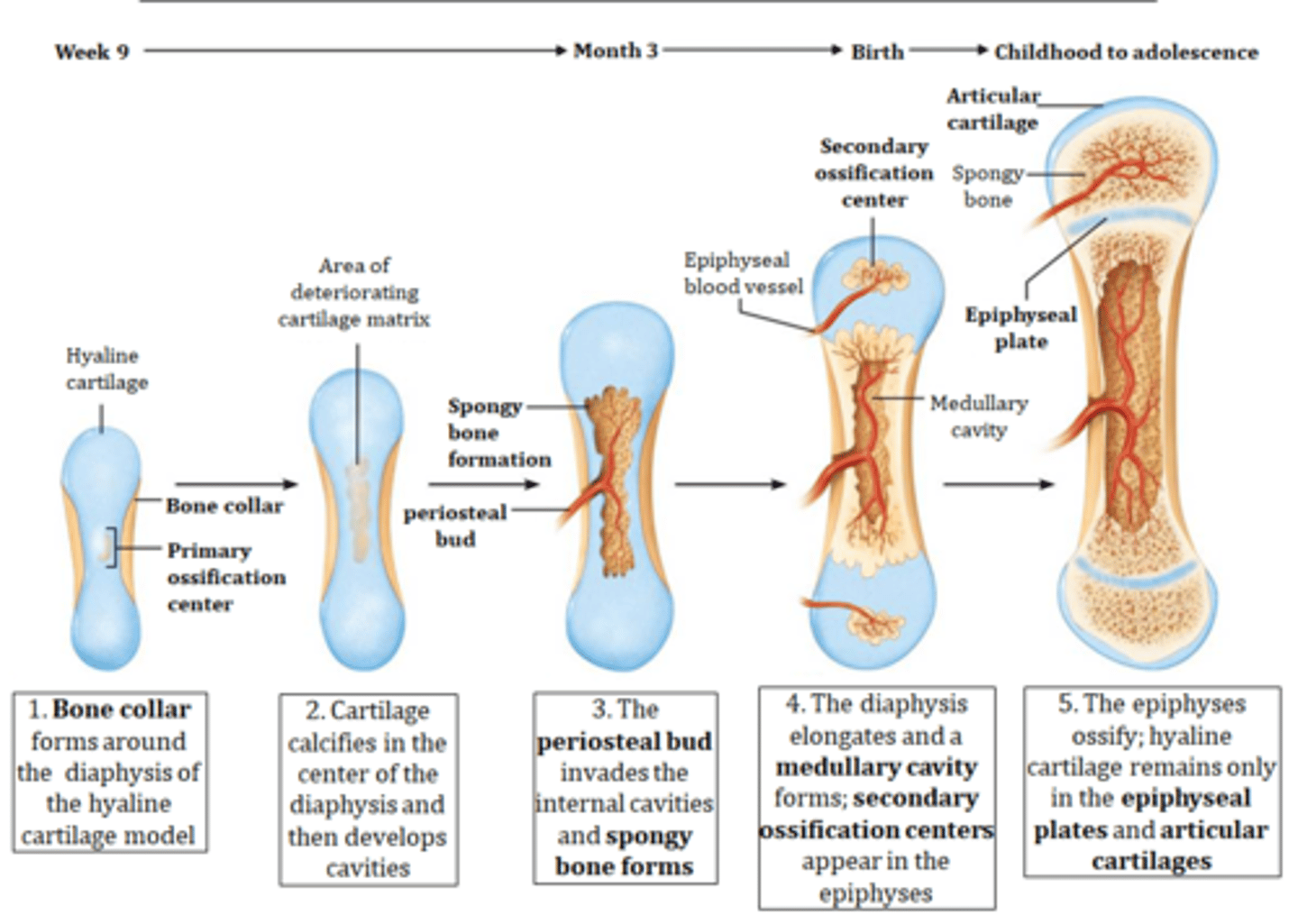
Steps of endochondral ossification
1. Primary ossification center emerges and a bone collar forms around the diaphysis of the hyaline cartilage model
2. Cartilage calcifies in the center of the diaphysis and then develops cavities
3. The periosteal bud invades the internal cavities and spongy bone forms
4. The diaphysis elongates and a medullary cavity forms; secondary ossification centers appear in the epiphyses;
5. The epiphyses ossify; hyaline cartilage remains only in the epiphyseal plates and articular cartilages
Steps of intramembranous ossification
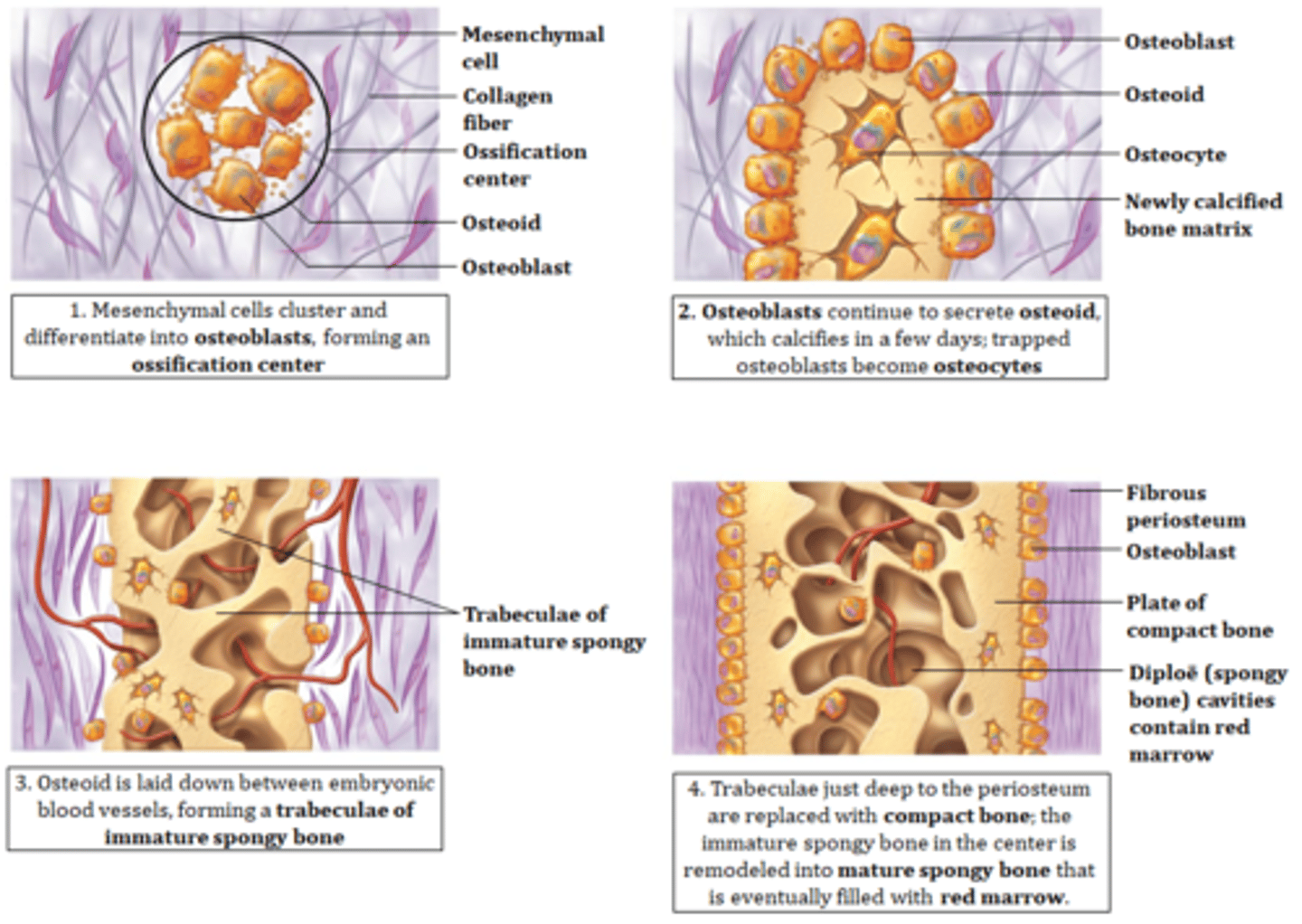
1. Mesenchymal cells cluster and differentiate into osteoblasts, forming an ossification center
2. Osteoblasts continue to secrete osteoid, which calcifies in a few days; trapped osteoblasts become osteocytes
3. Osteoid is laid down between embryonic blood vessels, forming trabeculae of immature spongy bone
4. Trabeculae just deep to the periosteum are replaced with compact bone; the immature spongy bone in the center is remodeled into the mature spongy bone that is eventually filled with red marrow.
Interstitial (longitudinal) bone growth
how long bones grow lengthwise
occurs at the epiphyseal plate
stimulated by growth hormone
Appositional growth
how bones increase in thickness or width
occurs throughout life, known as bone remodeling
thicken in response to stress on bone such as muscle activity or weight gain
bones thicken due to osteoblasts depositing new bone matrix as circumferential lamellae
Bone elongation at the epiphyseal plate
cartilage growth in which chondrocytes multiply then enlarge pushing the epiphysis away from the diaphysis
Calcification
transformation of hyaline cartilage or fibrous membranes into osseous tissue by the deposition of osteoid and calcium salts
5 zones of epiphyseal plate
resting zone, proliferation (growth) zone, hypertrophic zone, calcification zone, ossification (osteogenic) zone
Resting zone of epiphyseal growth plate
inactive area of epiphyseal growth plate
found furthest from marrow cavity
Proliferation (growth) zone of epiphyseal growth plate
a zone of the epiphyseal growth plate in which chondrocytes are rapidly dividing (proliferating) via mitosis and new cells are stacking on top of each other lengthening the growth plate and pushing the epiphysis away from the diaphysis
Proliferation
rapid increase in numbers
Hypertrophy
increase in size of cells
Hypertrophic zone of epiphyseal growth plate
a zone of the epiphyseal growth plate in which chondrocytes are enlarging lengthening the growth plate and pushing the epiphysis away from the diaphysis
Calcification zone of epiphyseal growth plate
a zone of the epiphyseal growth plate in which chondrocytes die, deteriorate, and matrix is calcified by deposition of calcium salts
Ossification zone of epiphyseal growth plate
a zone of the epiphyseal growth plate in which osteoblasts begin to form spongy bone and marrow invades the new osseous tissue
Bone remodeling
a continuous process of bone deposition and bone resorption
repairs microfractures, releases minerals into the blood to maintain homeostasis, reshapes bones due to mechanical stress, etc.
Bone deposition
carried out by osteoblasts
bone matrix is secreted on the periosteal side of the bone
stimulated by mechanical stress and/or increased concentrations of calcium and phosphate levels
Bone resorption
carried out by osteoclasts
bone matrix is reabsorbed on endosteal side of bone
Wolff's law
bone remodels in response to mechanical stress placed upon them
Importance of calcium in the body
essential for...
nerve transmission
muscle contraction
blood coagulation (clotting)
exocytosis
cell signaling
enzyme reactions
Importance of phosphate in the body
important component of DNA, RNA, ATP, and phospholipids
helps maintain acid-base balance of body fluids
Hormones that regulate blood calcium levels
calcitonin
parathyroid hormone (PTH)
vitamin D (calcitriol)
Vitamin D (calcitriol)
produced by the sequential actions of the skin, liver and kidneys
increases blood calcium levels by enhancing calcium absorption of the small intestine
Parathyroid Hormone (PTH)
increases blood calcium levels
produced by parathyroid glands
produced in response to low blood calcium levels (hypocalcemia)
stimulates osteoclasts to resorb (breakdown) bone releasing calcium into the bloodstream
Calcitonin
decreases blood calcium levels
puts calcium IN bones
produced in response to high blood calcium levels (hypercalcemia)
simulates osteoblasts to deposit calcium into bone
Hypocalcemia
low blood calcium levels
causes hyperexcitability of nerves and muscles
can cause muscle tremors, spasms, or even tetany
Hypercalcemia
high blood calcium level
causes depression of the nervous system, emotional disturbances, muscle weakness
severe cases could result in cardiac arrest
rare condition
Stress bone fractures
bone fractures that are a result of abnormal trauma or overuse
Pathological bone fractures
bone breaks because of underlying disease that has weakened the bone
such as cancer, osteoporosis, etc.
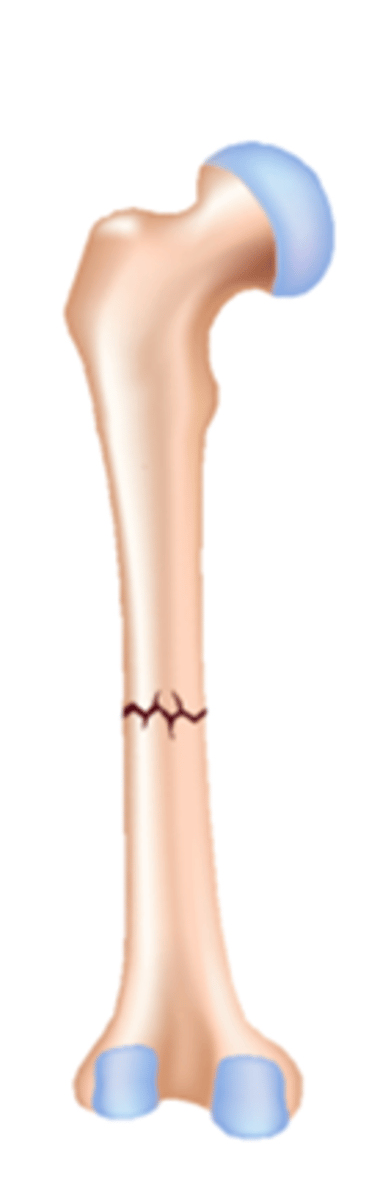
Transverse bone fracture:
bone fracture that runs laterally or side to side
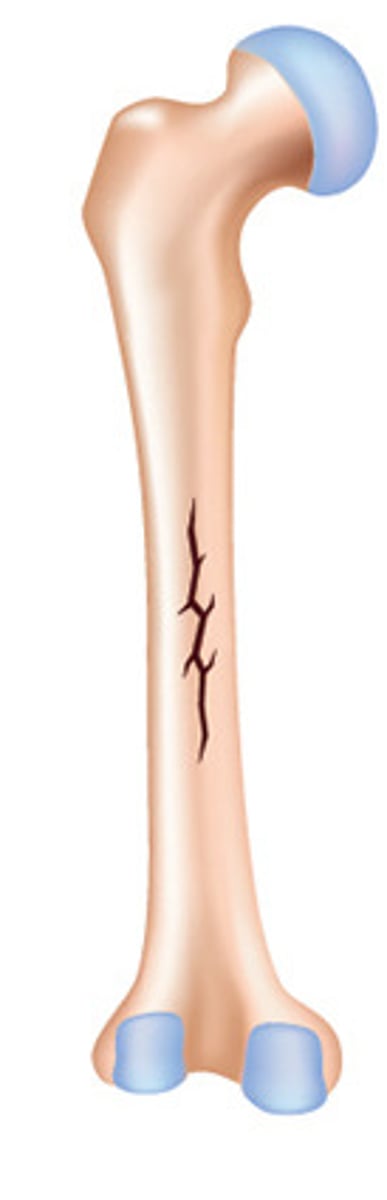
Linear bone fracture:
a bone fracture that runs longitudinally or up and down
Oblique bone fracture
a bone fracture that runs diagonally across a bone
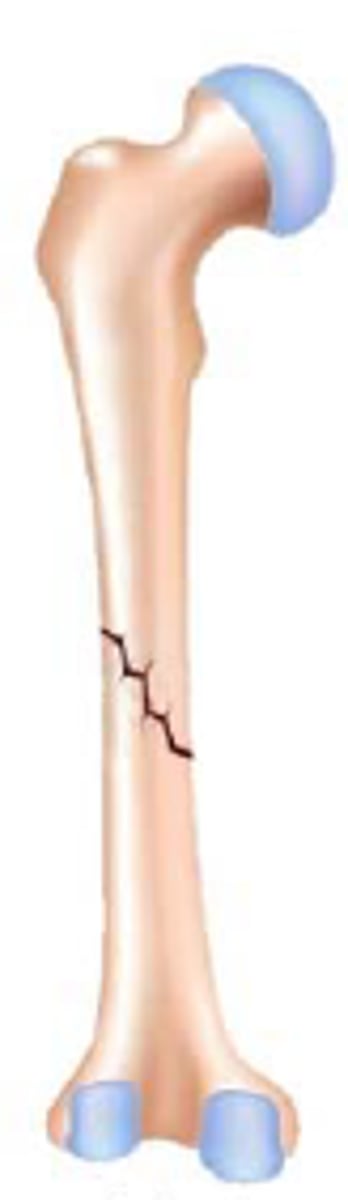
Displaced bone fracture
a bone fracture that causes the bones to misaligned
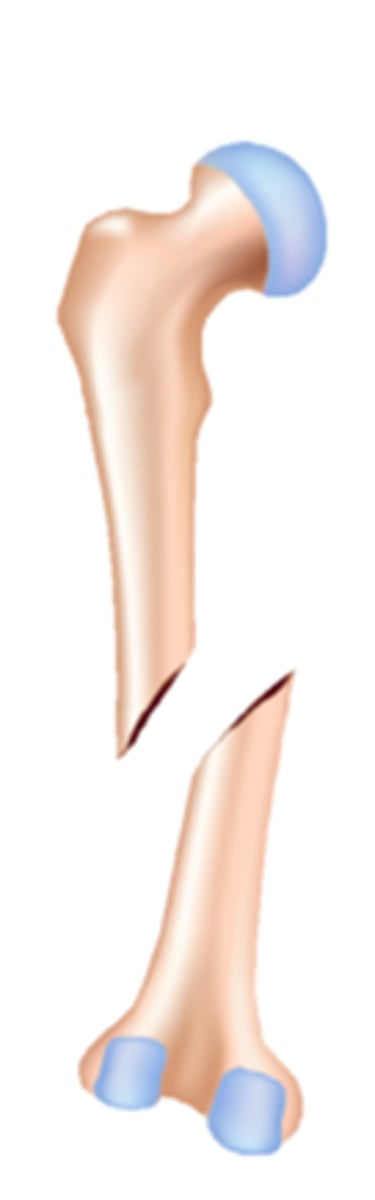
Nondisplaced bone fracture
bone fracture where the fractured ends retain their normal alignment
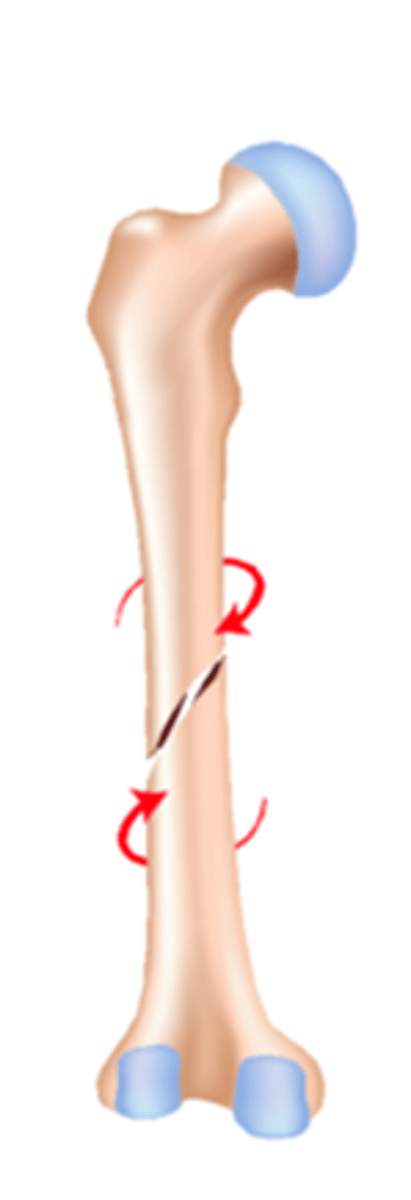
Spiral bone fracture
a bone fracture that results from excessive twisting forces
common sports injury
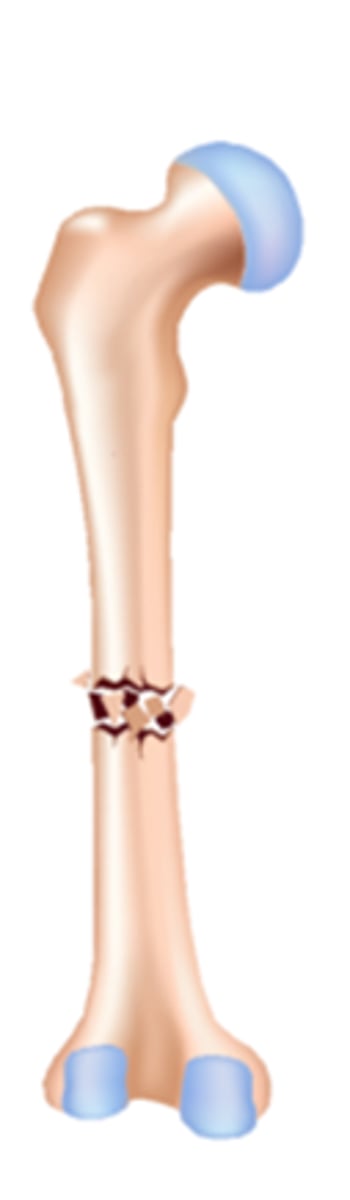
Comminuted bone fracture
bone fragments into three or more pieces
common in the elderly
Greenstick bone fracture
incomplete fracture where one side of the bone breaks and the other side bends
common in children because their bones are more flexible than adults
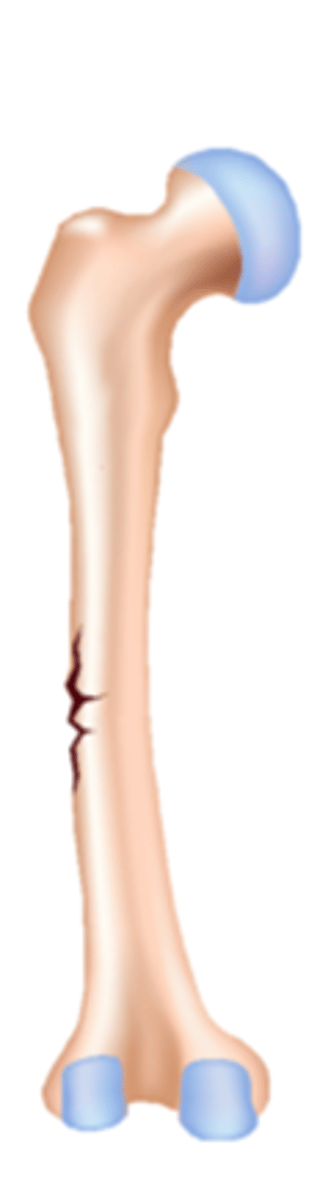
Simple (closed) bone fracture
a bone fracture in which the bone does NOT penetrate the skin
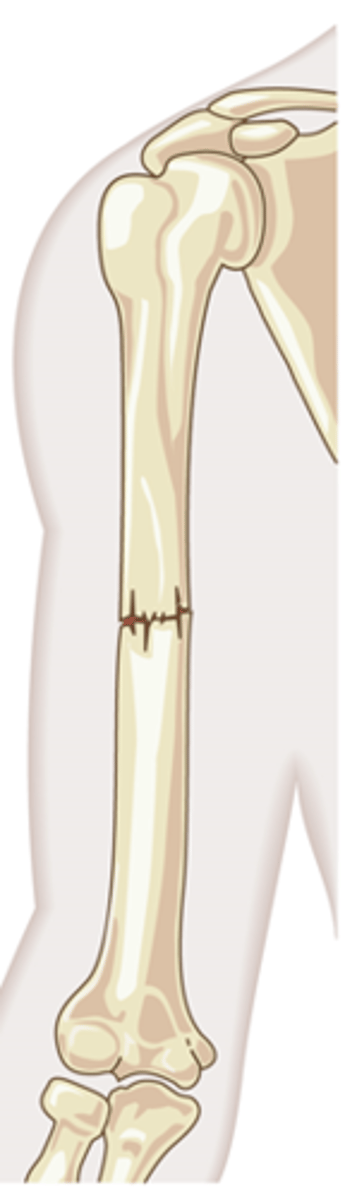
Compound (open) bone fracture
a bone fracture in which the bone DOES penetrate the skin
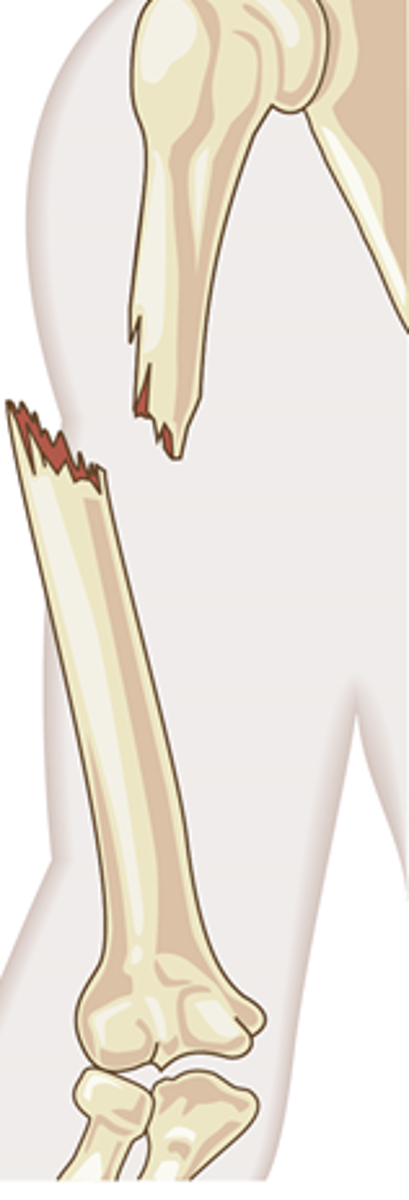
Bone reduction
realignment of the bone ends for proper healing
Closed (external) reduction
orthopedic doctor manipulates the bone ends into position through the skin
Open (internal) reduction
bone ends are secured together surgically with pins or wires
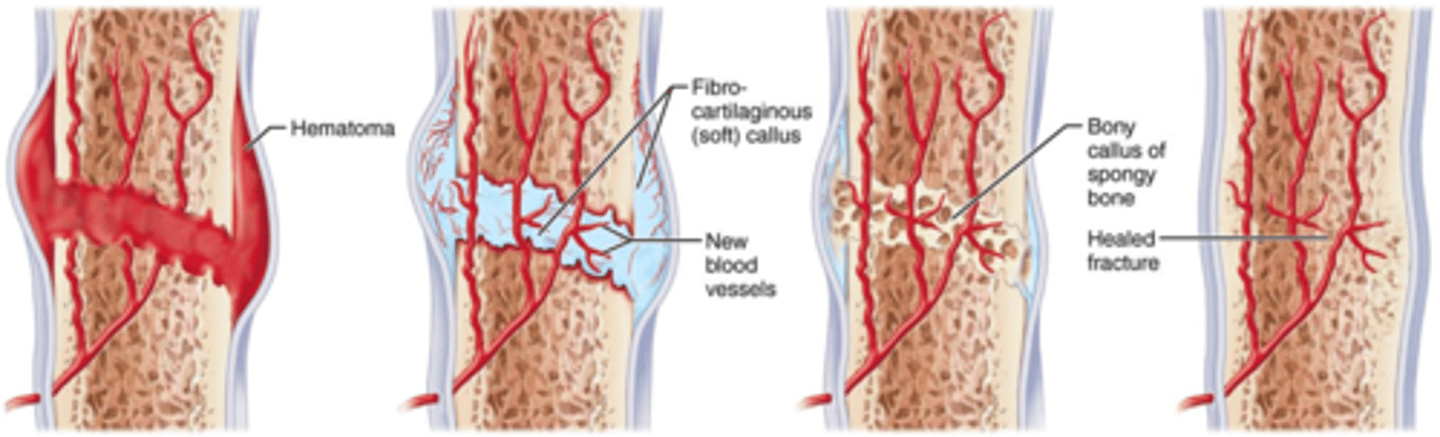
Bone fracture repair
1. blood clot (hematoma) forms at the fracture
2. fibrocartilaginous callus forms - fibroblasts secrete collagen matrix, osteoblasts begin forming spongy bone
3. bony callus forms - spongy bone replaces fibrocartilaginous callus
4. bone remodeling occurs - compact bone reconstructs diaphysis walls