Lab 13 diagram
 Call Kai
 Learn
Learn Practice Test
 Spaced Repetition
 Match
Match Flashcards
 Knowt Play
1/4

There's no tags or description
Looks like no tags are added yet.
Name | Mastery | Learn | Test | Matching | Spaced | Call with Kai | Chat |
|---|
No analytics yet
Send a link to your students to track their progress
5 Terms
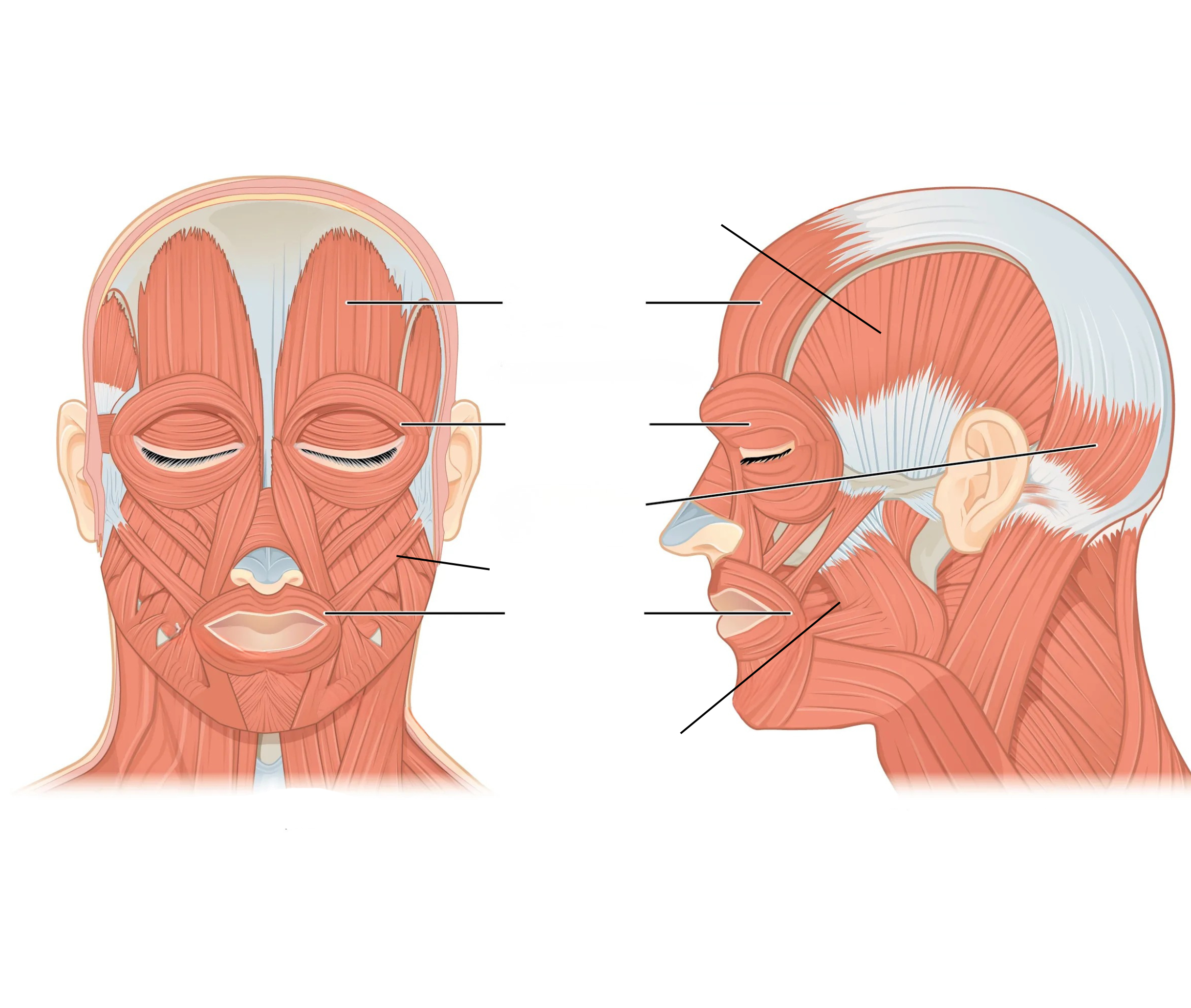
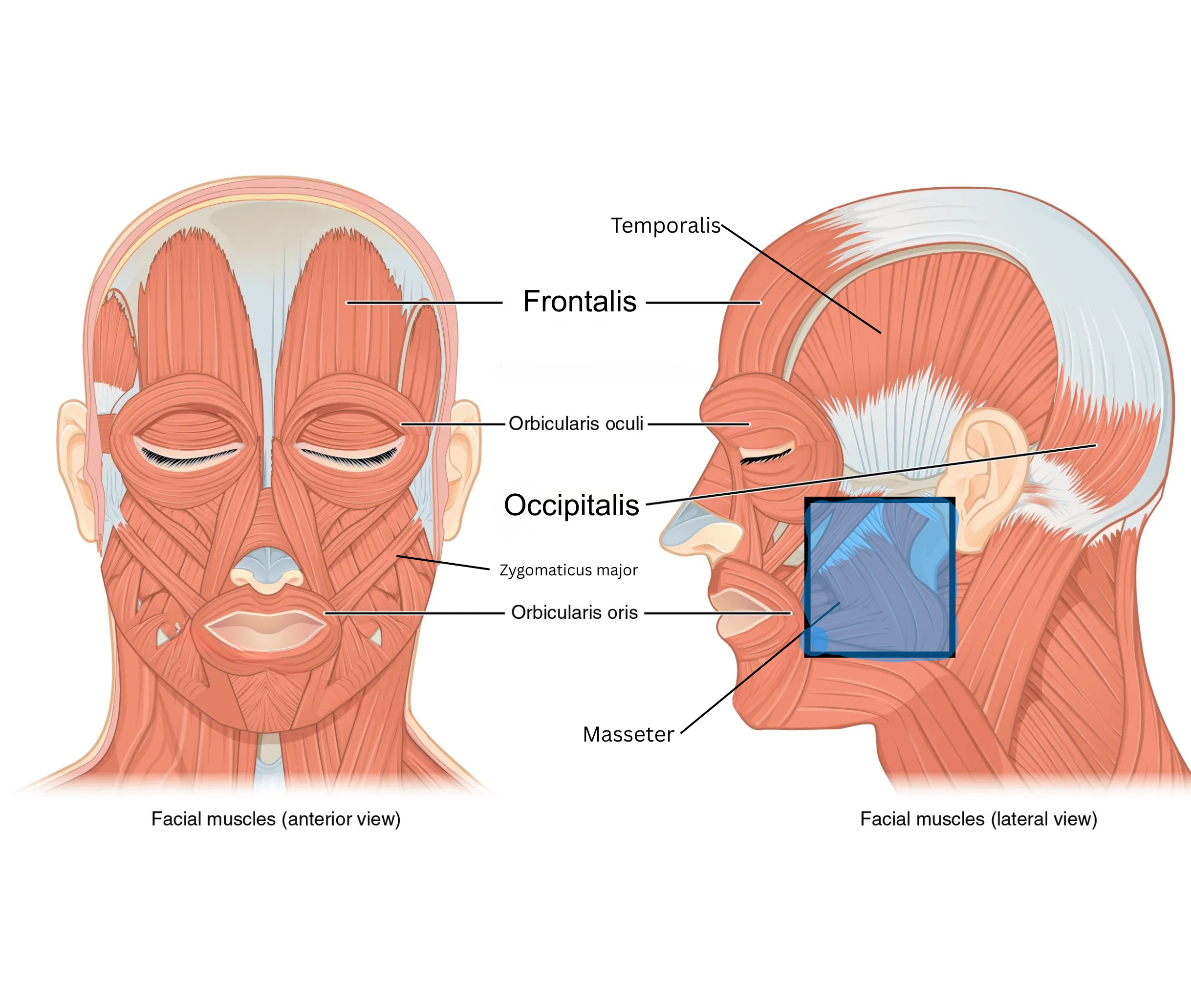
Muscles of Facial Expression & Mastication Diagram
Frontalis — raises eyebrows/wrinkles forehead, sits superficial to (on top of) the frontal bone.
Occipitalis — works with frontalis to move the scalp. Zygomaticus major — pulls mouth corners up (smiling).
Orbicularis oris — closes/puckers the lips.
Orbicularis oculi — closes the eyelids.
Masseter — closes the jaw for chewing.
Temporalis — closes the jaw for chewing, sits superficial to (on top of) the temporal bone.
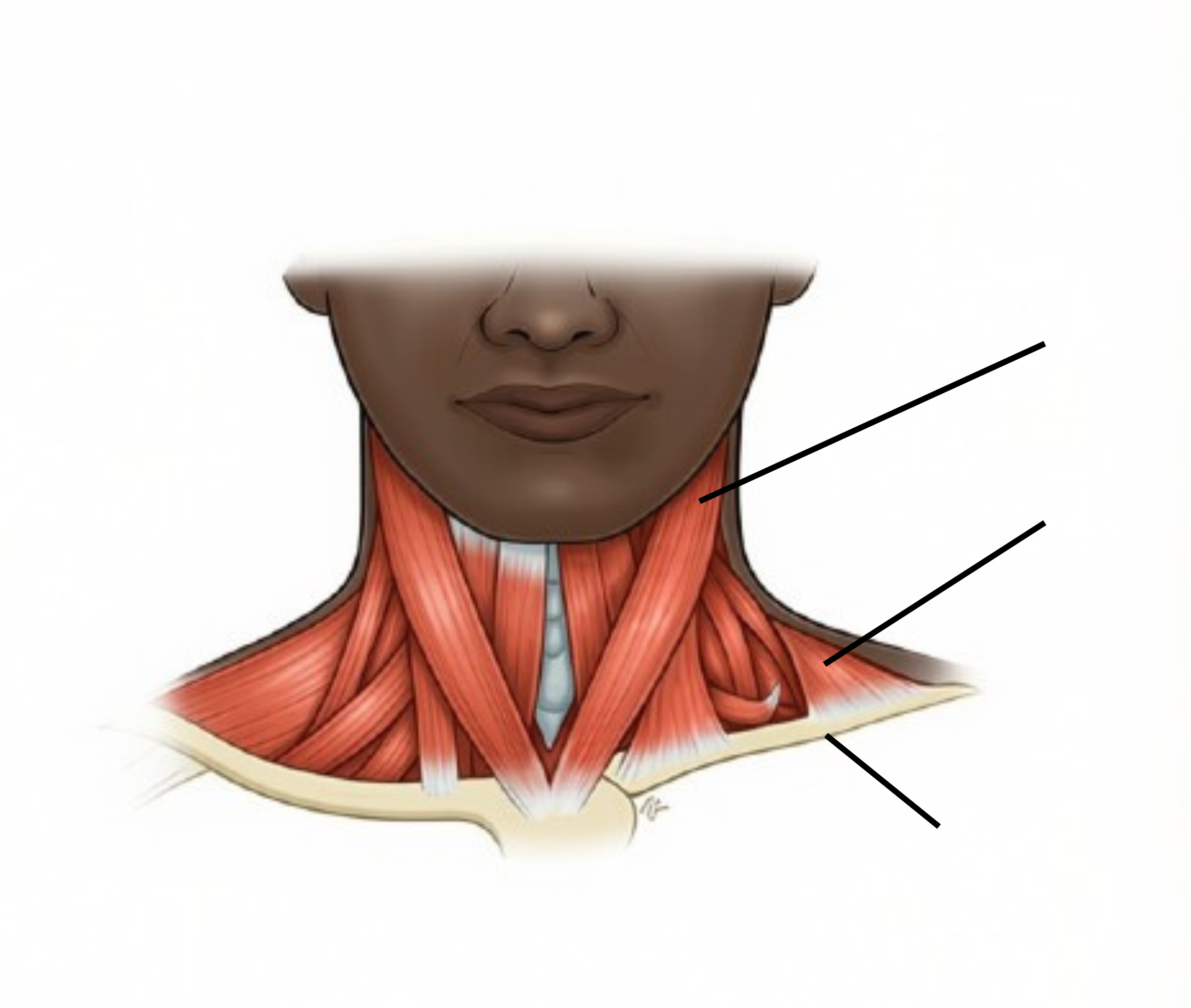
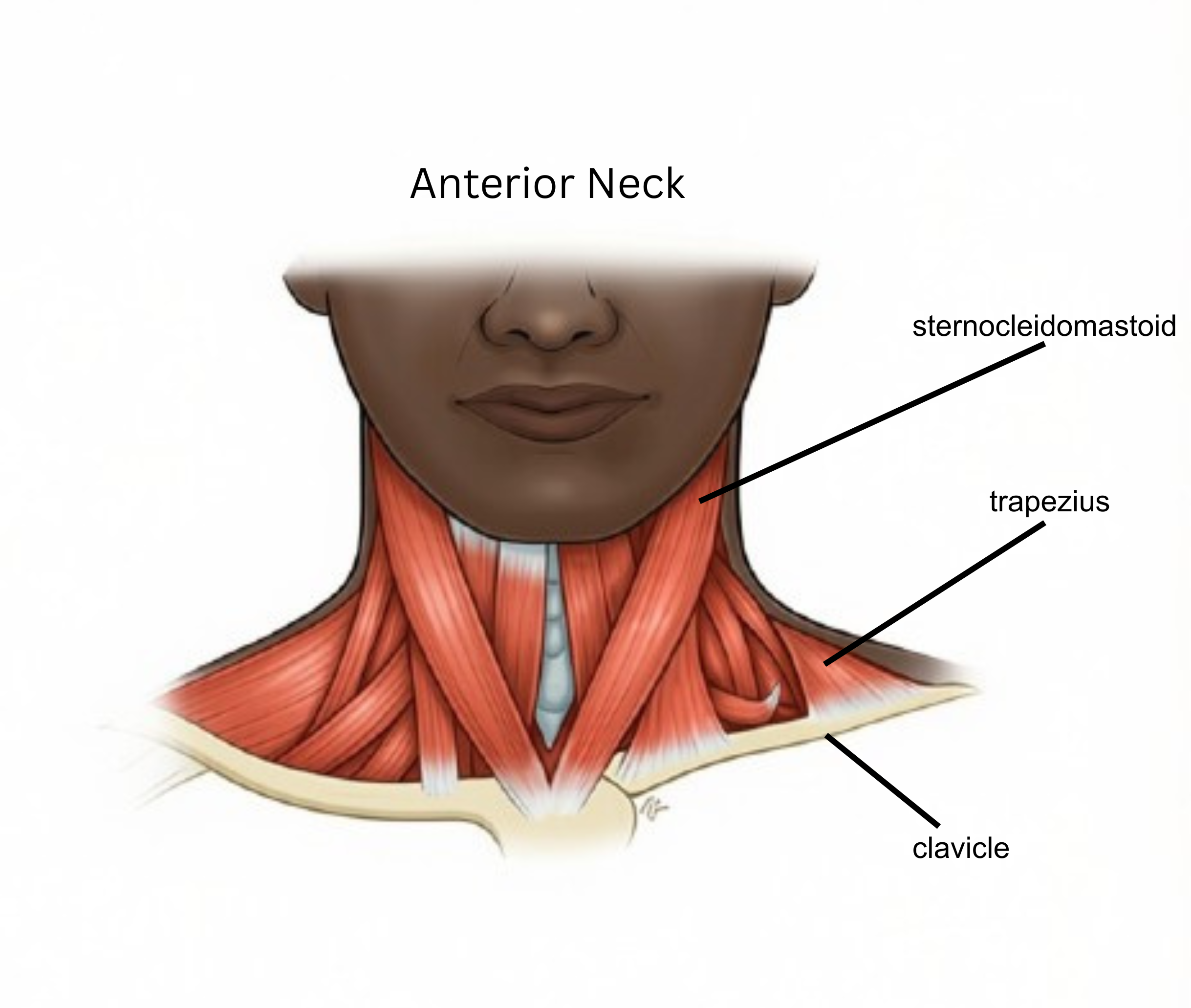
Muscles of the Neck Diagram
Sternocleidomastoid — turns and tilts the head; both sides together bend the neck forward.
Trapezius — moves the shoulder blade (shrugging) and helps move the head/neck.
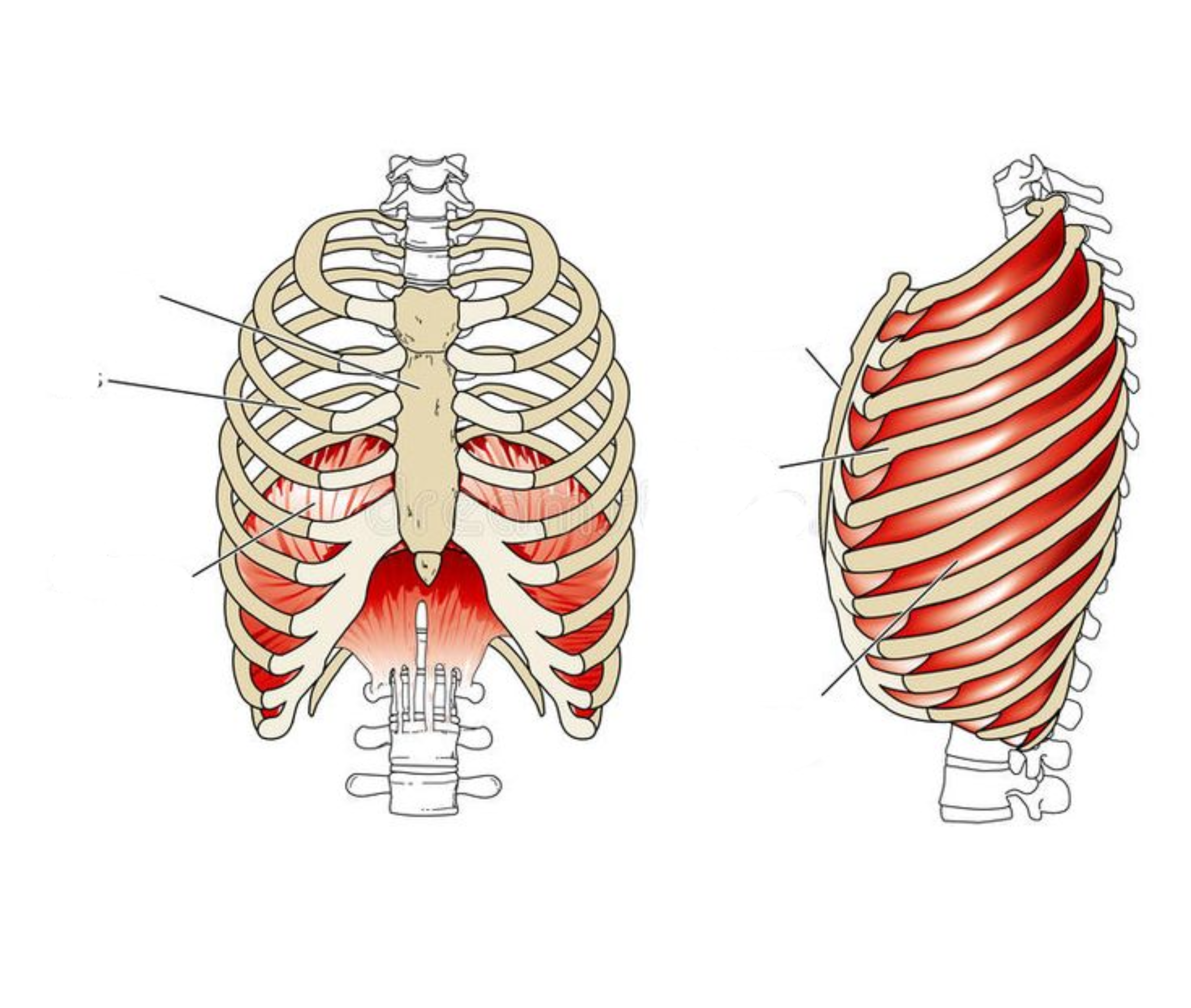
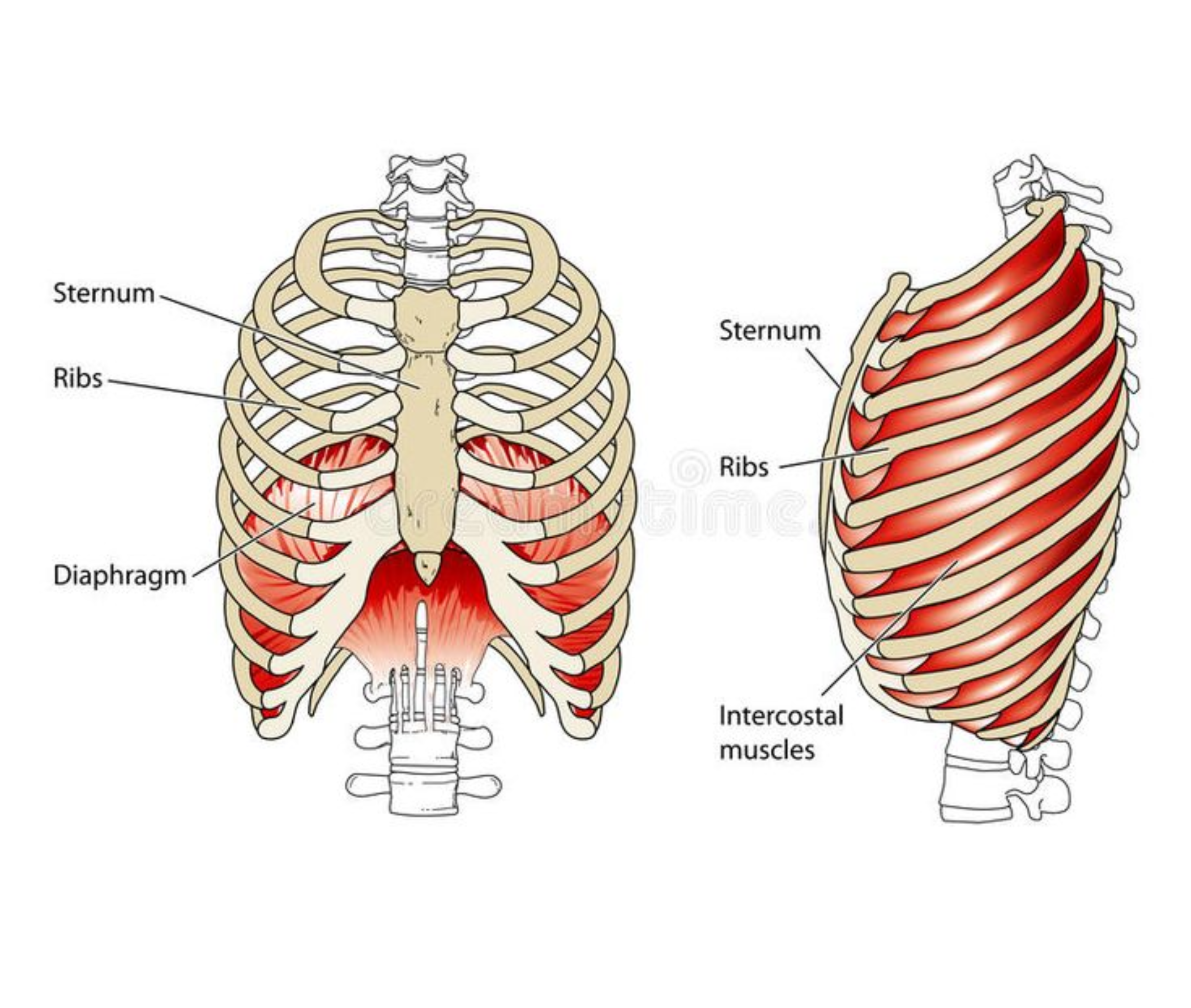
Muscles of Normal Respiration Diagram
Intercostals — muscles between the ribs, help lift the ribcage when breathing in.
Diaphragm — dome-shaped muscle separating chest and belly cavities; contracting it increases the volume of the chest cavity, pulling air into the lungs
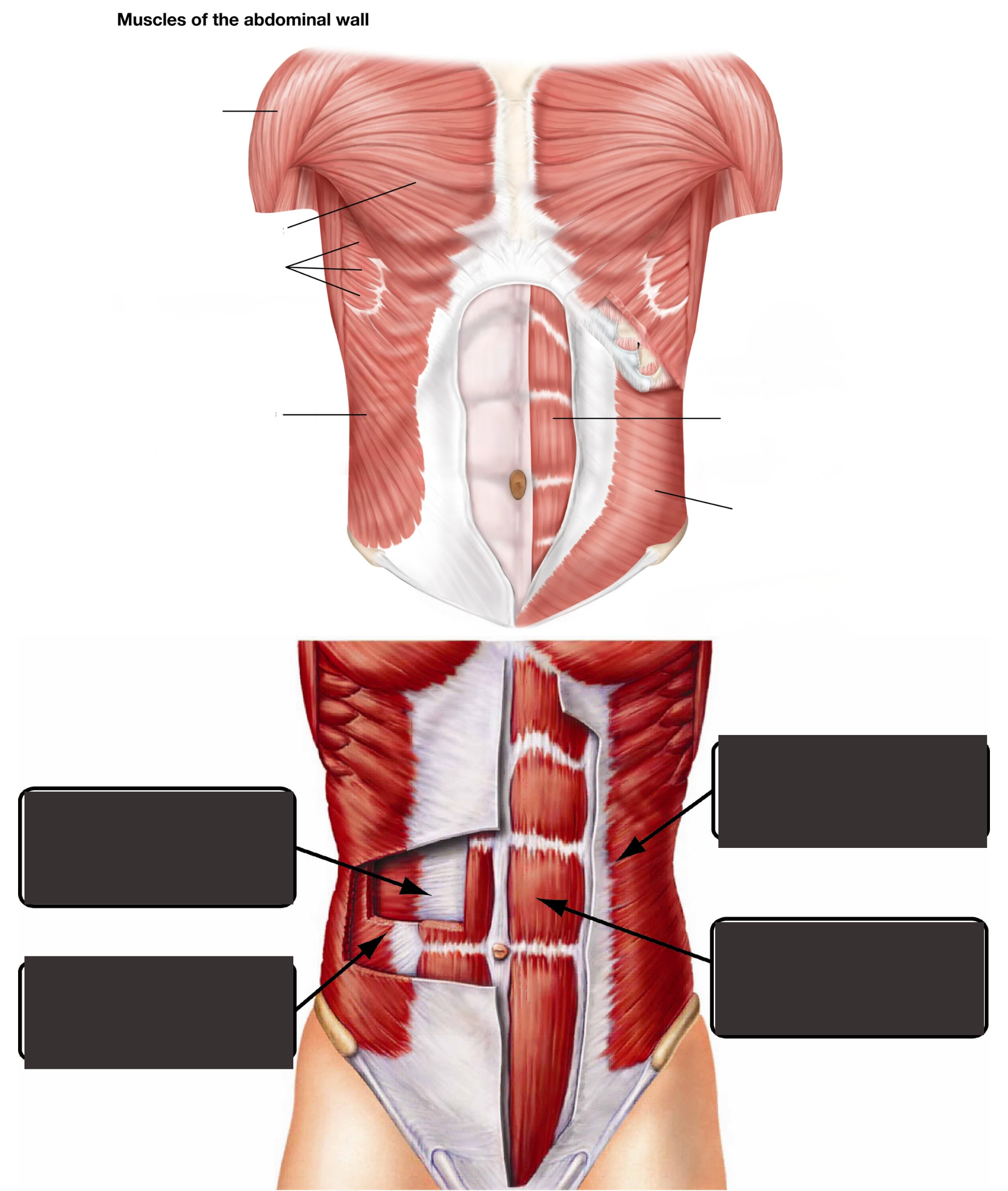
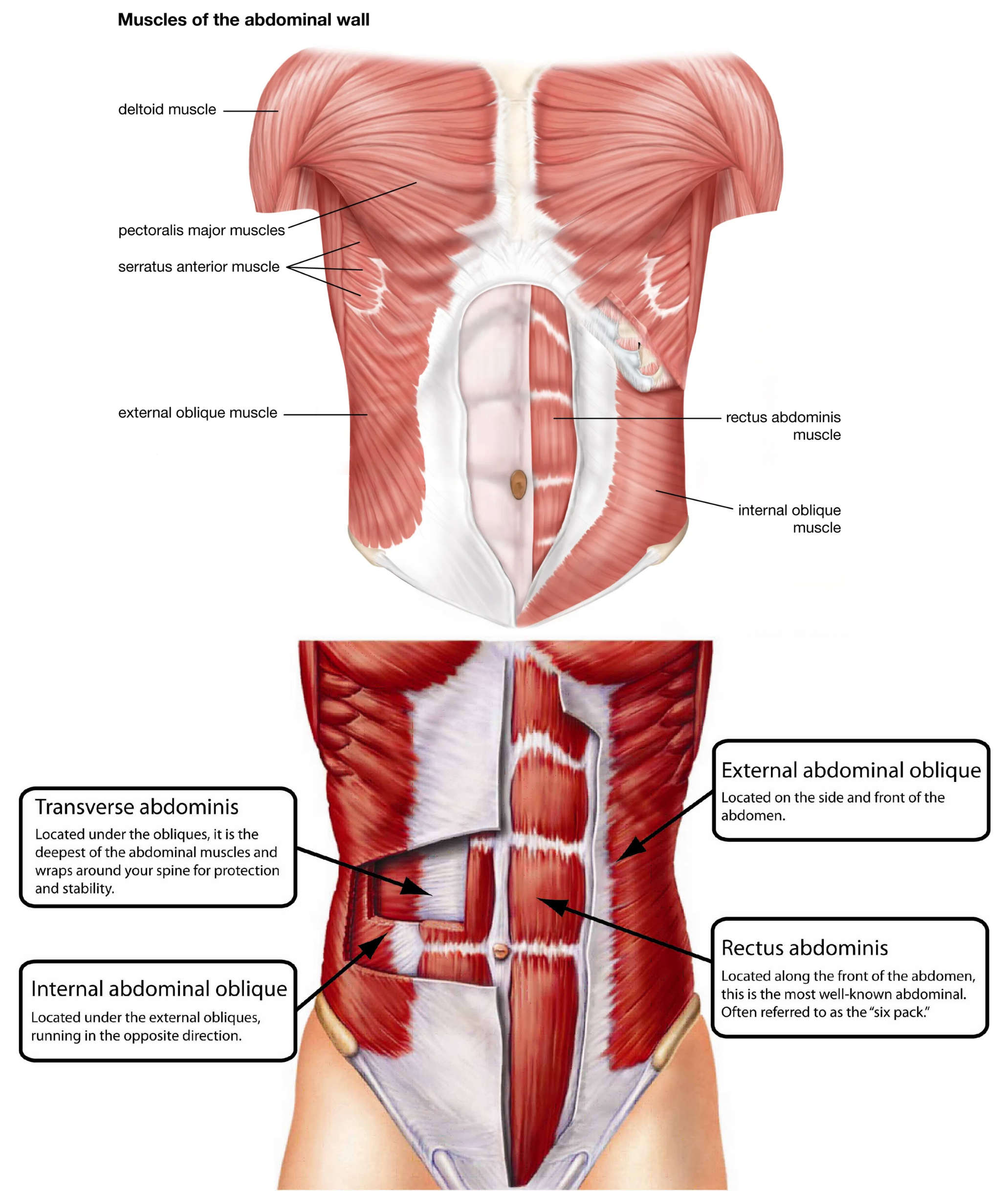
Muscles of the Abdominal Wall & Torso Diagram
Rectus abdominis — flexes the torso (bends forward); sits medial to (closer to the midline than) the external oblique.
External oblique — rotates/bends the torso, sits superficial to (on top of) the internal oblique.
Internal oblique — rotates/bends the torso, sits deep to (underneath) the external oblique.
Transverse abdominal — deepest belly muscle, compresses the abdomen.
Pectoralis major — adducts the arm (pulls it in toward the body); antagonistic to the deltoid. Serratus anterior — pulls the shoulder blade forward.
Deltoid — abducts the arm (raises it out to the side); antagonistic to pectoralis major.