1. High Blood Pressure and Cardiovascular Disease
 Call Kai
 Learn
Learn Practice Test
 Spaced Repetition
 Match
Match Flashcards
 Knowt Play
1/57

There's no tags or description
Looks like no tags are added yet.
Name | Mastery | Learn | Test | Matching | Spaced | Call with Kai | Chat |
|---|
No analytics yet
Send a link to your students to track their progress
58 Terms
What is blood pressure?
lateral pressure put on blood vessel walls
#1 Cause of Cardiovascular disease
hypertension
normal BP
BELOW 120/80 mm Hg
elevated BP
>120/>80 mmHg
replaces “pre-hypertension” -NOT A THING ANYMORE
cause of Primary or Essential Hypertension
unknown cause >95%
Secondary Hypertension
Result of other diseases
ex:
Pheochromocytoma
Renovascular disease (Renal artery stenosis) - thinning of blood vessel
Hyperaldosteronism – Conn Syndrome (Adenoma)
Coarctation of the aorta
Pheochromocytoma
tumor of adrenal medulla (secretes adrenaline)
adrenal cortex secretes
glucocortocoids
mineralcortocoids
sex hormones
adenoma
tumor of adrenal cortex
high aldosterone → retain Na → retain H2O
Coarctation of the aorta
endothelium of aorta gets damaged → inc BP
menopause increases risk of heart disease because
of the decrease of estrogen
estrogen is cardioprotective
BP chart *KNOW THESE
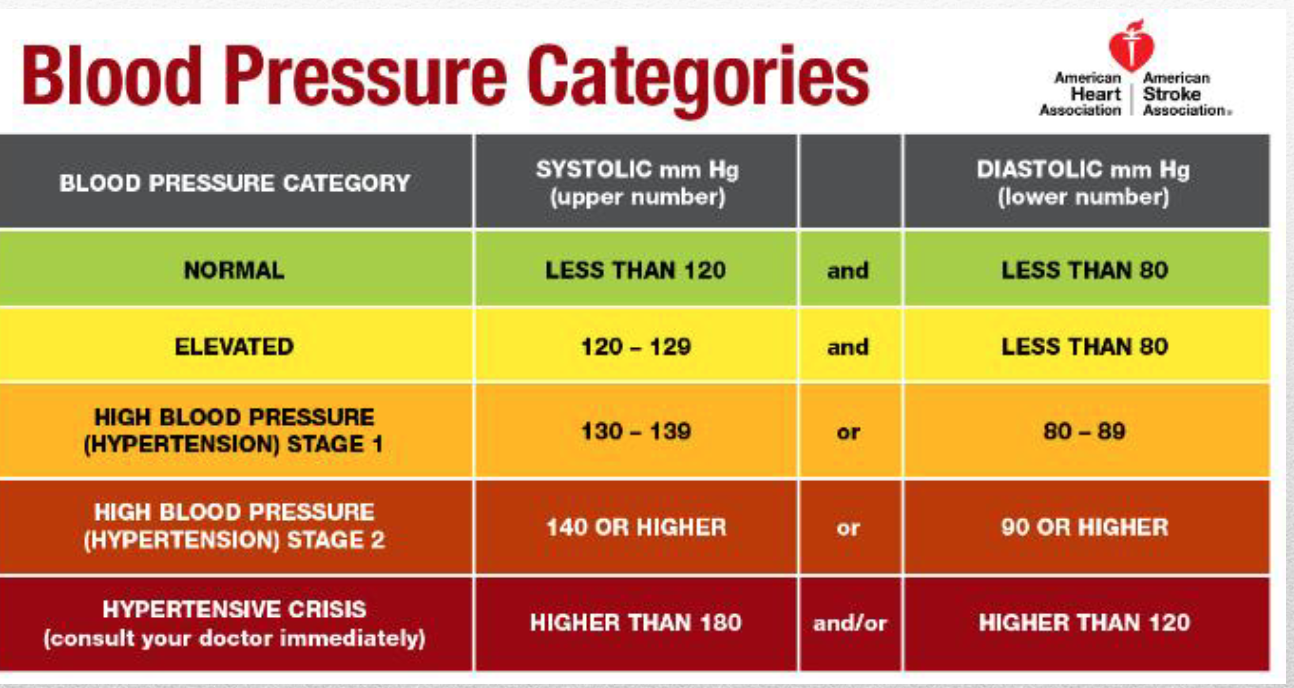
Normal BP
Less than 120/80 mm Hg
Elevated BP
Systolic between 120-129 and diastolic less than 80
Stage 1 hypertension
Systolic between 130-139 or diastolic between 80-89
Stage 2 hypertension
Systolic at least 140 or diastolic 90 mm Hg or higher
Hypertensive crisis
Systolic over 180 and/or diastolic over 120
is systolic or diastolic more important in normal people
diastolic should be lower than systolic in healthy individuals
2025 Latest Updated Guidelines for High Blood Pressure
Pre-hypertension does not exist as a category.
High BP should be treated earlier with lifestyle changes
Patients should be pharmacologically treated at 130/80 mm Hg rather than 140/90 – based on new ACC and American Heart Association (AHA) guideline
another name for stroke
cerebral vascular accident CVA
managing hypertension
Conservative management/ Lifestyle change
Including active intervention for smoking and drinking alcohol.
Prescribing for Stage I hypertension if a patient has had a cardiovascular event (MI or CVA) when at high risk of MI CVA
Presence of diabetes mellitus, chronic kidney disease or atherosclerotic risk (high cholesterol)
Patients may need two or more types of medications
Compliance: multiple medications in a single pill
Identifying socioeconomic status and psychosocial stress as risk factors for high blood pressure
LDL
deposits cholesterol in blood vessels → plaque → atherosclerosis
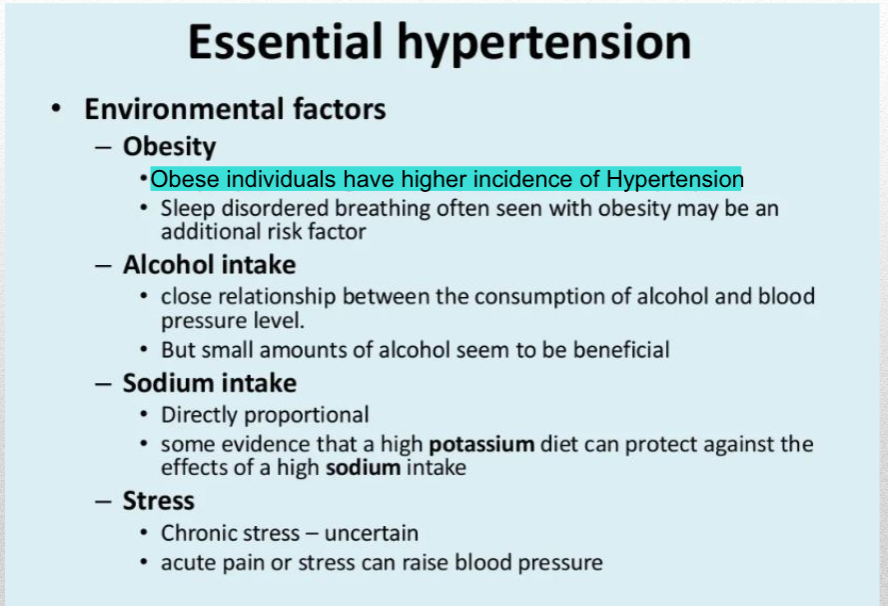
essential hypertension environmental factors
secondary hypertension environmental factors
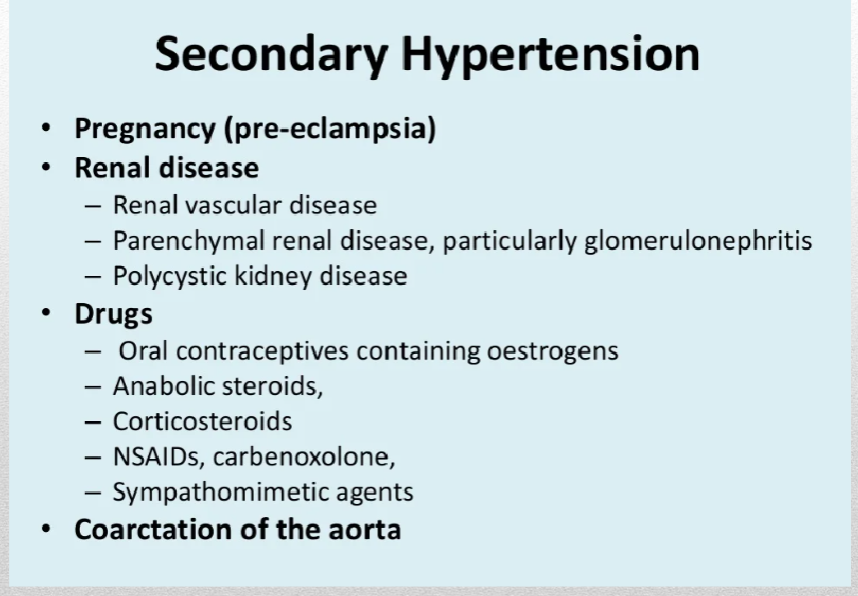
primigravida
first pregnancy
eclampsia
seizures during pregnancy
how does birth control → increase in BP
increasing estrogen and progesterone →increase in aldosterone → increase in sodium
NSAIDS for more than 5 days can cause
antihypertensives to stop working bc they work in the kidneys and NSAIDS are broken down in the kidneys
mechanisms of hypertension: RAAS
renin-angiotensin-aldosterone
angiotensin II → vasocontrict
aldosterone → retain sodium
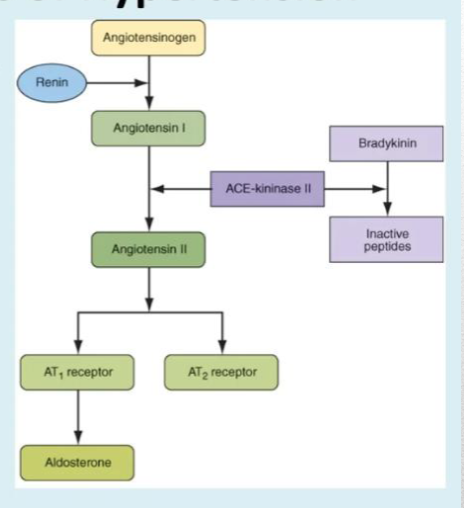
angiotensinogen is secreted by the
liver
renin comes from
kidneys
what activates angiotensinogen
angiotensin I
angiotensin I
comes from blood vessels
does NOTHING
converted to angiotensin II by ACE
ACE
secreted by bronchi, endothelium, top of trachea
dry hacking cough is caused by what drugs
ACE inhibitors
Target Organ Damage
Heart
Left ventricular hypertrophy
Angina or myocardial infarction
Prior coronary revascularization CABG (coronary artery bypass graft, homograph- comes from self)
Heart failure
Brain: Stroke or transient ischemic attacks
Chronic kidney disease
Peripheral arterial disease
Retinopathy
Hypertensive crisis
Acute elevation of BP associated with end organ damage
Potentially fatal!
Hypertensive Crisis/ Hypertensive emergency/ Malignant Hypertension
BP= 180/120 mmHg x 2 consecutive readings
Possible from post-surgical hypertension
Patients who develop a hypertensive crisis: Stop dental procedure!
Damage to nervous tissue, renal end arteries and retinal arteries as well as ischemia to the mural cardiac musculature
Medical emergency in dental clinic
All the following tumors may cause substantially increased BP EXCEPT:
a. Pheochromocytoma
b. Parotid tumor
c. Wilm's tumor
d.Thyroid tumor
b. Parotid tumor
Common causes of hypertension
Antihypertensive drug withdrawal (clonidine - alpha 2 agonist, centrally active)
Autonomic hyperactivity (sympathetic)
Collagen vascular disease (Systemic lupus erythematosus SLE)
Renal disease (stenosis)
Trauma to the head (contusion, lose conciousness for a long time)
Neoplasia (pheochromocytoma)
Pre-eclampsia (Leading onto eclampsia)
Recreational drugs (cocaine, MDMA, tobacco, adderall (dextroamphetamine), pseudoephedrine)
Major Cardiovascular Risk Factors
Hypertension
Cigarette smoking
Obesity (body mass index ≥30 kg/m2)
Abdominal girth: > 40 inches (men) and > 35 inches (Non- pregnant women)
Physical inactivity
Hyperlipidemias
Diabetes mellitus
Microalbuminuria or estimated GFR <60 mL/min (kidneys)
Age (older than 55 for men, 65 for women)
Family history of premature cardiovascular disease
Identifiable causes of hypertension
Sleep apnea
Drug-induced or related causes
Chronic kidney disease
Primary aldosteronism
Renovascular disease
Chronic steroid therapy and Cushing’s syndrome
Pheochromocytoma
Coarctation of the aorta
Thyroid or parathyroid disease
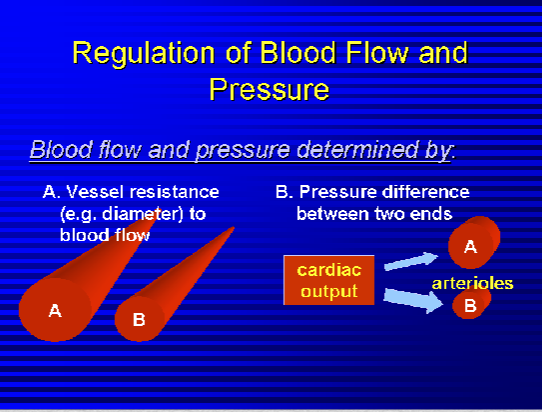
BP equation
Blood Pressure = Cardiac Output x Peripheral Vascular Resistance KNOW
Antihypertensive Drugs
Diuretics
Angiotensin Converting Enzyme (ACE) inhibitors ("-pril”)
Angiotensin Receptor Blockers (“-sartan”)
Calcium channel blockers (“-dipine”)
Beta blockers (“-olol”)
Alpha blockers (phentolamine)
Centrally acting Antihypertensives (clonidine)
Vasodilators (nitro or glycerine)
Diuretics
Diuretics act at various sites in the nephron to increase urine production.
Inhibit sodium reabsorption from the nephron into circulation causing an increase in excretion of sodium in urine