Blood Disorders and Hematology Vocabulary
 Call Kai
 Learn
Learn Practice Test
 Spaced Repetition
 Match
Match Flashcards
 Knowt Play
1/59

Earn XP
Description and Tags
Flashcards covering blood components, hematopoiesis, coagulation cascades, platelet function, bleeding disorders, anemias, and leukocyte pathologies from the lecture notes.
Name | Mastery | Learn | Test | Matching | Spaced | Call with Kai | Chat |
|---|
No analytics yet
Send a link to your students to track their progress
60 Terms
Hematopoiesis
The normal production of blood cells through mitosis and differentiation, taking place in the bone marrow, as well as in the fetal yolk sac and liver primordium during embryonic development.
Erythropoiesis
The process of red blood cell production, controlled and enhanced by the protein hormone erythropoietin secreted by the liver and kidney.
Erythropoietin
A protein hormone produced by the liver and kidney that enhances and controls the rate of red blood cell production.
Reticulocyte
An immature red blood cell derived from myeloid stem cells that loses its nucleus before maturing into a functional red blood cell.
Thrombopoiesis
The production of platelets from megakaryocytes through fragmentation, regulated by growth factors such as thrombopoietin from the liver.
Hemostasis
The physiological process of maintaining a static volume of blood, primarily accomplished through blood clot formation to seal vascular leaks.
Extrinsic Pathway
A blood coagulation pathway triggered when tissue damage exposes tissue factor on the vascular endothelium.
Intrinsic Pathway
A blood coagulation pathway initiated when clotting factors in the blood are activated by exposure to subendothelial collagen.
EDTA (Ethylene Diamine Tetra Acetic Acid)
An anticoagulant agent that blocks blood clotting by binding calcium ions required for the coagulation cascade.
Thrombin
An enzyme generated from prothrombin that converts fibrinogen into fibrin, which then polymerizes to bind platelets and construct a clot.
ADP (Adenosine Diphosphate)
A molecule released by platelets that activates platelet aggregation and promotes fibrin formation.
Thromboxane A2 (TXA2)
A mediator released by platelets that promotes inflammation, platelet aggregation, vasoconstriction, and fibrin formation.
Prostacyclin (PGI2)
A substance released by endothelial cells adjacent to an injury in response to local thrombin that inhibits platelet aggregation on uninjured vessel surfaces.
Plasmin
An active enzyme converted from plasminogen that degrades fibrin, fibrinogen, factor V, and factor VIII to break down blood clots.
t-PA (Tissue Plasminogen Activator)
A factor released by damaged tissue that gets incorporated into forming clots and converts plasminogen to plasmin, dissolving the clot from the inside out.
PTT (Partial Thromboplastin Time)
A blood coagulation test with a normal reference range of 25–40 seconds, where prolonged times indicate a potential pathway defect.
PT (Prothrombin Time)
A blood coagulation test with a normal reference range of 9–12 seconds, where prolonged times suggest decreased concentration of specific clotting factors.
Petechiae
Pinpoint-sized hemorrhages caused by small amounts of blood trapped in tissues.
Purpura
Patches of bleeding in the skin measuring 2 cm or larger in size.
Ecchymoses
Large bruises in tissues that are bigger than purpura and typically display blue-green discoloration.
Hematoma
A three-dimensional collection or pool of blood trapped between tissue layers.
Thrombocytopenia
A disorder defined by an insufficient quantity of circulating platelets in the bloodstream.
Idiopathic Thrombocytopenic Purpura (ITP)
An immune-mediated platelet destruction disorder causing petechial or purpuric bleeding, often following viral infections in children or presenting as a chronic condition in adults.
Thrombotic Thrombocytopenic Purpura (TTP)
A disorder in which antibodies damage endothelial cells, inducing widespread platelet binding and consumption.
Disseminated Intravascular Coagulation (DIC)
A condition marked by widespread platelet activation and aggregation throughout the vasculature, leading to platelet depletion and rampant hemorrhaging.
Von Willebrand Disease
A genetic bleeding disorder caused by deficient production of von Willebrand factor (vWF), which prevents platelets from binding to subendothelial collagen.
Hemophilia A
A sex-linked genetic disorder on chromosome X caused by a defect or deficiency in clotting factor VIII.
Hemophilia B
A sex-linked genetic disorder on chromosome X caused by a defect or deficiency in clotting factor IX.
Ankylosis
The fusion of bones across a joint space resulting from repeated joint hemorrhages in hemophilia patients.
Senile Purpura
Small vessel fragility seen in elderly individuals due to a age-related loss of vascular structural support.
Hereditary Hemorrhagic Telangiectasia
A genetic vascular condition involving chronic dilation of fine blood vessels, causing vessel weakness and leakage.
Anemia
A condition involving decreased numbers of erythrocytes or loss of O2 transport efficiency, defined by hemoglobin levels below 14–18 g/dL in males and 12–16 g/dL in females.
MCV (Mean Corpuscular Volume)
A red blood cell index evaluating cell size, categorizing cells as normocytic, macrocytic, or microcytic.
MCHC (Mean Corpuscular Hemoglobin Concentration)
A red blood cell index evaluating hemoglobin concentration per cell, categorizing cells as hyperchromic, normochromic, or hypochromic.
Pure Red Cell Aplasia
A bone marrow defect specifically characterized by defective RBC stem cells (myeloid origin).
Pancytopenia
A severe bone marrow defect in which all types of blood stem cells are defective.
Aplastic Anemia
A condition where all blood cell precursors and progenitors are defective, leading to fat cell proliferation that replaces normal bone marrow.
Pernicious Anemia
A megaloblastic anemia resulting from autoimmune chronic gastritis or gastric resection that prevents Vitamin B12 absorption due to lack of intrinsic factor (IF).
Sickle Cell Anemia
A genetic hemoglobinopathy where abnormal HbS is synthesized instead of HbA, leading to red blood cell sickling under conditions of hypoxia, acidosis, or pregnancy.
Thalassemias
Genetic blood disorders caused by defective or insufficient beta hemoglobin production, creating an imbalance with excess alpha hemoglobin and accelerated RBC clearance.
Leukopenia
A leukocyte disorder characterized by reduced white blood cell count, primarily neutropenia below 1800 per mm3, which raises infection risk.
Leukocytosis
An elevated white blood cell count occurring in response to physiological or pathological triggers, such as neutrophils in acute inflammation or lymphocytes in viral infections.
Leukemia
Malignant tumors of leukocyte precursor origin that produce aberrant populations of non-functional leukocytes of varying maturity without forming discrete solid masses.
Aleukemic Leukemia
A specific form of leukemia in which the cancerous cells remain entirely confined within the bone marrow.
Lymphoma
Solid malignant tumors of lymphoid tissue (such as the spleen and lymph nodes) arising from leukocytes and their precursor cells.
Hodgkin's Lymphoma
A malignant lymphoid tumor characterized by the presence of Reed-Sternberg cells, originating as a single tumor in cervical lymph nodes and spreading systematically.
Non-Hodgkin's Lymphoma
A malignant lymphoid tumor originating from T and B cell precursors that lacks Reed-Sternberg cells and starts in cervical lymph nodes without systematic progression.
Reed-Sternberg Cells
Abnormal cells featuring double nuclei surrounded by a halo, characteristic of Hodgkin's lymphoma.

What is this
Petachia

What is this
purpura

What is this
ecchymoses

What is this
DIC (disseminated intravascular coagulation)

What is this
DIC manifested as purpura fulminans

What is this
Hemophilia

What is this
Vessel braking due to snake bite

What is this
Hemolytic disease of newborn
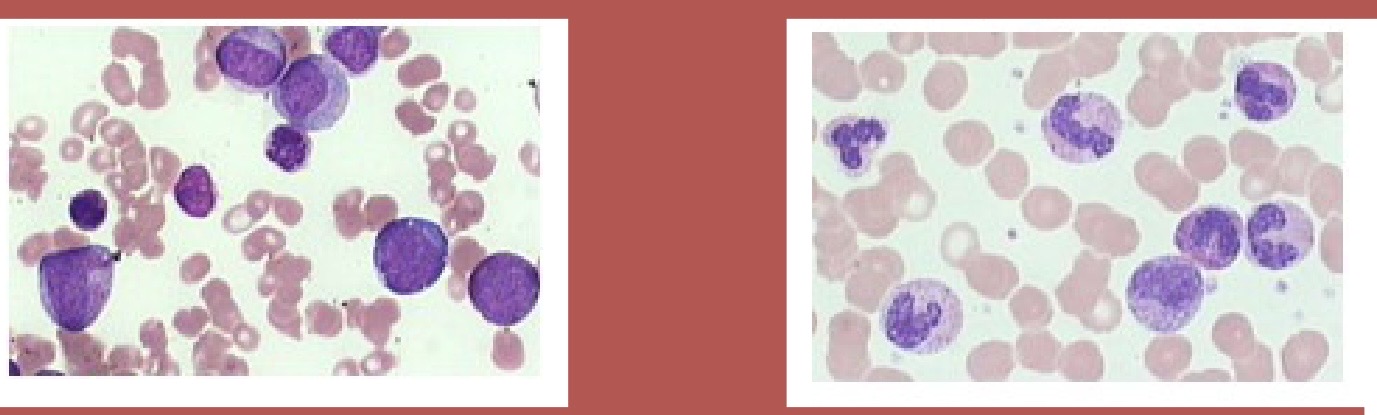
What is this
Polycytemia

What is this
Leukemia

What is this
Hodgkin’s disease

What is this
Non hodgkin’s lymphoma