Microbe-Host Interactions Study Guide
 View linked note
 Call Kai
 Learn
Learn Practice Test
 Spaced Repetition
 Match
Match Flashcards
 Knowt Play
1/32

There's no tags or description
Looks like no tags are added yet.
Name | Mastery | Learn | Test | Matching | Spaced | Call with Kai |
|---|
No analytics yet
Send a link to your students to track their progress
33 Terms
Contamination
Pathogens are introduced to the body but are not replicating.
Infection
Pathogens are replicating inside or on the body.
Disease
The body deviates from its normal state due to infection.
Normal microbiota
Microbes that normally inhabit the body and aid in preventing harmful organisms.
Transient microbiota
Microbes that are temporarily present on body surfaces due to daily activities.
Opportunistic pathogens
Harmless organisms that can cause disease when the opportunity arises.
Pathogenicity
The ability of an organism to cause disease.
Virulence
The degree to which an organism can cause disease.
Virulence factor
Molecules that help microbes invade and multiply within a host.
Portals of entry
Routes through which pathogens enter a host, including the skin, GI tract, urogenital tract, and respiratory tract.
Modes of transmission
Ways pathogens are spread, including direct, indirect, vector, and parenteral transmission.
Exotoxins
Protein enzyme released by bacteria that results in unique signs and symptoms.
Endotoxins
Toxins that are part of the bacterial structure and can cause systemic effects when released.
Localized infection
An infection confined to one location in the body.
Systemic infection
An infection that spreads throughout the body, often through the bloodstream.
Sign
Objective evidence of disease observed by another person.
Symptom
Subjective evidence of disease experienced by the patient.
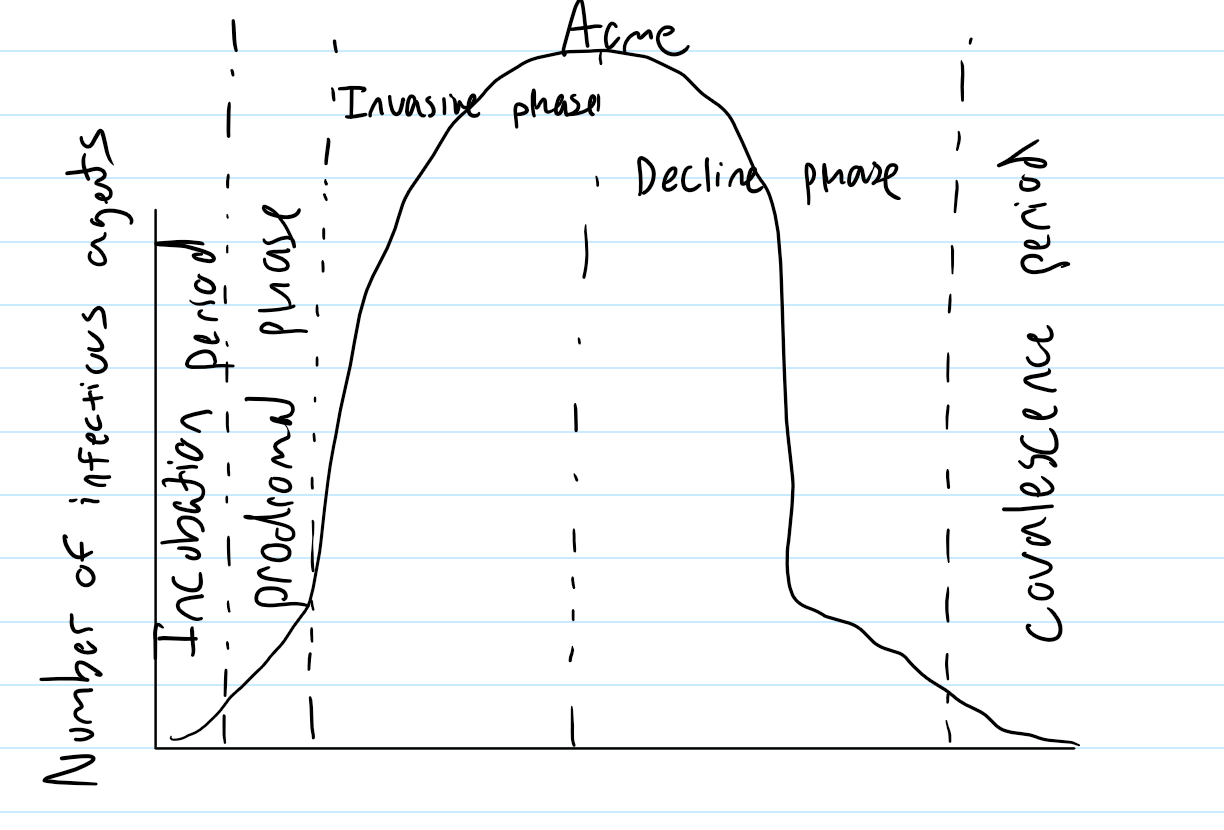
Phases of infection
Stages of an infection including incubation, prodromal, invasive, acme, decline, and convalescent phases.
Coagulase
An enzyme that induces coagulation, helping bacteria to protect themselves from phagocytes.
Protease
An enzyme that destroys proteins.
Hemolysins
Proteins (exotoxins) that destroy red blood cells (RBC).
Leukocidins
A protein toxin produced by bacteria that target and damage white blood cells.
Hyaluronidase
An enzyme that breaks down hyaluronic acid, which is the 'glue' that holds cells together.
streptokinase
An Exoenzyme that can break down clots after bacteria have hidden within the clot. Transports phosphate groups to things.
Antigenic Variation
A process where bacteria change their surface molecules to evade recognition by the host's immune system.
Flagella
Tail-like structures that enable some bacteria to move and can help them evade immune responses by outrunning phagocytes.
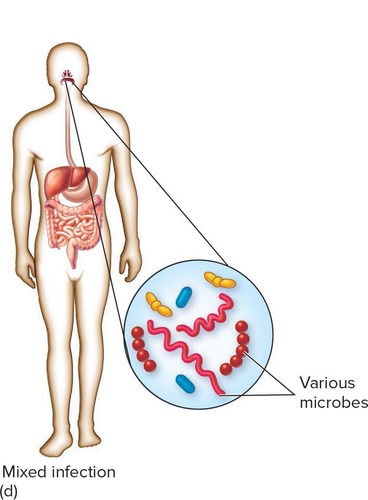
Mixed Infection
Several agents establish themselves simultaneously at the infection site.
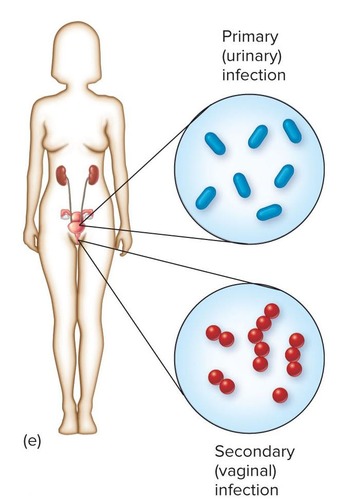
Primary & Secondary Infections
Primary infection is the initial infection. Secondary infection occurs when a primary infection is complicated by another infection caused by a different microbe.
Acute Infection
An infection that comes on rapidly and goes away quickly.
Chronic Infection
An infection that progresses and persists over a long period of time.
Latent Infection
An infection characterized by a period of inactivity.
Modes of Transmission
Indirect (via fomite or vehicle), Direct (coughing, kissing, vertical), Vector (biological or mechanical), Parenteral (penetrates skin via needle).
Exoenzymes
Hyluronidase, Protease, Streptokinase, and Coagulase,