NPTE: Cancer
 Call Kai
 Learn
Learn Practice Test
 Spaced Repetition
 Match
Match Flashcards
 Knowt Play
1/37

There's no tags or description
Looks like no tags are added yet.
Name | Mastery | Learn | Test | Matching | Spaced | Call with Kai | Chat |
|---|
No analytics yet
Send a link to your students to track their progress
38 Terms
Early warning signs of cancer
● Changes in bowel and bladder habits
● Sore that does not heal within 6 weeks
● Unusual bleeding or discharge
● Thickening or lump in breast or elsewhere
● Indigestion or difficulty swallowing
● Wart or mole with obvious change in characteristics
● Hoarseness or nagging cough
Supplemental S/S:
➤ Rapid unintentional weight loss
➤ Change in vital signs
➤ Night pain
➤ Frequent infections
➤ Pathological Fxs
➤ Proximal muscle weakness
➤ Change in DTRs
*PT's look out for blue
Tumor or neoplasm
abnormal growth of cells; swelling or mass
Metastasis
movement of cancer cells from one body part to another
-Spread via lymphatics or blood stream or by direct extension into the neighboring tissues or body cavities
Benign tumor
localized, slow-growing, noninvasive; does not show a tendency to metastasize
Malignant tumor
invasive, rapidly growing; shows a tendency to metastasize
➤ Can be life-threatening
Carcinoma
malignant tumor; originates in the epithelial tissue (stomach, colon, breast, skin)
Basal cell carcinoma
⚬ Involves the bottom layer of the epidermis
⚬ Occurs in hair-bearing areas with long sun exposure: face, neck, head, ears, and hands
⚬ Lesions grow slowly up to 1 to 2 cm in diameter
⚬ Rarely metastasizes, but can cause local destruction of tissue; can also ulcerate
⚬ Pearly or ivory in appearance, rolled borders, raised, with small blood vessels on the surface (telangiectasia)
Squamous cell carcinoma
⚬ Involves the top layer of the epidermis
⚬ Grows quickly more dangerous; metastasis is uncommon
⚬ Occurs in sun-exposed areas: rim of the ear, face, lips, mouth, dorsum of the hands
⚬ Two types
-In situ: usually confined to the epidermis, but may extend to the dermis (Actinic keratosis, Bowen disease)
-Invasive: Poorly defined margins; can present as flat red area, ulcer or nodule
Malignant melanoma
most serious form of skin cancer
➤ Arises from melanocytes (the pigmented skin cells)
➤ Can appear anywhere in the body
➤ Acute MMs are asymmetric; benign MM lesions have regular margins
-MMs are variegated; color ranges from tan and brown to black; sometimes, red and white colors are seen as well
-Can range up to 6 mm in diameter or larger
Sarcoma
malignant; originates in connective tissue (muscle, fat tissue, bone)
Lymphoma
originates in the lymphatic system (Hodgkin, lymphatic leukemia)
➤ Round patches of reddish-brown skin with hair loss
Leukemia
malignant; affects the blood and bone marrow
➤ Leukemia increased risk of osteonecrosis (so no jump rope or high-impact exercises)
Osteoid osteoma
predominantly seen in children and young adults; males
females
➤ Ages 7 to 25 years
➤ Bone cancer; benign
➤ Affecting long bones- femur and tibia
➤ Pain worse at night
➤ Pain is completely relieved by aspirin hallmark finding for this cancer
➤ Warmth and tenderness at the involved site
Chondrosarcoma
seen in adults ages 40 years
➤ Malignant cartilage tumor
➤ Palpable mass
➤ Back, pelvis, or thigh pain
➤ Sciatica
➤ Bladder symptoms
➤ Unilateral edema
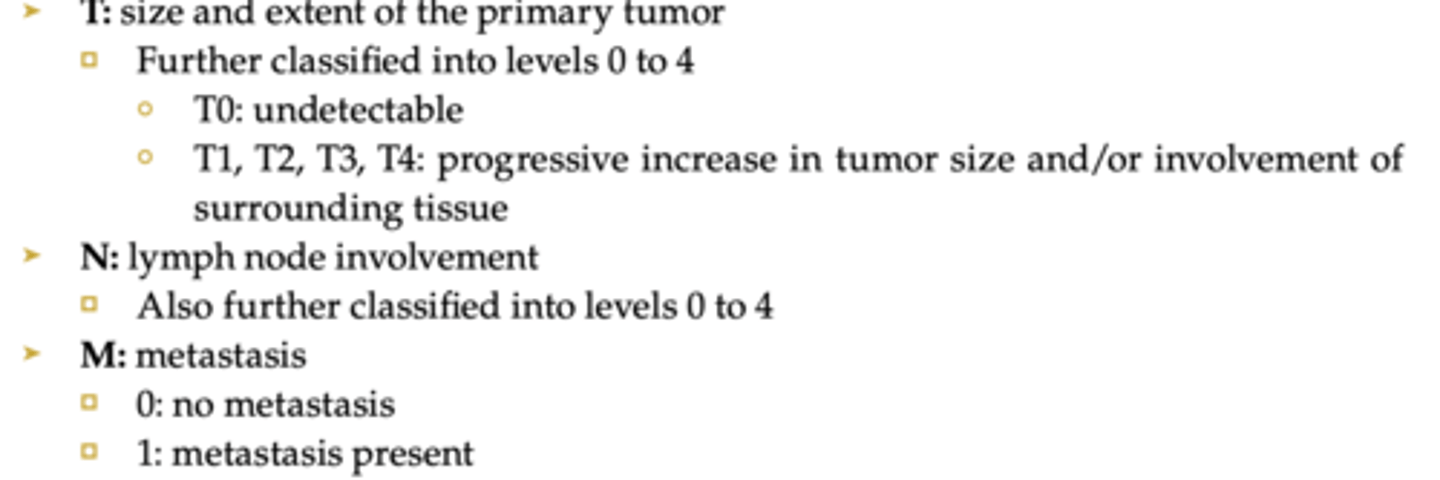
Cancer staging: TMN
tumor, nodes, metastasis
Patient is considered cured if they do not have a reoccurrence for ___ years after treatment
5
Side effects of surgery
Fatigue, disfigurement, loss of function, infection, increased pain, deformity, scar tissue, fibrosis, hemorrhage, bleeding
Radiation therapy does what
Destroys the dividing cancer cells, while damaging the normal cells as little as possible
➤ Destroys the hydrogen bonds between the DNA strands within the cancer cells
● RT can be done preoperatively to reduce the size of the tumor and prevent its spread
● Once surgical wounds heal, RT can be used postoperatively to prevent the cancer cells from multiplying or metastasizing
Side effects of radiation therapy
➤ Fatigue
➤ Radiation sickness
➤ Immunosuppression
➤ Decreased platelets and WBCs
➤ Infection
➤ Fibrosis
➤ Mucositis
➤ Diarrhea
➤ Edema
➤ Hair loss
➤ Delayed wound healing
➤ Peripheral nervous system (PNS) and CNS effects
➤ Malignancy
➤ Osteonecrosis
➤ Radiation recall
Chemotherapy does what
● Drugs used to destroy cancer cells
➤ Affect DNA synthesis or the function of cancer cells
● Used mainly for metastatic and widespread cancer
● Depending on the drug used and its pharmacokinetics, chemotherapeutic drugs are given orally, subcutaneously, intramuscularly, intravenously, intracavitary, intrathecally, or by arterial infusion
Side effects of chemo
➤ Fatigue
➤ GI effects
➤ Anorexia, nausea, vomiting, diarrhea, constipation
➤ Ulcers
➤ Hemorrhage
➤ Bone marrow suppression
➤ Anemia
➤ Leukopenia
➤ Neutropenia
➤ Thrombocytopenia
➤ Skin rashes
➤ Neuropathies
➤ Hair loss
➤ Infertility, sexual dysfunction
➤ Phlebitis
➤ Anxiety, depression
➤ Weight gain or loss
Immunotherapy does what
Also known as biologic therapy or biotherapy
● Strengthens the host's biological response to cancer cells
➤ Agents: interferons, interleukin-2, cytokines
Side effects of immunotherapy
➤ Fatigue
➤ Fever
➤ Chills
➤ Nausea, vomiting, anorexia
➤ Fluid retention
➤ CNS effects
➤ Anemia
➤ Leukopenia
➤ Altered taste and/or sensation
Hormone therapy does what
Used for certain types of cancers affected by specific hormones
➤ For example, tamoxifen is an antiestrogen hormonal agent that is used to block estrogen receptors in breast cancer
Side effects of hormone therapy
➤ Nausea, vomiting
➤ HTN
➤ Steroid-induced diabetes
➤ Myopathy
➤ Bone loss, Fxs
➤ Weight gain
➤ Altered mental status
➤ Hot flashes
➤ Sweating
➤ Decreased libido
➤ Sexual dysfunction
➤ Morning stiffness
➤ Arthralgia, myalgia
➤ Vaginal dryness
Hematopoietic cell transplantation (bone marrow transplantation) does what
● Used for cancers that respond well to chemotherapy or radiation therapy
➤ The high doses used for such treatments not only can kill cancer cells but can also destroy bone marrow
Side effects of hematopoietic cell transplantation (bone marrow transplantation)
➤ Severe bone marrow suppression
➤ Mucositis
➤ Nausea, vomiting
➤ Graft versus host disease
➤ Delayed wound healing
➤ Venoocclusive disease
➤ Infertility
➤ Cataract formation
➤ Thyroid dysfunction
➤ Growth hormone deficiency
➤ OP
➤ Secondary malignancy
Palliative vs hospice care
■ Palliative: individuals living with serious illness focus on relief of symptoms; improve QOL for patients and their families
■ Hospice: give supportive care to individuals with 6 months to live
Common vital sign findings
Elevated HR and BP, dyspnea, pallor, sweating, fatigue
Cancer pain syndrome
common
➤ Sympathetic S/S may accompany moderate to severe pain (tachycardia, HTN, tachypnea, nausea, vomiting)
*pain at a distal site to the initial tumor may suggest metastasis
Iatrogenic pain
pain from meds or surgery
Muscle atrophy and weakness is secondary to
Secondary to high doses of steroids, disuse, tumor compression or invasion
(ROM deficits: with high doses of radiation)
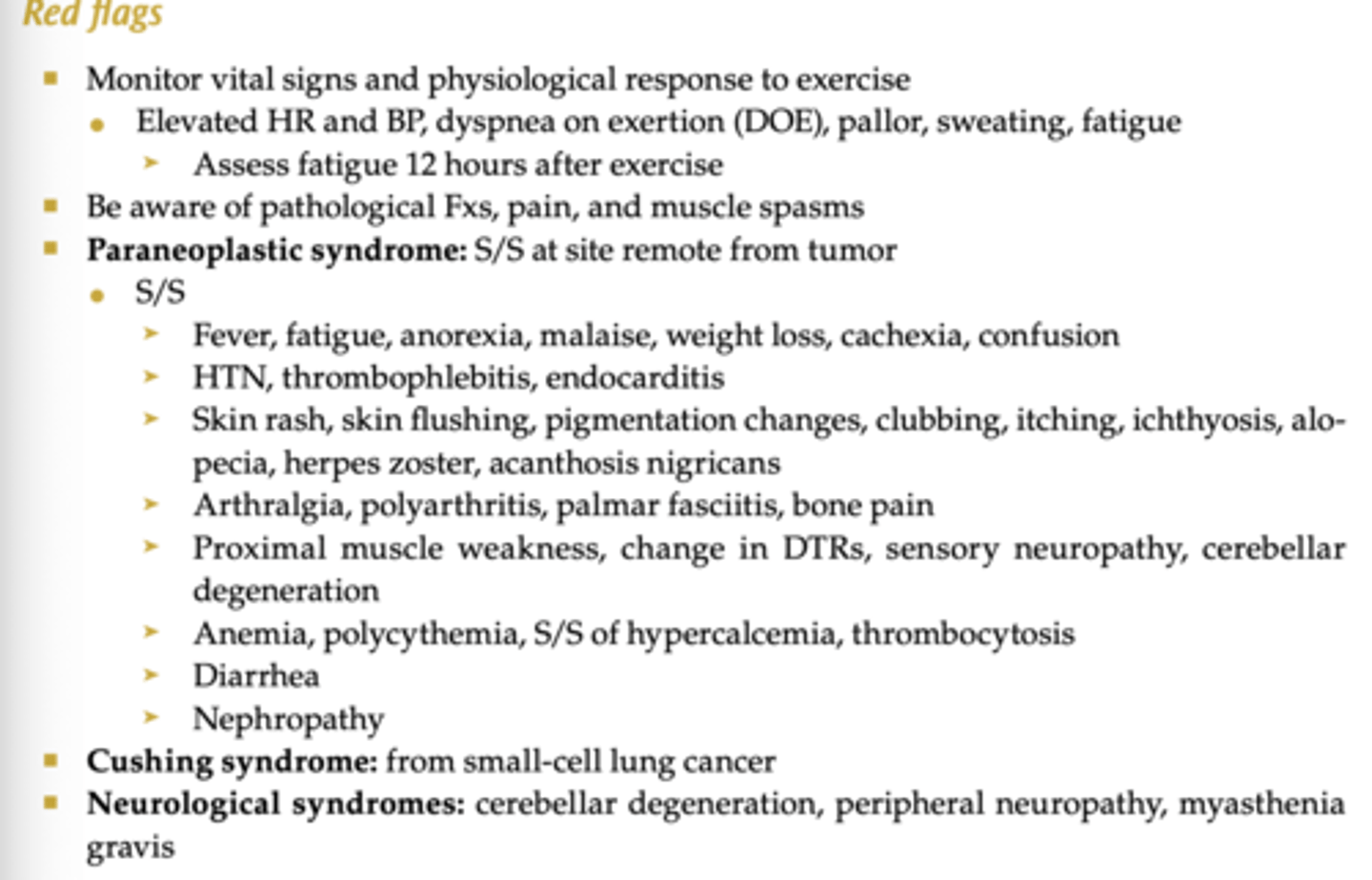
Red flags to watch for
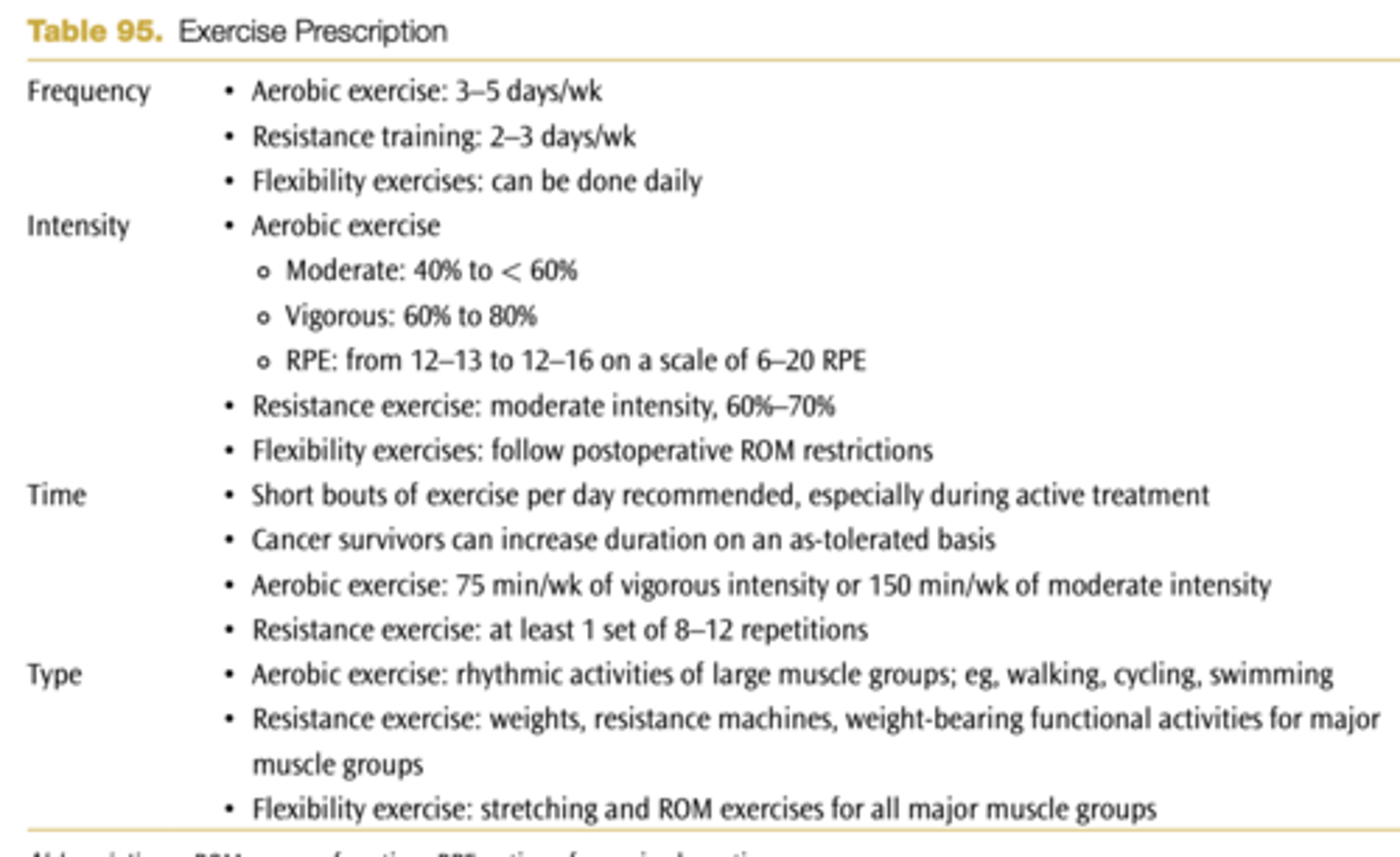
FITT
■ Slower progression for all exercises
■ Functional training
● Activities of daily living (ADL): bed mobility, transfers, ambulation
Exercise precautions for cancer survivors
● Medical evaluation is necessary for survivors with severe anemia; exercise sessions should be delayed
● Survivors with compromised immune systems and survivors who have had bone marrow transplants should avoid public areas and gyms until WBC counts return to normal
● Daily stretching is recommended, along with a slow progression of activities, as fatigue is common in cancer patients and survivors
● Avoid exposure of irradiated skin to chlorine (eg, swimming)
● Survivors with indwelling catheters should avoid resistance training and also avoid water and microbial exposures, as they increase the risk of infection
● For survivors with peripheral neuropathies or gait disturbances, use of a recumbent stationary bike is preferred over walking or using a treadmill
● Cancer-related fatigue is seen in up to 90% of cancer patients receiving chemotherapy and RT, which prevents and restricts their ability to participate in exercise programs.
However, inactivity in cancer patients should typically be avoided even during chemotherapy and RT treatments
● Bone metastases are common in cancers such as breast cancer, prostate cancer, and lung cancer. A modified exercise program is recommended in metastatic cancer survivors because of the increased risk of bone fragility and pathological Fxs.
● Typically, patients with advanced GI cancers present with cachexia or muscle wasting, thus limiting their exercise capacity depending on the extent of muscle wasting
Contraindications to exercise
● Aerobic exercise is contraindicated for cancer patients undergoing chemotherapy with the following blood test results:
➤ Platelet count 50,000/mm3
➤ Hemoglobin 10 g/dL
➤ WBC count 3000/mm3
➤ Absolute granulocyte count 2500/mm3
Physical agent red flags
● Not directly over the tumor
● Not over dysvascular tissue or tissue exposed to radiation
● Not over areas with decreased sensitivity to temperature and pain
● Not over areas with increased bleeding (common with corticosteroid therapy)
● Not over open wounds or acute inflammation
Cryotherapy red flags
● Not patients with cold insensitivity or intolerance
● Not over regenerating peripheral nerves
● Not over areas with circulatory compromise