chemistry alevel aqa practicals
 Call Kai
 Learn
Learn Practice Test
 Spaced Repetition
 Match
Match Flashcards
 Knowt Play
1/119

There's no tags or description
Looks like no tags are added yet.
Name | Mastery | Learn | Test | Matching | Spaced | Call with Kai | Chat |
|---|
No analytics yet
Send a link to your students to track their progress
120 Terms
required practical 1
Making a Standard Solution & Titration
why do things like concentrations vary for things liek river samples
samples vary over time or not consistent accross river
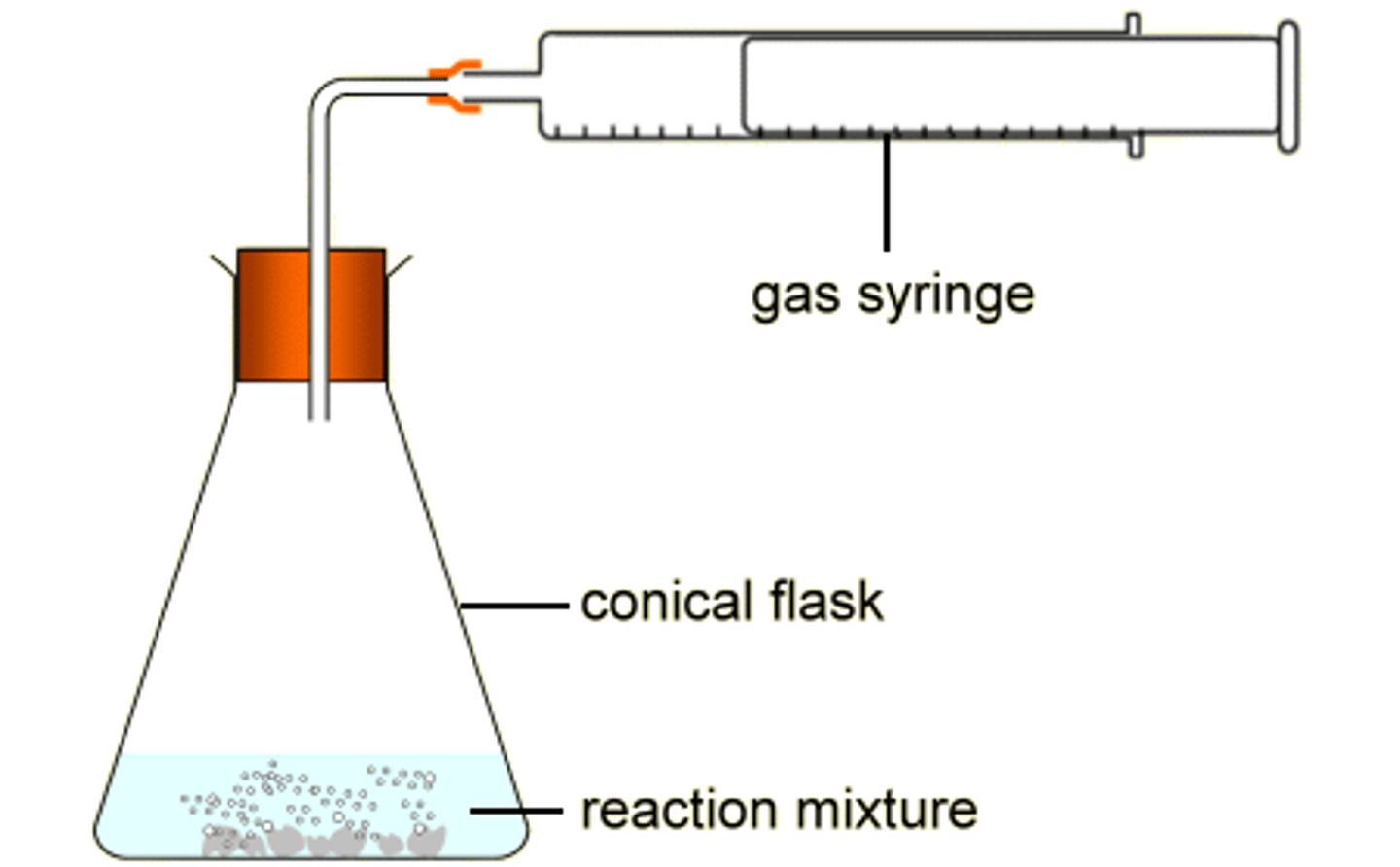
measuring the volume of gas produced apparatus set up
why might you need to seal the containers straight away
prevent loss or gain of H2O/ gasses/ certain reasgent
how could all the gasses in a sealed container escape
an equilibrium will be set up and so depeninding on the conditions it could force the equilibrium to the side with no gas
why might apparatus explode if sealed
build up of gas produced will ead to high pressure
weighing compounds and making up volumetric solutions
weigh by difference
weigh sample bottle on balance, transfer solid to beaker then reweigh bottle and record mass by difference
add distilled water to beaker and swirl until solid dissolves- pour into volumetric flask
ensure risning out + add washings to volumetric flask
ensure bottom of the meniscus is on the mark and then invert the flask to mix
what would happen if you filled a volumetric flask significantly above the graduation mark
acid in flask would be more dillute so would appear more acid had reacted
Distillation
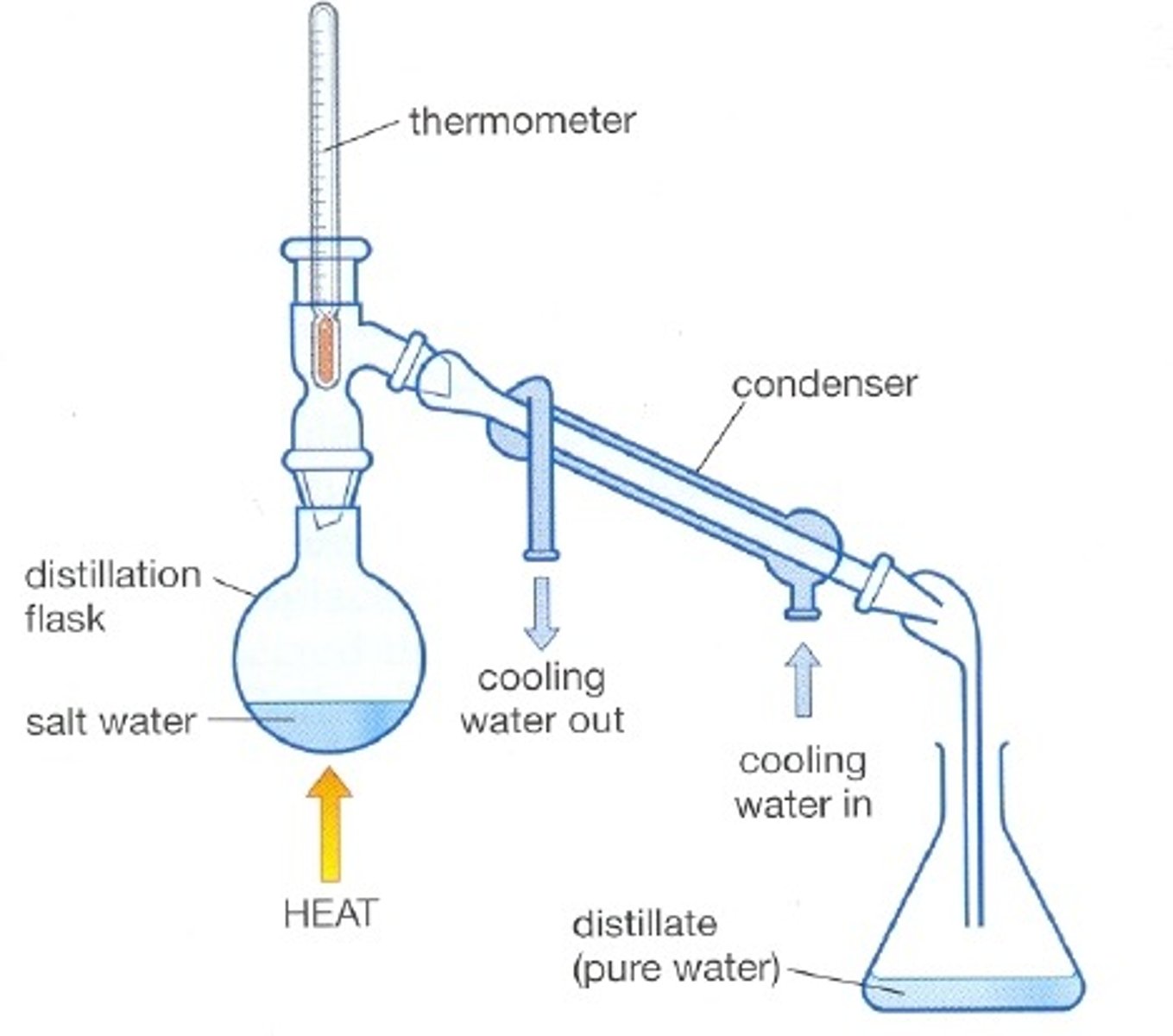
what is ditilation used for
used to separate substances with different boiling points
the one with lower boiling point boils first and can be condensed and collected
step 1 distillation
turn on water
in at low point + out at top
step 2 distillation
heat flask with bunsen burner to allow reagents to evaporate
step 3 distillation
vapours pass into fractioning column where they separate due to boiling points
step 4 distillation
substance with lower BP travels into condenser
higher BP condenses back into flask
step 5 distillation
use thermometer to ensure that the temperature is at, or just below, the BP of the substance you wish to collect
step 6 distillation
the substance you want will pass into condenser and be cooled back into a liquid
step 7 distillation
cool the reception vessel using ice to prevent loss of product by evaporation
heating under reflux set up
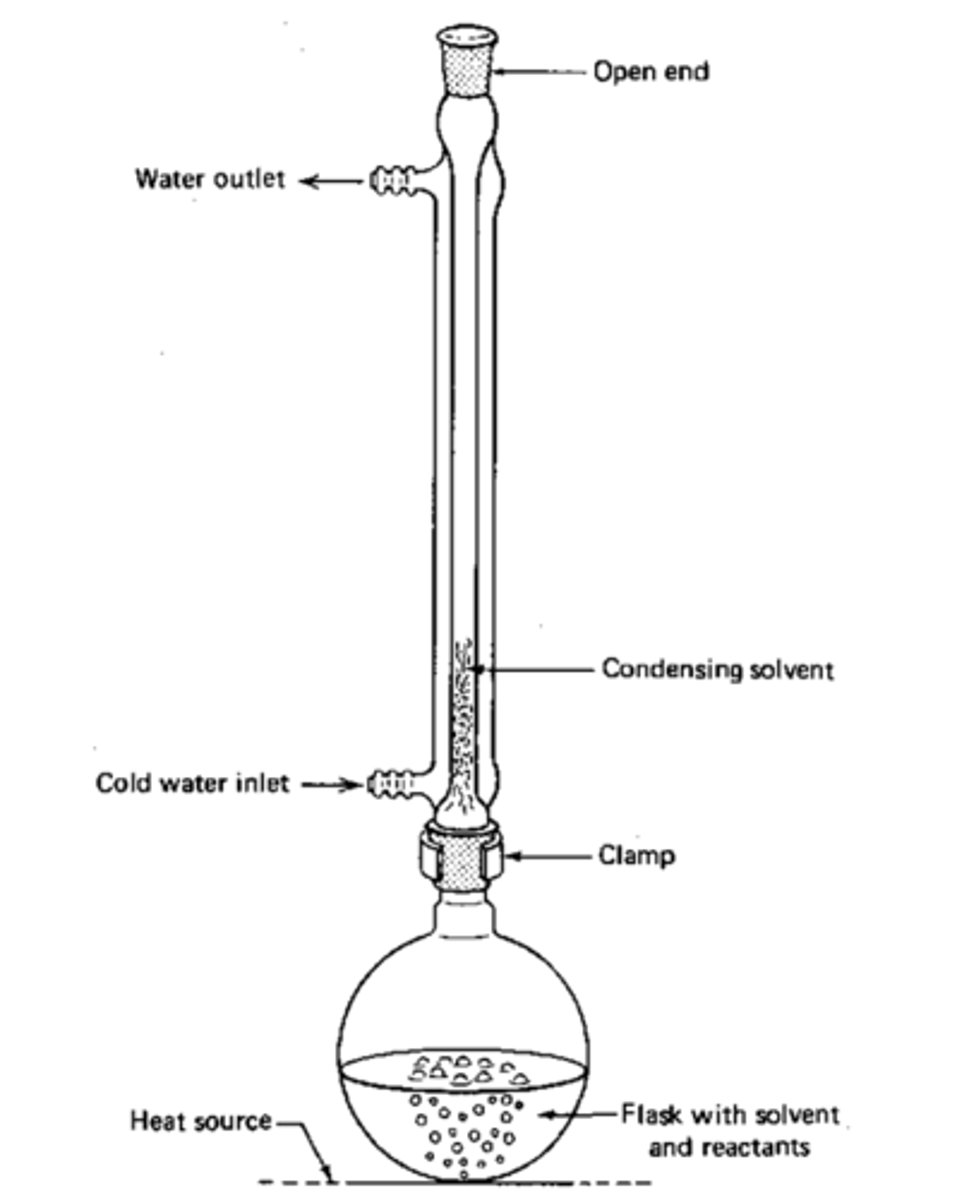
what is heating under reflux used for
convert alcohols into acids
when is reflux used
when need to heat for a long time but dont want to lose any product/ reactant through evaporation
anti-bumping granules
used t prevent uneven boiling by forming smaller bubbles
things to remember when drawing a reflux container
not sealed anywhere
flask with condenser vertically above it with no gaps
label
condenser must have outer tube for water with 2 openings
heating substances in a cruicible
why does cruicibkle ahve to be dry
to ensure water isnt lost on heating + gives a greater mass loss than actual
why use a lid
prevnt loss of the solid/ reactant
when to stop heating
when reached a constant mass on several checks
how to ensure reaction has gone to completion
there is a constant mass
main risks
handling a hot crucible
what isnt a good method to see if the reaction is at completion
colour change
heat loss can be improved through
adding a lid/ reducing distance bwetween flame and beaker or using a water bath
if only small amounts of H2O is used then there will be less heat loss than if a large amount is used
why is this
a smaller heat loss by evaporation from the surface
decomposition recations and heat loss
if a smaple is left over night then it can have an effect on the temperature change measured in the reaction as some will have already decomposed
there would be a smaller temperature change as there is less sample and what is left can react exothermically rather than endothermically
why might the mass of a solid obtained during decomposition be LESS than expected from the mass of original substance
some solid could have been lost during weighing
why might the mass of a solid obtained during decomposition be MORE than expected from the mass of original substance
sample is impure
reaction didn't go to completion
themometers often arent adequate for experiemnts even with uncertainties of +- 0.5
why
the temperature change is often bigger than the uncertainty or heat loss is a more significant issue
Calorimetry
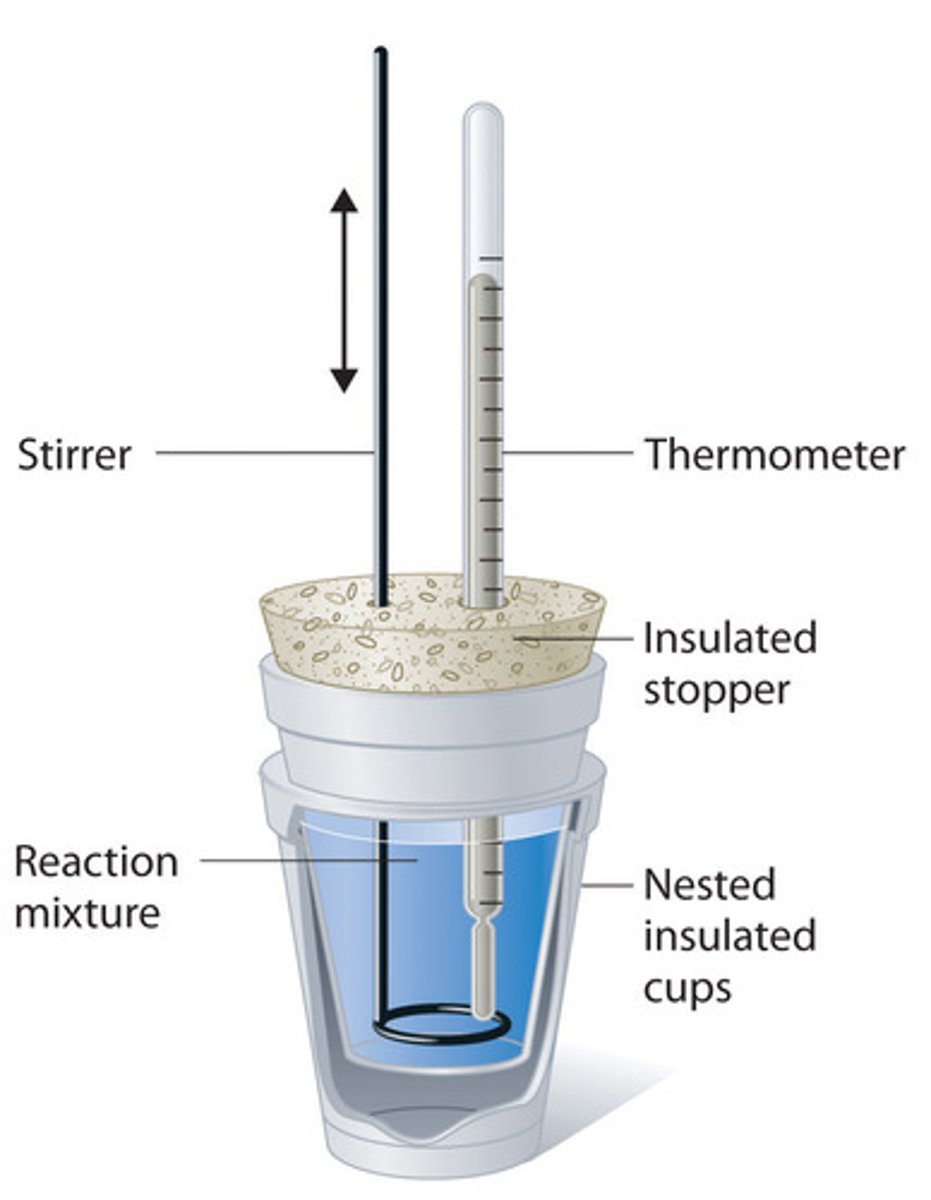
calorimetry equation
q=mcΔT
when does -'ve sign have to be put in
for exothermic reactions only
what is temperature measured in
Degrees Celsius (°C)
Calorimetry method
weigh spirit burner before and after combustion.
put measured volume of water in calorimeter
burn alcohol to heat water and measure temperature rise of water
why do values often differ from data book
incomplete combustion
heat transfer
heating of calorimeter or container
evaporation of fuel
for mixing 2 solutions or solution and a solid and finding the accurate minimum temperature that isn't influenced by heat from the surroundings
step 1
start stop watch + take temperature of 1 solution every minuite 0-3 minuites
step 2
add 2nd substance at minuite 4 do not take temperature at this time
step 3
record temperature at every subsequent minuite for about 5 minuites
step 4
plot graph temp vs time
step 5
extrapolate both lines to time of mixing + determine the temperature change
% error
(error/your volume) x100
to reduce % error
increase volume by changing a concentration or larger volume of other reactant.
when must there be operator error
if % error is greater than the calculated error from the equipment then there must be operator error as well
small volumes in tire will give...
largest error so would be least accurate values
if toxic
wear gloves/avoid skin contact
if corrosive
wear gloves + goggles
if irritant
wear goggles
if toxic gas
carry out in fume cupboard to avoid toxic vapours
how can harmful effects be reduced
can be reduced by diluting with water if needs returned to environment
why do you have less yield than expected
some of it dissolves/ lost in filtration/ gets oxidised (if relevant)
why do reactions stop when some reagents left
one of the products formed could coat the reactants (if solid)
% atom economy
(mass required product/ mass of all products) x100
how can impurities be removed
wash and filter, re-crystallisation
why do we use an excess of a reagent
to ensure all of the reactants has reacted/ improve yield/ displace equilibrium to the right.
the error in weighing substance that are used in excess does not matter
why use one reagent rather than another excess
teh one using in excess will probably be a solid and is therefore easier to remove by filtration
why might another substance be used
might be less corrosive, more readily available
oxidising agents and flammable materials
keep away from flammable materials; they are o if only have a low concentration
if you need to heat flammable materials you would use a water bath or electrical heater this will eliminate fire risks
oxidising agents
keep away from flammable materials
ok in low concentration
timing errors
in experiments where you are timing a way to reduce errors is to repeat the experiment with lower concentrations
this will slow the experiment to make the % error less
repeating experiments
improves reliabilty
determining solubility of a saturated solution
take a know volume of the solution, evaporate the filtrate to dryness, weigh the residue
ionic equations
just show the ions that are reacting, leave out the spectator ions
why are small samples used?
substance might be corrosive/ toxic/ expensive (and vice versa, toxic substances might be used as only small amounts)
graphs
if smooth curve or straight line can be drawn which runs close to all points then you can use it with confidence to predict intermediate points
scaling up
some things that you might be able to do easily in the lab might not work on an industrial scale because the cost of heating etc. may be too high
stirring
ensures all the solution is at the same temperature
why do you filter to remove insoluble impurities before adding chemical to give a precipitate
prevents you getting an incorrect/ too large a value for the final mass
why do you wash precipitates with distilled water
to remove soluble impurities/ excess of the reactants
how do you obtain a pure dry sample of a soluble substance
add it to water then stir and heat it so it dissolves
filter the mixture to get rid of the insoluble impurities and then evaporate the filterer to leave behind the dry substance
properties of drying agents
must be insoluble and not react with the substance you are trying to dry
drying compounds
can use propanone/ acetone etc. as evaporates at a lower temperature and removes the water
to determine the mass of a solid needed to ensure the acid is in excess
workout the solid needed to reacts fully with the acid and then use a smaller amount
if given a large sample of solid to react
ensure that the beaker is big enough for it and the other reactant
problems with decanting when trying to keep a solid
you can lose some of the solid, a better method would be to filter and wash with distilled water
how could you measure a set mass of water without using a balance
density of water= 1gcm3 so you could measure the volume and it would equal the mass, e.g. using a pipette
during rate of reaction experiments what effect would increasing the size of the reaction vessel have on the time taken
the time taken would increase as the particles will be more spread out
issue with using drops from a Pasteur pipette rather than a normal pipette
drop sizes vary so could get inconsistencies in your results.
how to avoid these inconsistencies with pasteur pipette
use a larger measured volume of the liquid, dissolve it in suitable solvent, transfer to 250cm3 volumetric flask and make up with more of the sample. then titrate a 25cm3 portion of this solution
how would you obtain a pure dry sample of a substance formed in a precipitation reaction?
filter the solution off, wash the residue with water and dry by pressing between filter paper or in air
purification by recrystallization how to do
step 1
dissolve the product in the minimum volume of hot solvent- to obtain saturated solution, to increase yield an enable crystallisation
step 2
solvent should have a high solubility for the solid when hot and less solubility for the solid when cold so lots of crystals appear cooling
step 3
filter hot- to remove insoluble impurities that haven't dissolved
step 4
allow solution to be cooled in ice - to increase amount of crystals formed
step 5
wash with cold water- remove any soluble impurities
step 6
cool/ crystallise, filter the pure product using a buchner funnel + side arm flask
step 7
compress crystals in the funnel so air passes through the sample and not just round it
filter under reduced pressure / vaucuum filtration
ensure you include a side arm flask, flat bottomed filter funnel + clearly show filter paper
equilibrium mixtures
if flask isnt sealed properly then you would get an incorrect value for Kc because one of the substances would escape and so incorrect concentrations would be determined and therefore wrong values used to determine Kc
why calibrate pH meter
to improve accuracy by using known pH
when does callibration have to occur
before use as do not give accurate results after storage
how to callibrate pH
use buffer solution, rinse probe between measurements
measure pH of more than one buffer solution
plot a graph of pH of buffer against pH on probe