Evidence-Based Practice and Research Levels in PT
 Call Kai
 Learn
Learn Practice Test
 Spaced Repetition
 Match
Match Flashcards
 Knowt Play
1/87

There's no tags or description
Looks like no tags are added yet.
Name | Mastery | Learn | Test | Matching | Spaced | Call with Kai | Chat |
|---|
No analytics yet
Send a link to your students to track their progress
88 Terms
Evidence-Based Practice
Integrating research evidence with clinical expertise and patient values.
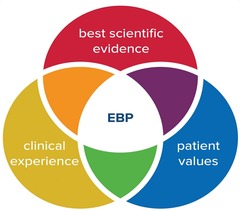
Clinical Decision Making
Informed by robust evidence to optimize patient outcomes.
Meta-Analysis
Gold standard of clinical information, highest evidence level.
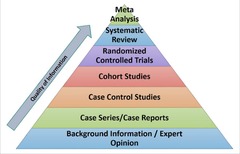
Systematic Reviews
Comprehensive reviews of multiple studies on a topic.
Randomized Controlled Trials (RCT)
Participants randomly allocated to minimize bias in studies.
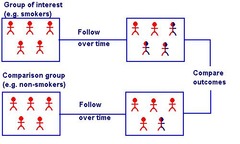
Cohort Studies
Observational studies comparing groups with shared characteristics.
Cross Sectional Studies
Studies observing a population at a single point in time.
Case Series
Descriptive studies detailing a group of patients.
Case Reports
Detailed reports of individual patient cases.
Levels of Evidence
Hierarchy of evidence quality in clinical research.
Clinical Relevance
Importance of evidence in relation to clinical expertise.
Critical Appraisal
Evaluating the quality and relevance of research evidence.
Patient Preferences
Individual patient values influencing treatment decisions.
Treatment Tailoring
Customizing interventions to meet individual patient needs.
Evidence Review Steps
Identify problem, review evidence, appraise, apply, evaluate.
Sensitivity Test
Ability to correctly identify those with the condition.
Specificity Test
Ability to correctly identify those without the condition.
Types of Errors
Mistakes that can occur in research and clinical practice.
Levels of Measurement
Different ways to quantify variables in research.
Collaborative Decision-Making
Joint process between therapist and patient for treatment.
Robust Evidence Base
Strong and reliable evidence supporting clinical decisions.
Patient Outcomes
Results of healthcare interventions on patient health.
Cohort Studies
Study design observing groups over time.
Prospective Cohort Study
Follows participants forward in time.
Retrospective Cohort Study
Analyzes past data of participants.
Randomized Controlled Trials
Participants randomly assigned to groups.
Clinical Case Series
Describes clinical outcomes of multiple patients.
Case Control Studies
Compares individuals with and without conditions.
Cross Sectional Studies
Data collected at one point in time.
Longitudinal Studies
Repeated observations over extended time periods.
Snapshot Study
Captures characteristics at a specific moment.
Balance Assessment
Evaluates stability during physical activities.
Falls Risk
Potential likelihood of falling in individuals.
Chronic Low Back Pain
Persistent pain affecting lower back region.
Alzheimer Disease
Progressive neurological disorder affecting memory.
Health Behaviors
Actions impacting individual health outcomes.
Prevalence Estimation
Determining how common a condition is.
Behavioral Trends
Patterns of actions observed over time.
Clinical Case Report
Detailed report of a single patient's case.
Patient Characteristics
Attributes defining an individual's health status.
Mobility Functions
Capabilities related to movement and physical activity.
Self-Efficacy
Belief in one's ability to succeed.
Perturbation Response
Reaction to unexpected physical disturbances.
Inclined Platform Study
Research using sloped surfaces for balance testing.
Postural Perturbations
Targeted training to improve compensatory stepping.
COPD
Chronic Obstructive Pulmonary Disease affecting lung function.
Qualitative Research
Analyzes non-numerical data for concepts and experiences.
Quantitative Research
Analyzes numerical data for statistical outcomes.
Nominal Data
Categorical data without quantitative value, e.g., gender.
Ordinal Data
Ranked data with meaningful order but no quantifiable difference.
Interval Data
Data with meaningful differences but no true zero.
Ratio Data
Data with meaningful differences and a true zero point.
Modified Ashworth Scale
Measures spasticity in individuals with stroke.
Test-Retest Reliability
Consistency of test results over repeated trials.
Intra-Rater Reliability
Same rater performs multiple tests on the same subject.
Inter-Rater Reliability
Different raters perform tests on the same subject.
Dynamic Gait Index (DGI)
Assesses gait and balance in individuals.
Oswestry Disability Index (ODI)
Measures low back pain disability.
Timed Up and Go Test (TUG)
Assesses mobility and balance.
Medical Outcomes Study SF-36
Measures patients' quality of life across multiple domains.
Statistical Analysis
Mathematical methods to interpret quantitative data.
Non-Parametric Data
Data not assuming a normal distribution, e.g., nominal.
Parametric Data
Data assuming a normal distribution, e.g., interval.
Endurance Testing
Evaluates physical stamina in patients.
Longitudinal Study
Research observing subjects over an extended time.
Randomized Controlled Trials
Experiment comparing outcomes between treatment and control groups.
Test-retest reliability
Consistency of results over repeated tests.
Intra-rater reliability
Consistency of measurements by the same rater.
Inter-rater reliability
Consistency of measurements between different raters.
Content validity
Extent to which a test measures specific patient problems.
Concurrent validity
Comparison with a gold standard test for accuracy.
Construct validity
Test measures what it is intended to measure.
Face validity
Test appears to measure what it claims.
Type I Error
False positive; rejecting a true null hypothesis.

Type II Error
False negative; failing to reject a false null hypothesis.
Sensitivity
Ability to identify true disease without missing cases.
Specificity
Ability to correctly identify absence of disease.
SnOut
Sensitive tests help rule conditions out.
SpIn
Specific tests help rule conditions in.
Goniometer
Instrument measuring range of motion (ROM).
Timed Up and Go test
Assess functional balance and fall-risk.
Kleiger's test
Evaluates ankle injuries, particularly sprains.
Gold standard test
Best available method for measuring a condition.
False positive
Incorrectly identifying a condition that is absent.
False negative
Incorrectly failing to identify a condition that is present.
Rotator cuff tear
Injury affecting shoulder stability and movement.
Patient problem
Specific health issue being assessed or treated.
Diagnostic test
Assessment tool used to identify medical conditions.