Darwin and Evolution: Natural Selection, Evidence, and Key Theories, Unit 1 notes 1 (Quiz on 8/24/2026)
 Call Kai
 Learn
Learn Practice Test
 Spaced Repetition
 Match
Match Flashcards
 Knowt Play
1/58

There's no tags or description
Looks like no tags are added yet.
Name | Mastery | Learn | Test | Matching | Spaced | Call with Kai | Chat |
|---|
No analytics yet
Send a link to your students to track their progress
59 Terms
Who was Charles Darwin?
A British naturalist known for his contributions to the theory of evolution.
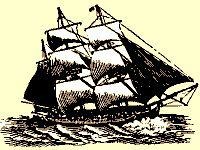
What significant journey did Darwin undertake?
He traveled on the HMS Beagle to South America and the Galapagos Islands.
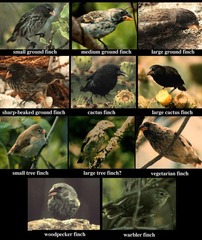
What did Darwin study during his journey?
He studied species diversity, particularly finches and tortoises.
What is the title of Darwin's famous work?
Origin of the Species.
What major concept did Darwin propose as the mechanism for evolution?
Natural selection.
What is natural variation?
Differences among individuals in a species that can be inherited.
What does 'survival of the fittest' mean in Darwin's theory?
Only those organisms best suited to their environment survive and reproduce.
What is descent with modification?
The process by which species change over time and new species evolve from common ancestors.
What evidence supports Darwin's theory of evolution?
Fossil records, geographic distribution, homologous structures, and embryonic similarities.
Who influenced Darwin with the idea that the Earth is millions of years old?
James Hutton.
What is the theory of inheritance of acquired traits?
A theory proposed by Jean Baptiste LeMarck, which Darwin disagreed with.
What did Thomas Malthus predict regarding human population?
That it would grow faster than the resources available.
What is artificial selection?
The process by which humans breed plants or animals for desired traits.
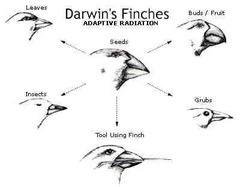
What is adaptive radiation?
The process by which species evolve from a common ancestor to adapt to different environments.
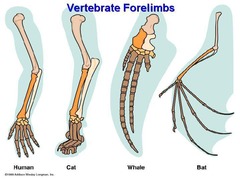
What are homologous structures?
Body parts that evolved from a common ancestor but have different functions.
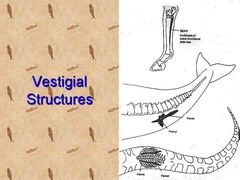
What are vestigial structures?
Body structures that have little or no function in the current species.
What role do fossils play in Darwin's theory?
Fossils provide evidence of changes in species over time.
What did Darwin argue about the fossil record?
It shows evidence of descent with modification and extinction of species.
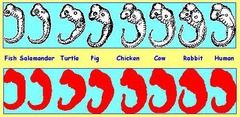
What is the significance of embryonic similarities in vertebrates?
They indicate common ancestry among different species.
What did Alfred Russel Wallace contribute to Darwin's work?
He prompted Darwin to publish his ideas on natural selection.
How does Darwin's view of species differ from that of LeMarck?
Darwin believed traits are inherited, not acquired.
What is the main idea of Darwin's theory of evolution?
Evolution is a change in species over time driven by natural selection.
What is the relationship between fitness and traits?
Traits that provide an advantage increase an organism's fitness.
What is speciation?
The process by which new species evolve from existing ones.
What does Darwin's theory imply about all living organisms?
All species, extinct or living, are derived from a common ancestor.
What did Darwin conclude about the similarities in species found in different environments?
They likely evolved from a common ancestor but adapted to their specific environments.
Charles Darwin's Theory
evolution by natural selection
What is Charles Darwin also known as
Father of evolution
Charles Darwin's Boat?
HMS Beagle
Charles Darwin's book?
Origin of the species
Where did Charles Darwin study?
Galapagos Islands
What did Charles Darwin study?
Finches and tortoises
James Hutton and Charles Lyell
Earth is much more than thousands of years old - but millions of years old (geologic)
Jean Baptist Lamarck
Theory of inheritance of acquired traits (traits can be acquired and then passed down.
Thomas Malthus
Predicts the human population will grow faster than the space and food needed
Alfred Wallace
Wallace's theory of natural selection (Survival of the Fittest)
Whom did Darwin agree with?
James Hutton, Charles Lyell, and Alfred Wallace
Whom did Darwin disagree with?
Jean Baptist Lamarck and Thomas Malthus
Evolution
A change in a species over time
Variation
Differences within a species
artificial selection
Humans choose who breeds with whom based on traits
Fitness
Organisms have an advantage due to their traits (They must survive and reproduce)
Mutation
Change in DNA
Descent with Modification
Species look different from their ancestors because species change over time.
.
Speciation
Some new species evolve from other species
Extinction
Some species die out.
Common Ancestor
Ancestors that share a species of descent
Fossils
preserved remains of organisms
adaptive radiation
Common ancestor, but
over time have adapted [changed] to be better suited to their environment.
homologous structures
Body parts that evolved from a common
ancestor. Have different mature forms but develop from the same embryonic tissue
vestigial structures
Body structures with
little or no function.
May have been
necessary before
evolutionary changes
took place within
the species.
analogous structures
Same function, no common ancestor
molecular similarities
similarities in DNA
Comparing embryology
Comparing developmental similarities
Fossils fuels
Looking at preserved remains
Biogeography
comparing location and how they are adapting
Adaptation
A change to better fit the environment
Natural Selection
Plants or animals with desired traits have a better chance to survive and reproduce.
Species
Organisms that can reproduce