Cell and molec exam 1 consolidation
 Call Kai
 Learn
Learn Practice Test
 Spaced Repetition
 Match
Match Flashcards
 Knowt Play
1/139

There's no tags or description
Looks like no tags are added yet.
Name | Mastery | Learn | Test | Matching | Spaced | Call with Kai | Chat |
|---|
No analytics yet
Send a link to your students to track their progress
140 Terms
Haloferax
Archaea
E. coli
Bacteria
Trypanosoma
Eukaryote
Dictyostelium
Eukaryote
Methanothermobacter
Archaea
All cells are enclosed by a blank that is used to blank
Plasma membrane; regulate the passage of materials in and out of the
All cells use what ‘language’ to encode hereditary information
DNA
All cells transcribe blank from DNA
RNA
All cells translate RNA into blank
Proteins
All cells store their hereditary information in the same linear chemical code
DNA
All cells use blank as catalysts
Proteins
Minimal number of genes for a viable cell is probably not less than
300
Organism with smallest number of genes
Mycobacterium genitalium
A core set of blank genes is shared by all living species
60
How do gene families form?
Through dna duplication
Describe c. Elegans genome size
9,000 genes less than humans in a very compact space
Benefits of using E. coli as model org
Short replication time
serves as simple model prokaryote
Grows at 37C
Not very dangerous to work with
used in research into mitochondrial function and mitochondrial dynamics
Benefits for using yeast as a model org
Doubles every 3 hours
Can grow in liquid or solid agar
Small genome
used for mitochondrial and mitosis purposes in cell cycle
minimal eukaryotic organism
Benefits for using Arabidopsis thaliana as a model org
Grows quickly and easily and is small
most commonly used plant model
can grow indoors
used to study circadian clock and circadian rhythms
Benefits for using c elegans as model org
Transparent
Compact
Short lifespan
used to study aging, reproduction, stress and the development of the nervous system
Benefits of using Drosophila melanogaster as model org
produces banded chromosomes
used to prove that genes are carried on chromosomes and the location of these genes can be mapped to specific locations on the chromosome
fewer gene duplicates than other eukaryotes
Benefits of using zebra fish (danio reio) as model org
commonly used as vertbrate model organism
Fertilization happens outside of body
trasnparent
rapid generation time
used to study embryonic development
Benefits of using Xenopus Laevis (a frog) as model organism
Large eggs that can have protein extracted from them
Fertilization happens outside
commonly used as vertebrate model organism
What is the approximate size of the human genome
Around 3.2 billion base pairs
Around how many genes does the human genome contain
30,000
What tends to be larger, introns or exons?
Introns
Why are covalent bonds used
Because of the stability they provide
When do covalent bonds form
When two atoms come very close together and share one or more of their electrons
Which four elements make up 99 percent of the total number of atoms found in the human body
Carbon, oxygen, nitrogen, and hydrogen
What are the second most common elements found in the human body
sodium, magnesium, potassium, calcium, phosphorus, sulfur, and chlorine
What are sodium and potassium important in
the transmission of electrical signals along membranes and nerve fibers.
What does chlorine do in the body
regulate release of neurotransmitters at synapses
What does magnesium do in the body
nucleotide binding
What is iron important for in the body
Metabolic purposes, hemoglobin, myoglobin
What is iodine important for in the body
essential for the production of thyroxine, a hormone produced in the thyroid gland that regulates the metabolic rate
What are hydrophobic forces
It involves the clustering of non-polar groups so that they minimally disrupt the hydrogen bonding of surrounding water molecules
Which bond is Very strong in a vacuum but weak in water
Ionic
What is the function of histone H1?
It changes the angle of DNA as it exits the nuceleosomes so they can pack closer together
What do we call the DNA clamp in mammalian cells?
PCNA
What is the function of DNA primase
It synthesizes primers on the lagging strand needed for dna polymerase
Which component of the replication fork has six identical subunits, has ATPase activity and functions as a molecular motor?
DNA helicase
bacillus
bacteria
cyanobacteria
bacteria
thermotoga
bacteria
methanocus
archaea
Sulfolobus
archaea
aeropyrum
archaea
paramecium
eukaryote
euglena
eukaryote
giardia
eukaryote
trichomonas
eukaryote
In which order are the genome sizes from largest to smallest
zebrafish, humans, c elegans, Arabidopsis, yeast. e. coli
tertiary protein structure
the fold of the protein; alpha helices, beta sheets
quaternary protein structure
protein complexes
src protein kinae domains
SH2 and SH3
What does sh3 do
bind sequences containing proline and hydrophobic amino acids
what does sh2 do
bind phosphotyrosine residues
what do GEFs do
regulate the activity of GTP binding proteins
binding gtp blanks them
activates
how is spectral karyotyping useful in clinics and labs
used to see disease and developmental disorders
heterochromatin
densely packed, transcriptionally silent, and associated with the nuclear lamina
euchromatin
transcriptionally accessible and loosely packed
Heterochromatin and euchromatin are dynamic. what does this mean?
one can turn into the other
nucleosomes
made up of chromatin; most basic level of chromosome packing
what does dna wrap around
histone octamers
chromatin
dna wrapped around histone proteins
H1
not a component of the histone core particle or histone octamers; binds nucleosomes at a one-to-one ratio so only one per nucleosome. Larger than others
h2ax
phosphorylated and becomes known as gamma H2AX. serves as a marker for DNA breaks and helps with the repair process
which region of histone proteins project out from the nucleosome
the n-terminal
what is the second level of proofreading
exonucleolytic
exonucleolytic proofreading
3’-5’ exonuclease site of enzyme removes nucleotides until correctly base-paired 3’OH terminus is left
first level of proofreading
dna polymerase
dna polymerase proofreading
polymerase binds to incoming nucleotides before they are covalently attached to growing strand
What non- component does telomerase carry with it to help it do its job
rna template
what types of cells would you expect to retain high telomerase activity in adults
stem cells
what do we call the looped dna structure formed by telomeres
T-loop
H3 and H4
randomly inherited by each daughter
NAP1 AND CAF1
chaperone proteins for the histone subunits; interact with sliding clamp to add them to daughter strands
fractal globule model
explains how dna can be tightly wounded but easily unwounded
histone code
combination of histone modifications
reader proteins
recognize specific histone modifications; reads histone code
HAT
histone acetylation enzymes
HDAC
histone deacetylase
HMT
histone methyltransferase
HDM
histone demethylase
kinases
adds phosphaste groups
histone modifications are
dynamic and reversible
writer enzyme
adds histone modification
barrier sequence
stops the spread of heterochromatin

name this bond
covalent
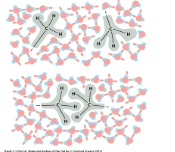
name this bond
hydrophobic force
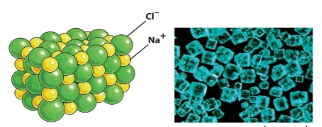
name this bond
ionic

name the bond highlighted
phosphoanhydride

name the bond highlighted
phosphodiester

name the bond highlighted
peptide

name the bond highlighted
ester
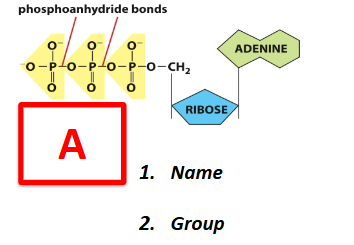
name the activated carrier and the group it carries
ATP; pi (phosphate)

name the activated carrier and the group it carries
NADH; electrons and hydrogens
The group carried by Acetyl CoA
acetyl group
The group carried by S-Adenosylmethionine
methyl group