Soil Formation and Types of Soil Flashcards
 Call Kai
 Learn
Learn Practice Test
 Spaced Repetition
 Match
Match Flashcards
 Knowt Play
1/29

Earn XP
Description and Tags
Vocabulary flashcards covering rock categories, rock descriptions, soil origins, transported soils, and USCS soil classification types.
Name | Mastery | Learn | Test | Matching | Spaced | Call with Kai | Chat |
|---|
No analytics yet
Send a link to your students to track their progress
30 Terms
Igneous Rocks
Rocks formed by the solidification of molten magma ejected from deep within earth’s mantle.
Sedimentary Rocks
Rocks formed by the accumulation or deposition of mineral or organic particles at the surface of the Earth, followed cementation.
Metamorphic Rocks
Rocks formed when existing rock is transformed physically or chemically at elevated temperature.
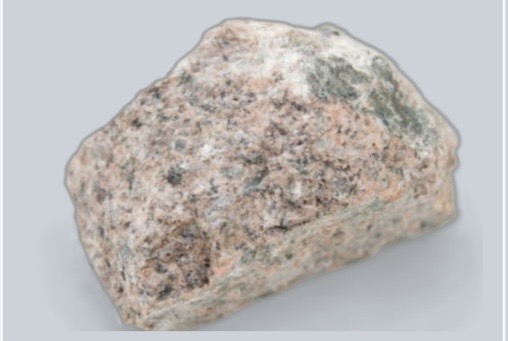
Quartz – Syenite
A pinkish-grey, reddish-tan, or buff grey rock with a medium-to-coarse-grained texture.
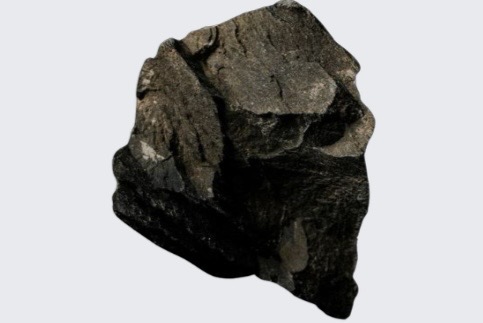
Basalt
A dark grey to black rock that weathers to reddish-brown or dark green, featuring a fine-grained texture.
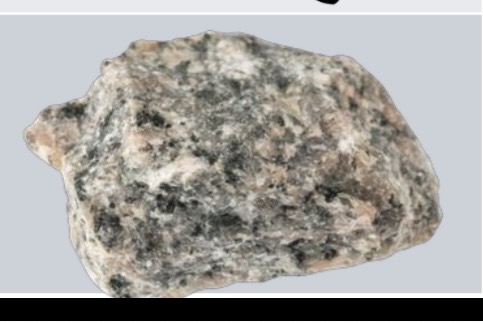
Granodiorite
A coarse-grained rock with a salt and pepper appearance, being medium to light grey with dark specks.
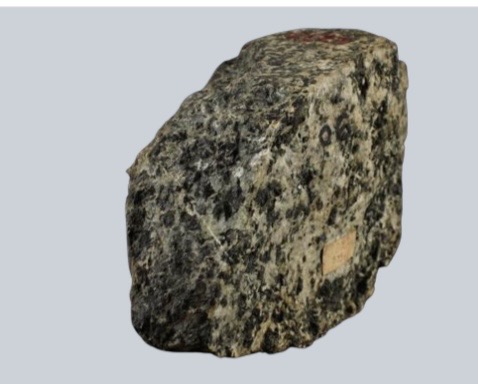
Pyroxenite
A dark olive green, dark brown, or black rock with a coarse-grained texture.
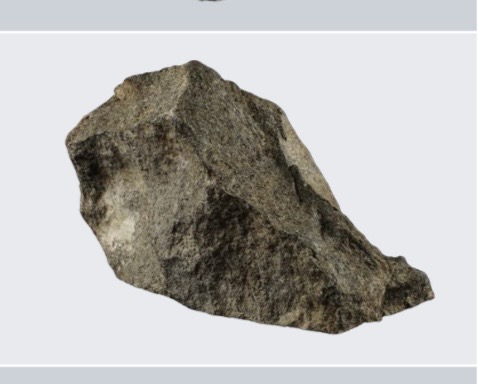
Pumice
A light grey, off-white, cream, or pale tan rock with a sponge-like structure.
Phyllite
A silvery-grey, greenish-grey, or iridescent pearl grey rock with phyllitic foliation, characteristically featuring wrinkled or wavy surfaces with a pronounced silky, satiny sheen.
Gneiss
A coarse-grained foliated rock with alternating light grey/pink and dark charcoal/black stripes.
Eclogite
A medium-to-coarse-grained rock with a striking Christmas rock contrast, composed of a bright green matrix studded with reddish-pink crystals.
Glaucophane Schist
A well-foliated, fine-to-medium-grained rock with a distinctive lavender-blue, dark blue-grey, or indigo color.
Chalk
A bright pure white or off-white, extremely fine-grained, soft, porous rock that leaves white powder when rubbed.
Breccia
A clastic, coarse-grained rock with sharp, angular, jagged rock fragments set in a fine matrix.
Conglomerate
A clastic, coarse-grained, clast-supported rock featuring rounded to well-rounded pebbles and multi-colored gravel clasts set in a tan, grey, or reddish sand matrix.
Arenite
A pure white, cream, or light grey clastic, grain-supported sandstone with minimal mud matrix.
Residual Soils
Soils that remain at their place of origin directly above the parent rock.
Transported Soils
Soils that have been eroded and moved from their original location by agents like water, wind, ice, or gravity.
GW: Well-Graded Gravel
Very coarse, clean, interlocking, angular to sub-rounded rock fragments with a wide, continuous distribution of sizes (fine to coarse gravel); non-plastic with high interparticle friction.
GP: Poorly Graded Gravel
Uniform coarse texture dominated by a single particle size (or gap-graded missing intermediate sizes); clean feel with large, open void spaces between fragments; non-plastic.
GM: Gravel with Silty Fines
Coarse gravel matrix coated or infiltrated with fine, flour-like silt; dry hand samples feel dusty/gritty, and moist samples show minimal stickiness with low to no plasticity.
GC: Gravel with Clayey Fines
Hard, coarse gravel fragments firmly bound in a sticky, cohesive clay matrix; plastic when wet, forming hard, cemented lumps when dry.
SP: Poorly Graded Sand
Uniform, gritty feel with a narrow spread of particle sizes (such as dune or beach sand); clean, loose, free-draining grains with zero cohesion or plasticity.
SM: Sand with Silt
Gritty yet noticeably floury or powdery feel when dry; exhibits weak cohesion when damp but breaks apart easily; non-plastic to low-plasticity fines.
SC: Sand with Clay
Gritty sand grains embedded in a highly plastic, sticky clay binder; pliable and moldable when moist, curing into firm, rigid clods when dry.
CH: Fat Clay
Extremely slick, greasy, highly plastic, and intensely sticky when wet; very high dry strength forming rock-hard clods; prone to severe shrinking and cracking upon drying.
Pt: Peat
Highly fibrous, spongy, lightweight, and intensely compressible; composed of mat-like, partially decomposed plant fibers and roots with extremely high moisture retention.
Sandy Loam
Soil that is moderately gritty and contains sufficient silt and clay to form a pliable cast when wet, capable of forming a weak ribbon up to 2.5cm long before breaking.
Clay Loam
Soil that is smooth and plastic with a mild underlying grittiness; forms a firm ribbon (2.5cm to 5cm) that bends moderately before cracking.
Silty Clay
Soil that is extremely smooth, slick, plastic, and sticky when wet; forms long, strong, shiny ribbons (>5cm) with zero gritty feeling.