Head, Neck, and Trunk/Abdominal/Pelvic Block 2
 Call Kai
 Learn
Learn Practice Test
 Spaced Repetition
 Match
Match Flashcards
 Knowt Play
1/118

There's no tags or description
Looks like no tags are added yet.
Name | Mastery | Learn | Test | Matching | Spaced | Call with Kai | Chat |
|---|
No analytics yet
Send a link to your students to track their progress
119 Terms
Frontal bone
forehead

parietal bone
Name this bone.

coronal suture
the suture between the parietal and frontal bones of the skull

sagittal suture
between parietal bones

lamboid suture
the suture between the occipital and parietal bones
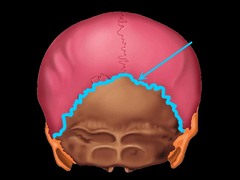
occipital bone
back of head

temporal bone
Name this bone.

ethmoid bone
Name this bone.

sphenoid bone
Name this bone.

maxillae bone
upper jaw

palatine bone
Name this bone.
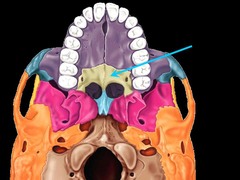
Zygomatic bone
cheek bone

lacrimal bone
Name this bone.

vomer bone
Flat, thin bone that forms part of the nasal septum

inferior nasal conchae
Name this bone.
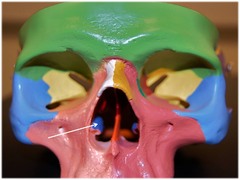
Mandible
lower jaw

frontal sinus
cavity within the frontal bone

foramen magnum
A large opening at the base of the skull through which the brain connects to the spinal cord.

occipital condyles
articulate with the atlas

external occipital protuberance
bump on back of head

mandibular fossa
the depression in the temporal bone into which the condyle of the mandible fits

external acoustic meatus
ear canal

mastoid process
round projection on the temporal bone behind the ear

styloid process
pole-like process extending downward from the temporal bone on each side of the skull

internal acoustic meatus
Name this opening.

jugular foramen
Name this foramen.

carotid canal
internal carotid artery

cribiform plate
Name this structure

perpendicular plate
Name this bony landmark.

hyoid bone
a U-shaped bone in the neck that supports the tongue.

Centrum (body)
body of vertebrae
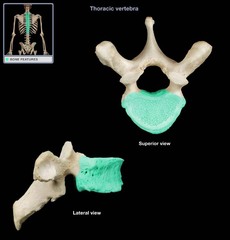
vertebral foramen
Name this opening.

transverse process
Name this specific part of the atlas (C1).

spinous process
sharp, slender projection

cervical vertebrae
neck (7)

thoracic vertebrae
throax, articulates with ribs (12)
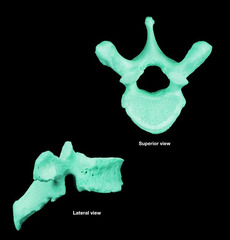
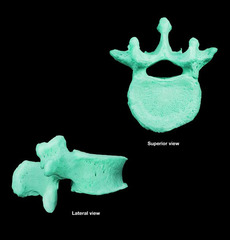
lumbar vertebrae
lower back (5)
transverse foramen
only found in the cervical vertebrae and allow passage of the vertabral artery, vein, and nerve

Atlas
first cervical vertebra

axis
second cervical vertebra

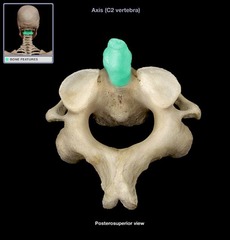
dens (odontoid process)
acts as pivot for rotation of atlas and the skull
costal facets
articulates with ribs

Sacrum
articulates with hip bones

coccyx
tailbone

Ribs
12 pairs, articulates with thoracic vertebrae and sternum

head of rib
articulates with vertebrae

shaft of rib
the body of the rib

Sternum
breastbone

Manibrium
top of sternum

xiphoid process
lower portion of the sternum

ilium
iliac crest

iliac crest
upper margin of iliac bones

anterior superior iliac spine
Name this specific part of the pelvic bone.

greater sciatic notch
Name this specific part of the pelvic bone.

ischium
Name this specific region of the pelvic bone.

Acetabulum
hip socket

ischial tuberosity
Name this specific part of the ischium.

obturator foramen
opening in hip bone formed by the pubic and ischial rami

pubis
pubic

Epicranius
composed of the occipitofrontalis muscle and an epicranial aponeurosis

Frontal belly of occipitofrontalis
elevates eyebrows and wrinkles skin of the forehead

occipital belly of occipitofrontalis
retracts scalp slightly

epicranial aponeurosis
A broad flat tendon connecting the frontal belly and the occipital belly

orbicularis oculi
closes the eyes (wink, blink, squint) ('crows' feet)

orbicularis oris
closes and purses lips (pucker up for a kiss)

zygomaticus major
elevates corner of mouth (smile)

depressor anguli oris
depresses corner of mouth (frown)

Buccinator
pulls cheeks against teeth when chewing

Platysma
tenses skin of neck, and depresses lower lip (pulls down)
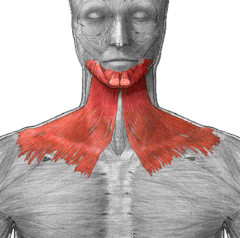
Bell Palsy
paresis, or paralysis, of one side of the face
Mastication
the process of chewing
Bones of importance of mastification include
mandible, temporal bone, sphenoid bone (pterygoid processes)
Masseter
elevates and protracts mandible

masseter attachments
zygomatic arch, mandible
Temporalis
elevates and retracts mandible

temporalis attachments
bones of the skull to mandible
medial pterygoid
elevates and protracts mandible and moves it from side to side

medial pterygoid attachments
pterygoid process
sella turcica
houses the pituitary gland

optic canals
Name this structure

pterygoid process
Process of the sphenoid bone, consisting of two plates
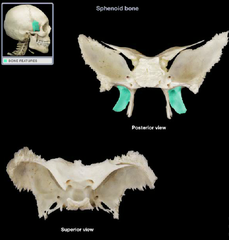
sphenoid sinus
sinus above and behind the nose

lateral pterygoid
protracts mandible; moves mandible side to side
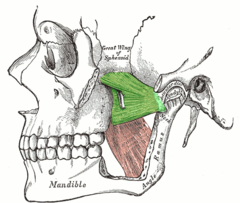
lateral pterygoid attachments
pterygoid process
genioglossus
protracts tongue

Styloglossus
elevates and retracts tongue

styloglossus attachments
styloid process
Hyoglossus
depresses and retracts tongue

hyoglossus attachments
hyoid bones
suprahyoid muscles
elevate the hyoid, raises floor of mouth for swallowing

infrahyoid muscles
depress the hyoid, swallowing and speaking

Sternocleidomastoid
each rotates head to one side, together: flex the head/neck

Sternocleidomastoid attachments
Mastoid process, clavicle, sternum
splenius capitis
each rotates head to one side, together: extend the head/neck

Quadratus Lumborum
together: extend lumbar vertebral column, unilaterally: each laterally flexes vertebral column

quadratus lumborum attachments
iliac crest to lumbar vertebrae and 12th rib
erector spinae
extends vertebral column, maintian erect posture

Iliocostalis
Lateral muscle of the erector spinae

Longissimus
intermediate muscle of the erector spinae

Spinalis
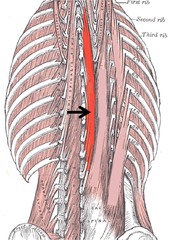
Medial muscle of the erector spinae