Biopsychology Exam 3 UARK
 Studied by 0 people
 Call Kai
 Learn
Learn Practice Test
 Spaced Repetition
 Match
Match Flashcards
 Knowt Play
1/56

Earn XP
Description and Tags
Josiah Leong
Name | Mastery | Learn | Test | Matching | Spaced |
|---|
No study sessions yet.
57 Terms
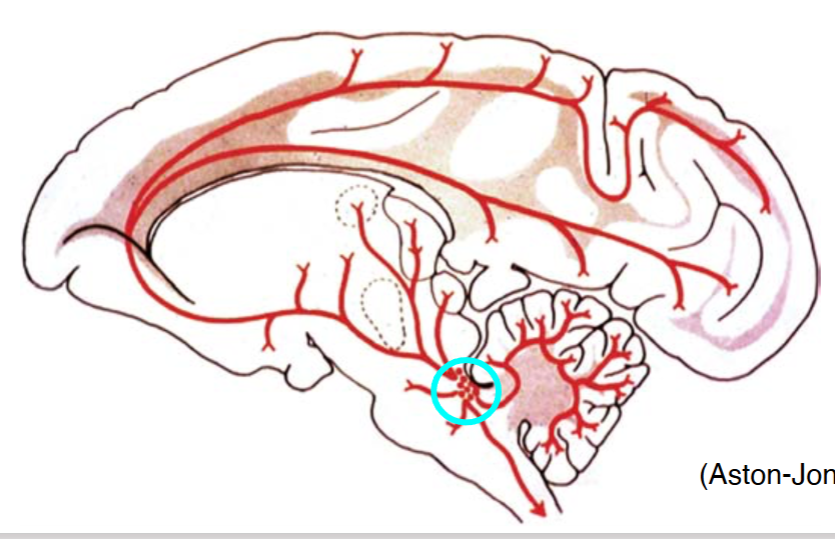
Neurochemistry, Locus Coeruleus (LC)
• Latin for "blue spot"
• 2-300 neurons in brainstem (anterior to cerebellum)
• makes norepinephrine (a.k.a. adrenaline)
Arousal basics
• Physiological and psychological alertness
• Controlled by Reticular Activating System (RAS)
• brainstem nuclei (LC)
• fire and release neuromodulator (norepinephrine) at different rates
• coordinates with thalamus, which excites versus inhibits cortex (remember "relay station"?)
Phasic versus tonic activity
• Phasic = brief change, Phasic activity after target
• Tonic = baseline change, also important for task performance
Rhythms in human biology
• Circadian: one cycle over the course of the day. e.g., sleep-wake cycle
• Ultradian: multiple cycles within one day. e.g., stages during sleep, gastrointestinal system
• Infradian: one cycle across many days. e.g., menstrual cycle
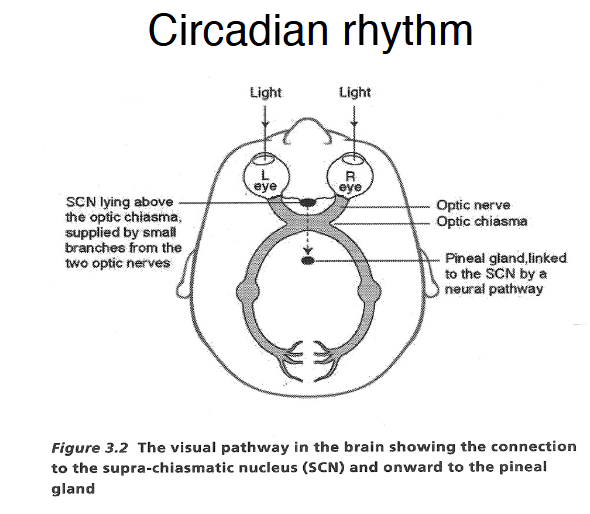
Circadian rhythm
• Entrainment synchronizes one's biology to 24 hour day
• Entrainment occurs via zeitgebers
• Photic: light
• Non-photic: activity, social cues, feeding, temperature
Melatonin
• Eye talks to SupraChiasmatic Nucleus (SCN)
• SCN talks to pineal gland
• Pineal gland releases melatonin in blood
• Light inhibits the pathway (less melatonin, less sleepy)
• Even moderate light, like indoors or from your phone,
can suppress melatonin release
(NREM) stages
Stage 1
• “relaxed wakefulness”, slow rolling eye movements. short quick waves similar to REM. (alpha)
Stage 2
• no eye movements, no dreaming, can still be woken, but brain suppresses arousal. Sleep spindle and K-complex (theta)
Stage 3
• slow wave sleep (SWS), aka “deep sleep”, consolidate memories, sleep inertia (“grogginess”). Large slow waves (delta)
Rapid Eye Movement (REM) stage
Random eye movements, Low muscle tone in body, Dreaming
Sleep and emotions
• Pupil diameter is a measure of arousal
• Picture-viewing task like before
• Sleep-deprived subjects:
– Faster and greater pupillary response to negative pics
Sleep and bipolar disorder
REM sleep model of psychopathology
• active emotion regulation during sleep via dreams
• passively aides emotion regulation during daily life
REM sleep in bipolar disorder:
• decreased REM latency (faster to get to REM)
• increased REM density (frequency of eye movements)
• increased percentage of REM sleep
Sleep disturbances:
Insomnia
• difficulty initiating or maintaining sleep for at least 4 nights per week for one month
• “clinically significant” distress or impairment
Hypersomnia
• excessive sleep (relative to personal baseline) for at least one month
• sometimes caused by meds which are treating other disorders
Parasomnias
• Abnormal sleep-related behaviors (e.g., sleepwalking, night terrors, enuresis, confused partial arousals, teeth grinding)
Sleep apnea
• transient closure of upper airway
• loud snores in between 20-30 sec of silence, long pauses in breathing despite effort to breathe. less slow-save sleep (stage 3) and less REM
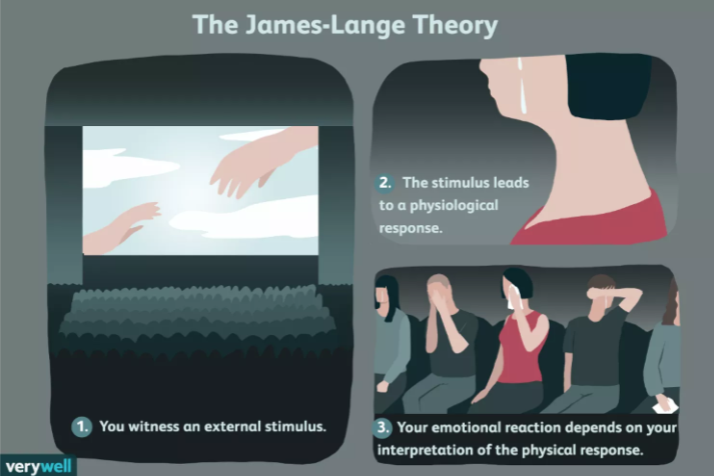
James-Lange theory
emotions are the result of physiological responses to external stimuli
Cannon-Bard theory
proposes that emotional and physiological responses to a stimulus happen simultaneously and independently, rather than in sequence
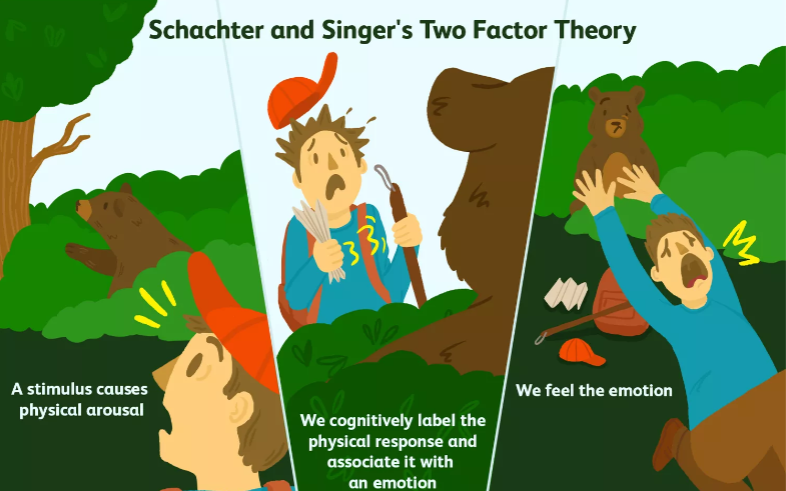
Schachter-Singer theory
experience a physical response, and then your brain interprets that response based on the context to identify the emotion
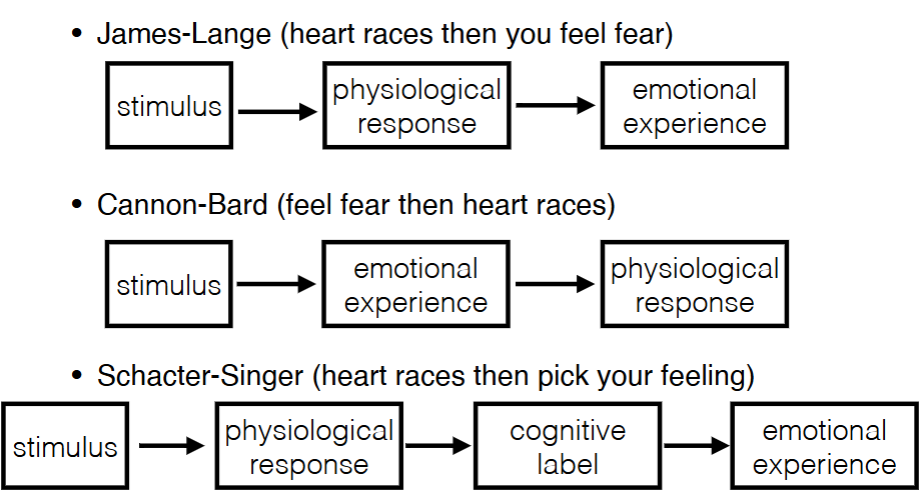
Models of emotions
James-Lange (heart races then you feel fear)
Cannon-Bard (feel fear then heart races)
Schacter-Singer (heart races then pick your feeling)
Peripheral physiology
Autonomic transmission
• Sympathetic nervous system
(“fight-or-flight”)
• Parasympathetic nervous system
(“rest-and-digest”)
• Enteric nervous system
(gut talking to brain)
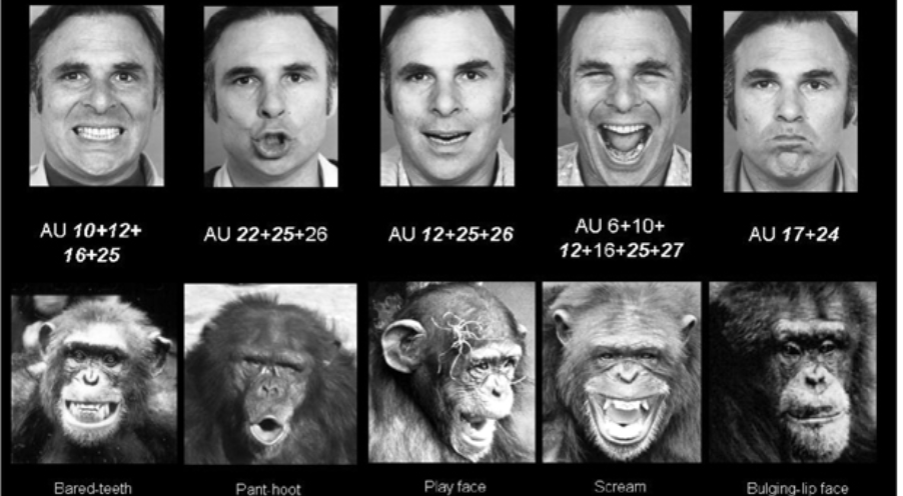
Facial action coding system (Paul Ekman)
• Taxonomy of all the facial muscles and head movements (i.e., Action Units)
• 28 facial muscles
• 14 head movements
• 11 eye movements
Categorical (a.k.a. "discrete") view of emotions
brain evolved to anticipate events, and coordinates peripheral physiology to survive the events (fight, flee, freeze, fornicate, cooperate)
•These brain circuits in animals and humans(homologous circuits) will create the same feelings, thoughts, and behaviors that help us survive and procreate.
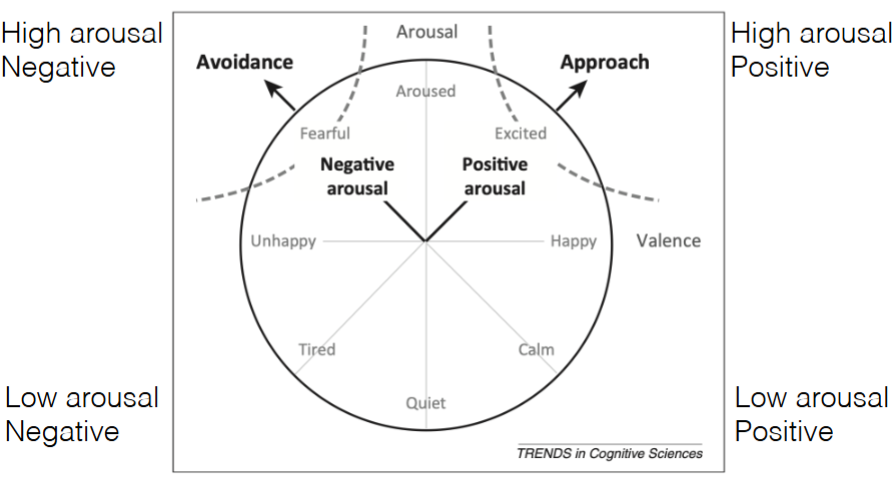
Dimensional view of emotions:
Affective Circumplex, measures approach/avoidance based on positive/negative emotions and high/ low arousal
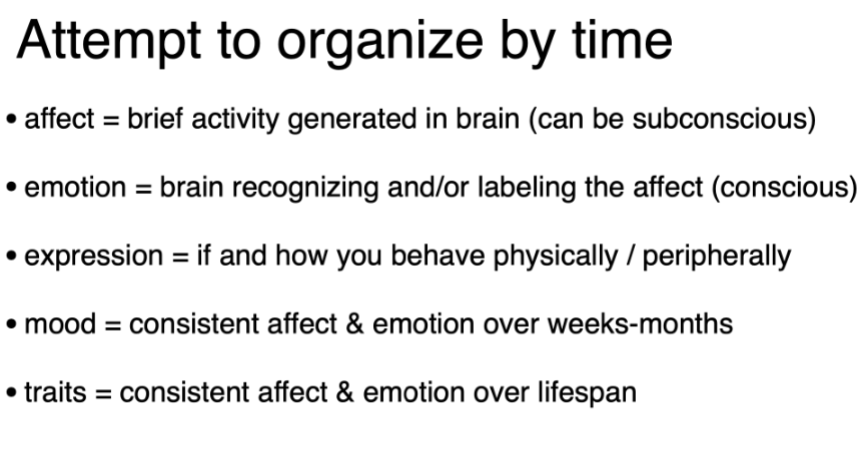
Organization of emotions by time:
affect→ emotion→ expression→ mood→ traits

Paul MacLean’s “Triune” Brain
-Neomammalian
• human: cortex
• function: symbolic processing
- Paleomammalian
• human: "limbic system"
• function: emotions (social)
- Reptilian
• human: brainstem
• function: 4 F's
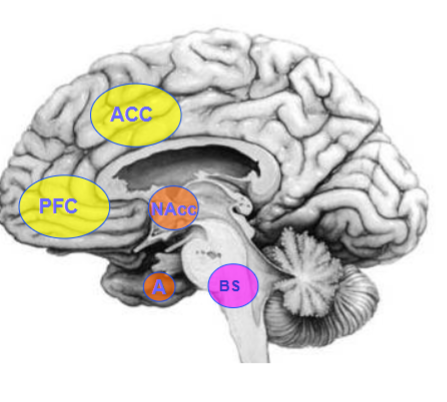
Neuroanatomy and emotions
where in the brain does structure and function create emotions?
• Amygdala (A)
• Brainstem (BS)
• Nucleus Accumbens (NAcc)
• Prefrontal cortex (PFC)
• Anterior Insula
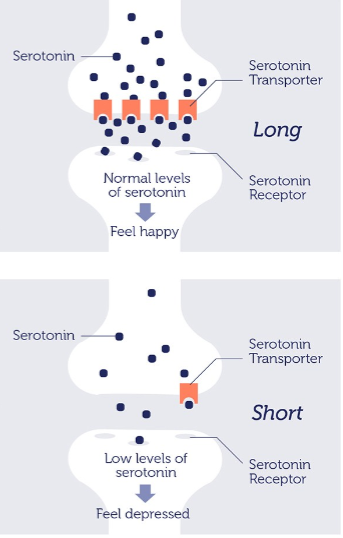
Serotonin transporters (5-HTT)
• 5-HTT gene codes serotonin
transporters at synapse
• Long (l) and short (s) alleles
• Short allele = too few transporters
(less recycling of serotonin)
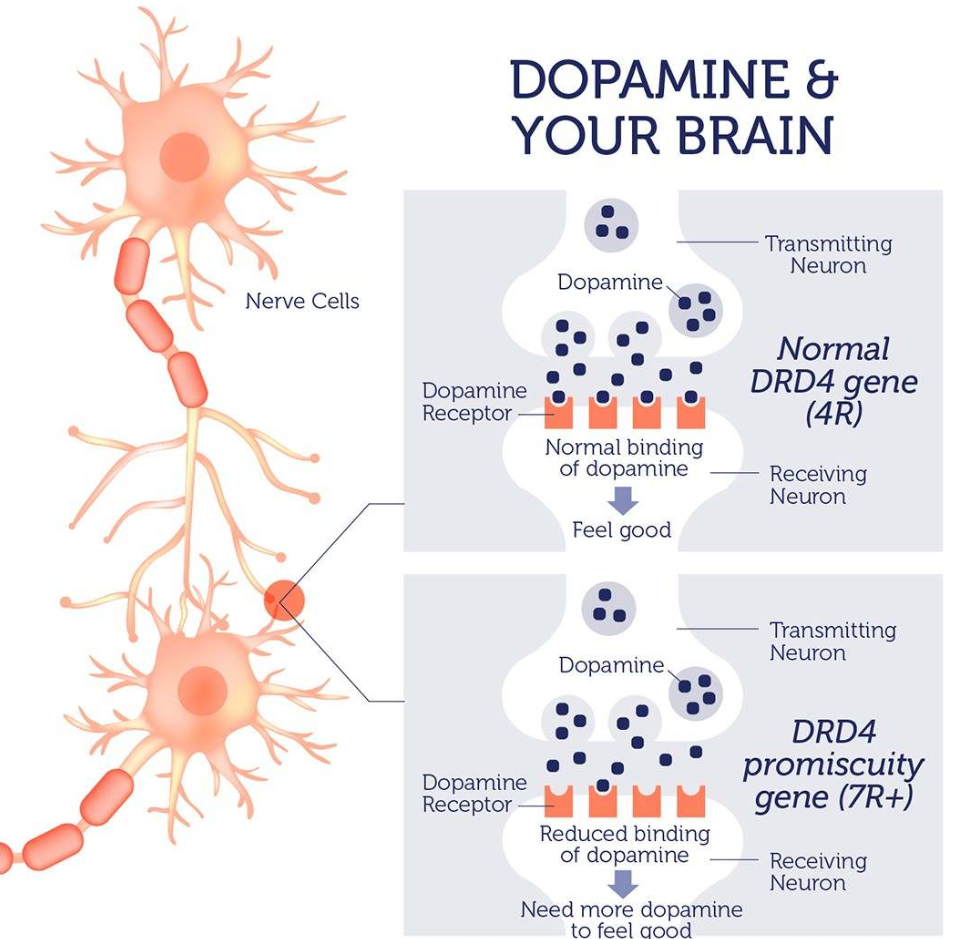
DRD4
Dopamine Receptor D4 gene, which plays a role in regulating various behaviors and is associated with conditions like ADHD
genetic variations, particularly the seven-repeat (7R) allele, are linked to traits such as novelty seeking and risk-taking. These variations are believed to reduce receptor sensitivity.
Personality tests
• medium reliability and low validity
• Barnum effect ("there's a sucker born every minute")
Personality (class definition)
patterns of affective responses, and one's ideal affect, that bias cognition and behavior across different situations
The "affective scientist's" definition of personality:
patterns of affect that influence cognition (thinking) and behavior (doing) across different situations

Mesolimbic dopamine system
The ventral tegmental area (VTA) of the brainstem makes dopamine, and releases it at the nucleus accumbens (NAcc) and prefrontal cortex (PFC)
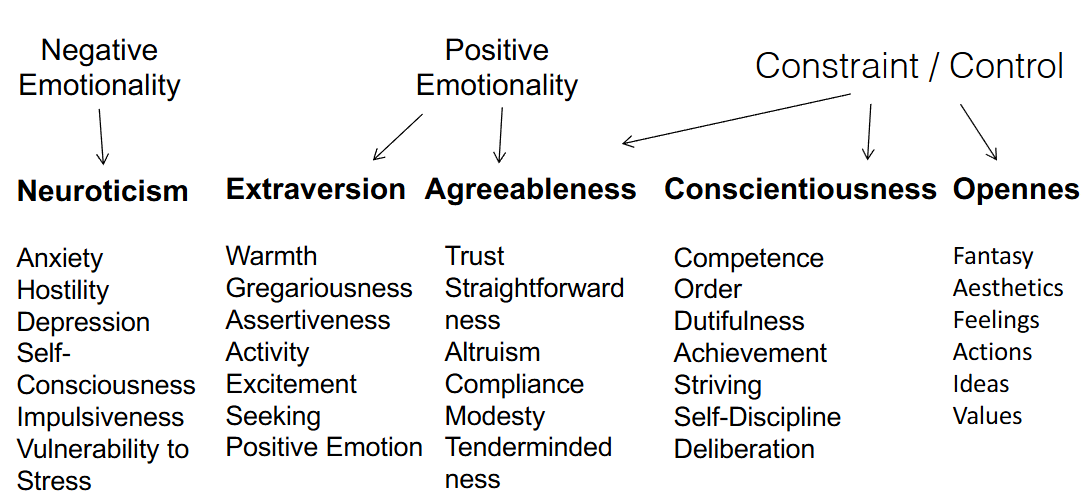
Hierarchical View of Personality
Neuroticism Extraversion Agreeableness Conscientiousness Openness
also known as CANOE or OCEAN
Social neuroscience
• How our brain can know other people's thoughts and feels.
• How social (contextual) signals change perception.
History of social psychology:
• Conformity (Asch) = we copy the group
• Authority (Milgram) = we obey authority
• Fundamental attribution error (Ross)
- we think what other people do reflects who they are, but we believe our behaviors are situational
• Thin slices (Ambady) = we form impressions of others in less than half a second
How we know others' thoughts
• Theory of mind -- kids know other kids' beliefs by 4 years old
• Higher activity in TemporoParietal Junction (TPJ) and
Anterior Cingulate Cortex (ACC)
How we feel what others feel
• Network of mirror neurons (shared representations)
• Medial PreFrontal Cortex (MPFC), PreMotor Cortex (PMC),
SuperiorTemporal Sulcus (STS), IntraParietal Lobule (IPL)
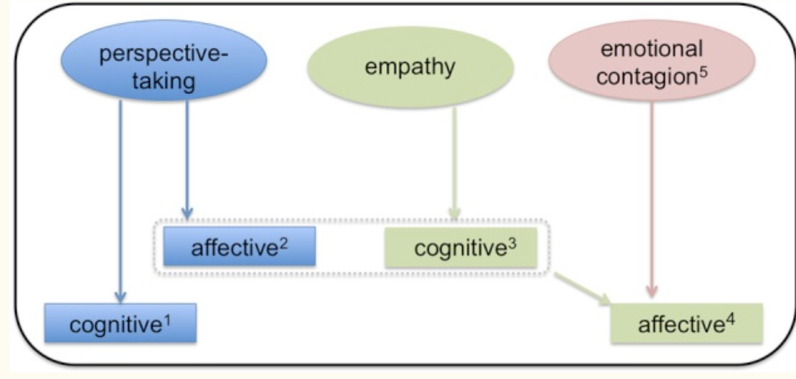
Types of empathy
• "Cognitive empathy" -- perspective taking
• "Affective empathy" -- emotional contagion
How do we bond with others
• Oxytocin = neuropeptide
• Neuropeptides different than neurotransmitters (glutamate / GABA) and neuromodulators (dopamine, norepinephrine)
• Produced in hypothalamus (below thalamus), released by pituitary gland to bloodstream (flows through brain and body)
• Released during:
• social bonding, sex, child birth, child rearing
Social Incentive Delay task shows that:
We feel rewarded when other people smile, NAcc activity increases for smiles as much as for money.
Motivated Perception
we see what we want to see
-social situations (context) change what we see and do
-Social incentive changes what we see
-Stereotypes change what we see
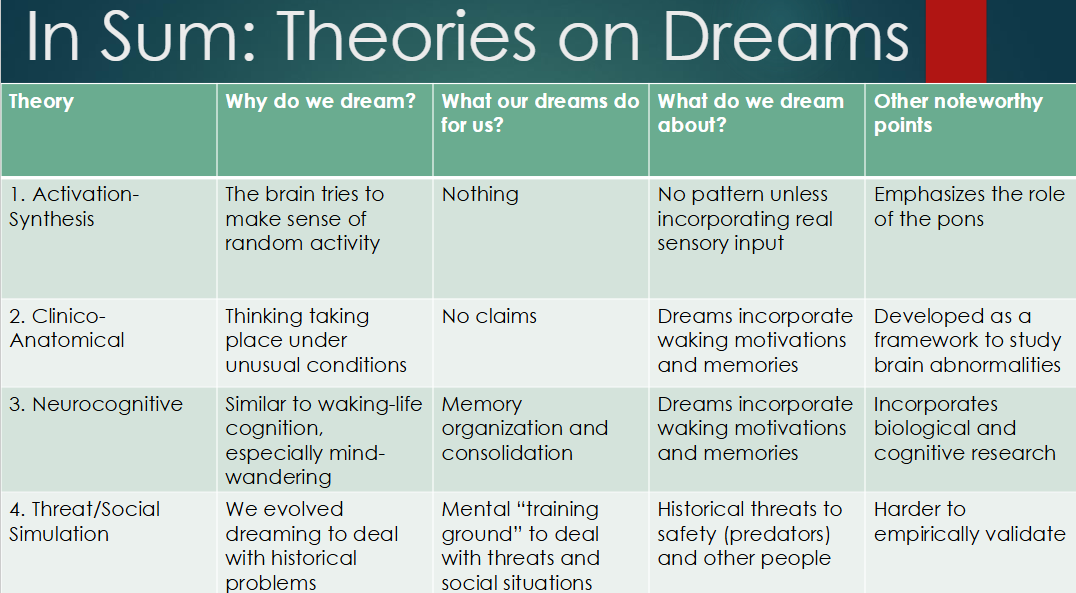
Theories on Dreams
1. Activation-Synthesis Theory
• Cortex tries to make sense of random activity, Dreams are a by-product of brain activity
2. Clinico-Anatomical Hypothesis
• PFC suppression: illogical narratives and poor recall, Dreams are normal thinking under unusual conditions
3. Domhoff’s Neurocognitive Theory
• Dreams arise from normal cognitive processing
4. Threat Simulation Theory
• We evolved dreams to practice dealing with threat
Defining Creativity
• The ability to create novel, useful solutions, Divergent thinking
Measuring Creativity
-Remote Associations Task
-Alternate Uses Task
-Creative Achievement
Lucid dreams:
-self awareness during dreams, conscious control of dream
-can be induced by reality testing techniques
Hypnagogic States
-Transition from wakefulness to sleep
-can include experiences like hallucinations or muscle jerks
Hypnagogia and Creativity
The Edison Technique
• Divergent thinking in NREM 1
• Thomas Edison — steel ball
• Sleep onset as a “sweet spot”
Lacaux’s Study
• Participants woken from early NREM1
• Performed better on math puzzles
The Dormio Project — M.I.T. Media Lab
• Wearable, glove-like device
• Tracks heart rate, skin conductance, and muscle movements in finger
• Can signal NREM 1 onset
Horowitz’s Dormio Study
• Utilized Dormio and Targeted Dream Incubation
• TBI introduced an audio cue with a specific theme
• Participants performed better on storytelling tasks related to cued theme
amygdala
almond-shaped mass of gray matter inside each cerebral hemisphere, involved with the experiencing of emotions
anterior insula
brain region involved in emotional awareness and subjective feelings, integrating visceral, sensory, and emotional information to create conscious feeling states
cognitive empathy vs affective empathy
Cognitive empathy is the ability to understand another person's feelings and thoughts from their perspective. (knowing/perspective taking)
Affective empathy is the ability to share or feel another person's emotions. (feeling/emotional mirroring)
What are these methods used to measure:
ElectroEncephaloGraphy (EEG)
ElectroMyoGraphy (EMG)
ElectroOculoGraphy (EOG
brain, muscle tone, eye movements
IntraParietal Lobule (IPL) or Inferior Parietal Lobule (IPL)
a brain region crucial for complex functions like language, spatial processing, attention, and social cognition and emotions.
medial PreFrontal Cortex (MPFC)
a region of the brain involved in a wide range of cognitive and emotional functions, including memory, decision-making, social behavior, and emotion regulation
Myers-Briggs Type Indicator (MBTI)
self-report questionnaire designed to indicate different psychological preferences in how people perceive the world and make decisions. 16 personality types. 4 Letter.
Difference between:
1.neuromodulator
2. neuropeptide
3. neurotransmitter
1. A signaling chemical that can dynamically reconfigure neuron activity and is used therapeutically to alter nerve activity through electrical or chemical stimulation. (affect many neurons at once by tuning their overall excitability) examples are dopamine and acetylcholine.
2. Small chains of amino acids that act as signaling molecules in the nervous system. modulate a wide range of functions, including hunger, stress responses, social and sexual behavior, and mood. (messengers, many neurons)
3. Endogenous chemicals that allow neurons to communicate with each other throughout the body, through the process of chemical synaptic transmission. (between two neurons)
norepinephrine
a chemical that acts as both a hormone and a neurotransmitter. role in the body's "fight-or-flight" response to stress by increasing heart rate and blood pressure. made by LC in brain.
oxytocin
a hormone produced in the hypothalamus that plays key roles in reproduction, social bonding, and other behaviors.
pineal gland
receive and convey information about the current light-dark cycle from the environment via the production and secretion of melatonin cyclically at night
suprachiasmatic nucleus (SCN)
each of a pair of small nuclei in the hypothalamus of the brain, above the optic chiasma, thought to be concerned with the regulation of physiological circadian rhythms
TemporoParietal Junction (TPJ)
a brain region where the temporal and parietal lobes meet. plays a key role in social cognition like theory of mind, and is involved in attention and perspective-taking
ventral tegmental area (VTA)
a midbrain region that produces the neurotransmitter dopamine, playing a crucial role in the brain's reward circuit