COPY QUIZLET Clinical Management of Hematological and Oncological Systems — Cardiopulmonary
 Call Kai
 Learn
Learn Practice Test
 Spaced Repetition
 Match
Match Flashcards
 Knowt Play
1/62

There's no tags or description
Looks like no tags are added yet.
Name | Mastery | Learn | Test | Matching | Spaced | Call with Kai | Chat |
|---|
No analytics yet
Send a link to your students to track their progress
63 Terms
Hemoglobin
main component of RBCs that transports oxygen and CO2
Blood plasma
The pale yellow fluid portion of whole blood that consists of water and its dissolved constituents: sugars, lipids, metabolic waste products, amino acids, hormones, and vitamins.

Hematocrit (Hct)
percentage of RBCs comprising blood
Anemia and polycythemia are related to what component of whole blood?
Hematocrit
- anemia: low hct
- polycythemia: elevated hct
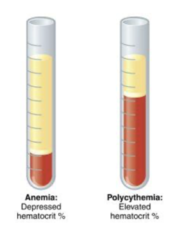
Polycythemia S/S
thicker blood = inc thrombus risk
- Fatigue
- Visual Changes
- Headache
- Dizziness
- Dysrhythmia
- Bleeding, bruising
- TIA
Anemia S/S
- pallor
- tachycardia
- tachypnea
- OH
- impaired endurance, activity tolerance
Hematocrit norms: female
37-47%
Hematocrit norms: male
42-52%
Hematocrit critical values
Hemoglobin norms: male
14-18
Hemoglobin norms: female
12-16
Hemoglobin critical values
Hematocrit and hemoglobin typically follow which normal ratio?
3:1 [hct to hgb]
- may be referenced in chart as H&H ratio
Leukocytes (WBC): critical values
< 2,500 or > 30,000
Neutrophils
Most abundant WBC, first responders to infection
- kill bacteria, fungi, foreign debris
Monocytes
WBC that cleans up damaged cells
Eosinophils
WBC that kills parasites, cancer cells; involved in allergic response
- "E" eliminates parasites
Lymphocytes
WBC that makes antibodies to fight off viruses
Basophils
WBC that produces histamine during allergic responses
- "B" blasts histamine
Albumin
protein in blood that maintains adequate blood pressure and volume
- synthesized by the liver; seen to decrease with liver disease
Which blood types are considered the universal donor and universal recipient?
Donor: O -
Recipient: AB +
Systemic inflammatory response syndrome [SIRS]
exaggerated inflammatory response that occurs in the body after a stressor
- may precede the development of sepsis
Sepsis
Systemic inflammatory response syndrome [SIRS] caused by infection
Septicemia
bloodstream infection
Septic shock
sepsis with uncontrollable, persisting hypotension [requiring the use of vasopressors] and serum lactate level >2
Anemia
reduction in circulatory RBCs due to decreased production, increased destruction, and/or abnormal maturation
- also nutrient related: iron, B12, folic acid
Posthemorrhagic anemia
rapid loss of RBCs due to bleeding, vascular injury, surgery
- 20-30% blood volume loss = dizziness, hypotension, tachycardia, exertion intolerance
- 30-40% = thirst, dyspnea, diaphoresis, dec urine output, altered mentation, LoC
- 40-50% = severe shock. death possible
Aplastic anemia
failure of RBC production in the bone marrow due to damage caused by toxins, infection, cancer, autoimmune dz
S/S and management of aplastic anemia
- bleeding [mucosal, easy bruising, petechiae], fatigue, sore throat, pallor
- management: immunospuuression, marrow transplant, transfusion, supplemental O2
Hemolytic anemia
destruction/removal of RBCs prior to completing their normal lifespan of 120 days
- congenital: Sickle Cell, Thalassemia
- acquired: circulatory damage (immune response, mechanical heart valve), enzyme deficit, overactive spleen
S/S and management of hemolytic anemia
- fatigue/weakness, chills, fever, N/V, janudice, dec urine, pain associated with splenomegaly
- management: corticosteroids, transfusion, splenectomy
sickle cell anemia
a genetic disorder in which RBCs take on a curved/ "sickle" shape when deoxygenated, become rigid and occlude blood flow over time
- increases risk of CVA, MI, ischemia
Sickle cell crisis
condition in sickle cell anemia in which the sickled cells interfere with oxygen transport, obstruct capillary blood flow, and cause fever and severe pain in the joints and abdomen
- may be triggered by infection, dehydration, hypoxia, cold exposure
- super painful, usually treated with opioids
- can last days to weeks
S/S of sickle cell anemia
- jaundice
- nocturia
- hematuria
- organ failure
- retinopathy
- nonhealing ulcers
- systolic murmur
- cardiomegaly
When working with a pt who has sickle cell anemia, what should be monitored closely?
Oxygen supply/demand
Neutropenia
Absolute neutrophil count (ANC) < 1500
Neutropenic precautions
- Universal precautions plus mask
- no one enters room who has any suspected infection
- no fresh flowers or potted plants
Hemophilia
Excessive and spontaneous hemorrhaging into joints, mm, cranium, and mucus membranes due to hereditary clotting deficiency
- severe cases could turn into hematomas
- modift MSK exam d/t bleeding risk
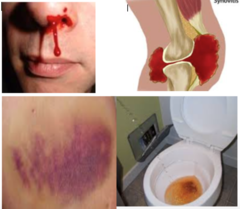
Hemarthrosis
Spontaneous hemorrhaging into a joint [see hemophilia]
S/S of hemophilia
- petechiae
- ecchymosis
- hematoma
- tachycardia/pnea
- hypotension
- pain
Thrombocytopenia
Acute or chronic platelet count < 150,000 d/t destruction, decreased production, or drug suppression
- educate on fall risk, modify MSK exam and therex d/t risk of bleeding
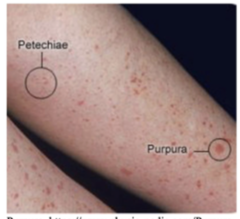
S/S of thrombocytopenia
- petechiae (or pupura, larger)
- ecchymosis
- hematoma
- tachycardia/pnea
- renal failure
- bleeding mucosal membrane
Heparin-induced thrombocytopenia [HIT]
The body mistakenly binds antibodies to heparin/platelet complex, leading to platelet activation and a hypercoagulable state
- macrophages wipe out tagged platelets, overall count drops
- 20% mortality rate
- most common type of drug induced thrombocytopenia
S&S of heparin induced thrombocytopenia
- DVT
- pulmonary emobolism
- skin lesions, necrosis
- limb ischemia
- weakness, painful movement
- erythema [rash]
- edema
Magament of heparin induced thrombocytopenia
immediate discontinuation of heparin, followed by an alternative anticoagulant, plasmapheresis, and/or immunoglobulin therapy
- defer PT until hemodynamically stable and properly anticoagulated
Heparin-induced thrombocytopenia most likely occurs with the adbimistration of which thrombolytics?
Unfractionated heparin
Metastatic disease
tumor that spreads away from the original/primary organ
- spine and pelvis most common sites of metastasis
- increases risk of pathological fx
Which primary tumors commonly metastisize to bone?
BLT Kosher Pickle: breast, lung, thyroid, kidney, prostate
Leukemia
malignancies of stem cells originating in bone marrow, causing anemia, thrombocytopenia, and leukopenia
- tx with chemo and bone marrow transplants
What is the most aggressive form of leukemia? What age group is it typically seen in?
Acute myeloid leukemia; 60+ age group
Lymphoma
malignant tumor of lymph tissue (and therefore lymphocytes of B-, T-, or NK cell origin)
- visible by painless enlargement of tissue [lymphadenopathy]
- Tx: chemo, stem cell transplants, immunotherapy
Multiple myeloma
Malignancy of plasma cells in the bone marrow, which decreases the production of all whole-blood components
- creates the highest risk of a pathological fx
S/S of multiple myeloma
- bone pain
- decreased RBCs, WBCs, platelets
- lesions cause osteoporosis, patho fx, hypercalcemia [due to malignant bone destruction], and AKI assoc.
Side effects and PT considerations of radiation therapy
- skin reactions/burns, fatigue, bone marrow suppression
- site specific administration may impact contractile tissue and therefore ROM
What precautions are important for treating a patient on chemo?
Extra precautions for managing body fluids due to toxins [i.e. flush toilets twice, be careful of saliva and vomit]
PT considerations for pts on chemo
chemotherapy-induced peripheral neuropathy may occur
- bilateral in the feet and hands, usually lifelong
Cancer related fatigue [CRF]
Physical, emotional, and mental feeling of tiredness or exhaustion, unassociated with exertion and not alleviated by rest
- reported as the most distressing cancer sx
- all pts should be screened for this
Acute adverse blood reactions: febrile
Antileukocyte antibodies in the pt's blood are sensitive to transfused plasma protein, platelets, or WBCs
- occurs during or up to 24 hrs after transfusion
- chills followed by low fever, HA, N/V, flushing, mm pain, anxiety
- low BP, tachycardia/pnea, cough [severe]
Acute adverse blood reactions: allergic
Pt's blood [IgE, IgG, or both] is sensitive to transfused plasma protein
- occurs within minutes of starting transfusion
- hives, flushed or itchy skin, mild bronchial wheezing
- tachypnea, angina, cardiac arrest [severe]
Acute adverse blood reactions: septic
Caused by transfused blood components being contaminated with bacteria
- occurs within minutes to 30 mins after transfusion
- rapid onset of high fever, low BP, chills, emesis, diarrhea, renal failure, shock, ab cramps
Acute adverse blood reactions: acute hemolytic
Patient's blood and transfused blood are not compatible, resulting in RBC destruction
- occurs within minutes to hours after transfusion
- most common manifestation is fever w/ or w/o chills
- tachycardia/pnea, cyanosis, chest pain, HA or back ache, ARF, cardiac arrest
Acute adverse blood reactions: anaphylactic
Caused by the development of IgA antibodies to transfused components
[if pt is deficient in IgA to begin with]
- OCCURS WITHIN SECONDS of starting transfusion
- mild hives, wheezing or bronchospasm, cyanosis, emesis, bloody diarrhea, shock
Acute adverse blood reactions: transfusion-related acute lung injury
Caused by the reaction of antibodies in donor plasma with the recipient granulocytes
- occurs within several hours after transfusion
- imaging shows pulm edema
- chills, fever, chest pain, hypotension, cyanosis