Unit III: Chapter 10- Endocrine System and Homeostasis
 Call Kai
 Learn
Learn Practice Test
 Spaced Repetition
 Match
Match Flashcards
 Knowt Play
1/70

There's no tags or description
Looks like no tags are added yet.
Name | Mastery | Learn | Test | Matching | Spaced | Call with Kai |
|---|
No analytics yet
Send a link to your students to track their progress
71 Terms
Endocrine system
hormone-producing glands and tissues of the body
Endocrine system
uses hormones
Endocrine system
hormones released into the blood and most travel all over the body before they reach their target
Endocrine system
response is slow and more sustained
Nervous system
uses neurons and neurotransmitter
Nervous system
response is fast and it dosent last very long
1. Hormones are released from the secreting cell into the blood
2. Hormones travel throughout the body in the blood
3. When they reach the target cell they attach to a receptor
How does the endocrine system send messages to different parts of the body
- blood sugar
-metabolism
- growth
reproductive development and function
the endocrine system also controls:
Hormones
chemical that circulate throughout the blood and exert sme measure of control over most every organ and tissue in the body
pituitary gland
many hormones released by the _________ _____ stimulate other glands to releasesd other hormones
Releasing hormones
stimulates other glands to release hormones
Inhibitory hormones
stops a gland from releasing hormones
Negative feedback loop
a mechanism that works to "reverse" or "decrease" changes in the body
Positive feedback loop
a mechanism that serves to "increase" the effect of an action
Somatotropin, or human growth hormone (HGH)
target cell/ organ: bones, tissue
Somatotropin, or human growth hormone (HGH)
Action: regulates growth and developement of body tissues
ACTH
target organ/ cell: adrenal cortex
ACTH
action: causes the adrenal cortex to produce cortisol and aldosterone
Thyroid Stimulating Hormone (TSH)
target organ/ cell: thyroid gland
Oxytocin
target organ/ cell: uterine muscles
Oxytocin
target organ/ cell: mammary gland
Antidiuertic Hormone (ADH) (Vasopressin)
target organ/ cell: blood
Antidiuertic Hormone (ADH) (Vasopressin)
target organ/ cell: arteries
Antidiuertic Hormone (ADH) (Vasopressin)
target organ/ cell: collecting ducts of kidneys
Antidiuertic Hormone (ADH) (Vasopressin)
action: regulates sodium levels in blood
Antidiuertic Hormone (ADH) (Vasopressin)
action: causes damaged blood vessels to constrict to reduce blood loss
Antidiuertic Hormone (ADH) (Vasopressin)
action: causes kidneys to retain water
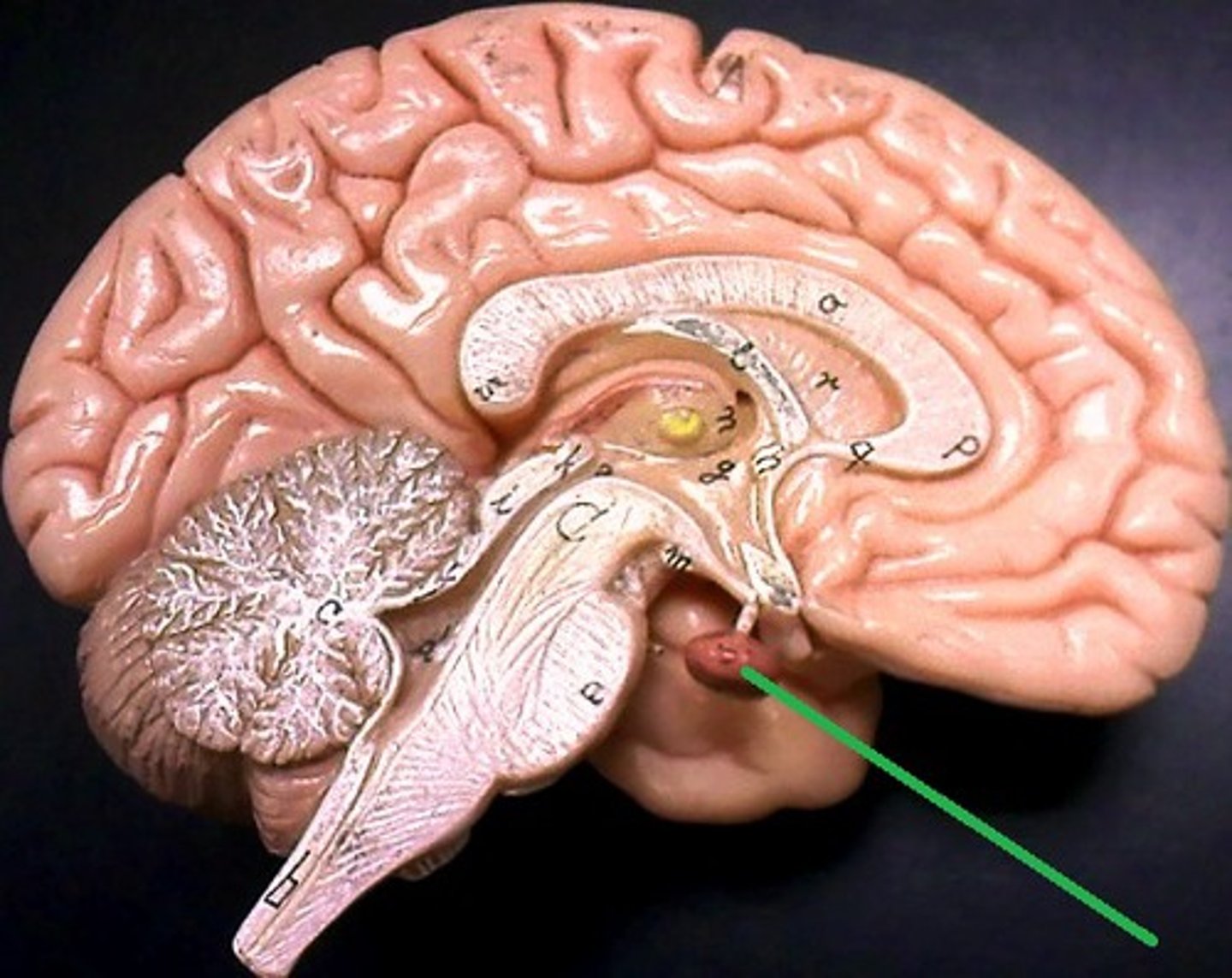
Pituitary gland
located at the base of the brain. Called the "master gland".
Pituitary gland
nervous system sends signals via the hypothalamus to exert over the _____________
Somatotropin (human growth hormone [HGH])
ACTH
Thyroid stimulating hormone
Oxytocin
Antidiuertic hormone (ADG) or vasopressin
pituitary gland hormones
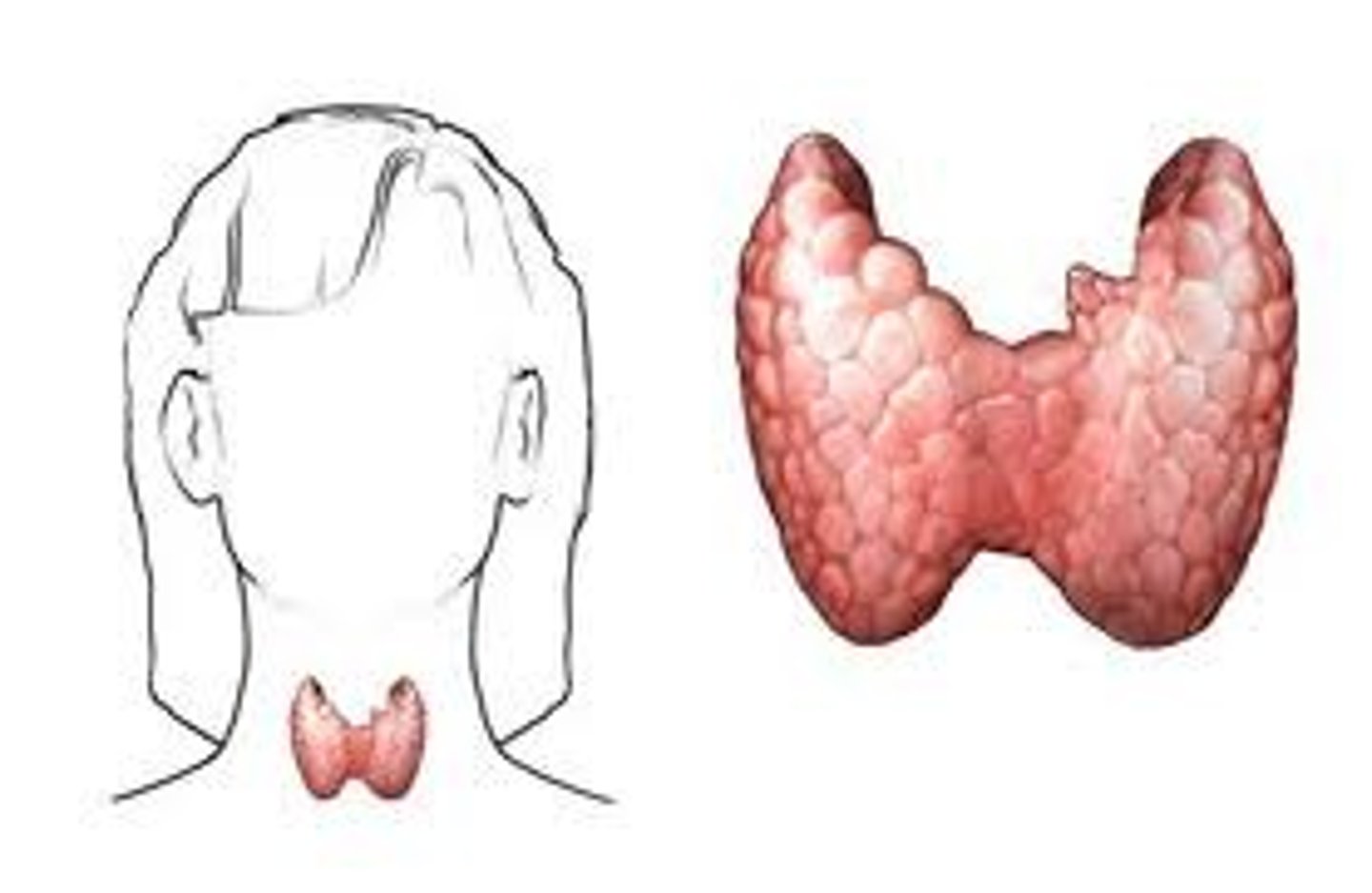
Thyroid gland
located in the throat, butterfly shaped
thyroid gland
produces thyrocine and calcitonin
Thyroxine function
increases metabolism and oxygen rate
thyroxine function
released from the thyroid gland when stimulated by TSH from the pituitary
Calcitonin function
lowers blood calcium levels
Calcitonin function
moves calcium from the blood and into the bones. This lowers the amount of calcium in the blood
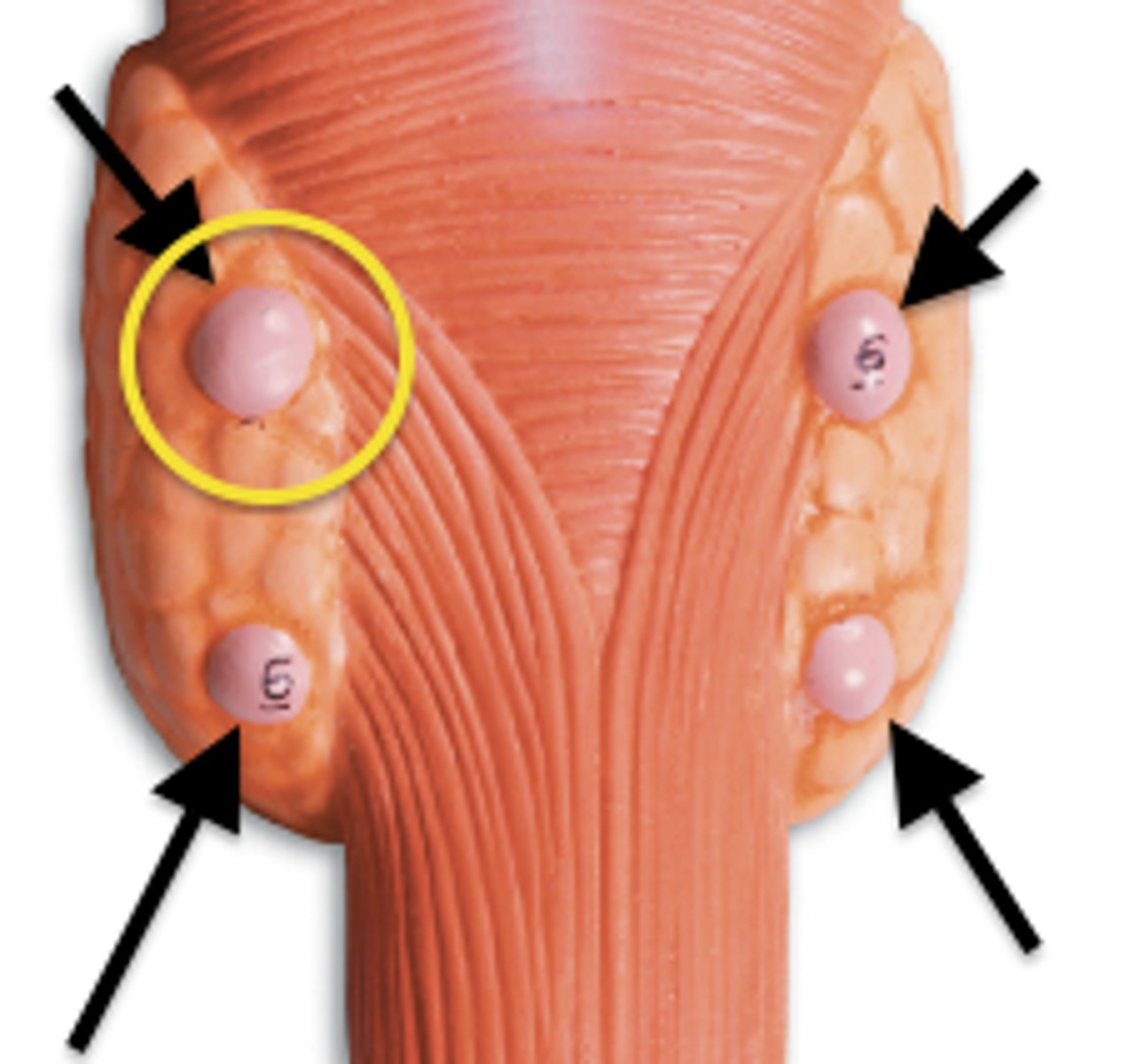
Parathyroid glands
located on the surface of the thyroid gland
parathyroid glands
produces PTH
PTH (parathyroid hormone) function
causes bones to release calcium into the bloodstream
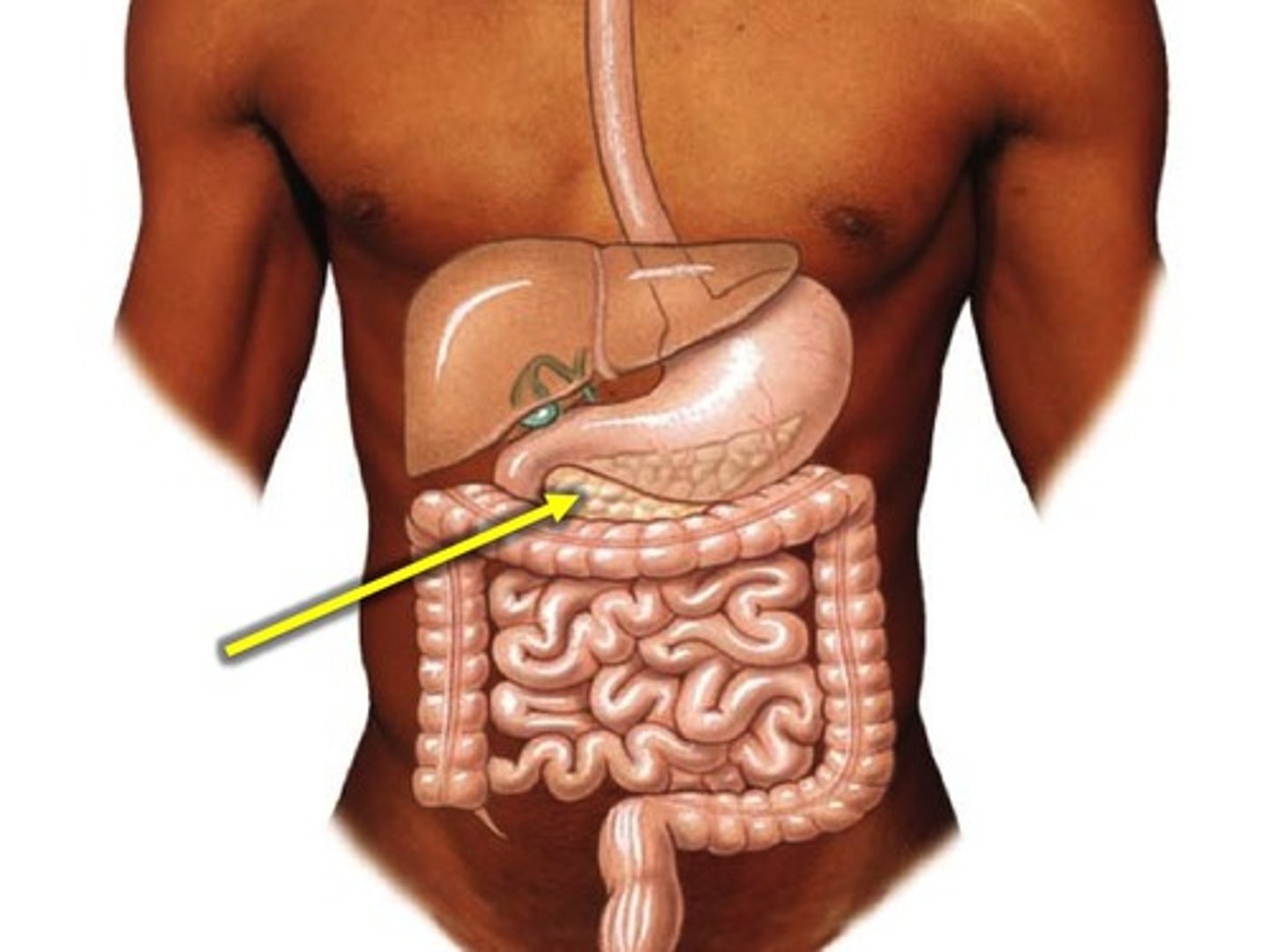
Pancreas
located near the small intestine
Pancreas
contins specialized endocrine cells called islets of Langerhans
Pancreas
secretes Insulin and Glucagon
Insulin
stores glucose in the liver
Glucagon
releases glucose from you liver into the blood
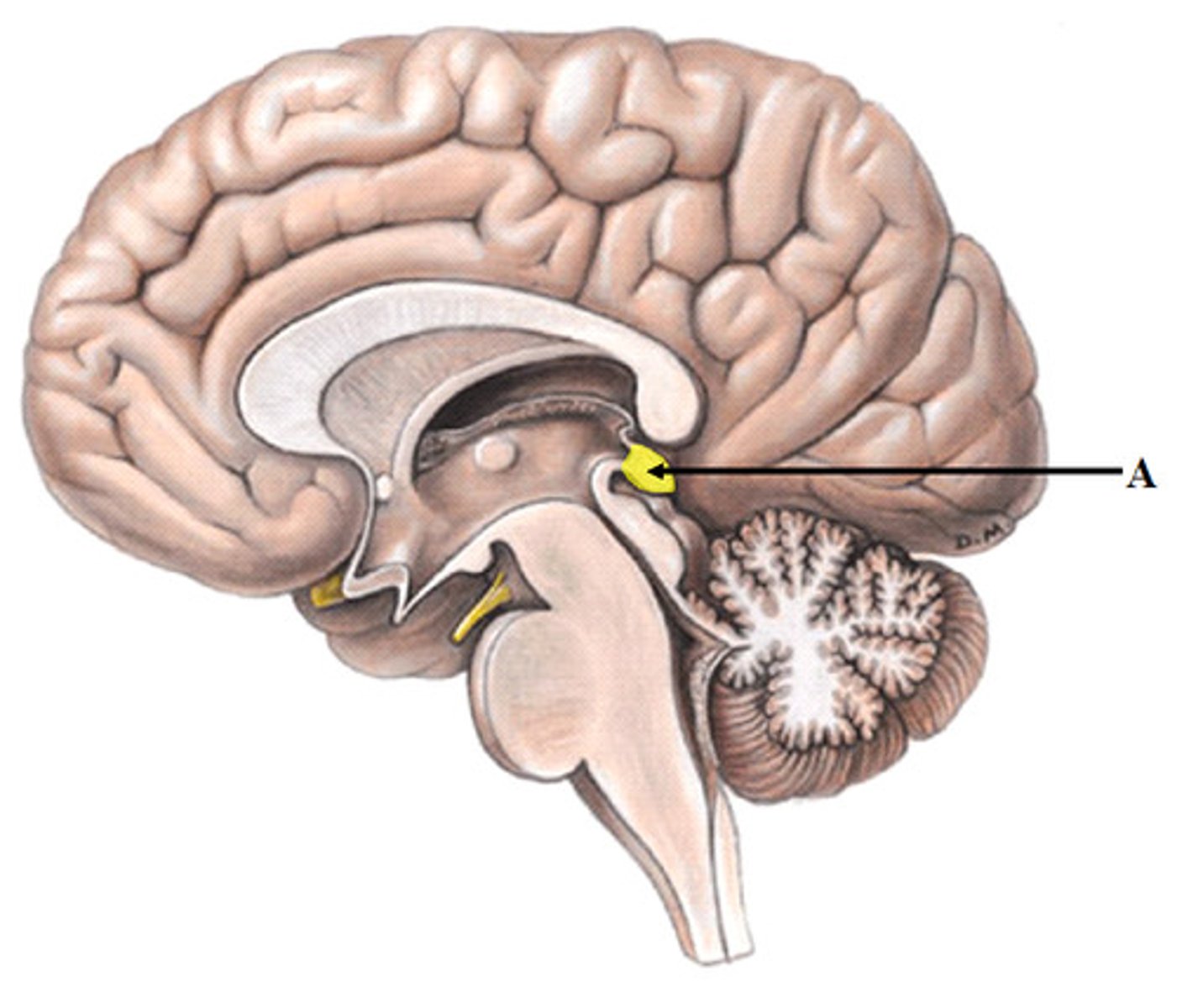
Pineal Gland
located deep in the brain
Pineal gland
produces melatonin
Melatonin
makes you sleep
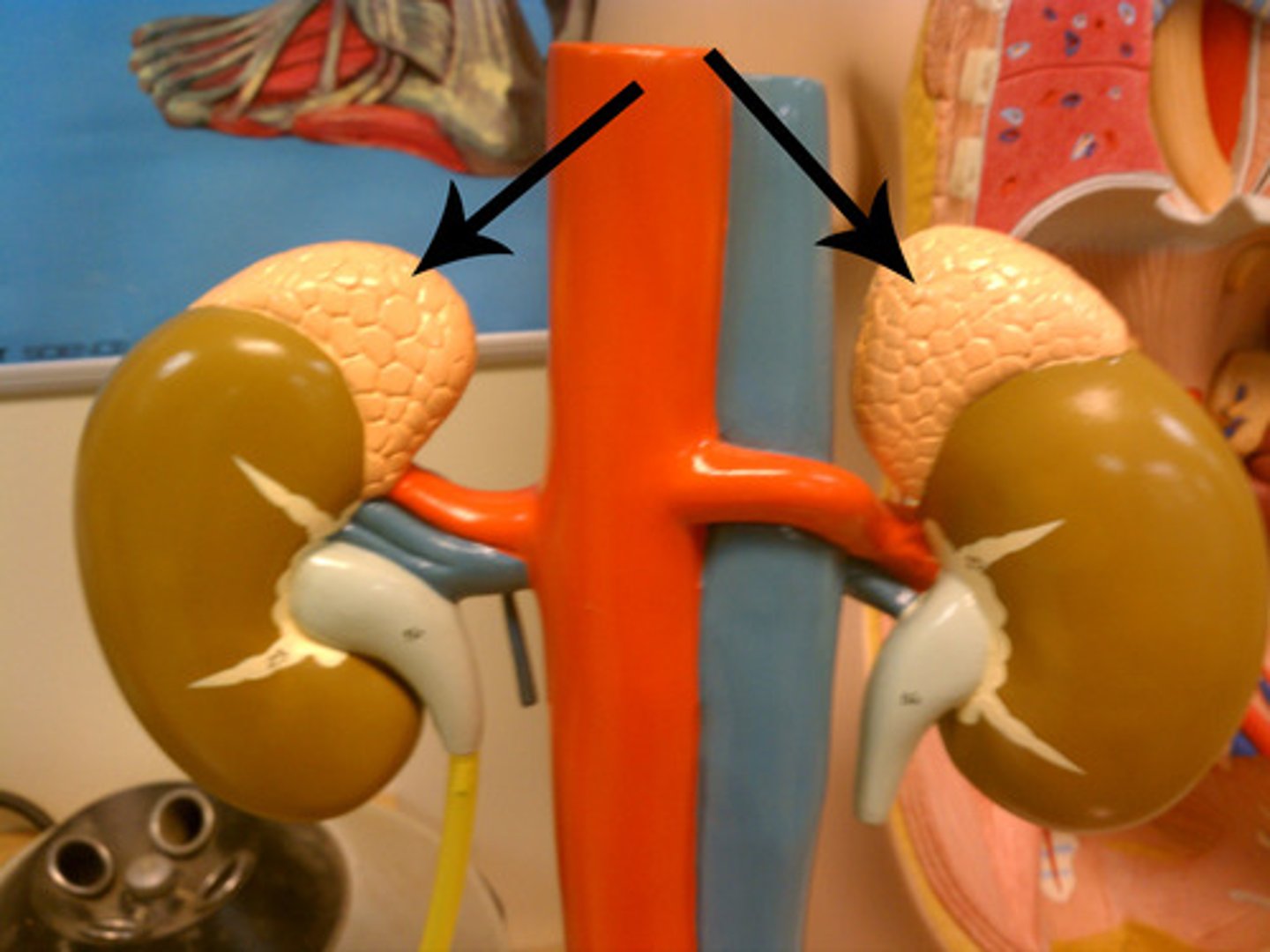
Adrenal glands
located on top of the kidenys
Adrenal glands
made of two layers:
-adrenal cortex
-adrenal medulla
Adrenal cortex
outside of the adrenal gland
Adrenal cortex
regulates long-term stress response (sustained stress response)
Adrenal cortex
Releases the hormones Aldosterone and Cortisol
Aldosterone
increases blood pressure through raising sodium levels in the blood
Cortisol
Increases glucose levels in the blood
Cortisol
stress hormone
Adrenal Medulla
inside the adrenal gland
Adrenal medulla
Regulates short-term stress response (rapid and short lived stress response)
Adrenal medulla
Releases the hormones Adrenaline (epinephrine) and Noradrenaline (norepinephrine)
Adrenaline and Noradrenaline
the fight or flight hormones
Adrenaline and Noradrenaline
Increases heart rate, respiration rate, blood glucose, blood flow to the heart and muscles and metabolism
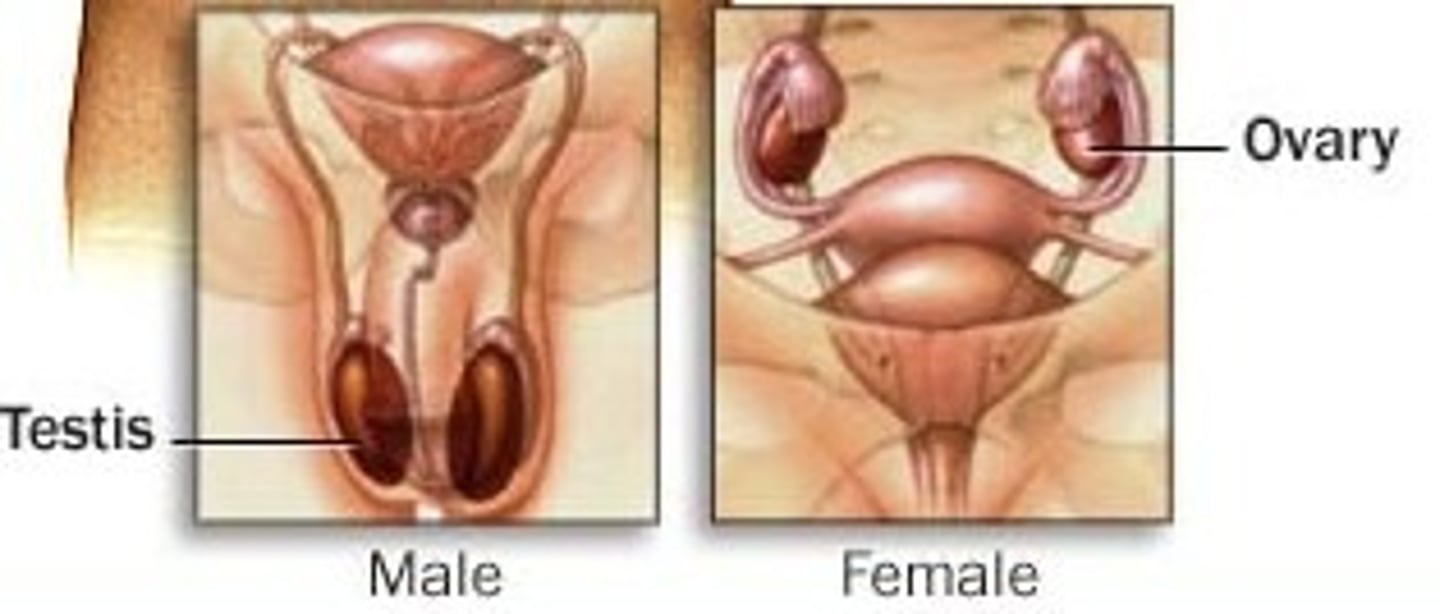
Gonads
the male _____ is the testes which releases testosterone
Gonads
the female _____ is the ovaries which releases estrogen
Testosterone
secondary male sex hormone (ex. deep voice, hair growth)
Estrogen
secondary female sex hormone )ex. mensual cycle, breast growth)
pituitary gland
Thyroid gland
Parathyroid glands
Pancreas
Pineal gland
adrenal glands
Gonads