midterm anana
 Call Kai
 Learn
Learn Practice Test
 Spaced Repetition
 Match
Match Flashcards
 Knowt Play
1/330

There's no tags or description
Looks like no tags are added yet.
Name | Mastery | Learn | Test | Matching | Spaced | Call with Kai | Chat |
|---|
No analytics yet
Send a link to your students to track their progress
331 Terms
Anatomy
The study of the structural basis of body function. Anatomy focuses on body structures, where they are located, and how their form relates to what they do. Your professor emphasizes “form follows function.”
Physiology
The study of the functional application of a structure, meaning how a body structure works. Anatomy = structure; physiology = function.
Levels of human organization, largest to smallest
Organism → organ systems → organs → tissues → cells → organelles → molecules.
Organism
A single, complete individual. It is the largest level of structural organization.
Organ system
A group of organs that work together to carry out major body functions.
Organ
A structure with definite boundaries that contains two or more tissue types working together.
Tissue
A group of similar cells and cell products that perform a specific function and form part of an organ.
Cell
The smallest unit considered alive.
Organelle
A microscopic structure inside a cell that performs a particular cellular function. Examples from class include the nucleus and mitochondria.
Molecule
A particle made of two or more atoms joined by chemical bonds.
What are the 11 human organ systems?
Integumentary, skeletal, muscular, nervous, endocrine, circulatory, lymphatic/immune, respiratory, urinary, digestive, and reproductive.

Integumentary system
Includes skin, hair, nails, and glands. Functions include protection, water retention, thermoregulation, and sensation.
Skeletal system
Includes bones, cartilage, and ligaments. Functions include support, movement, protection, and blood formation.

Muscular system
Primarily consists of skeletal muscles. Functions include movement, communication, control of body openings, and heat production.

Nervous system
Includes the brain, spinal cord, nerves, and ganglia. Functions in internal communication, coordination, motor control, and sensation.

Endocrine system
Includes hormone-producing structures such as the pituitary, pineal, thyroid, parathyroid, thymus, adrenal glands, pancreas, testes, and ovaries. Its major function is hormone production.

Circulatory system
Includes the heart and blood vessels. Distributes oxygen, nutrients, wastes, and other materials throughout the body.
Lymphatic/immune system
Includes lymph nodes and vessels, thymus, spleen, and tonsils. Detects pathogens, produces immune cells, and helps defend against disease.
Respiratory system
Includes the nose, pharynx, larynx, trachea, bronchi, and lungs. Functions include absorption of O2, discharge of CO2, and speech.
Urinary system
Includes kidneys, ureters, urinary bladder, and urethra. Removes wastes and helps regulate blood volume, blood pressure, fluids, and ions.
Digestive system
Includes the esophagus, stomach, small and large intestines, liver, gallbladder, and pancreas. Functions in nutrient breakdown and absorption.
Reproductive system
Includes structures such as testes, penis, ovaries, vagina, and mammary glands. Functions include sperm and egg production, sex hormone secretion, fertilization, fetal development, birth, and lactation.
Anatomical position
The standard reference position: standing erect with feet flat, arms at the sides, and palms, face, and eyes facing forward. Anatomical directions are described from the subject’s point of view.

Sagittal plane
Divides the body or an organ into right and left portions.
Midsagittal plane
A sagittal plane that divides the body into equal right and left halves.

Frontal/coronal plane
Divides the body or an organ into anterior and posterior portions.
Transverse/horizontal plane
Divides the body or an organ into superior and inferior portions.
Anterior
Toward the front of the body. Example: the sternum is anterior to the heart.
Posterior
Toward the back of the body. Example: the esophagus is posterior to the trachea.
Ventral
Toward the anterior/front side of the body.
Dorsal
Toward the posterior/back side of the body. Example: the scapulae are dorsal to the rib cage.
Superior
Above another structure. Example: the heart is superior to the diaphragm.
Inferior
Below another structure. Example: the liver is inferior to the diaphragm.
Medial
Toward the midline of the body. Example: the heart is medial to the lungs.
Lateral
Away from the midline of the body. Example: the eyes are lateral to the nose.
Proximal
Closer to the point of attachment or origin. Example: the elbow is proximal to the wrist.
Distal
Farther from the point of attachment or origin. Example: the fingers are distal to the wrist.
Ipsilateral
On the same side of the body.
Contralateral
On opposite sides of the body.
Superficial
Closer to the body surface. Example: the skin is superficial to the muscles.
Deep
Farther from the body surface. Example: bones are deep to muscles.
Axial region
The head, neck, and torso. The torso is further divided into thoracic and abdominal regions.
Appendicular region
The upper and lower limbs, or appendages of the body.
Brachial region
The arm region from shoulder to elbow.
Antebrachial region
The forearm region from elbow to wrist.
Carpal region
The wrist region.
Palmar/digital region
The hand and fingers.
Femoral region
The thigh region.
Crural region
The lower leg region between the knee and ankle.
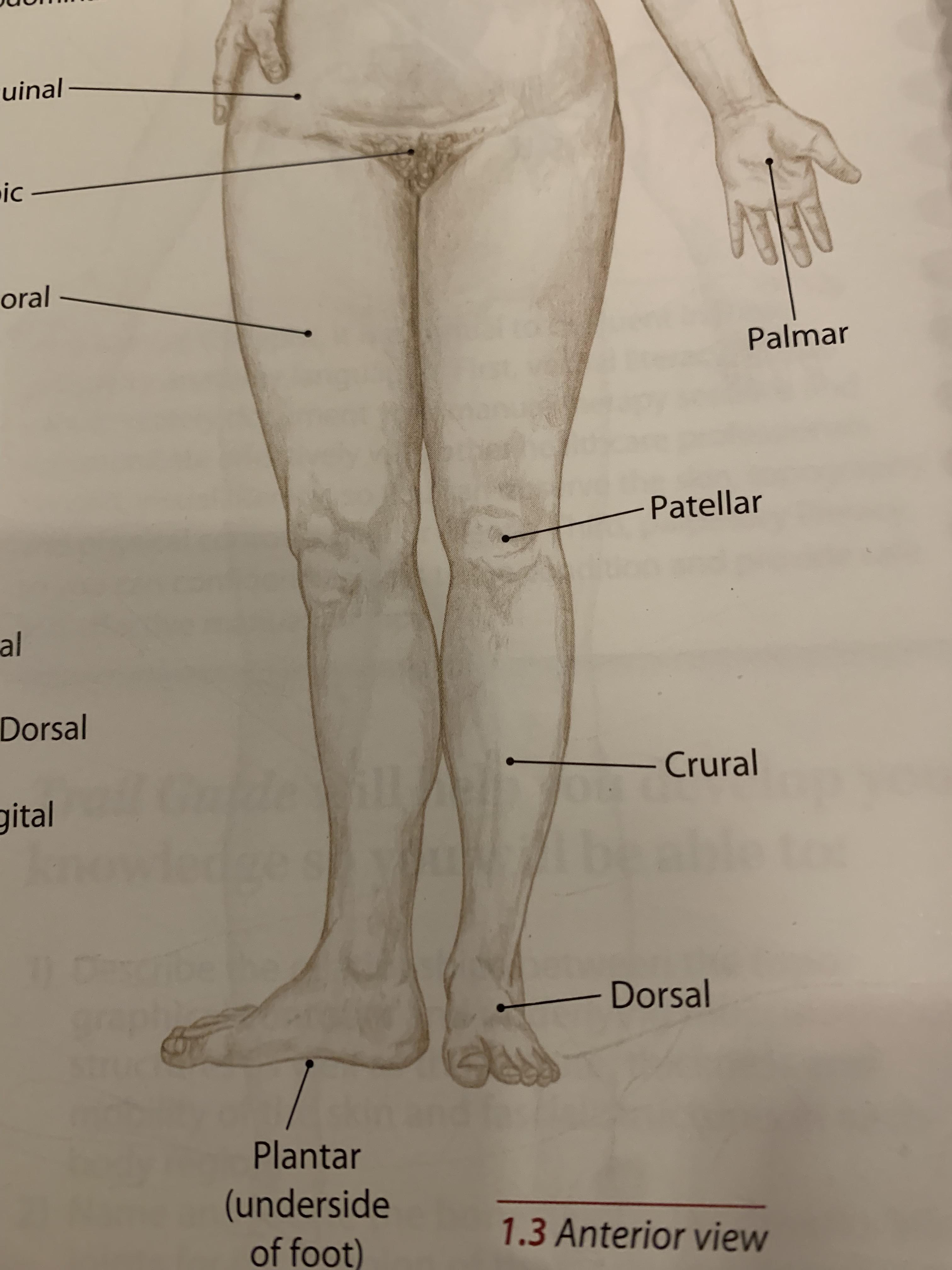
Tarsal region
The ankle region.

Pedal/digital region
The foot and toes.
Cranial cavity
Enclosed by the skull and contains the brain.
Vertebral canal
Enclosed by the vertebrae and contains the spinal cord.

Thoracic cavity
The chest cavity bounded by ribs, thoracic vertebrae, and sternum. Contains the heart and lungs and is separated from the abdominopelvic cavity by the diaphragm.
Mediastinum
The region between the lungs inside the thoracic cavity. It contains the heart and great vessels.
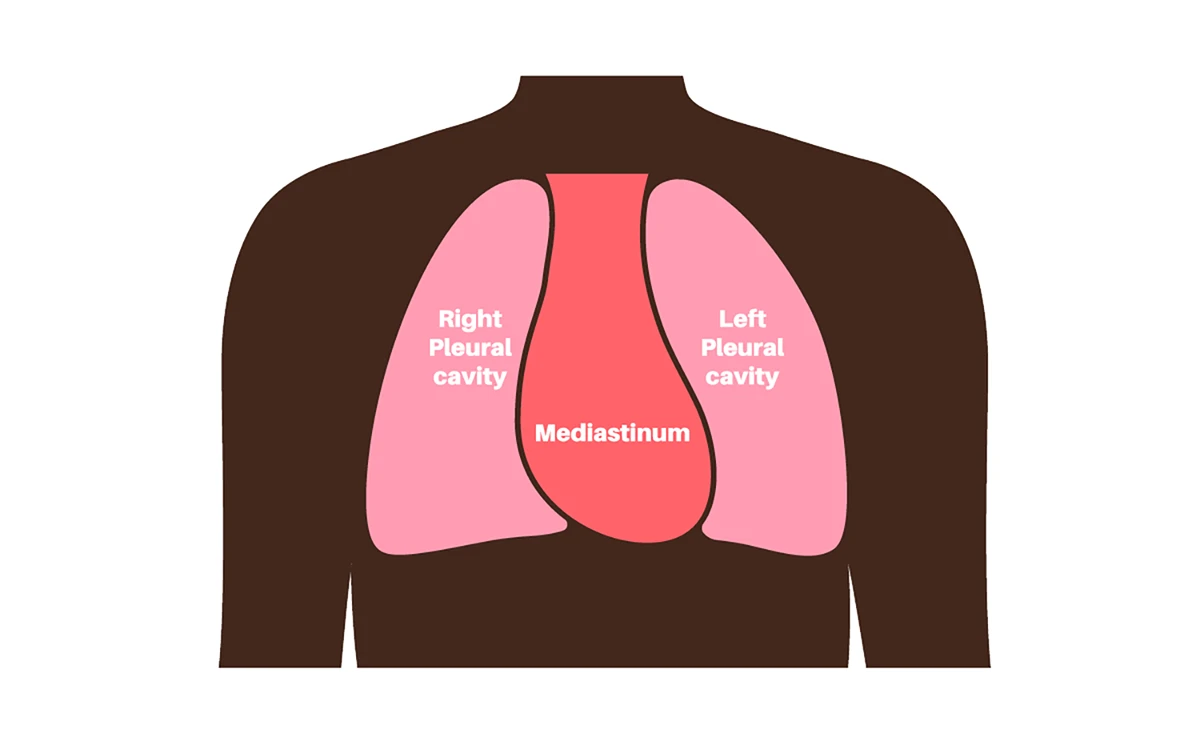
Diaphragm
Separates the thoracic cavity from the abdominopelvic cavity.

Abdominopelvic cavity
The cavity below the diaphragm consisting of the abdominal cavity superiorly and pelvic cavity inferiorly.
Abdominal cavity
Contains digestive organs, spleen, kidneys, liver, and ureters.
Pelvic cavity
The inferior part of the abdominopelvic cavity. Contains the rectum, urinary bladder, urethra, and reproductive organs.

Plasma membrane
The boundary of the cell that separates the internal cellular environment from the external environment.
Cytoplasm
Material inside the cell between the plasma membrane and nucleus/organelles.
Cell receptors
Structures that bind specific signal molecules such as hormones.
Membrane transport
Movement of molecules into and out of a cell. This helps maintain a different internal environment from the extracellular environment.
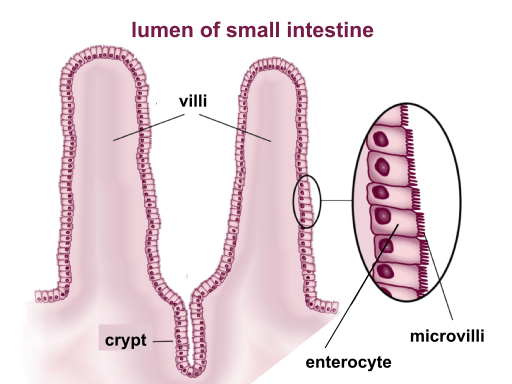
Microvilli
Extensions of the plasma membrane that increase surface area. Especially useful for maximizing absorption.
Cilia
Hairlike processes that beat to move substances across an epithelium.

Nucleus
The largest organelle and the location of chromosomes/DNA. Your notes describe it as “command central” because DNA directs cellular activity.
Mitochondria
Organelles specialized for aerobic respiration and responsible for most ATP production. Often called the powerhouses of the cell.
What are the four primary tissue types?
Epithelial, connective, nervous, and muscular tissue.
Epithelial tissue
Tissue made of closely packed cells that covers surfaces, lines organs, and can form glands. Functions include protection, secretion, and absorption.
Simple epithelium
One layer of cells, with every cell resting on the basement membrane. Your slides use lung alveolar sacs as an example.
Stratified epithelium
Two or more layers of cells. Only the deepest layer rests on the basement membrane. Thick skin/epidermis is an example.
Basement membrane
The layer between epithelial tissue and underlying connective tissue.
Connective tissue
Tissue with abundant fibers that supports, binds, and protects. Examples include tendons, ligaments, cartilage, bone, blood, adipose, and lymph.
Functions of connective tissue
Binding, support, physical protection, immune protection, movement, storage, heat production, and transport.
Fibrous connective tissue
Connective tissue such as tendons and ligaments.
Adipose connective tissue
Fat tissue. Functions in energy storage and can contribute to insulation and protection.
Supportive connective tissue
Cartilage and bone. These tissues provide support. Your slides use intervertebral disc fibrocartilage as an example.
Fluid connective tissue
Blood is a fluid connective tissue that transports gases, nutrients, wastes, and other substances.
Nervous tissue
Tissue specialized for rapid transmission of electrical and chemical information. Found mainly in the brain and spinal cord and also in peripheral nerves and ganglia.
Neuron
A nerve cell that detects stimuli, responds quickly, and transmits information.
Neuron cell body
The part of a neuron that processes stimuli/information.
Dendrites
Parts of a neuron that receive stimuli/signals.
Axon/nerve fiber
The part of a neuron that transmits signals.
Neuroglia/glial cells
Supportive nervous-system cells that are more abundant than neurons.
Skeletal muscle tissue
Long, cylindrical/threadlike muscle cells. Usually attached to bones, striated, voluntary, and multinucleated.
Cardiac muscle tissue
Muscle found only in the heart. Striated, involuntary, and generally has one nucleus per cell.
Smooth muscle tissue
Nonstriated, involuntary muscle found in the walls of hollow organs and tubes such as the stomach, intestines, and blood vessels. Helps move or regulate flow of materials.
Gland
A cell or organ made of epithelial tissue that secretes substances for use elsewhere in the body or for elimination.
Endocrine gland
A ductless gland that secretes hormones directly into the blood.
Exocrine gland
A gland that sends its secretion through a duct to a surface.
Membrane
A thin sheet of tissue covering a surface, lining a space, or separating tissues and spaces.
Cutaneous membrane
The body’s outer covering/skin. Associated with stratified squamous epithelium.
Mucous membrane
A membrane that lines passages open to the exterior, such as parts of the respiratory and digestive tracts.
Serous membrane
A membrane associated with organs of the thoracic and abdominal cavities that produces a watery secretion.
Synovial membrane
A connective tissue membrane at some joints that spans from one bone to another and secretes synovial fluid into the joint.
Integumentary system structures
Skin, hair, nails, and cutaneous glands. Skin includes the epidermis and dermis; the hypodermis lies beneath the skin.
Functions of skin
Protection, defense against infection and UV, water retention, vitamin D synthesis, sensation, thermoregulation, and communication through facial expression.
Epidermis
The outermost epithelial layer of skin. Its superficial cells are dead and packed with keratin.
Dermis
The connective tissue layer beneath the epidermis. Contains collagen fibers, blood vessels, sweat glands, and nerve endings.
Hypodermis
The connective tissue layer beneath the skin. Not technically part of the skin. Contains adipose tissue and helps with energy storage, insulation, protection, and attachment to deeper tissues.