AP Bio Unit 1
 AP Practice
 Call Kai
1/87

Earn XP
Description and Tags
Name | Mastery | Learn | Test | Matching | Spaced | Call with Kai | Chat |
|---|
No analytics yet
Send a link to your students to track their progress
88 Terms
Polar Molecule
A molecule where opposite ends have opposite charges (has a positive and a negative side)
Hydrogen Bonds
Mild bonds formed from the attraction between positive and negative sides of two atoms
Polar Bond
A bond with positive and negative sides due to unequal sharing of electrons. This happens because the bigger atom attracts electrons more strongly than the smaller atom.
Covalent Bond
Where two atoms share some electrons to complete both of their shells
Two polar covalent bonds
What kinds of bonds does water have?
high specific heat, high heat of vaporization, evaporative cooling, cohesion, adhesion, and surface tension
6 properties of water…
Specific heat
The amount of energy it takes to heat a substance
Heat of vaporization
The amount of heat required to change a substance’s phase to a gas
Evaporative cooling
A quality of a substance that takes the heat of whatever it’s resting on when it evaporates into a gas, cooling that surface. (ex: sweating)
Homeostasis
How a body keeps the correct balance of factors within itself. (temperature regulation, sodium regulation, etc..)
Cohesion
When a substance sticks to itself.
Adhesion
When a substance sticks to another thing.
Surface Tension
Caused by cohesion, this is when a substance sticks to itself so tightly that its surface can withstand some pressure without breaking (ex: water)
Solution
A homogeneous mixture of two or more substances.
Homogeneous
A mixture with particles that are perfectly evenly distributed.
Solvent
A substance that dissolves another substance, part of a solution
Solute
A substance that dissolves into another substance, part of a solution
H+
Hydrogen ion
OH-
Hydroxide ion
Taxis
An organism responds directly to a stimuli by moving towards or away from it.
Kinesis
An organism moves around quickly when unhappy, and slowly when happy.
4
Carbon makes _ bond(s).
3
Nitrogen makes _ bond(s).
2
Oxygen makes _ bond(s).
1
Hydrogen makes _ bond(s).
Functional group
Specific groups of atoms found within larger organic molecules.
Hydroxyl
-OH or HO-
Carbonyl
>C=O
Carboxyl

Amino
-N<HH
Sulfhydryl
-SH or HS-
Phosphate
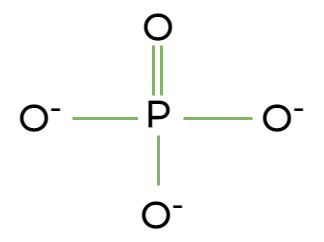
Methyl

R
Placeholder for any group of atoms connected to whatever you’re looking at
macromolecules
The building blocks of cells, made up of functional groups.
carbohydrates, lipids, proteins, nucleic acids
4 kinds of macromolecules
monomer
1 unit within a long repeating molecule
polymer
A long repeating molecule, a chain of units.
Dehydration Synthesis
The process by which polymers add more monomers to their chain. A polymer always has a hydrogen at the end, and a hydroxyl at the beginning. This is the same for a monomer. In this process, the H and the HO break off and combine to create a lone h2o, allowing the monomer to join the polymer.
Hydrolysis
The process by which the body breaks down large polymers into individual monomers (ex: digestion). This is the opposite of dehydration synthesis, and requires a lone H2O to replace the empty bonds created by the separation of a monomer from a polymer. The H2O breaks into H and HO to go on either end of the newly raw bonds.
Lys
to break
Sugars
Carbohydrates are also known as…
Quick short term energy
Function of carbs
Monosaccharides
Monomer of carbs
Sugar
Saccharide means…
Glucose, ribose, fructose
Examples of monosaccharides
Glucose + Fructose
Sucrose is a disaccharide composed of…
Glycosodic linkage
A carbohydrate bond
Polysaccharide
Carbohydrate polymer
highly
Glycogen is ___ branched
Minimally
Starch is ____ branched
Cellulose
Polysaccharide fiber
Fats
Lipids are also known as…
phobic
All lipids are hydro_____
Long term energy storage
Function of lipids
Glycerol
A lipid monomer that is a chain of three carbons surrounded by 5 hydrogen and 3 hydroxyl.
Fatty acid
A lipid monomer that is a chain of CH2, often goes in a zigzag shape
Ester linkage
Bonding of lipids
R-C(=O)-O-R’
Ester linkage formula
Triglycerol
A lipid polymer that is glycerol linked by 3 ester linkages to 3 fatty acid chains.
Steroids
A lipid polymer known for stimulating growth
Cholesterol
A lipid polymer that provides stability to cell membranes
Phospholipid
A lipid polymer that consists of a phosphate head and 2 fatty acid tails.
double bonded carbons
An unsaturated fatty acid contains 1 or more ____
Kink
When there is a double bond in a fatty acid, it causes the chain to ____
phillic
The phosphate/glycerol head of a phospholipid is hydro______.
phobic
The fatty acid tail of a phospholipid is hydro______.
less (hence unsaturated)
A double bond leads to more or less hydrogen atoms within a fatty acid chain?
phospholipid
The plasma membrane is made up of _____s. it has 2 layers of them, making it the _____ bilayer.
Store genetic code
Function of nucleic acids
Nucleotide
Monomer of nucleic acid
a phosphate, a pentose sugar, and a nitrogenous base
A nucleotide is made up of…
H
what is bonded to C2’ of deoxyribose?
OH
what is bonded to C2’ of ribose?
Purine structure
Hexagon ring fused with pentagon ring
Pyrimidine structure
Hexagon ring
C U T
Pyrimidine acronym
doers/jack of all trades
Proteins are the ____
Amino acids
Protein monomer
Poly/di peptide
Protein polymer
peptide bond
Protein bond
20
How many amino acids are there?
unique arrangement of amino acids in a polypeptide
The primary protein structure is the…
Alpha helix
Secondary subunit of protein structure that is a coil
beta pleated sheet
Secondary subunit of protein structure that is a zigzag
Tertiary protein structure
A long chain of alpha helixes and beta pleated sheets all bonded and clumped together
4
Quaternary protein structure groups together how many tertiary protein structures?
Hemoglobin
Example of a Quaternary protein structure