A&P 1 Lab- Exam 3 Practical (Muscle Physiology)
 Studied by 0 people
 Call Kai
 Learn
Learn Practice Test
 Spaced Repetition
 Match
Match Flashcards
 Knowt Play
1/45

There's no tags or description
Looks like no tags are added yet.
Name | Mastery | Learn | Test | Matching | Spaced |
|---|
No study sessions yet.
46 Terms
From deep to superficial, name the three types of connective tissue sheaths of a skeletal muscle
Endomysium, Perimysium, Epimysium
Why are the connective tissue wrappings of a skeletal muscle important?
Support and bind the muscle fibers together, increase the strength of the muscle and provide a round of entry, and exit nerves and blood vessels that serve the muscle.
For skeletal muscle fibers to contract, they must be excited by motor neurons. However, the electrical impulse cannot pass directly from a neuron to the skeletal muscle fibers to excite them. Just what does pass from the neuron to the muscle fibers, and what effect does it produce?
Acetylcholine interacts with muscle cell receptors after diffusing from the axon into the synaptic cleft. More sodium ions can enter muscle fibers due to a shift in permeability.
Label A
Tendon
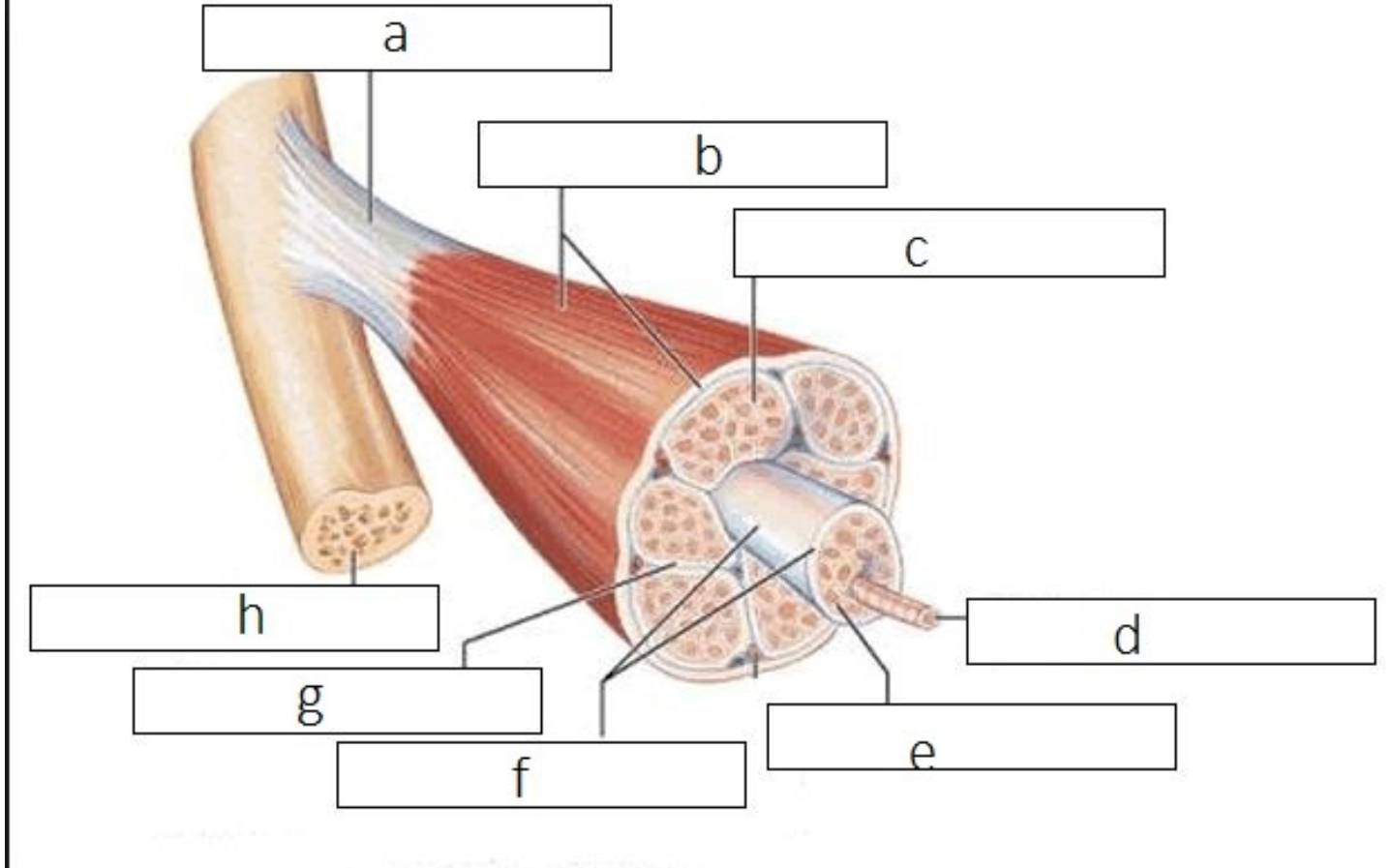
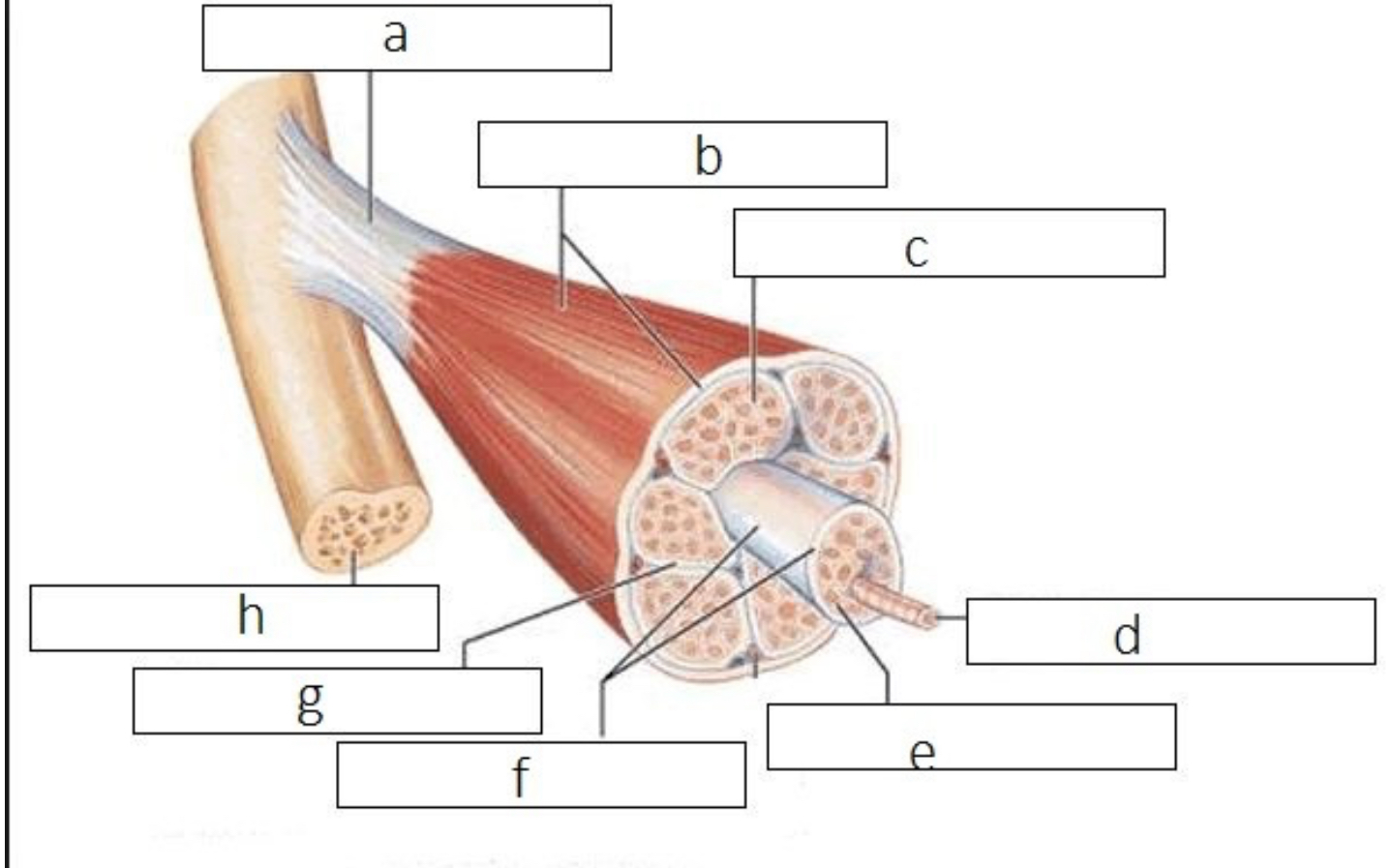
Label B
Epimysium
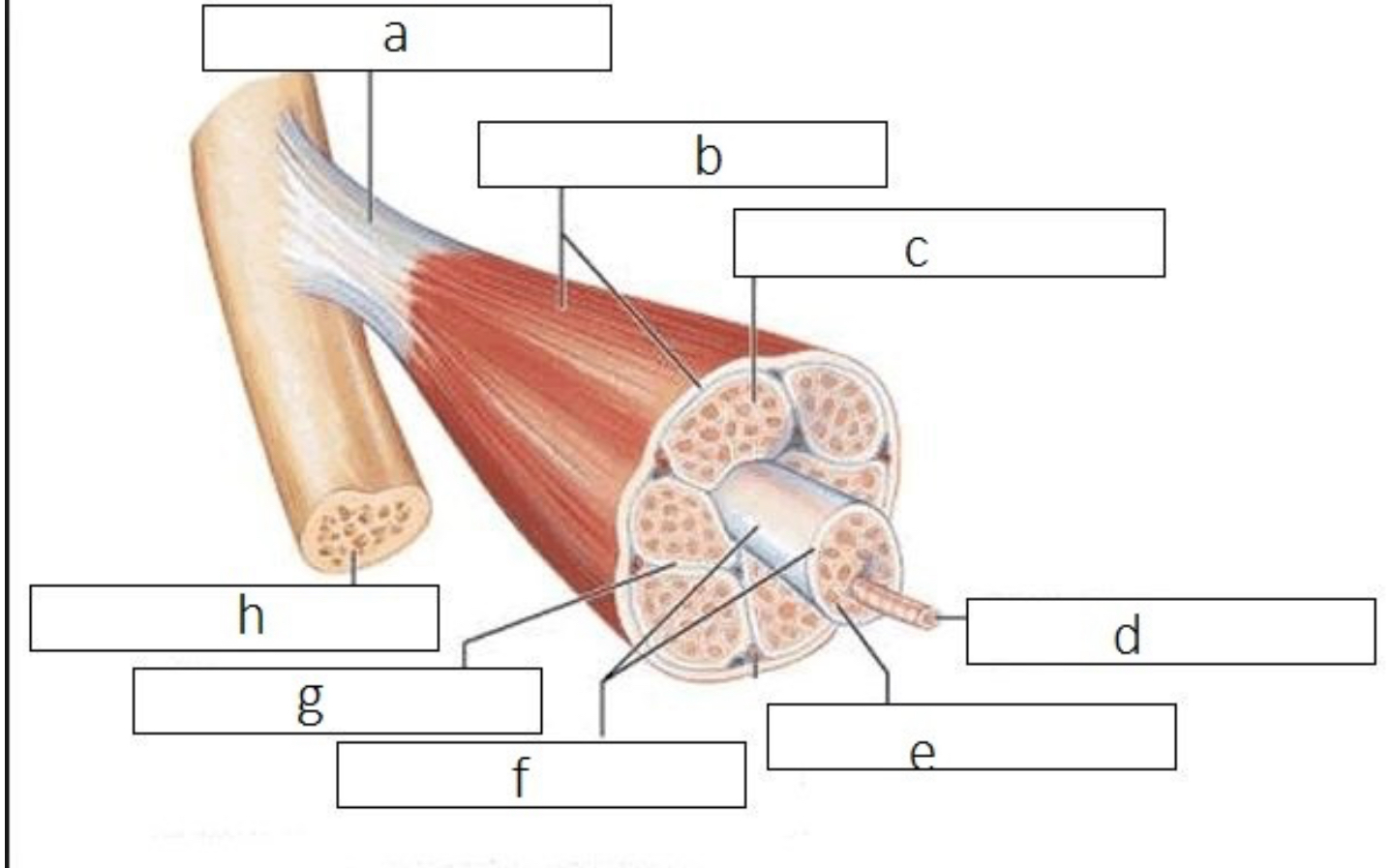
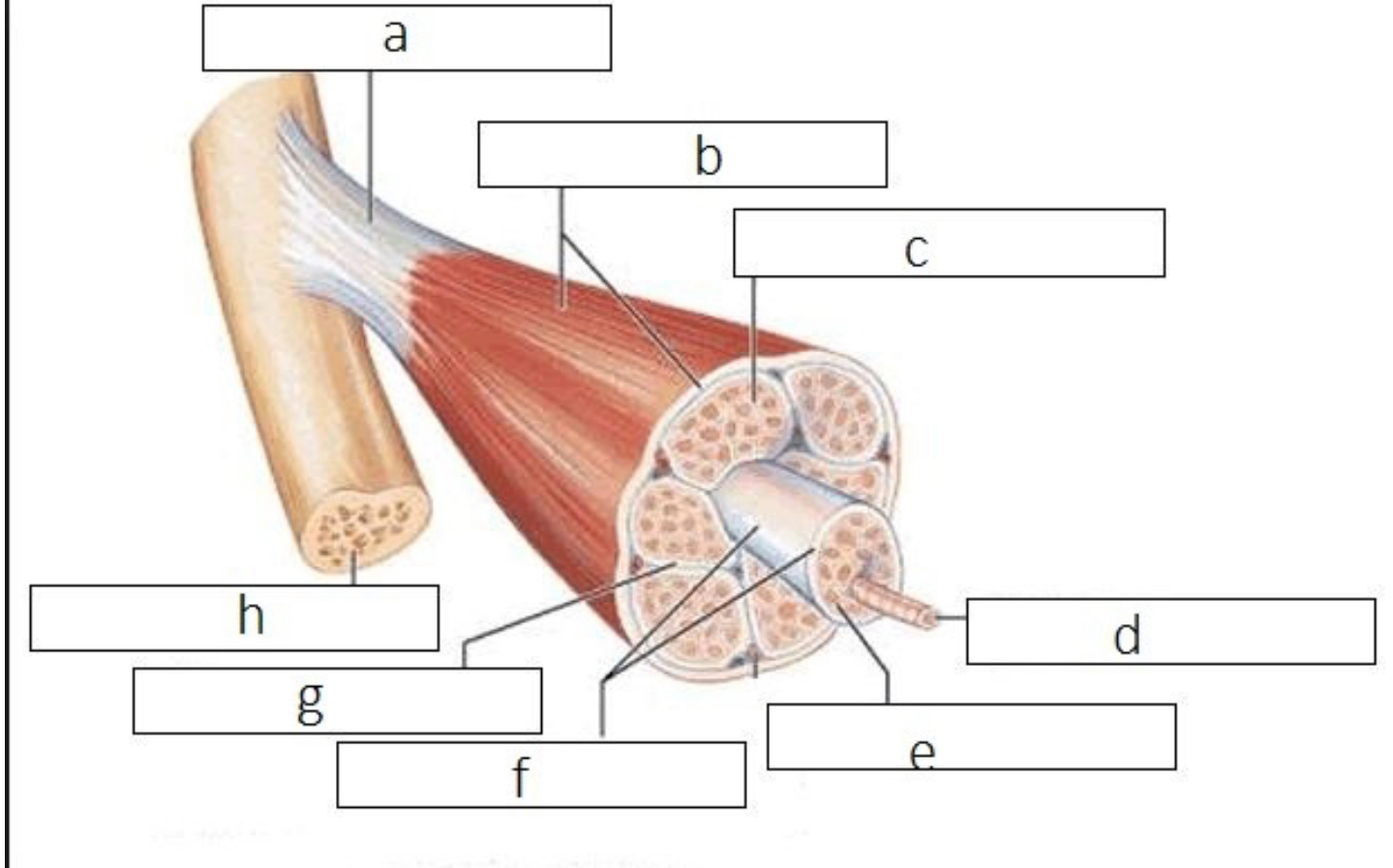
Label C
Endomysium
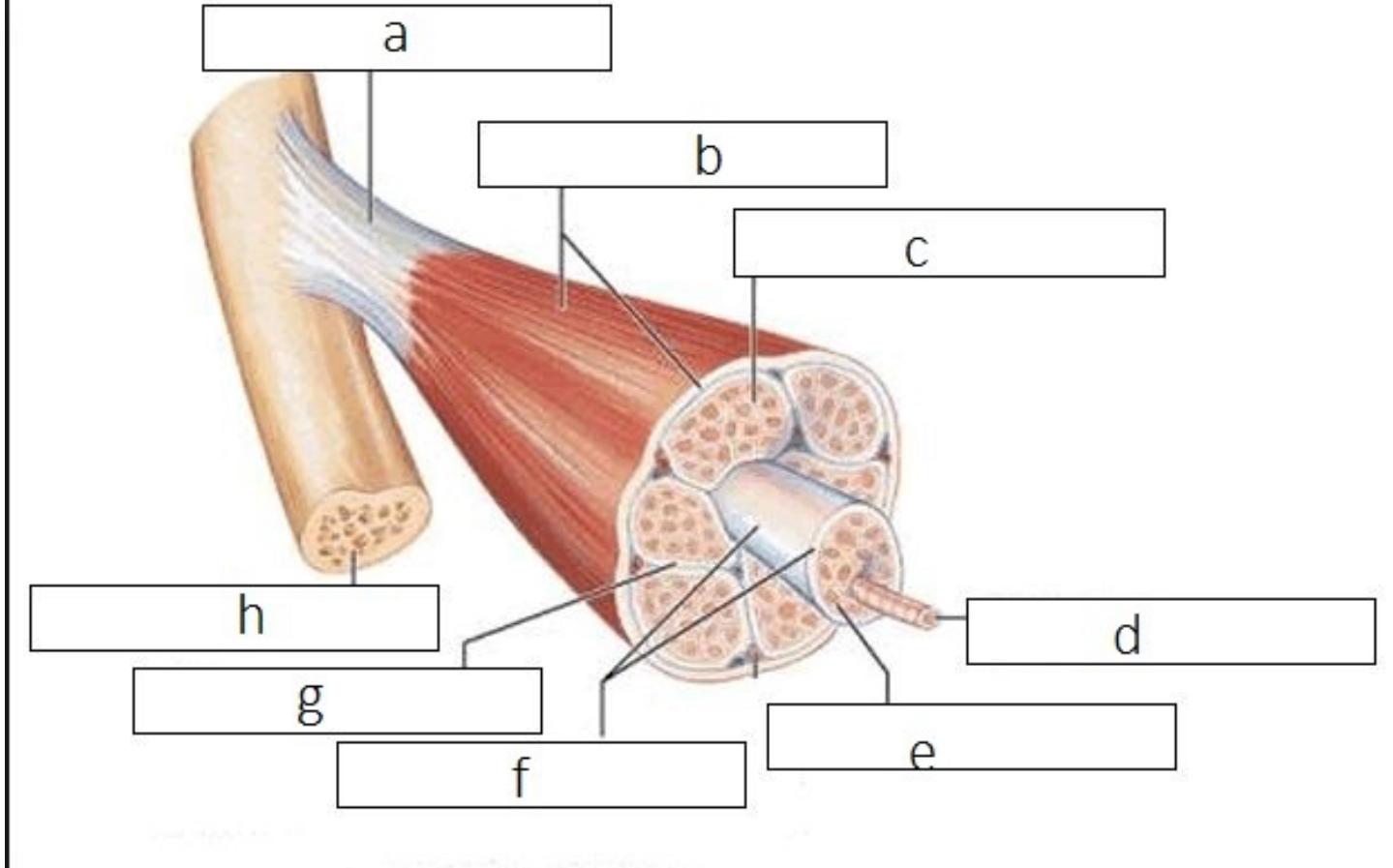
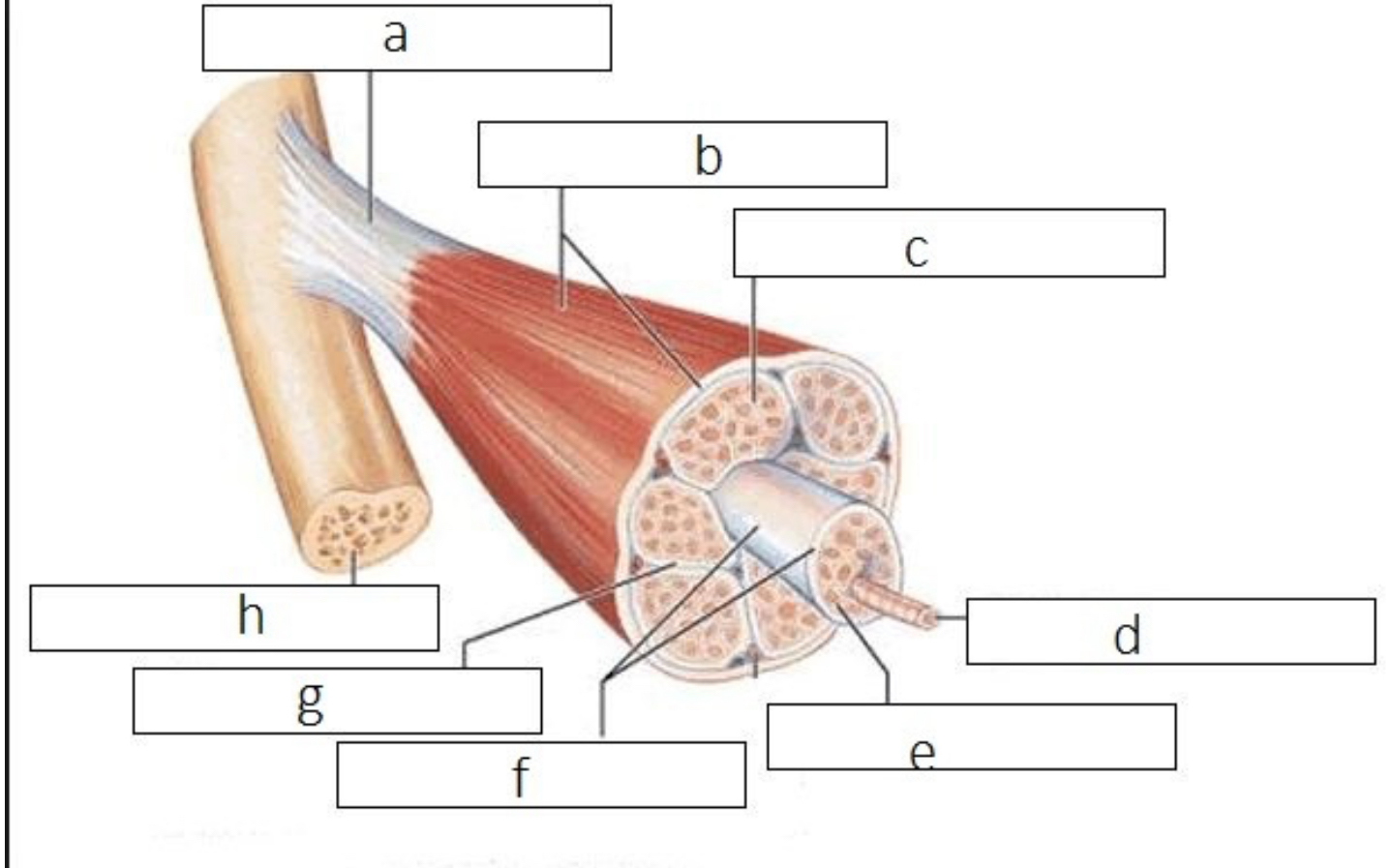
Label D
Muscle Fiber
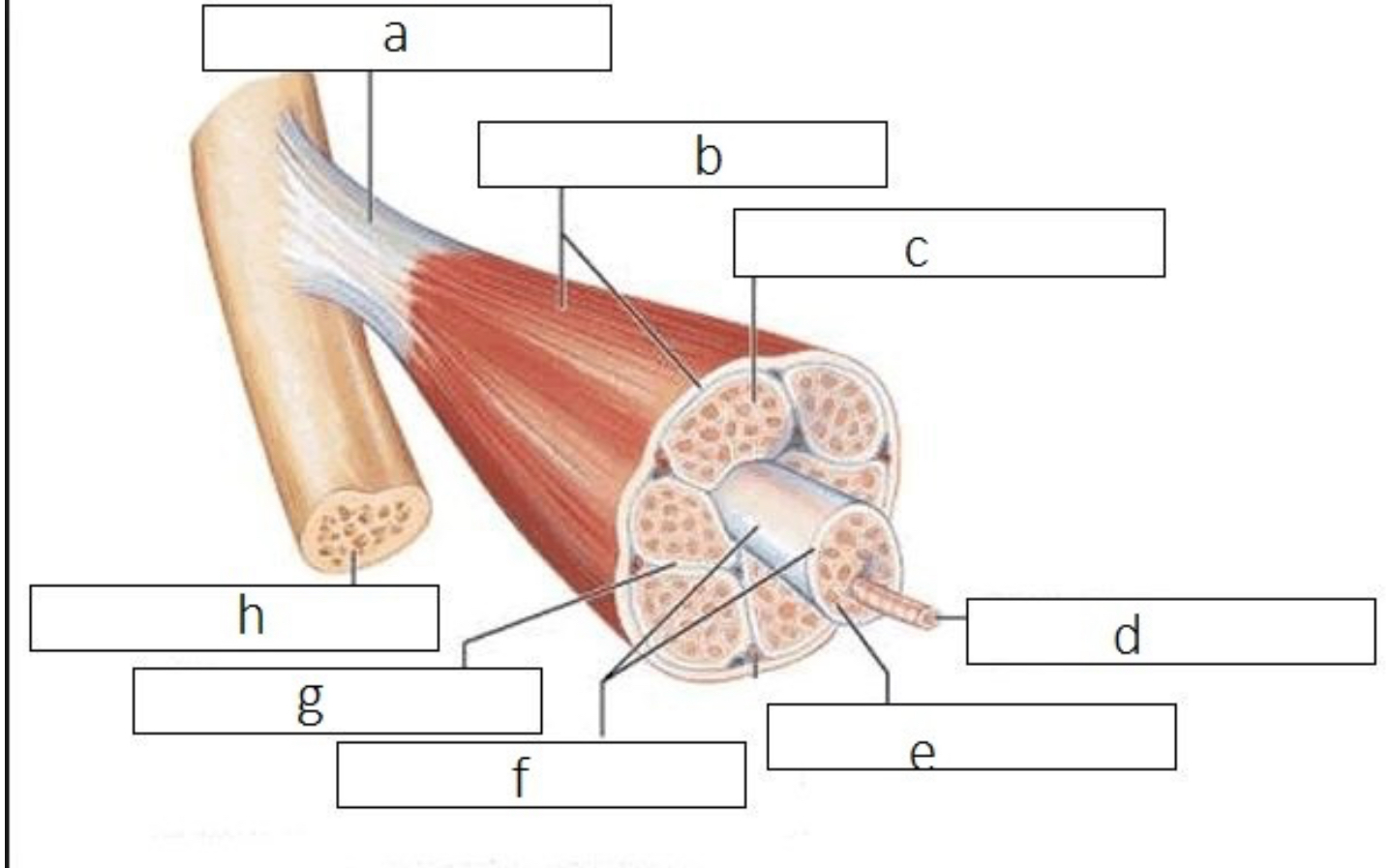
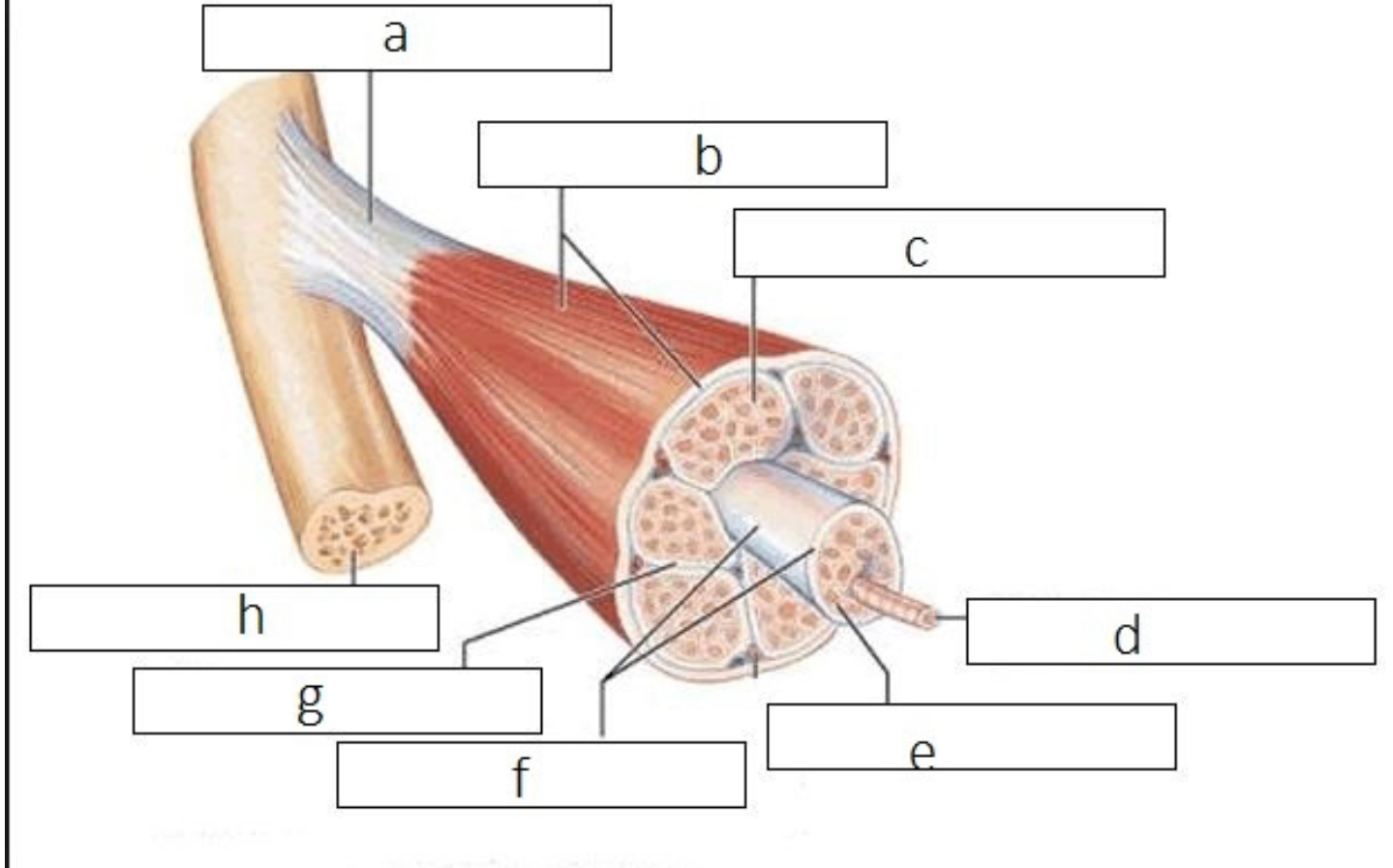
Label E
Endomysium
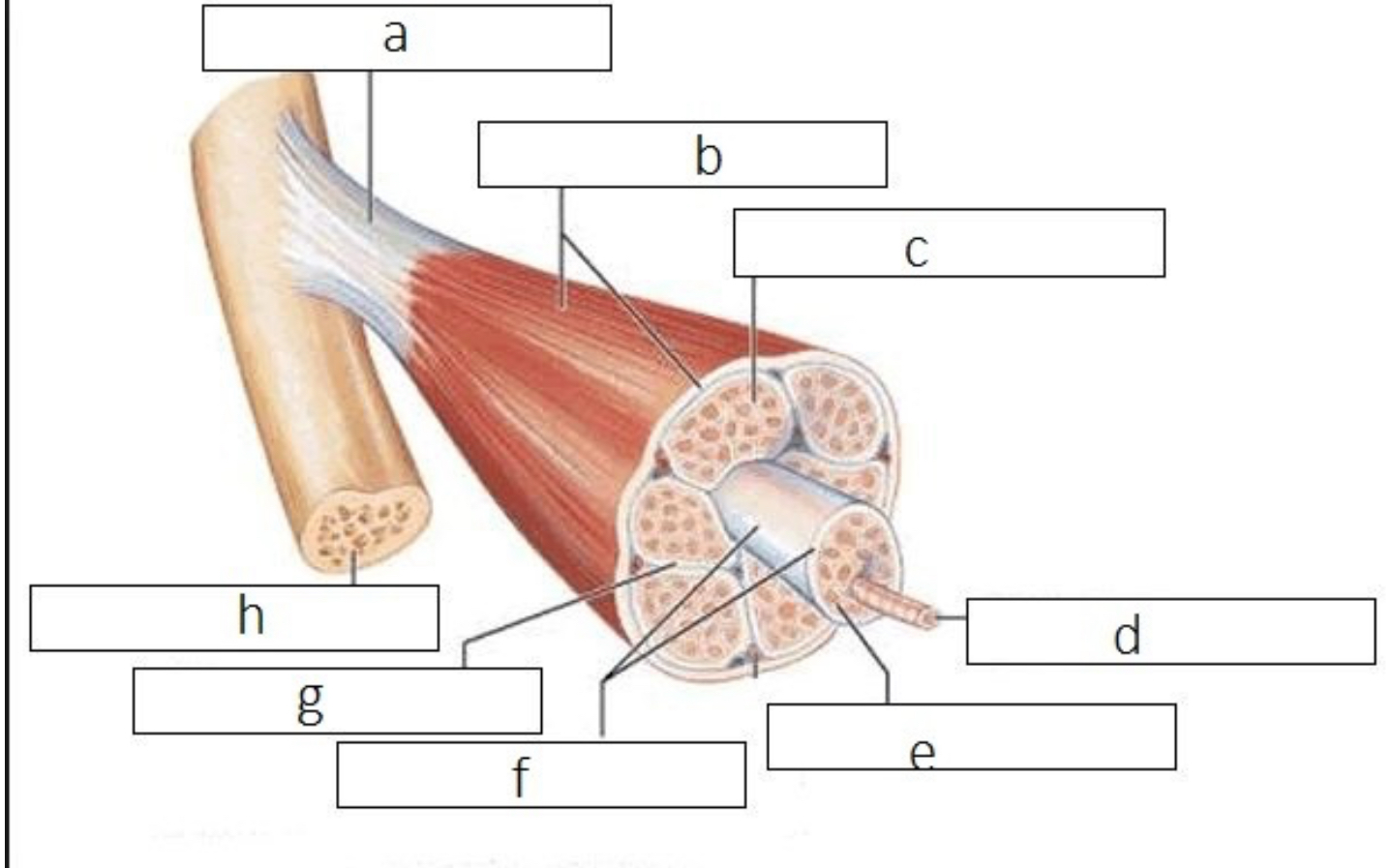
Label F
Fascicle
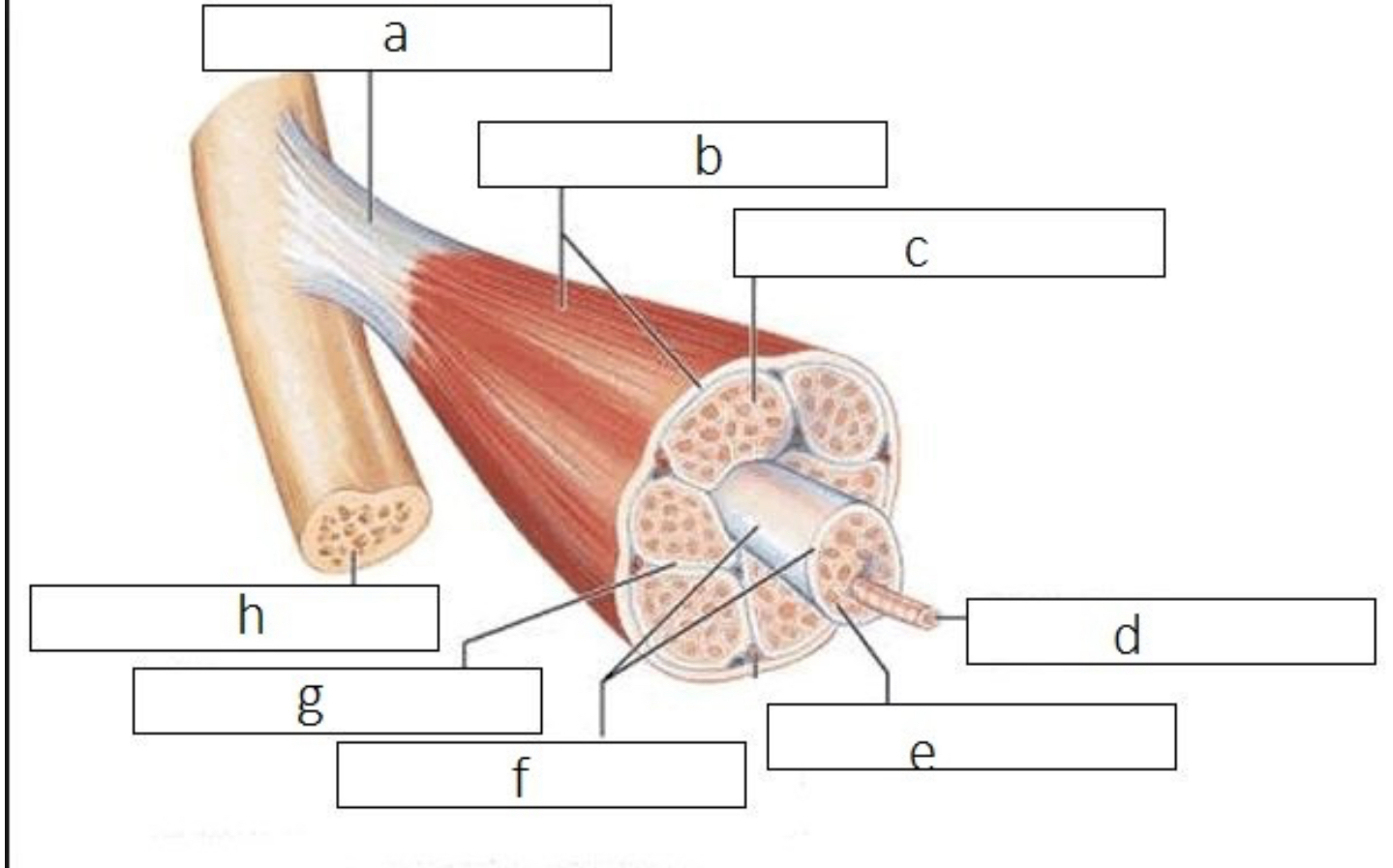
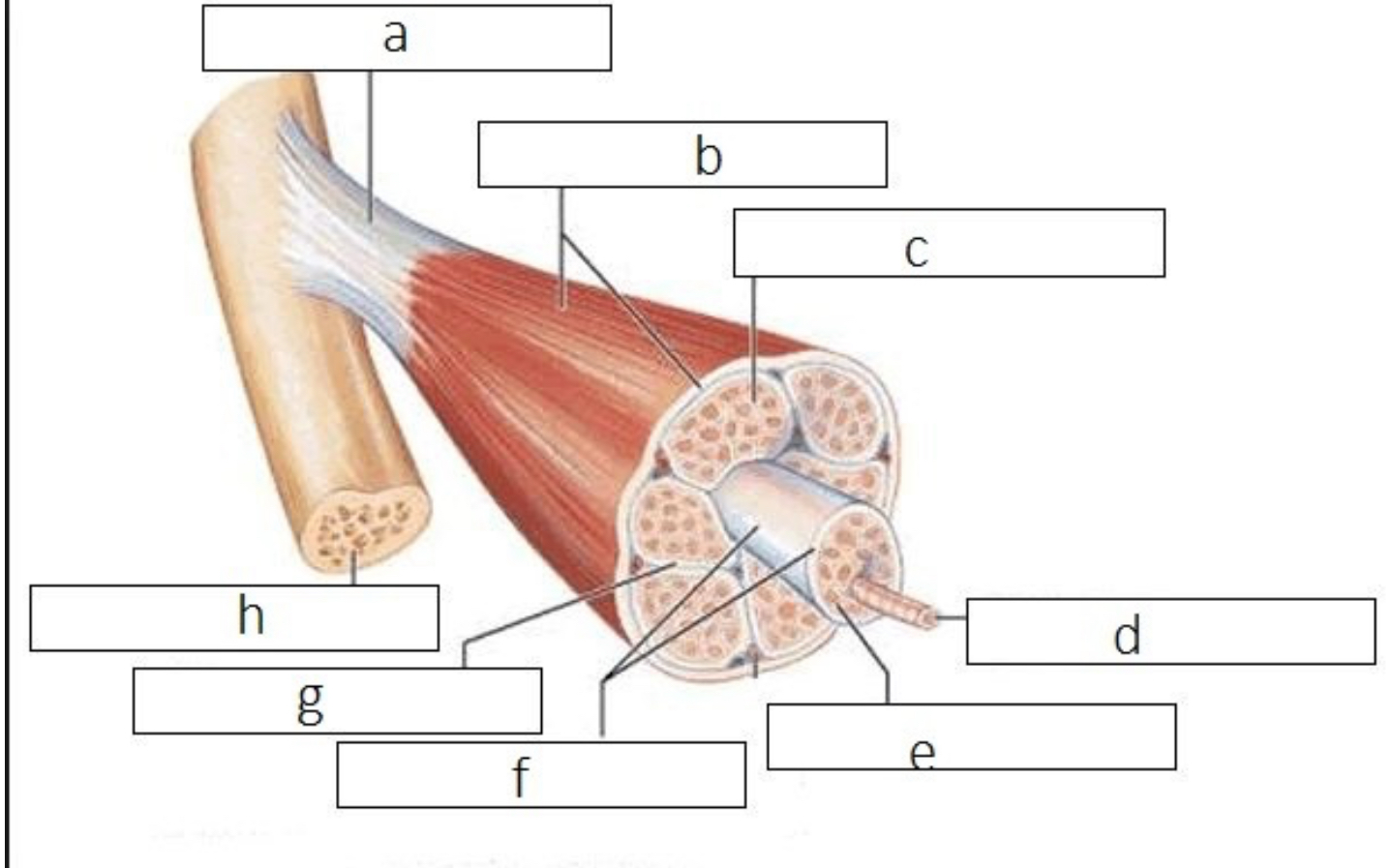
Label G
Perimysium
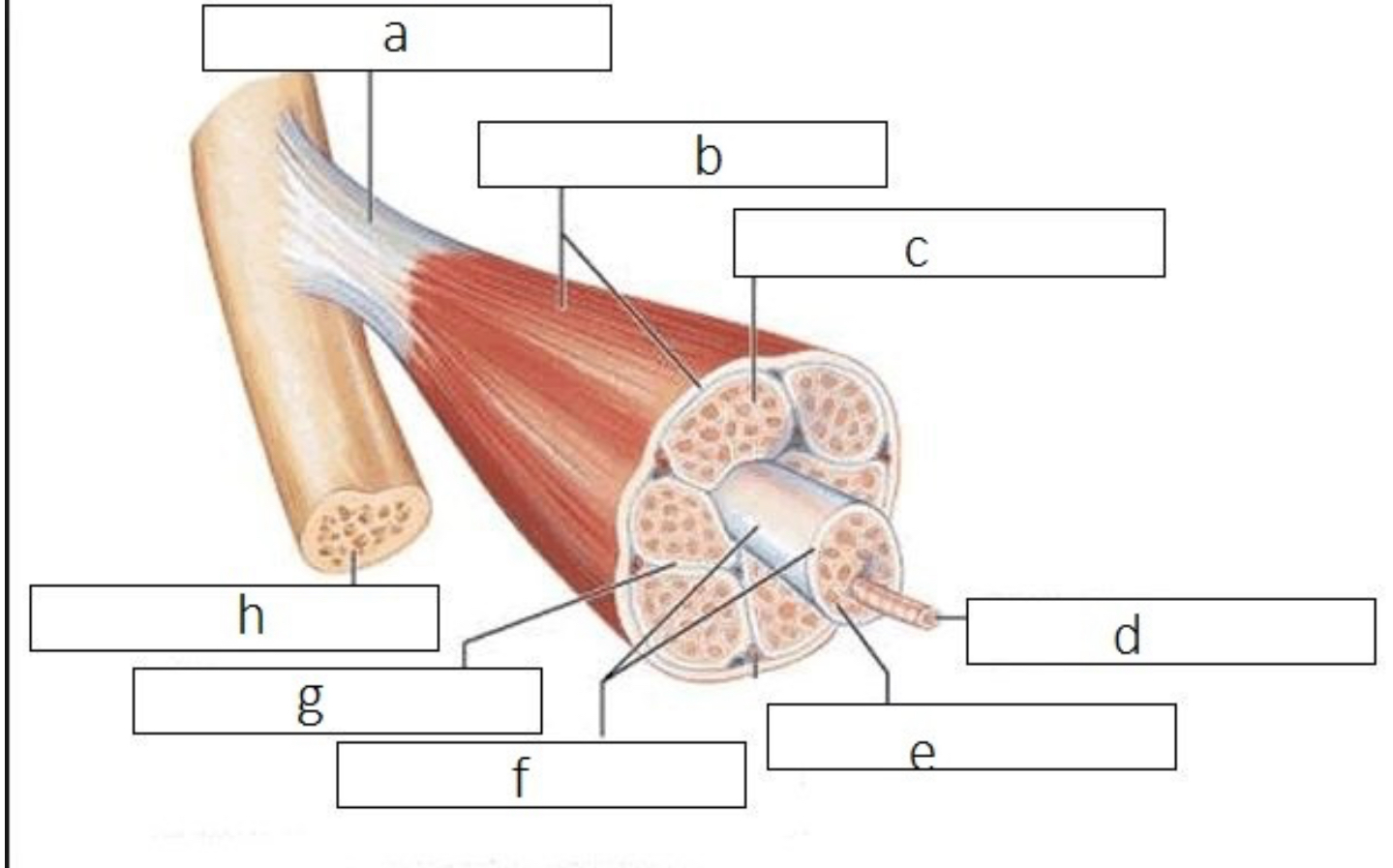
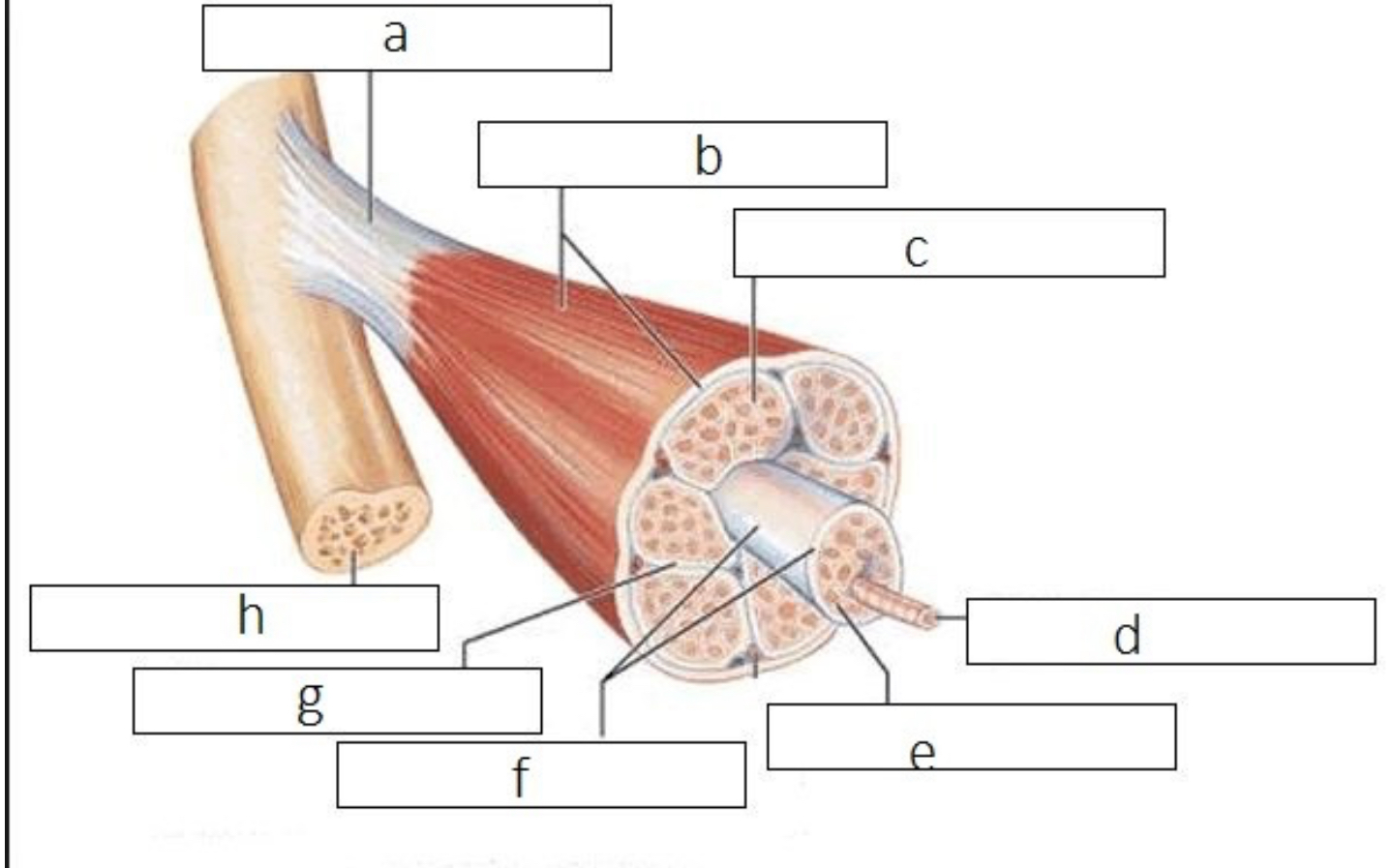
Label H
Bone
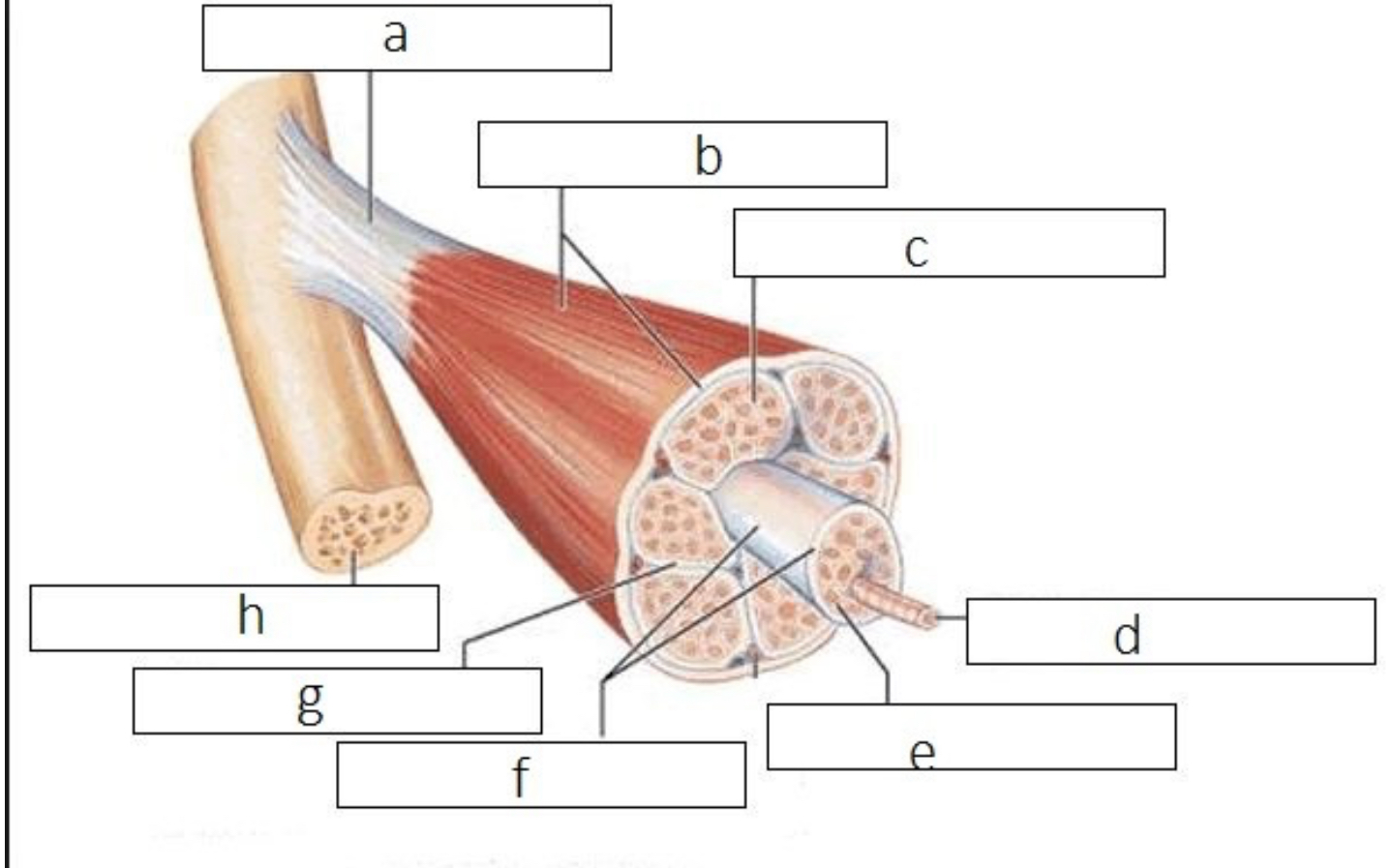
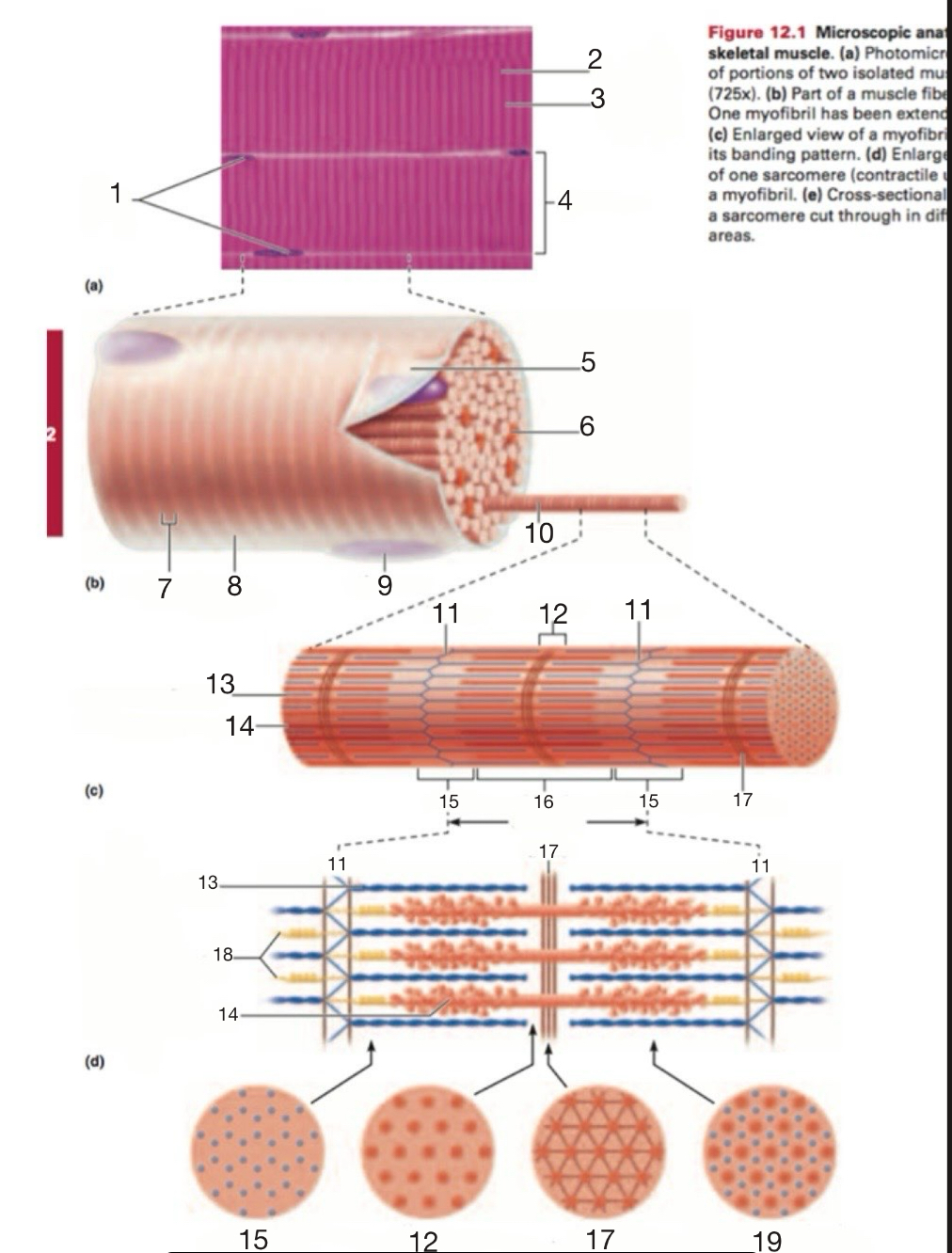
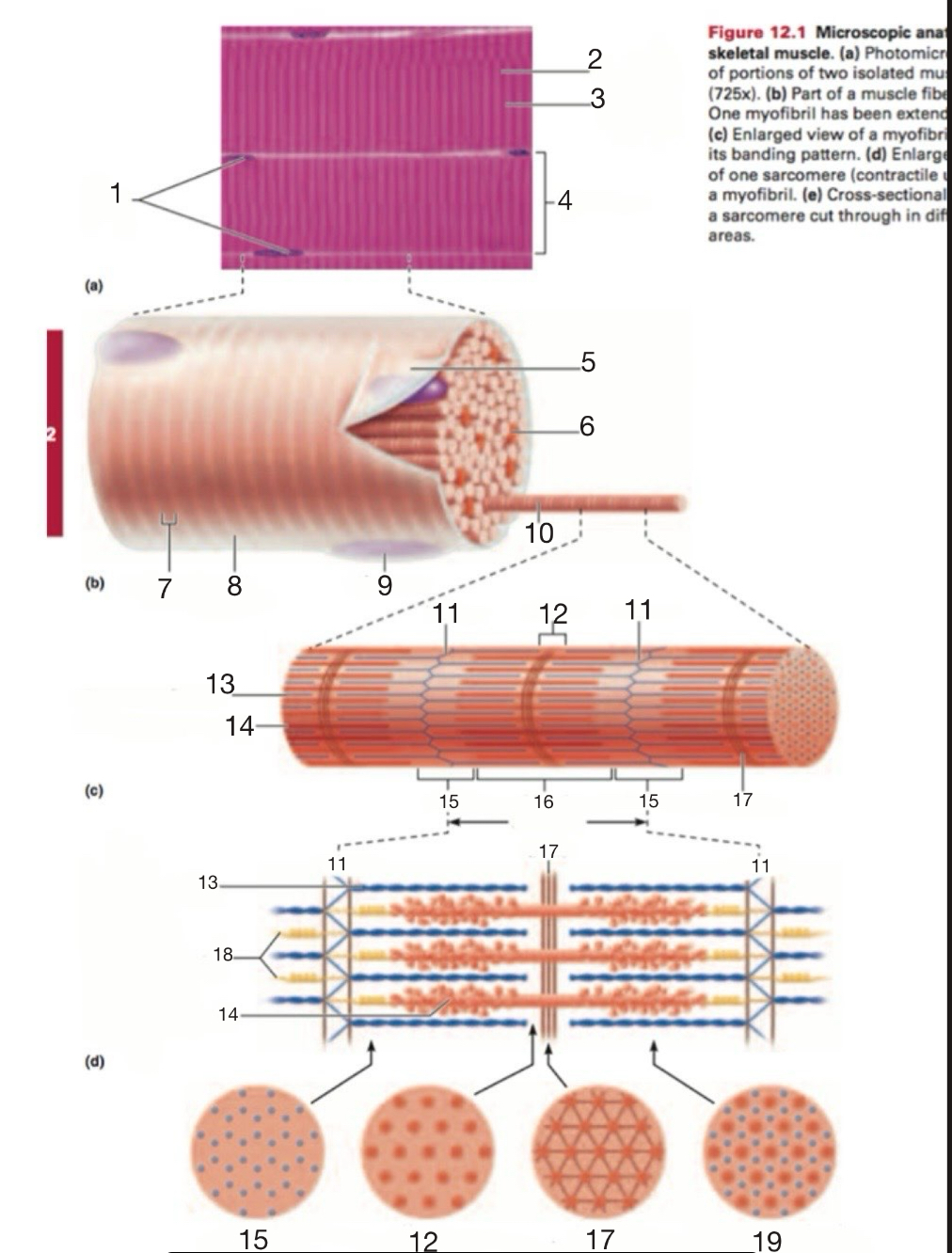
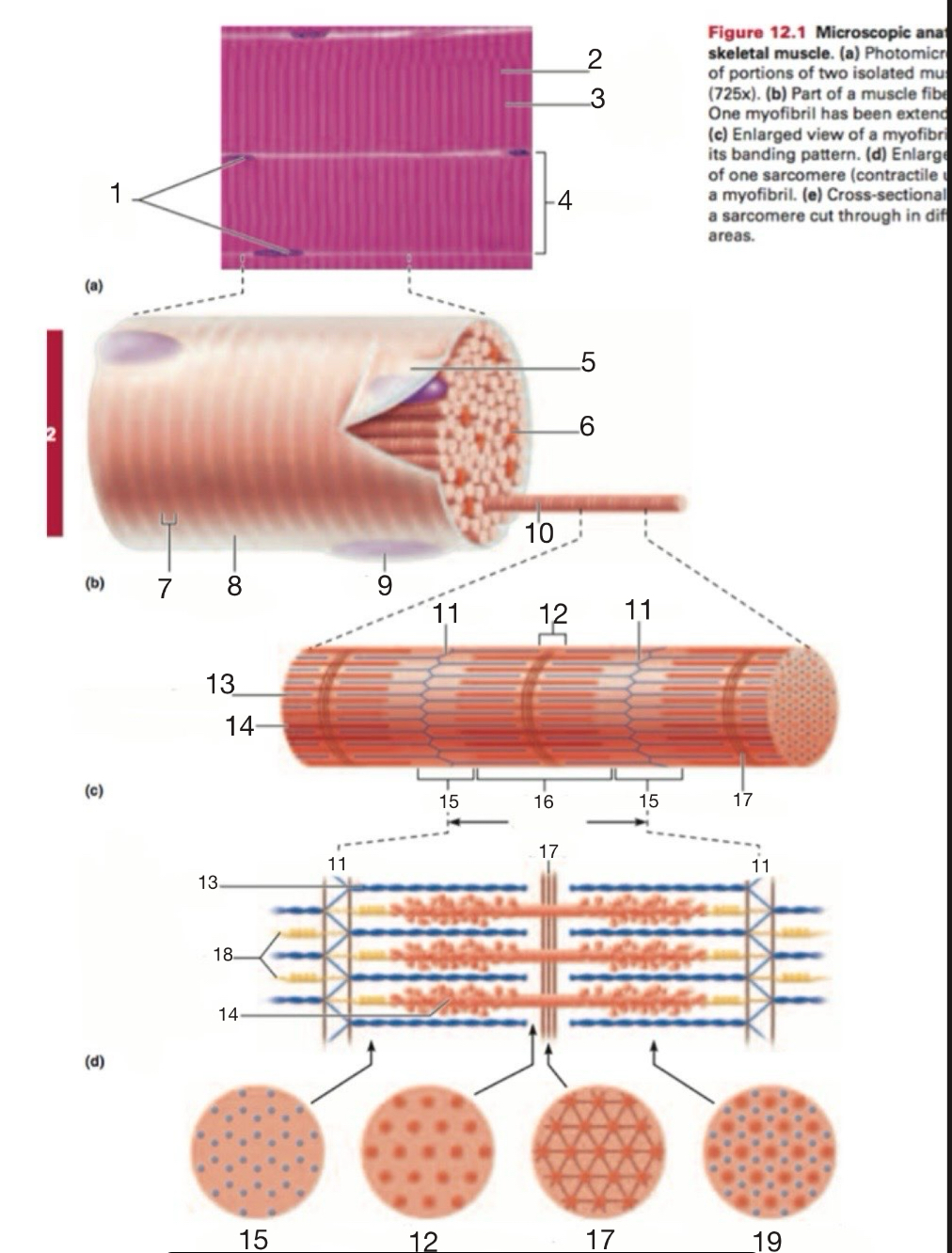
Label number 1
Nuclei
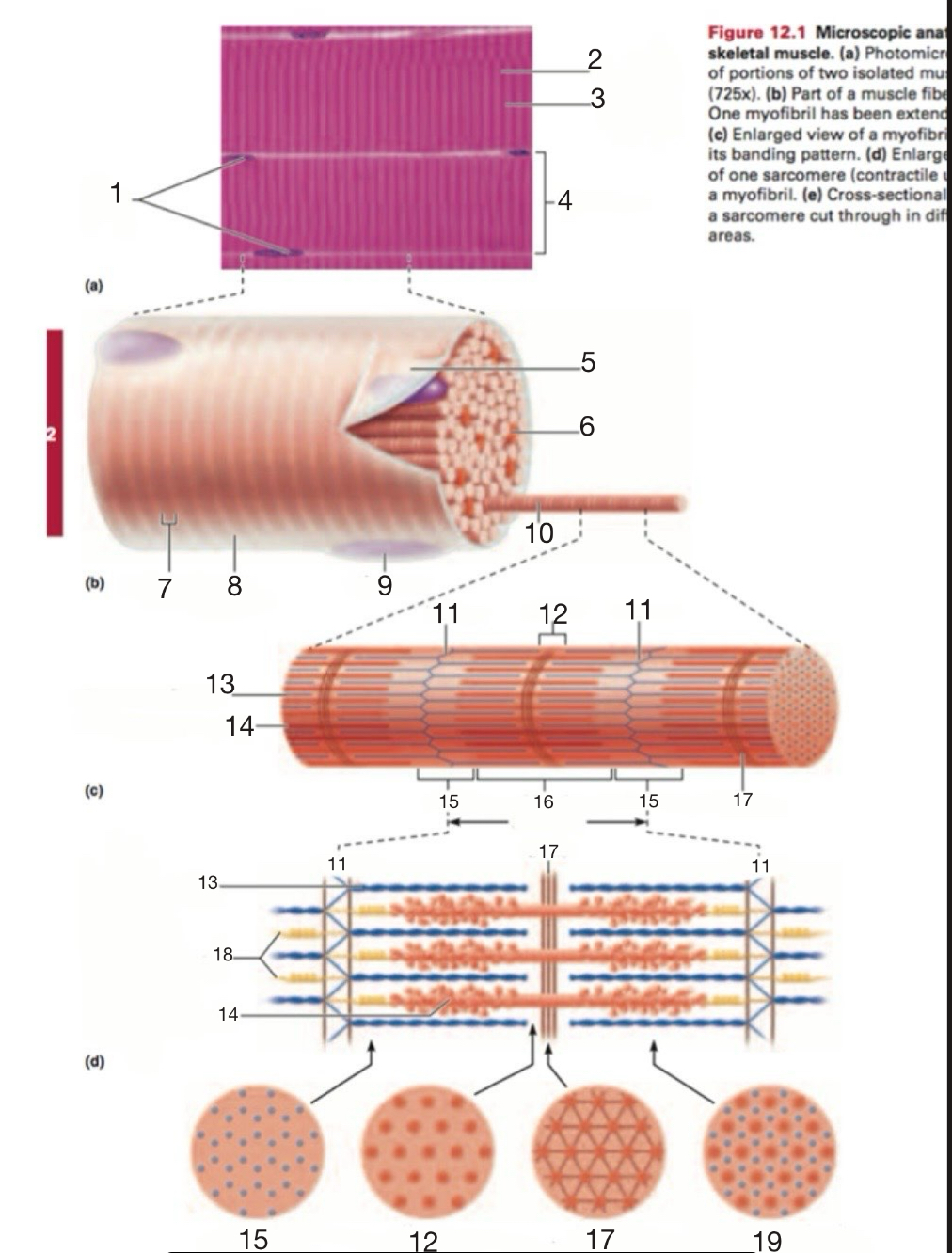
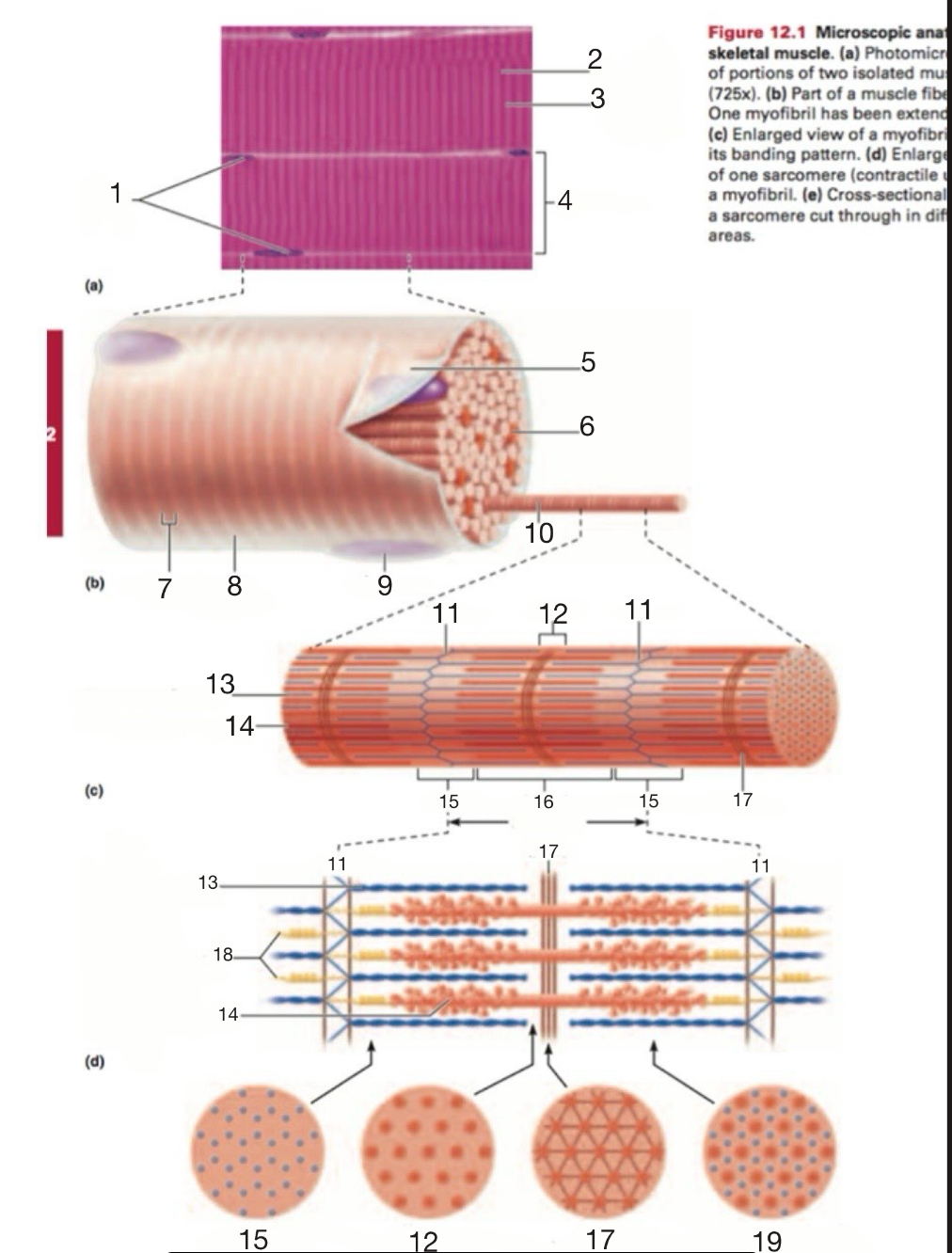
Label number 2
Dark A Band
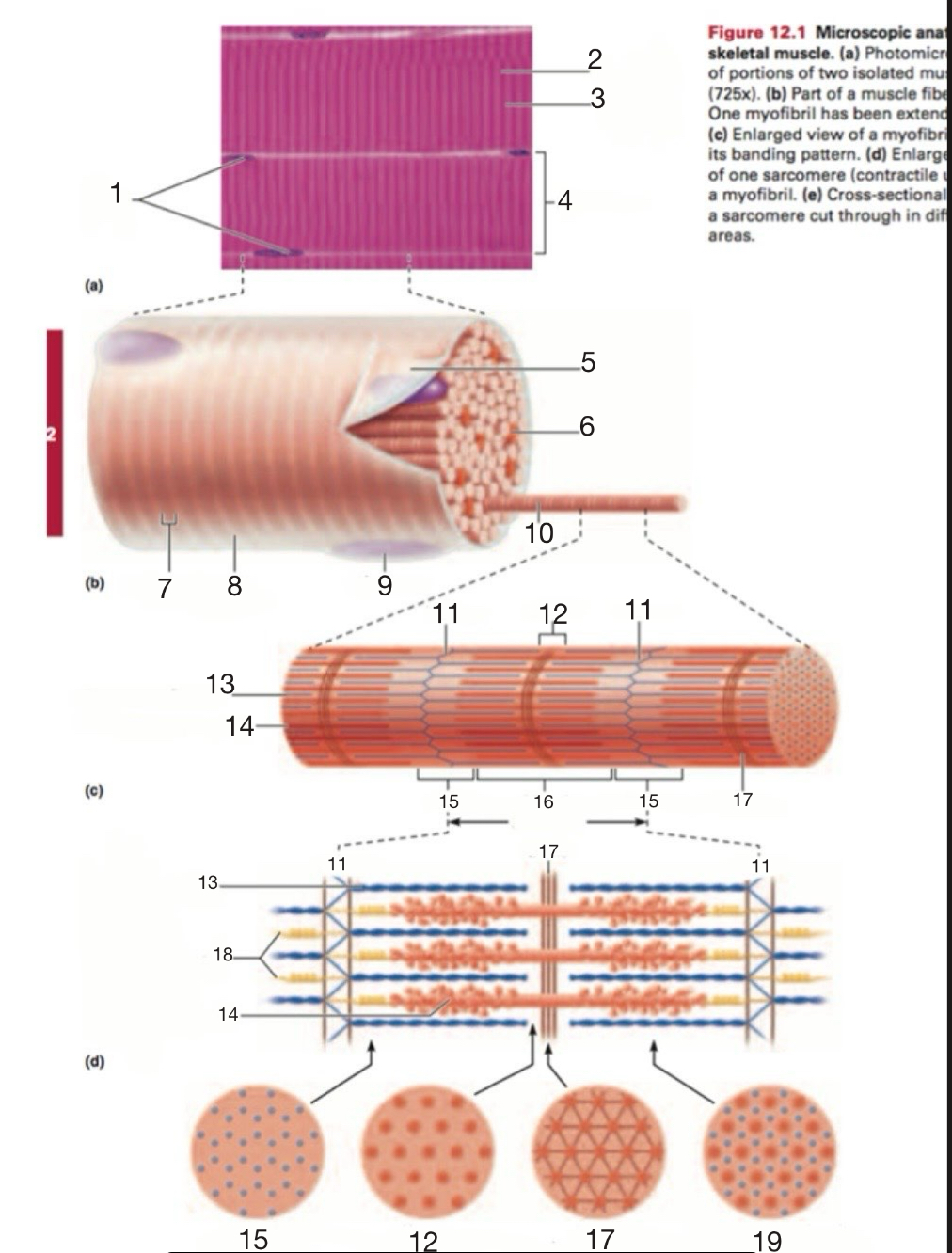
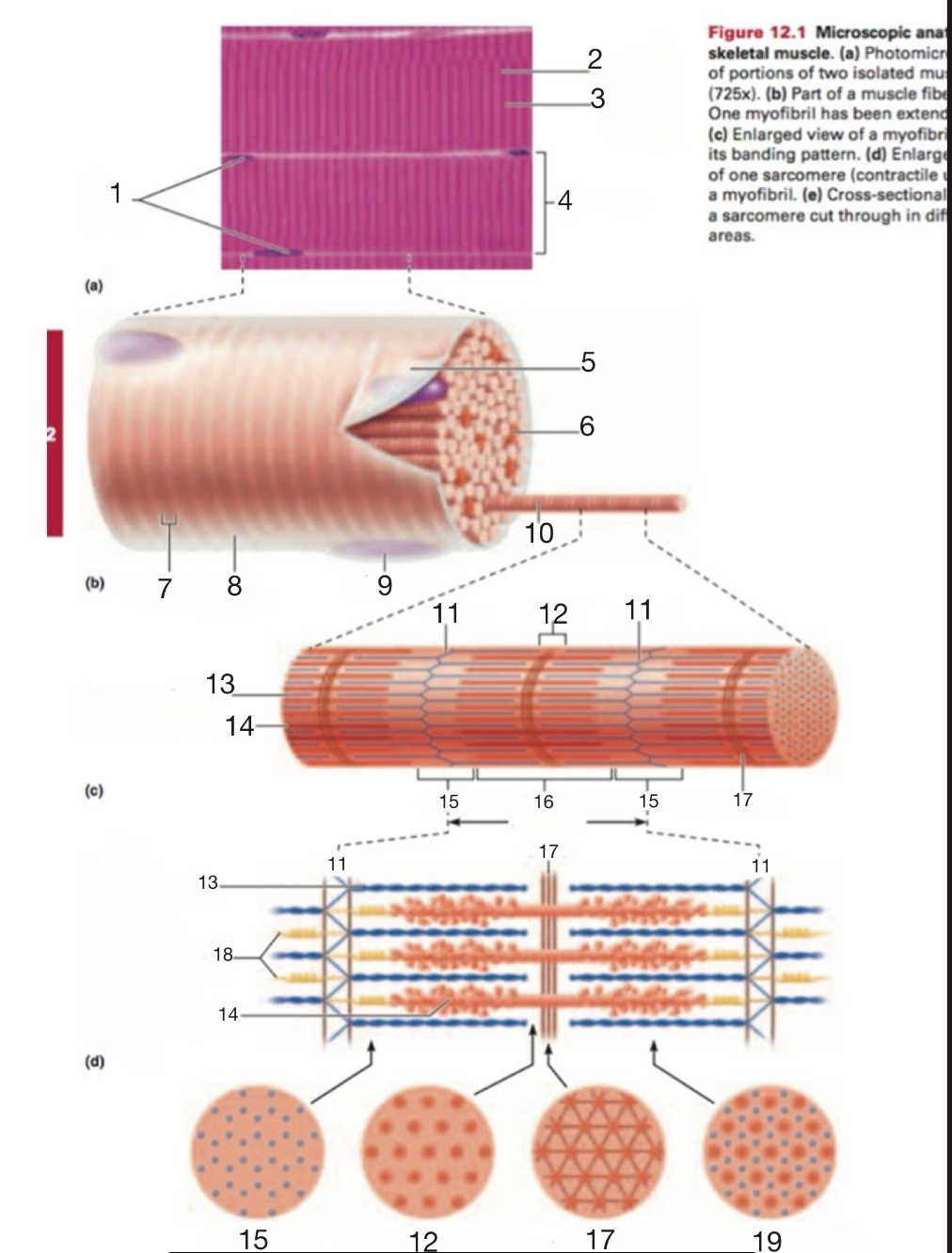
Label number 3
Light I Band
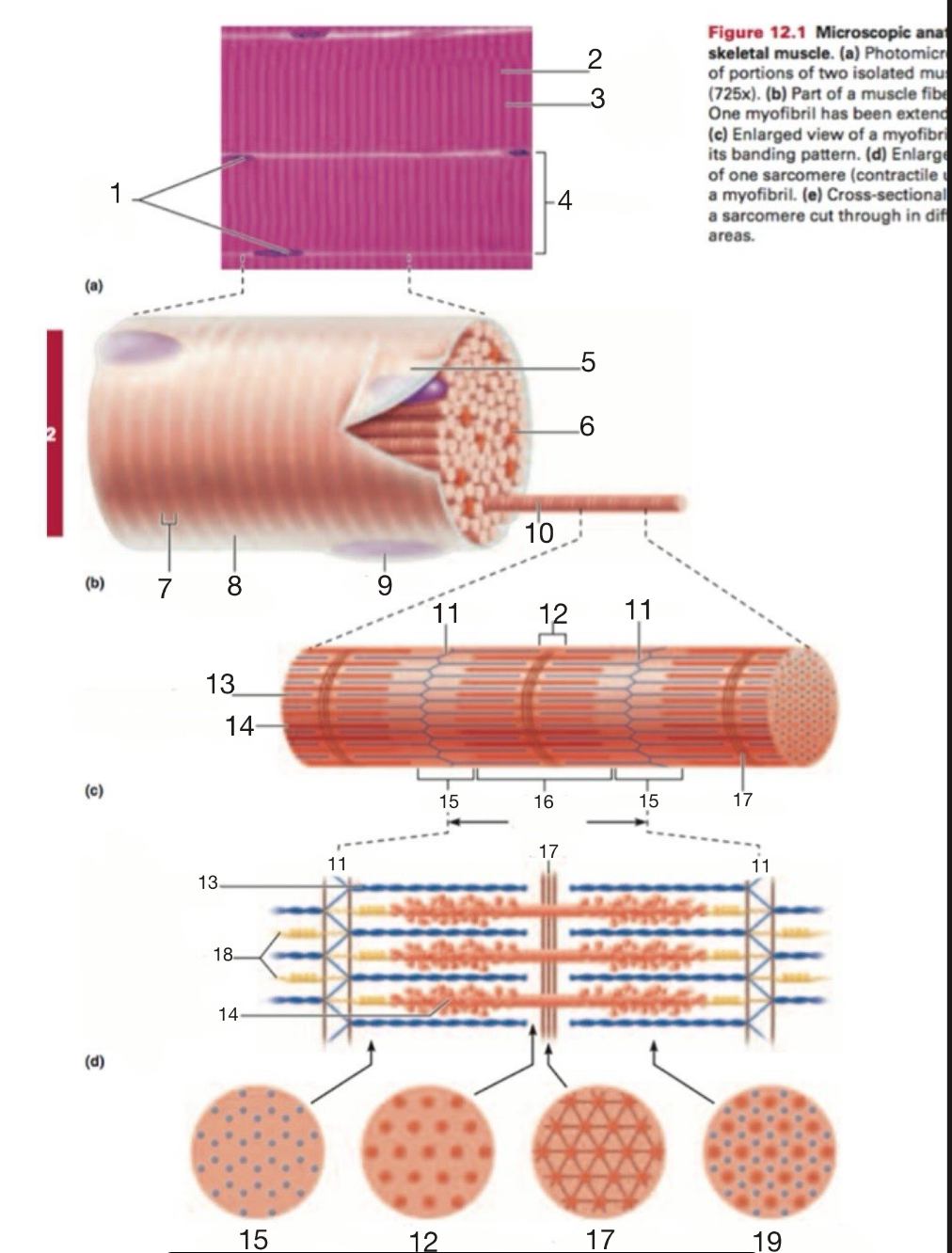
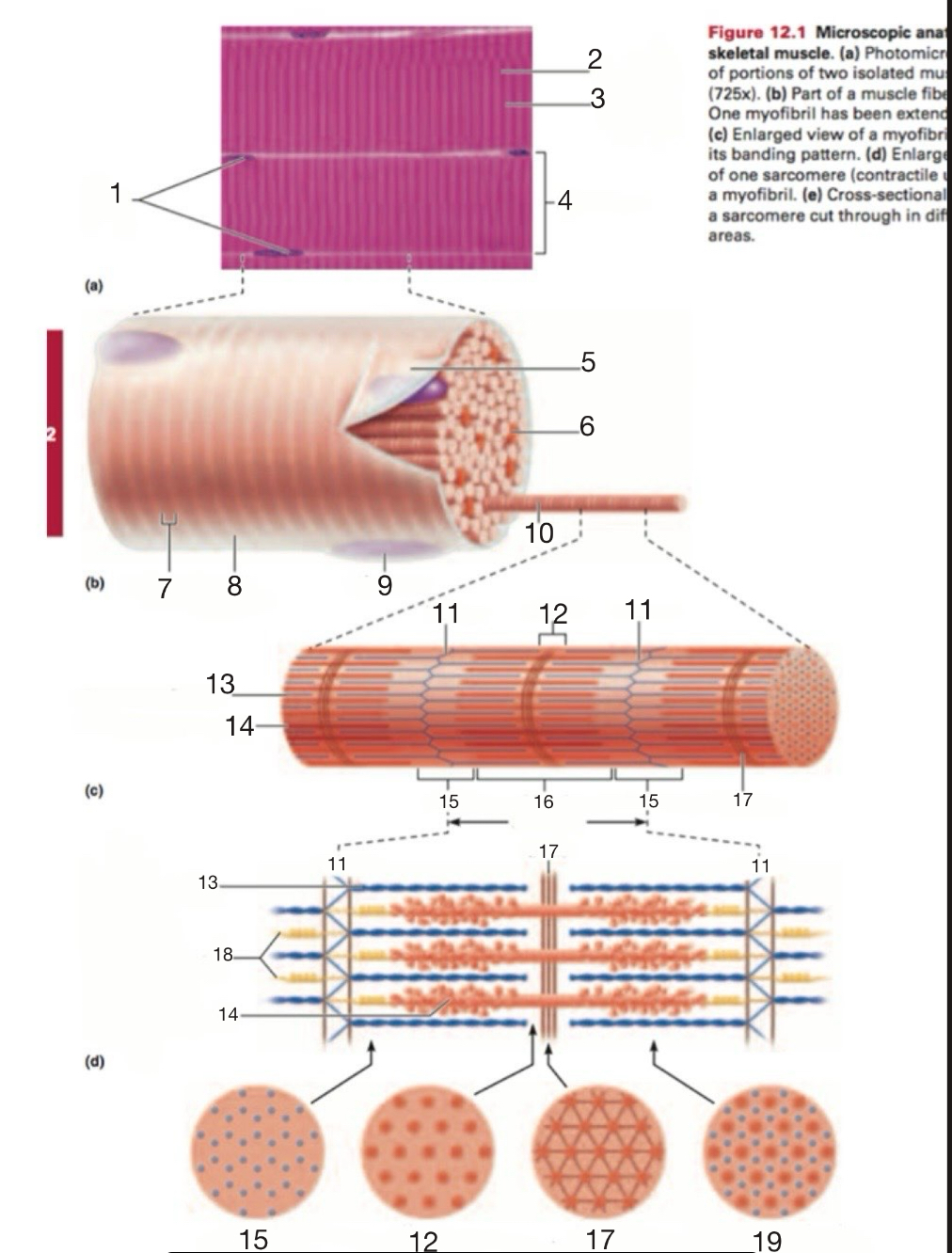
Label number 4
Muscle Fiber
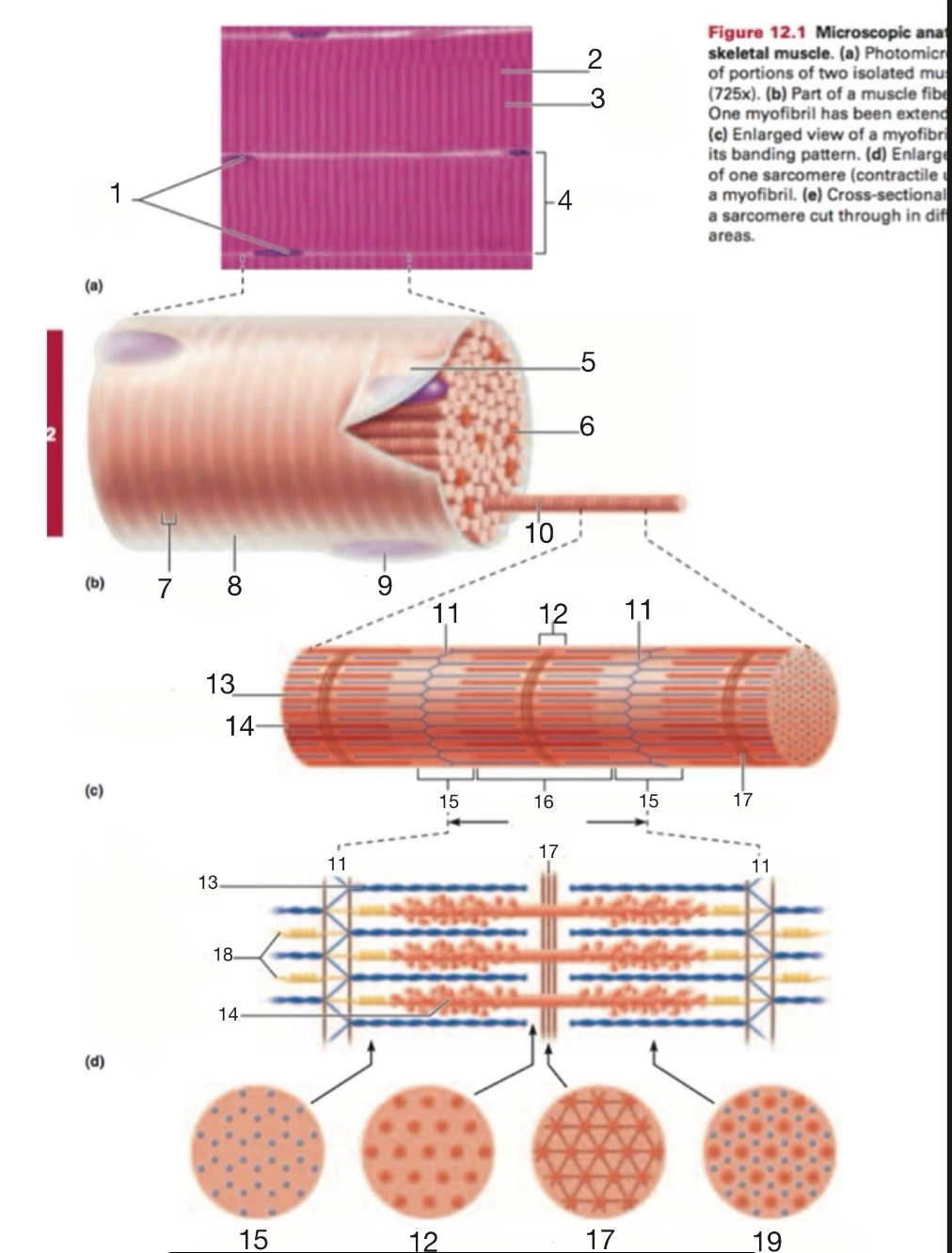
Label number 5
Sacroleema
Label number 6
Mitochondrion
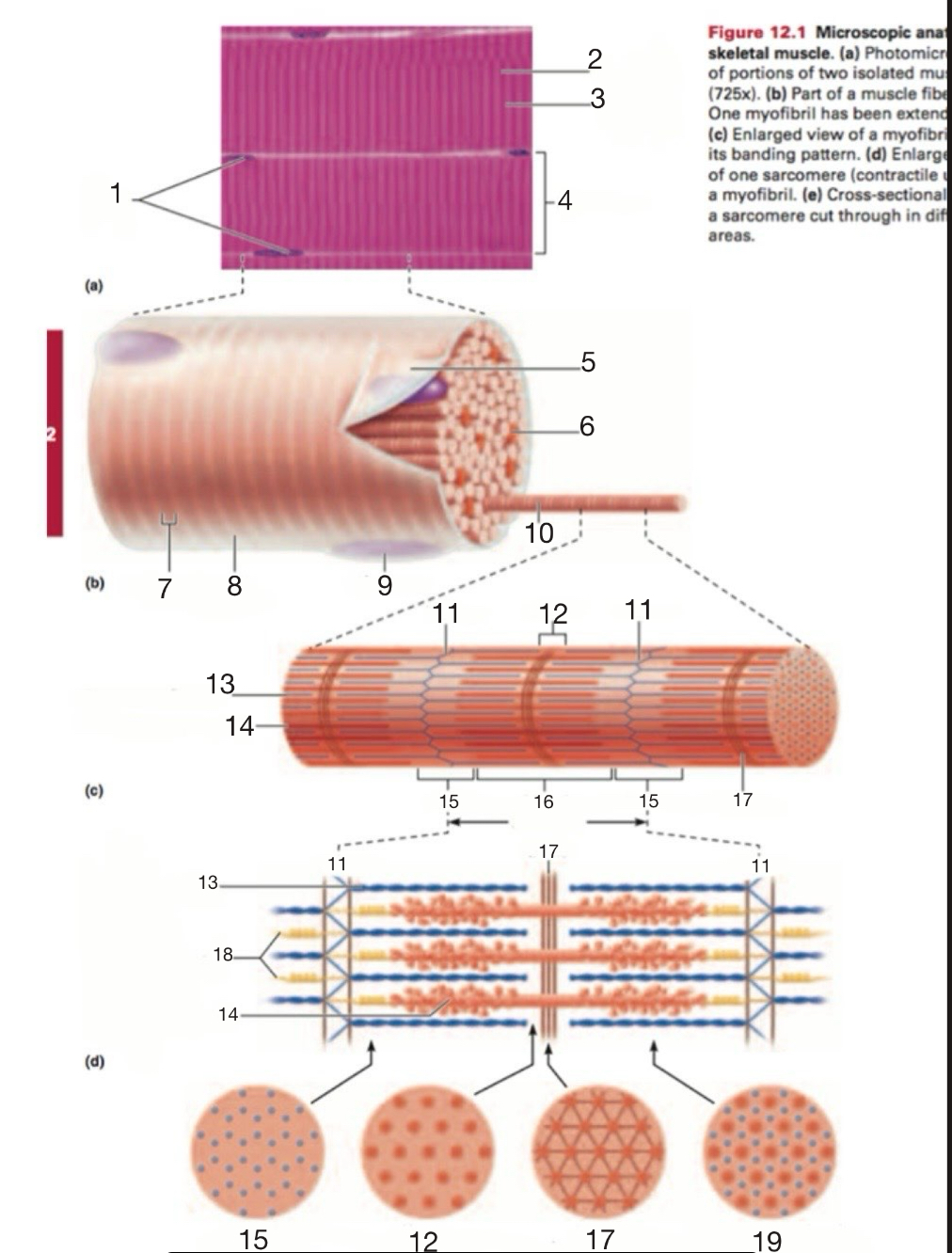
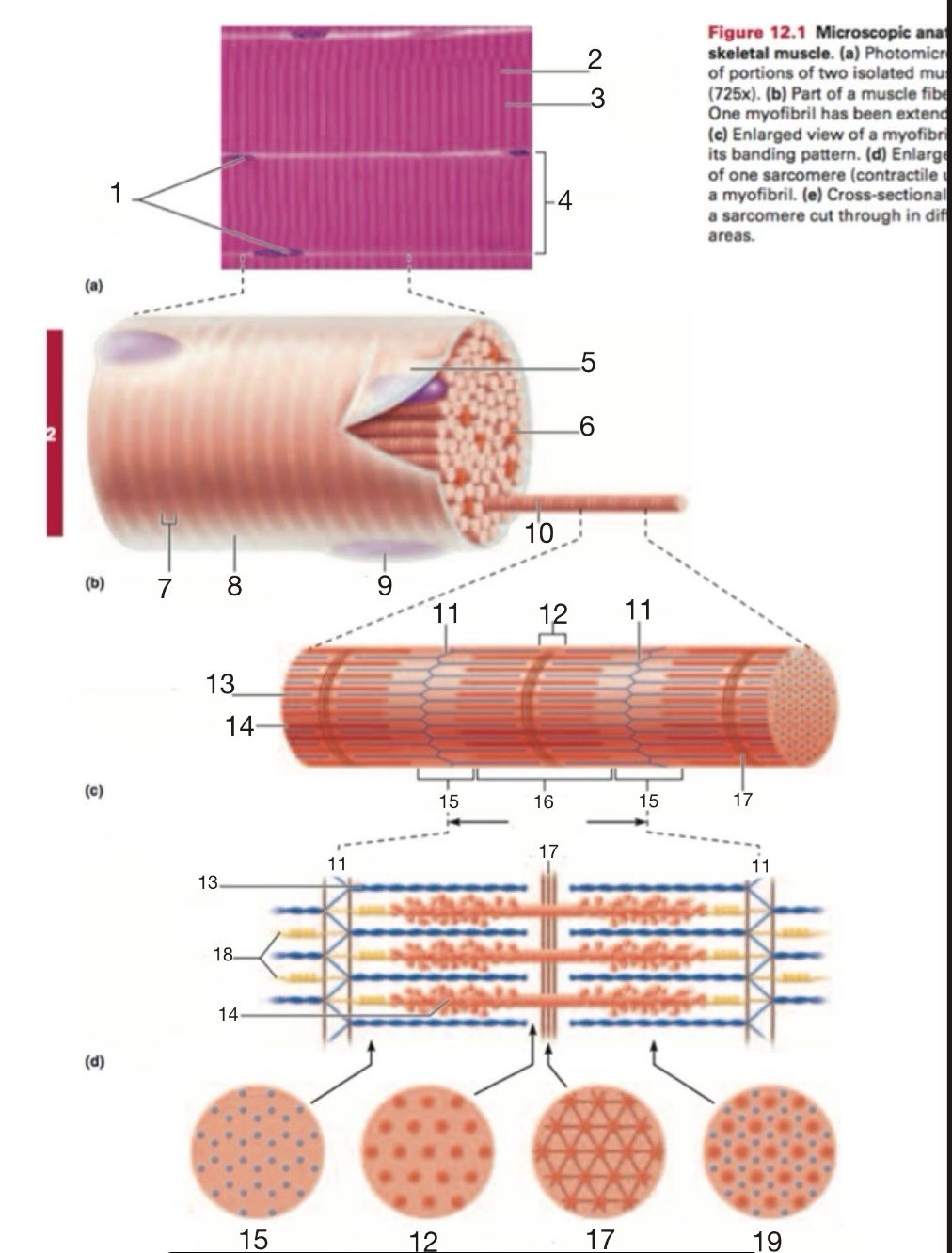
Label number 7
Dark A Band
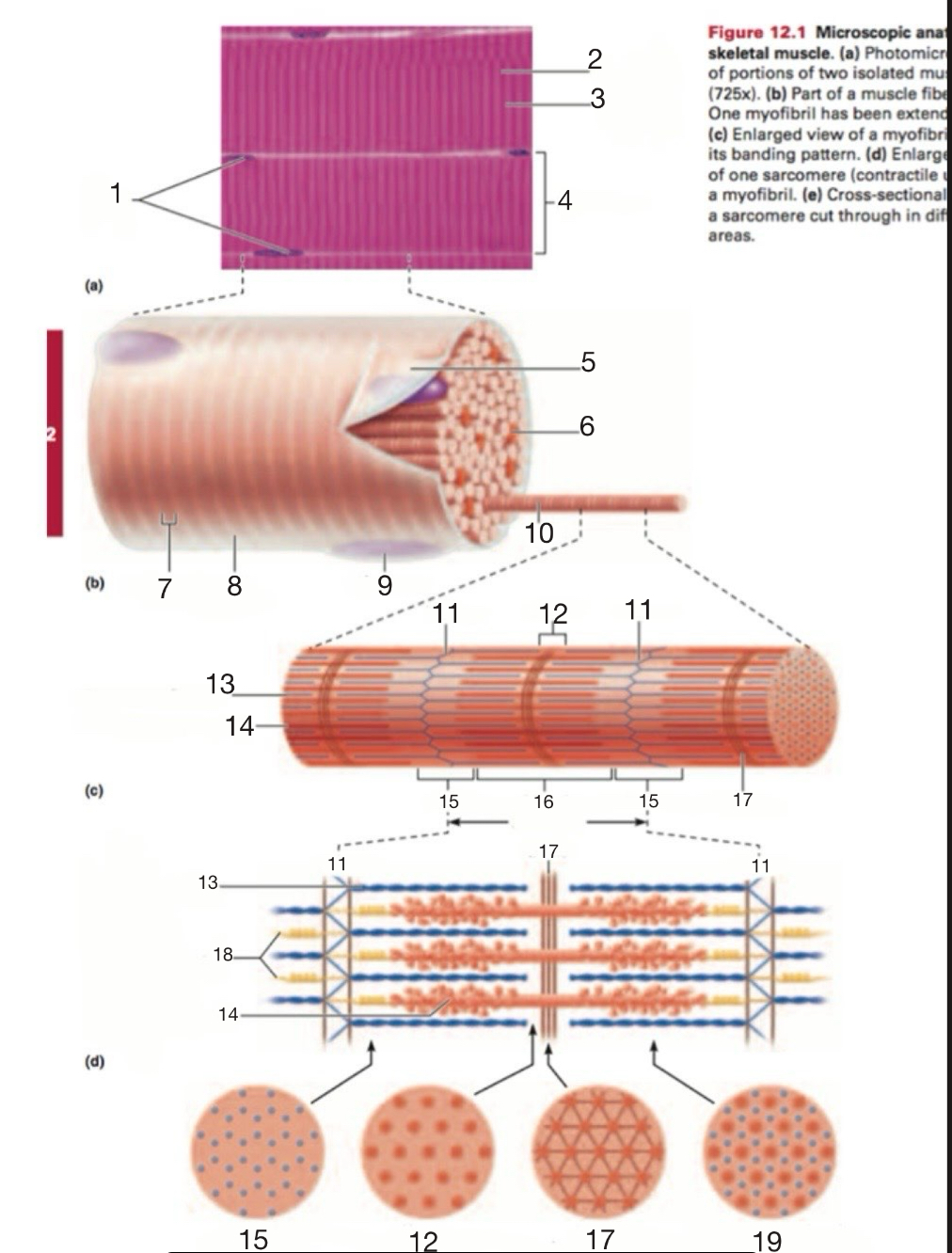
Label number 8
Light I Band
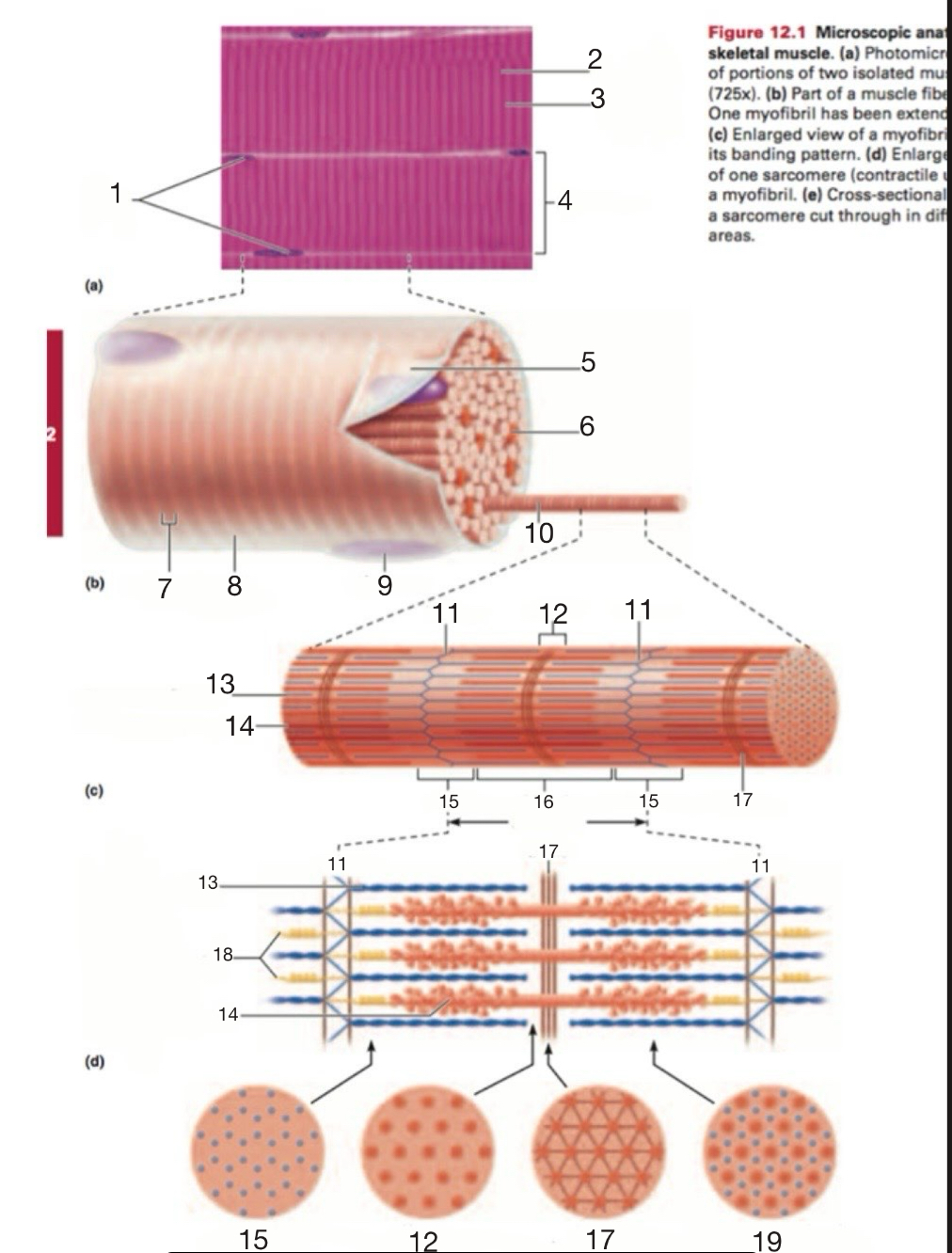
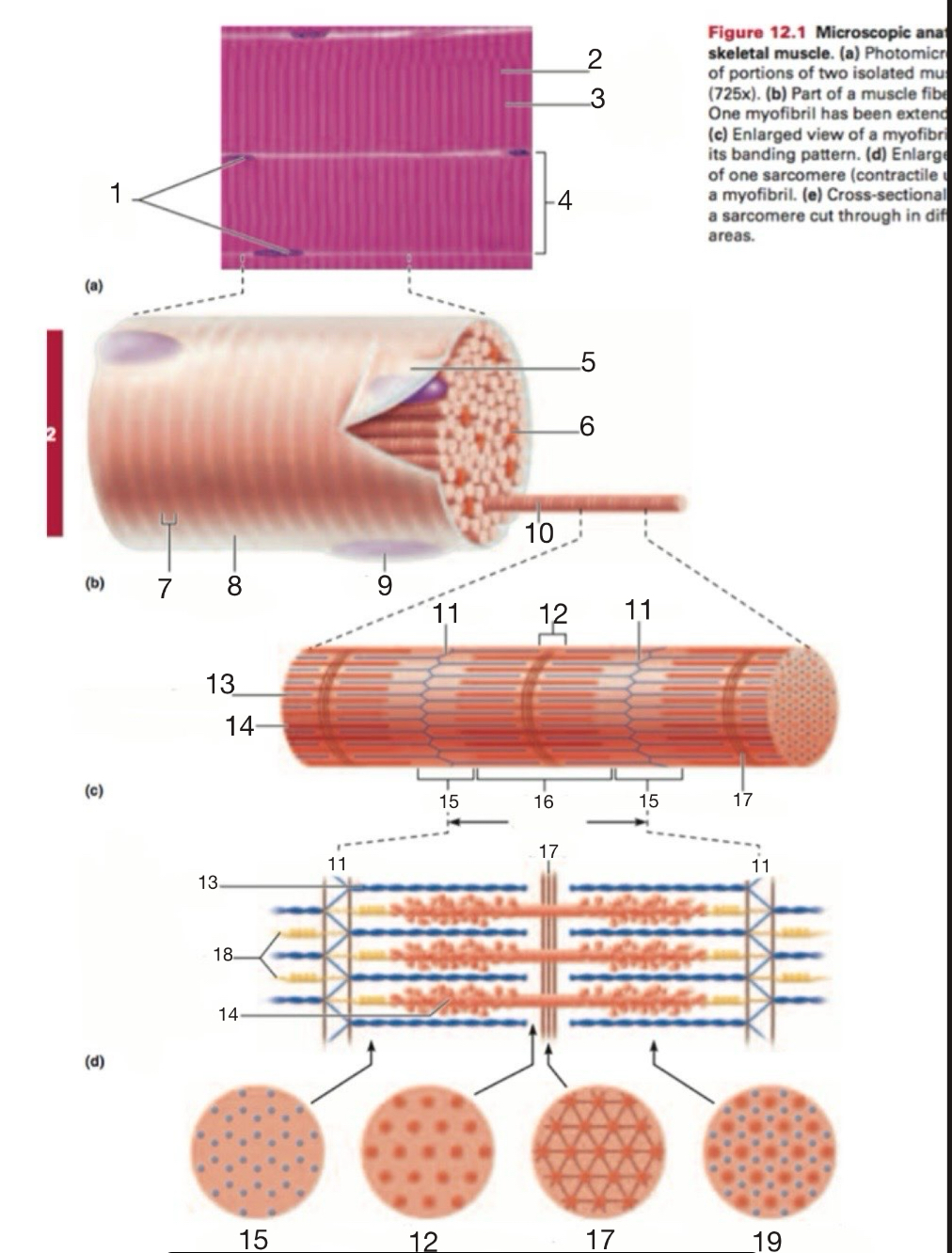
Label number 9
Nucleus
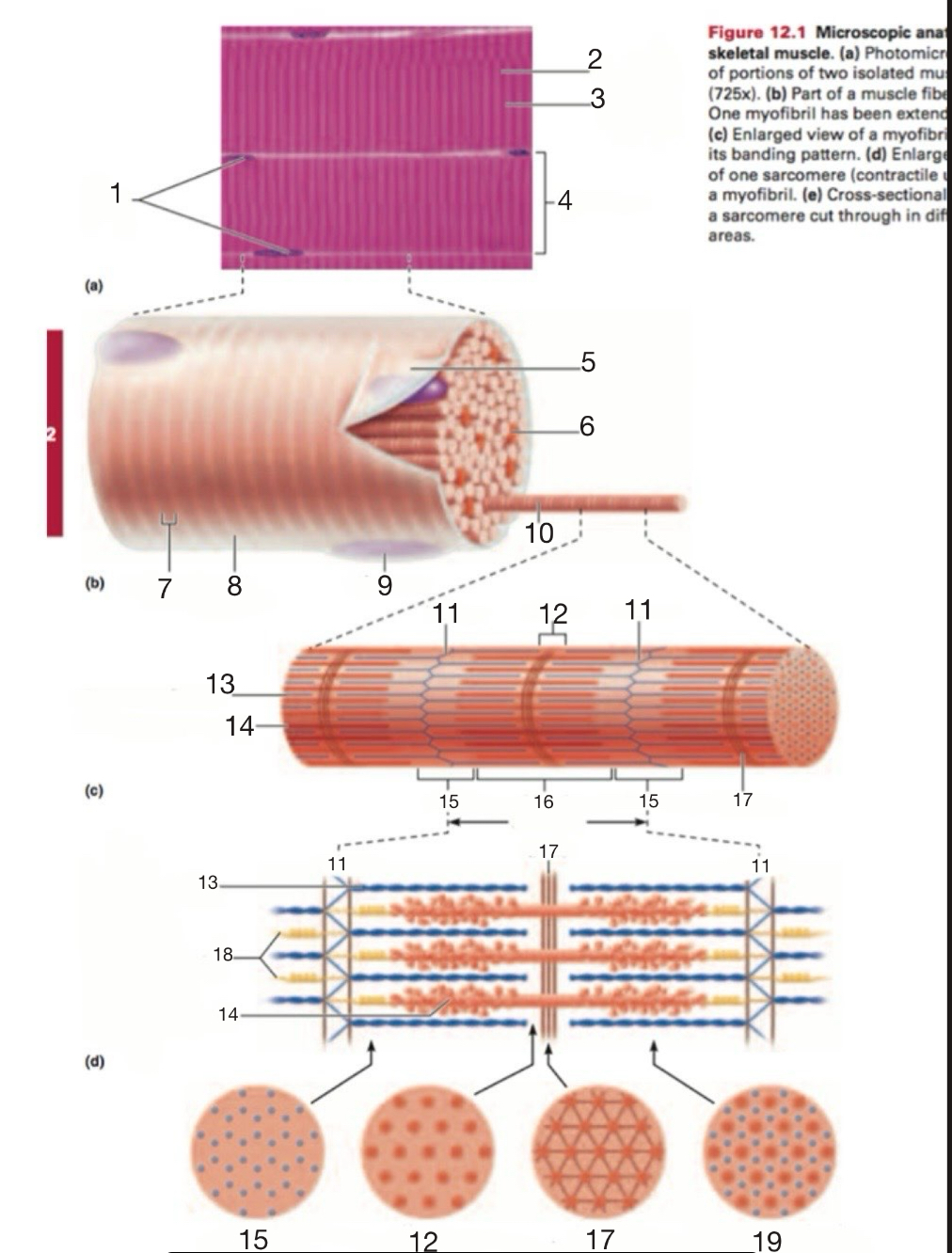
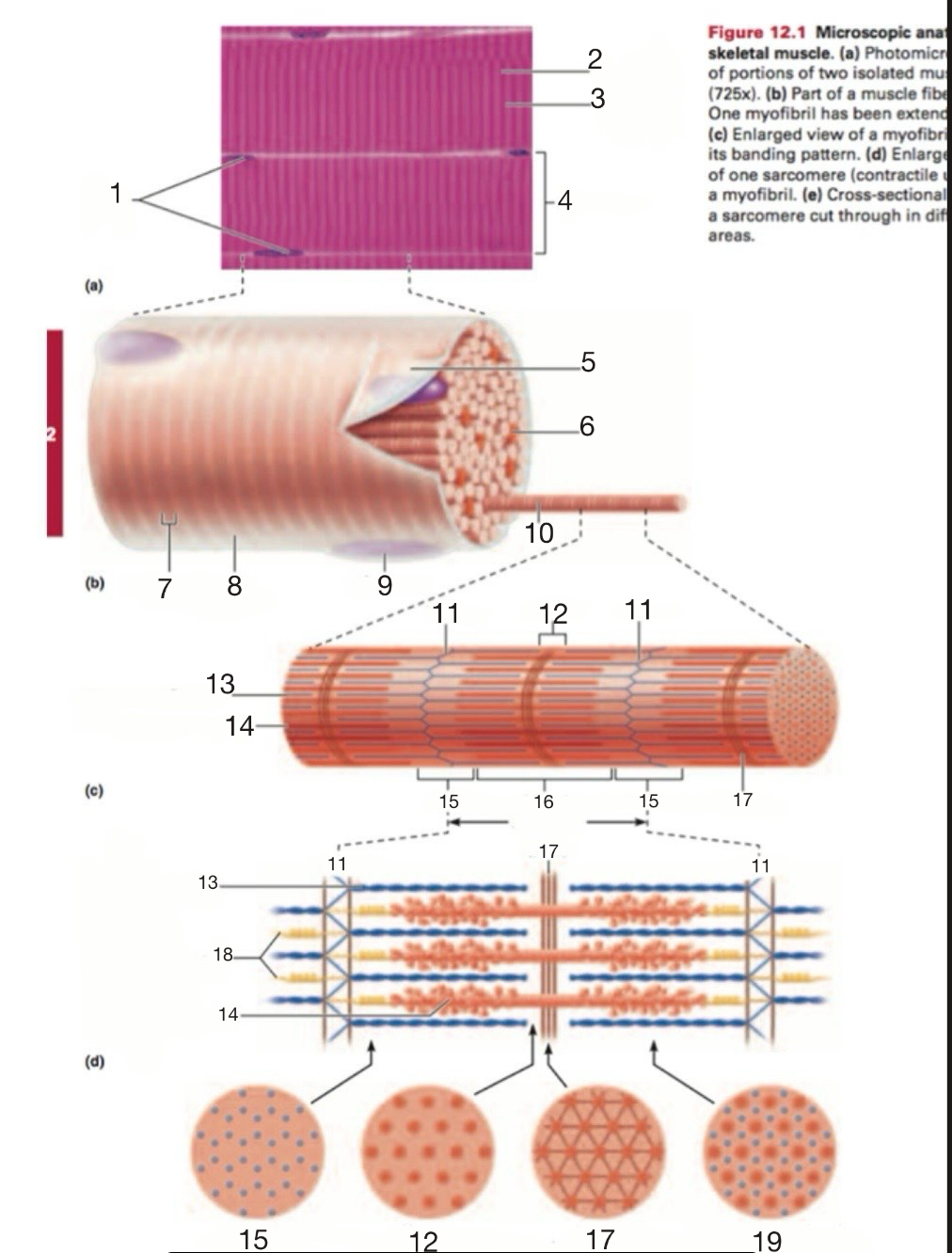
Label number 10
Myofibril
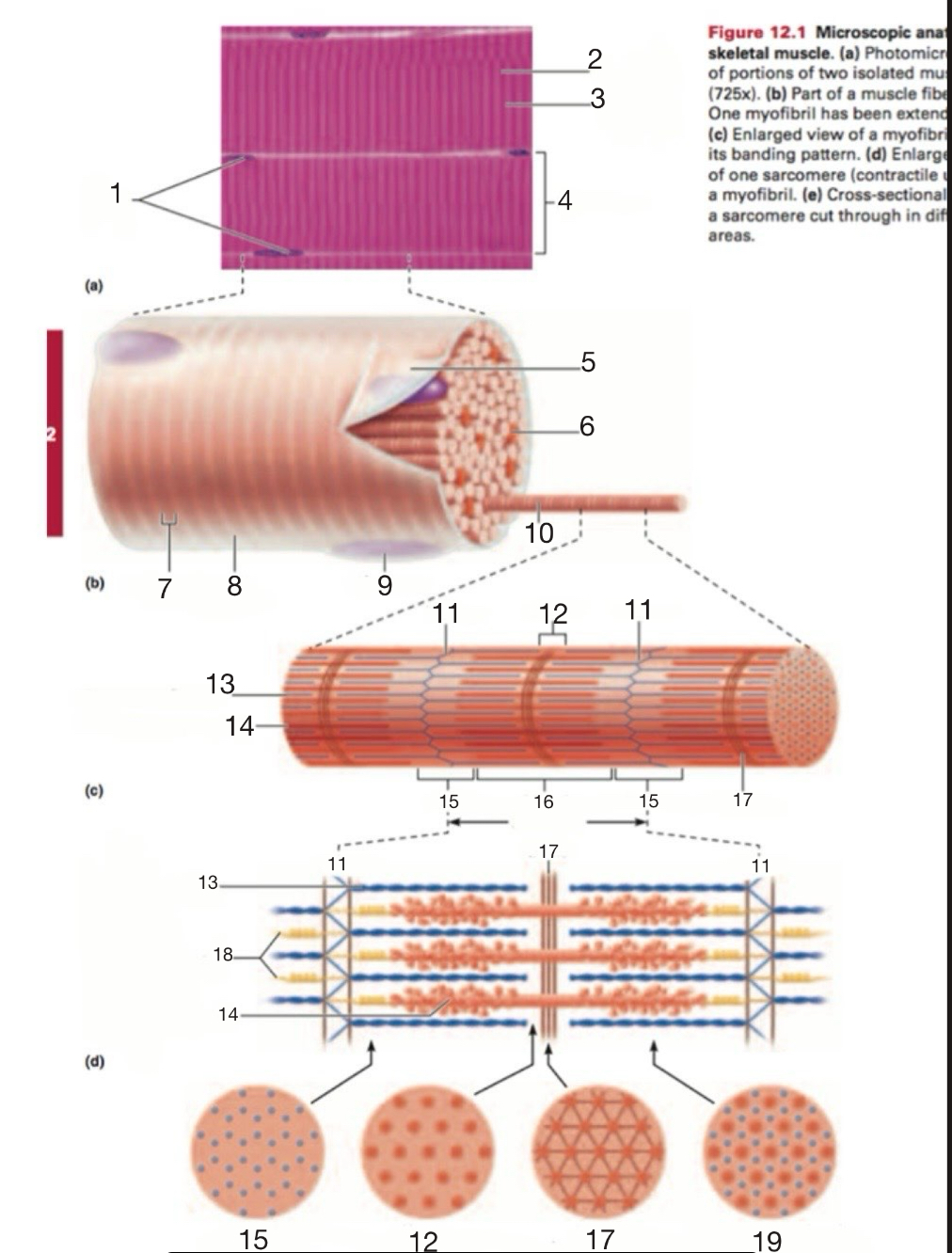
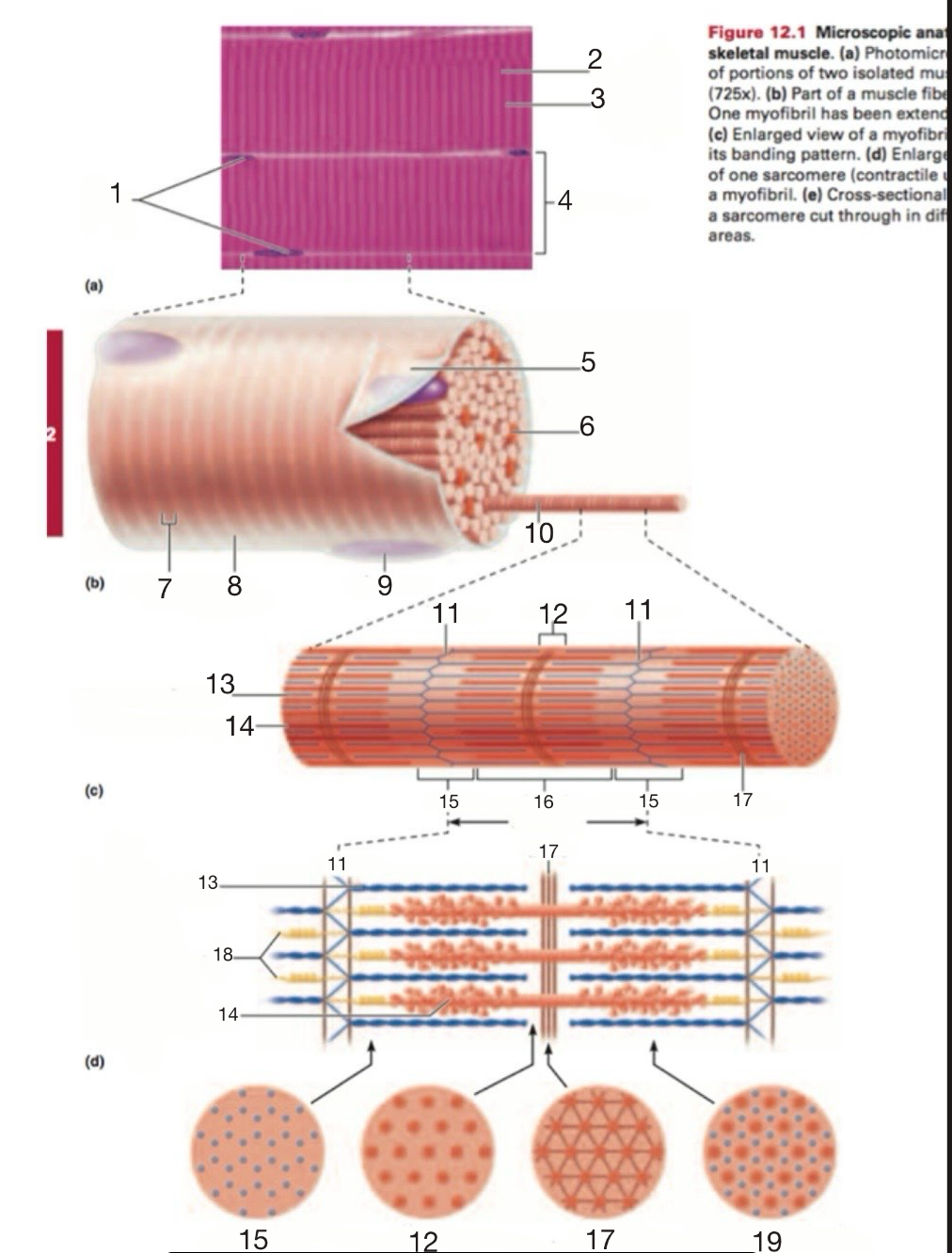
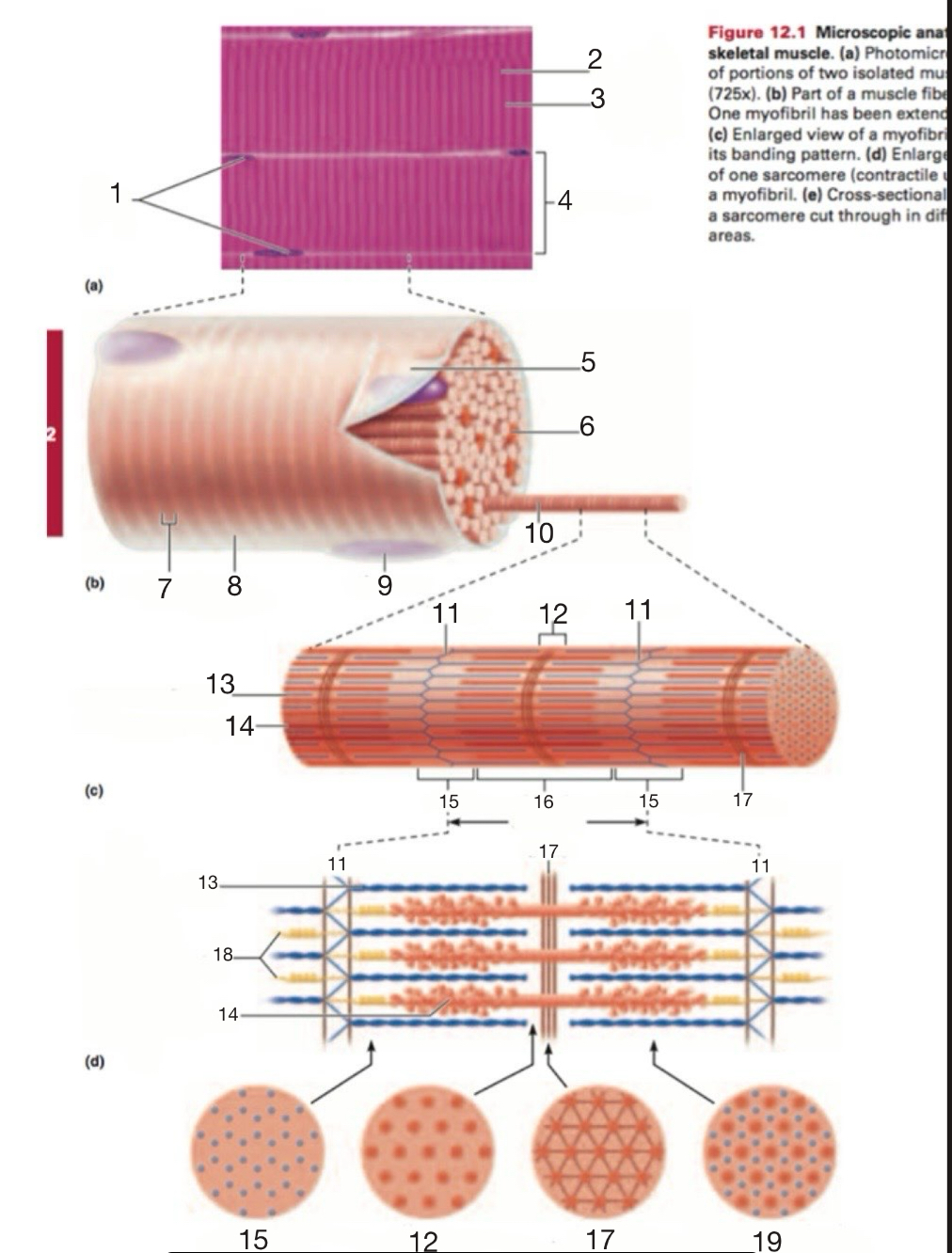
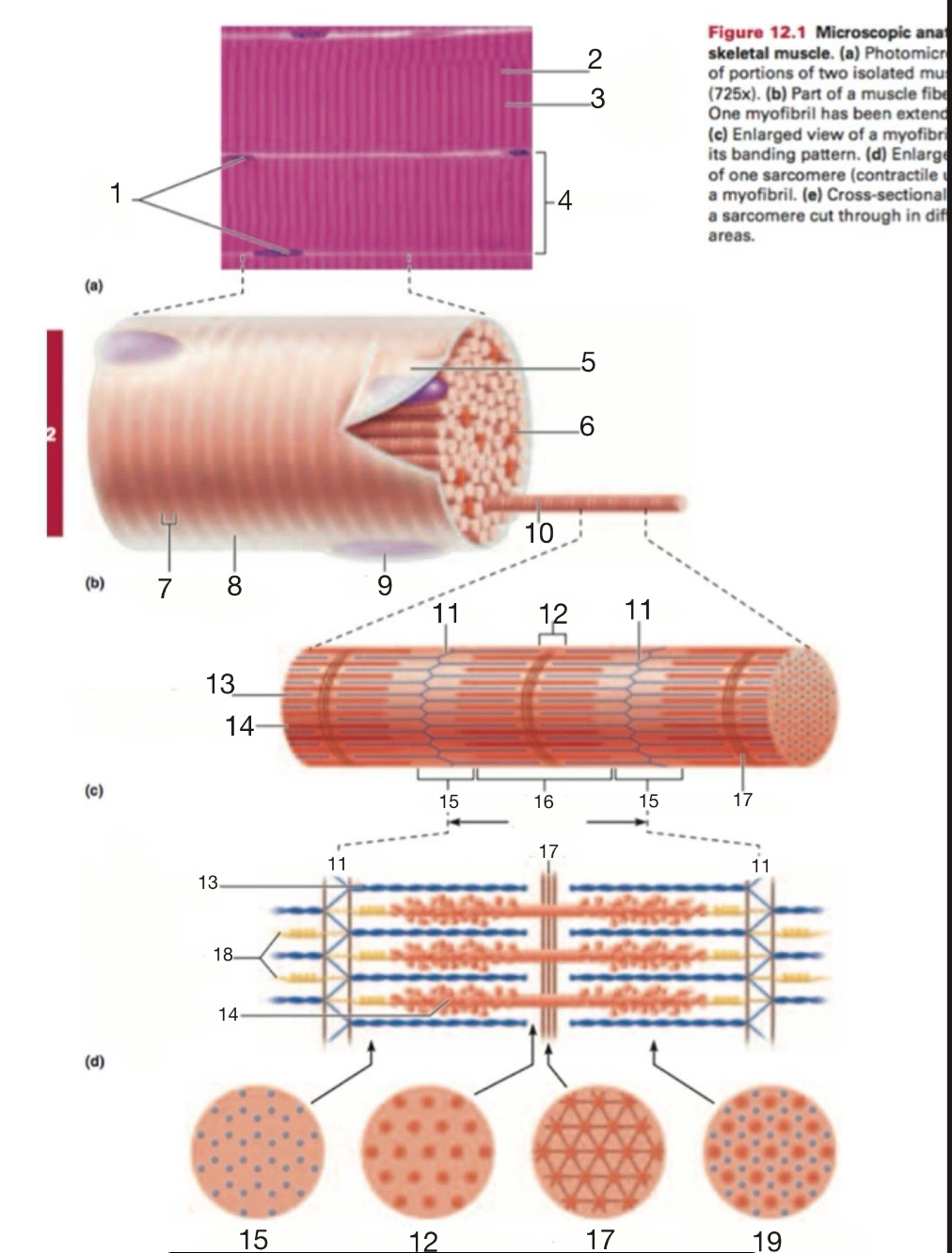
Label number 11
Z Disc
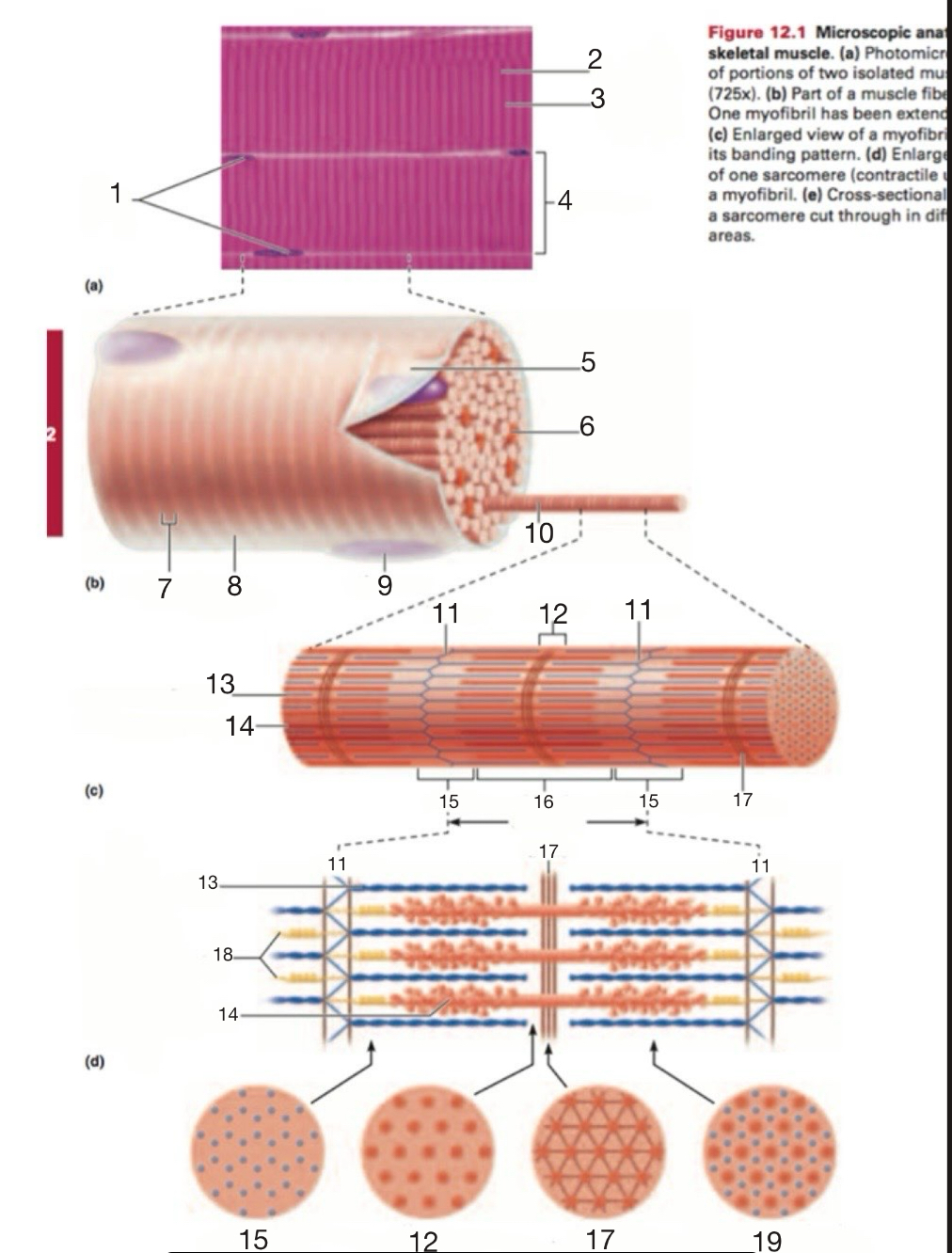
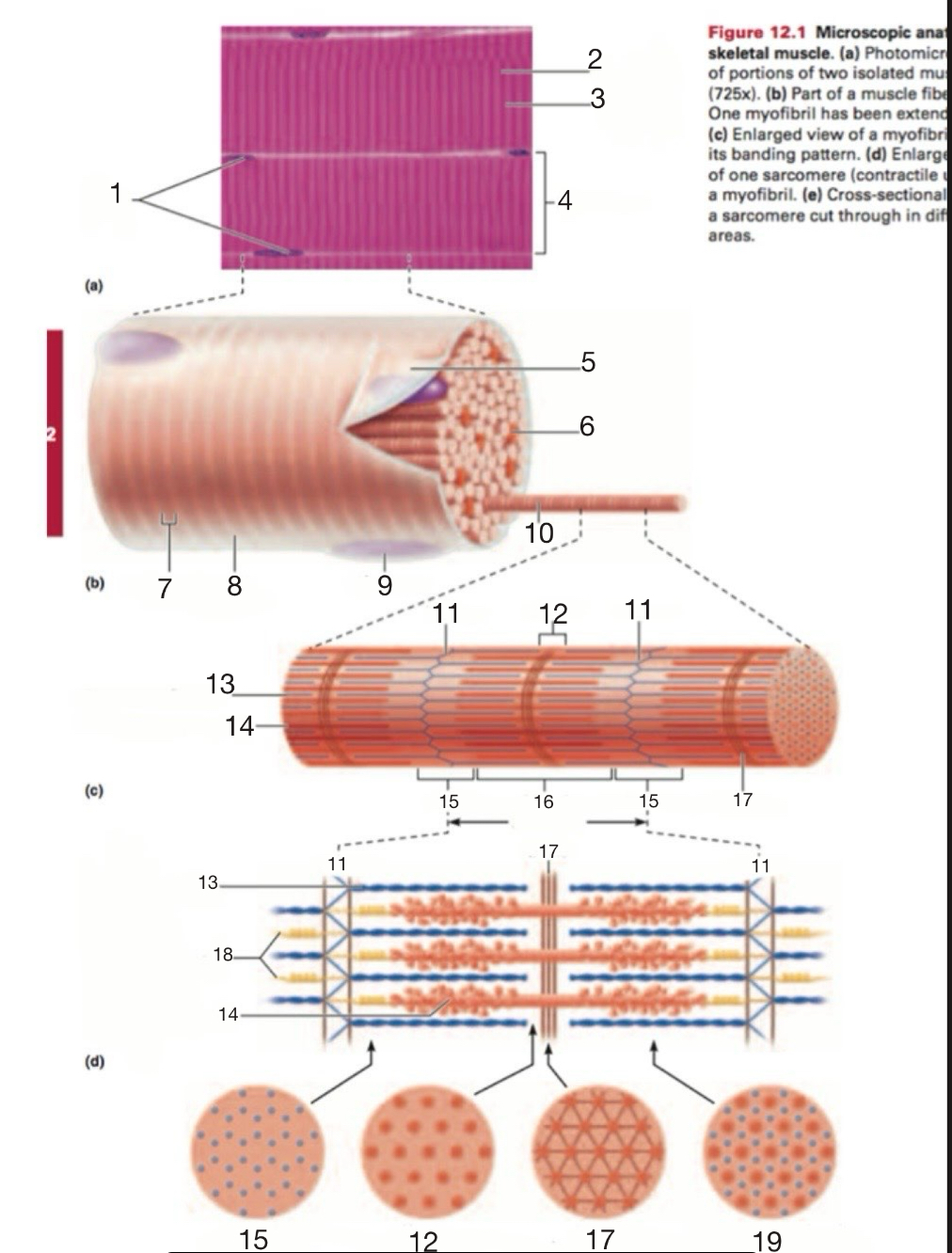
Label number 12
H Zone
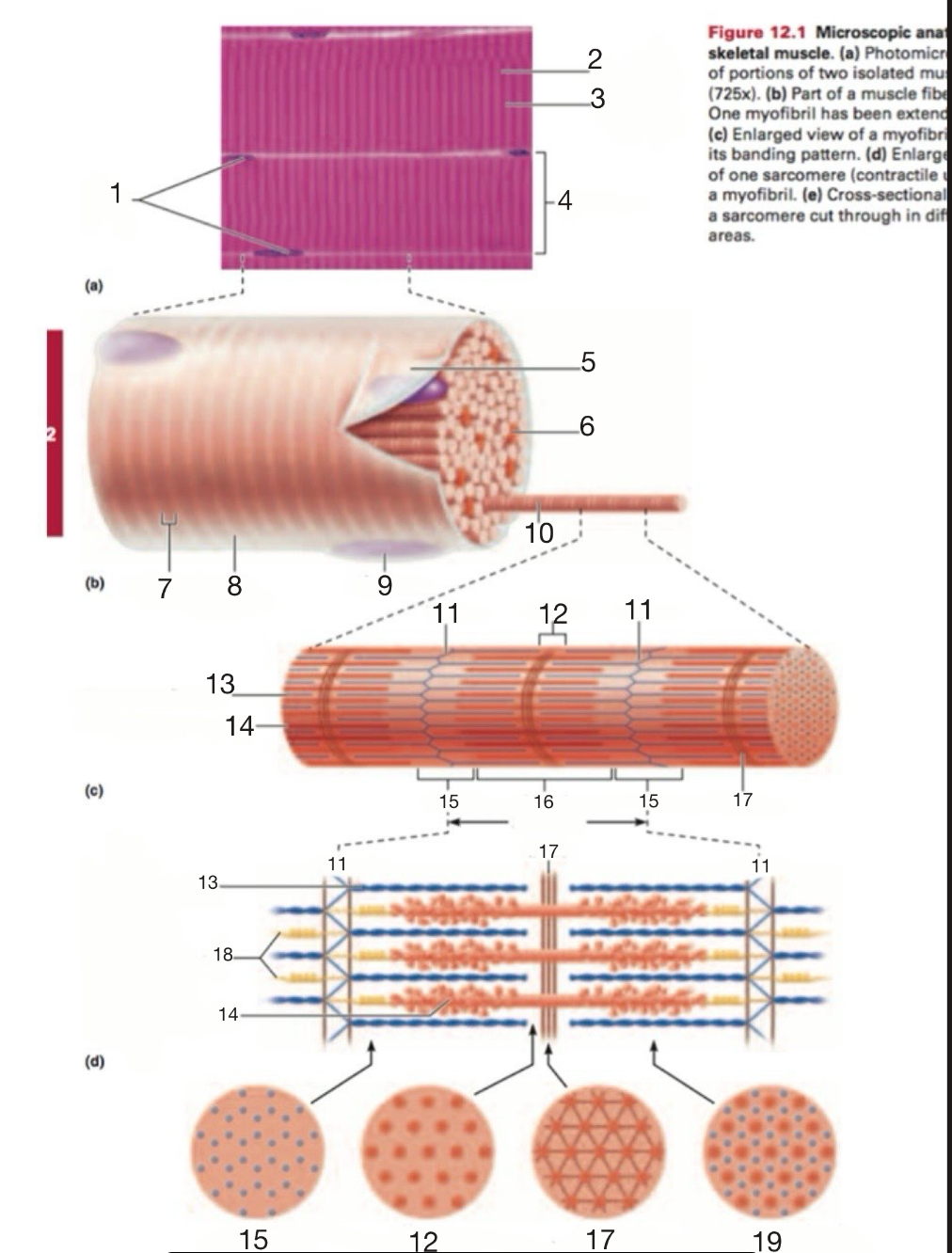
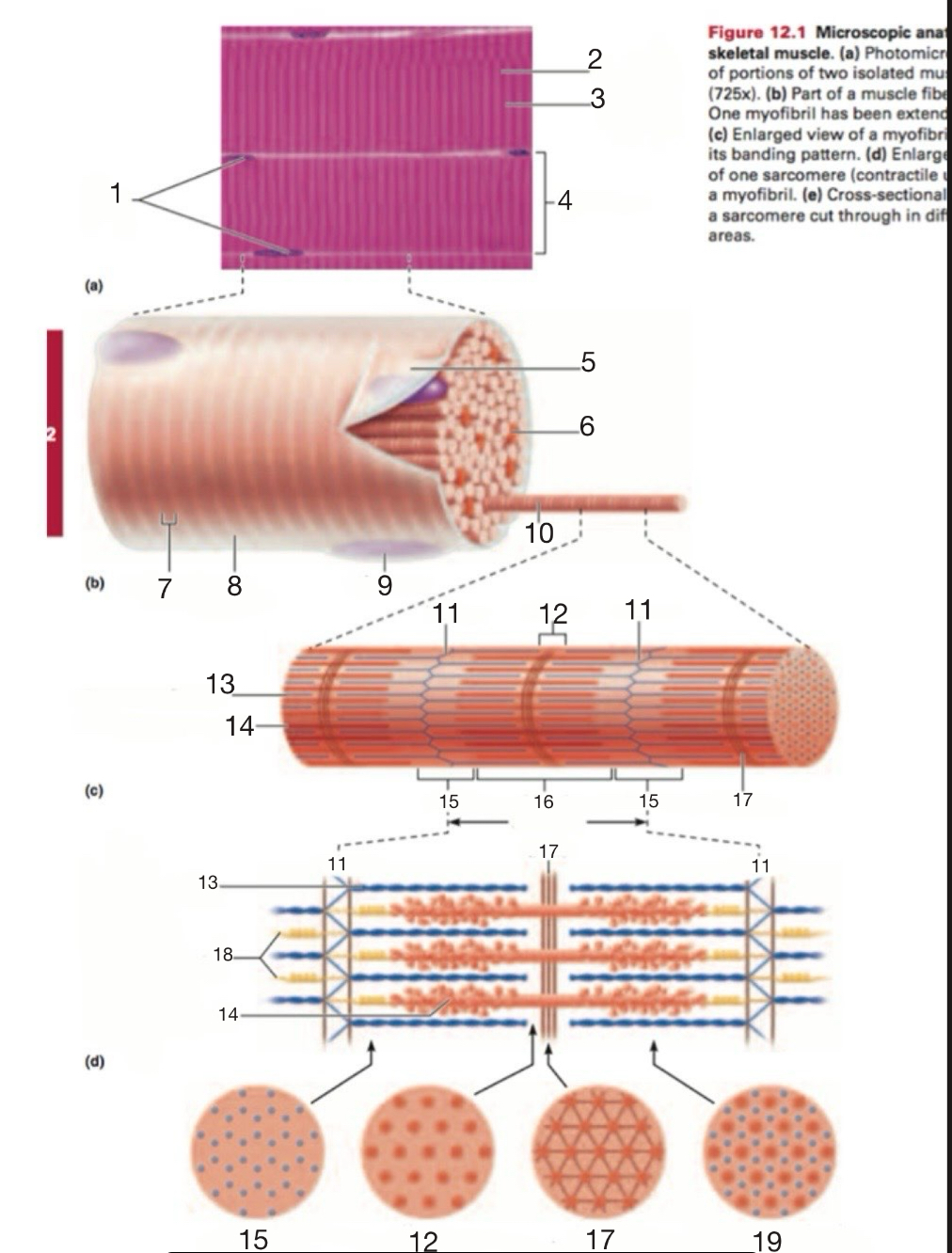
Label number 13
Thin filament
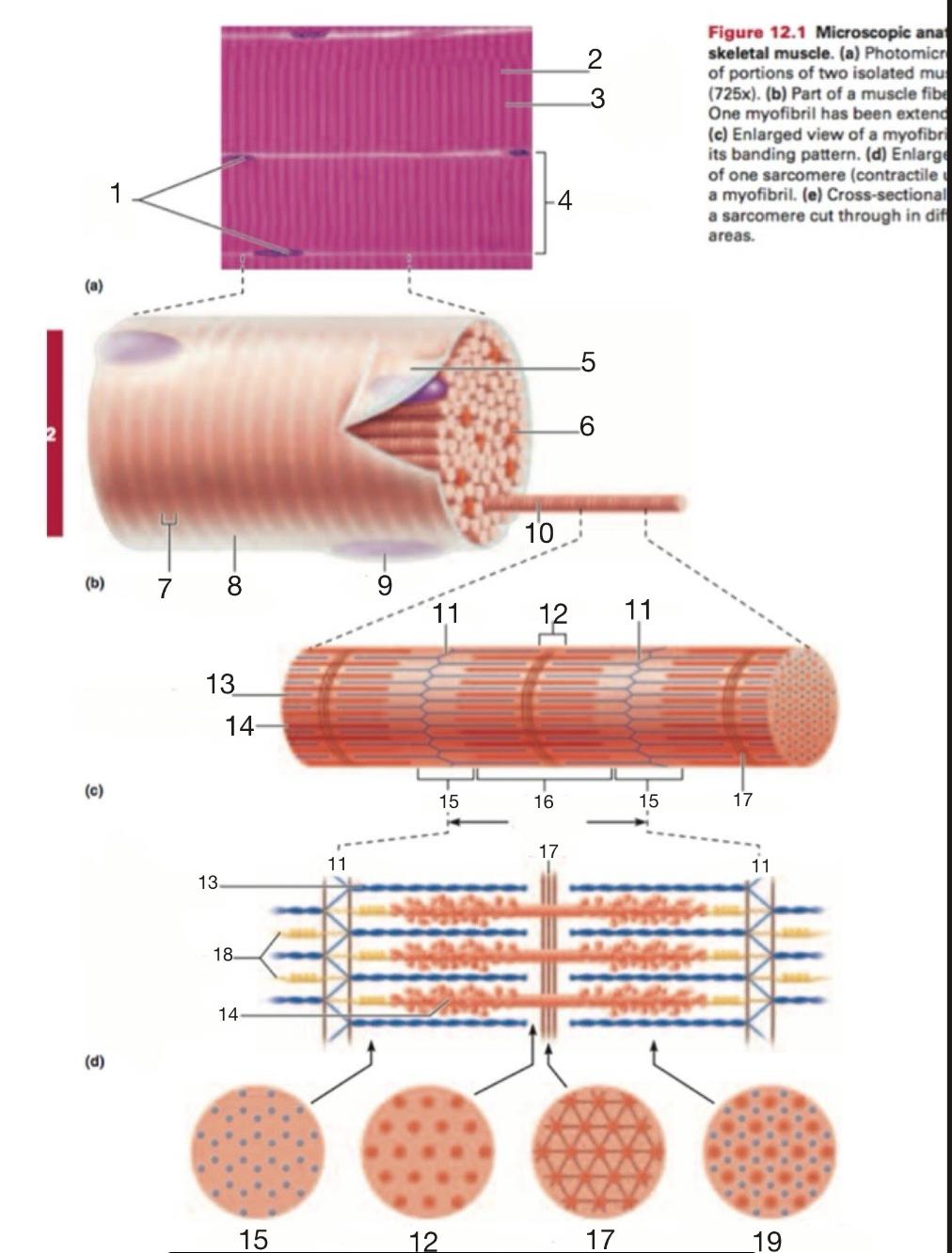
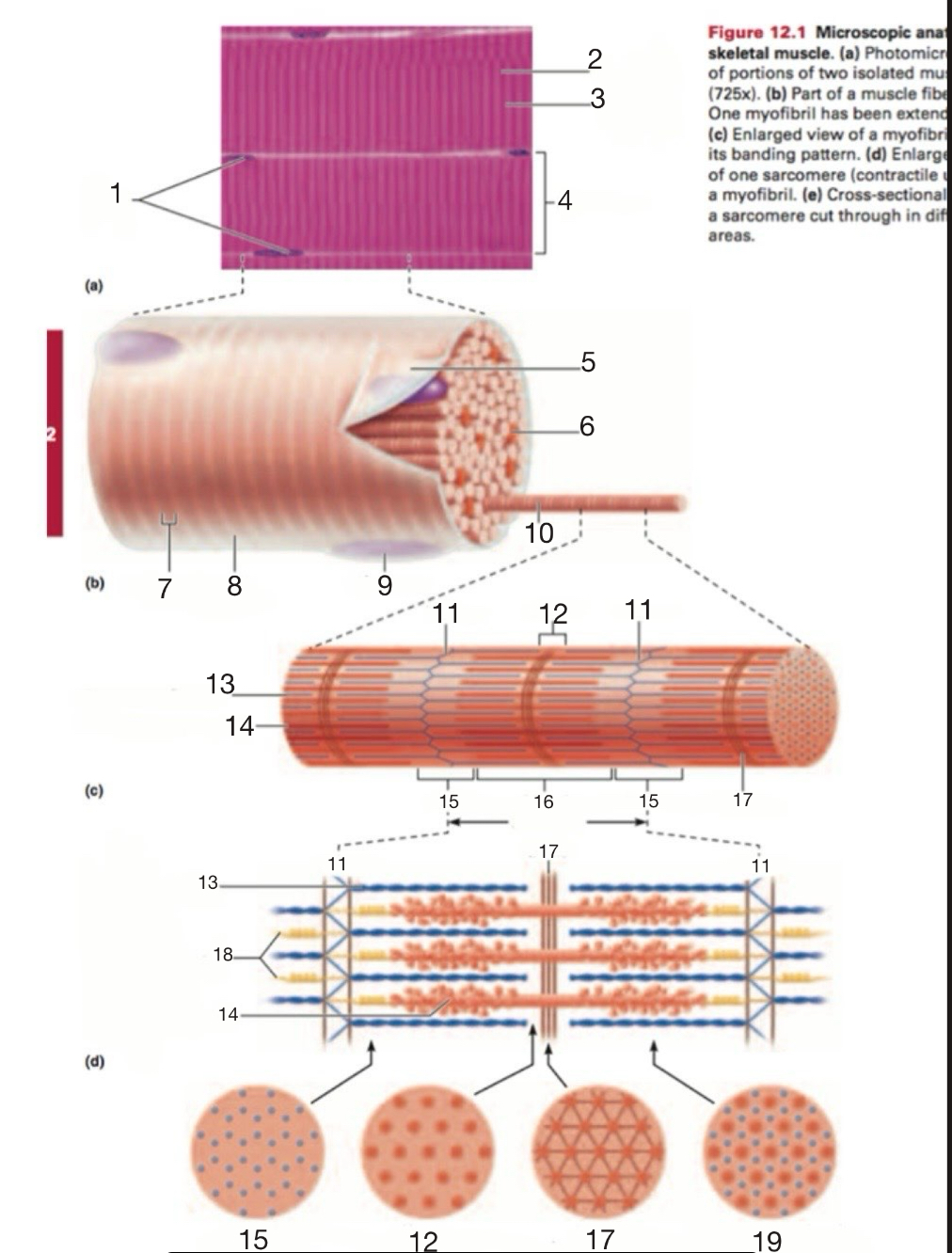
Label number 14
Thick Filament
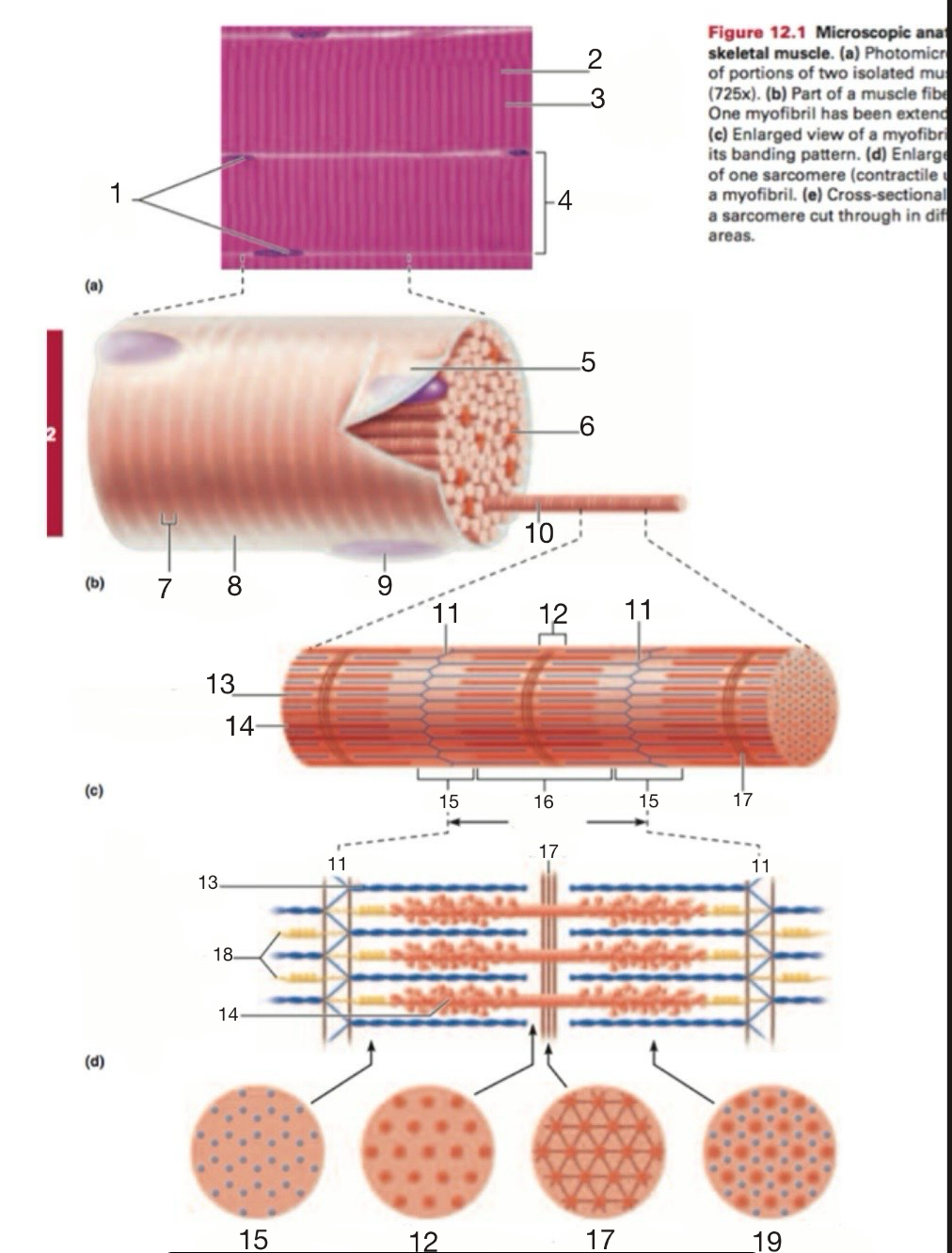
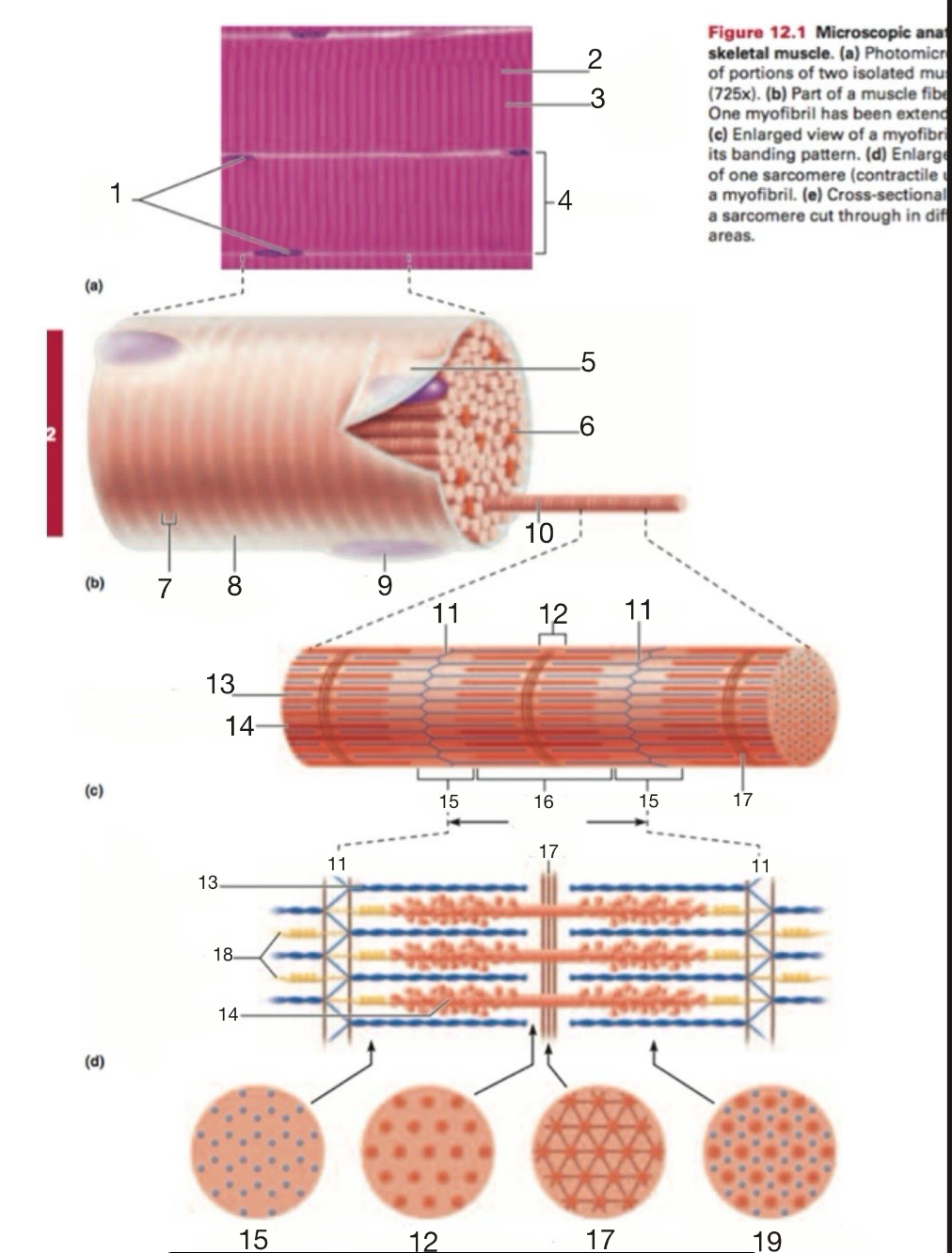
Label number 15
I Band
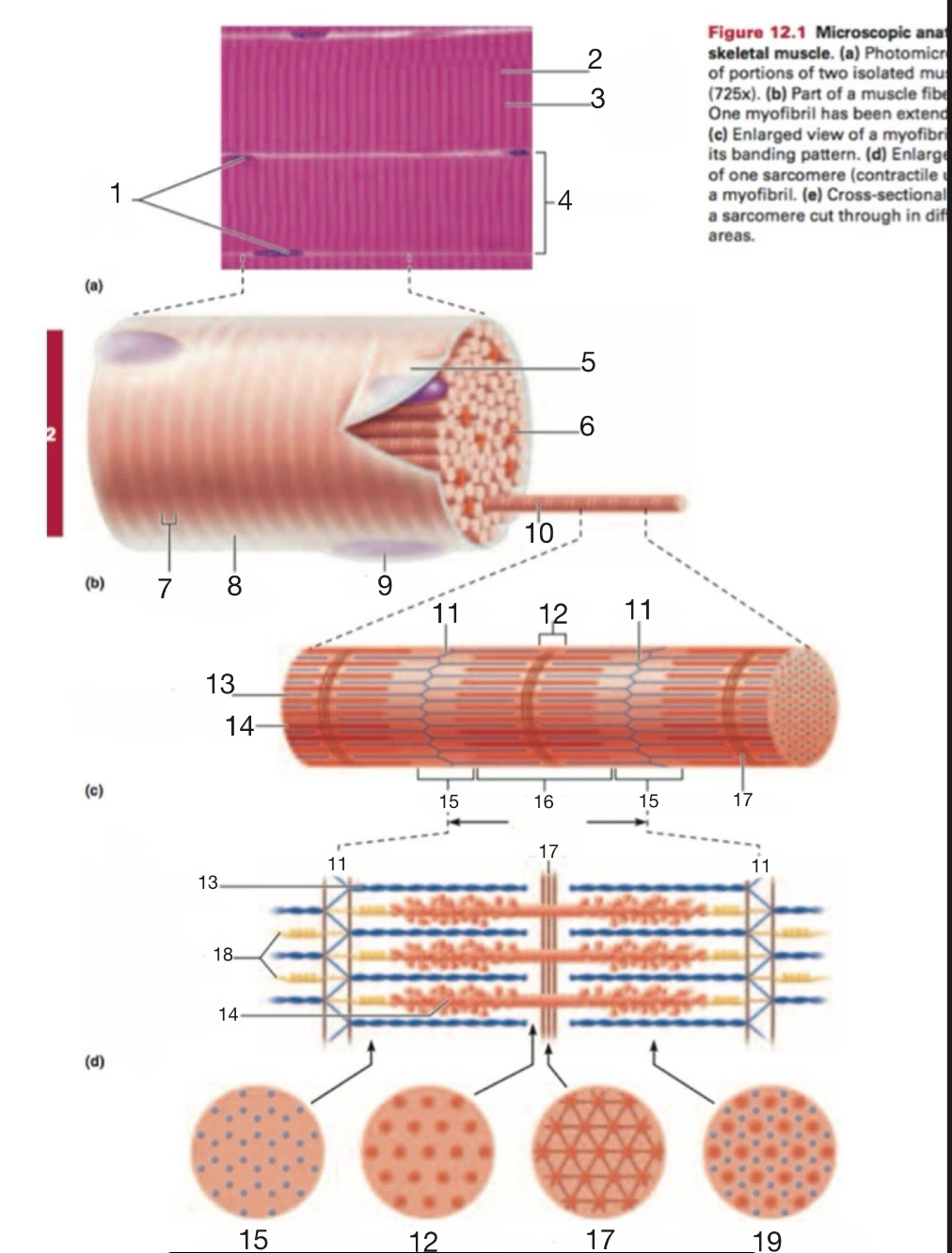
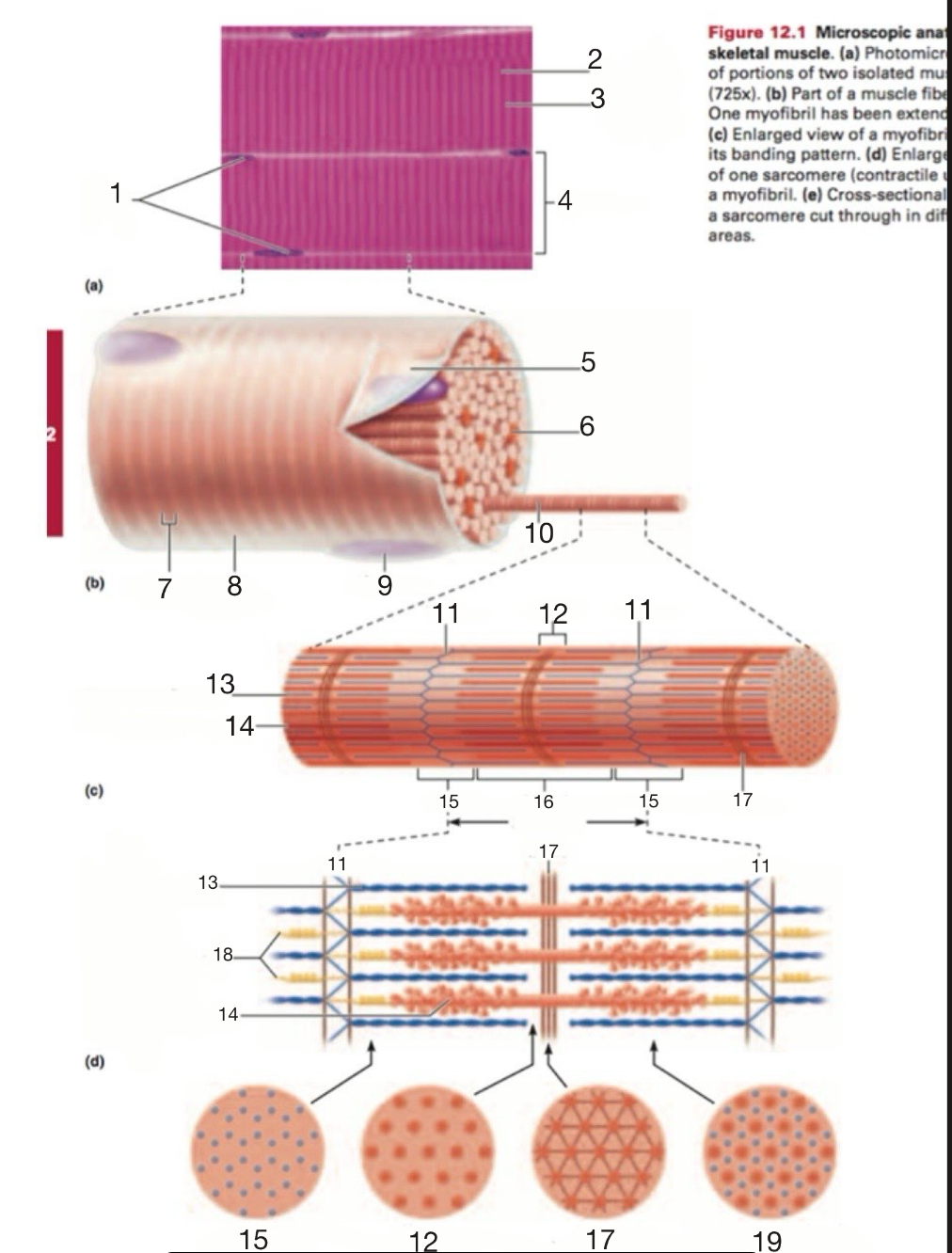
Label number 16
A Band
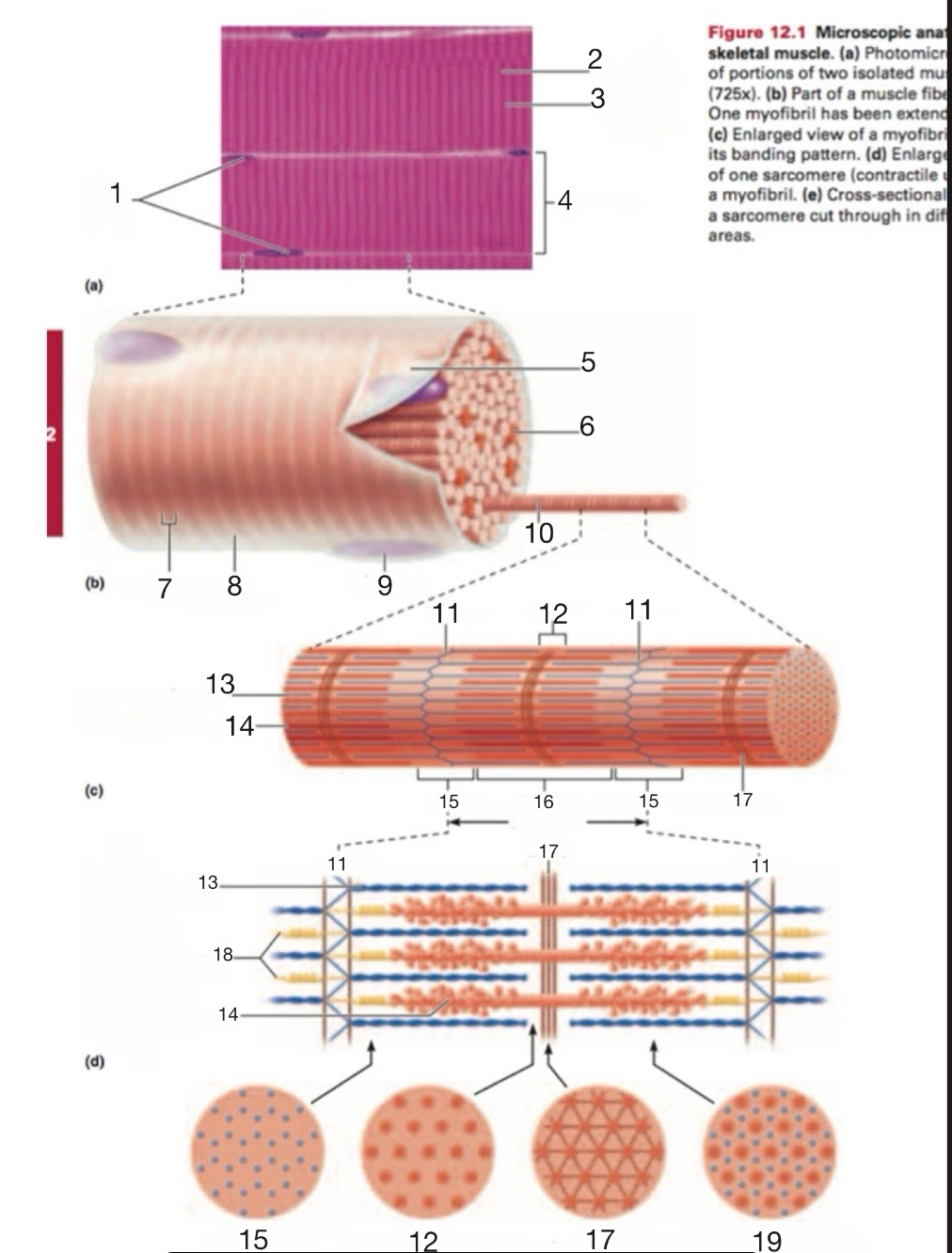
Label number 17
M Line
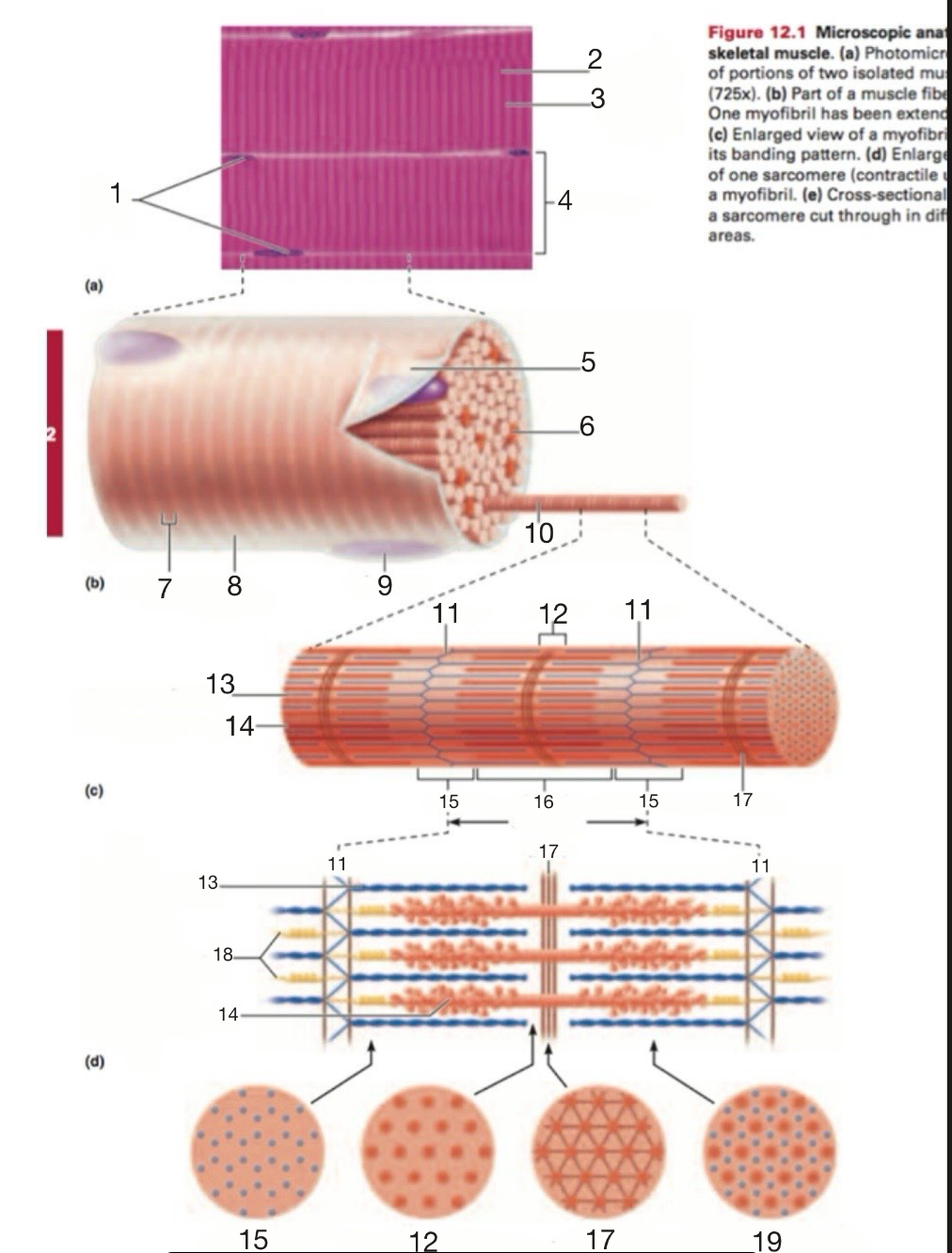
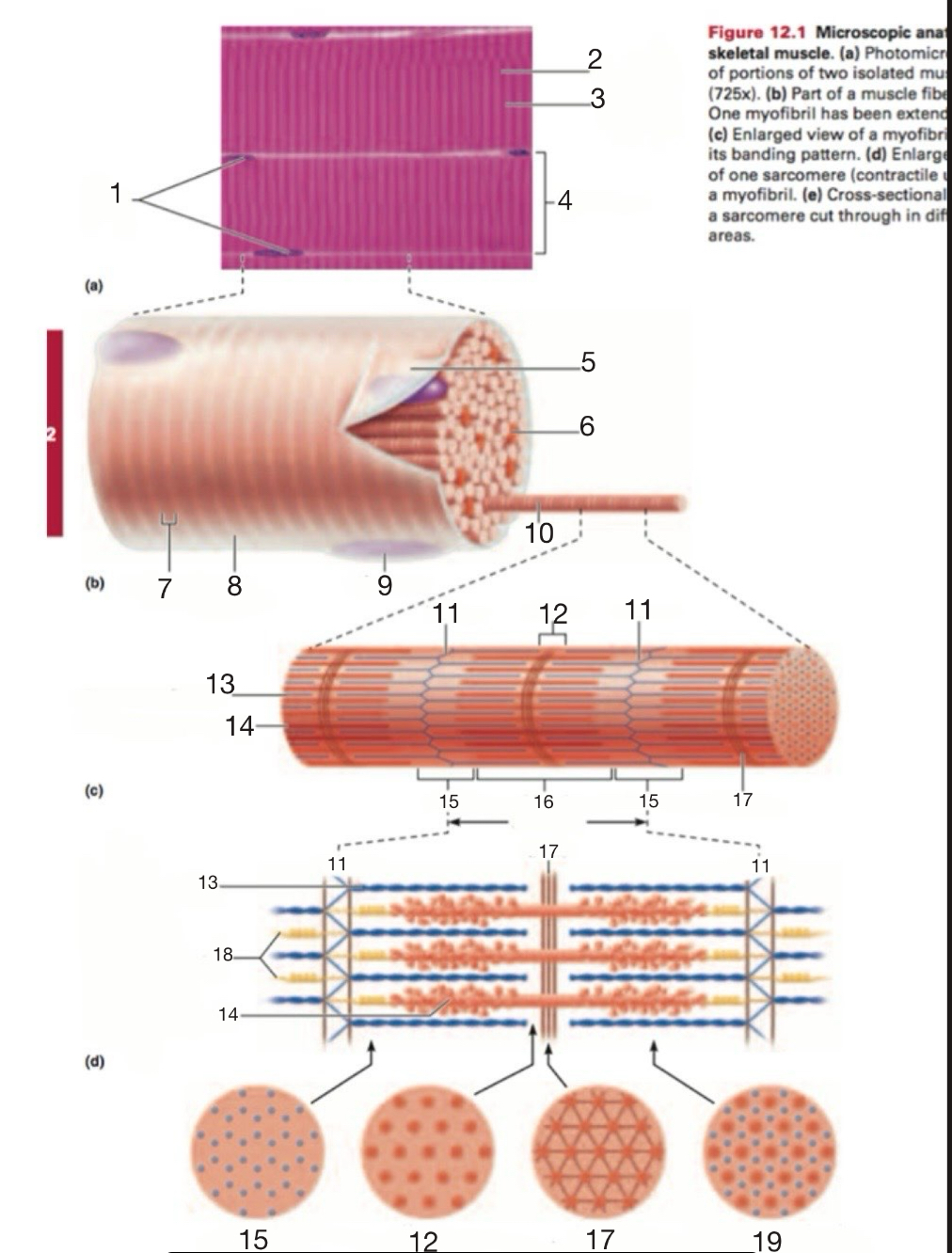
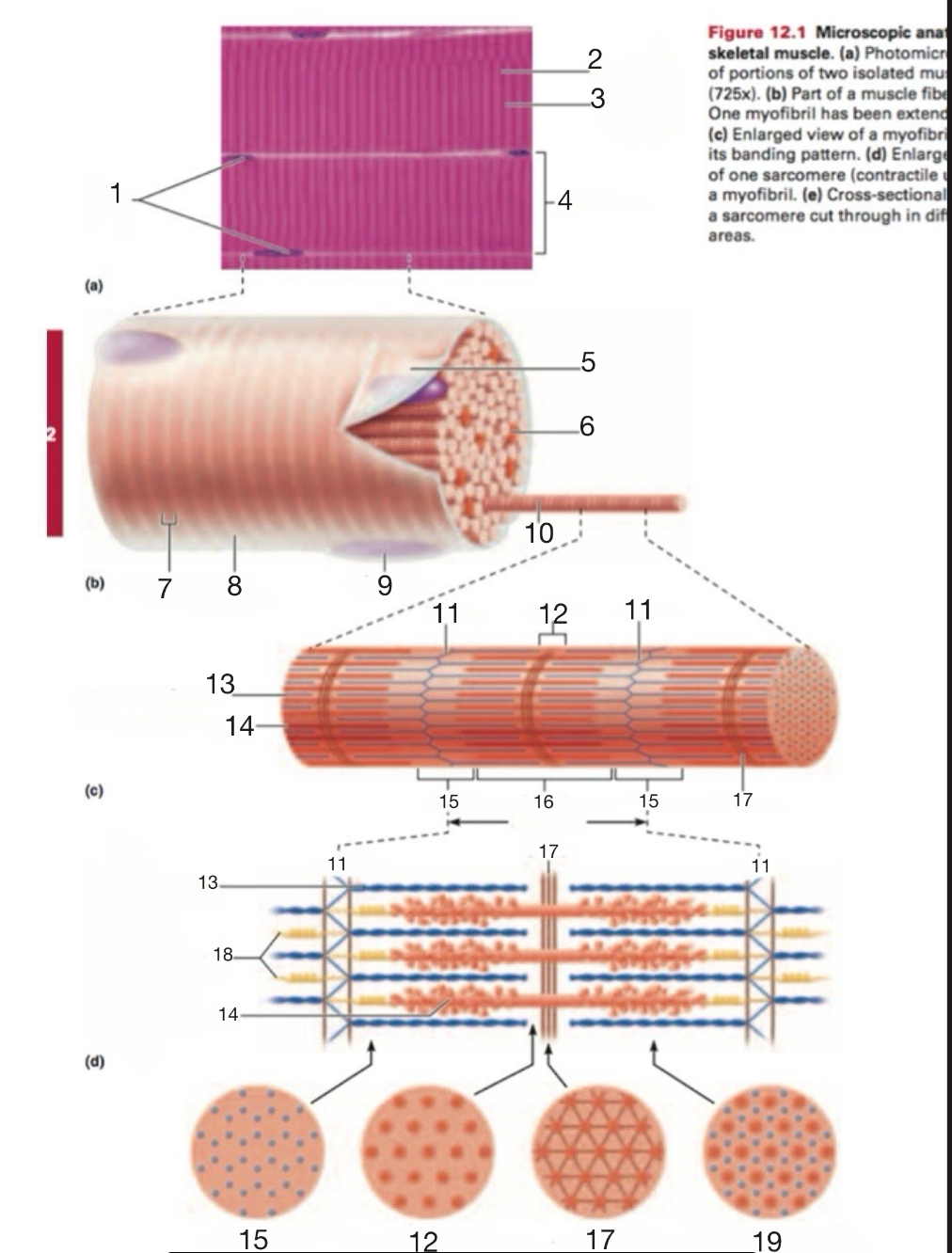
Label number 18
Elastic Filaments
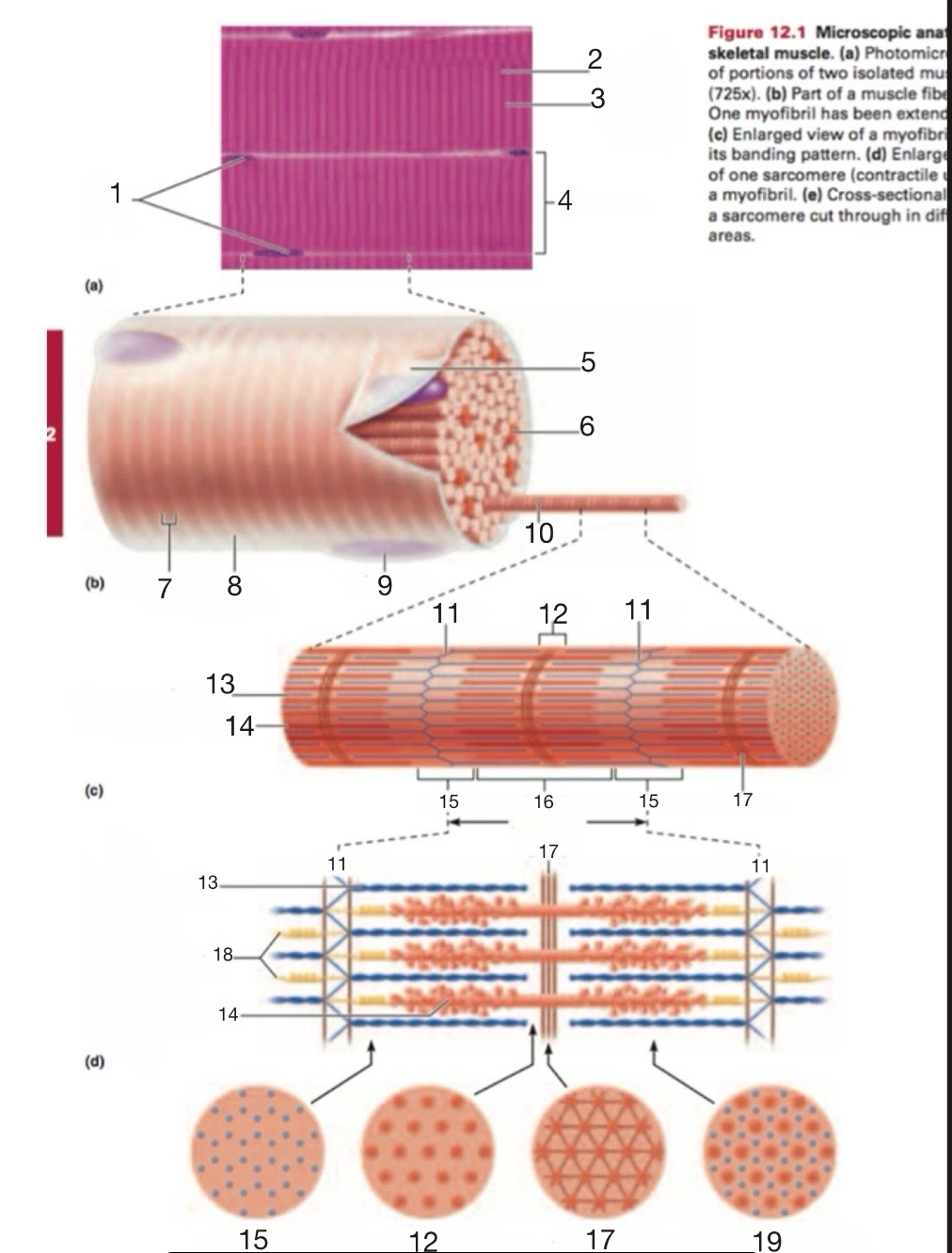
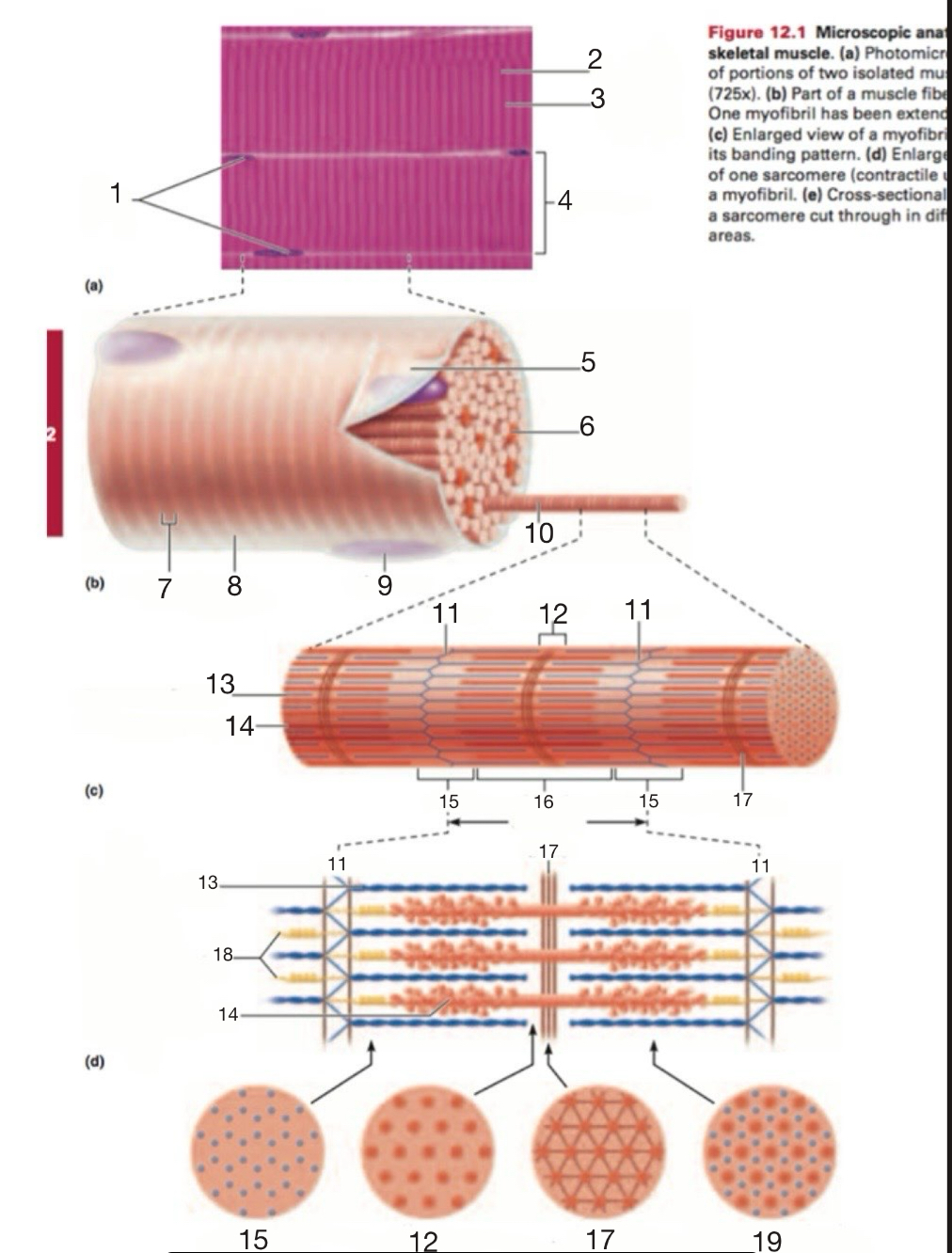
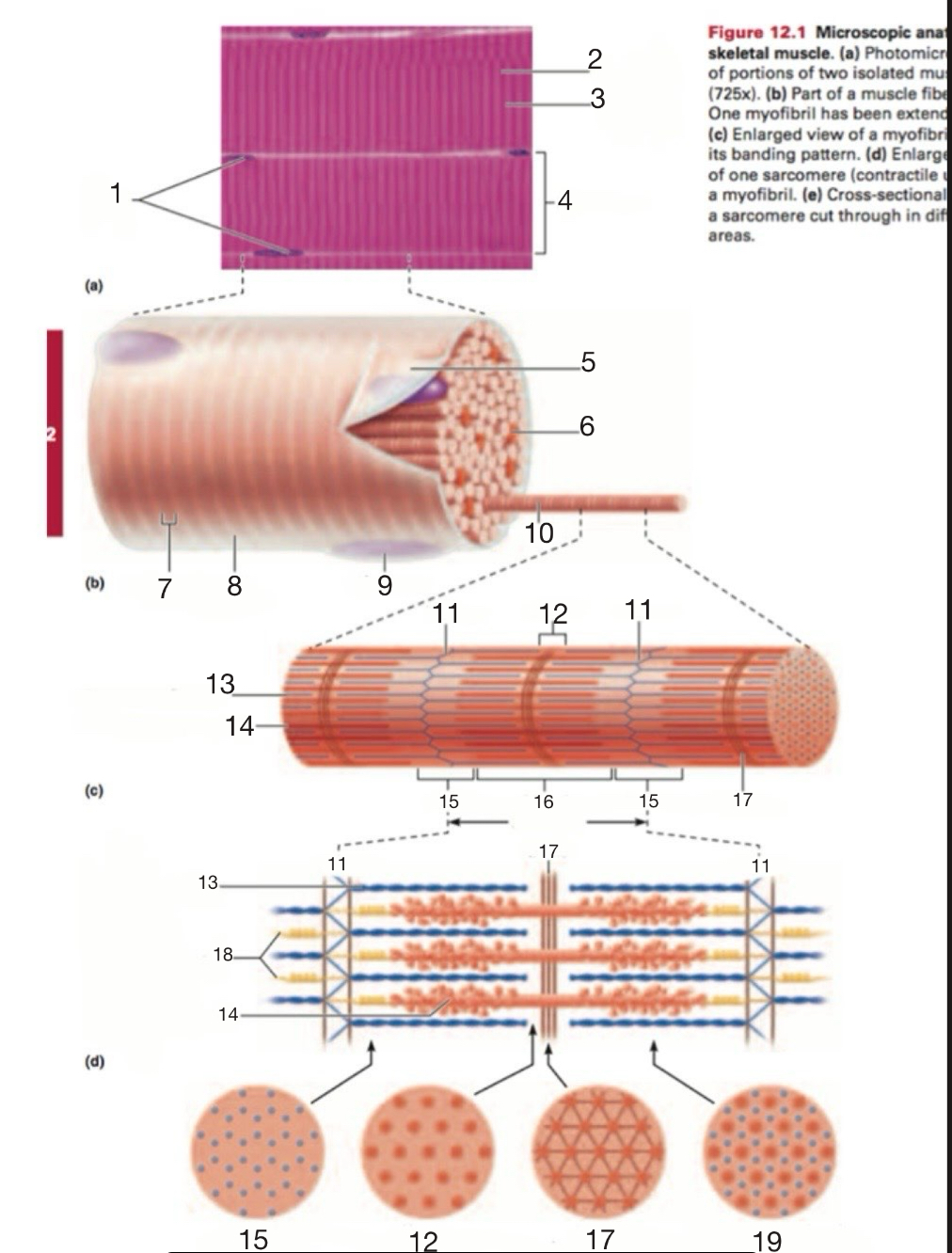
Label number 19
Outer Edge of A Band
Motor Unit Recruitment
When multiple muscle fibers are stimulated by a single motor neuron. Slight contractions cause few fibers to contract.
Threshold Value
This is BEFORE a muscle contracts and the impulse that triggers the contraction must be above the threshold value.
Graded Response
The muscles gradually increase from slight to more forceful contractions.
Summation
The rise in contraction force, either increasing the frequency of impulses to a single muscle fiber or boosting the stimulus to an expanding number of muscle fibers might cause this.
Incomplete Tetanus
A sequence of contractions brought on by a muscle receiving repeated, fast stimulation.
Complete Tetanus
When the frequency of the stimulus increases, a muscle’s smooth contractions merge.
Aponeurosis
Connective tissue is a broad, flat layer that joins to bones or other muscles.
Agonist
Sometimes referred to as the prime mover, this is the main muscle that contracts to produce a particular movement.
Antagonist
Muscle resists the agonist’s action by relaxing or lengthening to permit the agonists movement.
Synergist
Muscle used to help the agonist move.
Fixatior
Muscle keeps other joints from moving unintentionally by stabilizing its origin.
Fascia
Fibrous connective tissue that envelops & sustains bones, muscles, and organs.
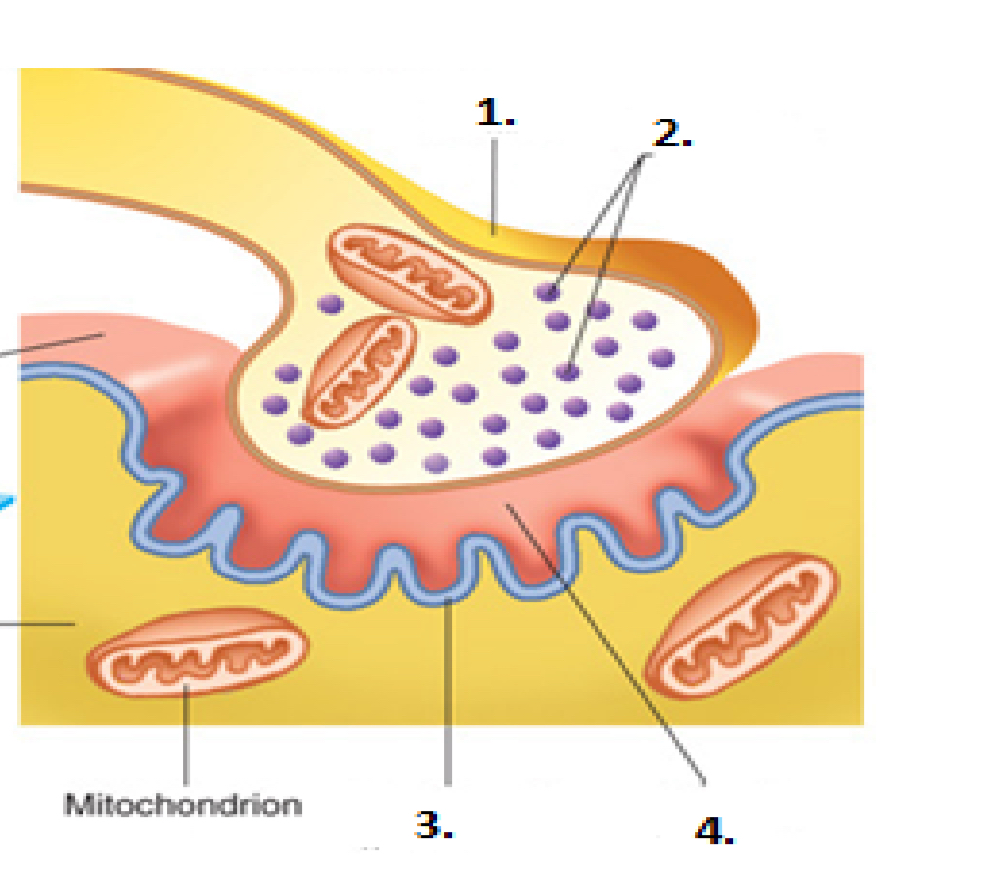
Label 1
Presynaptic Terminal
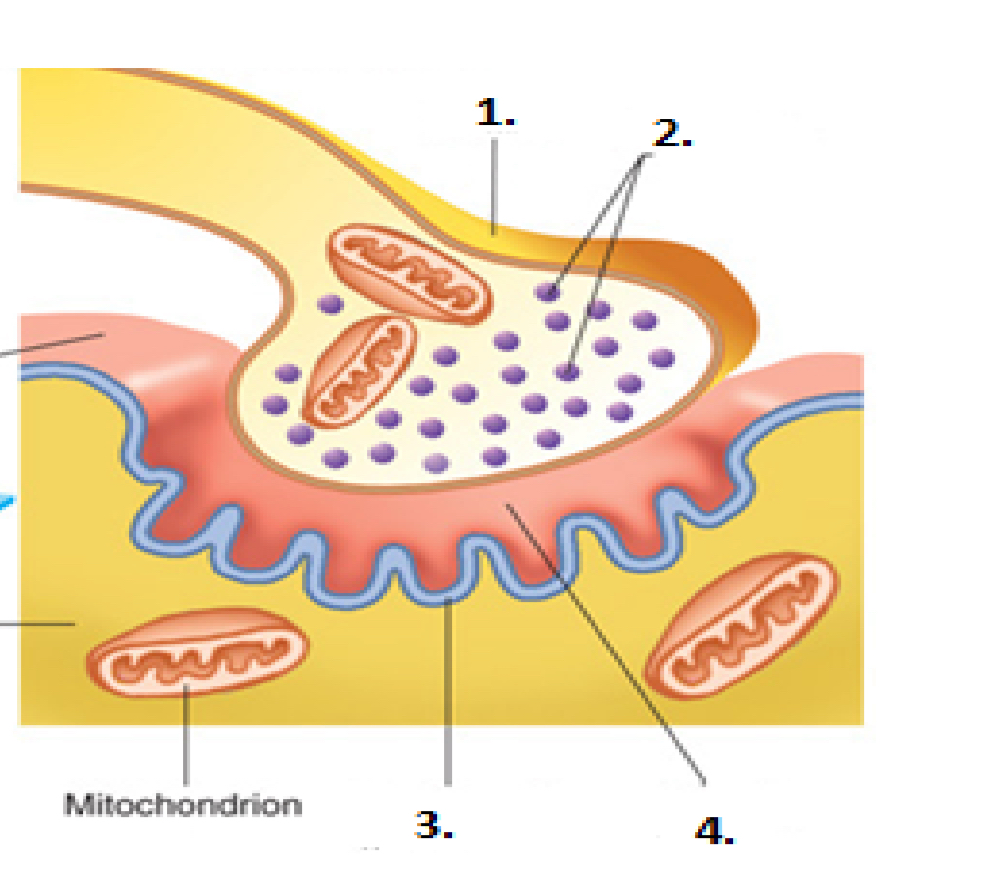
Label 2
Synaptic Vesicles
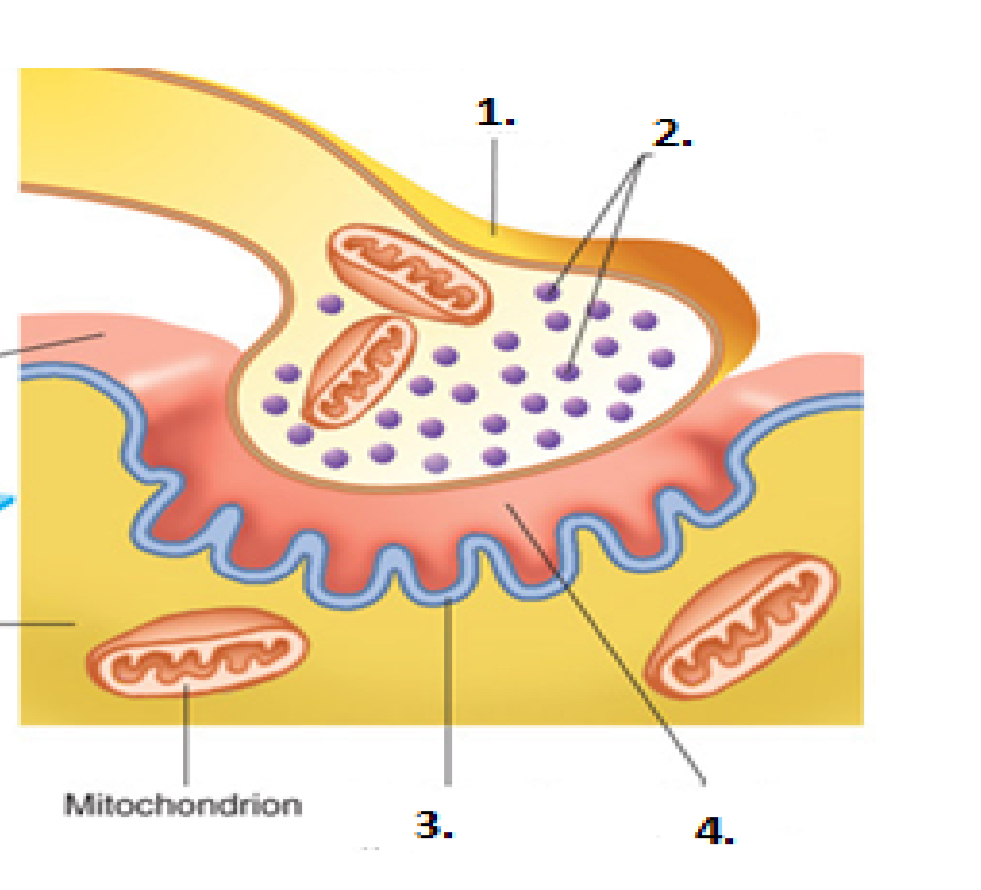
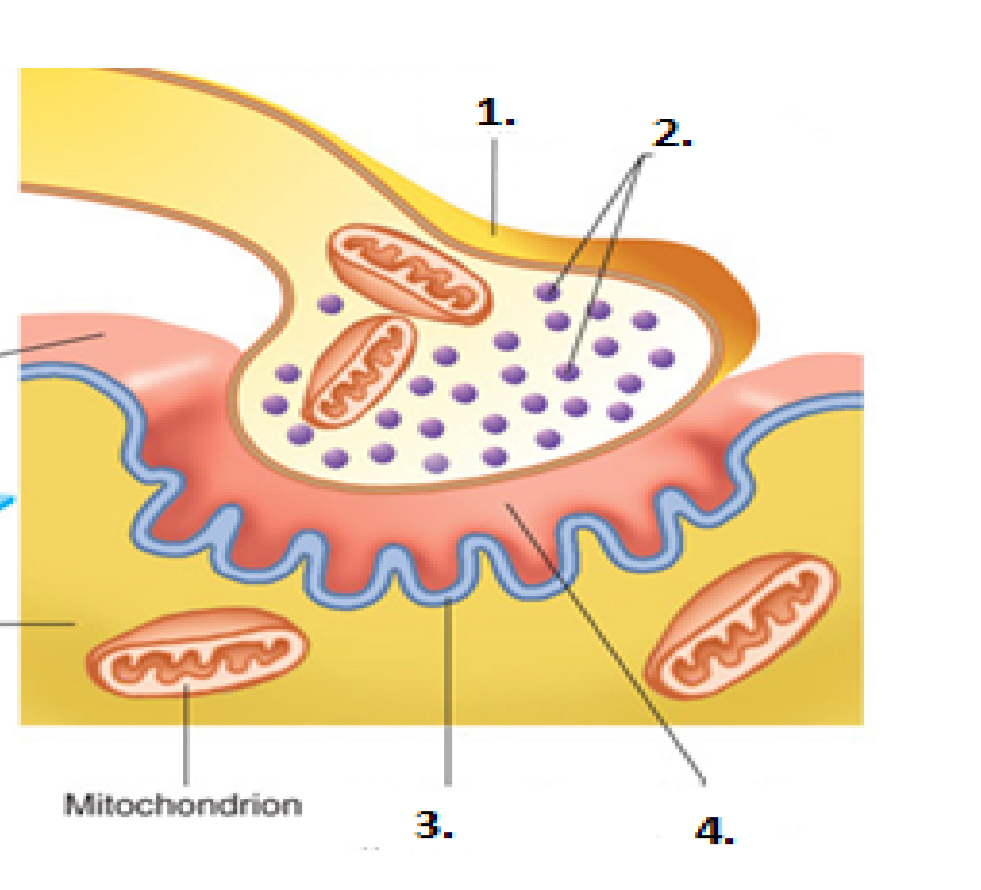
Label 3
Postsynaptic Membrane (sacroleema)
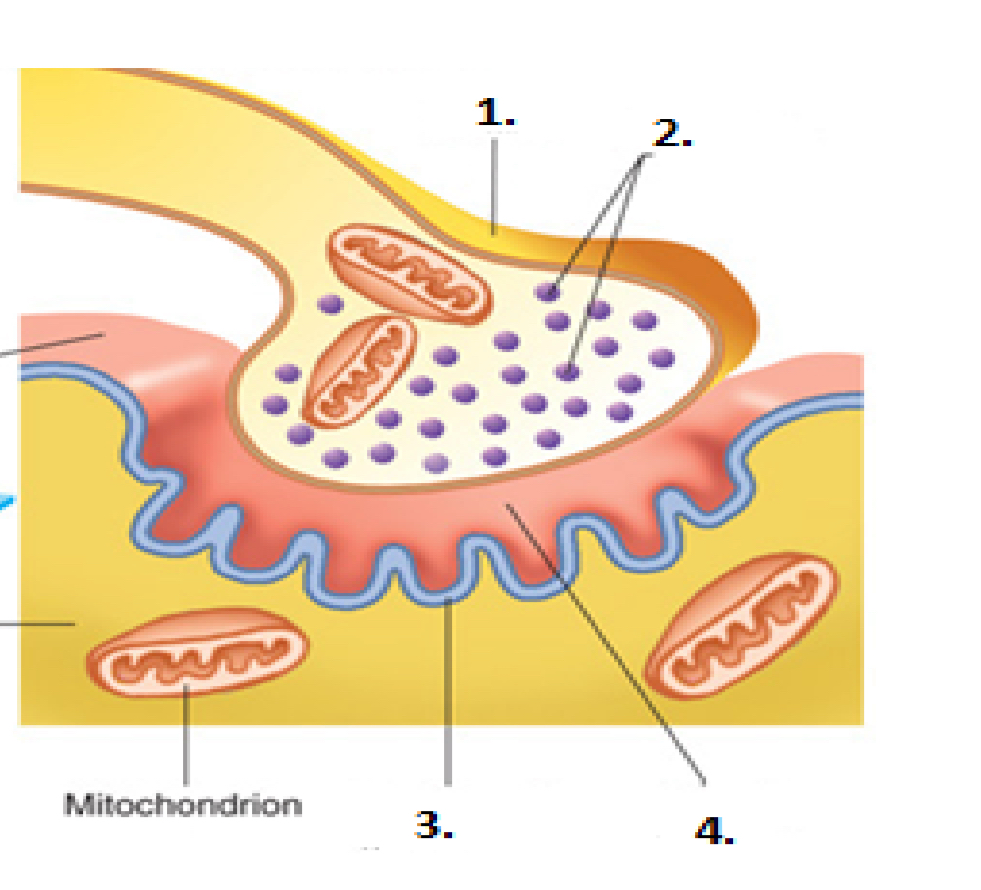
Label 4
Synaptic Cleft