Unit 2: Chemistry of Life
 Call Kai
 Learn
Learn Practice Test
 Spaced Repetition
 Match
Match Flashcards
 Knowt Play
1/23

There's no tags or description
Looks like no tags are added yet.
Name | Mastery | Learn | Test | Matching | Spaced | Call with Kai | Chat |
|---|
No analytics yet
Send a link to your students to track their progress
24 Terms
acid
a substance that donates hydrogen ions and therefore lowers pH
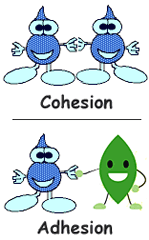
adhesion
the attraction between water molecules and molecules of a different substance
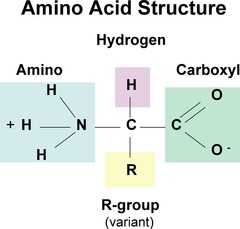
amino acid
a monomer of a protein
anion
a negative ion formed by gaining electrons

base
a substance that absorbs hydrogen ions and therefore raises pH
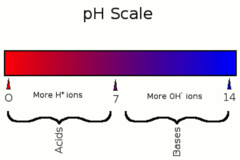
buffer
a solution that resists a change in pH by absorbing or releasing hydrogen or hydroxide ions
carbohydrate
a biological macromolecule in which the ratio of carbon to hydrogen to oxygen is 1:2:1; carbohydrates serve as energy sources and structural support in cells

cation
a positive ion formed by losing electrons

cellulose
a polysaccharide that makes up the cell walls of plants and provides structural support to the cell

chemical bond
an interaction between two or more of the same or different elements that results in the formation of molecules
chitin
a type of carbohydrate that forms the outer skeleton of arthropods, such as insects and crustaceans, and the cell walls of fungi

cohesion
the intermolecular forces between water molecules caused by the polar nature of water; creates surface tension

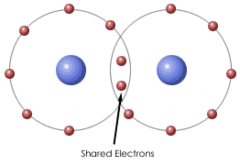
covalent bond
a type of strong bond between two or more of the same or different elements; forms when electrons are shared between elements

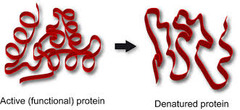
denaturation
the loss of shape in a protein as a result of changes in temperature, pH, or exposure to chemicals
deoxyribonucleic acid (DNA)
a double-stranded polymer of nucleotides that carries the hereditary information of the cell

disaccharide
two sugar monomers that are linked together by a glycodsidic bond

electron
a negatively charged particle that resides outside of the nucleus in the electron orbital; lacks functional mass and has a charge of -1

electron transfer
the movement of electrons from one element to another

element
one of 118 unique substances that cannot be broken down into smaller substances and retain the characteristic of that substance; each element has a specified number of protons and unique properties

enzyme
a catalyst in a biochemical reaction that is usually a complex or conjugated protein

evaporation
the release of water molecules from liquid water to form water vapor

fat
a lipid molecule composed of three fatty acids and a glycerol (triglyceride) that typically exists in a solid form at room temperature

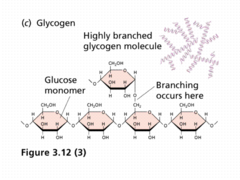
glycogen
a storage carbohydrate in animals
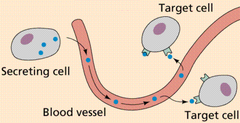
hormone
a chemical signaling molecule, usually a protein or steroid, secreted by an endocrine gland or group of endocrine cells; acts to control or regulate specific physiological processes