MED ORG LEC - 03 Chemical Aspects of Drug Metabolism
 Call Kai
 Learn
Learn Practice Test
 Spaced Repetition
 Match
Match Flashcards
 Knowt Play
1/51

There's no tags or description
Looks like no tags are added yet.
Name | Mastery | Learn | Test | Matching | Spaced | Call with Kai | Chat |
|---|
No analytics yet
Send a link to your students to track their progress
52 Terms
Metabolism
Conversion of the active drug molecule to inactive products (metabolites), waiting excretion
Most drug _____ is done by the liver
Elimination
Metabolism and excretion are often grouped under the word “_____”
Parent
Original molecule is called _____
Metabolites
Products after metabolism are called _____
Nonpolar
Most parents get into the bloodstream and are distributed as _____ molecules. To get out of the body, they must be converted to more polar metabolites.
Deactivation
Parent: Active
Metabolite: Inactive
Overall Effect: ?
Most common case
Activation
Parent: Inactive
Metabolite: Active
Overall Effect: ?
Case for prodrugs
Continued Activity
Parent: Active
Metabolite: Active
Overall Effect: ?
Increases DoA; “active metabolites”
Toxicity
Parent: Active
Metabolite: Toxic
Overall Effect: ?
Special cases
Altered Activity
Parent: Active
Metabolite: Active (other)
Overall Effect: ?
Special cases
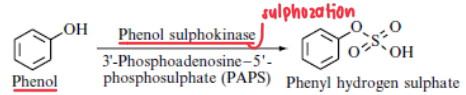
Example of Deactivation
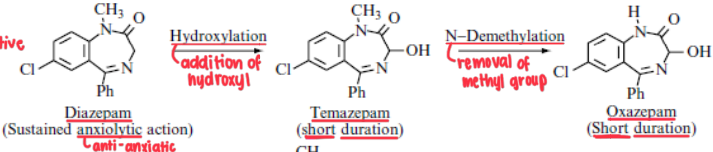
Example of Activation
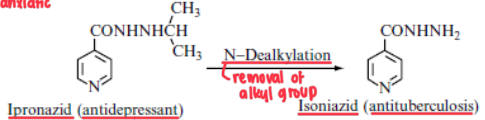
Example of Continued Activity
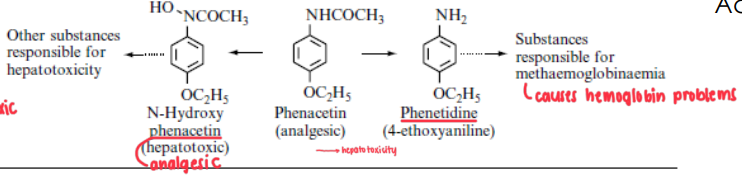
Example of Toxicity
Functionalization
Phase I Reaction
Converts a drug into a more polar metabolite, either by adding a small functional group or “unmasking” them from the original molecule
Small changes
Conjugation
Phase II Reaction
Attachment of a (usually polar) molecule to assure that the drug metabolite is very readily excreted
Requires cofactors that supply the group to be attached
Big attachments
Converts metabolite → hydrophilic
Reactions in Phase I/Functionalization
Oxidation
Reduction
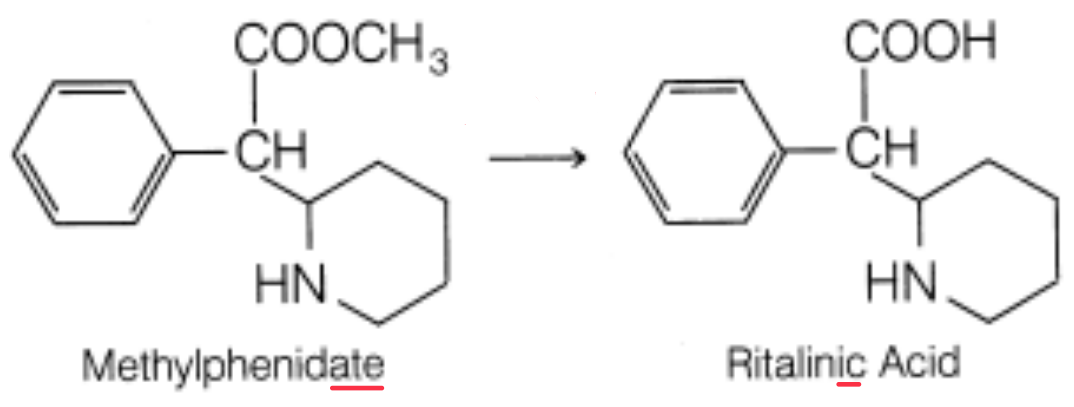
Hydrolysis
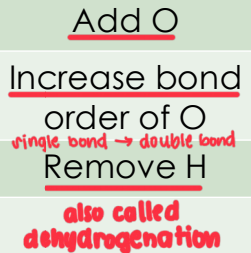
Oxidation
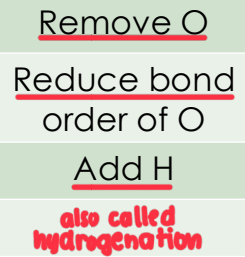
Reduction
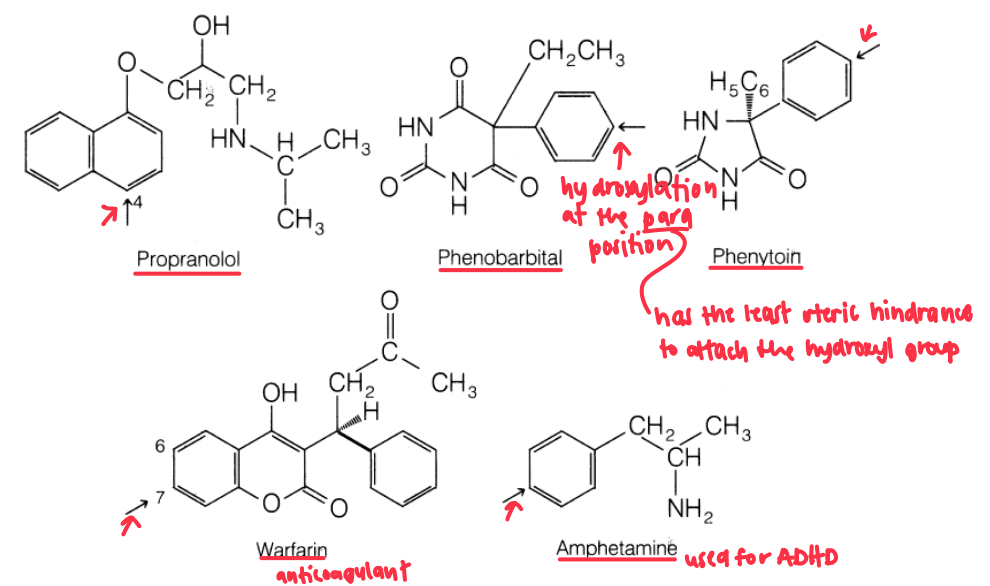
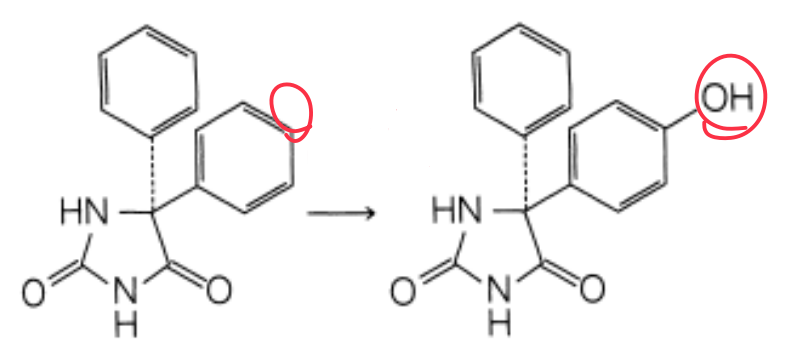
C-Redox Aromatic Hydroxylation
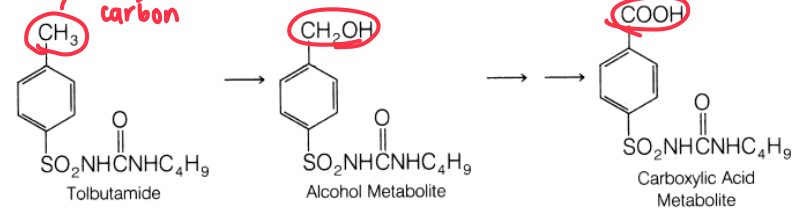
Benzylic Carbon
Directly attached to the ring
Susceptible to Oxidation
Vinylic Carbon
Carbon that is apart of a double bond
C=C
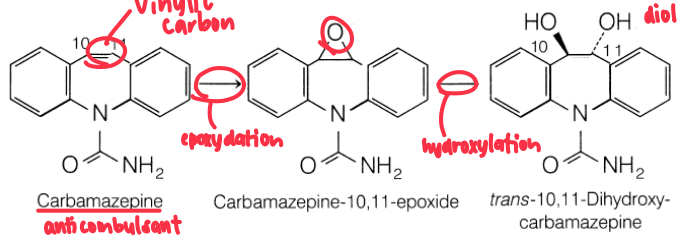
Oxidation of a-Carbons
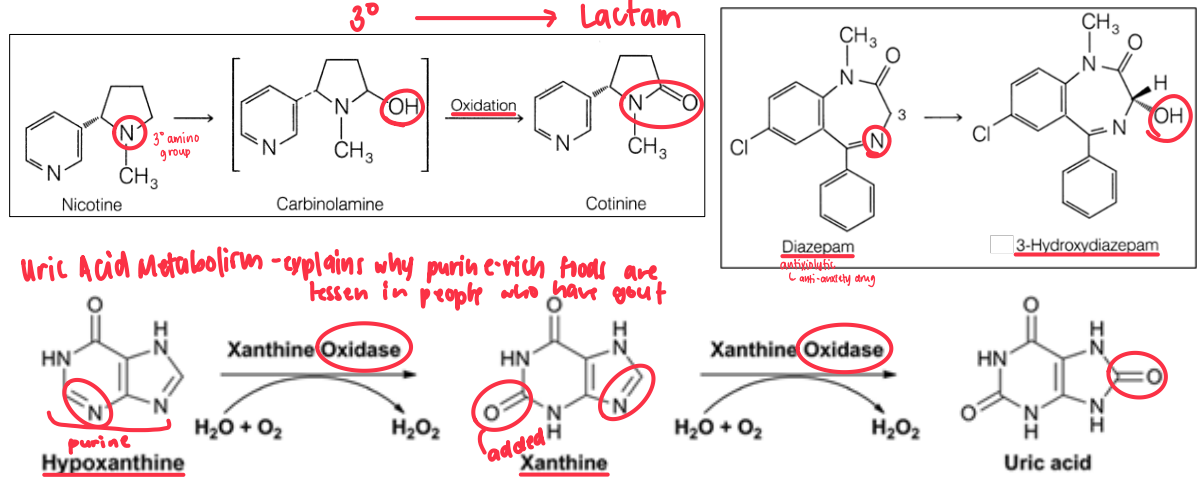
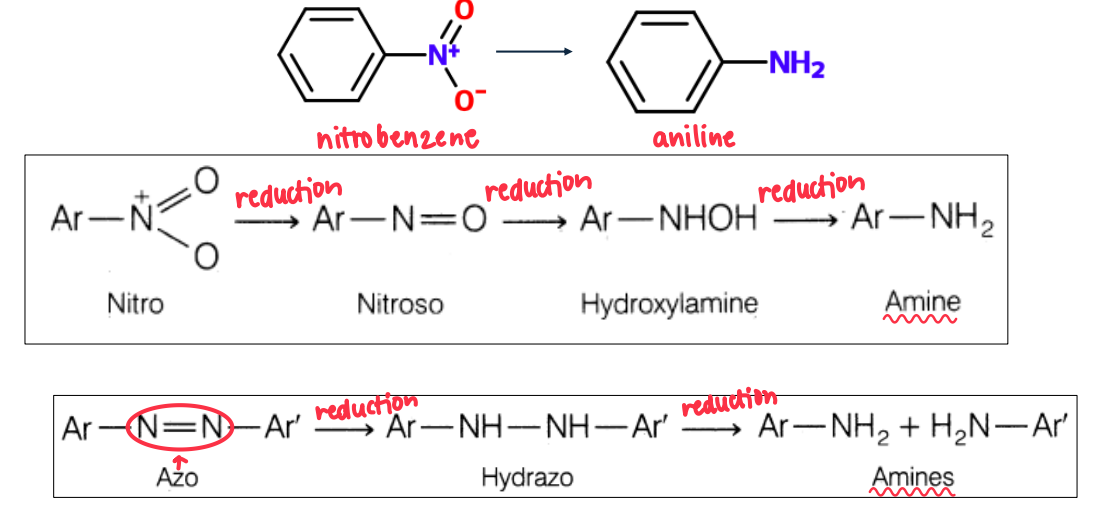
N-Redox
becomes primary amines
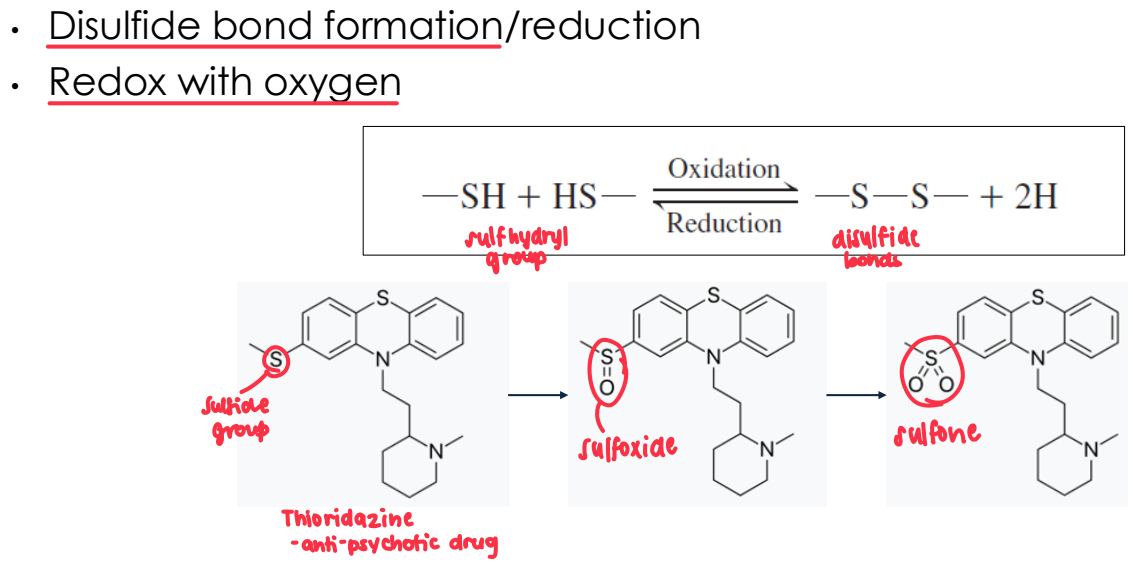
S-Redox
Redox at the sulfur atom
Oxidation of hydrogen
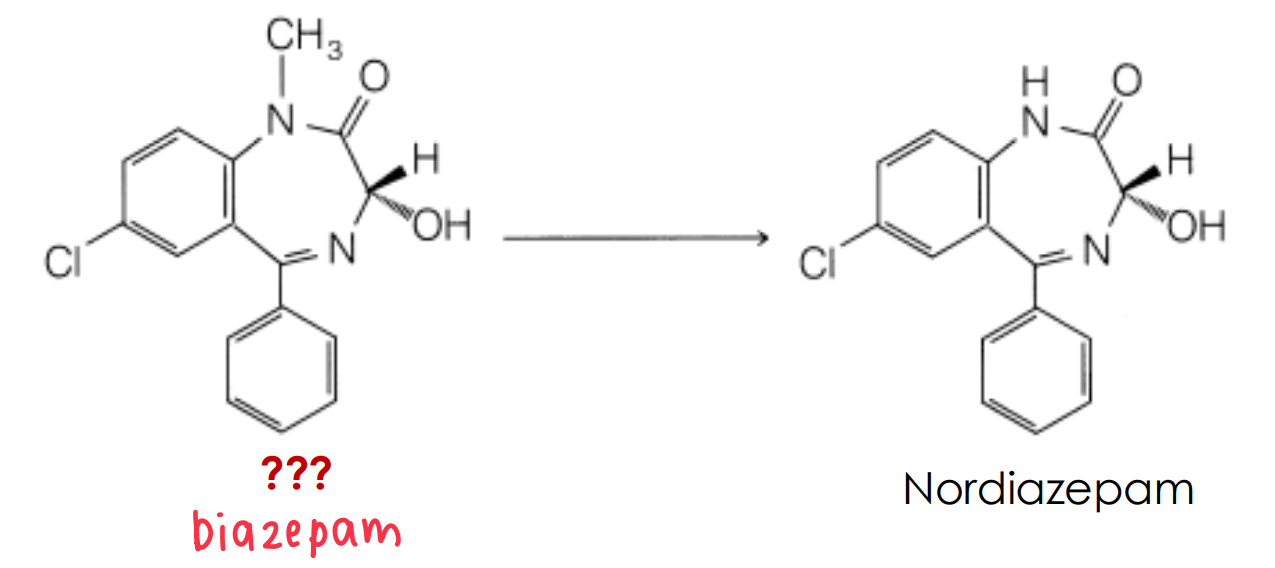
Dealkylation
Removal of alkyl group
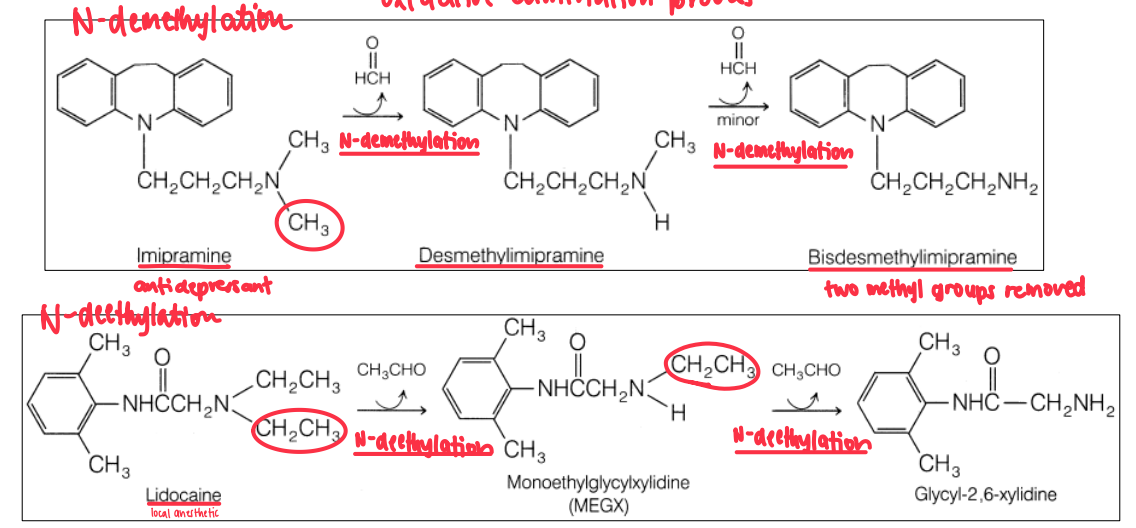
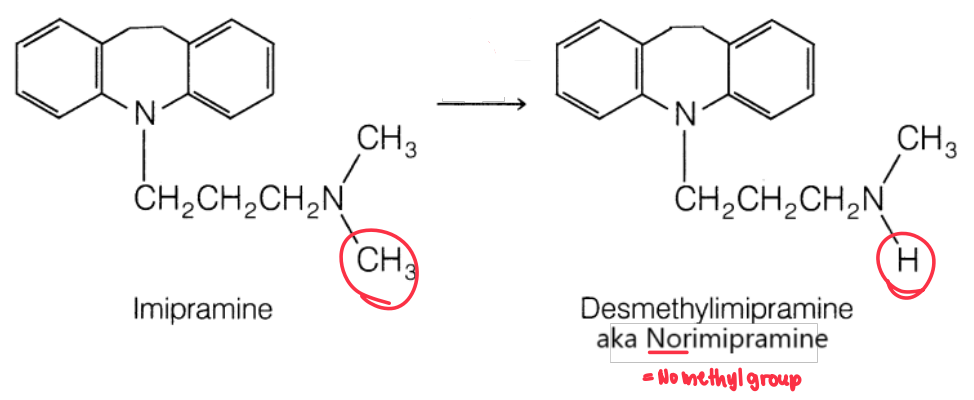
N-demethylation
What reaction is this?
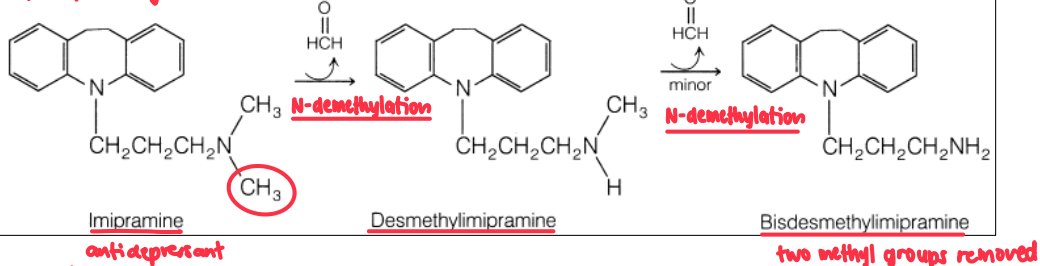
N-deethylation
What reaction is this?

Oxidative Elimination
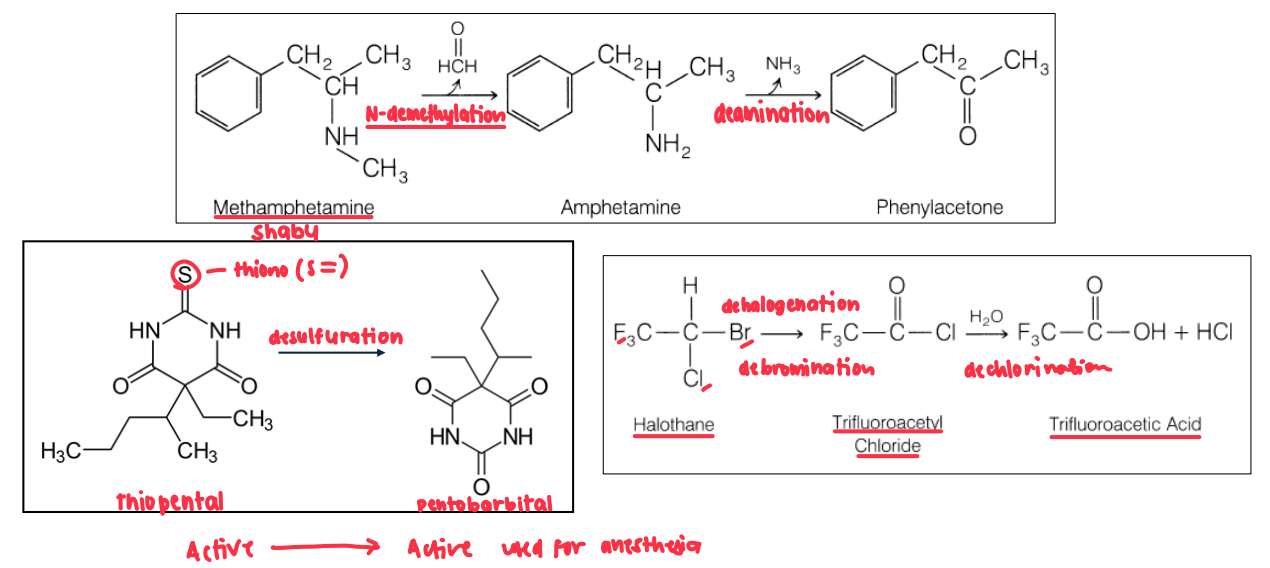
Hydrolysis
What reaction is this?

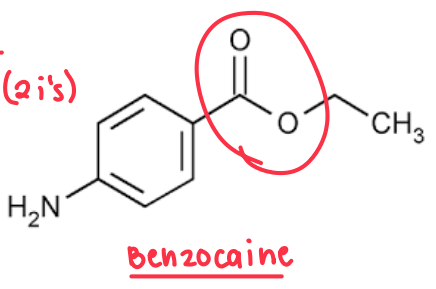
Amides
Has 2 i’s
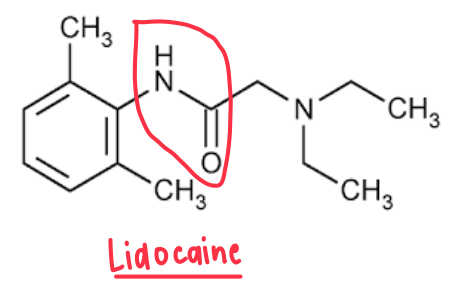
Esters
Has 1 i
Has faster rate
More electrophilic
Reactions in Phase II/Conjugation
Glucuronidation
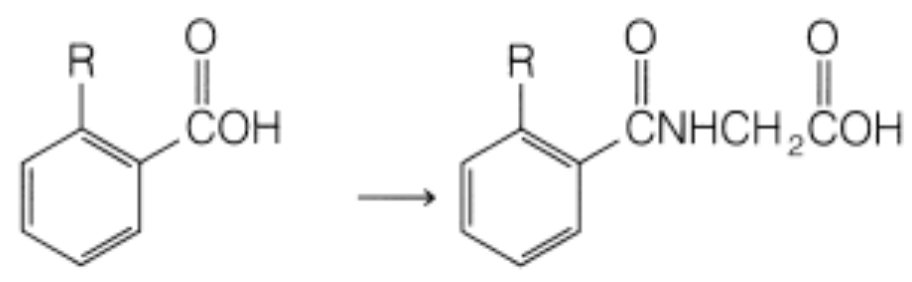
Glycine Conjugation
Glutathione Conjugation
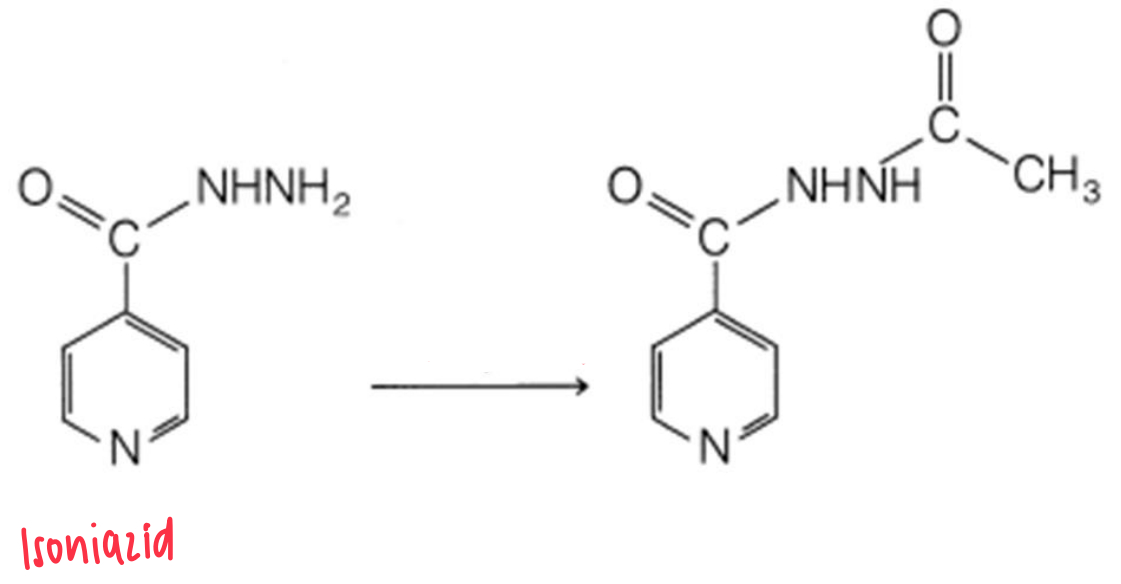
Acetylation
Sulfation
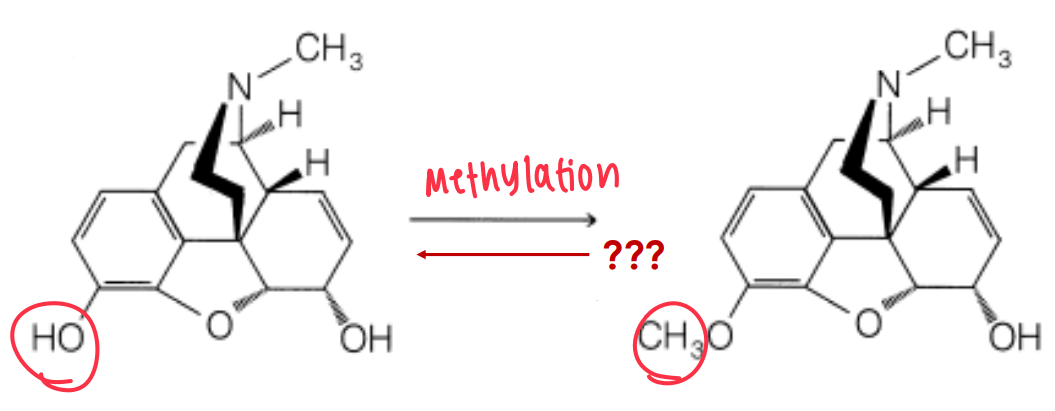
Methylation
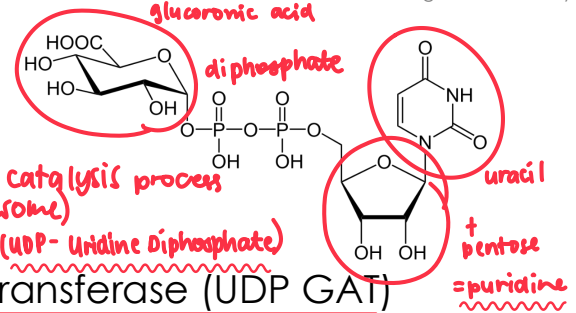
Glucuronidation
Cofactor: UDP-glucuronic acid
Enzyme: UDP-glucuronosylacyltransferase (UDP GAT)
Most common Phase II Process
Can result to:
O-glucuronides
N-glucuronides
S-glucuronides
Last Phase II Process to develop in neonates
Clinical Correlate:
Gray Baby Syndrome (toxicity from chloramphenicol—antibiotic)
Hyperbilirubinemia
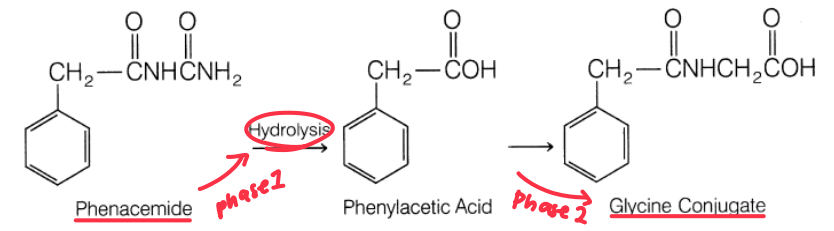
Glycine Conjugation
Cofactor: Glycine itself
Enzyme: Glycine N-acetyltransferace
Not that common
GSH Conjugation
Cofactor: Glutathione (GSH)
Enzyme: Glutathione S-transferase (GST)
Targets:
halides
sulfates
sulfonates
phosphates
nitrates
Biochem Correlate:
Glutathione is composed of E, C, and G
GSH can be reactivated by adding SH groups from other molecules
Acetylation
Cofactor: Acetyl-CoA
Enzyme: N-acetyltransferase (NAT)
Most common pathway for primary amines, even including amides, sulfonamides, and hydrazo groups
“HIPS”
hydralazine
isoniazid
procainamide
sulfonamides
Sulfation
Cofactor: 3-phosphoadenosyl-5’-phosphosulfate (PAPS)
Enzyme: Sulfotransferases
Especially important for phenols (ex. APA, catecholamines, thyroxine, bile acids, phenolic drugs, steroids)
Methylation
Cofactor: S-adenosylmethionine (SAM/AdoMet); Occasionally, methylenetetrahydrofolate
Enzyme: Methyltransferases
Important for synthesis of neurotransmitters
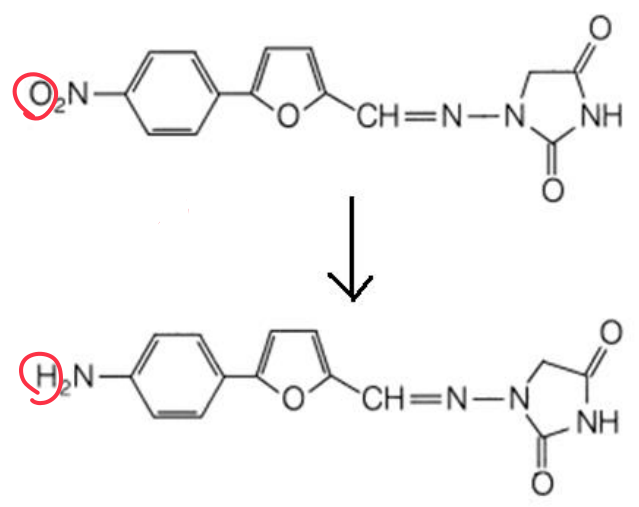
Reduction
Determine the metabolic reaction
Demethylation
Determine the metabolic reaction
Aromatic Hydroxylation
Determine the metabolic reaction
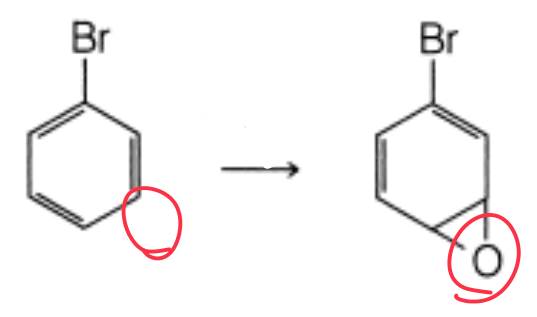
Epoxydation
Determine the metabolic reaction
N-demethylation
Determine the metabolic reaction
Glycine Conjugation
Determine the metabolic reaction
Hydrolysis
Determine the metabolic reaction
Demethylation
Determine the metabolic reaction
Acetylation
Determine the metabolic reaction
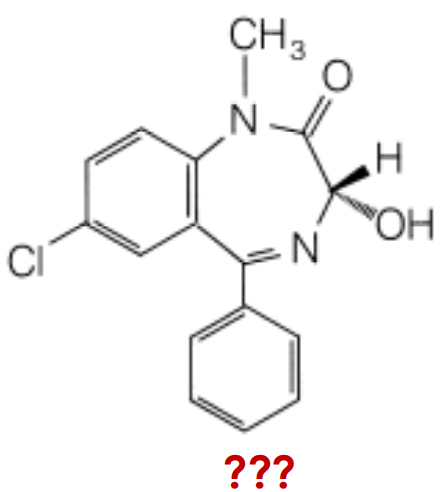
Diazepam
What is this Structure?
Enzyme Inhibition
Reduction of enzyme activity
Increases drug in body
Potential Problem? Toxicity
Enzyme Induction
Improvement of enzyme activity
Decreases drug in body
Potential Problem? Decreased efficacy/Failure of therapy
TRUE
TRUE OR FALSE
Phase I does not always mean first. There are some drugs that go straight to Phase II