Sedatives
 Call Kai
 Learn
Learn Practice Test
 Spaced Repetition
 Match
Match Flashcards
 Knowt Play
1/23

There's no tags or description
Looks like no tags are added yet.
Name | Mastery | Learn | Test | Matching | Spaced | Call with Kai | Chat |
|---|
No analytics yet
Send a link to your students to track their progress
24 Terms
What is a sedative?
A substance that depresses the (CNS), resulting in calmness, relaxation, reduction of anxiety, sleepiness, slowed breathing, slurred speech, staggering gait, poor judgement, and slow, uncertain reflexes
Common properties of sedatives
Dissolved in the blood
Cross the blood brain barrier
Act on receptors in the synapse
Sedatives depress brain areas that make you awake and alert by blocking dopamine
And/or enhance the action of receptors that depress the nervous system by activating GABA
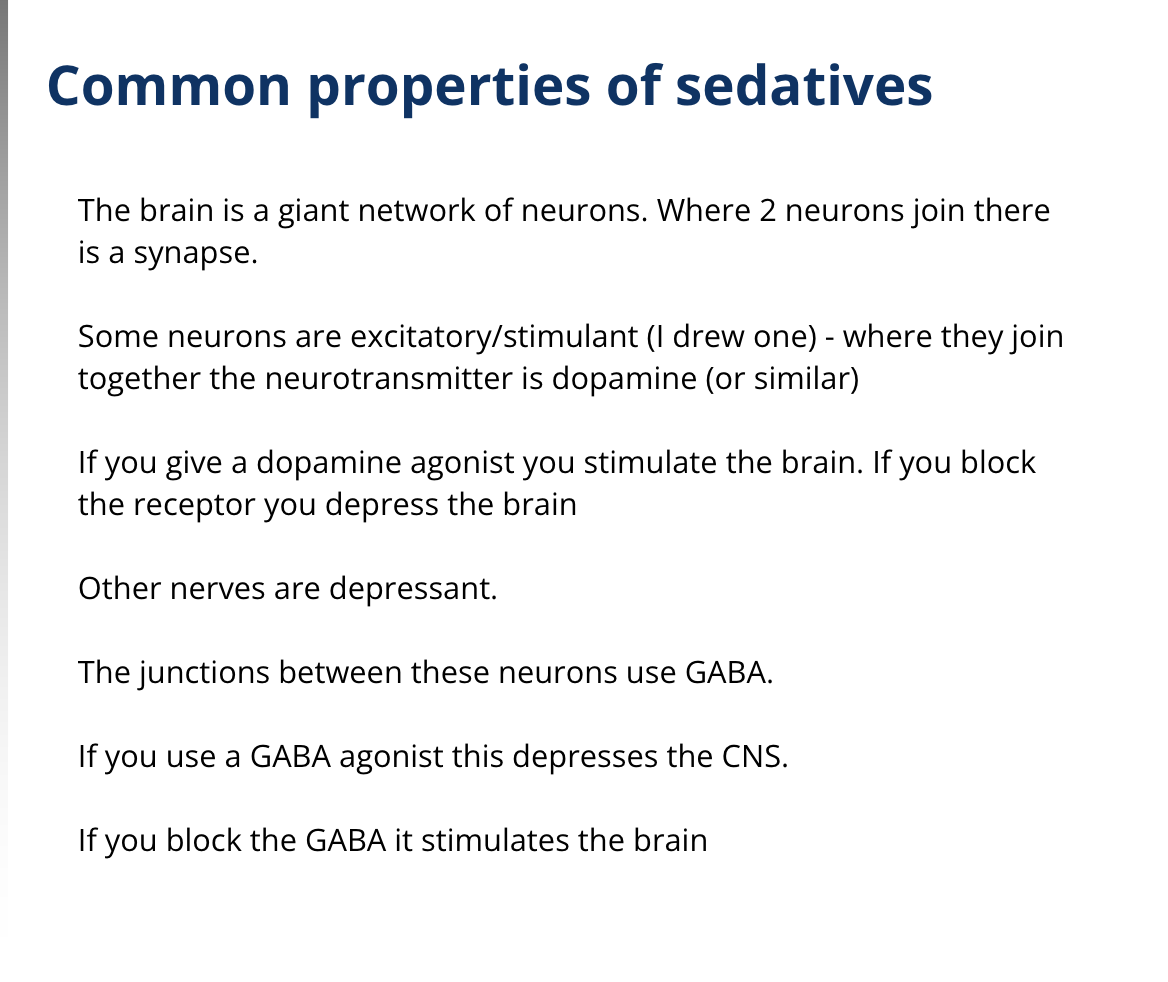
What are the two neurotransmitters we are concerned about when considering sedation?
Dopamine and Gamma-aminobutyric acid - GABA
→ Dopamine excites the brain. Stimulant - agonist - Involved emotional and motivational behaviour, as well as the control of movement
→ GABA provides an antagonistic action to counter balance the dopamine within the brain. Blocker
How do sedatives work?
Block dopamine and stimulate GABA
The nervous system is like a car, the faster it goes the more stimulated and excited you are. Sedatives press on the brakes (stimulate GABA) or make it harder to press on the accelerator (block dopamine) or both.
Why do you give sedatives in your area of work?
Agitated patient, intubation, operations, pain relief, comfort, Facilitate ventilation, stop aggressive behaviour, treat psychosis, sleep, facilitate withdrawl, seizure treatment, mental illness
Which sedatives do you administer in your area of worK?
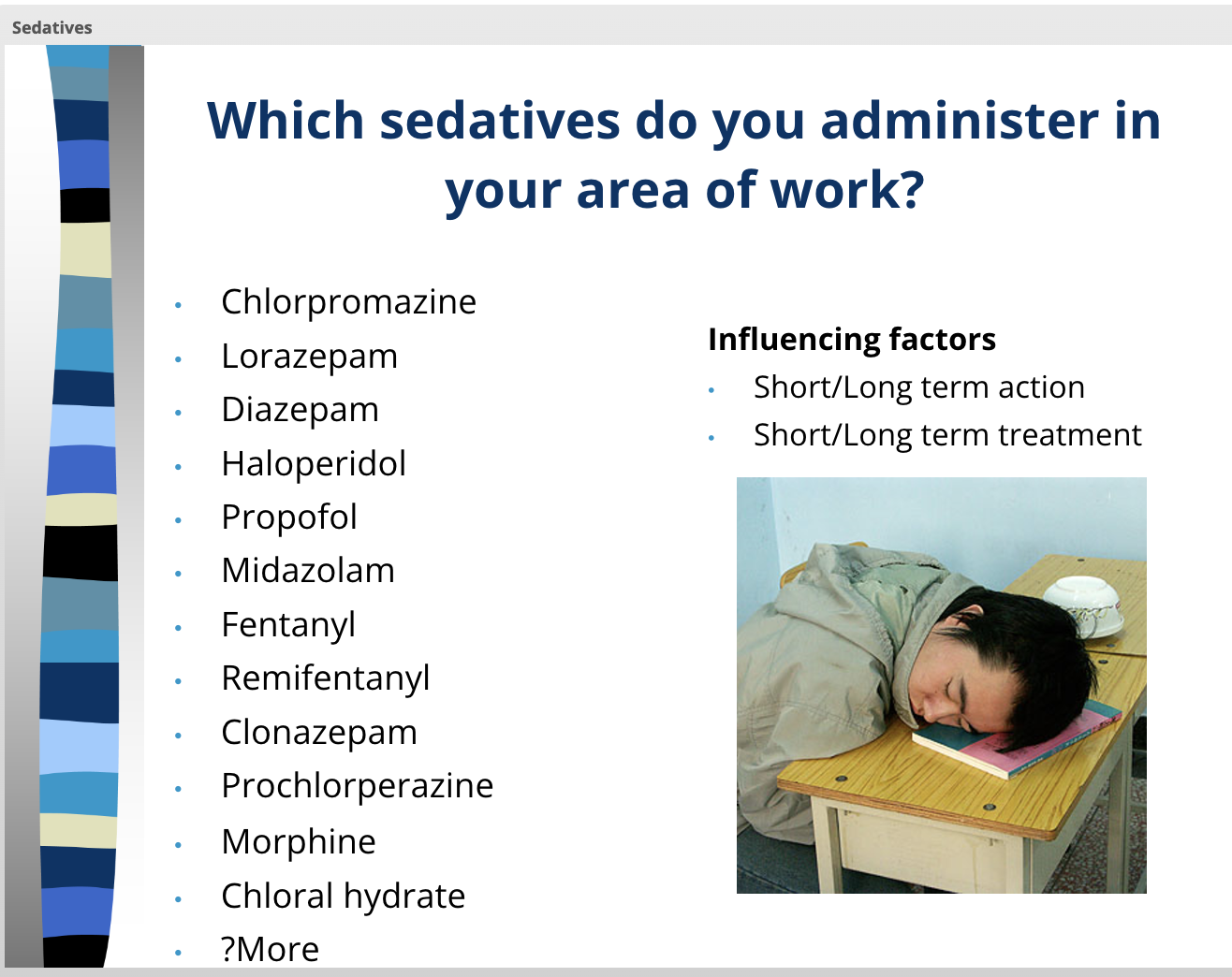
There are five major indications for the use of sedatives in seriously ill patients:
To allay anxiety
To manage acute confusional states
To faciltate mechanical ventialtion
To implement treatment or diagnostic procedures
To reduce tachycardia, hypertension or raised intracranial pressure
Sedative groups in terms of properties
Anxiolytics - benzodiazepines → loraz and diaz
Hypnotics - benzodiazepines → loraz, diaz and nitrazepam
Neuroleptics/antipsychotics → chlorpromazine, haloperidol
Anaesthetics → etomidate, propofol, ketamine, barbiturates
Analgesics → morphine, fentanyl, remifentanil
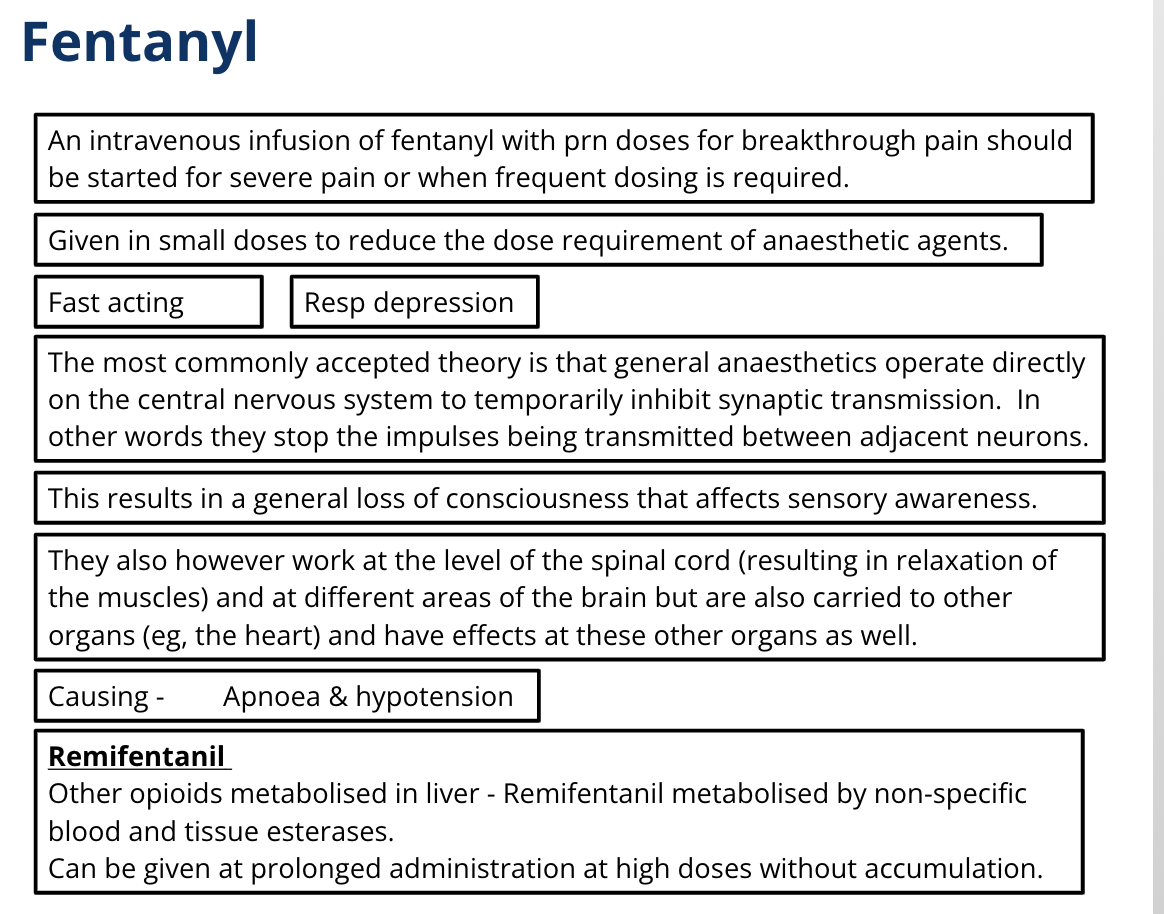
Fentanyl
is 100x more potent than morphine
it has a faster onset of action than morphine and does not produce a histamine release
it has a shorter duration of action than morphine when used on a prn basis or when infused for a short duration
it is the analgesic of choice in patients with renal dysfunction, morphine allergy or ongoing haemodynamic instability
metabolised by the liver
Benzodiazepines
Depression of CNS → increases inhibition of the CNS by the neurotransmitter GABA
Paradoxical effects → increased hostility, aggression, talkative, excitable
Withdrawal and dependence
Impaired judgement
Slow reaction time
Impaired renal and hepatic clearance in elderly
Midazolam adverse effects
Respiratory depression and airway obstruction
Hypertension or hypotension
Headache, drowsiness, dizziness, excessive sedation
Thrombophlebitis
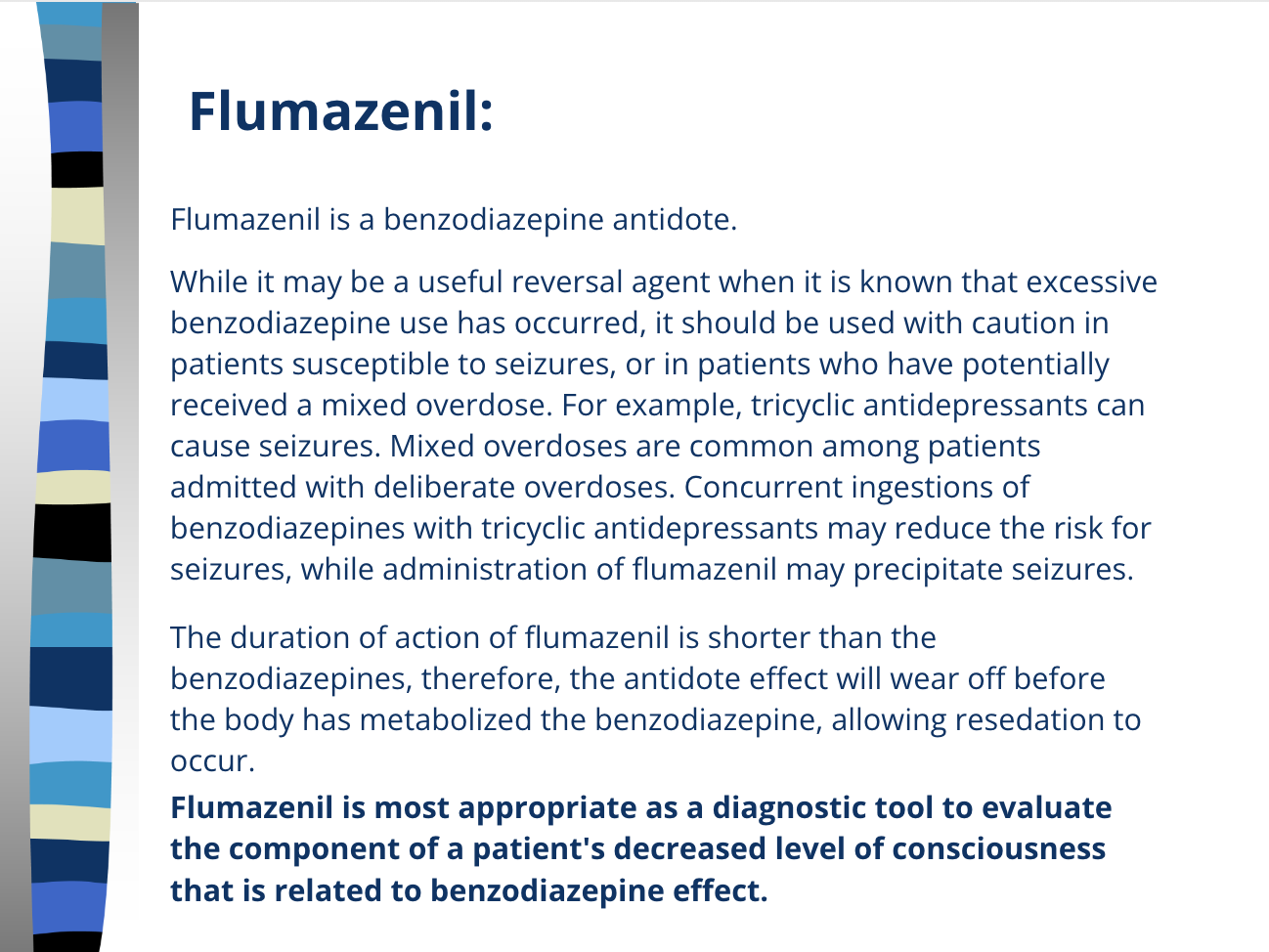
Midazolam antidote
Flumazenil
Midazolam monitoring
HR, ECG, Arterial blood pressure, RR
Midazolam side effects
There are lots of side effects and problems with midaz but considering the range of uses this drug has it would be pertinent to say the one things of paramount is the importance of ABC
Propofol
Short acting general anaesthetic agent
Induction/maintenance of general anaesthesia
Mechanically ventilated adults
Procedures
Mania, agitated depression
Metabolised by the liver
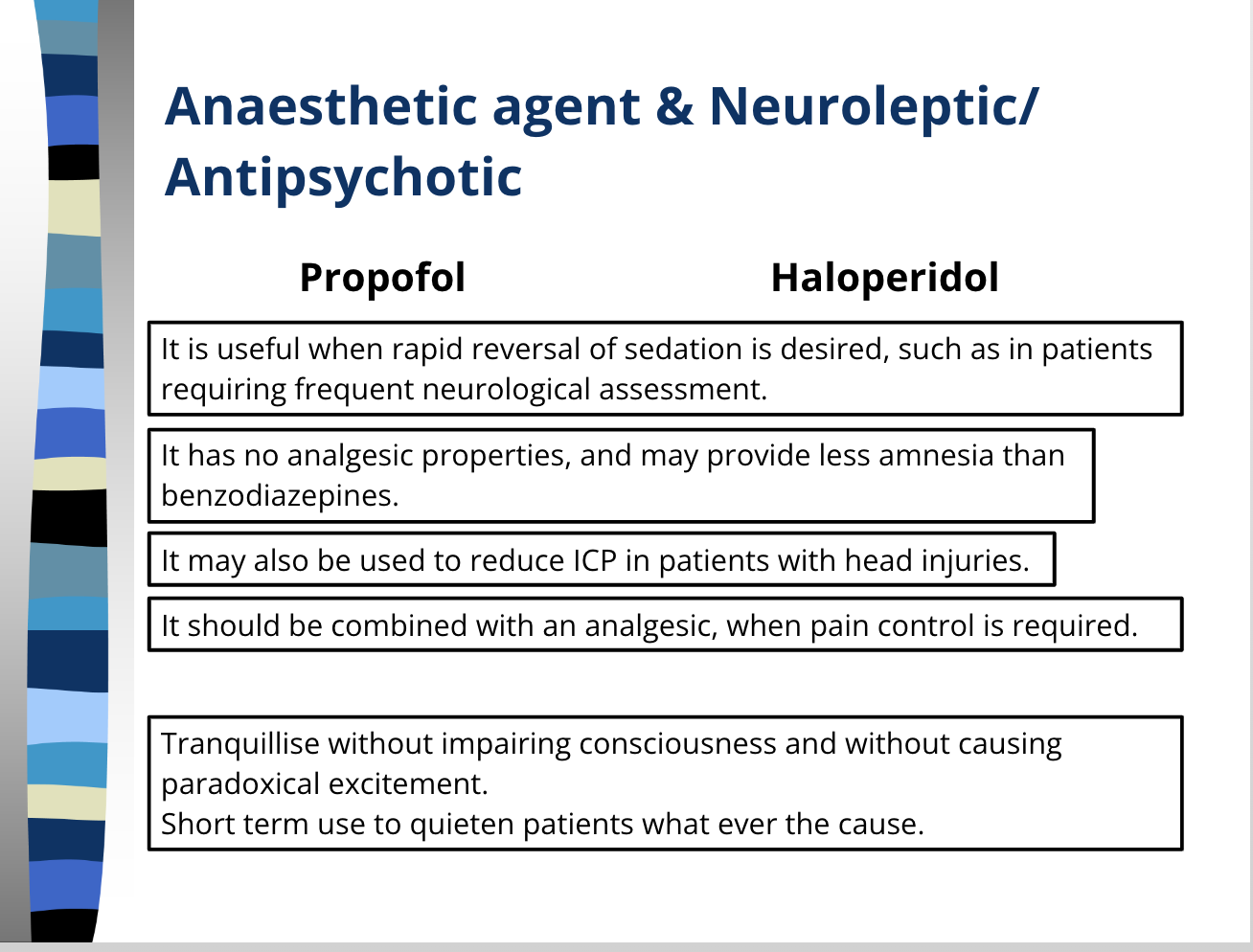
Haloperidol
Sever anxiety
Quieten disturbed patients
Brain damage, mania, agitated depression
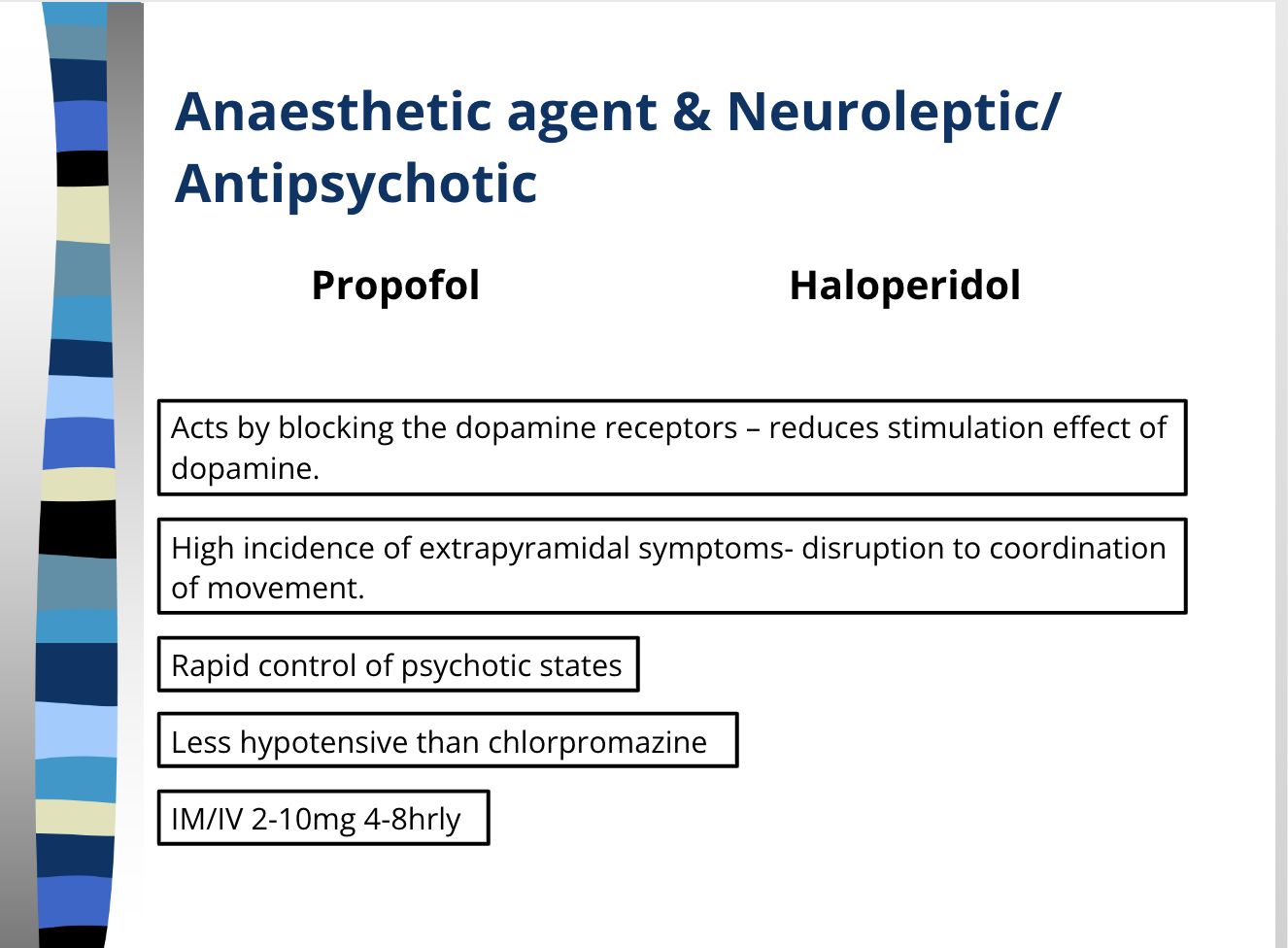
Haloperidol adverse effects
Tachycardia, hypotension, hypertension, ataxia, restlessness, agitation, seizures, exacerbation of psychotic symptoms, dry mouth or hyper-salivation, QT interval prolongation, elevated liver enzymes