PP2: Frameworks of terrestrial ecology: species adaptations and tolerance
 Call Kai
 Learn
Learn Practice Test
 Spaced Repetition
 Match
Match Flashcards
 Knowt Play
1/9

There's no tags or description
Looks like no tags are added yet.
Name | Mastery | Learn | Test | Matching | Spaced | Call with Kai | Chat |
|---|
No analytics yet
Send a link to your students to track their progress
10 Terms
Chaos in the woods
lots of chaotic things going on in the woods, but we can find order if we have a standard with which to compare
vegetation is constantly changing- succession, management, storms, fires, climate change, etc.
a more geographic approach gives us one thing to hold onto
What does establishment mean
establishment means that plants have germinated and survived
establishment is a key ecosystem process, as is growth and maintenance, and reproduction
many plants can live on many more sites than they occur, if they could only get established
Competition
competition is a direct factor determining occurrence of trees in an area within the context of the site
competition= relationship of two non-symbiotic species with each other capable of occupying the same geographic space
competition = sum of the processes by which the yield of biomass is reduced
“open site” = low competition = many species can exist
For a plant to occur in an ecosystem:
Establishment on the site (may take 2-5 years to occur)
growth and maintenance in the face of competition
reproduction via sexual maturity or asexual reproduction
Understory tolerance
understory tolerance= the relative capacity of a plant to survive and grow in the understory of a forest
survival of a plant in the understory is the most critical part of its life
light is the most important factor, but also moisture, humidity, temperature, and fungi
shade tolerance doesnt apply to plants that NEED shade to survive and will burn up without it

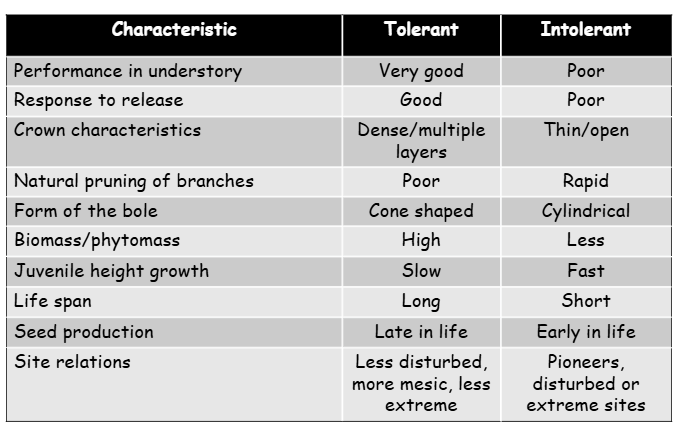
Understory tolerance chart
Release means if you cut down the trees shading/blocking them, what happens?
Tolerant trees have dense crowns because the leaves on the inside can survive with less lights
Natural pruning: branches in the shade fall off
Biomass: how dense they're growing/spread out
Mesic: moisture avilable throughout the growing season
Caveats to understory tolerance
wood strength or rooting depth are not related to tolerance
best strategy is min-tolerant: can tolerate shade but also quickly release
juvenile plants are more tolerant than adults
suckers are more tolerant than seedlings
Suckers=sprouts, suckers have a more established root system
tolerance may change with moisture/nutrient availability
Photosynthesis and amount of light
quantity and quality of light reaching the surface of the earth is what controls plant growth and ecology
light is used by plants to produce sugars and carbohydrates in the process of photosynthesis
CO2 is uptaken from the atmosphere into the leaves through the stomates
once in the plant, CO2 reacts with water to produce a 6-carbon sugar and a byproduct (sugar)
Xylum: water from roots to canopy
Phloem: sugars from canopy to roots
At the same time as photosynthesis, plants undergo respiration in all living plant cells, day and night
respiration uses energy gained for maintenance and construction within the plant
Tolerant species have a _____ compensation point than intolerant plants, and saturate at lower levels of light
lower
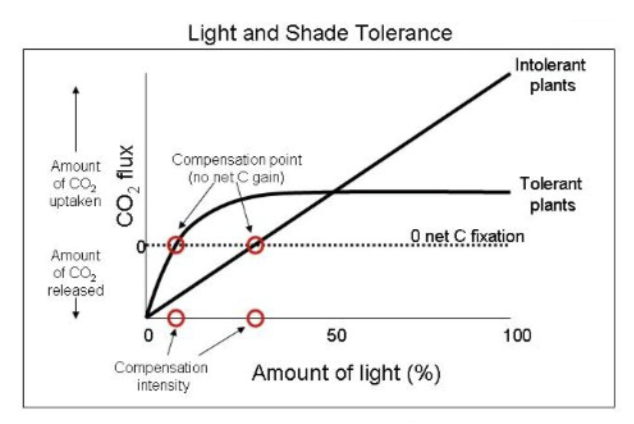
Forest understories differ in the amount of full sunlight they recieve:
tropical rainforest: 0.25-2%
beech/sugar maple: 0.4-2%
oak/hickory: 3-5%
pine forest: 10-25%
as expected, specific ecosystems have more/less tolerant species in their understories (B/SM = many, pine = less)