Nutrition Module 3 Carbohydrates/Diabetes Practice
 Call Kai
 Learn
Learn Practice Test
 Spaced Repetition
 Match
Match Flashcards
 Knowt Play
1/51

Earn XP
Description and Tags
SDMGGMERSMGEMRMRMRMMRMRMRMRRMMRRMRKRKRKRRKKR
Name | Mastery | Learn | Test | Matching | Spaced | Call with Kai | Chat |
|---|
No analytics yet
Send a link to your students to track their progress
52 Terms
nourish
Carbohydrates ______ the brain and nervous system, and all of your cells
vitamins
Carbohydrates provide _______ and minerals
fiber
Indigestible carbohydrates provide _____ with other health benefits
glucose
Plants synthesize _______ to use to make other larger, more slow-releasing carbohydrates
one two
Carbohydrates are organic compounds containing a ration of ___ carbon atom to ___ hydrogen atoms to one oxygen atom
Glucose
______ is the most abundant carbohydrate in the human body. It’s formula is written as C6H12O6.
Glucose
The preferred fuel source for all organisms, from bacteria to plants and animals.

Galactose
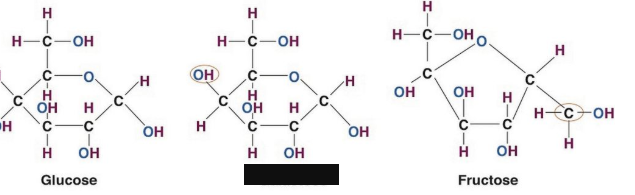
One of two simple sugars that are bound together to make up the sugar found in milk. Monosaccharide. Less stable than glucose, so the liver rapidly converts it to glucose
Fructose
A monosaccharide that has the same chemical formula as glucose, but differs in its chemical structure (having a 5-carbon ring instead of 6). Found in fruits, honey, and sugarcane; one of the most common monosaccharides in nature.

Pentose
A monosaccharide that has only 5 carbons instead of 6. Abundant in RNA and DNA, and as components of fiber
Sugar Alcohols
Industrially synthesized derivatives of monosaccharides. Examples are sorbitol, xylitol, and glycerol. They are often used in place of table sugar to sweeten foods, as they are less caloric due to incomplete digestion/absorption
Sucrose
A disaccharide that contains both glucose and fructose, and is otherwise known as table sugar.
Lactose
Disaccharide commonly known as milk sugar. Made up of one glucose and one galactose. Prevalent in milk, yogurt, cheese, and other dairy products
Maltose
Disaccharide consisting of two glucose molecules. A common breakdown product of plant starches, and is rarely found in foods as a disaccharide.
Complex Carbohydrates
Long chains of monosaccharides (polysaccharides) that may be branched or non-branched. The two groups are starches and fibers. Eating them provides sustained energy and helps maintain blood sugar levels.
Starches
Complex carbohydrates found in abundance in grains, legumes, and root vegetables like potatoes.
Amylose
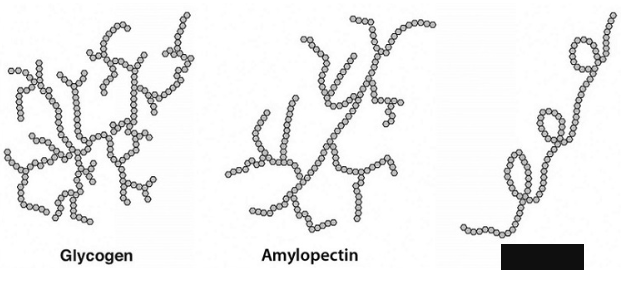
A plant starch. A linear chain containing hundreds of glucose units. More abundant than amylopectin
Amylopectin
A plant starch. A branched chain containing thousands of glucose units.
Amylose amylopectin
______ and ___________ store energy in plants
starch
The digestive system has a hard time breaking down _____, so cooking of vegetables/foods containing it is needed to obtain more nutrients.
Resistant Starches
Starches that remain intact throughout digestion. Bacteria in the gut can break dome down and may benefit gastrointestinal health.
Dietary Fibers
Polysaccharides that are highly branched and cross-linked. Includes pectin, gums, cellulose, and lignin. Humans do not produce enzymes that can break down these, but bacteria in the colon do. Known to reduce the risk of obesity and diabetes.
Functional Fiber
A class of fiber that may be extracted from plants and purified, or synthetically made. They are added to foods that do not originally contain that fiber.
Total Dietary Fiber Intake
The sum of dietary fiber and functional fiber consumed.
14
The dietary guidelines (2020-2025) recommend __ grams of fiber per 1000kcal as adequate intake.
38
The dietary guidelines recommend __ grams of fiber per day for males 14 years old and up
19 25
The dietary guidelines recommend __-__ grams of fiber per day for children from 1-3 to 4-8 years old
25 27
The dietary guidelines recommend __-__ grams of fiber per day for females 9 years old and up
5
Only about _% of starches are broken down in the mouth.
chemical
There is no further ________ breakdown of carbohydrates in the stomach because amylase cannot function in the acidic environment.
liver
The first organ to receive monosaccharides is the _____. It exports the glucose to the blood (the amount is controlled by hormones)
Insulin
Hormone released into the blood by the pancreas to signal the removal of glucose from the blood by transporting it to the inside of cells, converting it to energy
Glucagon
Hormone released into the blood by the pancreas triggered by a drop in glucose levels. Signals for the body to stop using glucose, and signals the liver to break down glycogen and release stored glucose into the blood.
70
About __% of glucose entering the body from digestion is redistributed by the liver into the blood for use by other tissues.
glycogen
If the body has enough energy, excess glucose is stored as ________ (mostly in the muscle liver)
4000 3000 1000
The amount of glycogen in the body at any one time is equivalent to ~____ kilocalories, with ____ in muscle tissue and ____ in the liver.
Fat-sparing
When blood-glucose levels rise, the use of lipids as an energy source is inhibited.
Ketosis
A metabolic condition resulting from an elevation of ketone bodies in the blood. Rare in healthy adults, but can occur in alcoholics, malnourished individuals, and people who have type 1 diabetes.
50
The minimum amount of carbohydrate in the diet required to inhibit ketosis in adults is __ grams per day
Ketone Bodies
An alternative energy source that cells can use when glucose supply is insufficient. Acidic; high elevations in the blood can make it too acidic.
Diabetes
A metabolic disease characterized by insulin deficiency and glucose over-sufficiency.
Type 1 Diabetes
A metabolic disease in which an abnormal immune response kills insulin-secreting cells in the pancreas, causing a lack of insulin in the body. Onset typically occurs before the age of 30, but can happen at any age. It can cause hunger, excessive thirst and urination, and rapid weight loss.
Type 2 Diabetes
A metabolic disease of insulin insufficiency/insulin resistance in cells. Has a gradual onset of symptoms. Accounts for 90-95% of diabetes cases
Gestational Diabetes
A condition characterized by high blood glucose levels and insulin resistance, developed by some women during pregnancy. The exact cause is not known, but is linked to pregnancy hormones. Normally ceases when pregnancy is over, but affected individuals can carry a lifetime risk of progression to type 2 diabetes of up to 60%.
Prediabetes
A metabolic condition in which people have moderately high glucose levels, but do not meet the criteria for diagnosis as a diabetic. Risks of developing this condition include being overweight, being 45+ years old, having a relative with type 2 diabetes, being physically active less than 3 times a week, having gestational diabetes, or having polycystic ovary syndrome.
Hyperglycemia
High blood glucose. Symptoms are increased thirst and frequent urination
Hypoglycemia
Low blood glucose. Symptoms include acute shakiness, sweating, nausea, hunger, clamminess, fatigue, confusion, irritability, stupor, seizures, and coma. Can be treated by eating foods containing about 10-20 grams of fast-releasing carbohydrates. Most often caused by injecting too much insulin or injecting at the wrong time. More common in individuals with type 1 diabetes.
Reactive Hypoglycemia
A condition in which people are sensitive to the intake of sugars, refined starches, and high-GI foods. Symptoms are similar to hypoglycemia
Anemia
A decrease in red blood cells. Poor absorption of iron and folic acid can lead to it.
Osteoporosis
A disease in which bones become brittle. Can be caused by a Calcium and Vitamin D deficiency.
Diverticulosis
A benign condition characterized by out-pockets of the colon.
Diverticulitis
Occurs when the out-pocketing in the lining of the colon becomes inflamed.