TEASm A&P Skeletal System
 Call Kai
 Learn
Learn Practice Test
 Spaced Repetition
 Match
Match Flashcards
 Knowt Play
1/32

There's no tags or description
Looks like no tags are added yet.
Name | Mastery | Learn | Test | Matching | Spaced | Call with Kai | Chat |
|---|
No analytics yet
Send a link to your students to track their progress
33 Terms
Skeletal System
body’s support systm of structure and protection for internal organs
How many bones are there in the body?
206
Primary function
body support, internal organ protection, reservoir for minerals, produce RBC and WBC and enables movement
What are the two main parts of the skeletal system?
Axial and Appendicular skeletal
Axial Skeletal
forms central axis of our body; facilitates breathing, head and neck movement and is the foundation for the appendicular

Appendicular Skeletal
helps function of all body parts
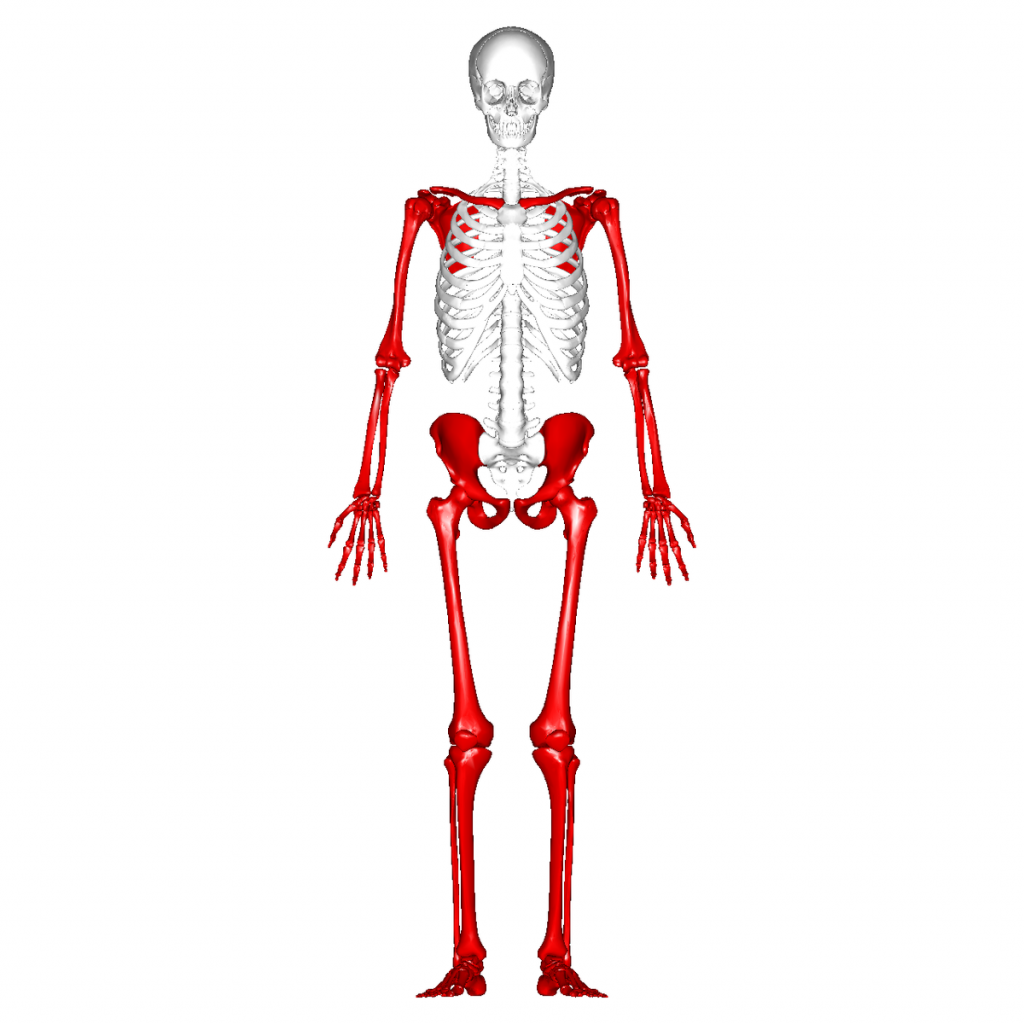
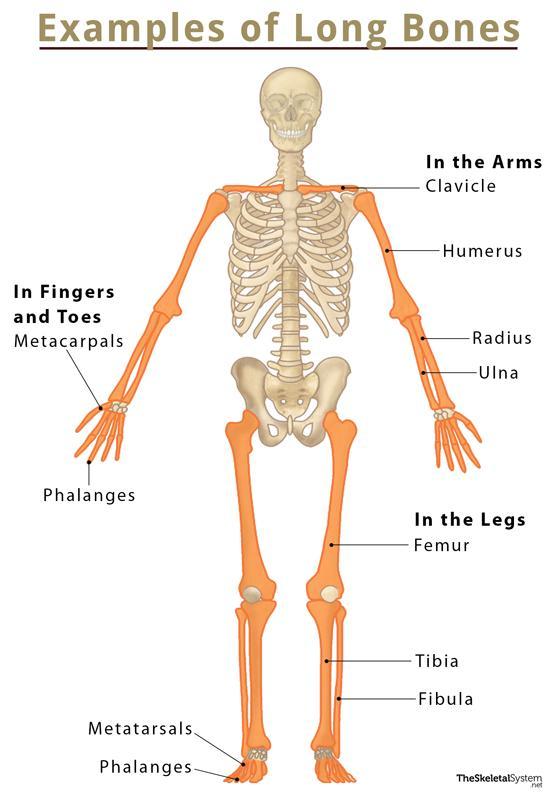
Long Bone
cylindrical shape, longer than there width and involve movement
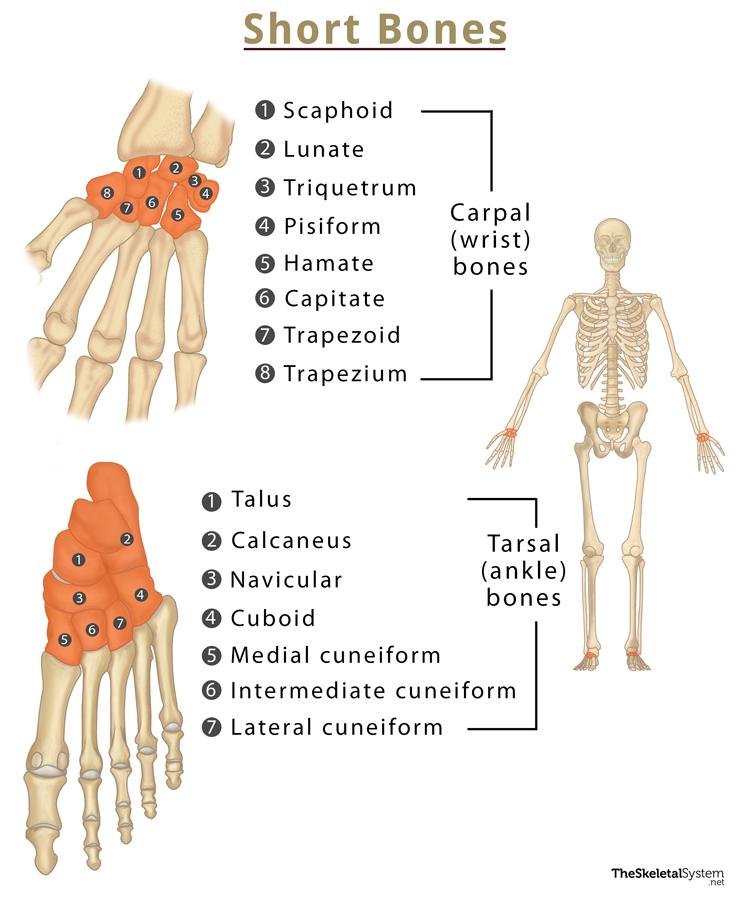
Short Bones
resemble cubes, length and width are equivalent, and mobilize muscle contraction and provide stability
Sesamoid Bone
small, round, handle pressure and are imbedded in tendons or muscles

Flat Bone
curved, thin, for body structure and protection

Irregular Bone
defy regular shape classifications, protect against forces and support movement in multiple directions

What is bones composed of?
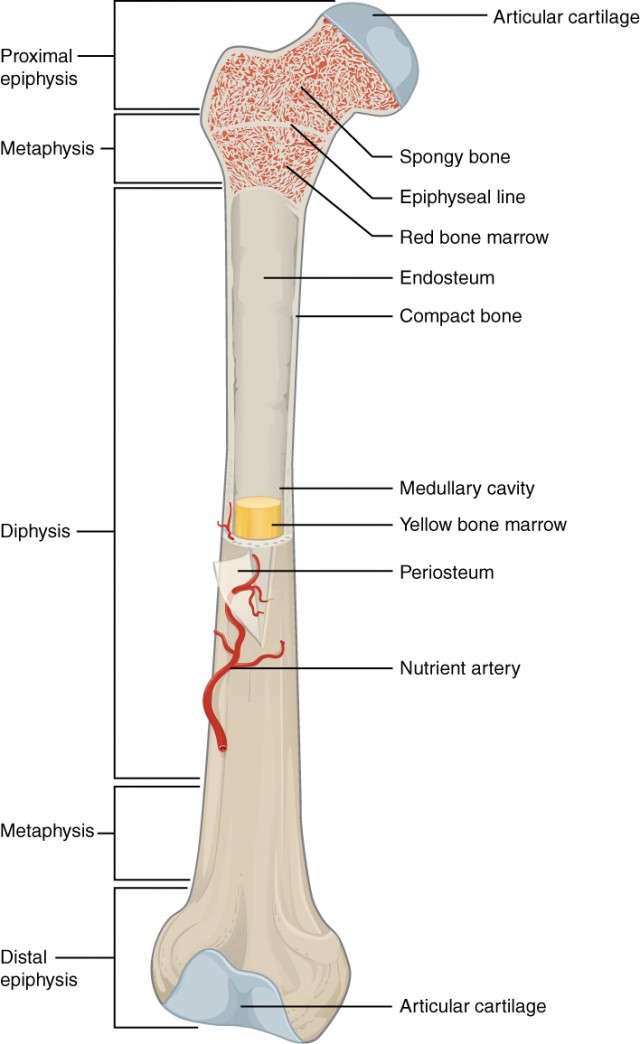
compact, and spongy
Compact Bone
hard, dense, outer layer of bones that protect and strengthen bones
Spongy/Cancellous/Trabecular Bone
Porous, honey comb like structure containing bone marrow
Red Bone Marrow
contains hematopoetic stem cells that produce RBC, WBC and platelets
Yellow Bone Marrow
contains mesenchymal stem cells producing fat, cartilage and bone; reservoir for long term energy
Cells involved in Bone and Cartilage formation and maintenance
Osteoblasts, osteocytes, and osteoclasts
Osteoblasts
“bone builders”; create new bone, bone synthesis and mineralization
Osteocytes
primary cells in bone tissue and maintain structure
Osteoclasts
bone reabsorbing cells, breaks down bone tissue
Bone Remodeling Steps
1) Resting 2) Reabsorption 3) Reversal 4) Formation 5) Mineralization
Resting
inactive state where remodeling happens
Reabsorption
osteoclasts create acidic environment to dissolve mineral components of bone
Reversal
mononuclear cell appear on surface and transition between reabsorption and formation
Formation
osteoblasts create new osteoid at reabsorption to replenish bone
Mineralization
osteoid mineralization, restoring mechanical strength and support
Chondroblasts
form cartilage, support bone joint connection and are a template
Chondrocytes
maintain structure of cartilage
Closed Fracture
doesn’t penetrate skin

Open Fracture
does penetrate skin

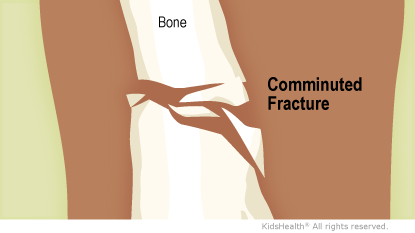
Comminuted Fracture
bone shatters into 3 or more pieces
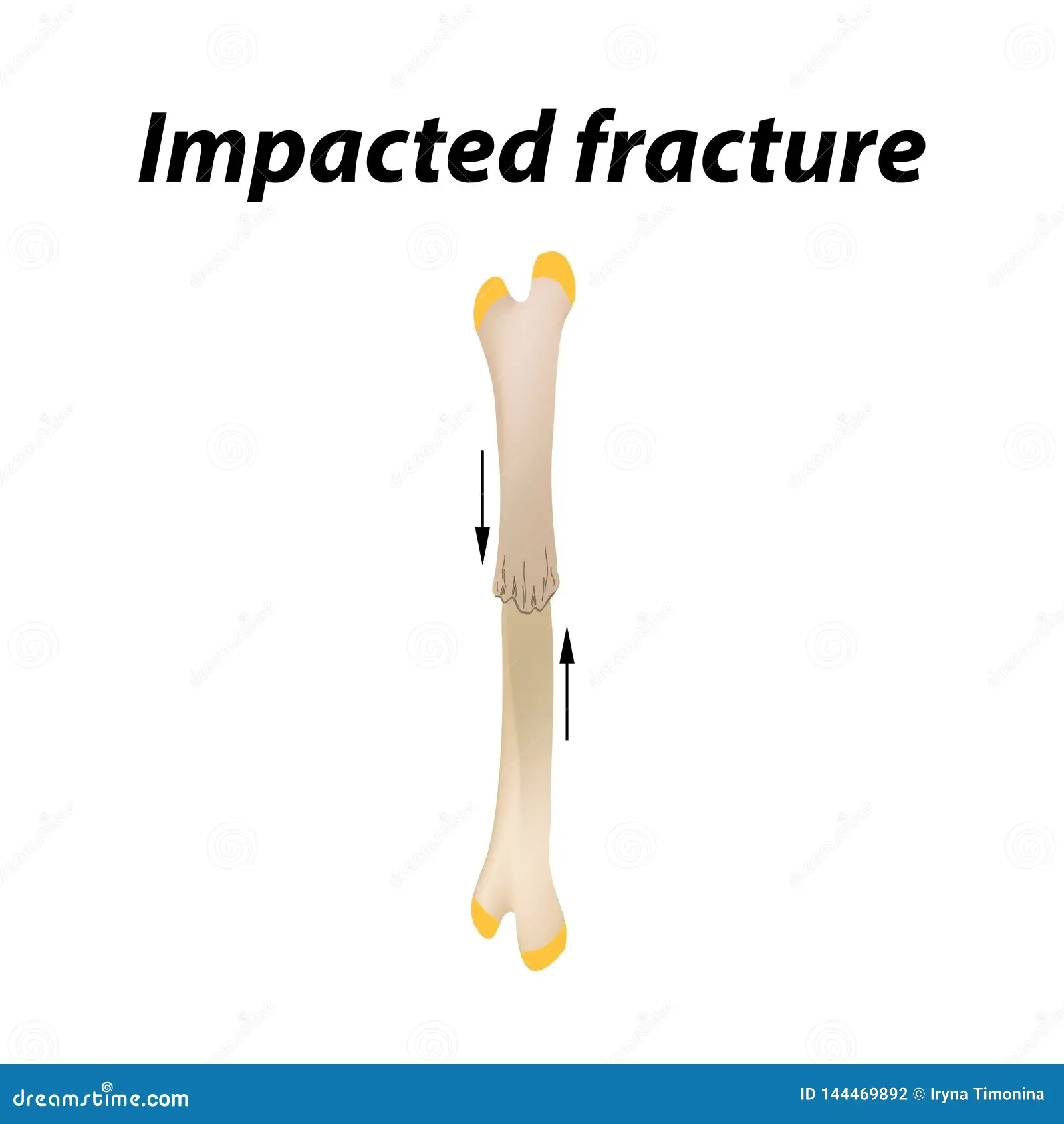
Impacted fracture
ends of bone driven together
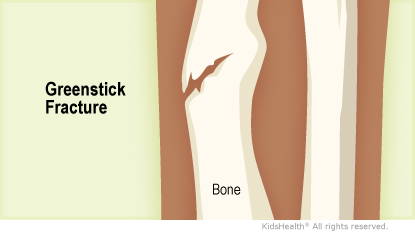
GreenStick fracture
bend and crack, does not break all the way through