Touch, Smell, Taste
 Studied by 0 people
 Call with Kai
 Learn
Learn Practice Test
 Spaced Repetition
 Match
Match Flashcards
 Knowt Play
1/98

There's no tags or description
Looks like no tags are added yet.
Name | Mastery | Learn | Test | Matching | Spaced | Call with Kai |
|---|
No study sessions yet.
99 Terms
What do the cutaneous senses detect?
Touch, pain, temperature, proprioception, and limb movement.
What is tactile sensation?
Detecting the position and features of objects touching the skin.
What is nociception?
Detecting harmful or potentially damaging stimuli.
What are thermoreceptors?
Receptors that detect warm and cold temperatures.
What is proprioception?
Sense of body and limb position.
What is kinesthesis?
Sense of limb and body movement.
What are the two skin layers?
Epidermis (outer layer) and dermis (inner layer).
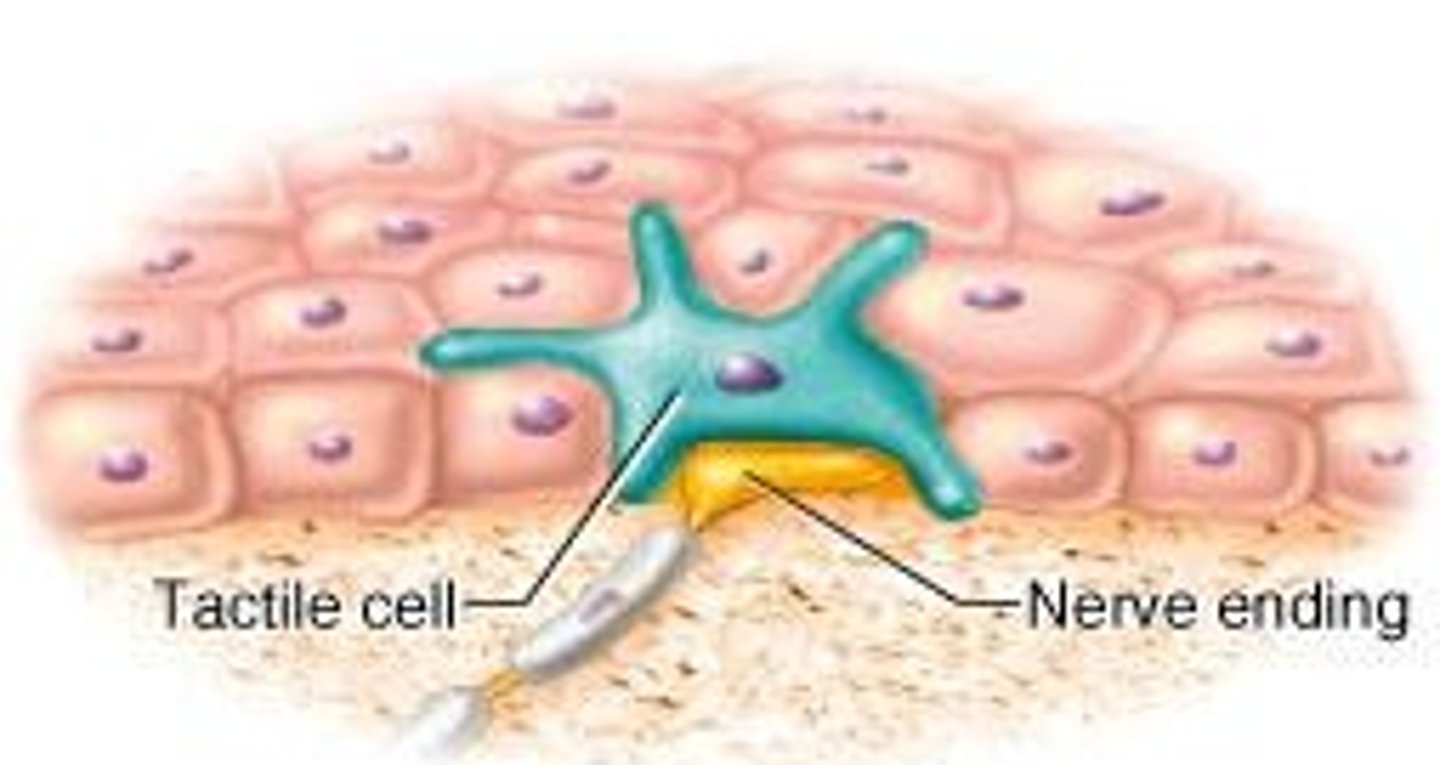
What do Merkel cells respond to?
Fine detail and texture; small receptive fields.
What do Meissner corpuscles detect?
Light touch and motion across skin.
What do Ruffini cylinders detect?
Skin stretch.
What do Pacinian corpuscles detect?
Deep pressure and vibration.
What activates warm thermoreceptors?
Increasing temperatures.
What activates cold thermoreceptors?
Decreasing temperatures.
What information goes to S1?
Touch and body sensation signals.
How is S1 organized?
As a spatial map of the body — the homunculus.
What does the homunculus show?
Body areas with more sensitivity have larger cortical representation.
What is a receptive field in touch?
The skin area where stimulation activates a particular S1 neuron.
How does receptive field size affect acuity?
Smaller RF = higher acuity.
Which body parts have the smallest RFs?
Fingertips and lips.
Which receptor has the smallest RF?
Merkel cells.
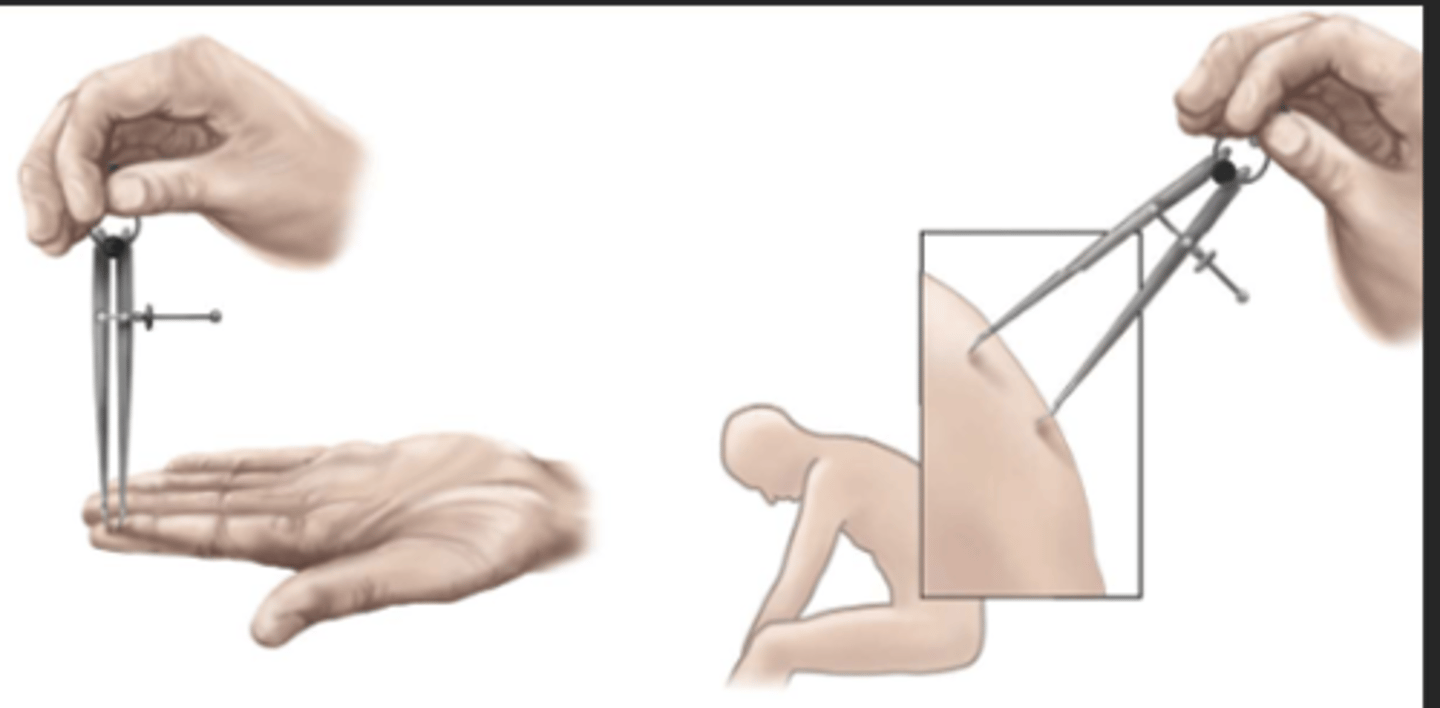
What is the two-point threshold test?
Measures minimum distance needed to feel two separate touches.
Can S1 change with experience?
Yes — like auditory and visual cortex.
Who shows increased S1 representation?
Musicians (more cortical area devoted to fingers).
What do nociceptors detect?
Painful or damaging stimuli.
What is the "direct pathway" of pain?
Signal travels from nociceptors → spinal cord → brain.
Why is pain considered multimodal?
It includes sensory, emotional, and cognitive components.
What is gate control theory?
A spinal "gate" modulates pain signals before they reach the brain.
What factors open the pain gate?
Anxiety, stress, focus on pain.
What factors close the pain gate?
Distraction, relaxation, positive emotion.
How does emotional pain relate to physical pain?
Social or emotional pain activates similar brain networks.
What causes phantom limb pain?
The brain still has a cortical map of the missing limb.
What therapy helps phantom limb pain?
Mirror therapy.
What is congenital insensitivity to pain?
A rare condition where individuals cannot feel pain — extremely dangerous.
Why is the ability to feel pain important?
Pain warns us of injury and prevents further damage.
What is olfaction?
The sense of smell.
Odor vs. odorant — what's the difference?
Odor = the smell experience
Odorant = the molecule that produces the smell
What is the odor detection threshold?
The lowest concentration of an odorant that can be detected.
In what units are detection thresholds often measured?
Parts per billion (ppb).
Do people have the same smell thresholds?
No — thresholds vary widely between individuals.
What increases or decreases odor sensitivity?
Time of day, age, sex (women > men), ovulation, smoking, illness, COVID.
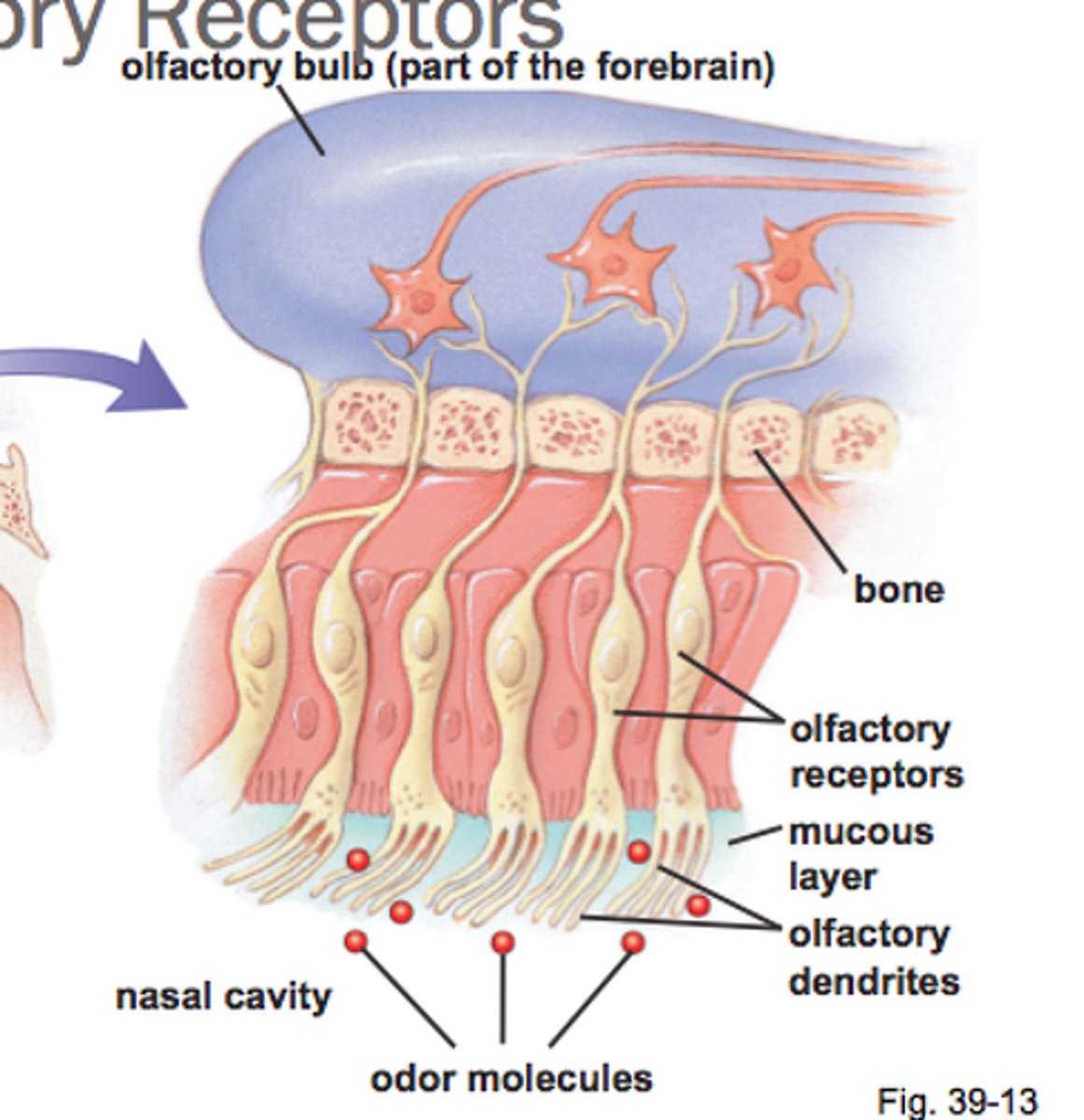
What is the olfactory mucosa?
A dime-sized area in the nasal cavity containing receptor neurons.
What are ORNs?
Olfactory receptor neurons that detect odorants.

How do odorants activate ORNs?
Odorants bind to receptor proteins on the ORN cilia.
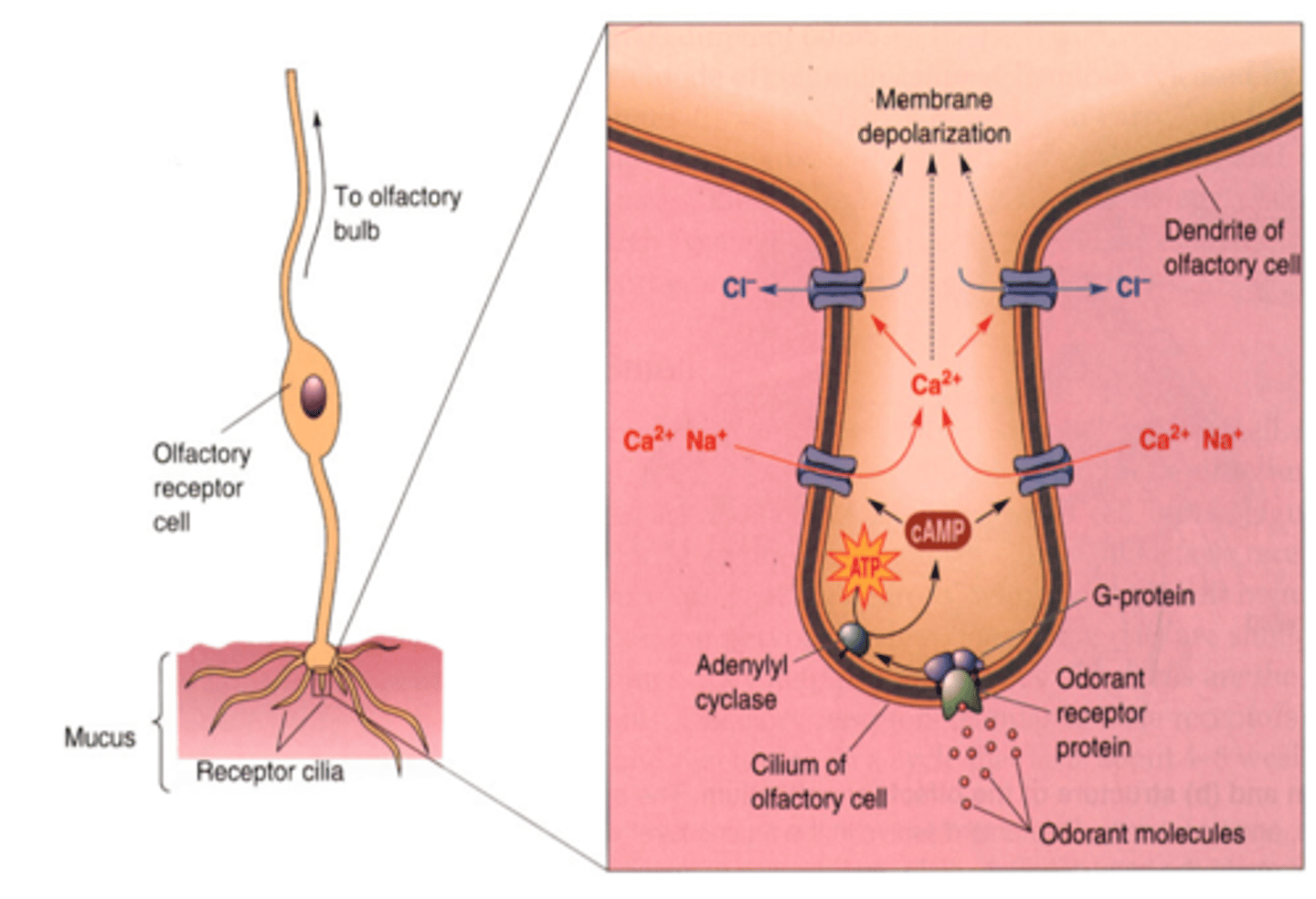
How is smell transduced?
Binding opens ion channels → ORN depolarizes → signal sent to brain.
About how many ORNs do humans have?
~10 million.
How many types of ORN receptors do humans have?
About 350.
Do ORNs regenerate?
Yes — every 5 to 7 weeks.
What must new ORNs do to function?
Regrow axons and reconnect exactly to the olfactory bulb.
What is the olfactory bulb?
The brain structure that receives signals from ORNs.
What are glomeruli?
Clusters in the olfactory bulb that receive input from similar ORNs.
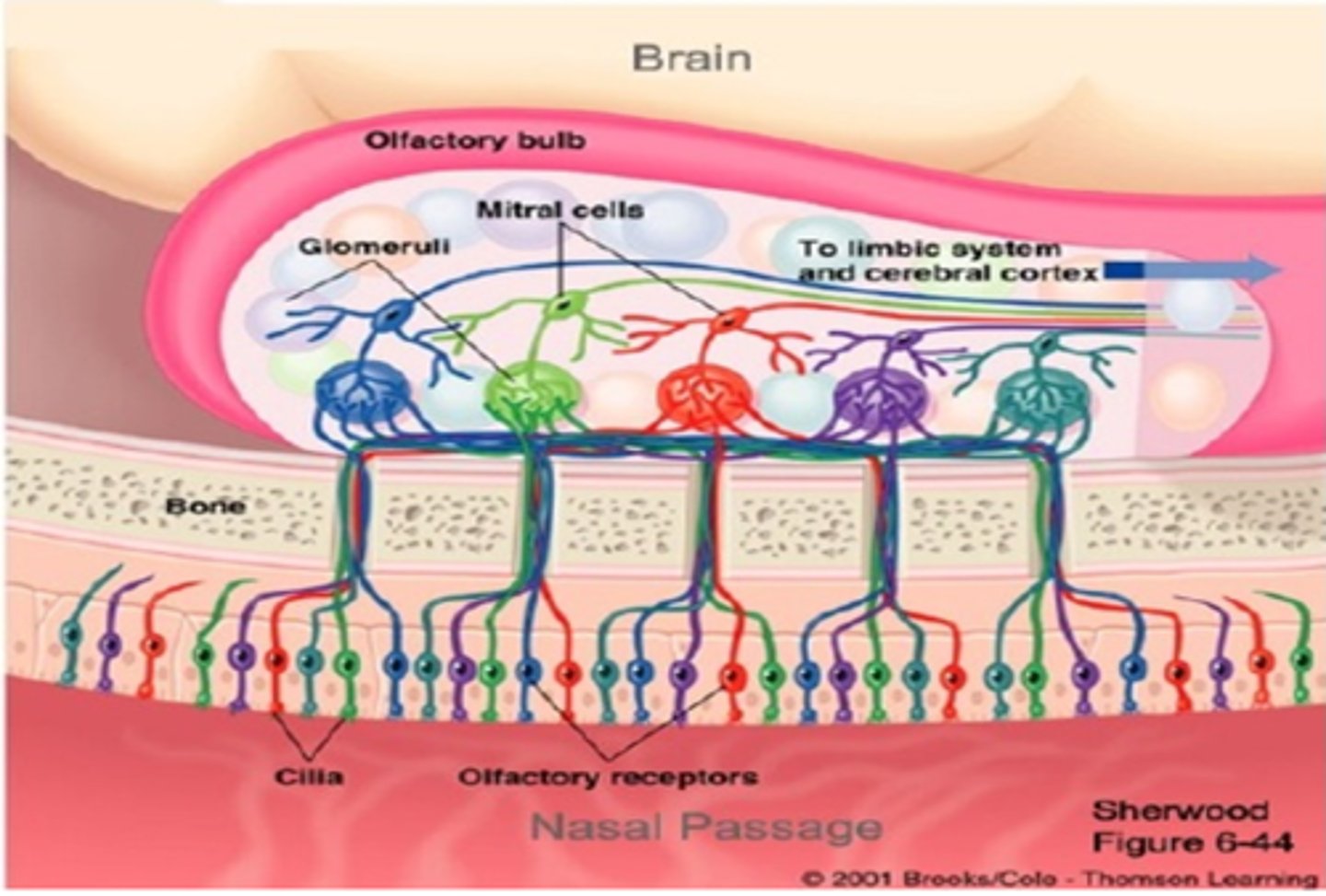
What is the main function of glomeruli?
To organize and categorize odor information.
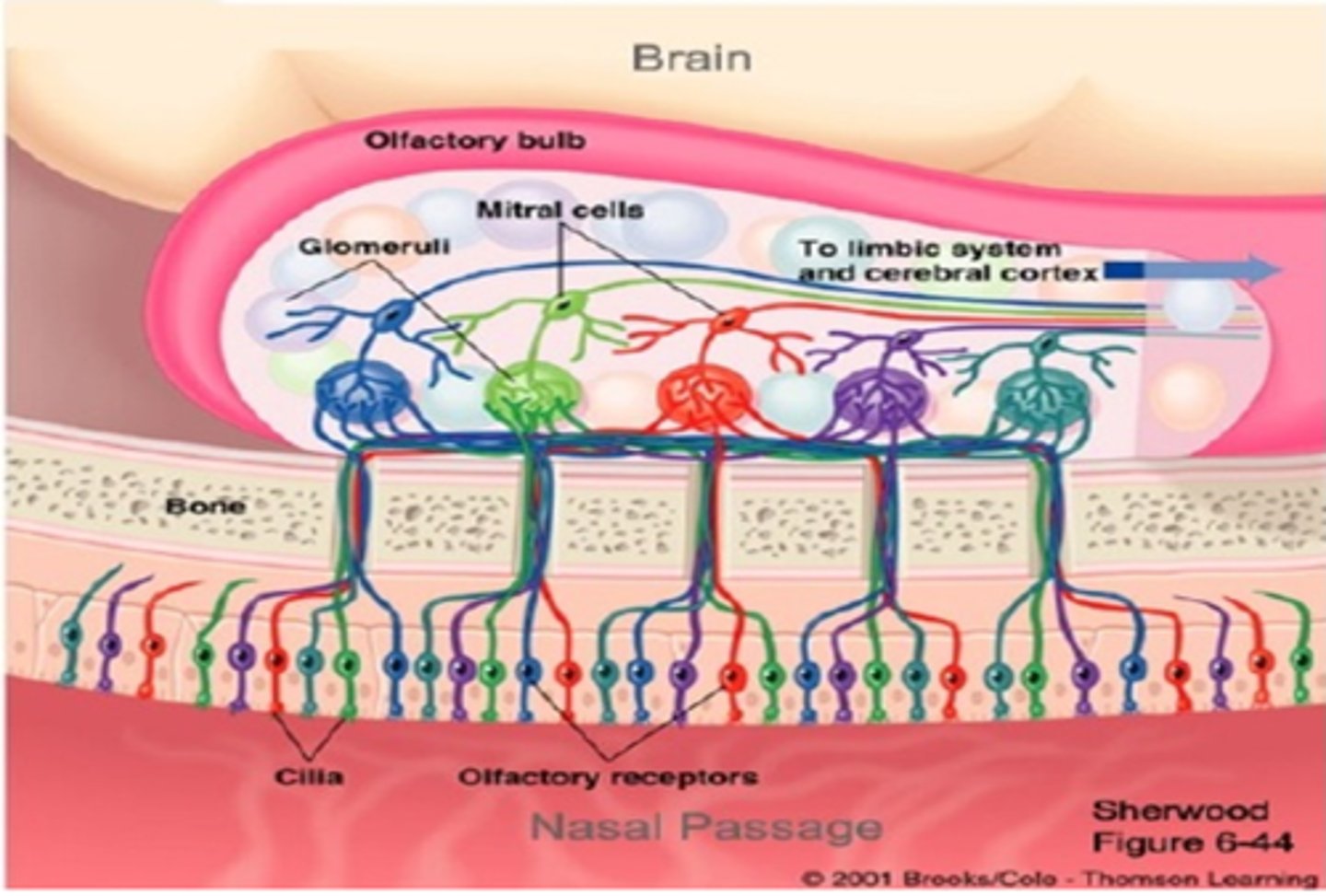
What is an odotopic map?
Organization of smell information by chemical structure, like retinotopy for vision.
What is the primary cortex for smell?
The piriform cortex.
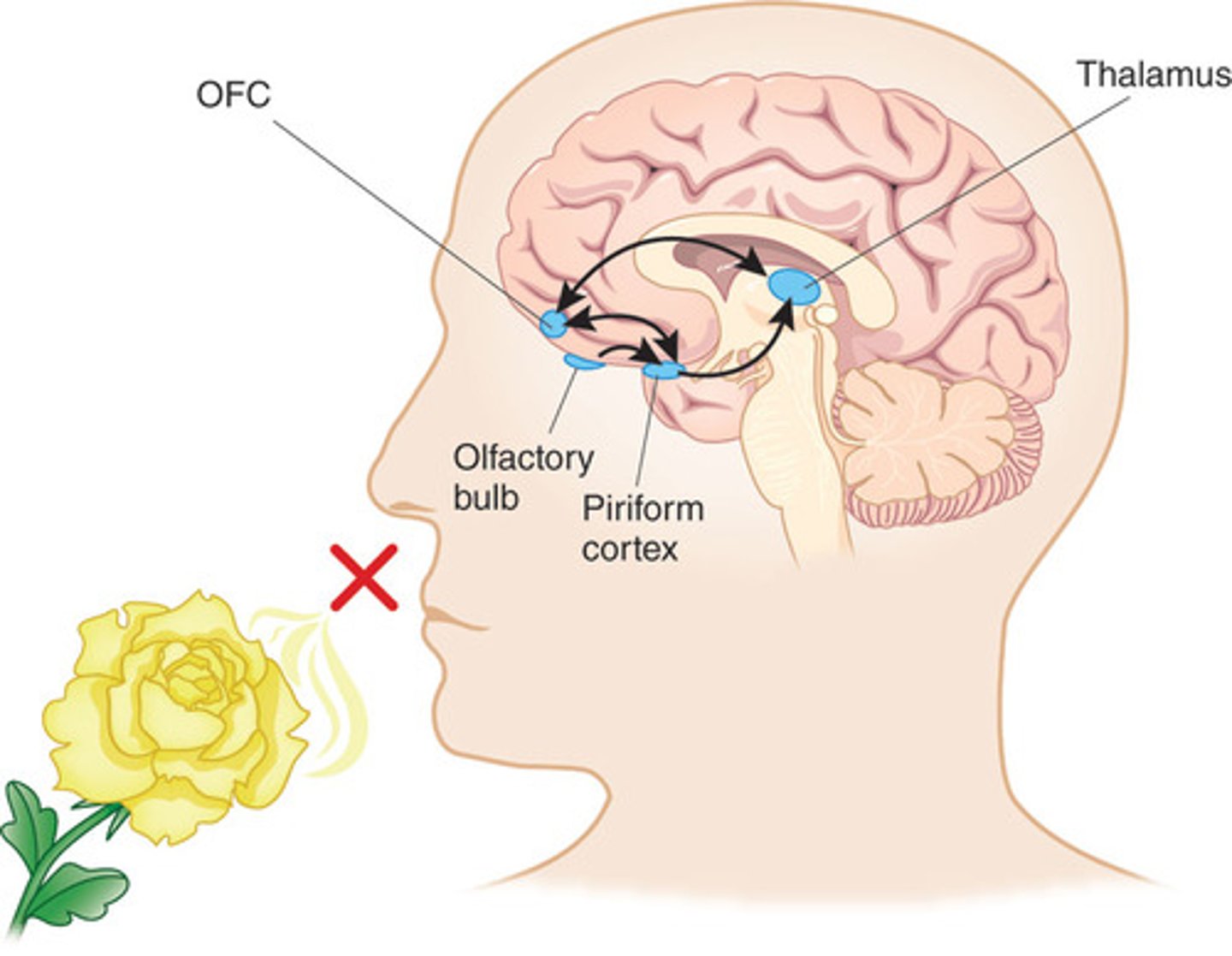
What is the secondary smell cortex?
Orbitofrontal cortex (OFC).
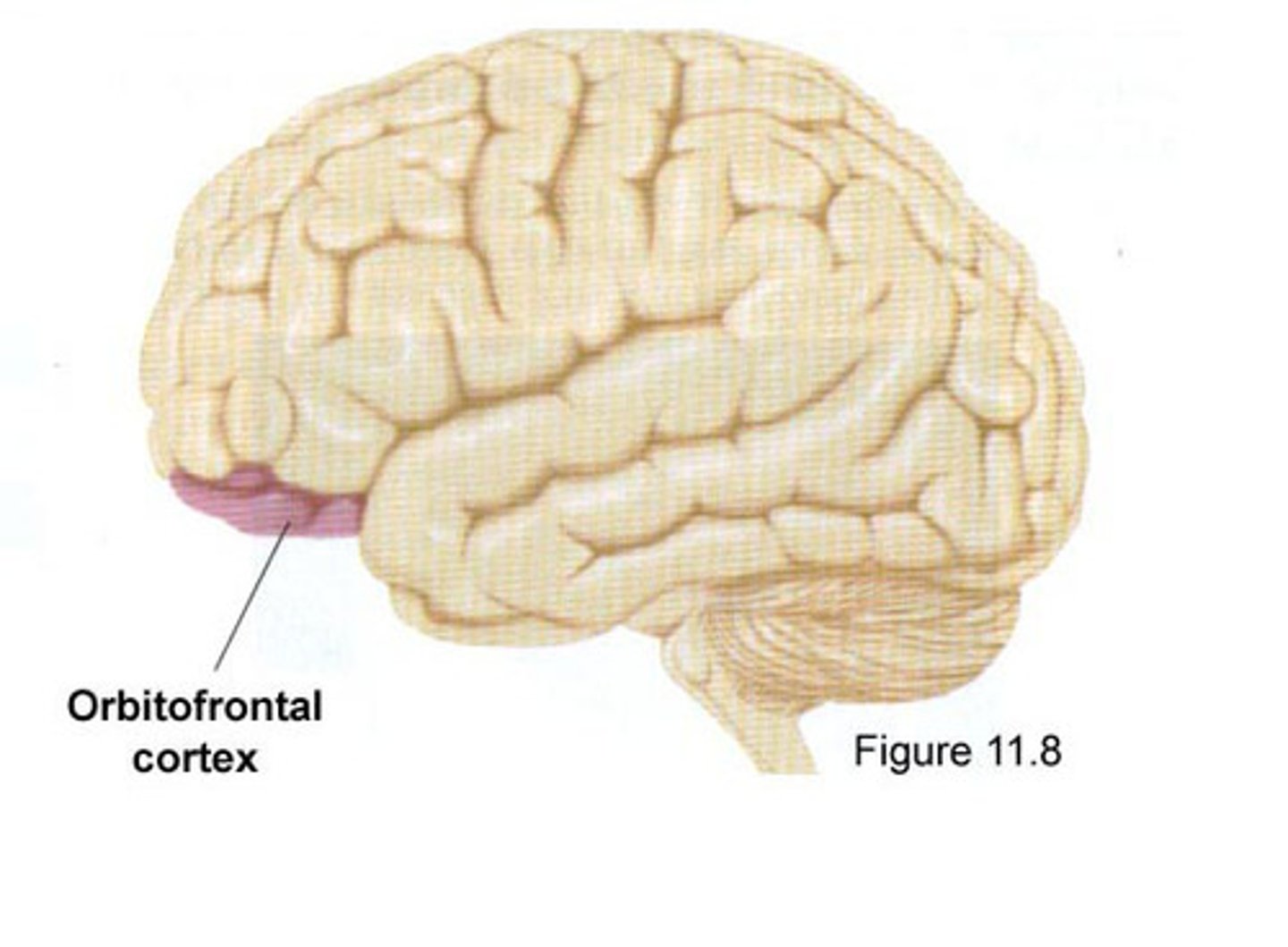
What influences higher-level odor perception?
Experience, memory, expectations, and labeling.
How does labeling affect smell?
The same odor smells better if labeled "cheddar cheese" than "body odor."
How is pleasantness related to the brain?
Pleasantness ratings correlate with OFC activity.
How does top-down processing affect smell?
Past experiences shape how odors are interpreted.
What is anosmia?
Loss of the sense of smell.
What can cause anosmia?
Congenital factors, nasal blockage, receptor damage, nerve damage, aging, smoking, drugs, COVID.
Why is anosmia impactful?
Smell influences memory, emotion, and daily life enjoyment.
What is phantosmia?
Hallucinations of smell.
What conditions can cause phantosmia?
Migraines, schizophrenia, mood disorders, Parkinson's, piriform cortex damage.
Why is smell important in daily life?
Safety (smoke, gas), flavor perception, memory, emotion.
What is gustation?
The sense of taste.
What are papillae?
Structures on the tongue that contain taste buds.
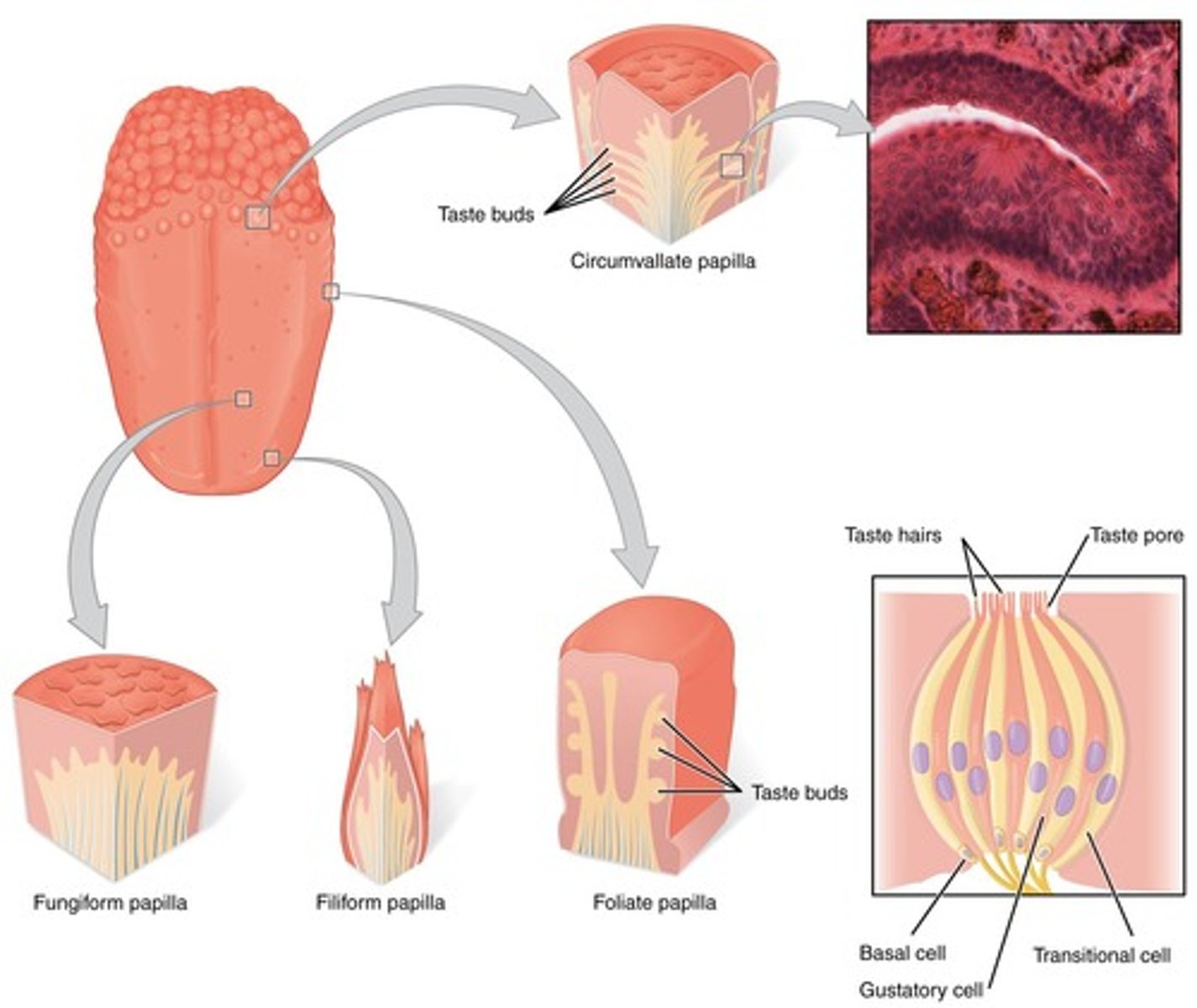
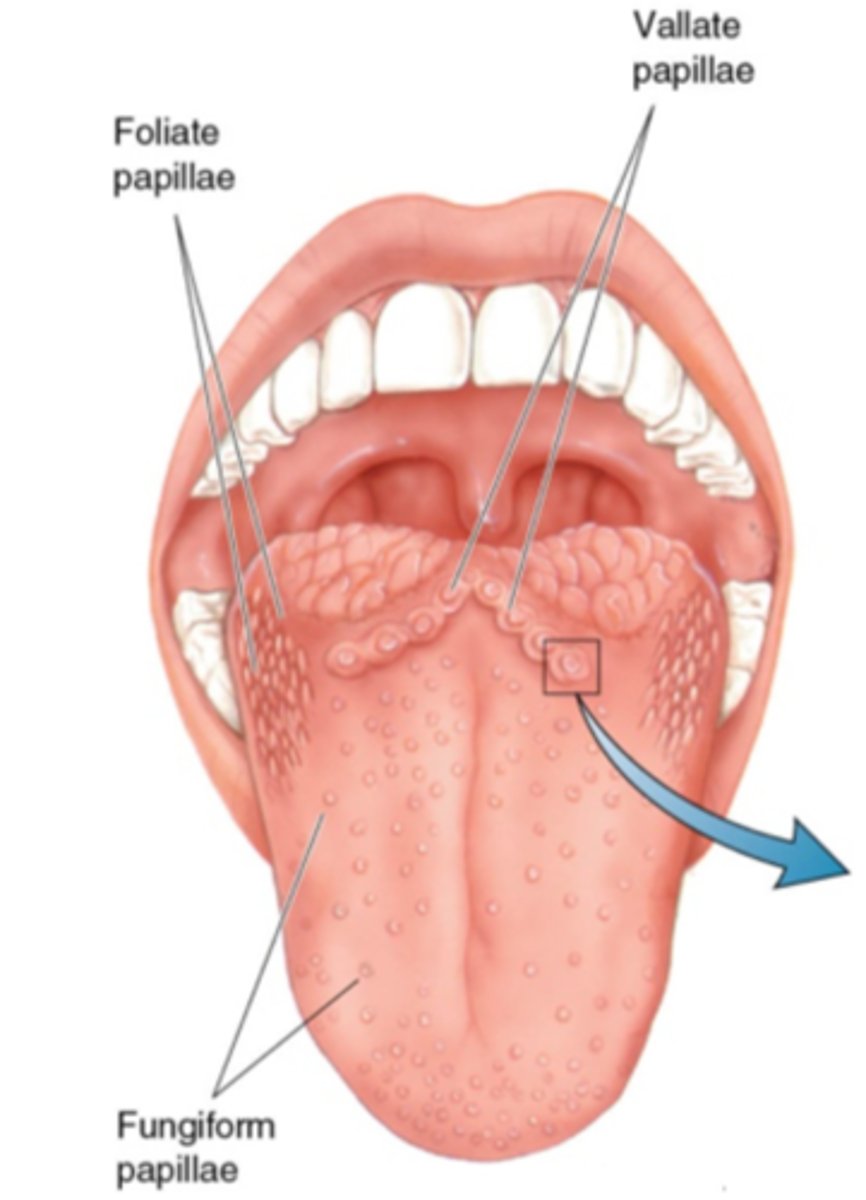
What are the four types of papillae?
Filiform, fungiform, foliate, and circumvallate
What is unique about filiform papillae?
They do not contain taste buds; used for texture.
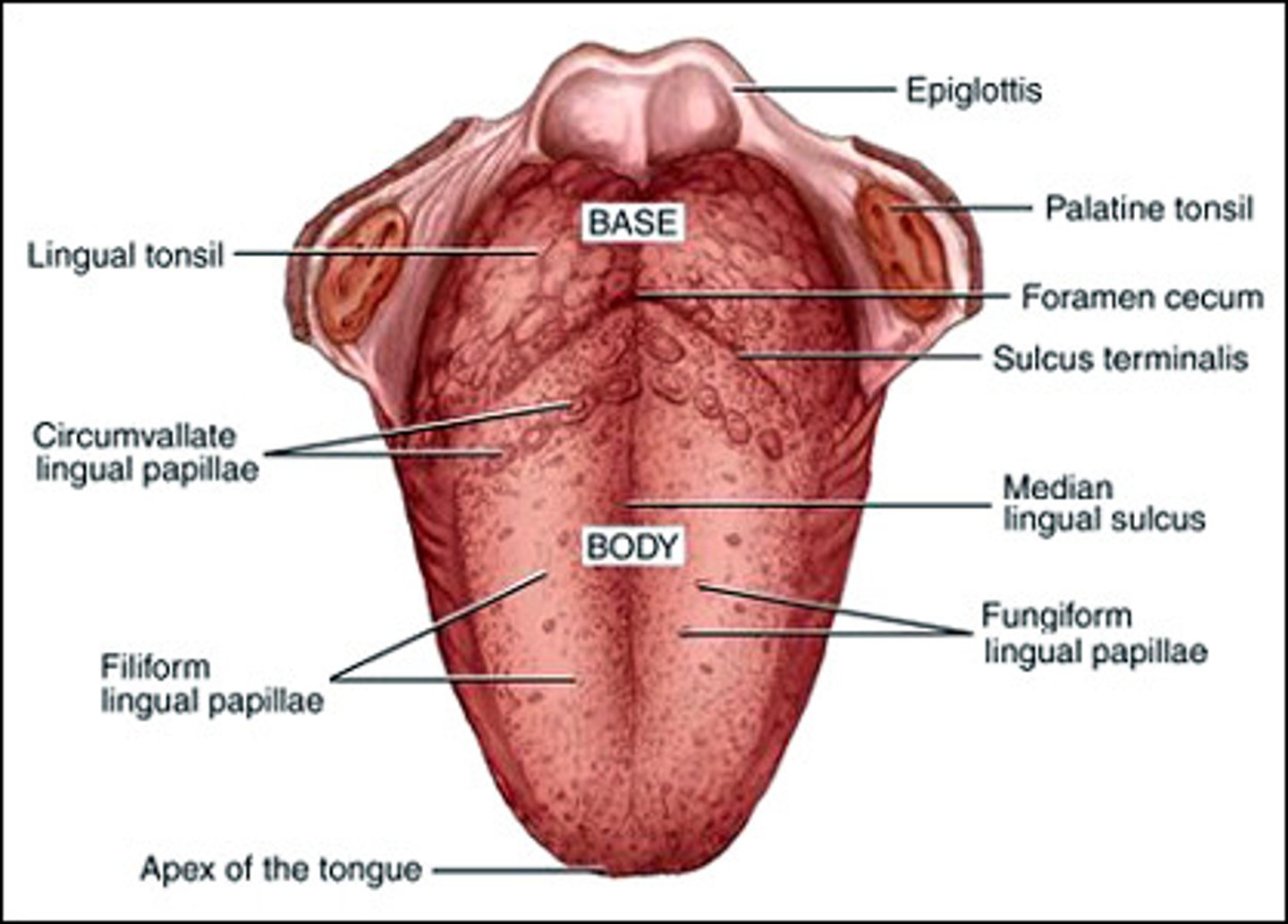
Where are fungiform papillae located?
On the front and sides of the tongue.

Where are foliate papillae found?
On the sides and back of the tongue.
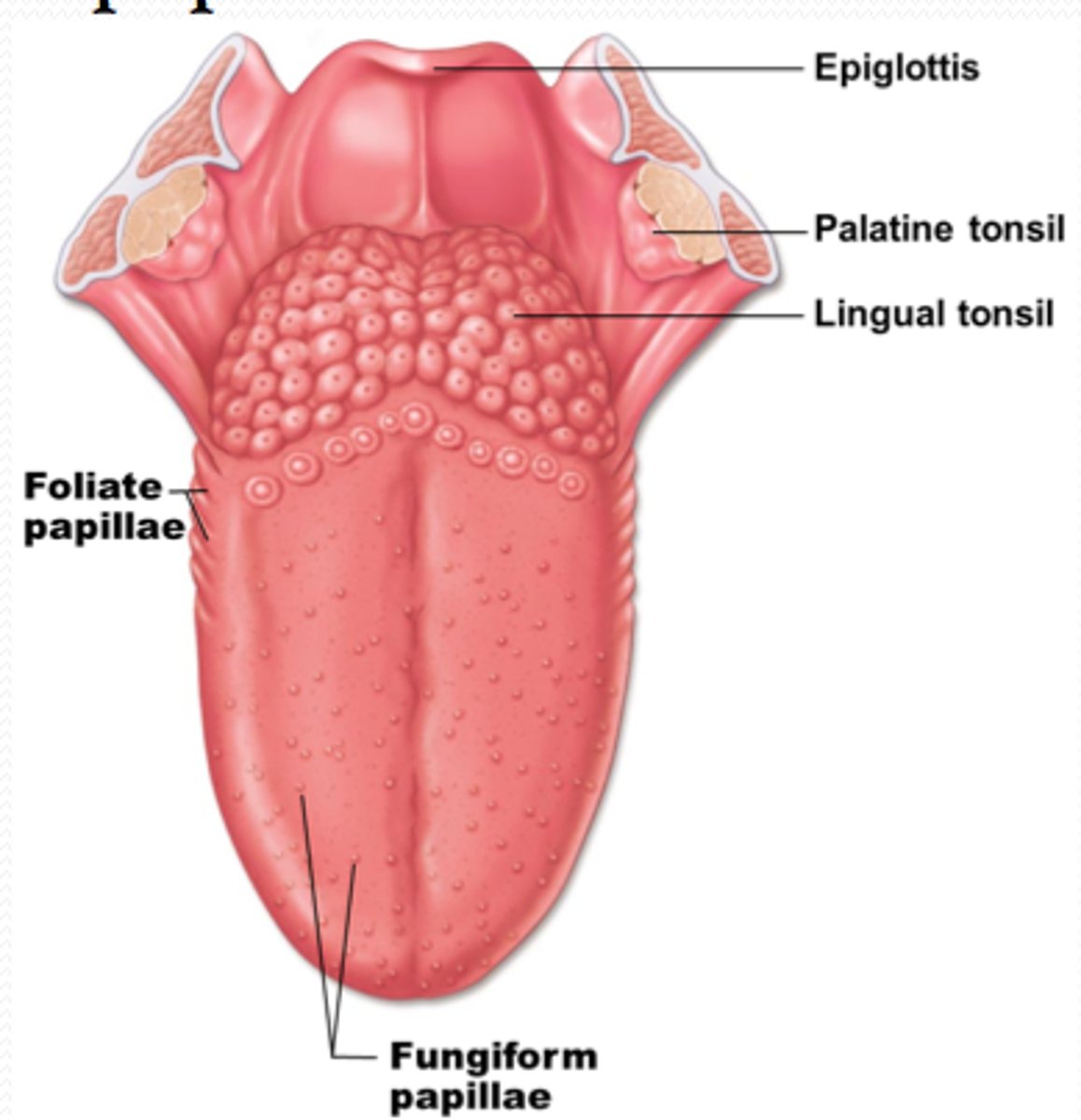
Where are circumvallate papillae located?
In a V-shape at the very back of the tongue.
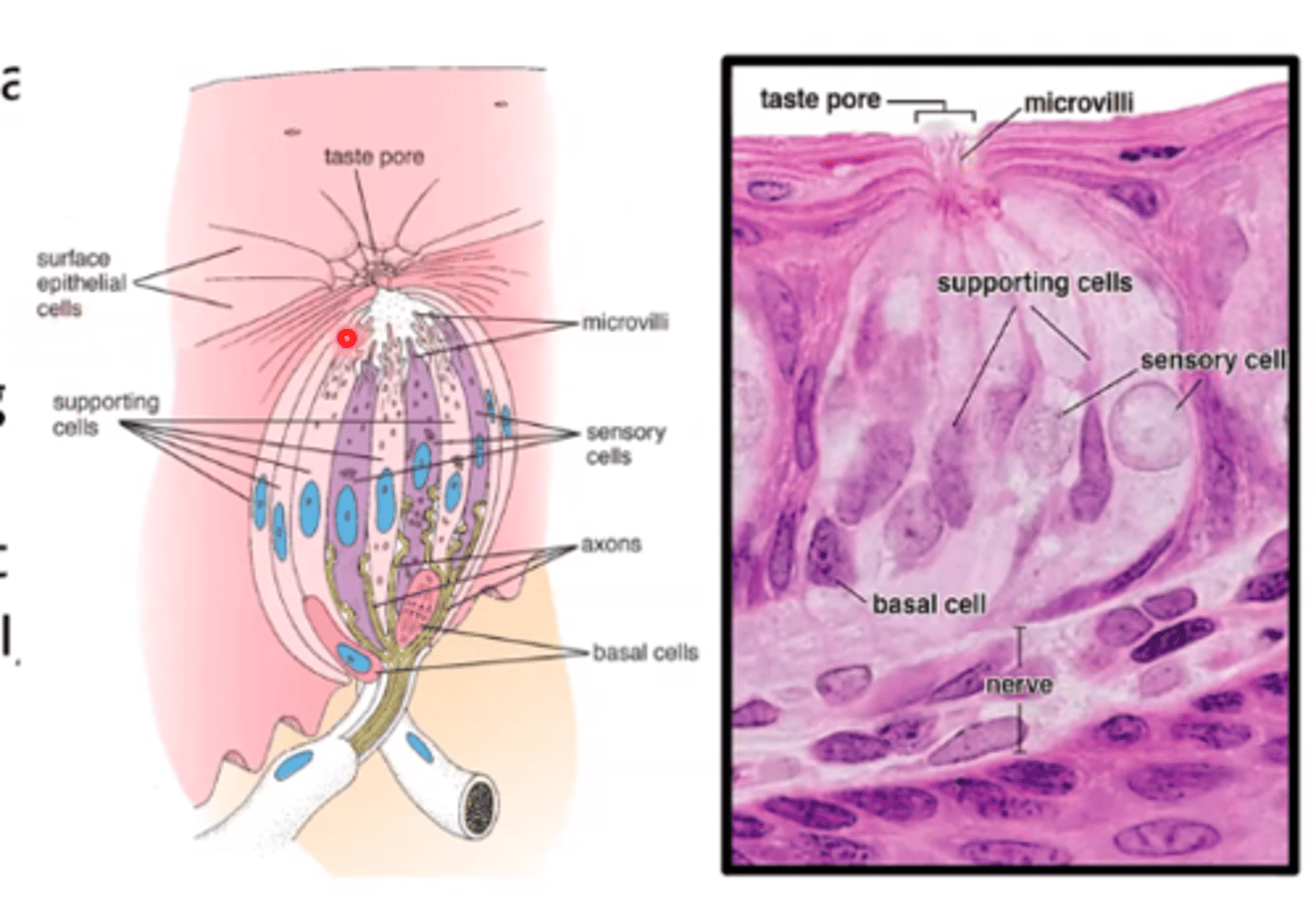
What do taste buds contain?
Taste receptor cells.
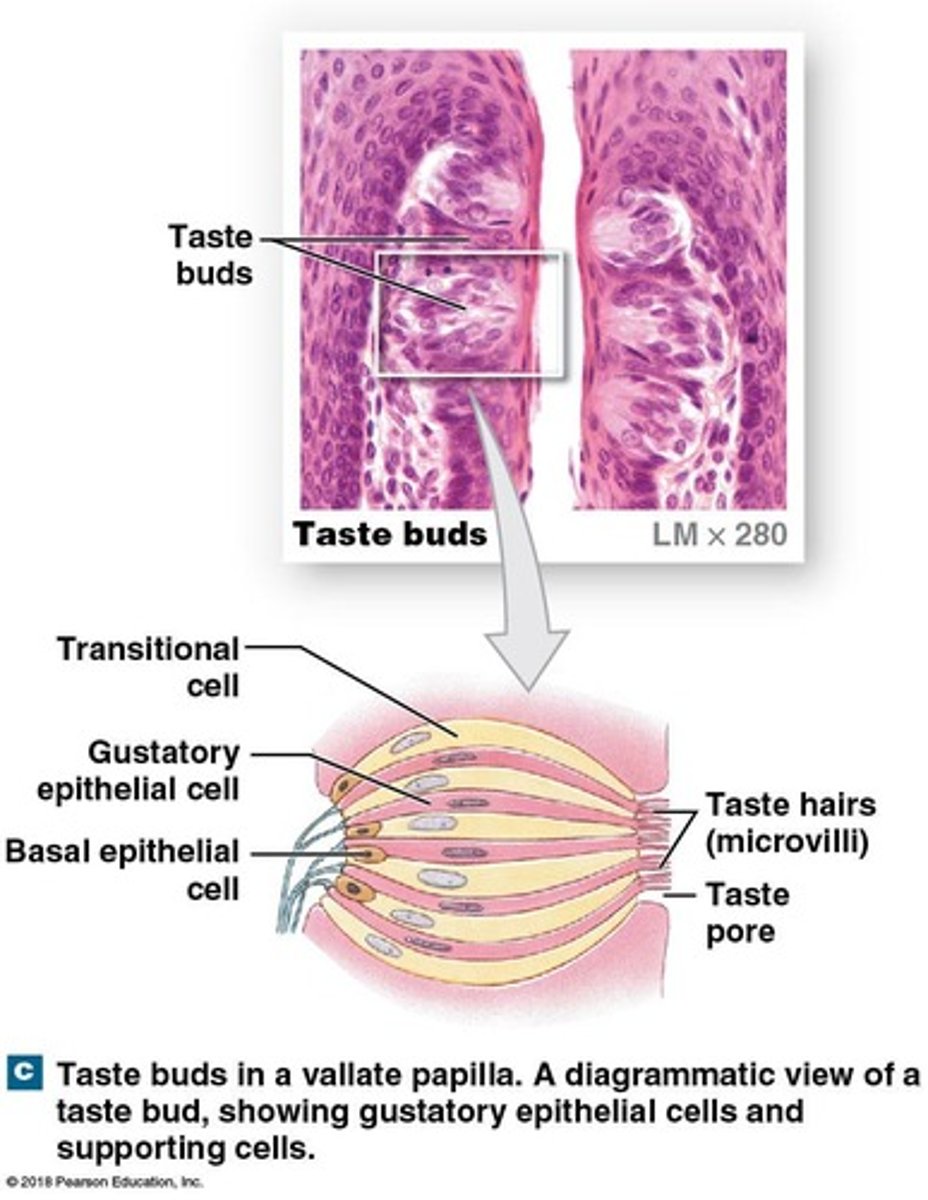
What is the function of taste receptor cells?
Transduce chemical molecules into neural signals.
What is the taste pore?
Opening where tastants contact receptor cells.
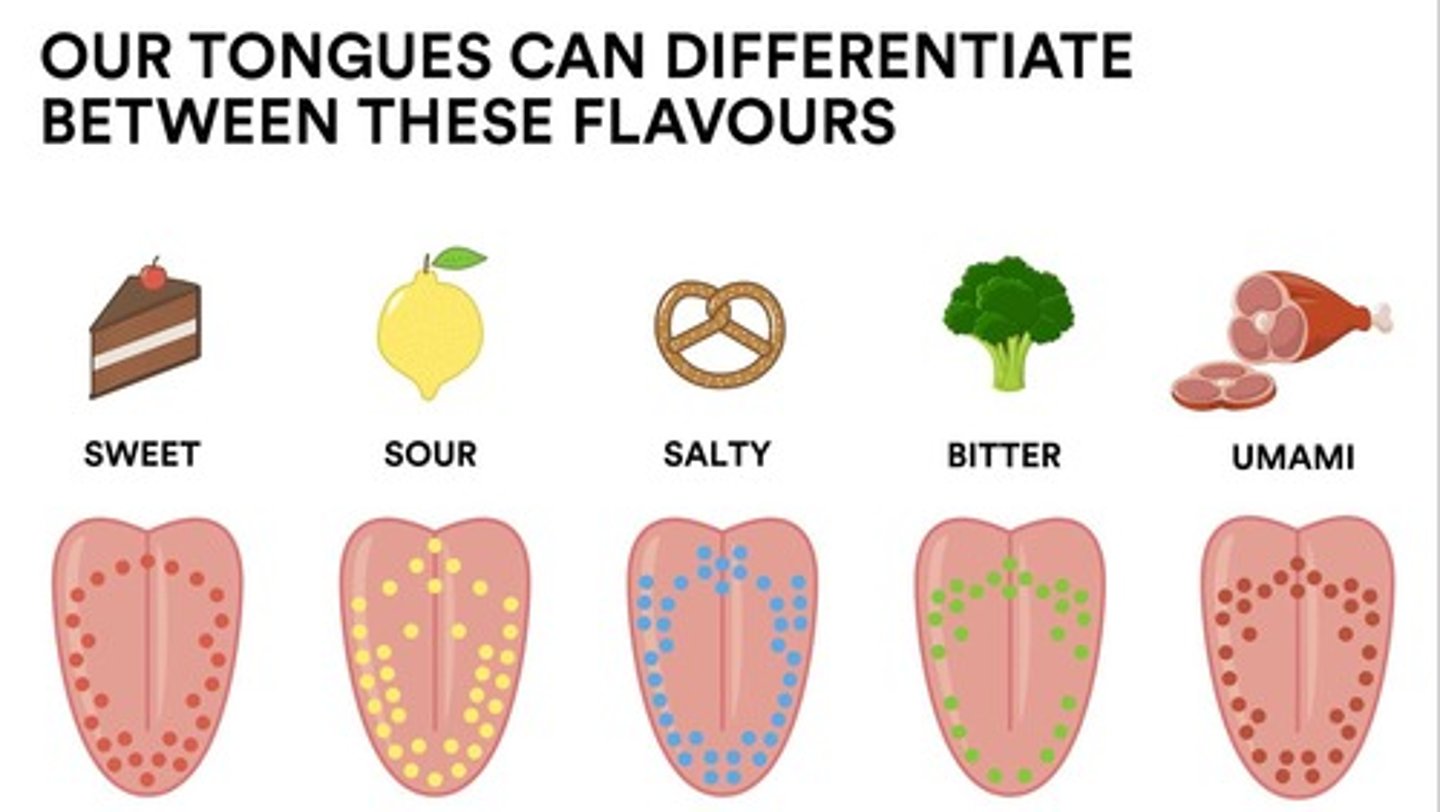
What are the five basic taste qualities?
Sweet, sour, salty, bitter, umami.
How does "sweet" detection work?
Sweet molecules bind to receptor sites and trigger depolarization.

What does sour respond to?
Hydrogen ions (acidic foods).

What does bitter respond to?
Many toxic compounds; protective function.
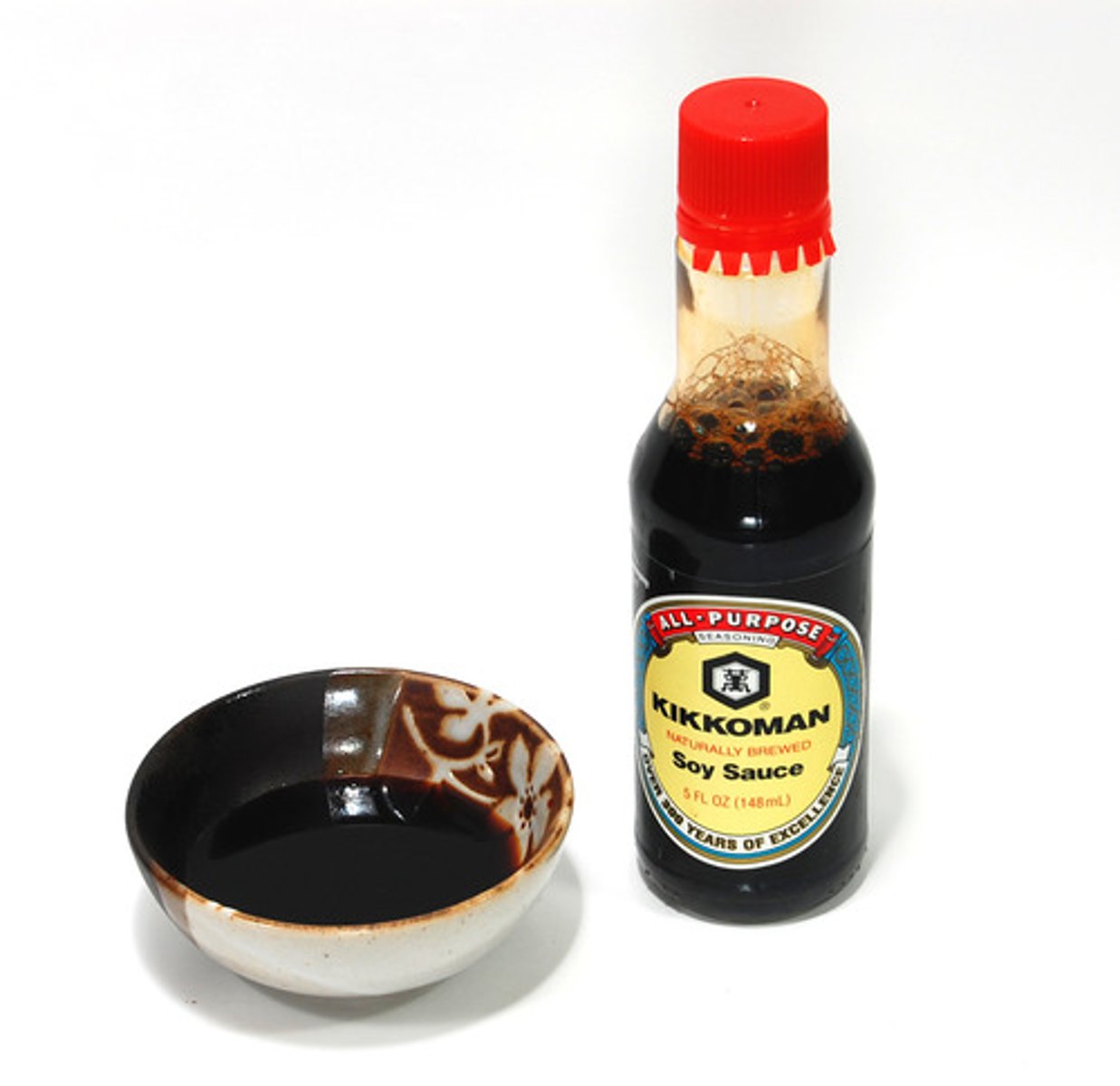
What does umami signal?
Glutamate; savory/meaty taste.
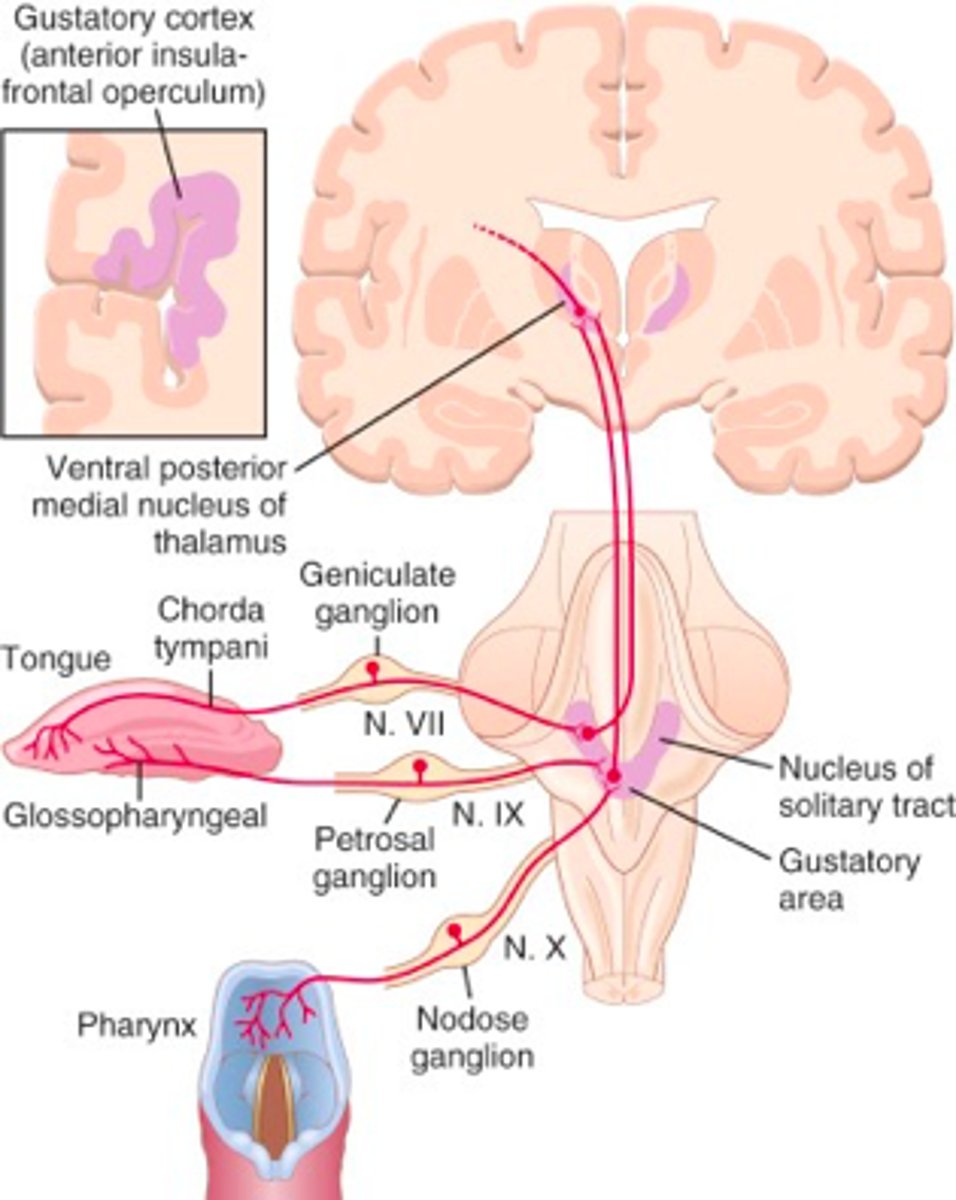
Which cranial nerves carry taste signals?
Facial (chorda tympani)
Glossopharyngeal
Vagus
What is the pathway of taste to the brain?
Taste receptors → cranial nerves → NST → thalamus → cortex.
What is the NST?
Nucleus of the solitary tract. First brain area that receives taste signals.
What are the primary taste cortices?
Insula and frontal operculum.
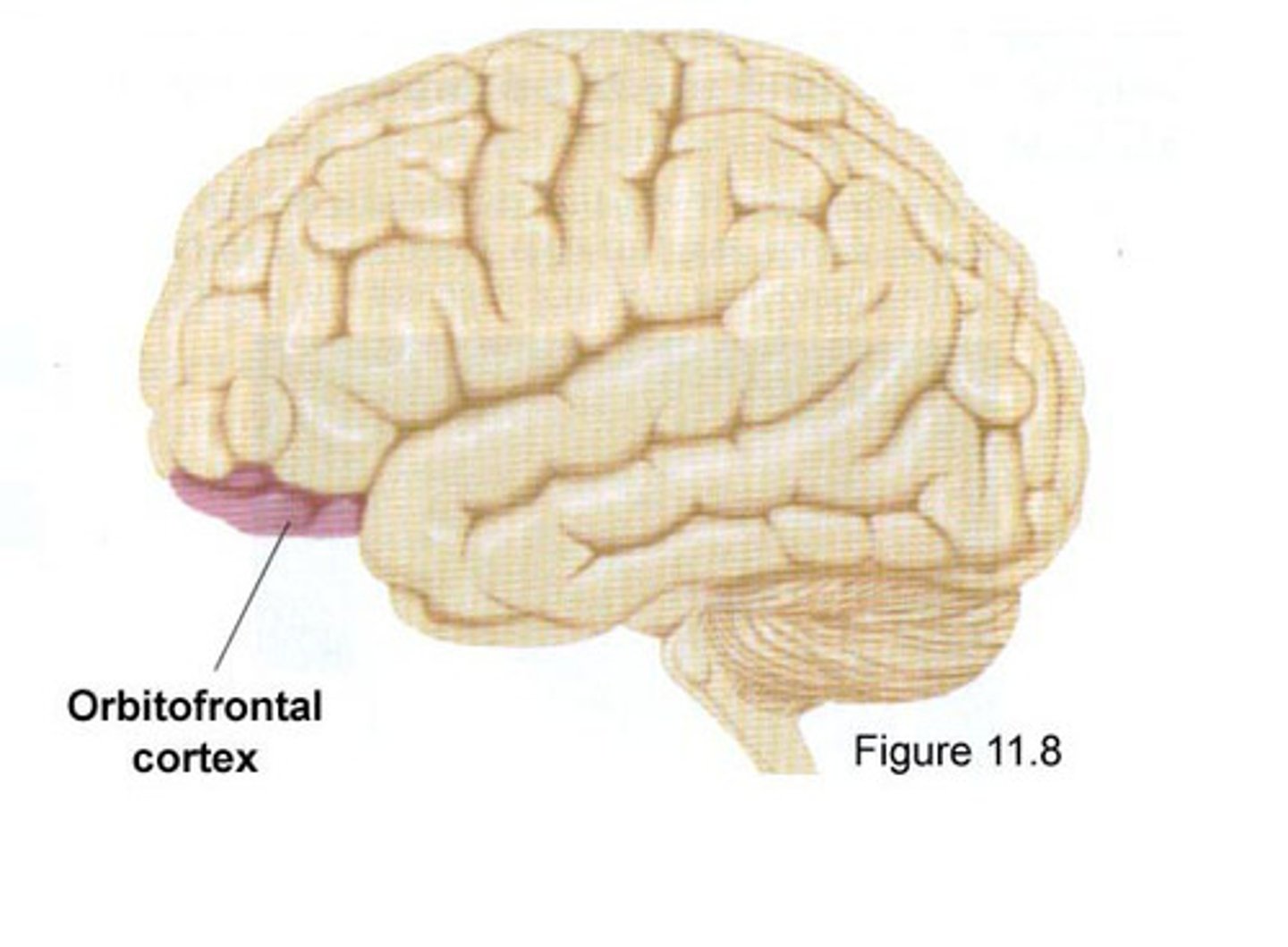
What is the secondary taste cortex?
Orbitofrontal cortex (OFC).
What is specificity coding in taste?
Individual neurons respond to specific taste qualities.
What is distributed coding in taste?
Taste quality is coded by patterns across many neurons.
What creates "flavor"?
Combination of taste + smell + touch + temperature.
How does smell influence taste?
Odors from food travel to the olfactory mucosa during eating.
What are bottom-up influences on taste?
Actual chemical makeup of the food.
What are top-down influences on taste?
Expectations, labeling, memories, culture.
Who are supertasters?
People with more taste buds; stronger taste sensitivity.
What is ageusia?
Complete loss of taste.
What is hypogeusia?
Reduced taste sensitivity.
What is dysgeusia?
Distorted or altered taste.
Is spicy a taste?
No — it activates pain receptors (nociceptors), not taste buds.
How does temperature affect taste?
Warm foods often enhance sweetness; cold dulls flavor.
Front: How does texture contribute to taste?
Texture receptors (filiform papillae) modify flavor experience.
Why are taste memories strong?
Taste connects directly to emotional and survival circuits.
What is taste adaptation?
Sensitivity decreases after prolonged exposure to a taste.