Practical 1: Antibiotics
 View linked note
 Call Kai
 Learn
Learn Practice Test
 Spaced Repetition
 Match
Match Flashcards
 Knowt Play
1/31

Earn XP
Description and Tags
for small test week 2, based on presentation, finished
Name | Mastery | Learn | Test | Matching | Spaced | Call with Kai | Chat |
|---|
No analytics yet
Send a link to your students to track their progress
32 Terms
the 3 groups of antiiinfectives are?
antibacterics - against bacteria
antimycotics - against moulds and yeasts
antivirotics - against viruses
the 2 groups of antibacterics?
antibacterics acc. to chemical structure:
antibiotics - products of metabolism of microorganisms (like bacteria and fungi)
kills other microorganism or stop their growing
replaced by semi-synthetic and synthetic substances (due to effect, availability + price)
chemotherapeutics
sulfonamides
quinolones
nitrofurans
Beta lactams Antibiotic include?
a type of antibiotic - characterized by beta-lactam ring in their structure. incl:
penicillins
narrow spectrum: benzylpenicillin
broader spectrum: ampicillin, amoxicilin
beta lactamase resistant penicillins: dicloxacilin, cloxacilin, nafcilin
cephalosporins - cephalexin, ceftiofur ex.
PENICILLINS - narrow spectrum include?
benzylpenicillin
PENICILLINS- broader spectrum include?
ampicillin, amoxicillin
beta-lactamase resistant PENICILLINS include?
dicloxacilin, cloxacilin, nafcilin
CEPHALOSPORINS, 1st generation?
cefacetrile
cefaspirin
cephalexin
cefadroxil
CEPHALOSPORINS 2nd generation?
cefoxitin
cefotetan
CEPHALOSPORINS 3rd generation?
cefoperazone
ceftiofur
cefovecin
CEPHALOSPORINS 4th generation include?
cefquinone
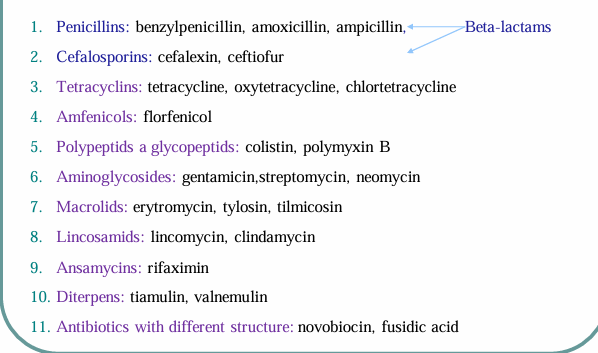
Classification of antibiotics into which 11 groups according to chemical structure? (overview)
Penicillins
Cefalosporins
tetracyclins
amfenicols
polypeptids and glycopeptids
aminoglycosides
macrolids
lincosamids
ansamycins
dieterpens
antibiotics with different structure, such as fusidic acid
what is MIC of penicillin?
MIC: minimum inhibitory concentration, it is the lowest conc. of penicillin that prevents visible growth of bacteria.
0.03 IU/ml
TETRACYCLINS include?
1st gen: Chlortetacycline, oxytetracycline, tetracycline
2nd gen: doxycycline
AMFENICOLS include?
Florfenicol
POLYPEPTIDES & GLYCOPEPTIDES incl?
polypeptides: colistin, polymyxin B
glycopeptides: Vankomycin, teikoplanin
AMINOGLYCOSIDES & AMINOCYCLITOLS include?
Aminoglycosides:
1st gen: streptomycin, dihydrostreptomycin, neomycin, kanamycin
2nd gen: gentamicin
3rd gen: amikacin, netilmicin
4th gen: isepamycin, dactinomycin
Aminocyclitols:
spectinomycin
MACROLIDES include?
gen: erythromycin, spiramycin, tylosin
gen: tilmikosin, tylvalosin, tildipirosin
Azalides (under macrolides) include?
gamithromycin
Triamilides (under macrolides) include?
Tulathromycin
LINCOSAMIDES include?
lincomycin, clindamycin
ANSAMYCINS include?
rifaximin
DITERPENES include?
tiamulin, valnemulin
Antibiotics with different structure?
novobiocin
fusidic acid
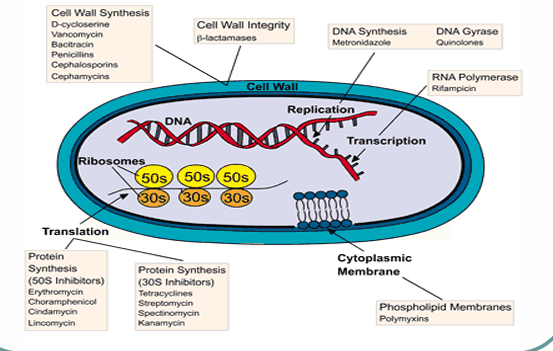
what is the classification of ATBs according to mechanism of action?
cell envelope ATB - cell wall synthesis inhibitors
ex. beta-lactams, glycopeptides
protein synthesis inhibitors
ex. tetracyclines, amphenicols, aminoglycosides, macrolides
nucleic acids synthesis inhibitors
rifamycins
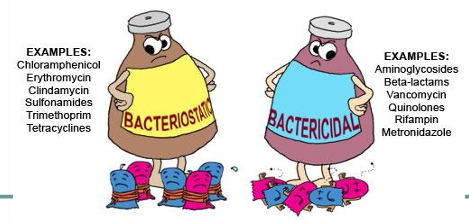
classification of ATBs acc. to the effect on microorganisms?
bacteriostatic (stops growth of bacteria)
ex. tetracyclines, macrolides, amphenicols
bactericidal (kills bacteria)
ex. beta lactams, polypeptides
classification of ATBs according to the spectrum of action?
broad spectrum - effective against wide range of bacteria (both G+ and G-) ex. tetracyclines
slightly broad - ex. ampicillin, neomycin
narrow spectrum - effective only against specific families of bacteria ex. penicillin G.
Classification acc. to adverse effects of antibiotics?
3 groups of adverse effects:
animals: allergic reaction, salivation, emesis, disruption of intestinal flora, diarrhea, reduction of vit. B synthesis, resistancy development
products of animal origin causes: depreciation meat, difficulties in processing milk fermented products
human: occurrence of residues in meat, eggs, milk, resistance development.
classification of ATB according to resistance of microorganisms?
Primary - natural, microorganism to the antibiotic completely unresponsive ex. penicillin not acting on mycobacterium tuberculosis.
Secondary - obtained a property that is subject to various genetic changes
testing the effectiveness of ATBs by which 2 methods?
Diffusion:
disc diffusion method (qualitative)
E-test (quantitative)
Dilution:
microdilution
macrodilution
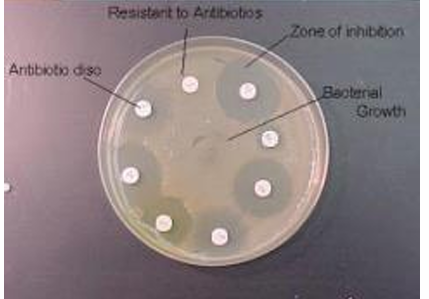
explain method of disc diffusion.
disc diffusion method (qualitative)
involve placing ATB impregnated discs on an agar plate inoculated with bacteria. As the antibiotic diffuses into the agar, it creates a conc. gradient.
clear zones of inhibition around the discs indicate the effectiveness of ATB
explain the method of E-test.
another method is E-test (quantitative)
determines MIC of ATB, using plastic strip with a gradient of ATB conc., placed on agar plate already inoculated with bacteria.
The ATB diffuses into agar → gradient made → MIC determined by point where there is no bacterial growth
Dilution methods are?
quantitative method for MIC determination
Macrodilution method: liquid medium in tubes
larger volumes of liquid medium
observes turbidity, clear tubes indicate effective inhibition.
Microdilution method: liquid medium in microplates
smaller volumes
We observe turbidity, where clear tubes/wells indicate effective inhibition.