AP Bio: Topic 2-6: Organic Chem
 Call Kai
 Learn
Learn Practice Test
 Spaced Repetition
 Match
Match Flashcards
 Knowt Play
1/49

There's no tags or description
Looks like no tags are added yet.
Name | Mastery | Learn | Test | Matching | Spaced | Call with Kai | Chat |
|---|
No analytics yet
Send a link to your students to track their progress
50 Terms
Organic Chemistry
The study of carbon based compounds that form the structural and functional foundation of all living things
Functional Groups
Specific groups of atoms within molecules that dictate the characteristic chemical reactions and physical composition of those compounds
Hydroxyl, carbonyl, carboxyl, amines, and phosphate
Functional groups dictate the chemical personality, shape, and behavior of organic molecules and living systems

ATP
Energy for living plants and animals
Macro-molecule
Large organic molecule built from smaller repeating subunits that’s essential for life
Organic Compounds
Carbon based molecules bonded with hydrogen, oxygen, nitrogen and other elements. They form the structural and functional bases of all living things
Carbon’s atomic structure allows it to form stable, covalent bonds which makes it a versatile element
Hydrocarbons
Organic molecules that consist entirely of carbon and hydrogen atoms
Dehydration Reaction
Molecule loses water (H2O) during transformation
ie: H3 PO4 → HPO3 + H20
Hydrolysis
Chemical reaction where water is used break down the bounds of a compound. Splits into smaller parts
ie: AB +H20 → A-OH + B-H
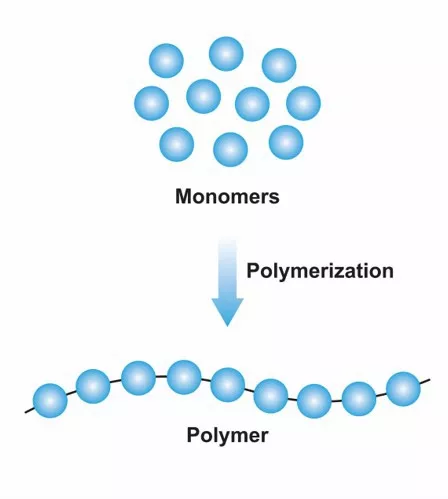
Polymers
Large molecule made of many smaller, repeating, chemical units linked together
Monomers
Small simple molecules that can chemically bond with other similar molecules to form larger complex structures
Disaccharide
Type of sugar formed when 2 monossaccharides join together
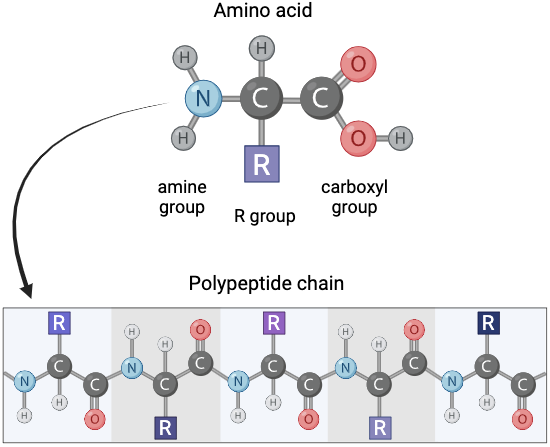
Amino Acids
Organic molecules that combine to form proteins
C, H, O, R, N

Cellulose
Gives plants their structure and rigidity. It’s a complex, fibrous, carbohydrate made up of thousands of glucose units

Polymer
A large chain formed when many monomers join together

Monosaccharide
Simplest carbohydrate form
Remember 1:2:1
consists of a single sugar unit
CANT BE BROKEN DOWN INTO SMALLER PIECES

Glycogen
Branched polysaccharide that animals and fungi use to store excess glucose
Hydrophobic
“Afraid of water” Repels water or fails to mix with it
think water and oil
Hydrphillic
“Water loving” Strongly attracted to water and mixes or dissolves easily in it
Polypeptides
Continuous chains of amino acids linked together by peptide bonds

Monomer
Small, basic building block that can chemically bond with similar/ identical molecules that form a larger → polymer
there are 20 standard amino acid monomers for protein
Glycosidic Linkage
Covalent bond that joins a carbohydrate molecule to another group
Forms from Dehydration Reaction
Starch
Complex carbohydrate and polysaccharide made of many glucose units joined together
Macromolecule: Amylose and amylopectin
R-groups
Determines how amino acids interact and makes the final 3D shape
Polysaccharides
Large complex carbohydrate molecules made of many smaller sugar units linked together in long chains
Energy storage and structure rigor for plants — +tissue structure in animals

Monomers of polysaccharides
Glucose, fructose, galactose, and moded sugars
How does saturation affect fatty acid structure and function?
Dictates biological function in cell membranes and energy storage
Directly determines the shape, packing ability, and physical state of a fatty acid
Fat
Type of liquid made of glycerol and fatty acids that living things use to store energy
Fatty acid
Carboxylic acid with an aliphatic chain
either saturated or unsaturated
Phospholipids
Fat molecule that can be found in the cell membrane of all living things.
Forms main layer of the cell membrane and is the structural integrity and fluid dynamics
The head is hydrophobic. Tail is hydrophilic

Carbohydrates
Polysaccharides + Monosaccharides
C, H, O ; 1:2:1

Lipids
Glycerol + fatty acids
C, H, O, and sometimes P
Lipid definition
natural molecule that doesn’t dissolve in water
not a true polymer
Steroid
Type of lipid (fat) that works as vital structural parts of cell walls
these chemical messengers control many body functions
Proteins
Amino Acids + Polypeptides
C, H, O, N, S
Protein definition
large essential molecules made up of smaller building blocks (aa)
A change in structure will change its function
Nucleic Acids
Nucleotides + RNA/DNA
C,H,O,N,P
DNA
Deoxyribonucleic acid. This stores and transmits hereditary and genetic info.
Small amount can be found in the mitochondria
Usually double stranded. contains A - T, and G=-C
RNA
Ribonucleic acid. Single stranded. Helps use genetic info to make proteins and has roles in gene regulation
Found in the nucleus, cytoplasm, and ribosomes
Contains A, U, C, and G
Nucleotide
True monomer of nucleic acids. Made up of 5-carbon sugar, phosphate group and Nitrogenous base
Sugar +phosphates + base
monomer if its lacking a phosphate group
Possible nitrogenous bases: Adenine, Guanine, Cytosine, and Thymine

Gene
Sequence of DNA that contains info used to produce a functional product
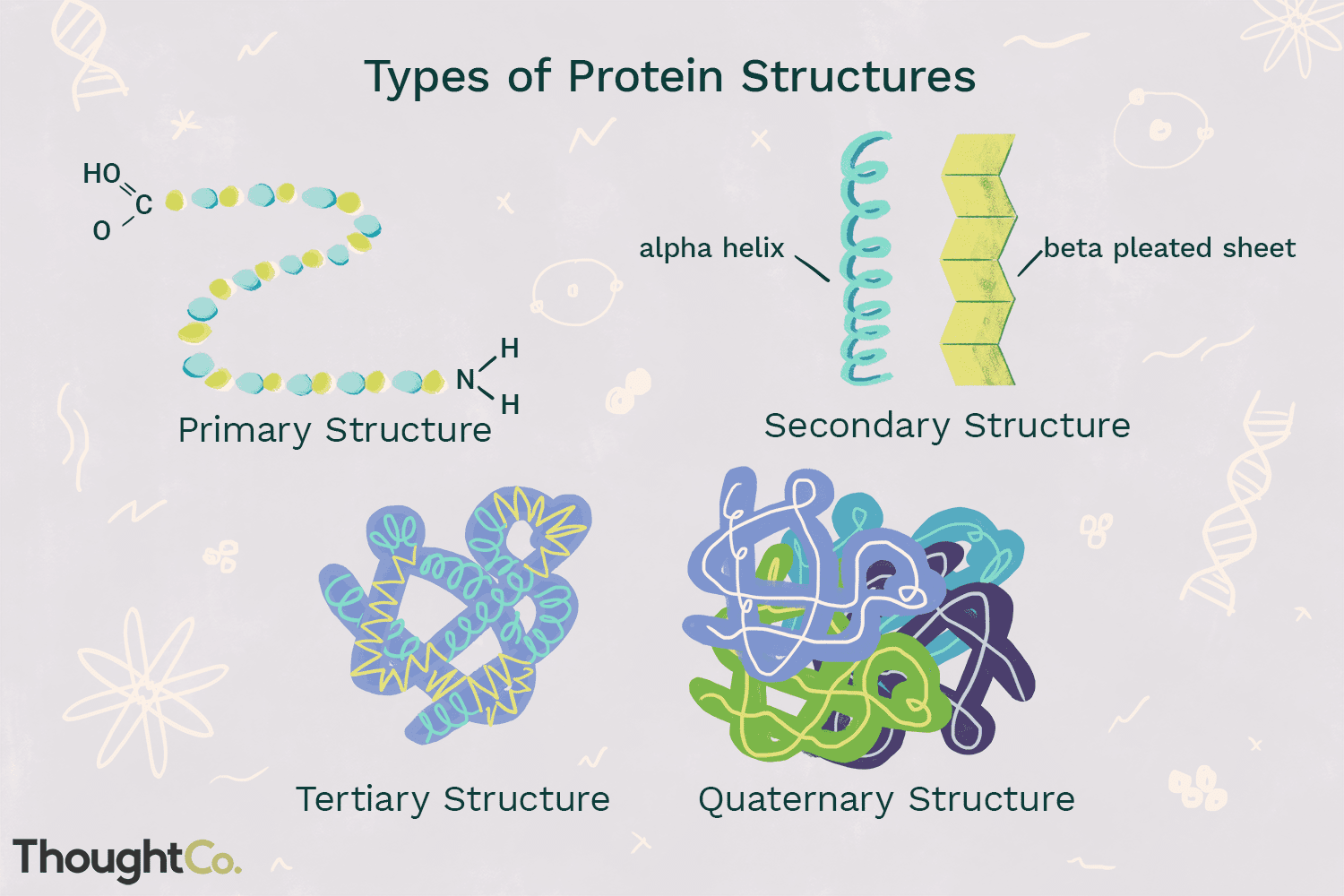
Primary structure
Exact linear sequence of amino acids linked together in a polypeptide chain

Secondary Structure
Repeating 3D shapes that forms alternating a polypeptide’s backbone or a nucleic acid chain.
Held together by H-bonds

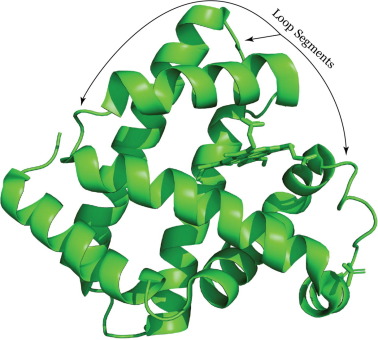
Tertiary Structure
3D overall shape of a single protein or polypeptide chain
Quaternary Structure
3D arrangement and assembly of 2 or more sperate polypeptide chains into a single functional protein quart structure complex
Denature
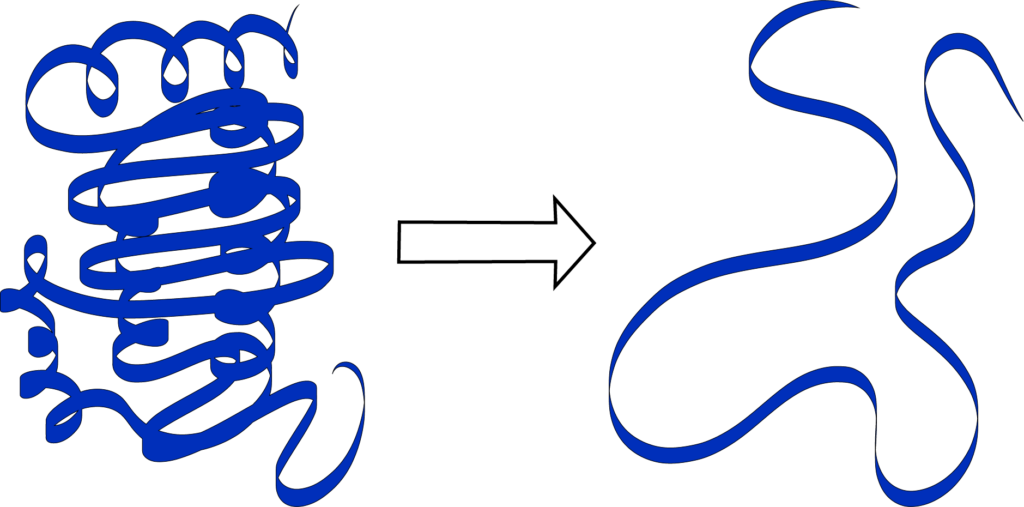
Protein or DNA loses its natural 3D shape and stops working
Caused by Extreme heat, pH changes, or certain chemicals
Backbone of DNA?
Alternating deoxyribose sugar and phosphate groups
Relationship between protein and amino acids
If the sequence of amino acids changed in a cell the proteins unique 3D structure would change. The folding will alter and binding capabilities will be impacted
Anti-parallel
2 strands of DNA running in opposite directions

Pyrimidine
Nitrogenous base with one 6-membered ring
DNA: C and T.
RNA: G and A
Purine
Nitrogenous base with one 2-connected rings
A and G