Urinary System Anatomy
 Call Kai
 Learn
Learn Practice Test
 Spaced Repetition
 Match
Match Flashcards
 Knowt Play
1/52

There's no tags or description
Looks like no tags are added yet.
Name | Mastery | Learn | Test | Matching | Spaced | Call with Kai | Chat |
|---|
No analytics yet
Send a link to your students to track their progress
53 Terms
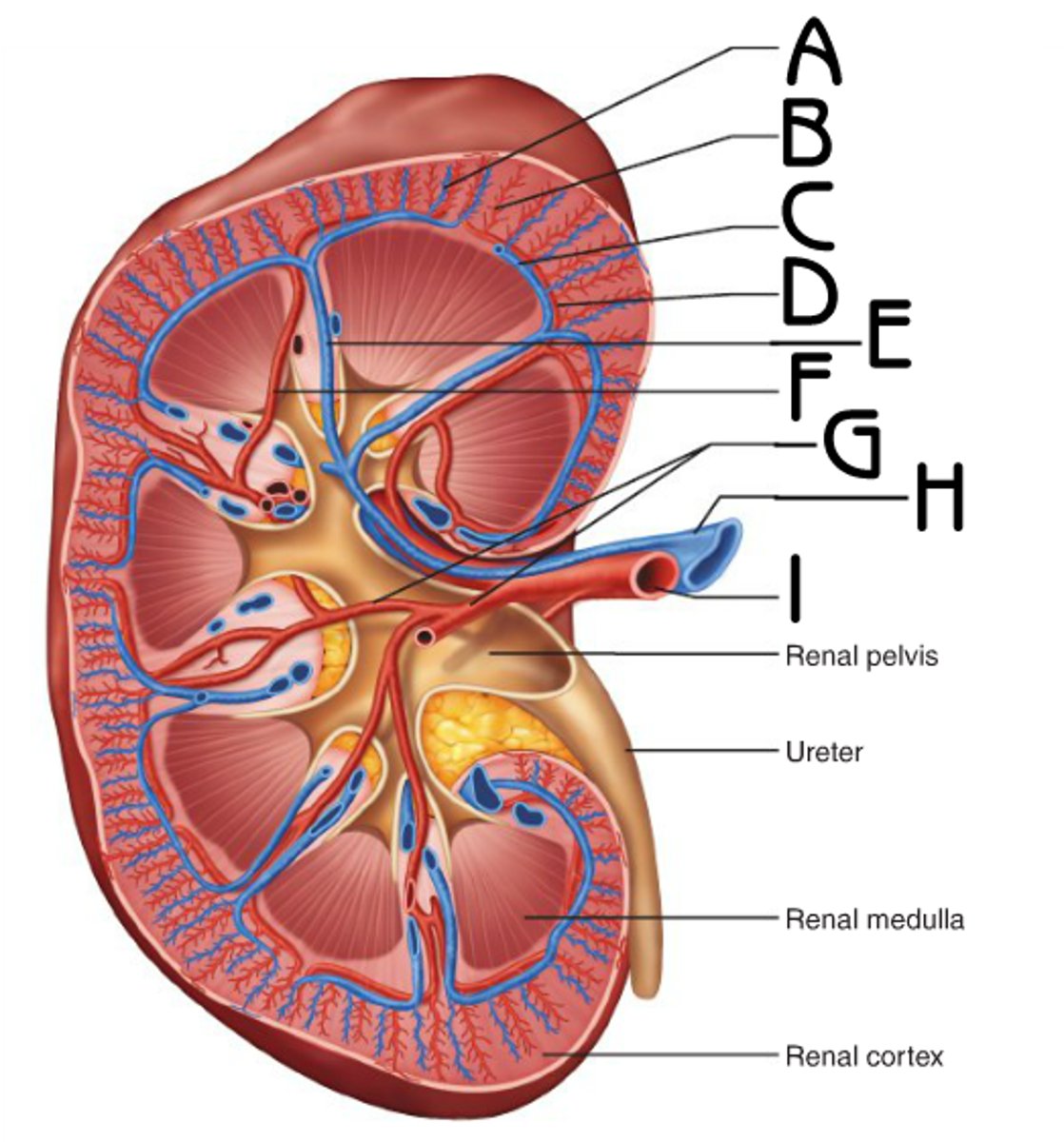
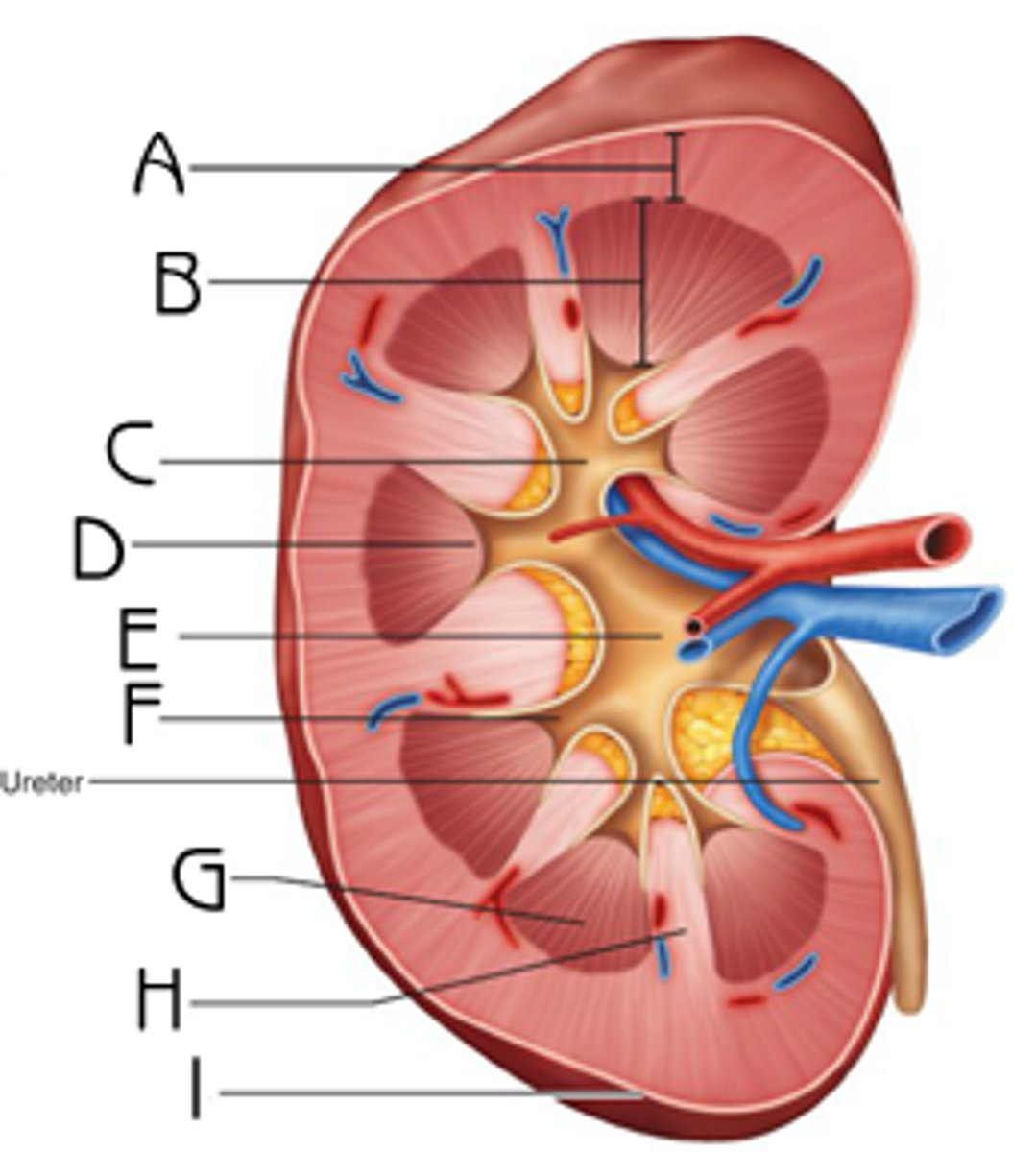
Kidney (Left)
E
Function: removing waste products from the blood and regulating the water fluid levels
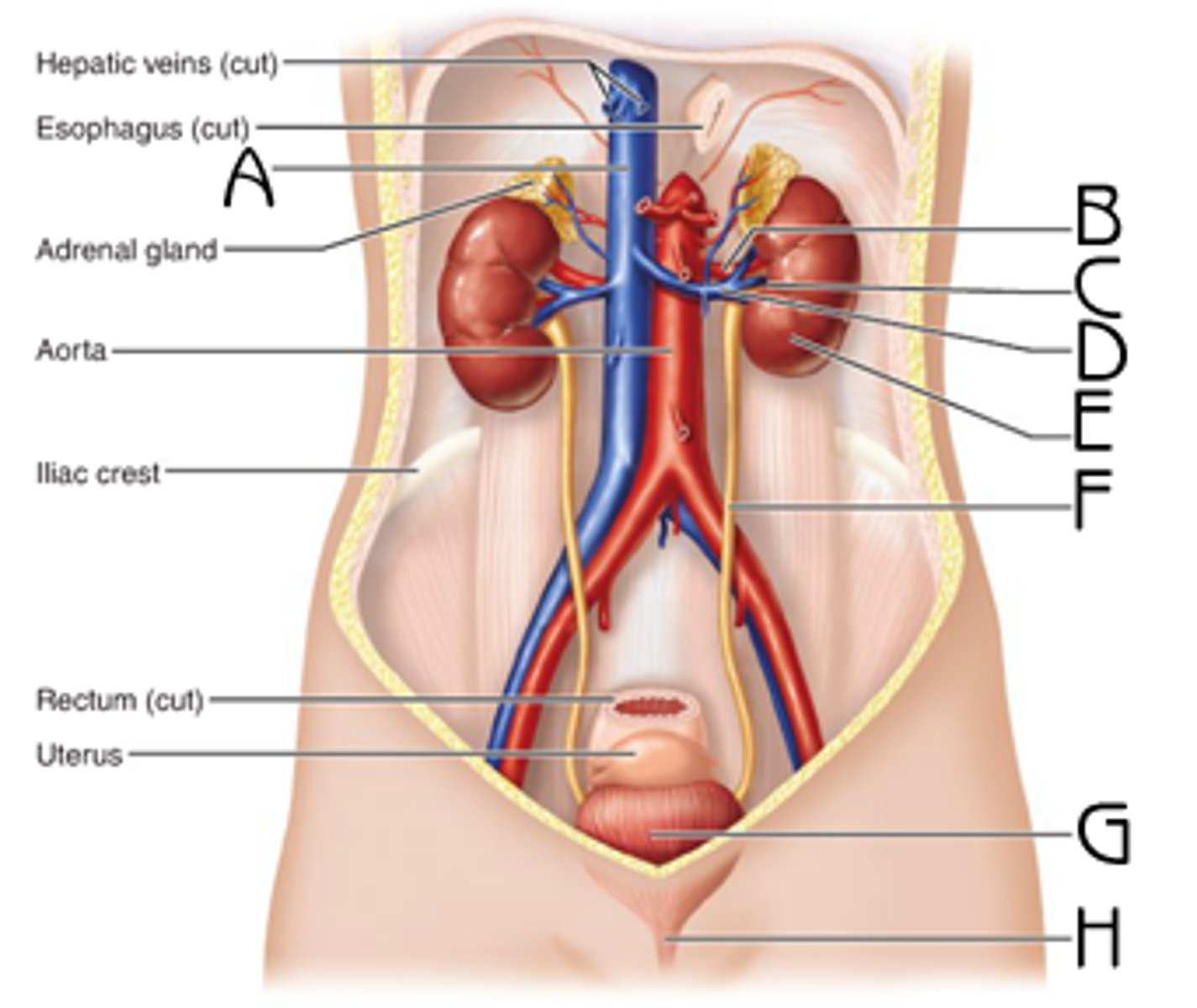
Inferior Vena Cava
A
Function: return oxygen poor blood to heart
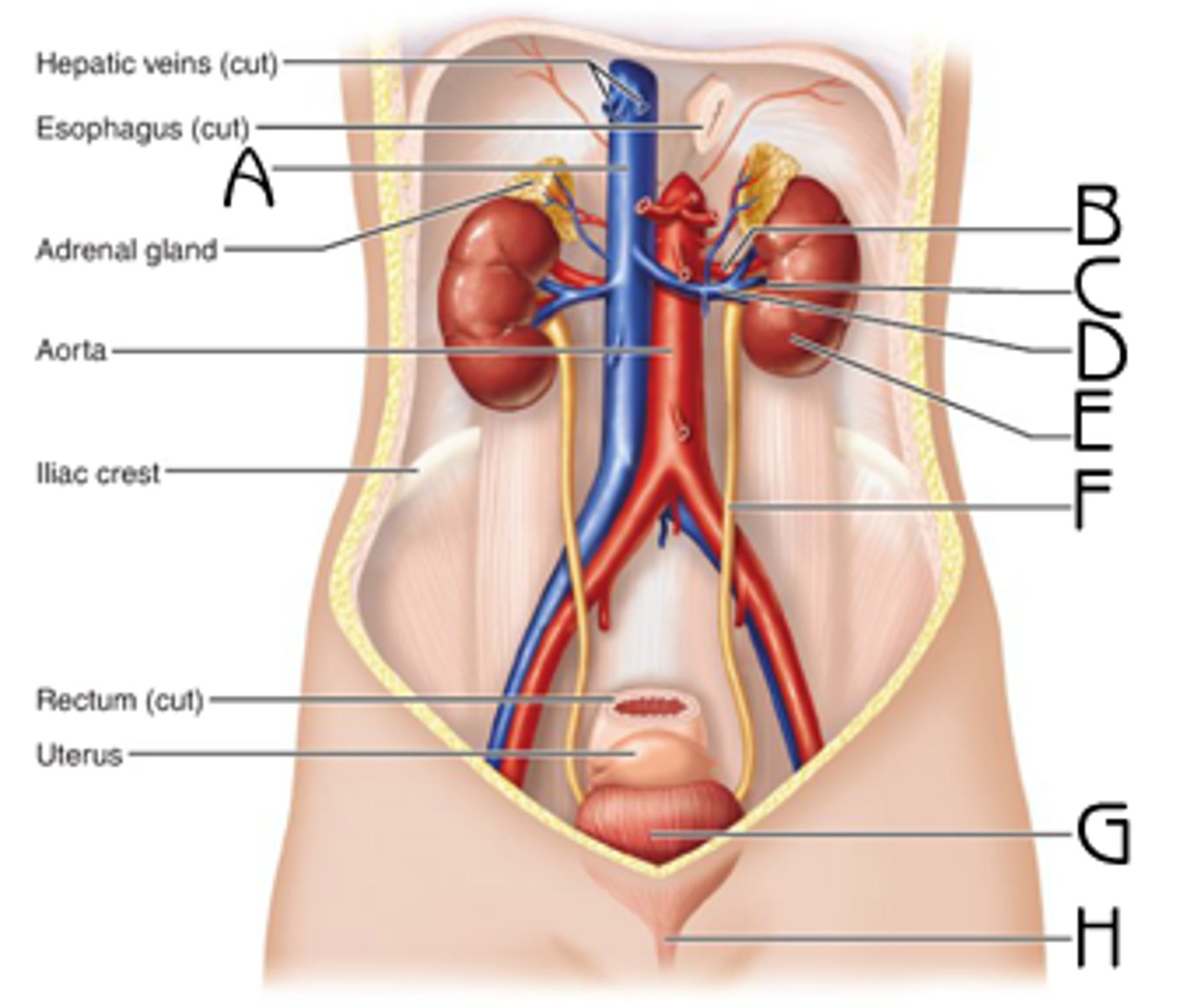
Renal Artery
B
Function: supply oxygen rich blood to kidneys
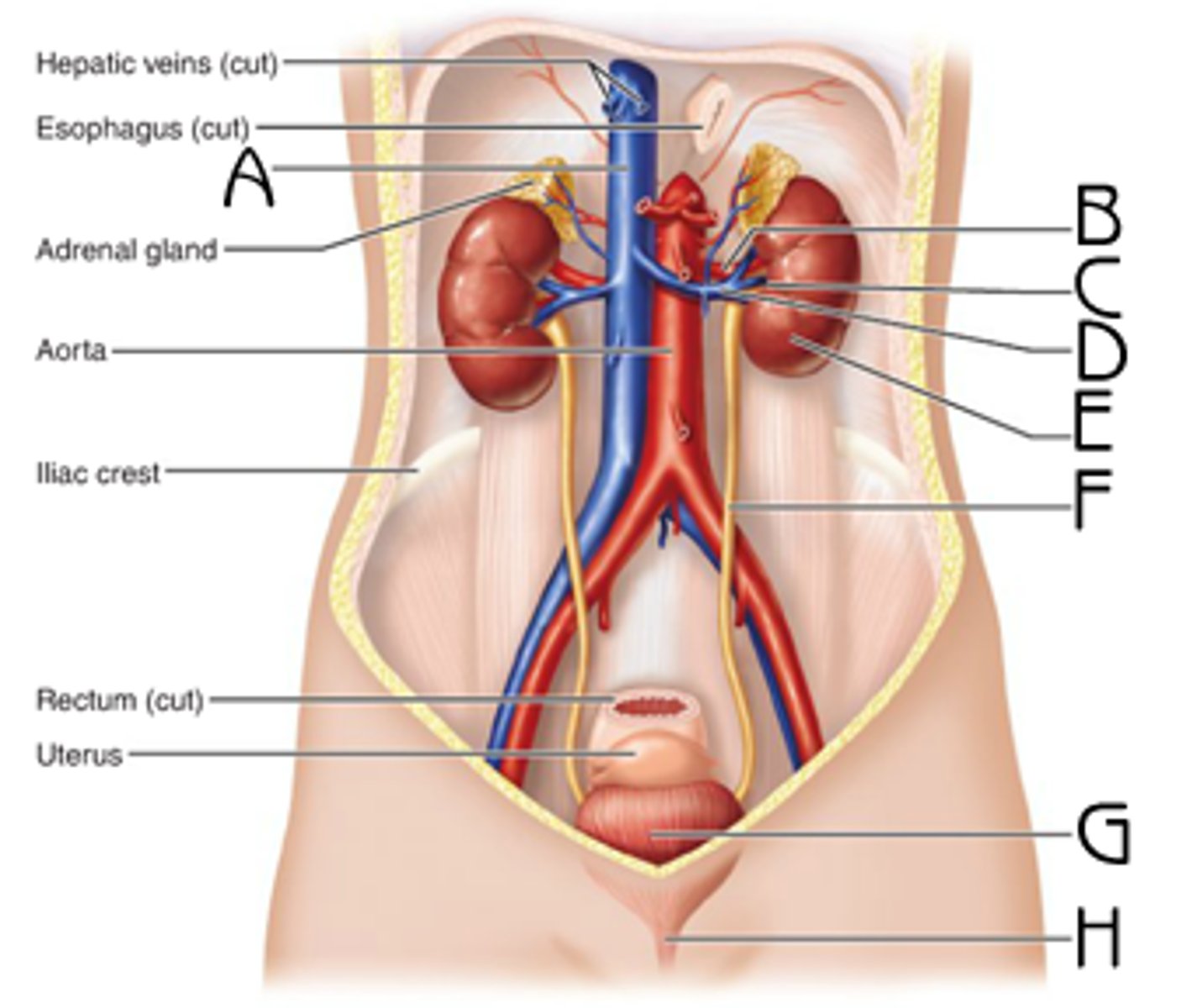
Renal Vein
D
Function: return oxygen poor and filtered blood to the inferior vena cava
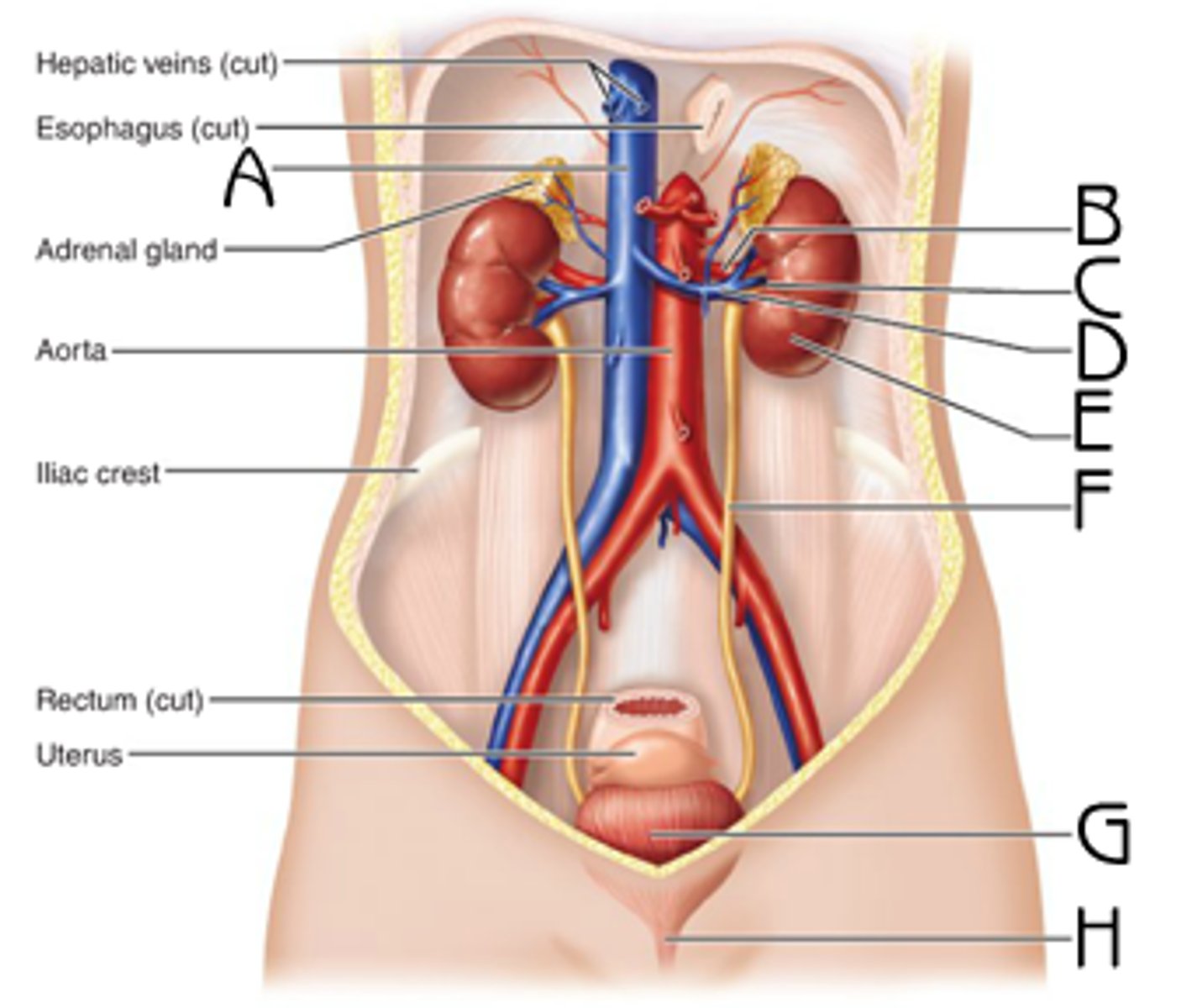
Hilus of kidneys
C
Function:transmits the vessels, nerves, and ureter
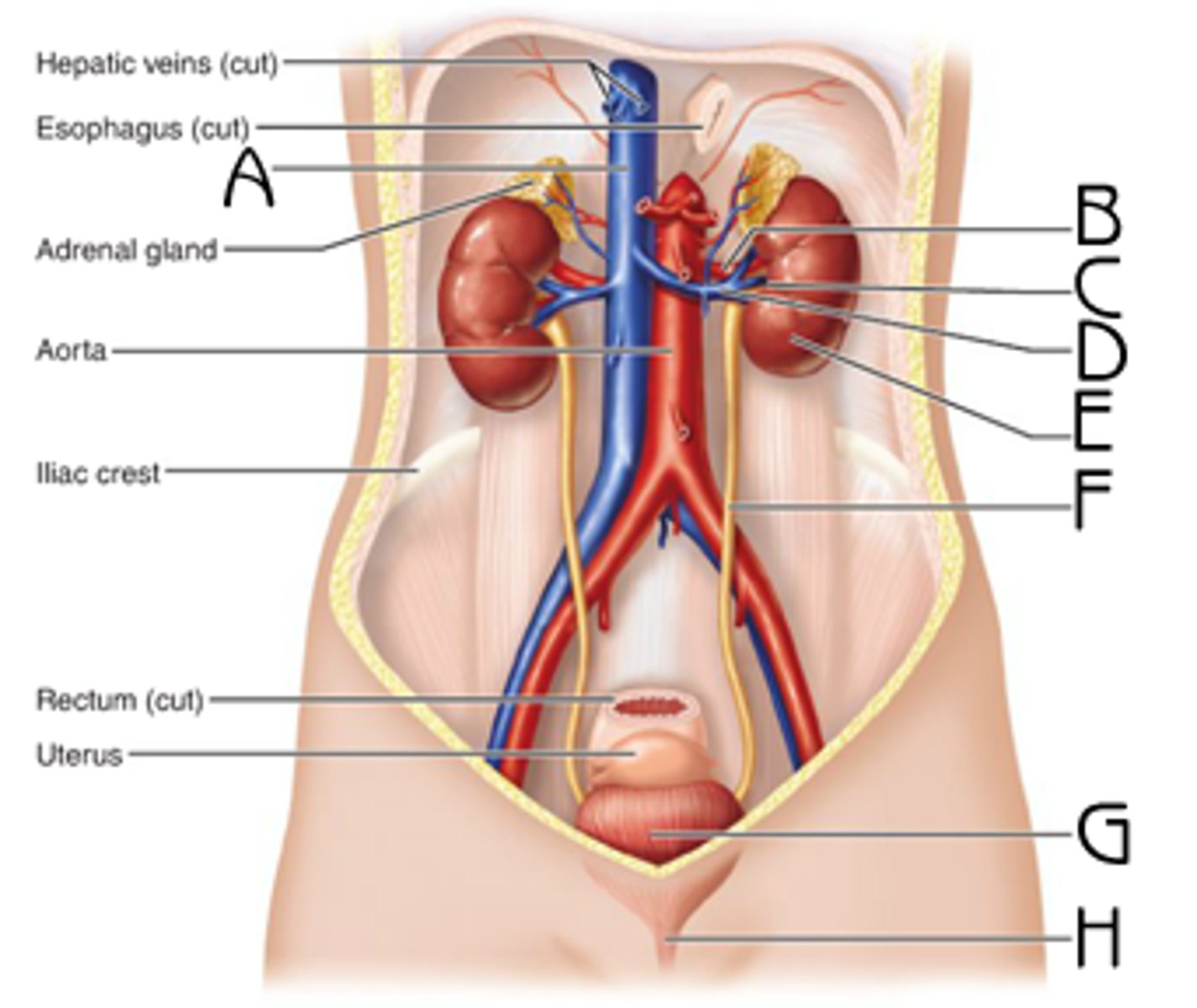
Ureter
F
Function: move urine from collecting tubule to urinary bladder
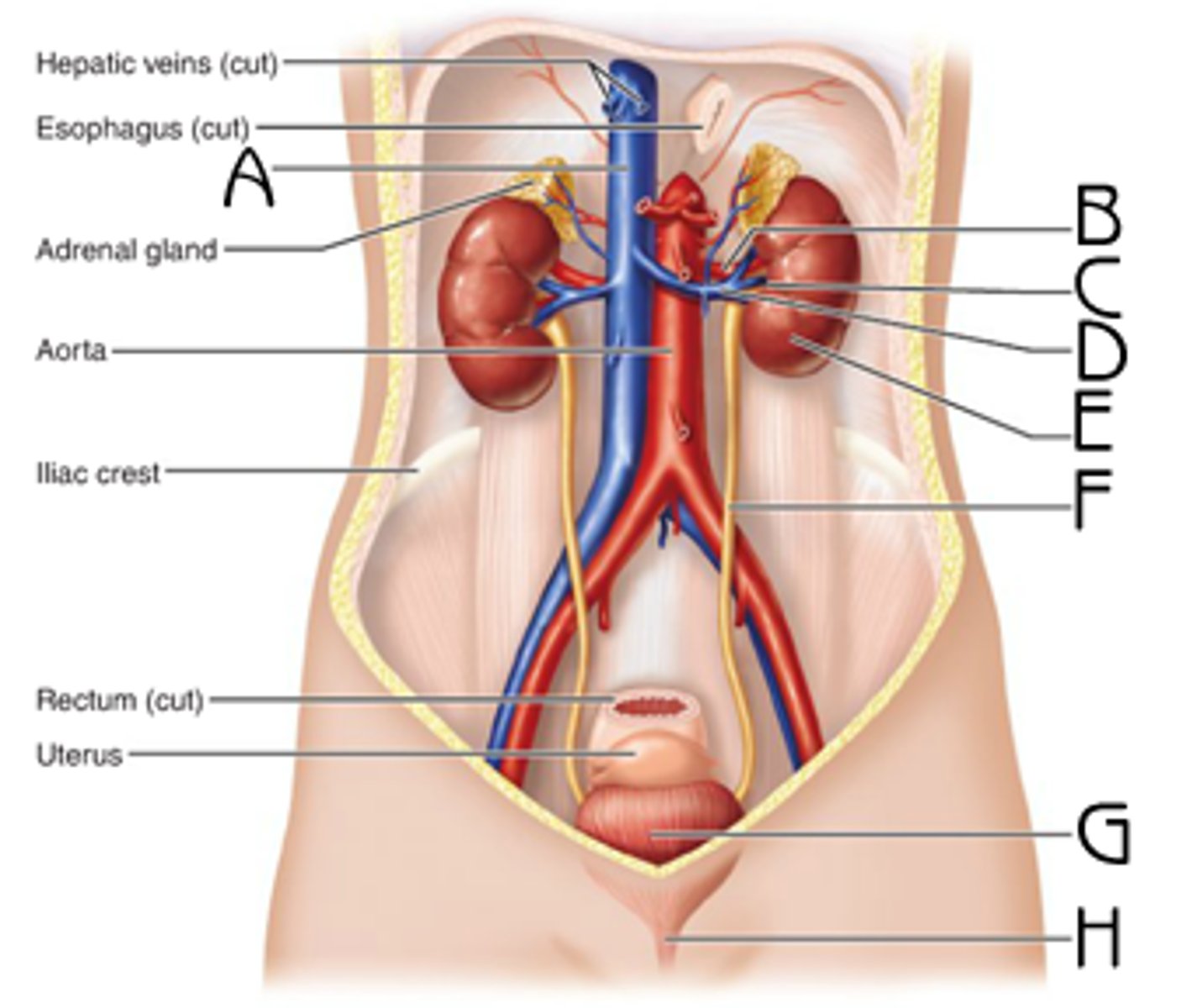
Urinary bladder
G
Function: hold urine
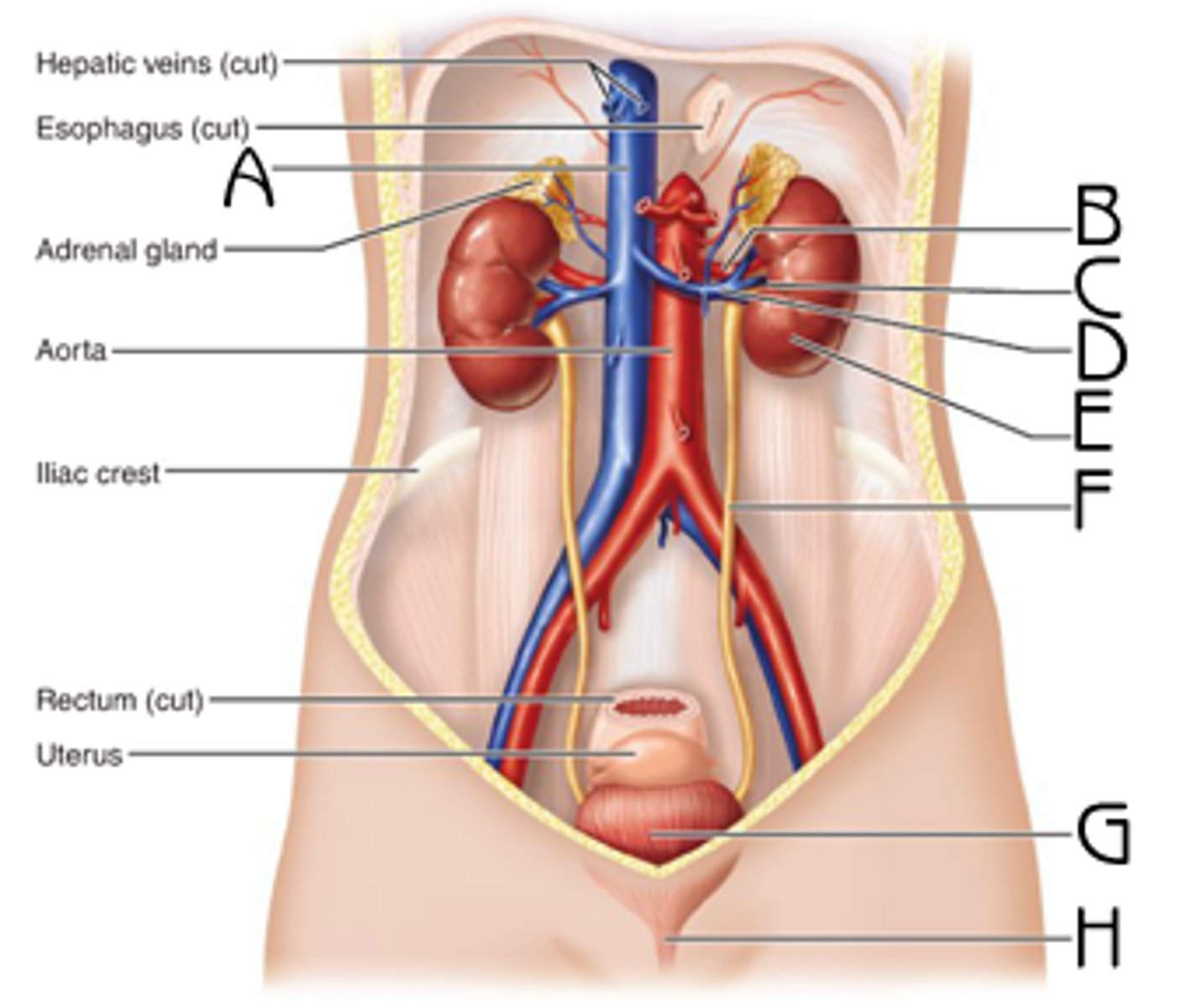
Urethra
H
Function: allow urine to exit the body
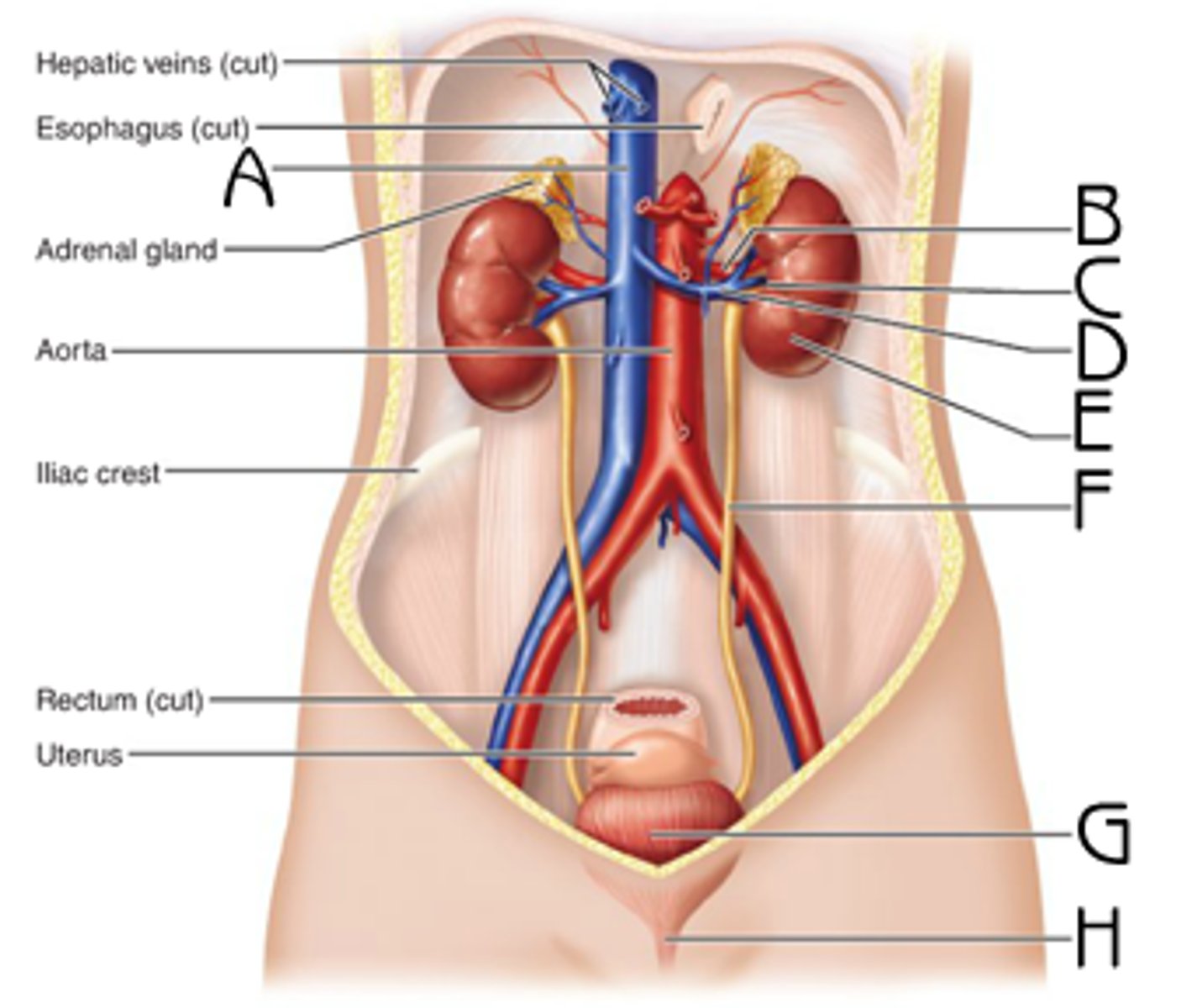
Cortex (of Kidney)
A
Function: filter blood and to remove the waste products
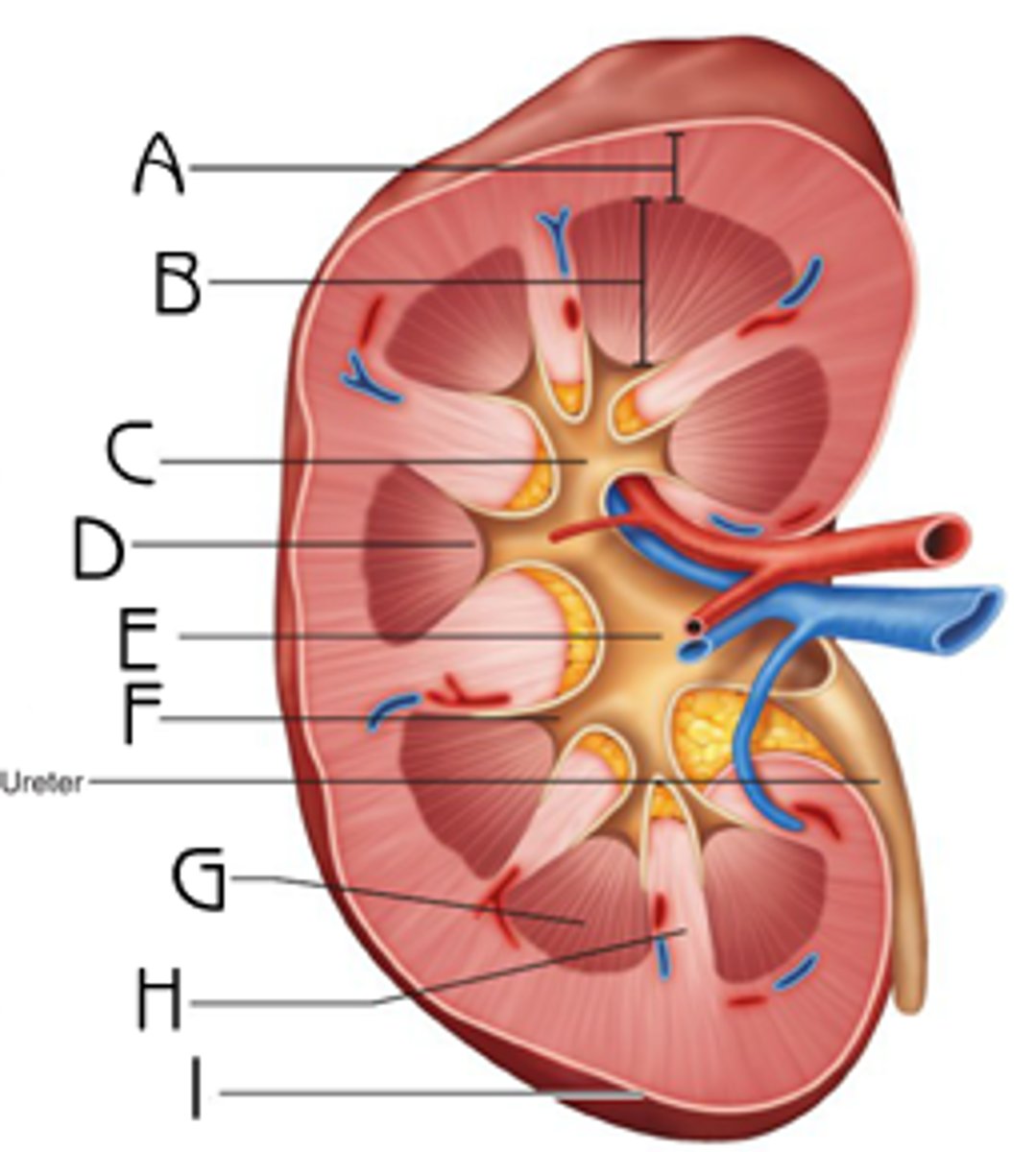
Medulla (of Kidney)
B
Function: contains the structures of the nephrons responsible for maintaining the salt and water balance of the blood
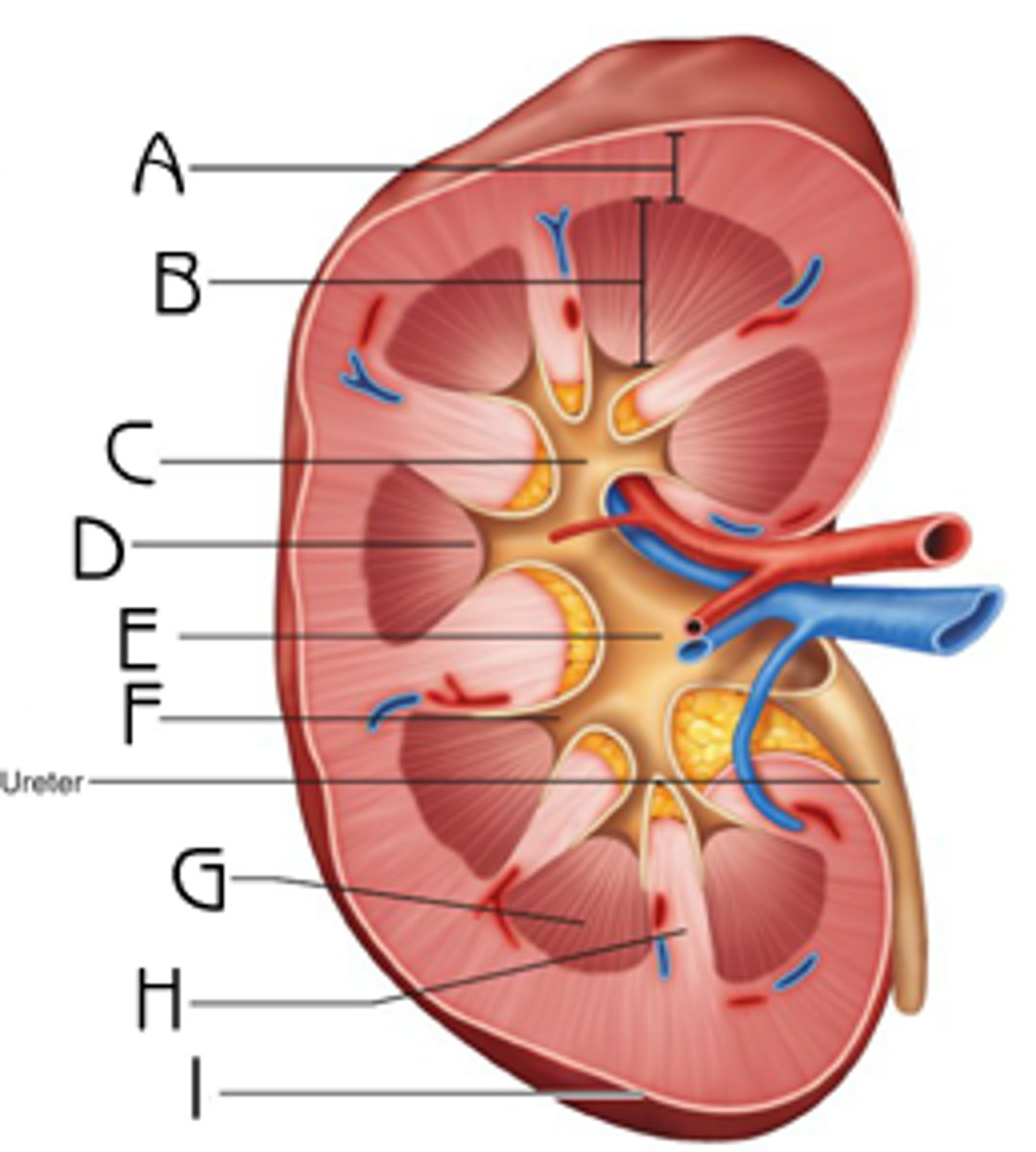
major renal calyx
C
Function:provides a channel for urine to flow through to the ureter
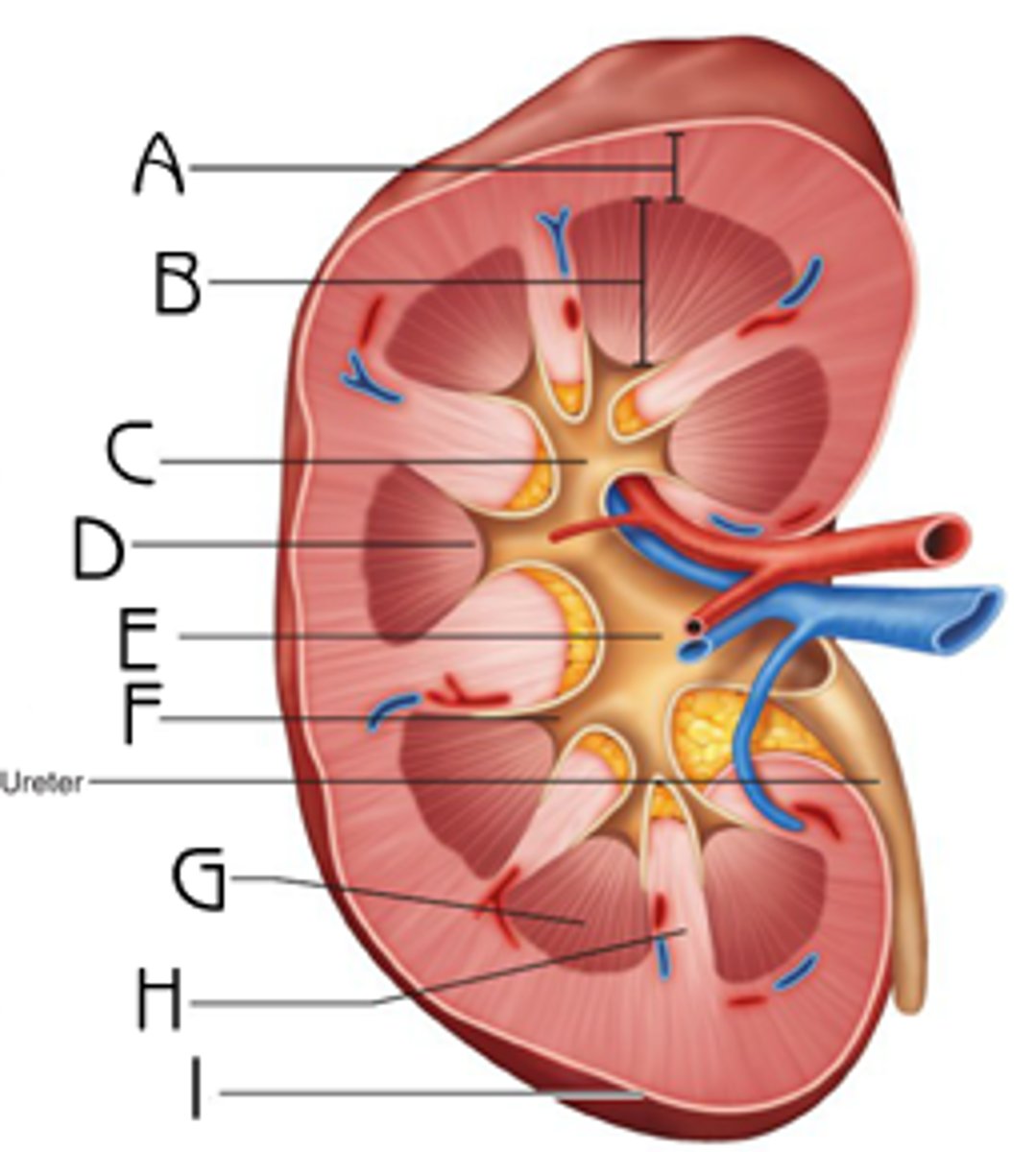
renal papillae
D
Function: drain urine into the minor calyxes and thence to the ureters
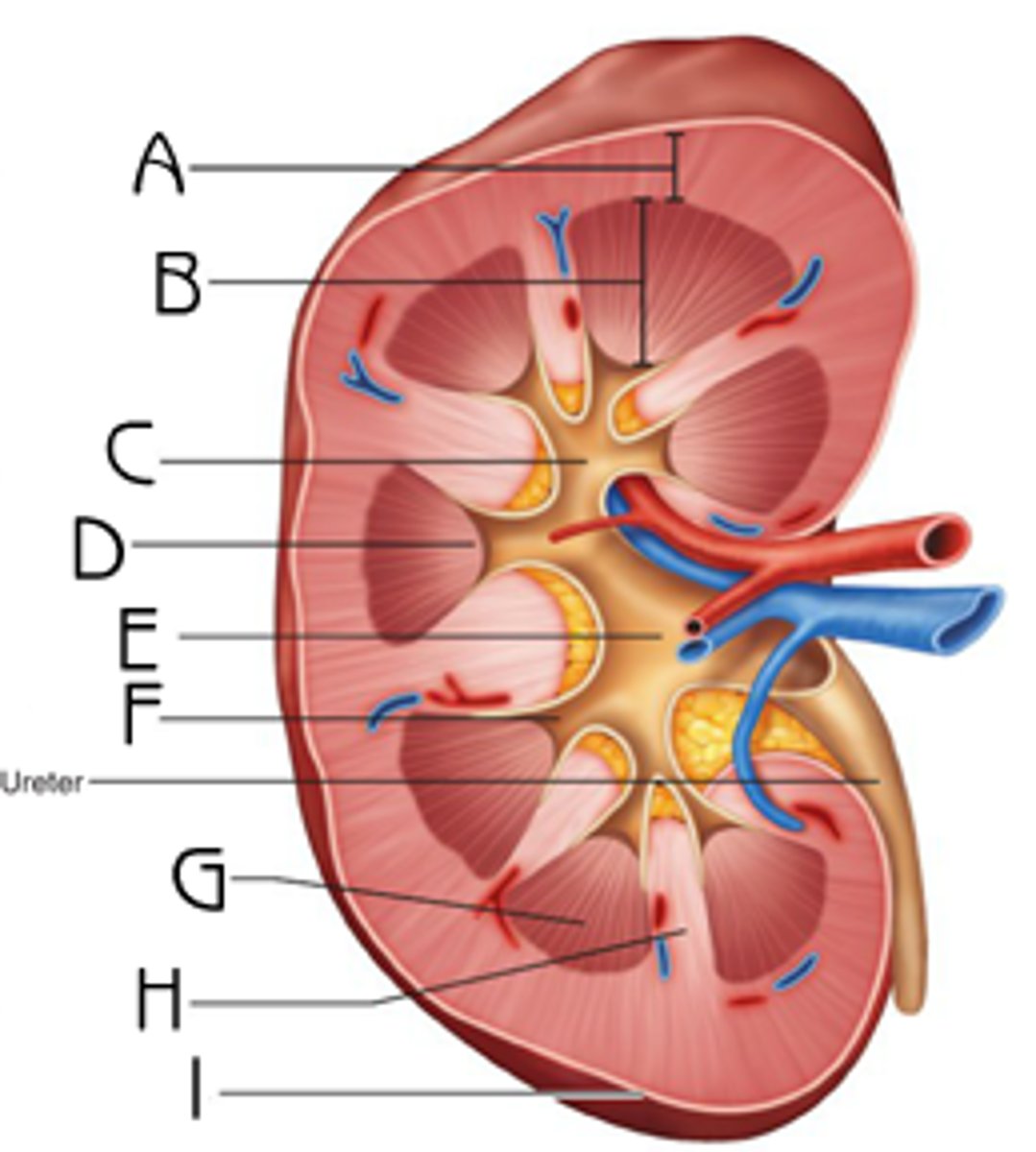
Renal pelvis
E
Function: drain urine into ureters
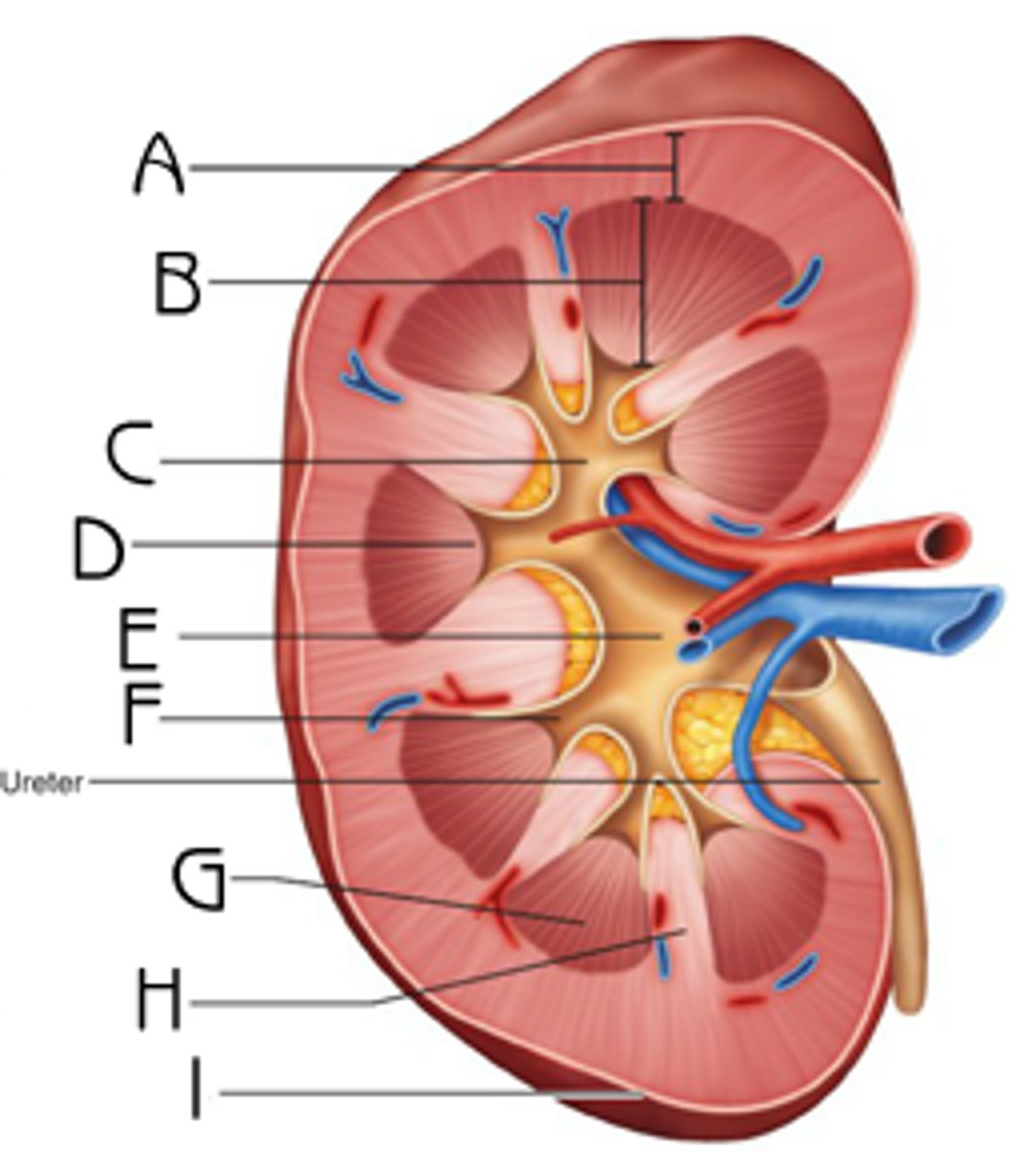
Minor renal calyx
F
Function: drain urine from renal papillae and pass it on to the major renal calyx
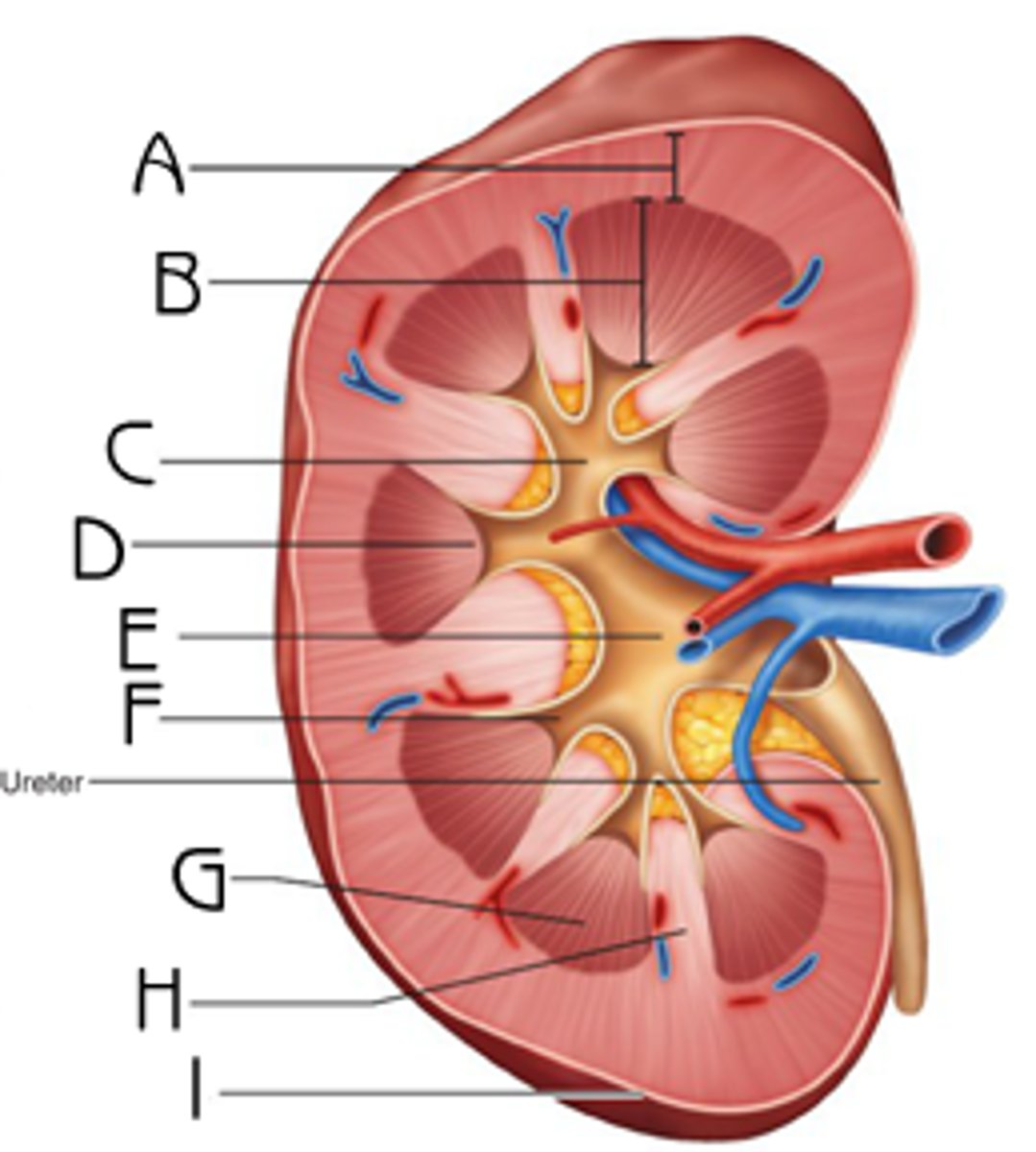
renal pyramids
G
Function: part of the medulla of the kidney that contains the structures of the nephrons responsible for maintaining the salt and water balance of the blood
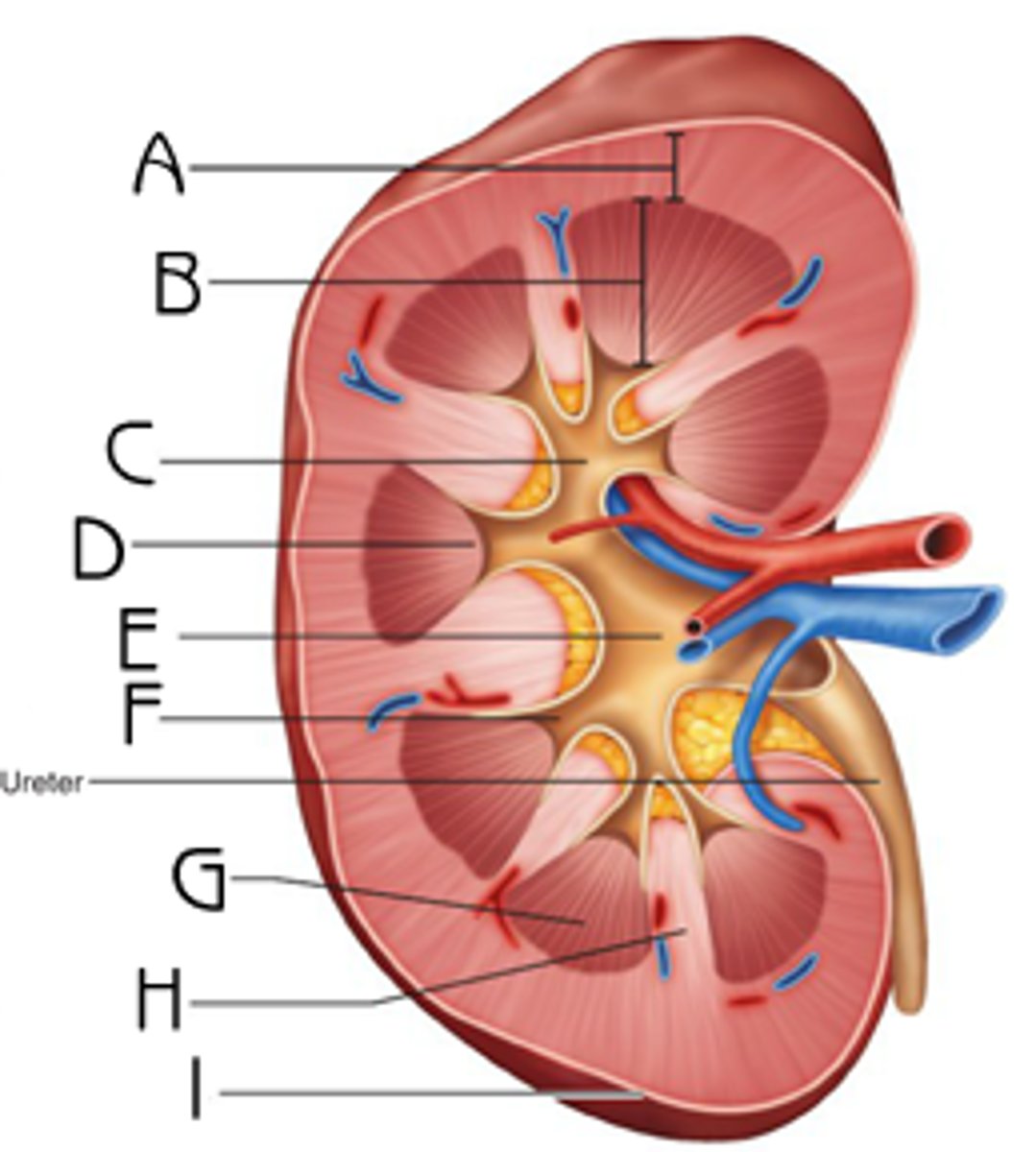
Capsule of kidney
I
Function: cover and protect kidney
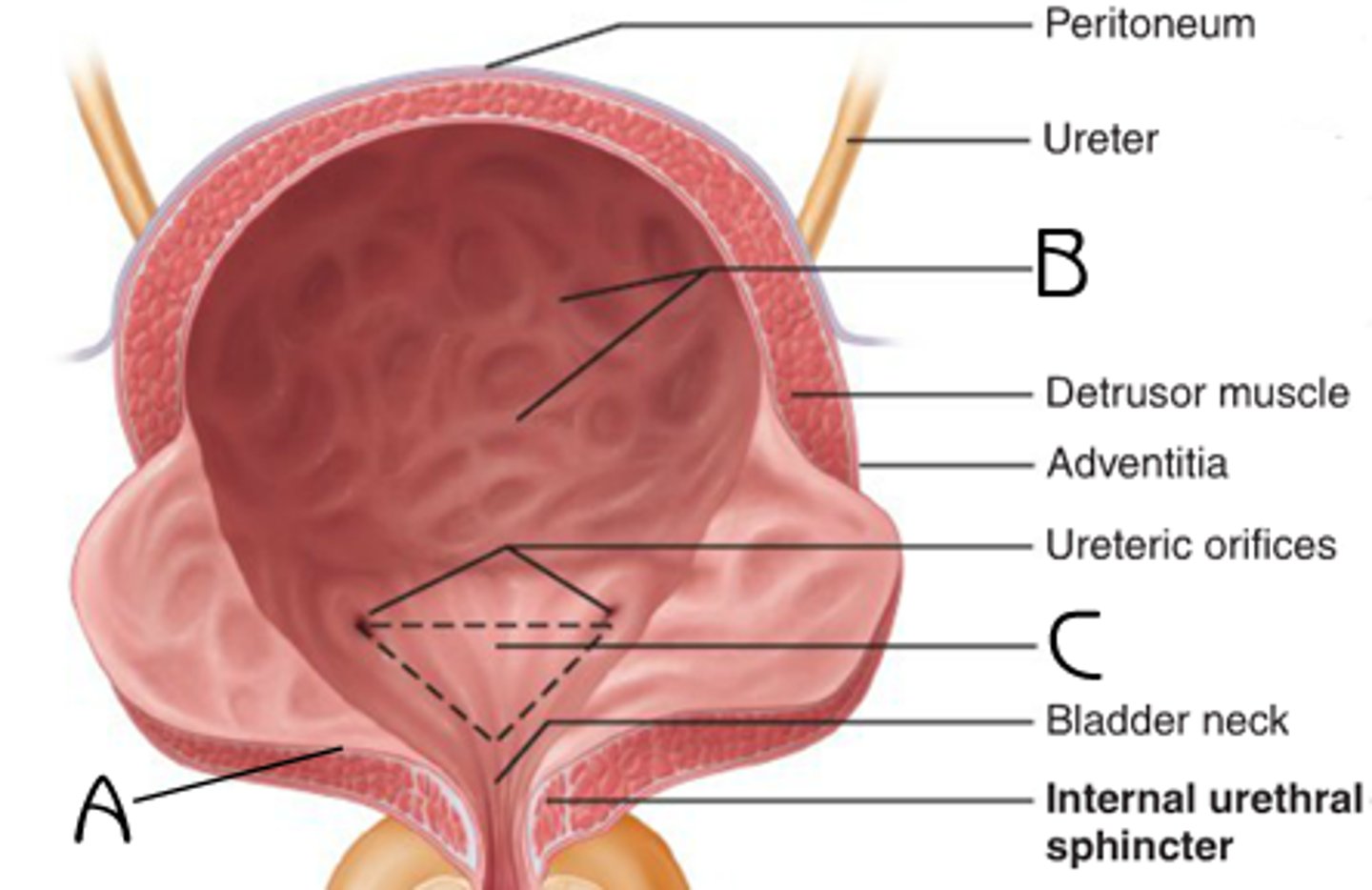
Mucosa (of urinary bladder)
A
Function: maintain water-proofing of internal bladder; expand to hold urine
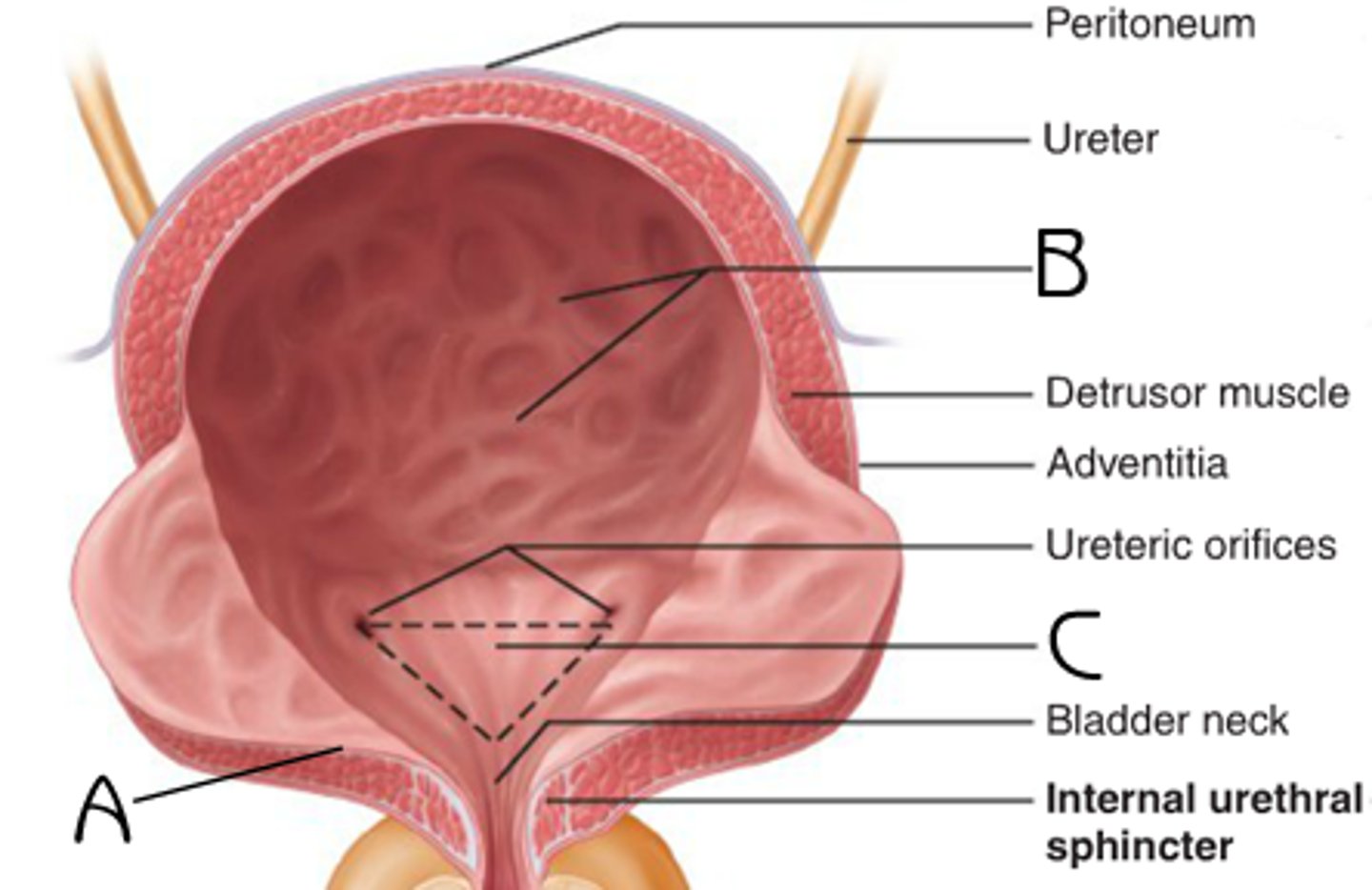
Rugae (of urinary bladder)
B
Function: allow bladder to expand to hold urine
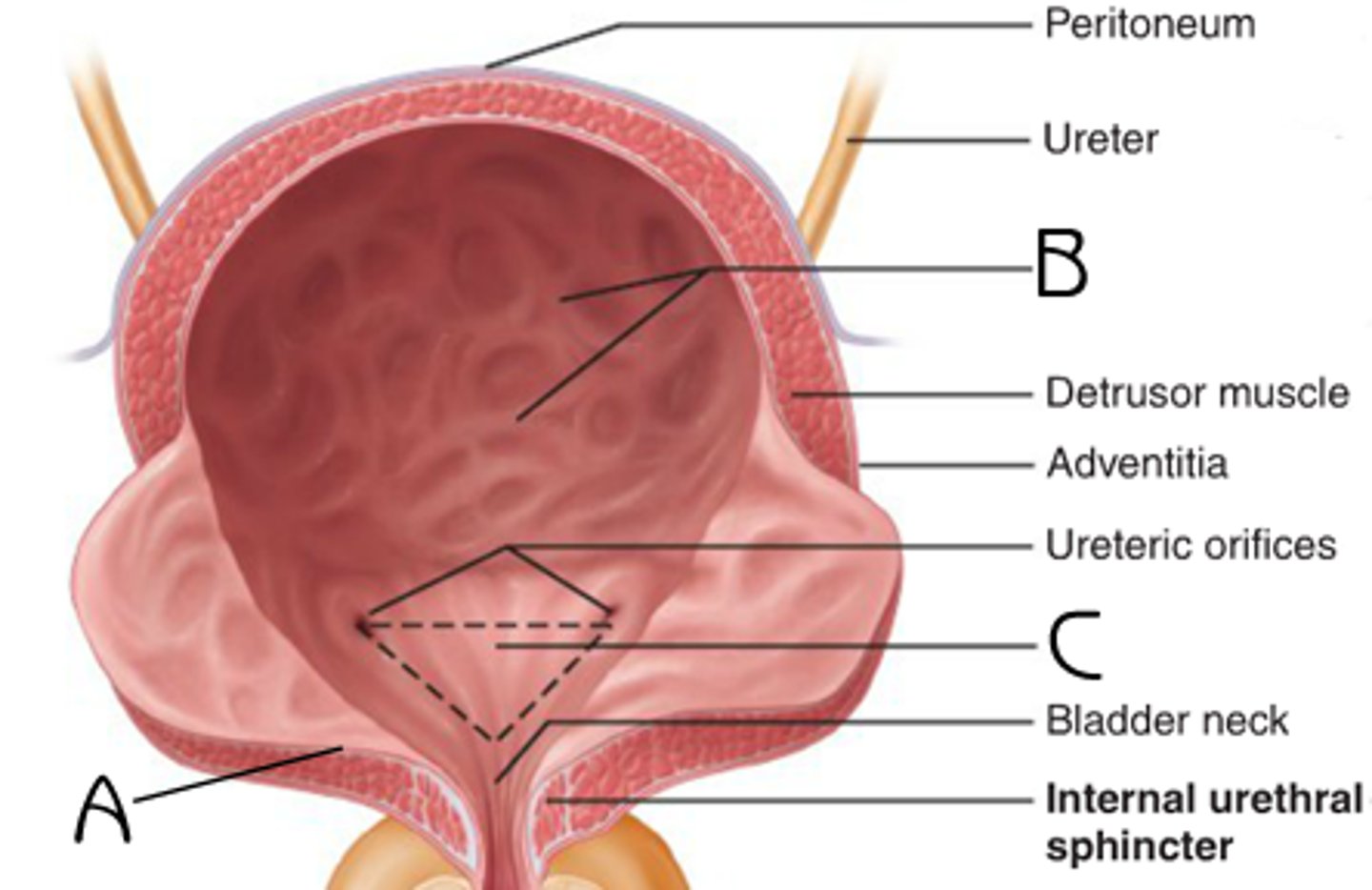
Trigone (of urinary bladder)
C
Function: signal the brain when the bladder is full
Cortex (of kidneys, histology)
B
Function:filter blood and to remove the waste products
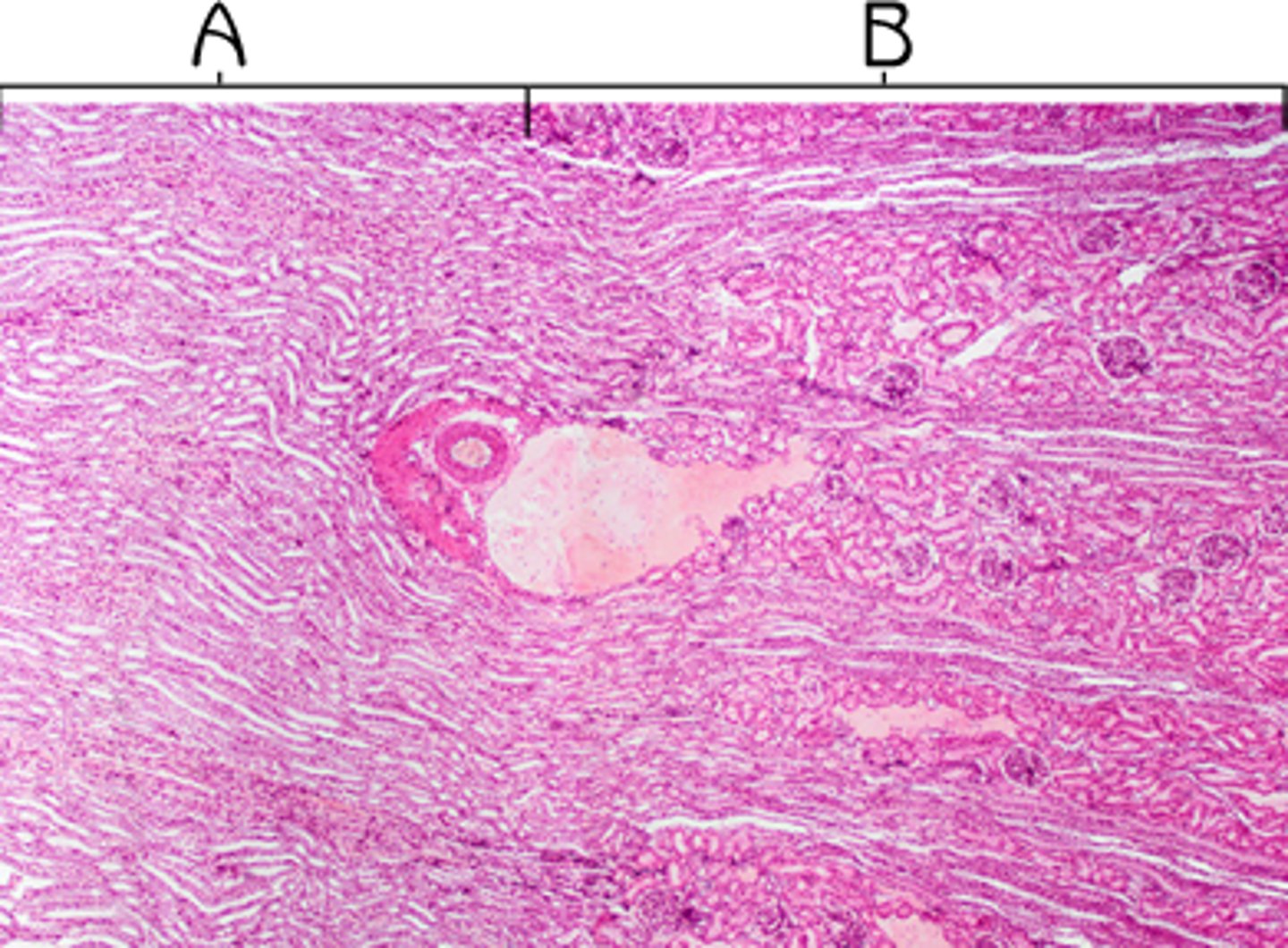
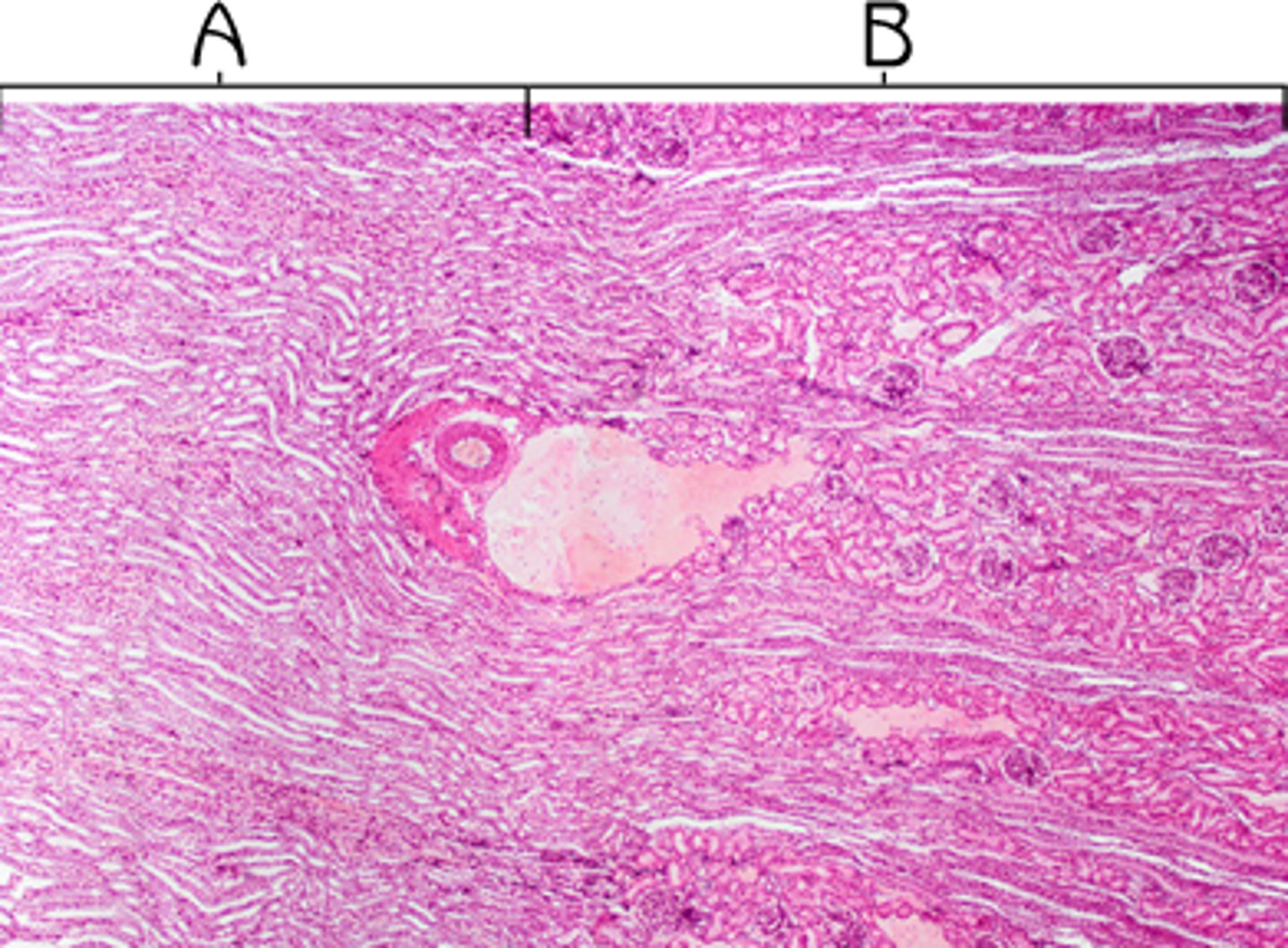
Medulla (of kidneys, histology)
A
Function: maintain salt and water balance of blood
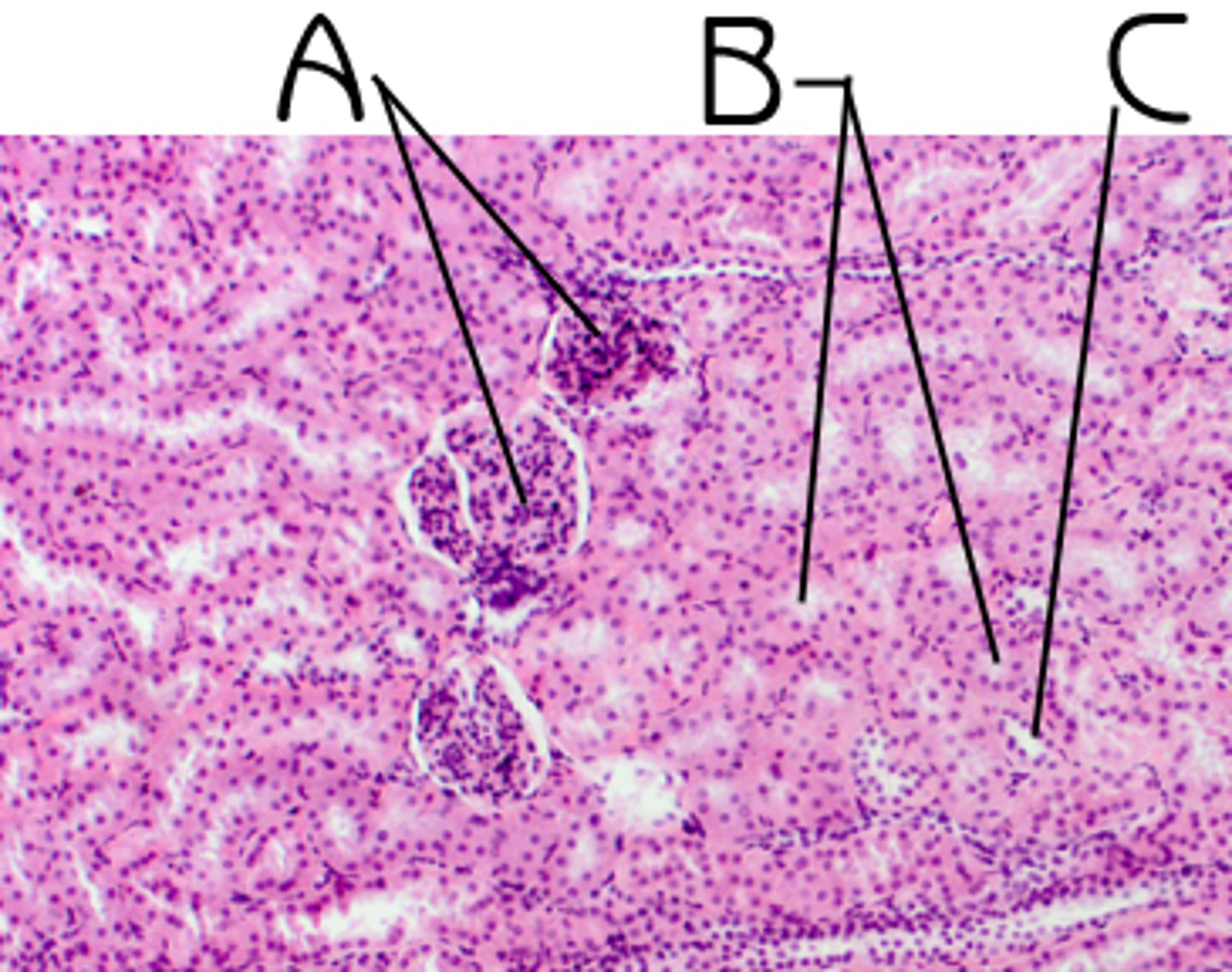
Glomeruli (of kidneys, histology)
A
Function: first site of filtration of blood in kidneys
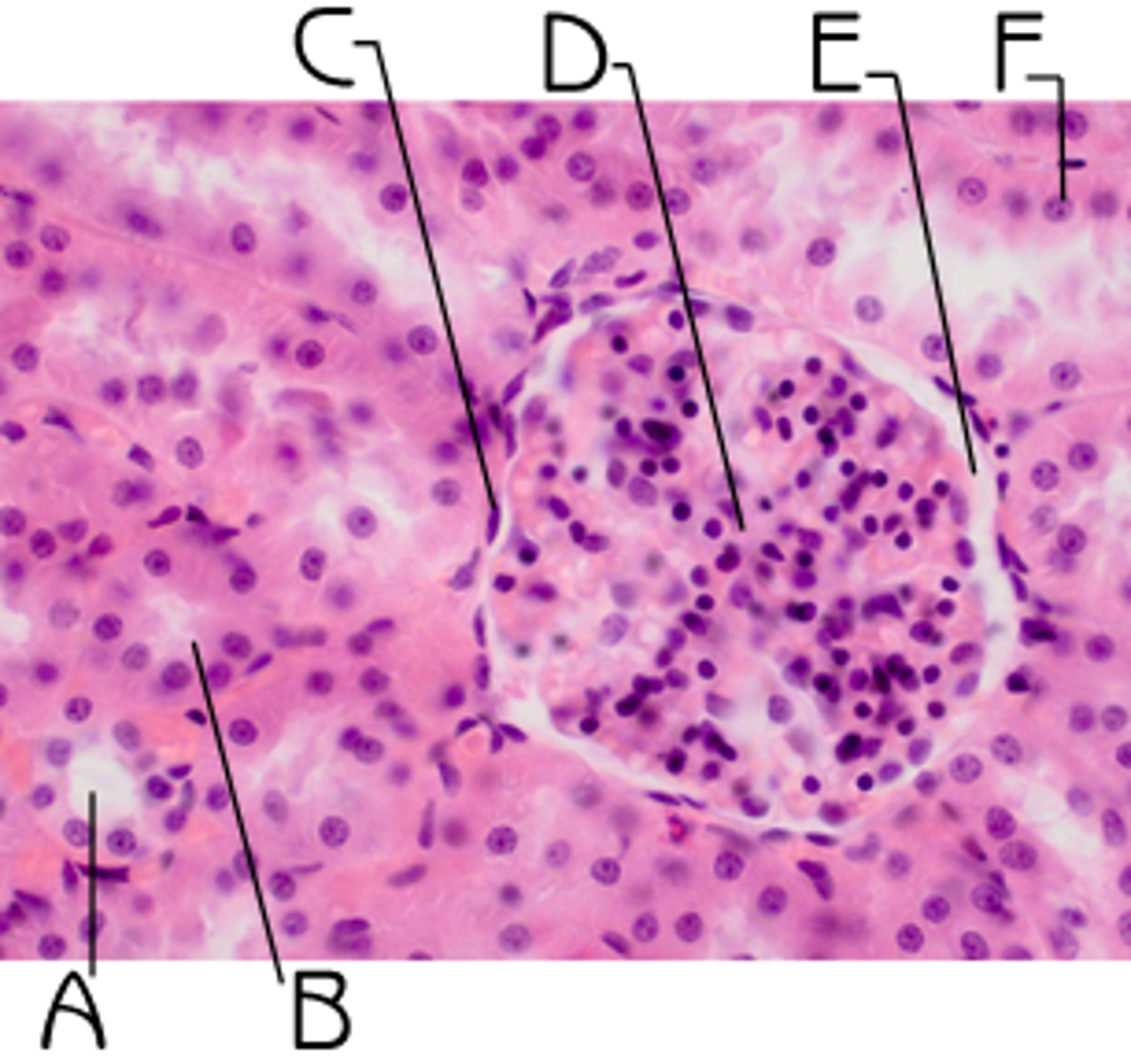
Glomerulus (of kidneys, histology, 400x)
D
Function: first site of filtration of blood in kidneys
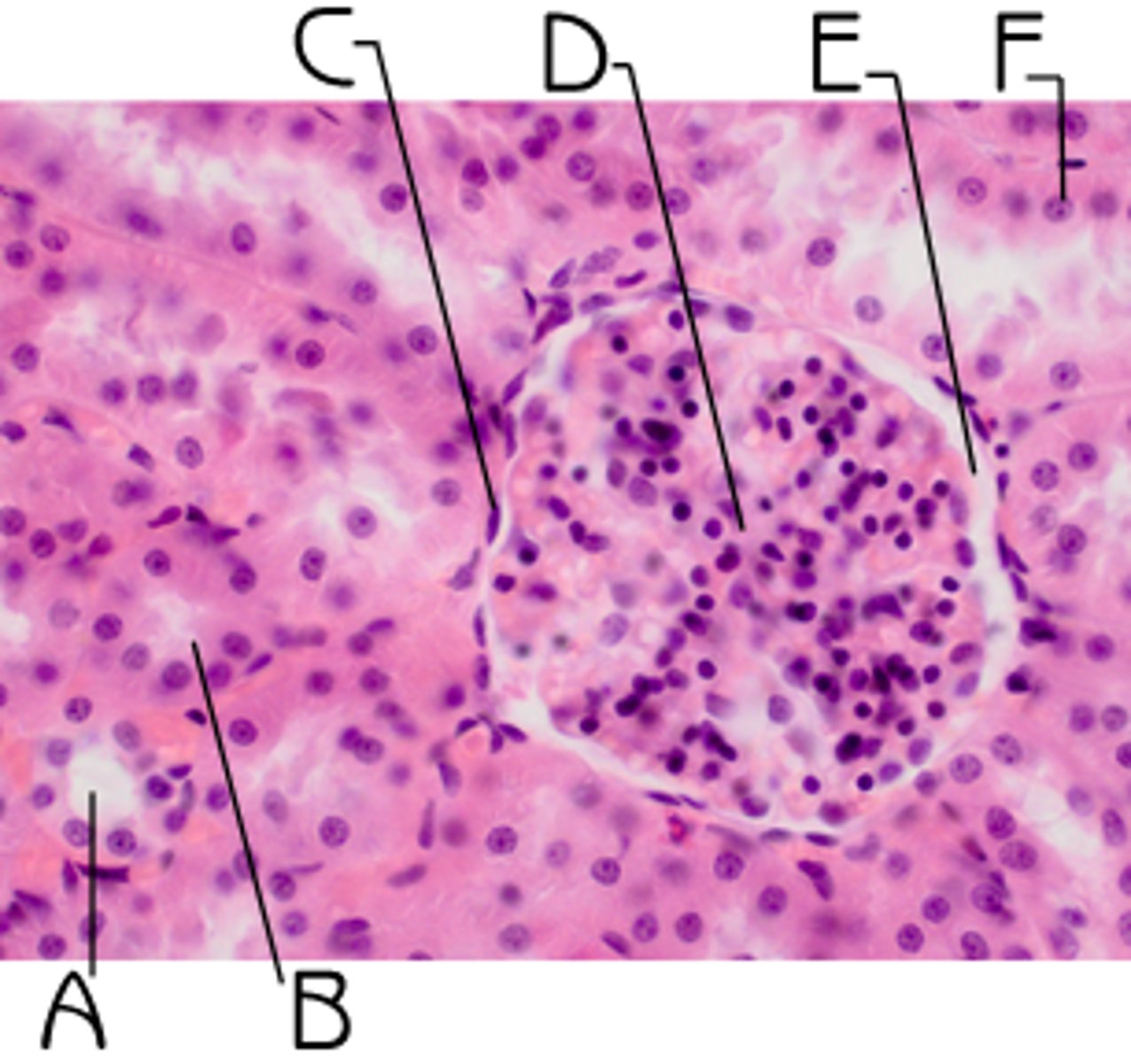
Bowman's Capsule (glomerular capsule, kidneys, histology 400x)
E
Function: contain filtrate from glomerular capillaries)
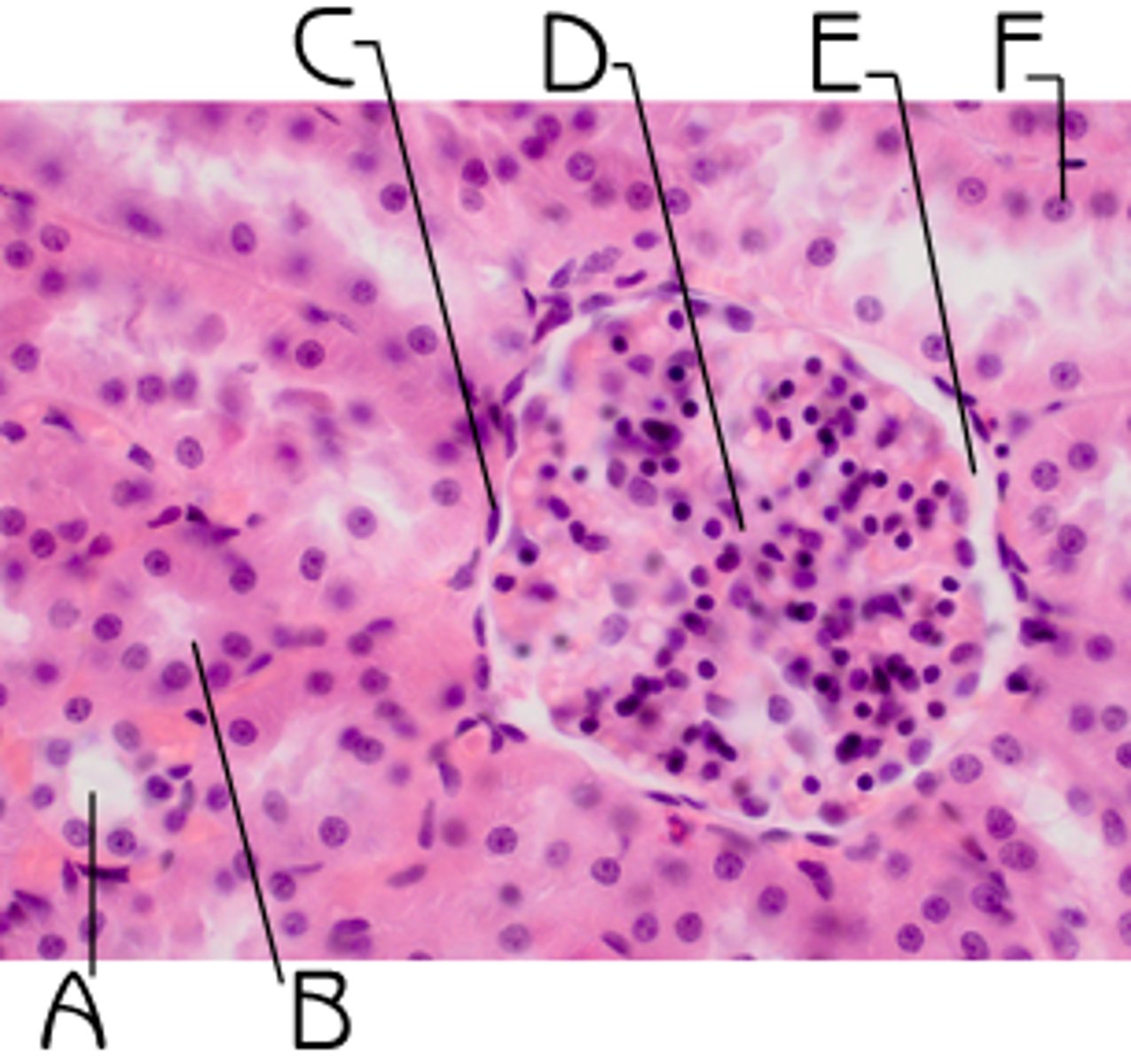
distal convoluted tubule (of kidneys, histology, 400x)
A
Function: acts as a site for selective secretion and reabsorption as water and ions pass between the blood and the filtrate across the tubule membrane
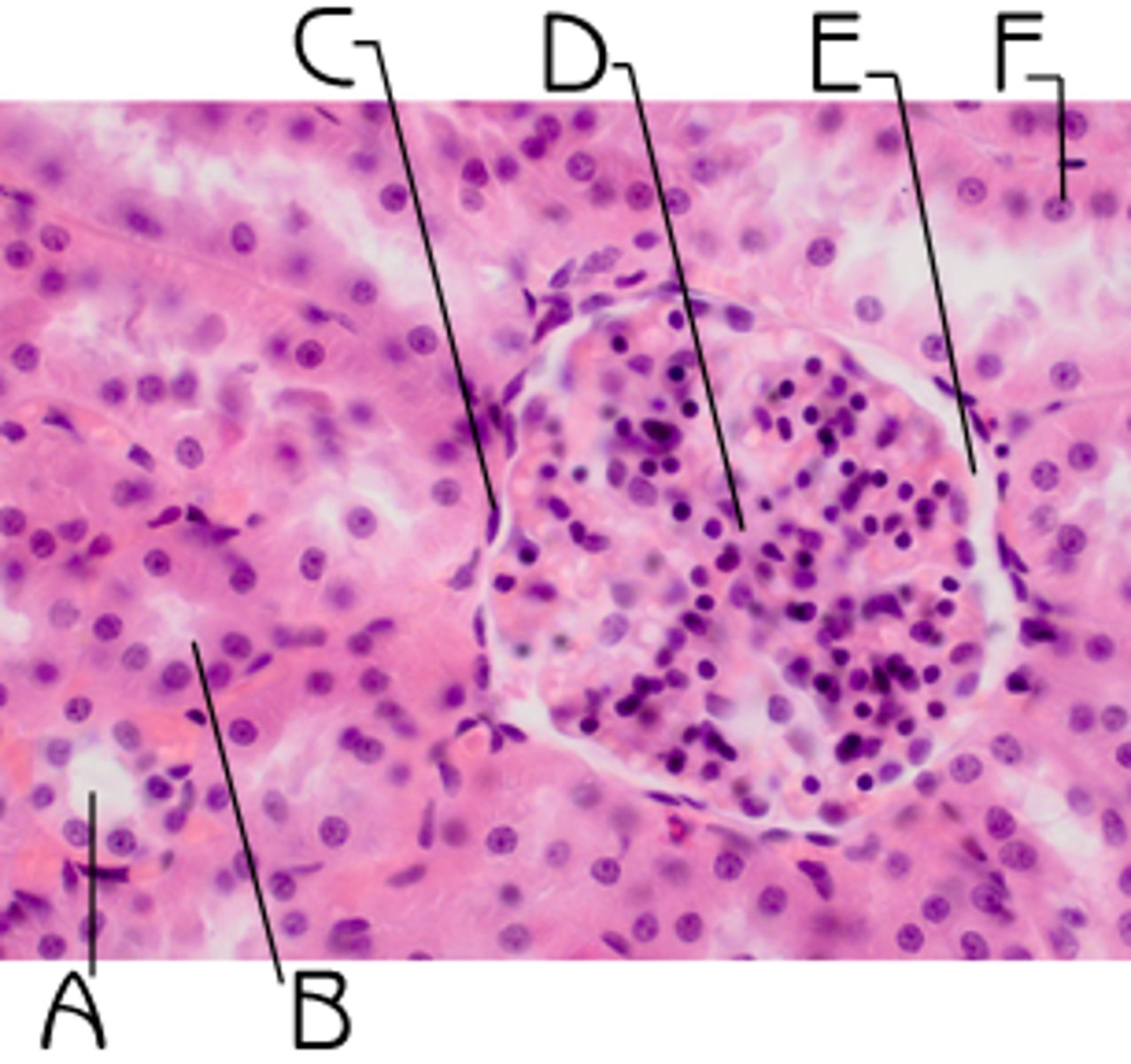
proximal convoluted tubule (of kidneys, histology, 400x)
B
Function: regulates the pH of the filtrate by exchanging hydrogen ions in the interstitium for bicarbonate ions in the filtrate; responsible for secreting organic acids, such as creatinine and other bases, into the filtrate
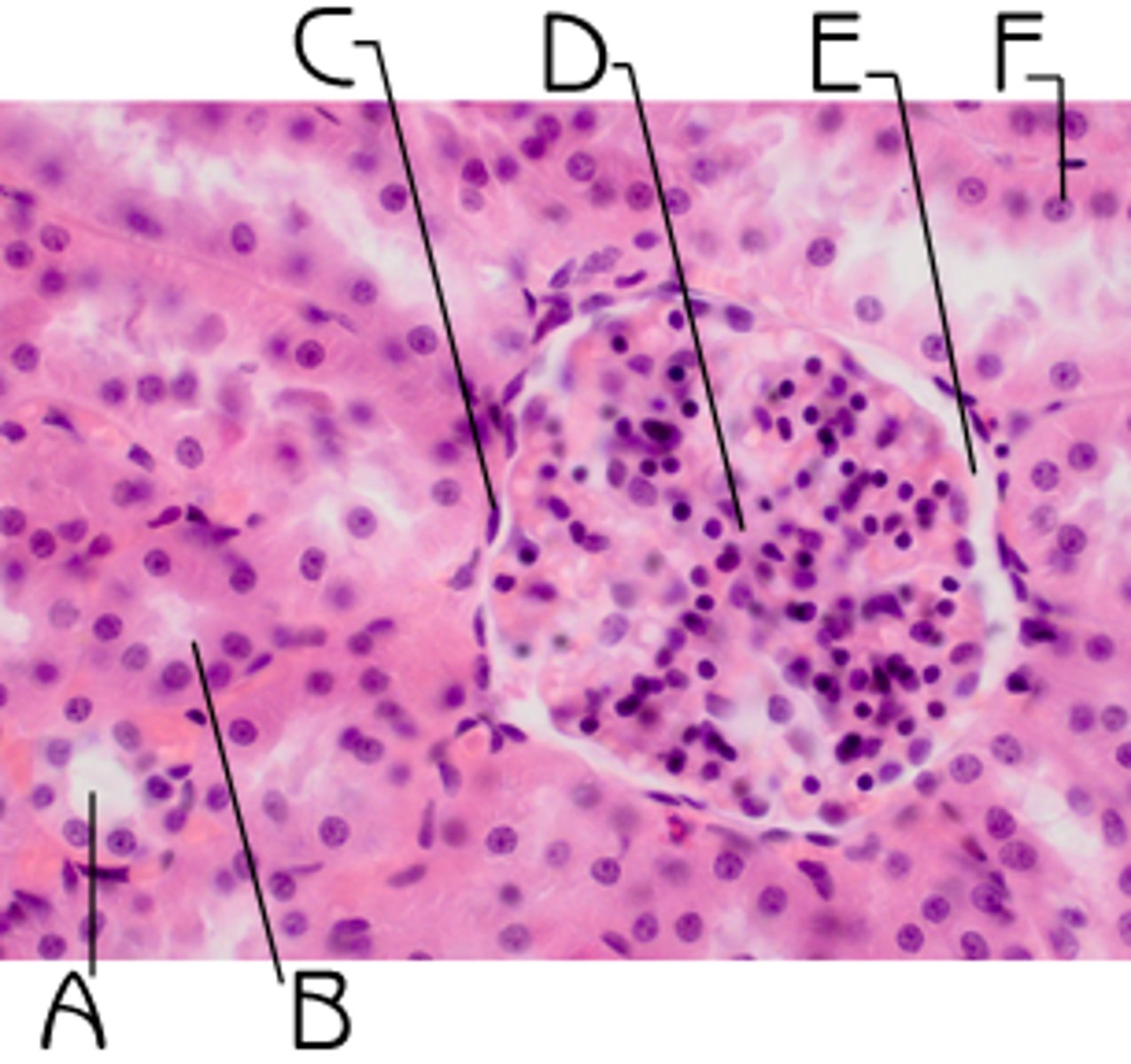
Simple squamous epithelium (of kidneys, histology, 400x)
C
Function: external layer of glomerular capsule
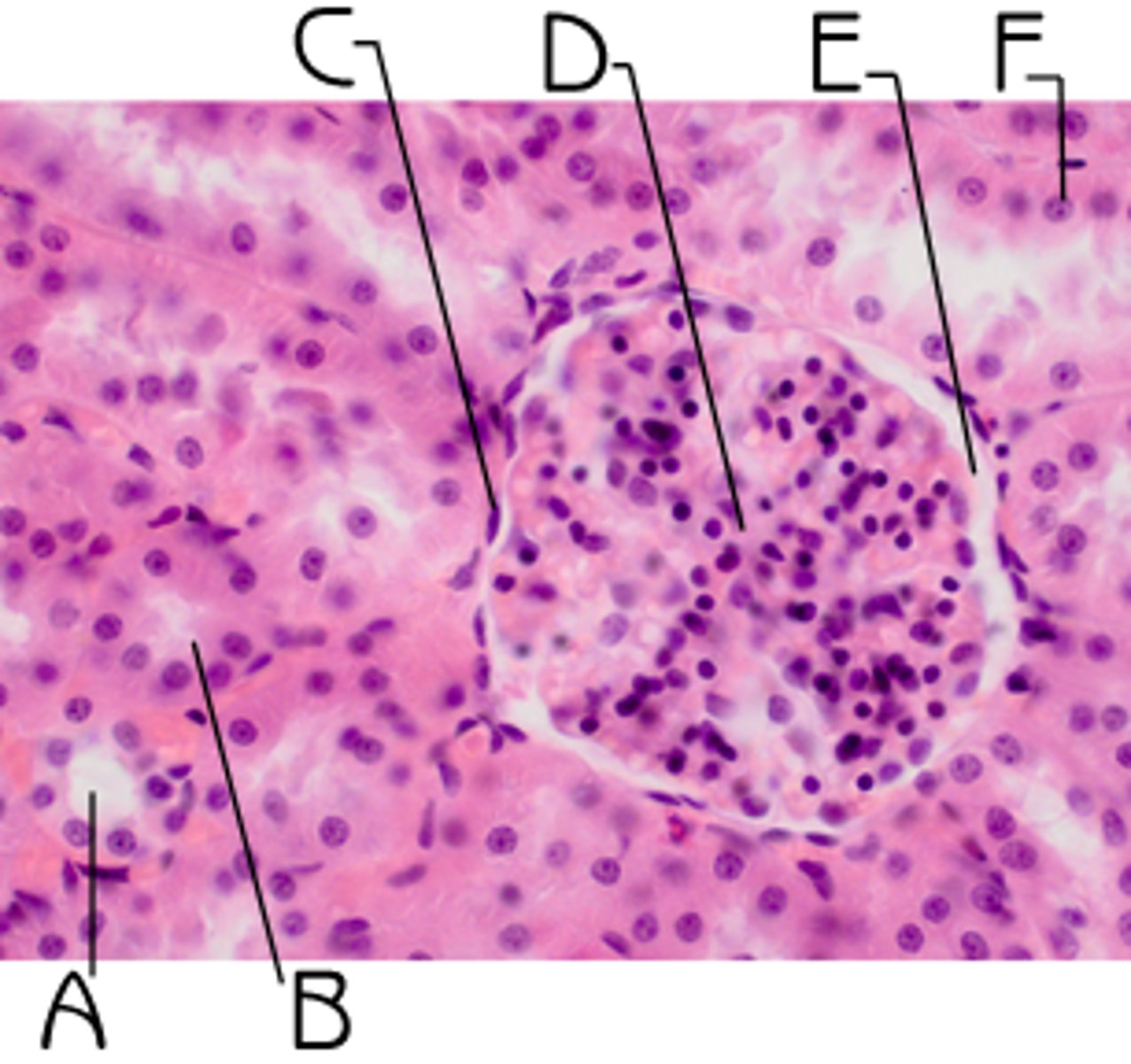
Simple cuboidal epithelium (of kidneys, histology, 400x)
F
Function: form the tubules of the nephron
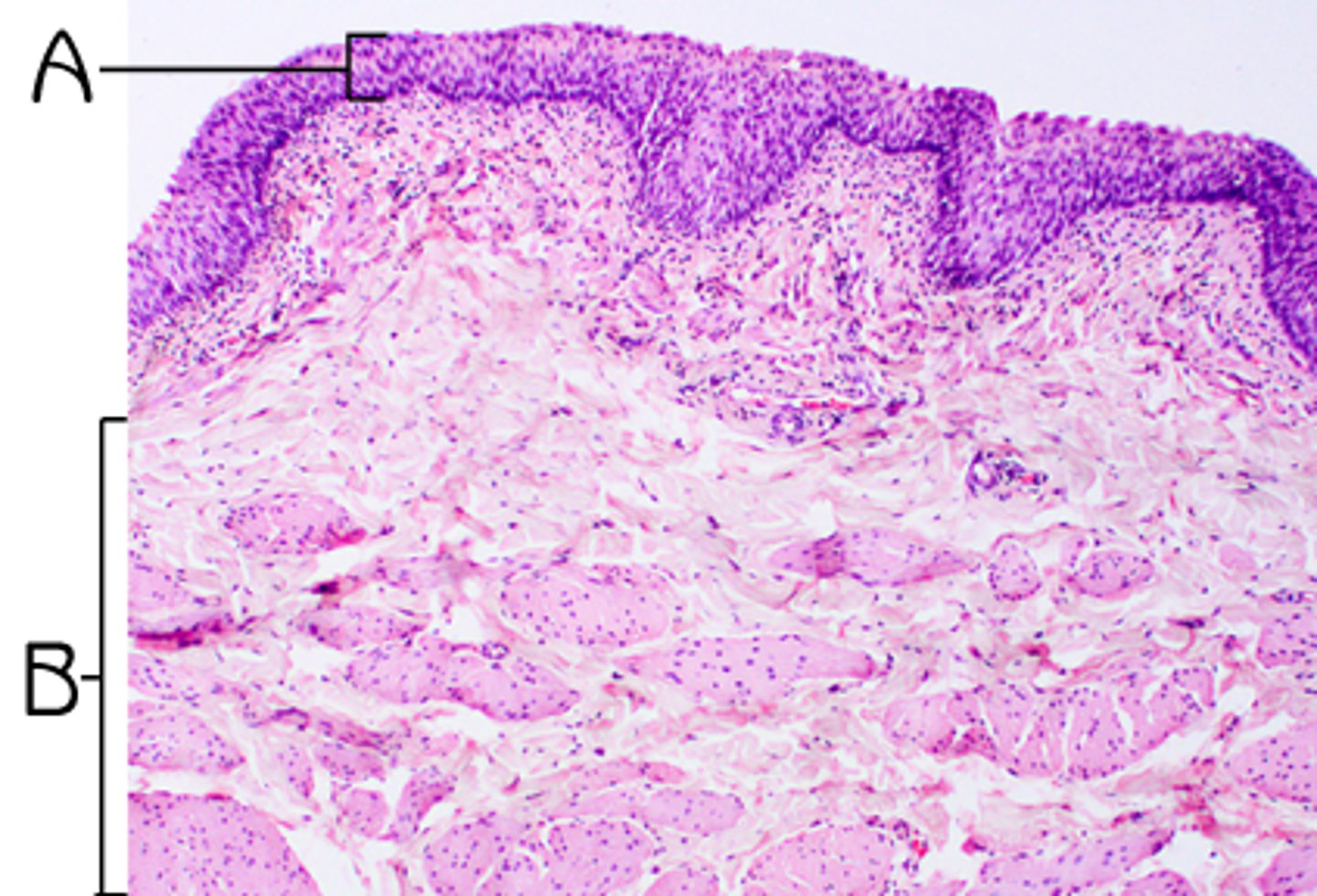
Transitional Epithelium (urinary bladder, histology, 100x)
A
Function: allow for expansion of the lumen of the bladder
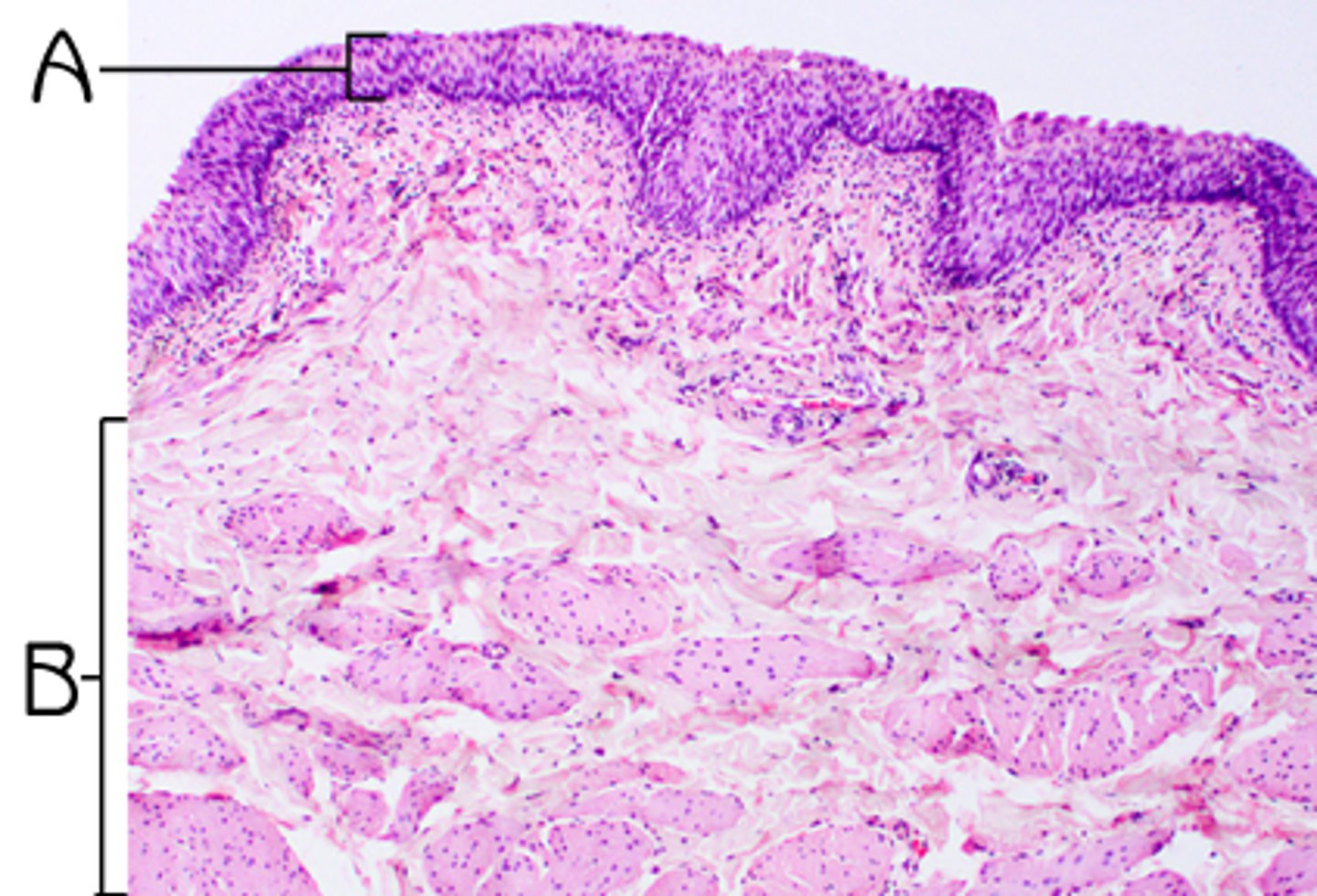
Smooth Muscle (urinary bladder, histology, 100x)
B
Function: control micturition
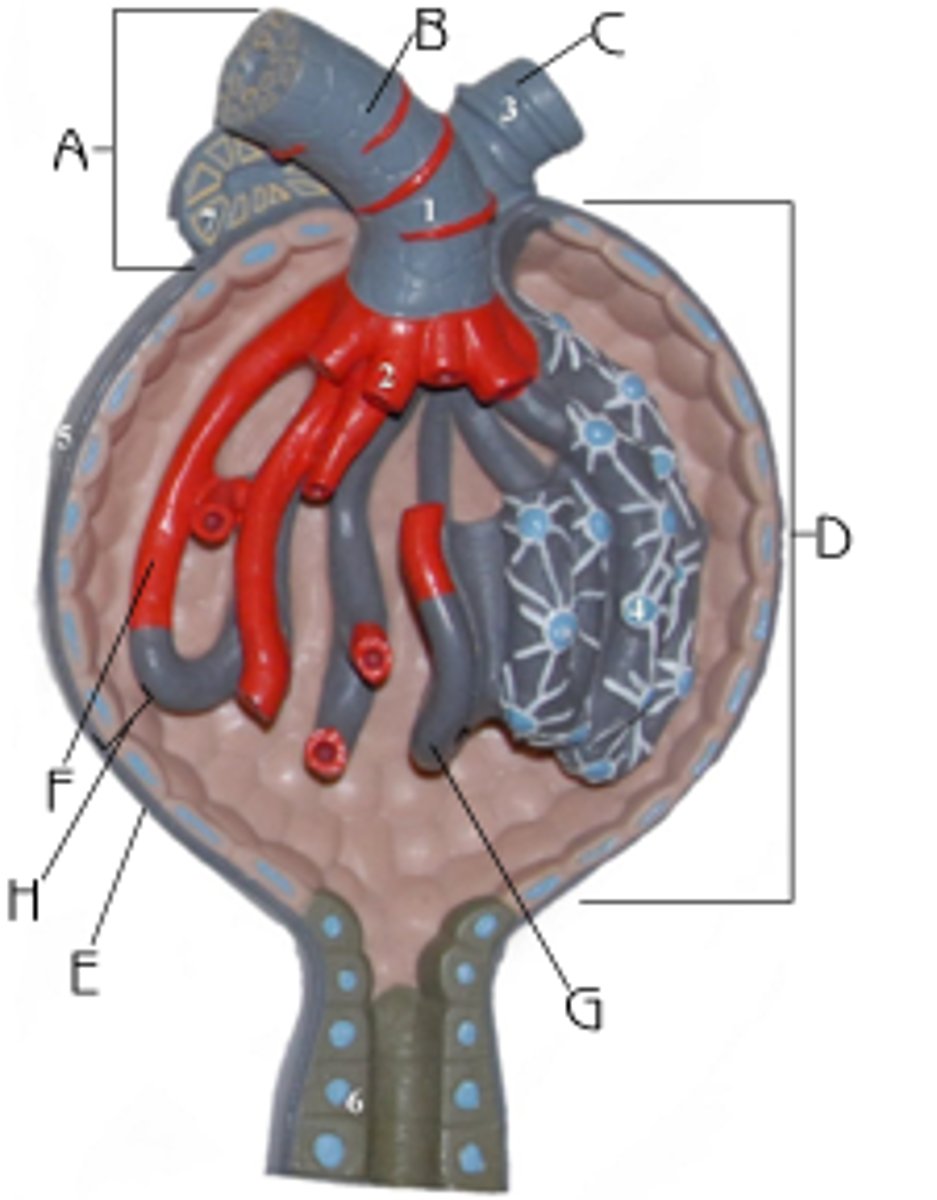
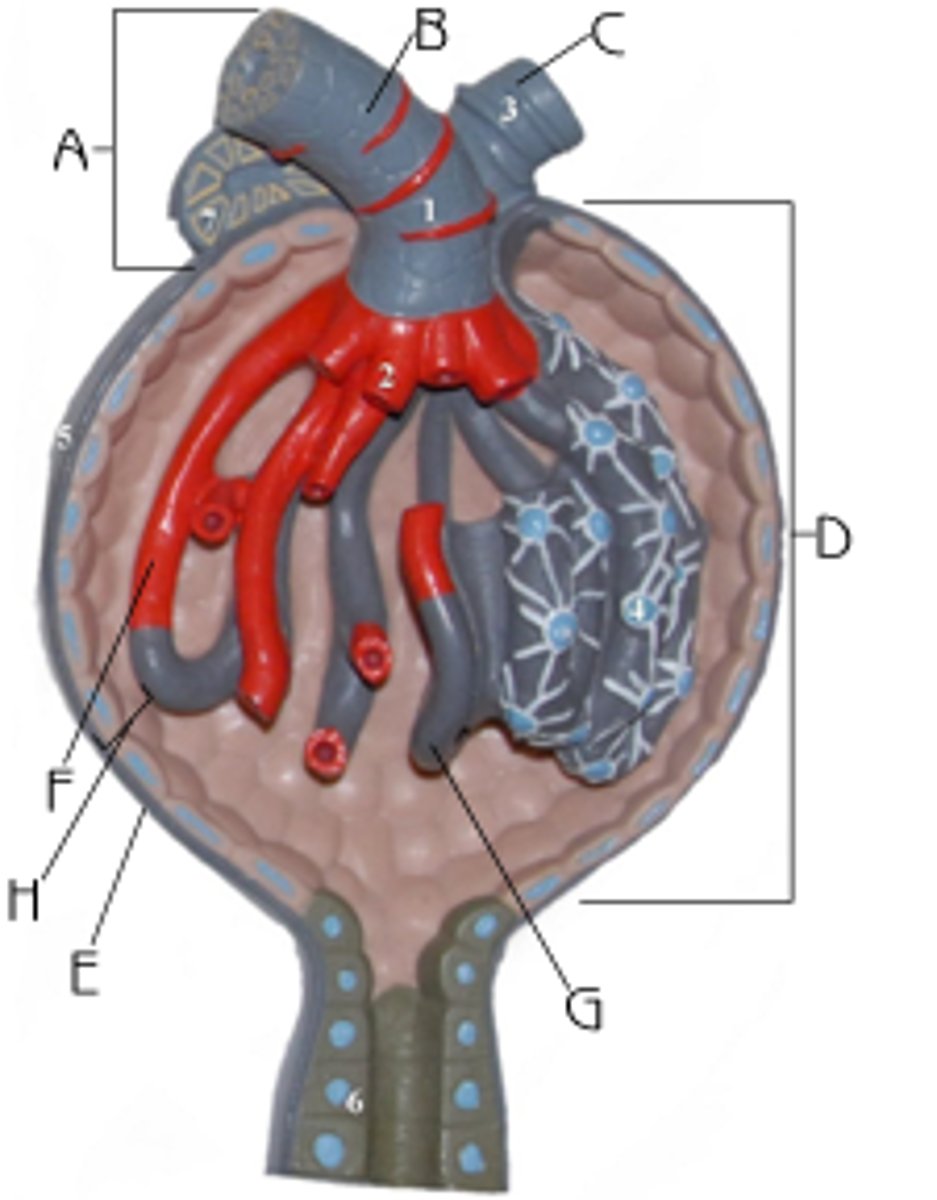
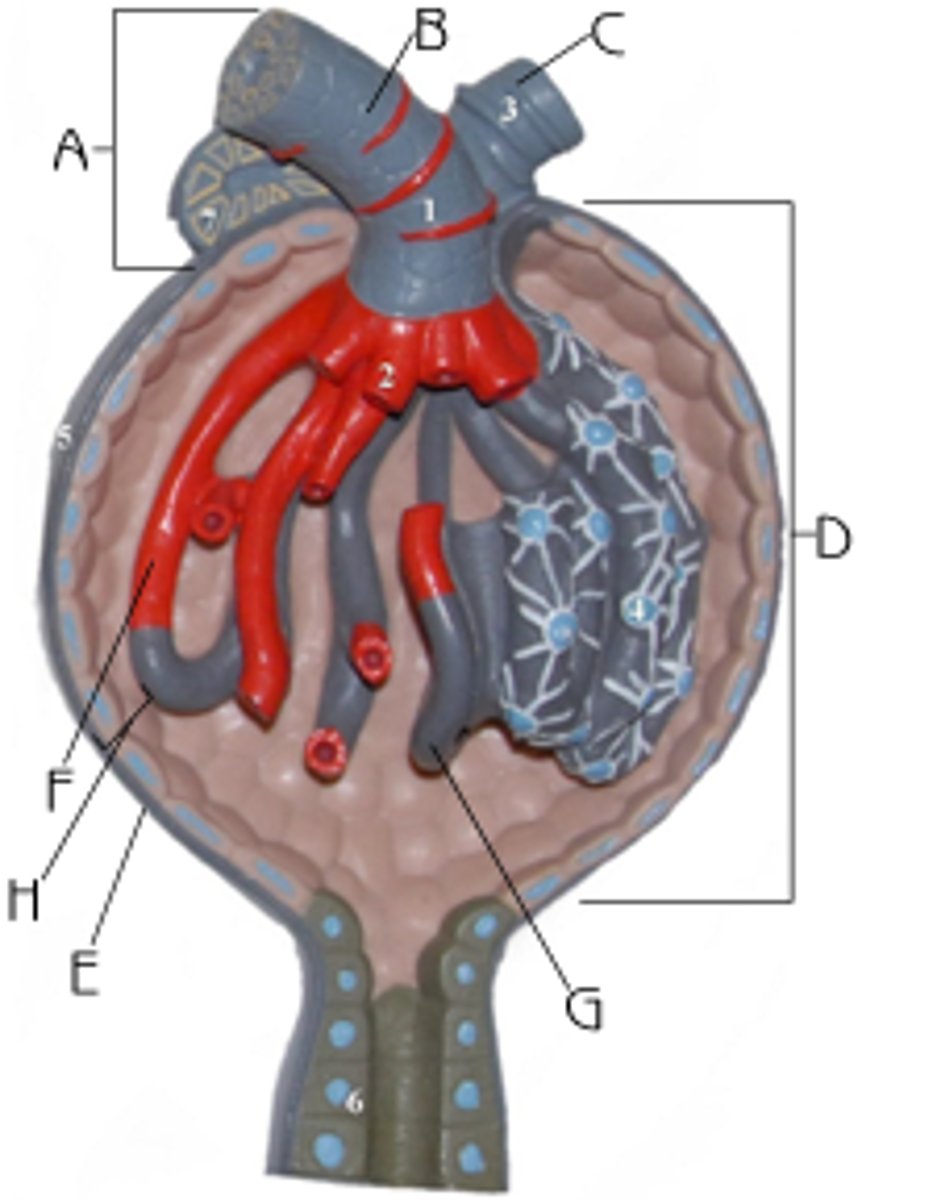
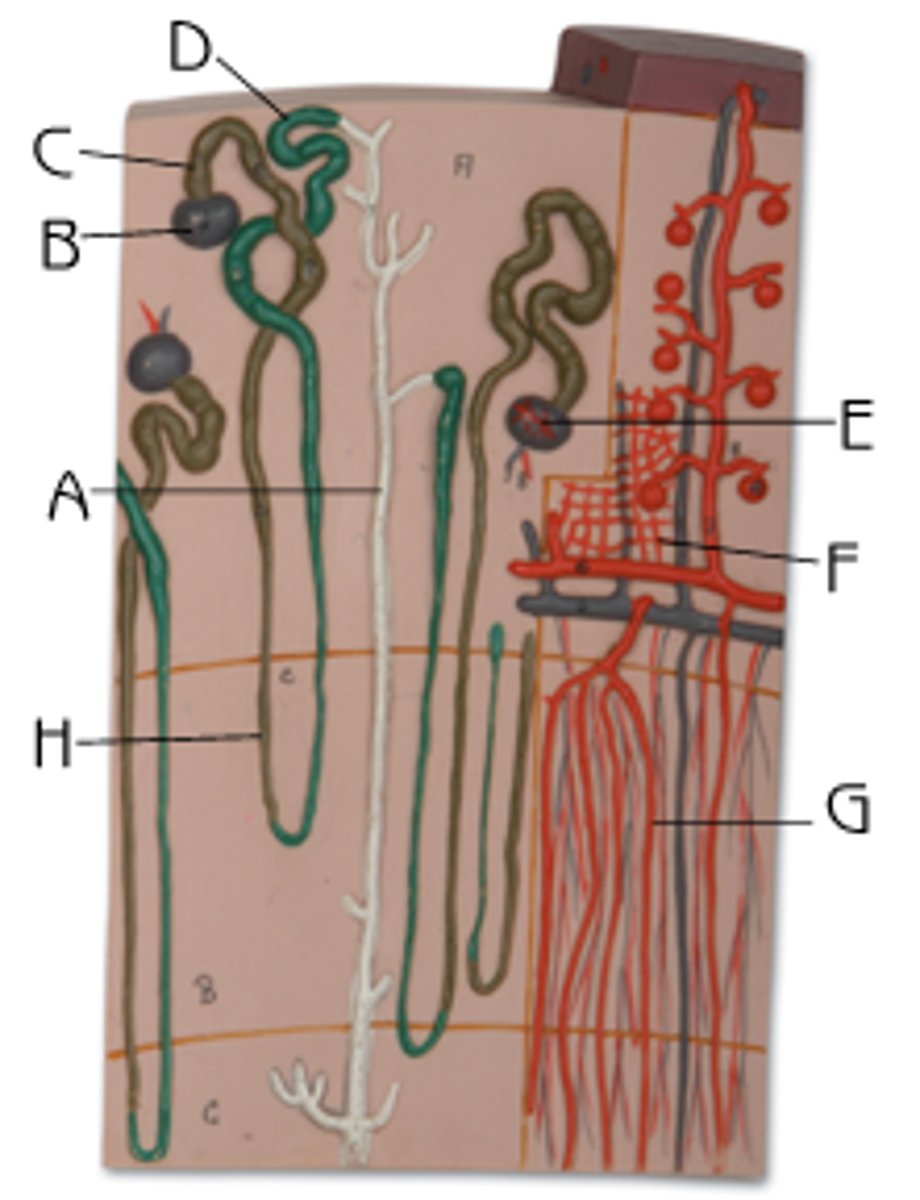
Renal corpuscle
D
Function: contains glomerulus and bowman's capsule; first site of blood filtration
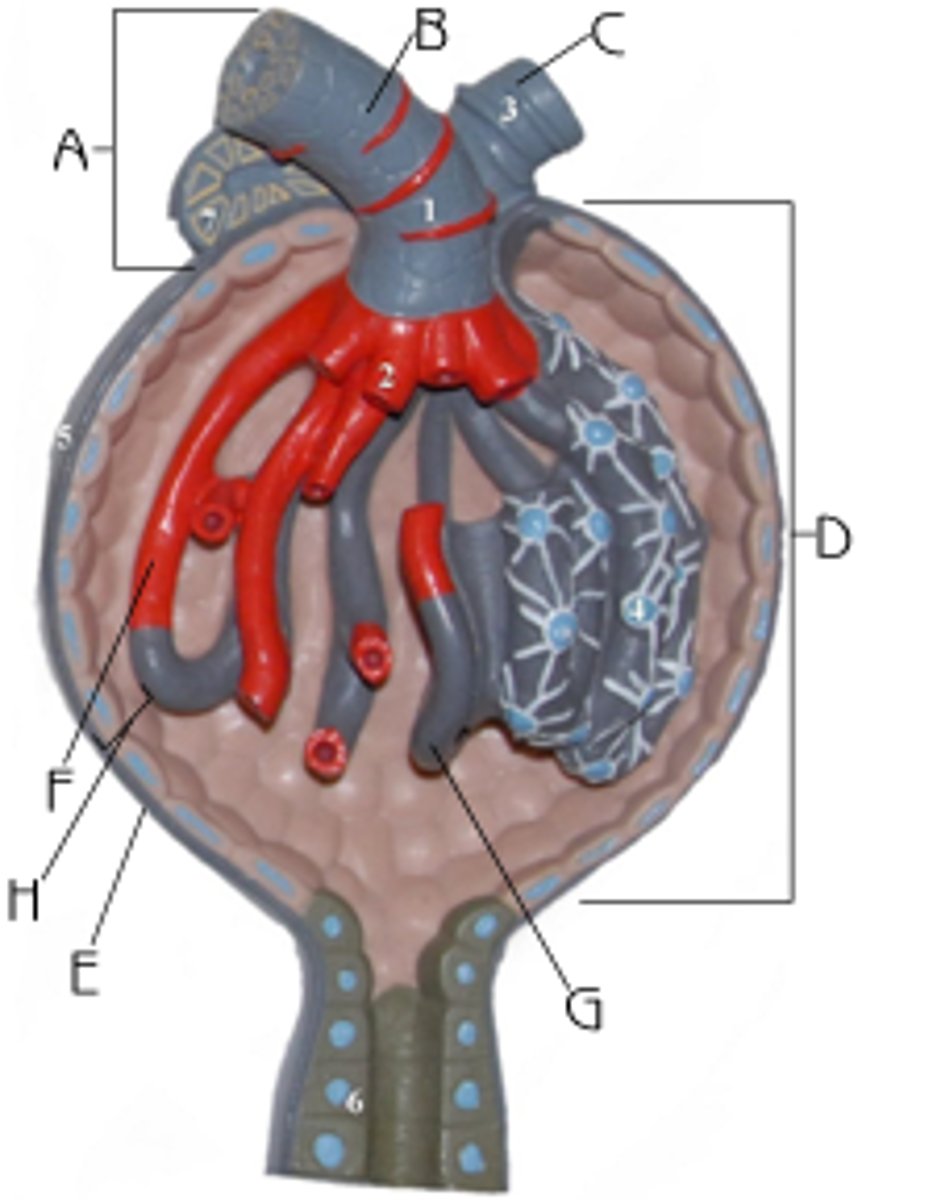
Glomerular capsule (Bowman's capsule)
H
Function: contain filtrate from glomerular capillaries
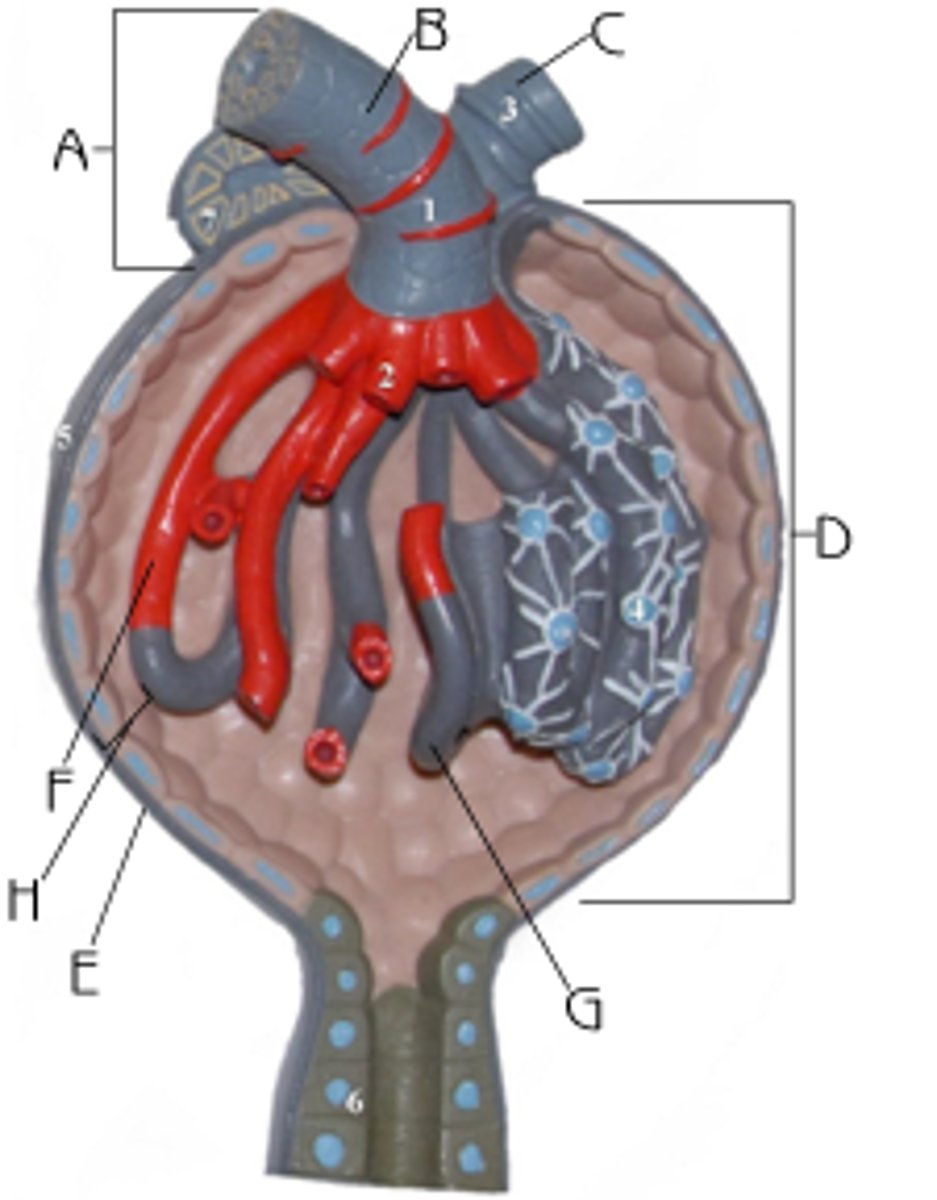
Parietal Layer of Glomerular Capsule
E
Function: outer layer of Glomerular capsule
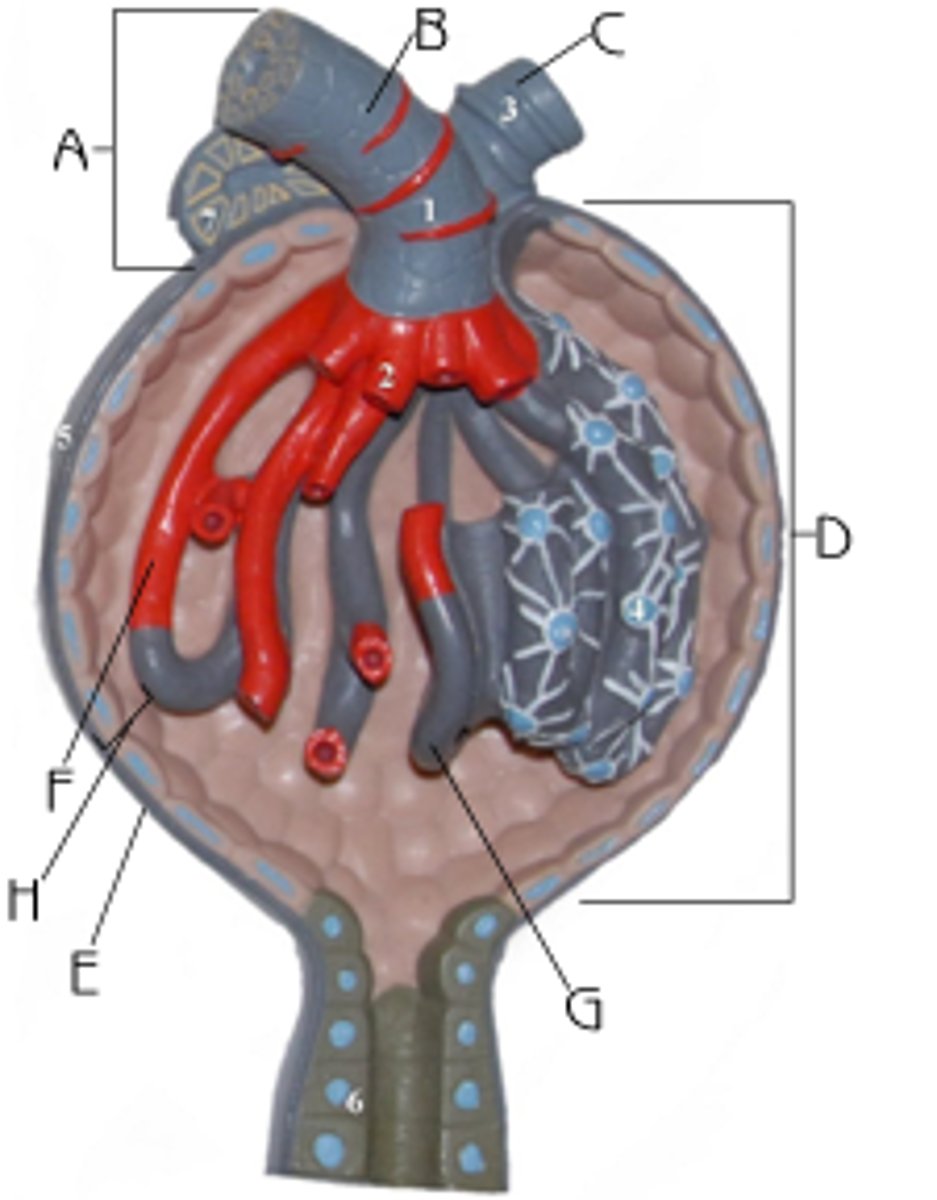
Visceral Layer of Glomerular Capsule
G
Function: cover glomerular capillaries and allow filtrate into Glomerular capsule
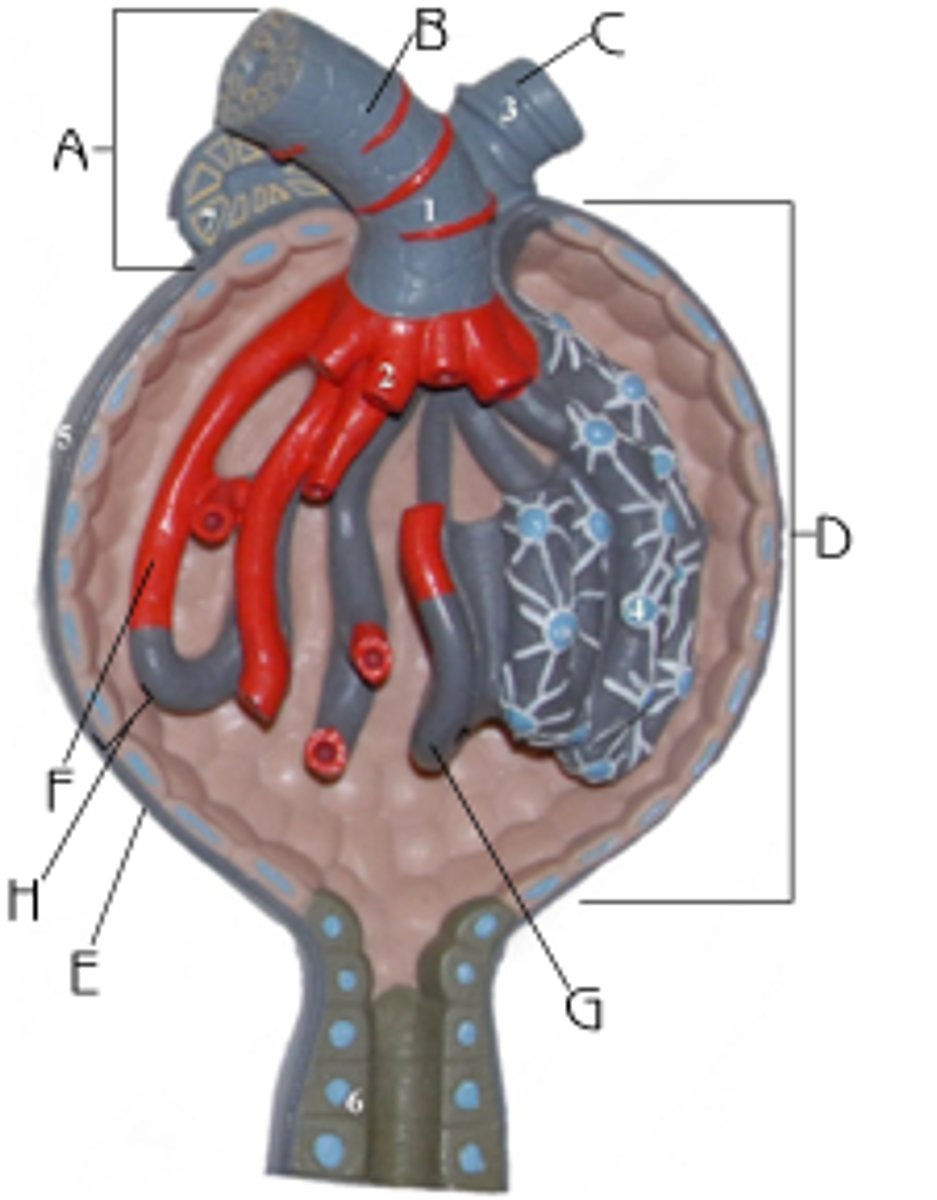
glomerular capillaries
F
Function: bring blood into glomerulus to allow filtrate into Glomerular capsule
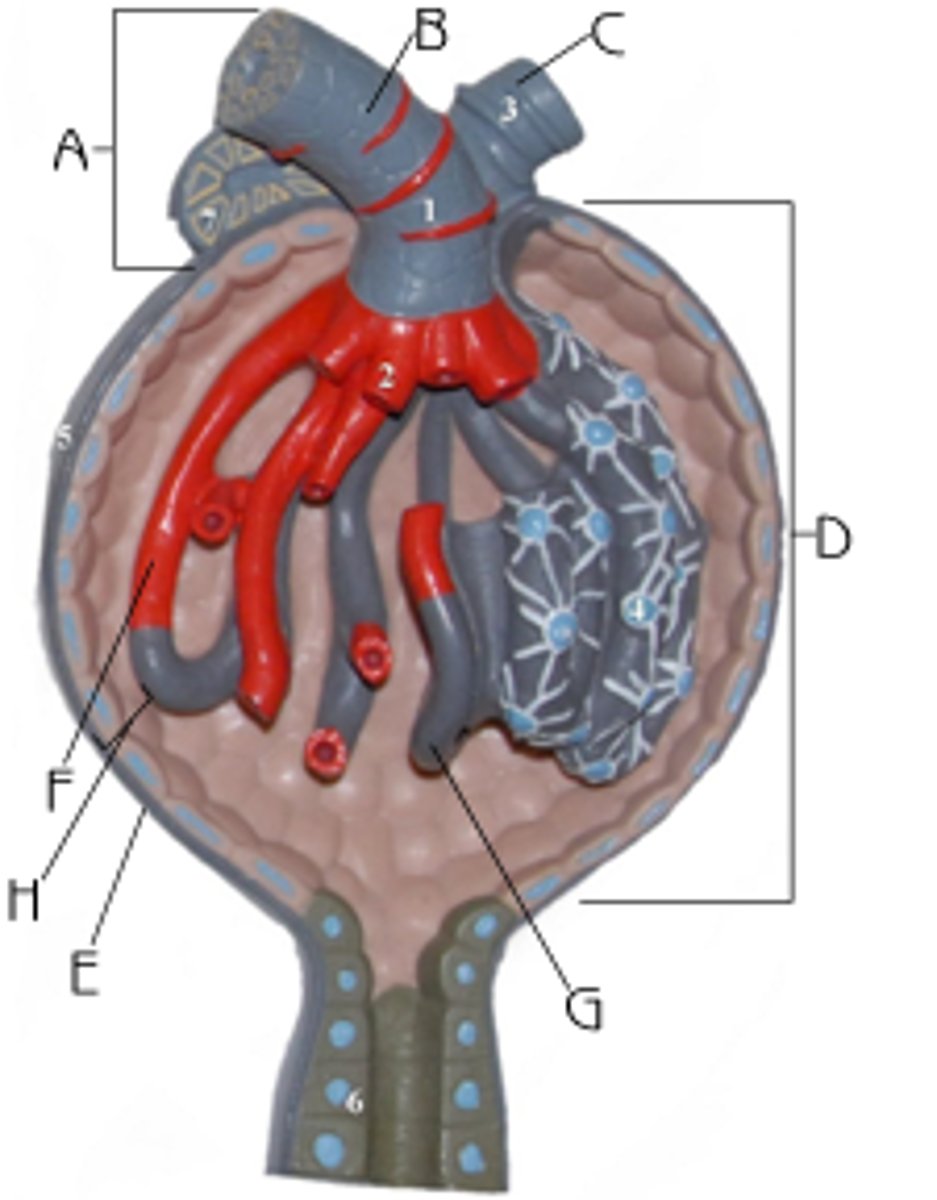
afferent arteriole
B
Function: bring blood into the glomereulus
efferent arteriole
C
Function: Carry blood out of glomerulus
juxtaglomerular apparatus
A
Function: regulates the function of each nephron
proximal convoluted tubule
C
Function: regulates the pH of the filtrate by exchanging hydrogen ions in the interstitium for bicarbonate ions in the filtrate; responsible for secreting organic acids, such as creatinine and other bases, into the filtrate
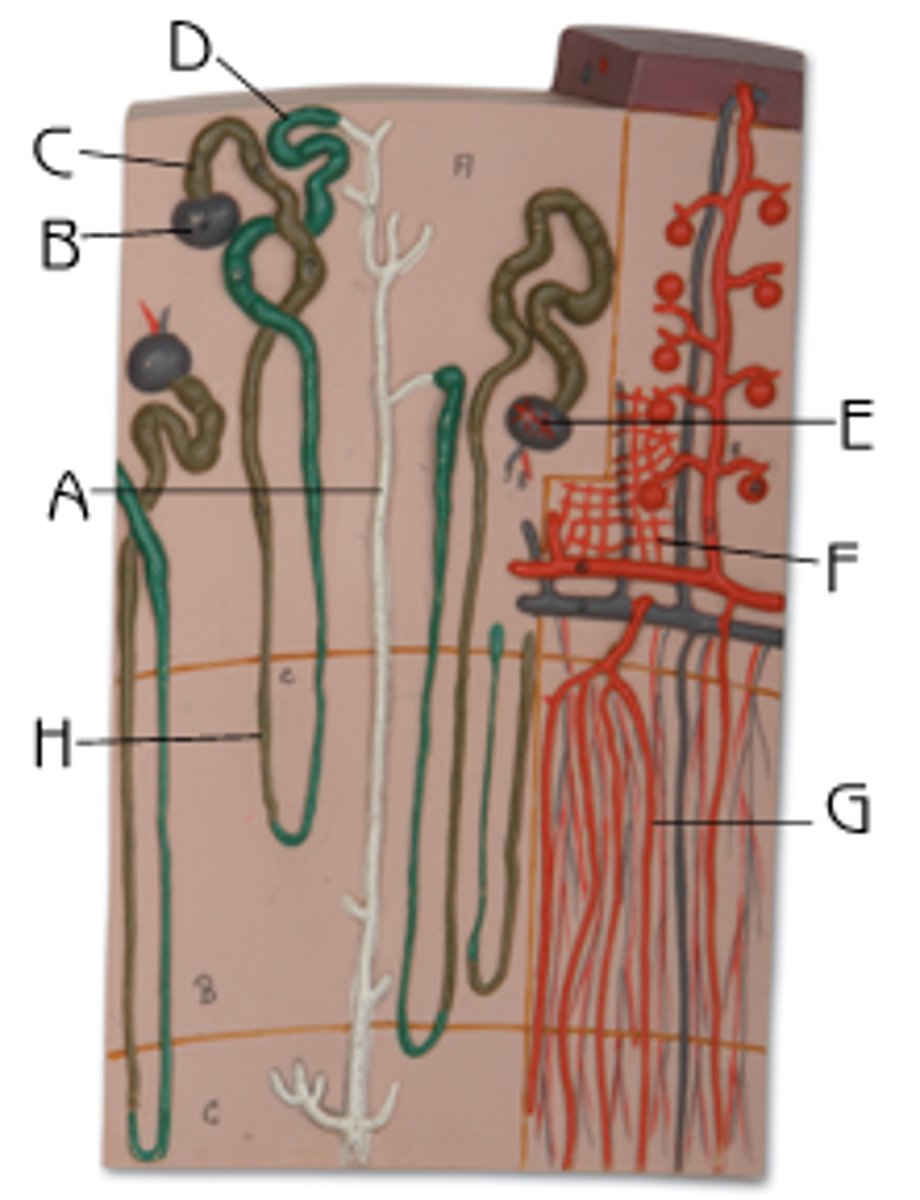
loop of Henle
H
Function:to create a concentration gradient in the medulla of the kidney
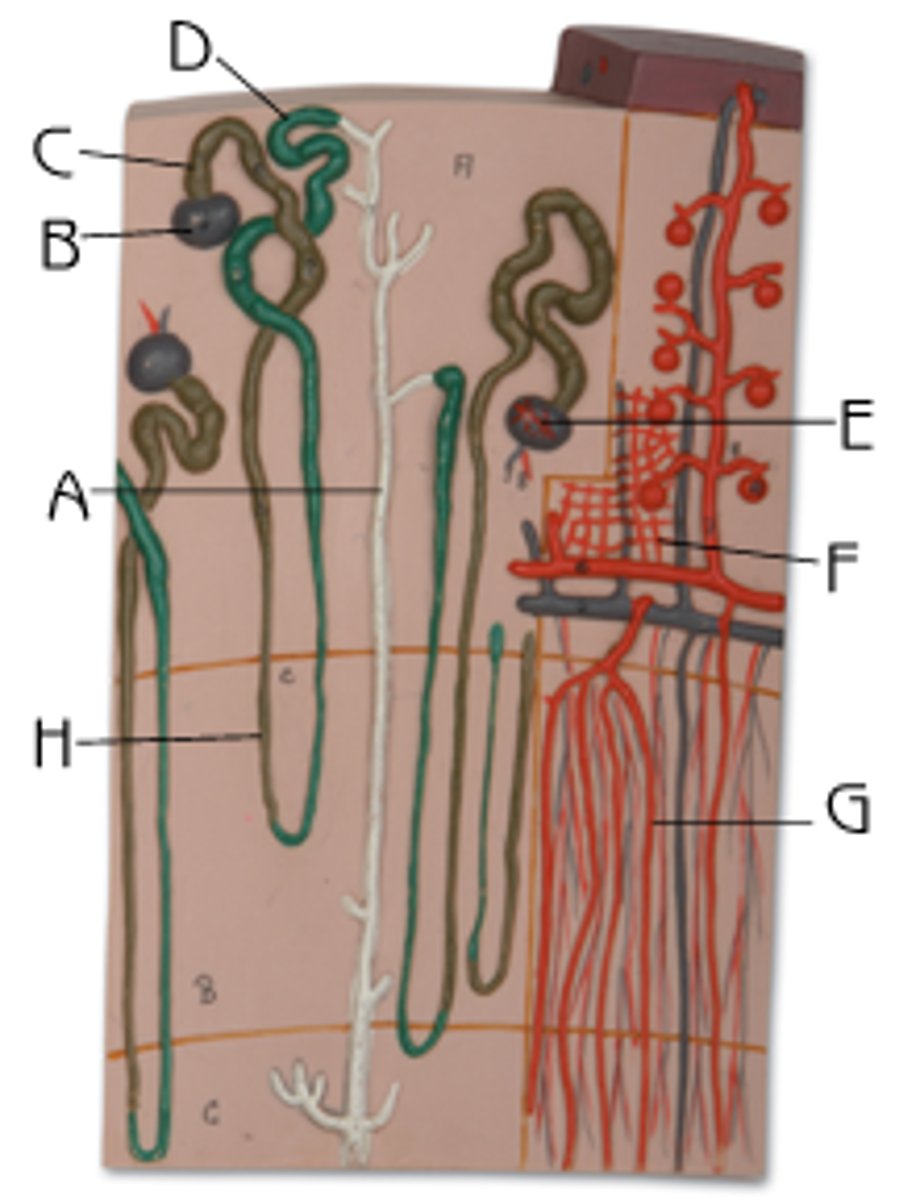
distal convoluted tubule
D
Function: acts as a site for selective secretion and reabsorption as water and ions pass between the blood and the filtrate across the tubule membrane
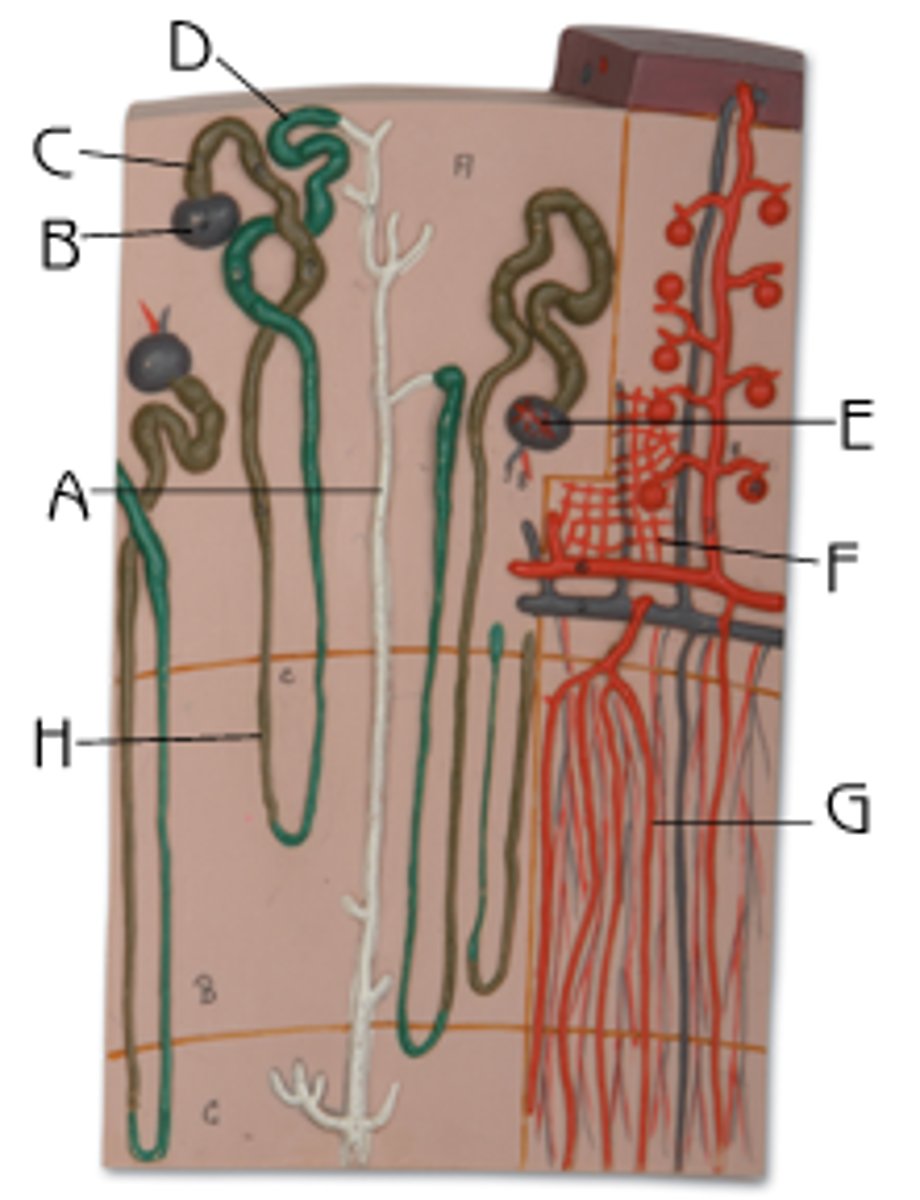
Collecting tubule
A
Function: to collect urine from distal convoluted tubule of nephron
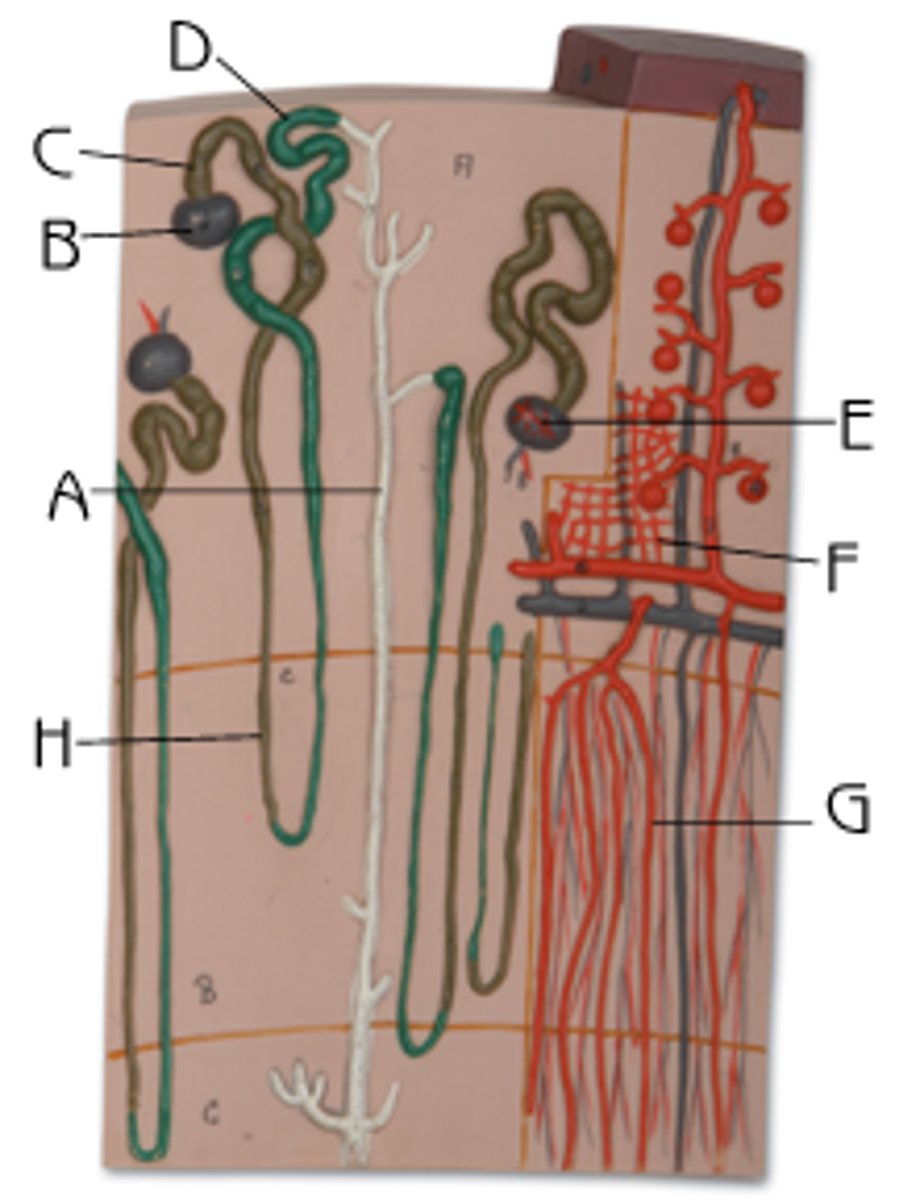
peritubular capillaries
F
Function: supply the blood for reabsorption and secretion in medulla of kidneys
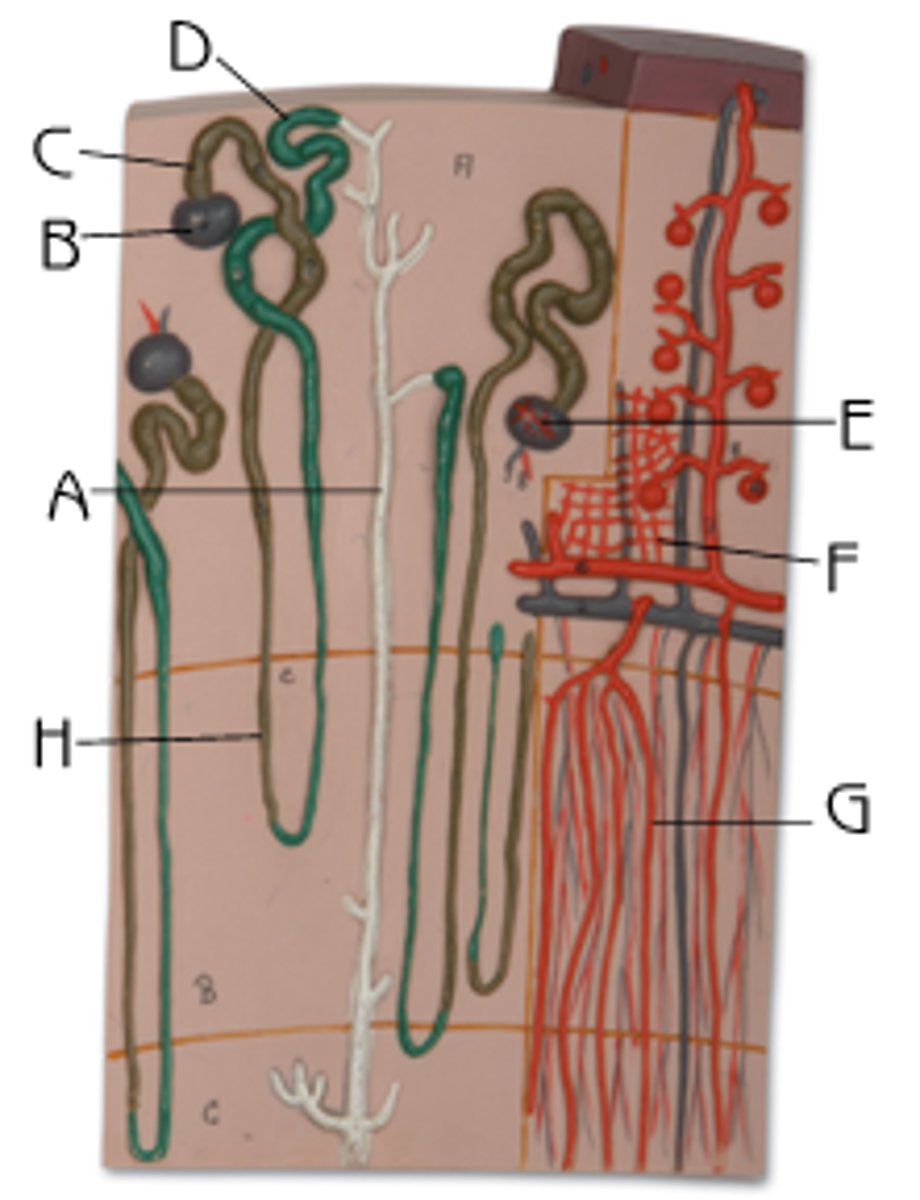
Vasa Recta
G
Location: surround the loop of Henle in a nephron
Function: maintenance of countercurrent exchange that prevent washout of the concentration gradients established in the renal medulla
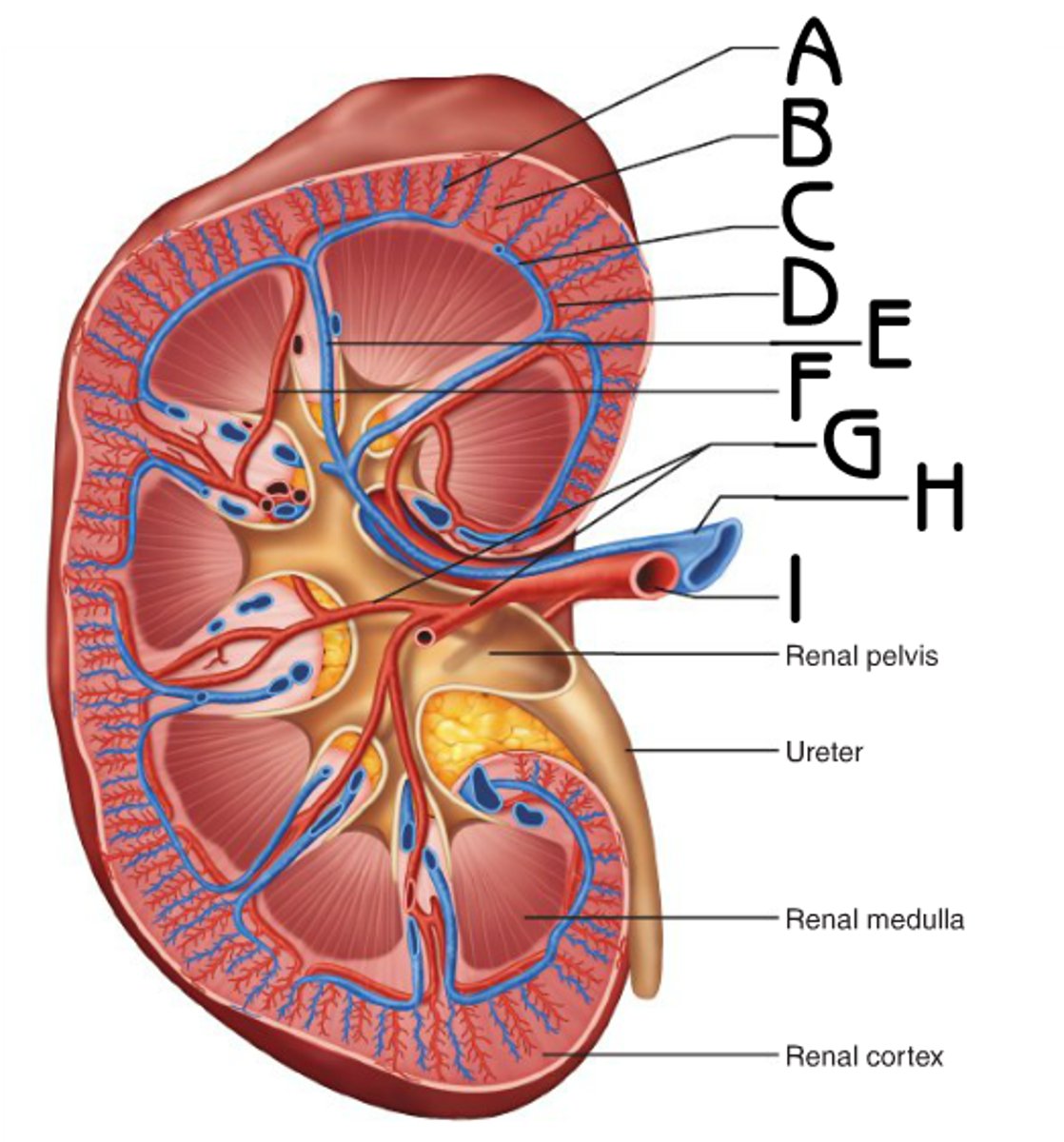
Cortical radiate vein
A
Function: take deoxygenated blood from peritubular capillaries/vasa recta
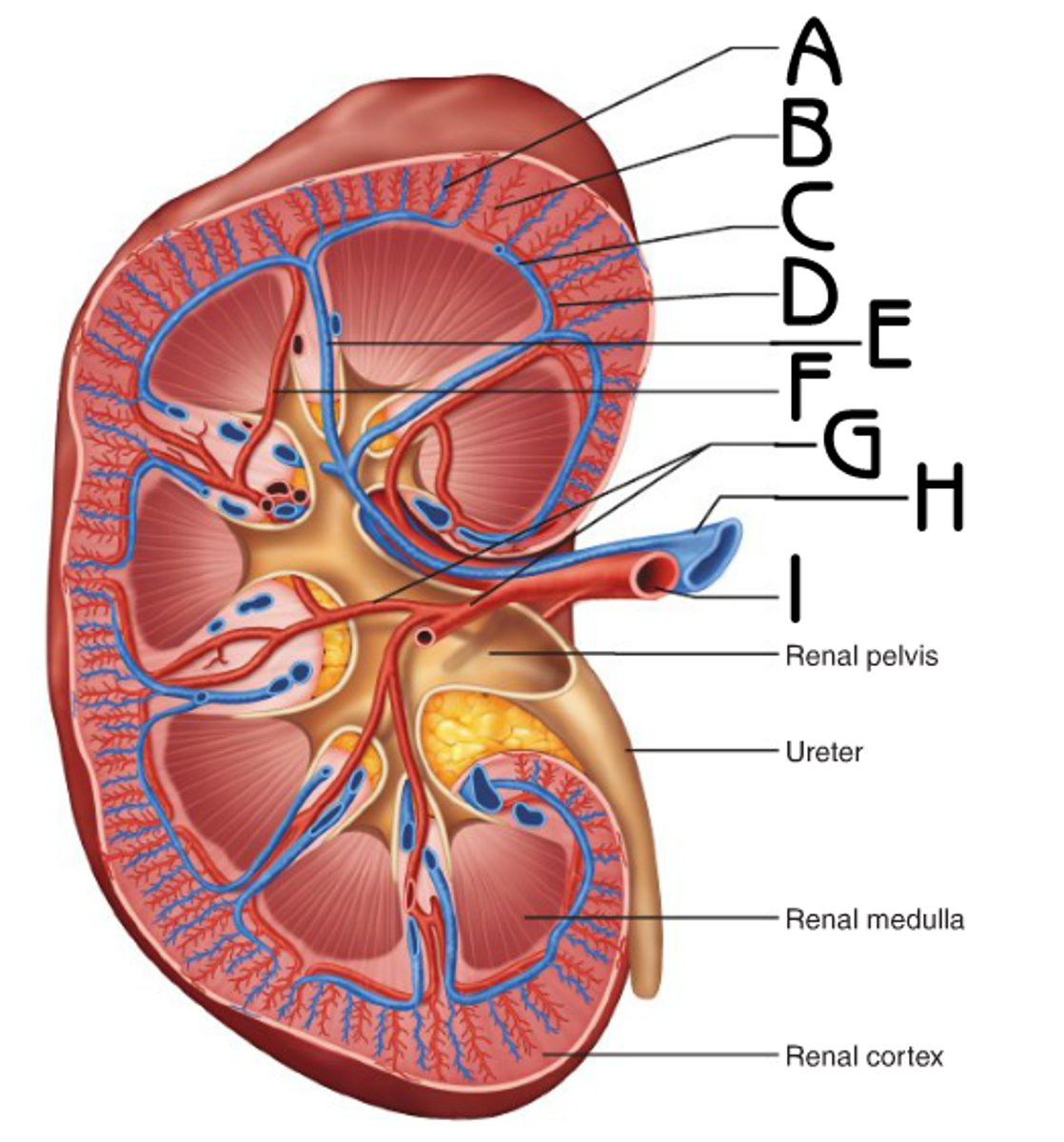
Cortical radiate artery
B
Function: take blood to afferent arteriole that enters glomerulus
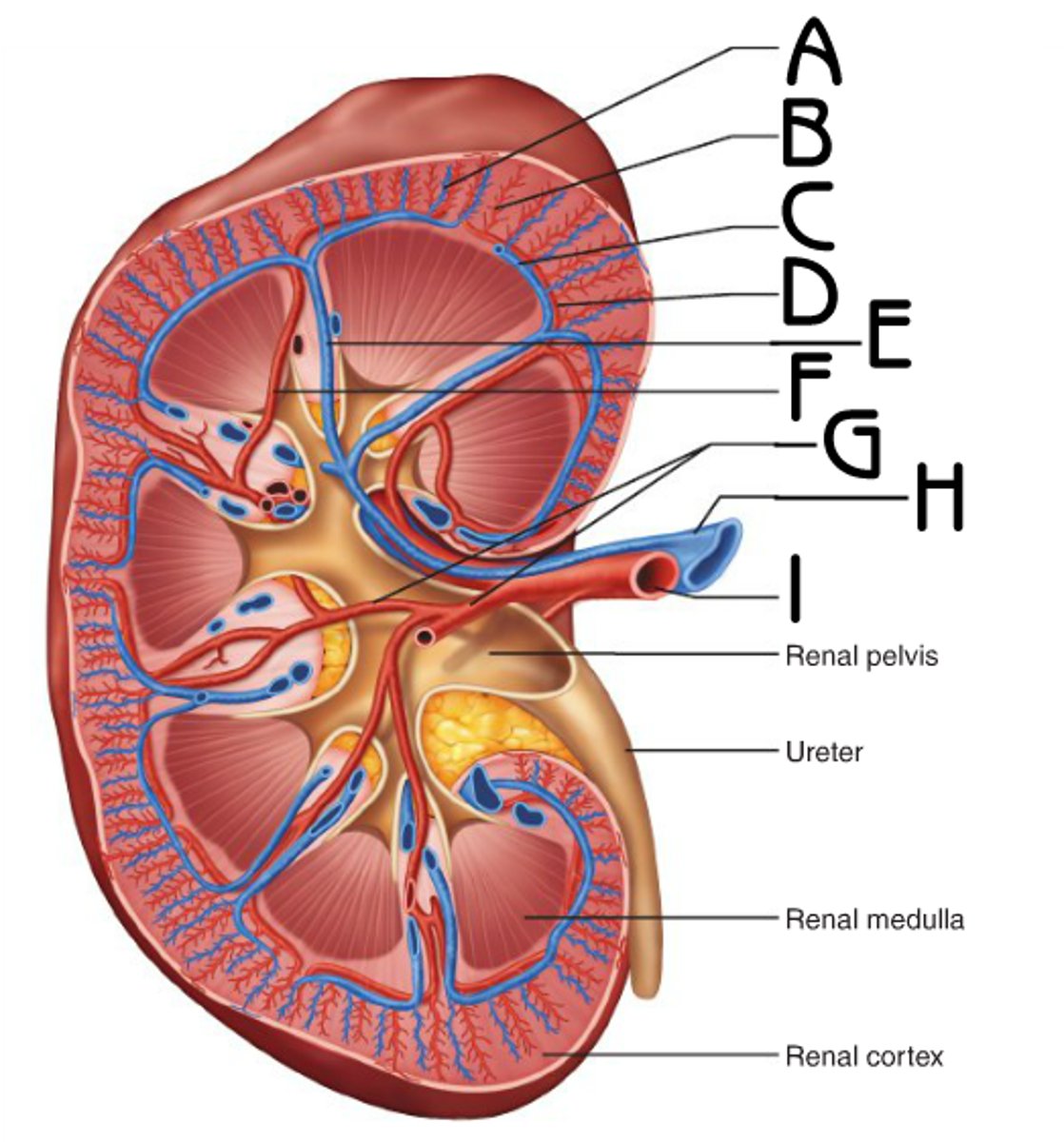
Arcuate vein
C
Function: take deoxygenated blood from cortical radiate vein and convey it to interlobar vein
Arcuate Artery
D
Function: take oxygenated blood from interlobar artery to the cortical radiate artery
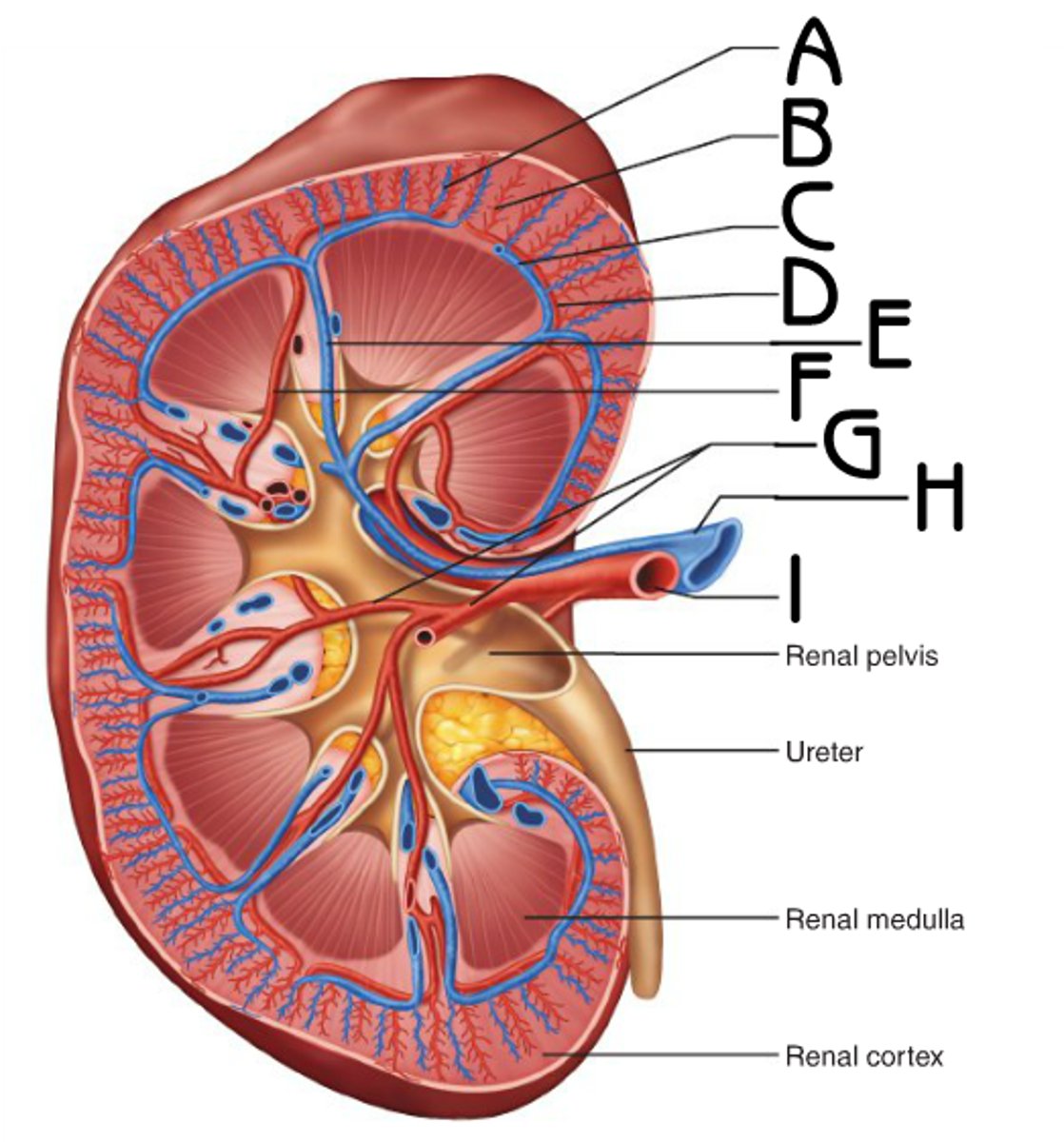
Interlobar vein
E
Function: move deoxygenated blood from arcuate vein to renal vein
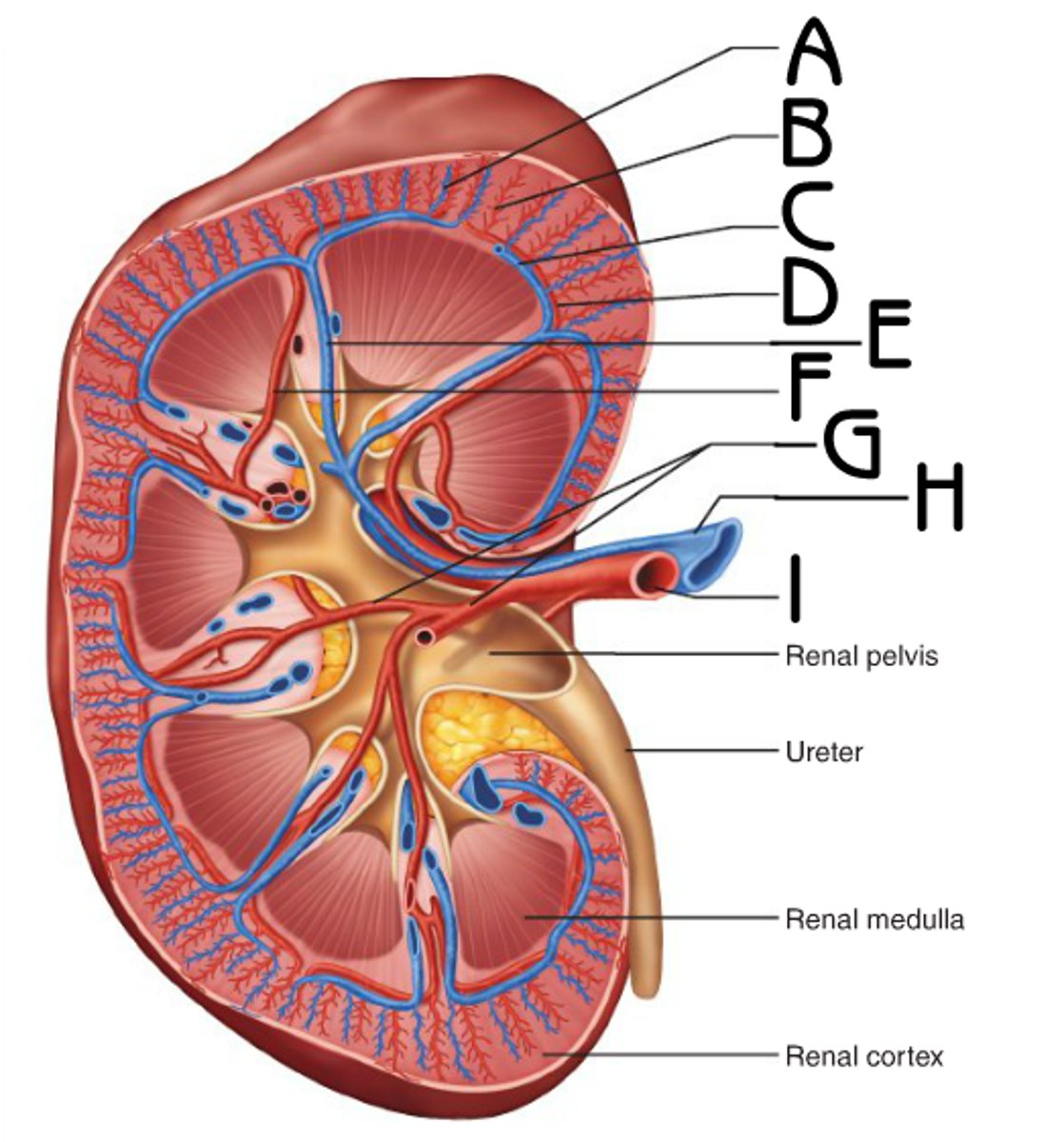
Interlobar artery
F
Function: move oxygenated blood from segmental artery to arcuate artery
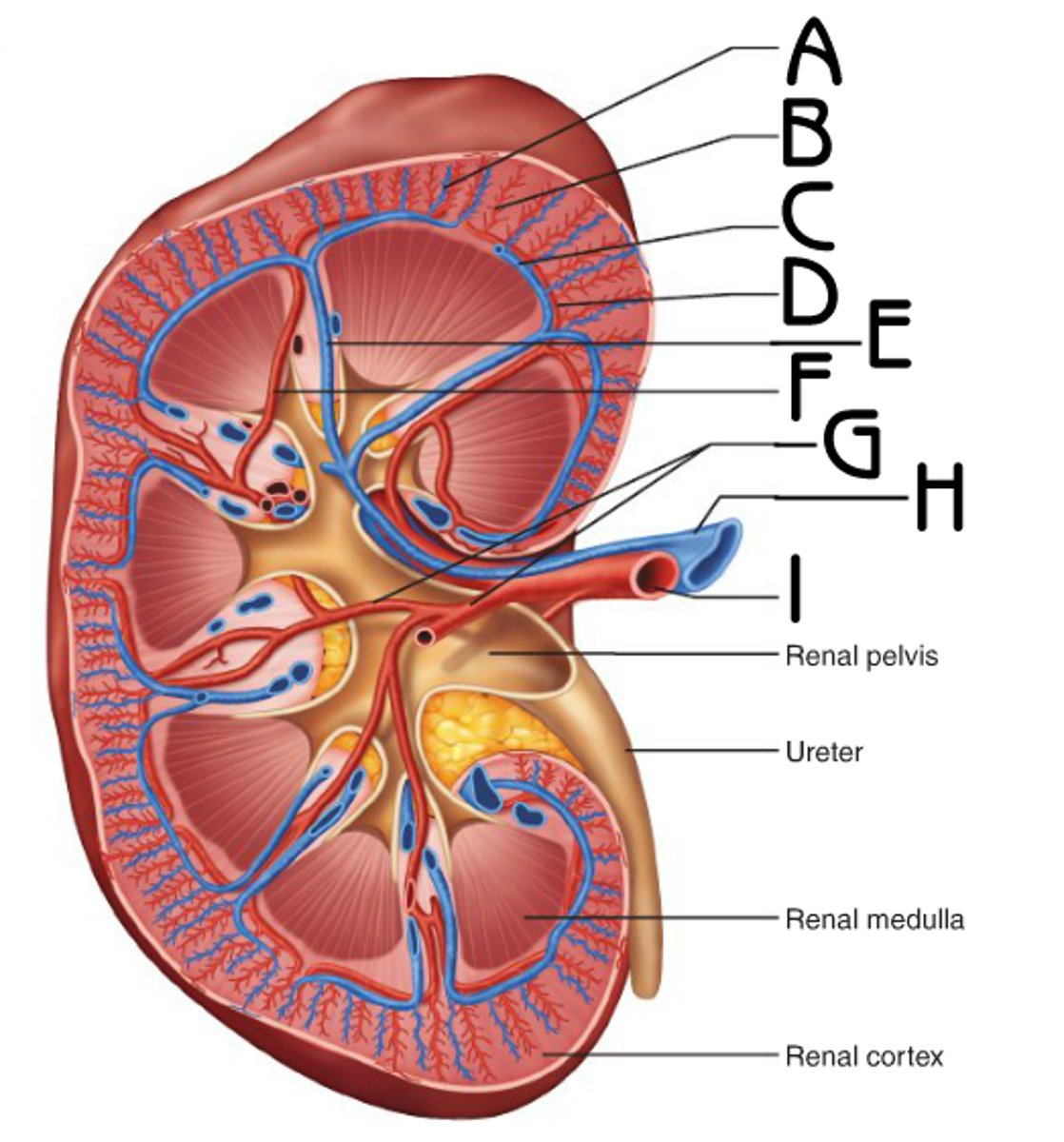
Segmental Artery
G
Function: move blood from renal artery to interlobar artery
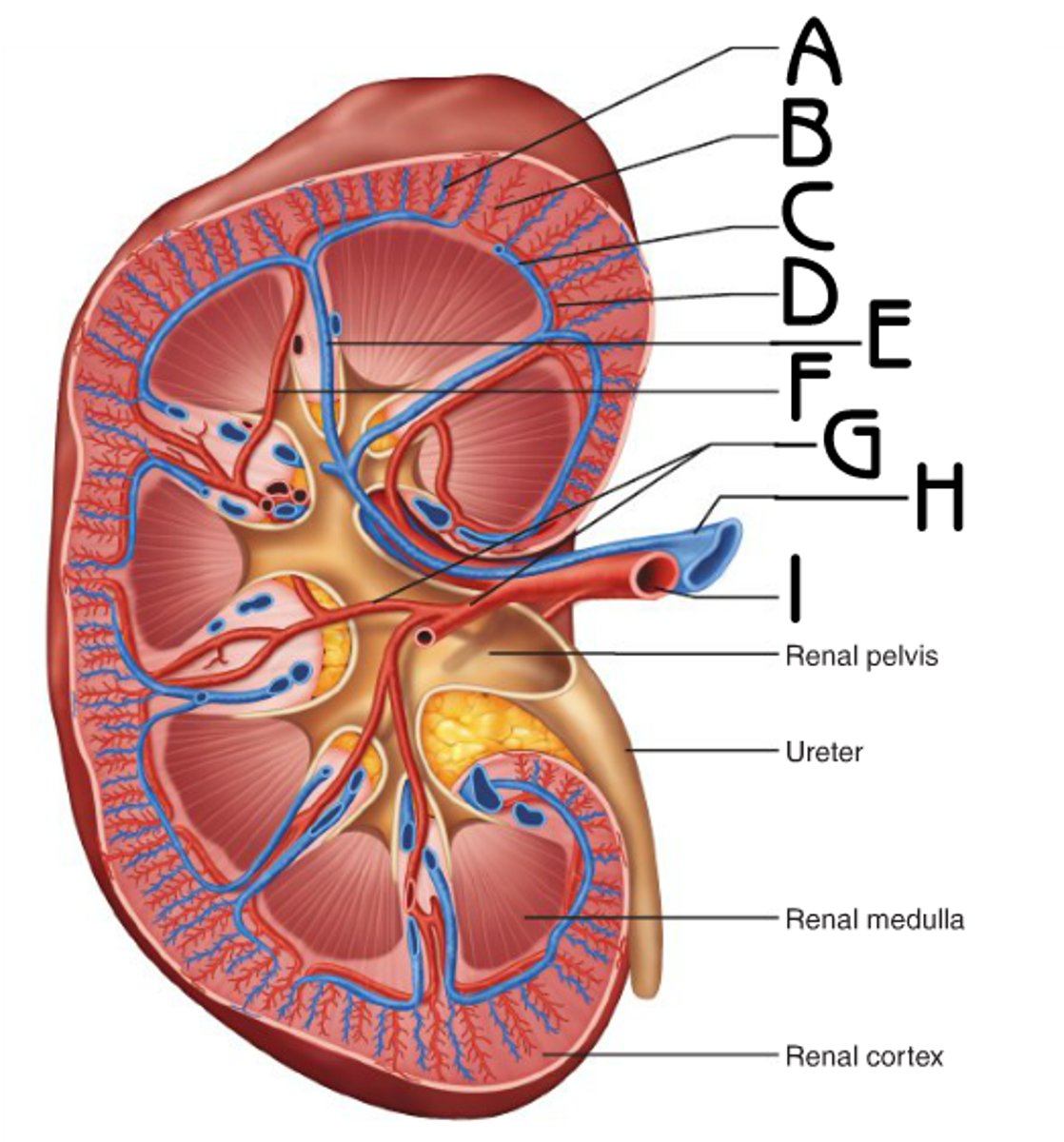
Renal vein
H
Function: moves deoxygenated blood from interlobar vein to inferior vena cava
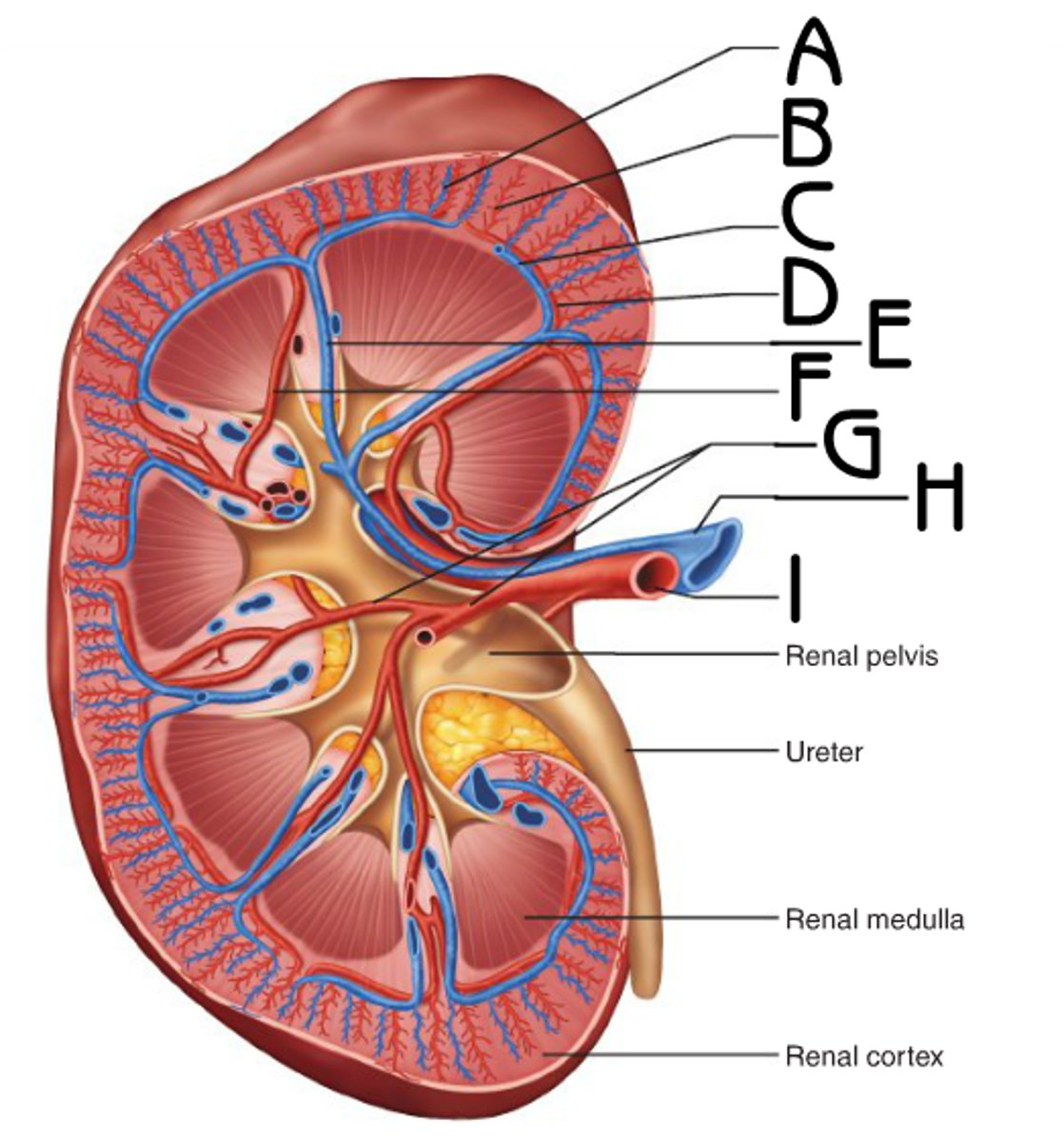
Renal Artery
I
Function: move oxygenated blood from abdominal aorta to the segmental arteries