1. Language and Literacy (C. Reading: Literature and Informational Text
 Call Kai
 Learn
Learn Practice Test
 Spaced Repetition
 Match
Match Flashcards
 Knowt Play
1/55

There's no tags or description
Looks like no tags are added yet.
Name | Mastery | Learn | Test | Matching | Spaced | Call with Kai |
|---|
No analytics yet
Send a link to your students to track their progress
56 Terms
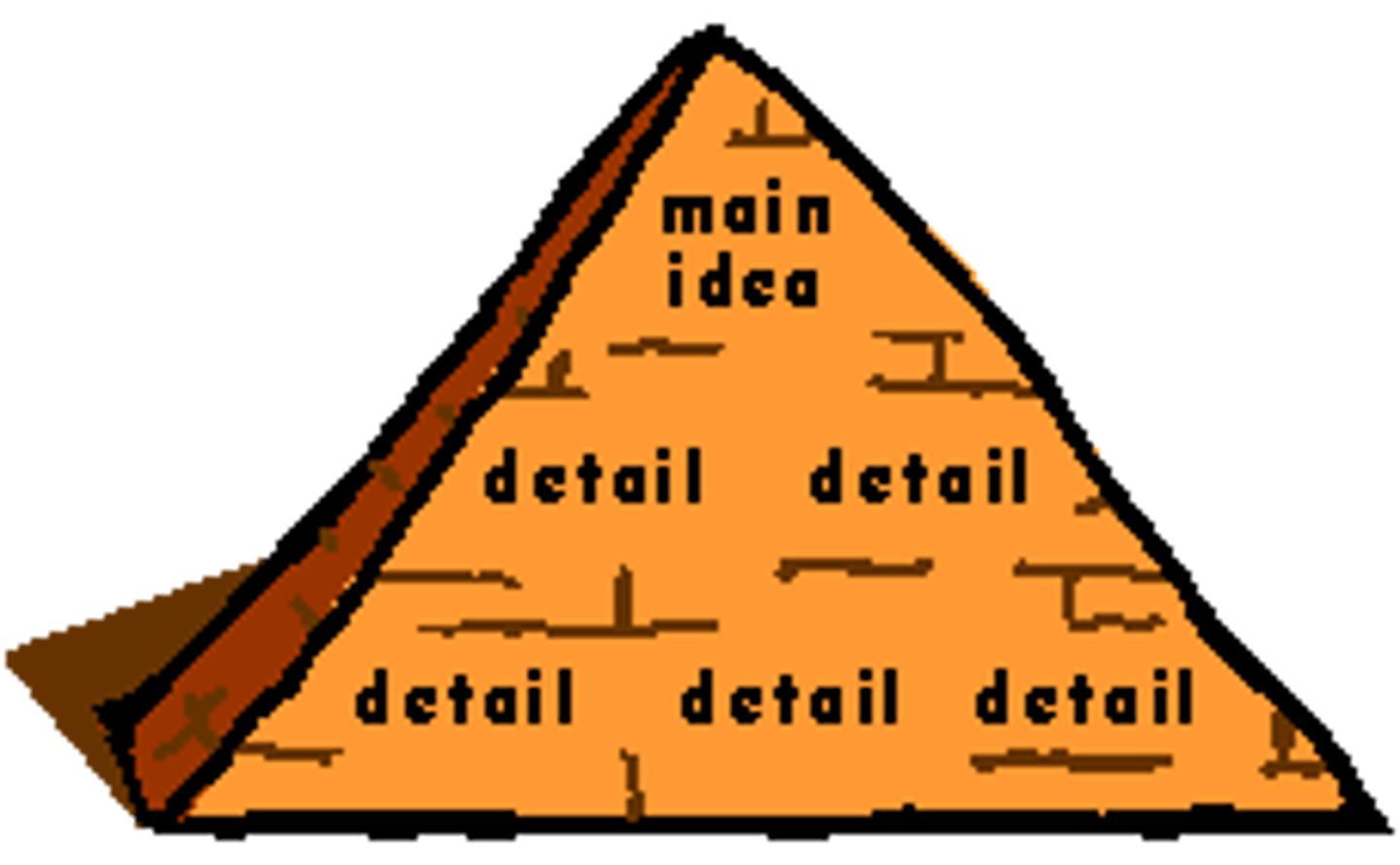
Central idea
The student can identify the story's overarching viewpoint or idea and then supports that idea with details throughout the text.
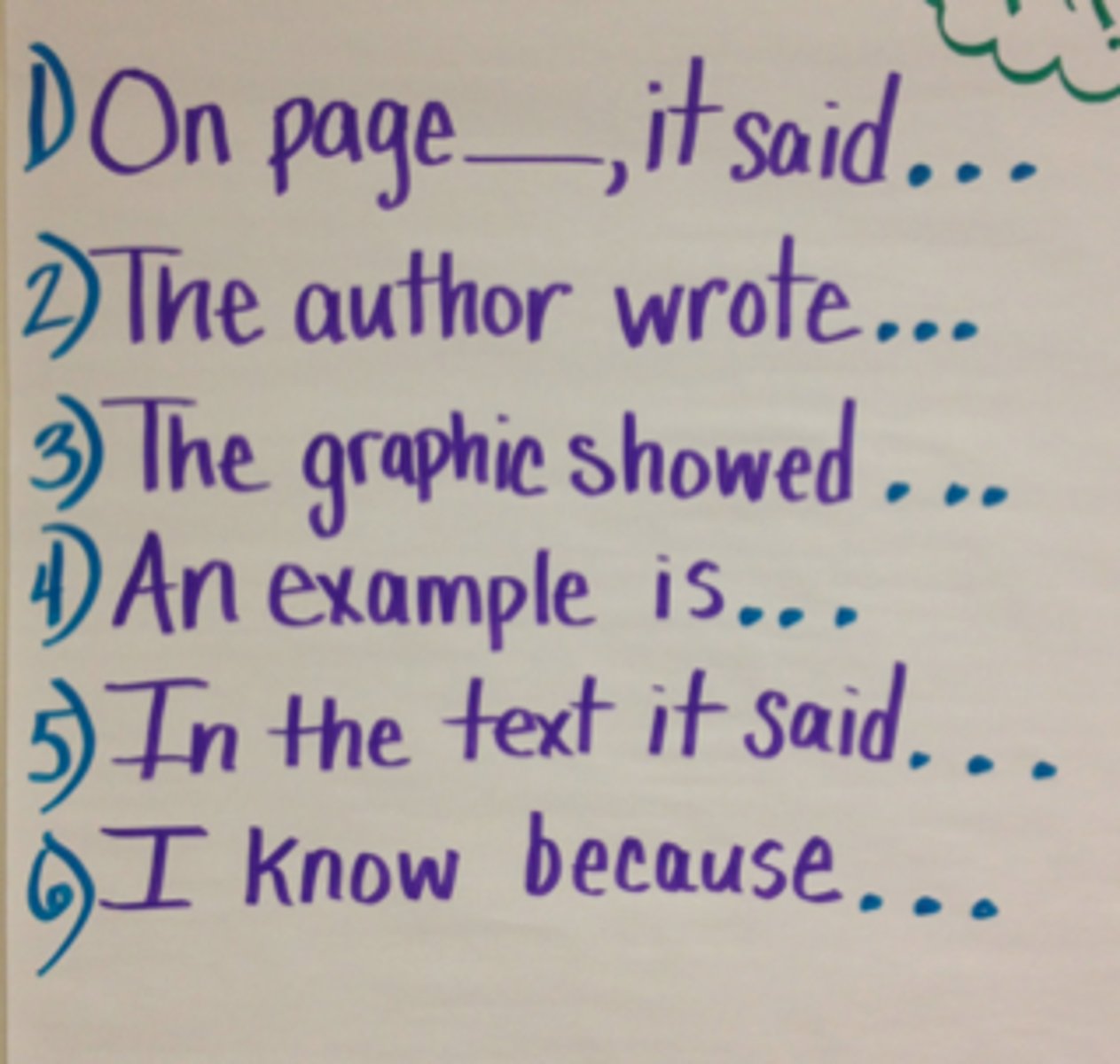
Supporting details and facts
The student can identify words or phrases that help the reader answer questions about the text. The student evaluates key details by asking questions like who, what, where, when, and why.
Author's purpose
The student can evaluate why the author would write the story (e.g. to inform, persuade, or describe).
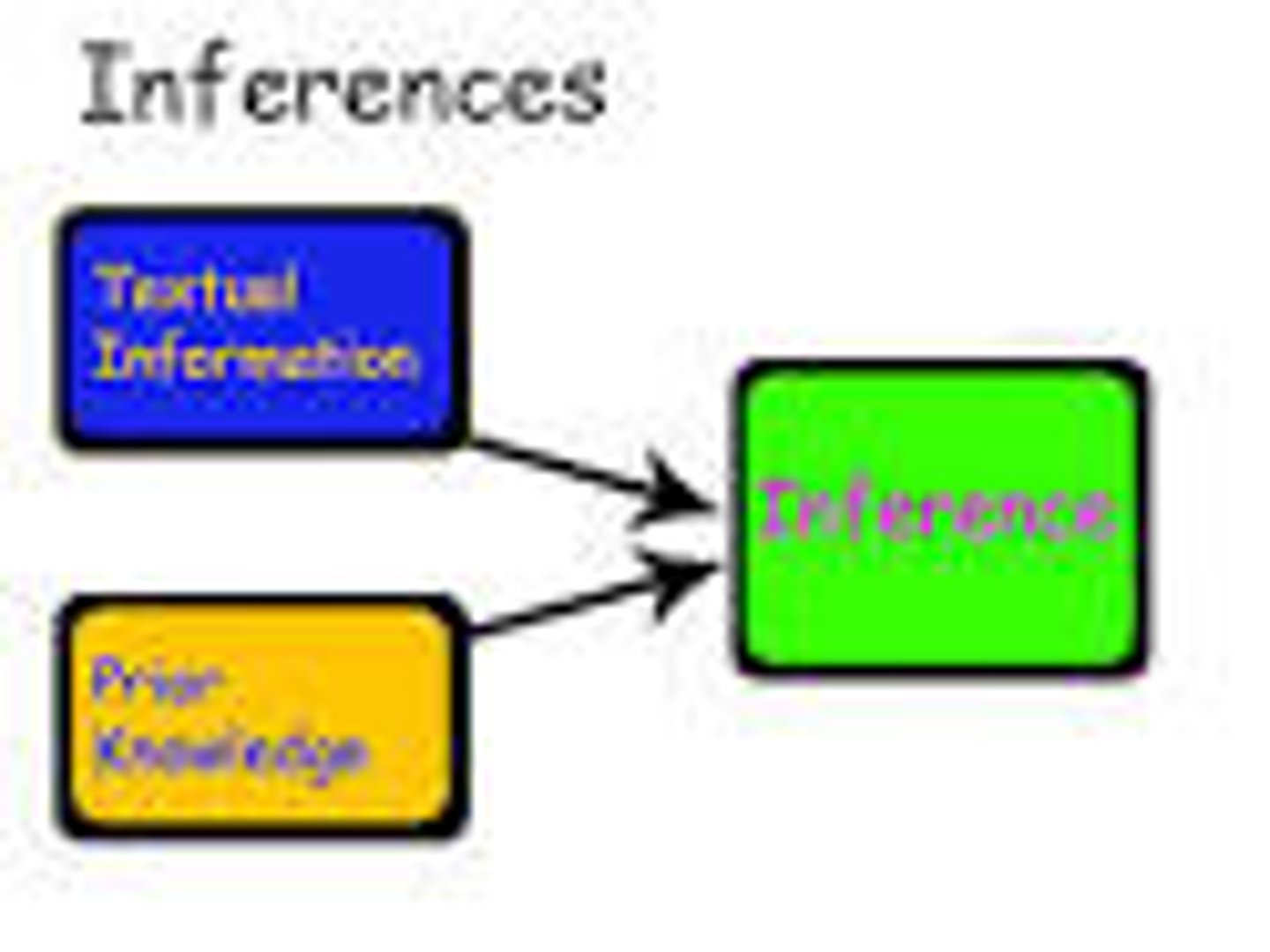
Inference
The student can reach a conclusion on the basis of evidence and reasoning.
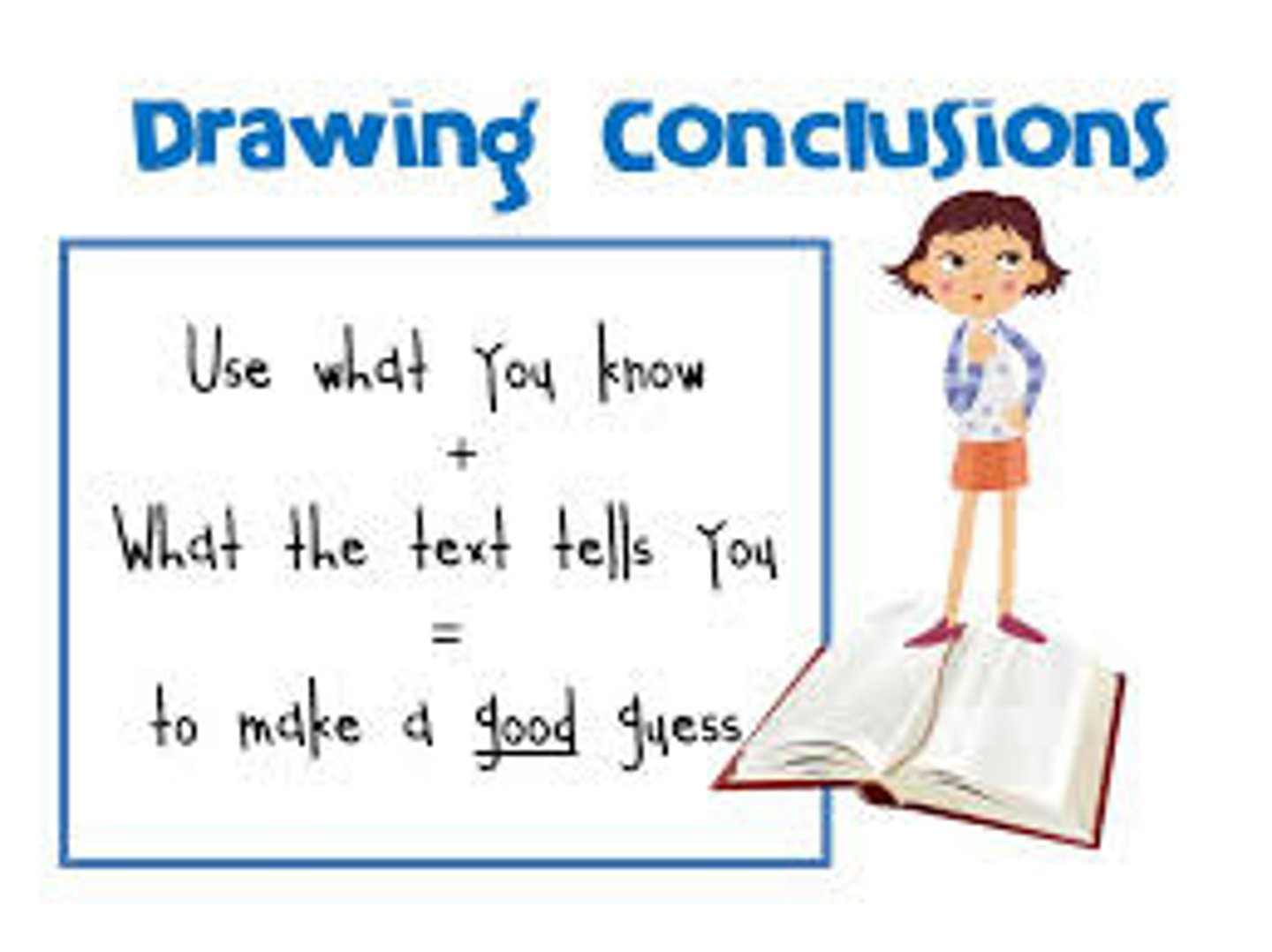
Conclusion
The ending of a story or essay that summarizes the overall meaning or purpose of the text.
Point of view
The student can understand the perspective through which the story is told.
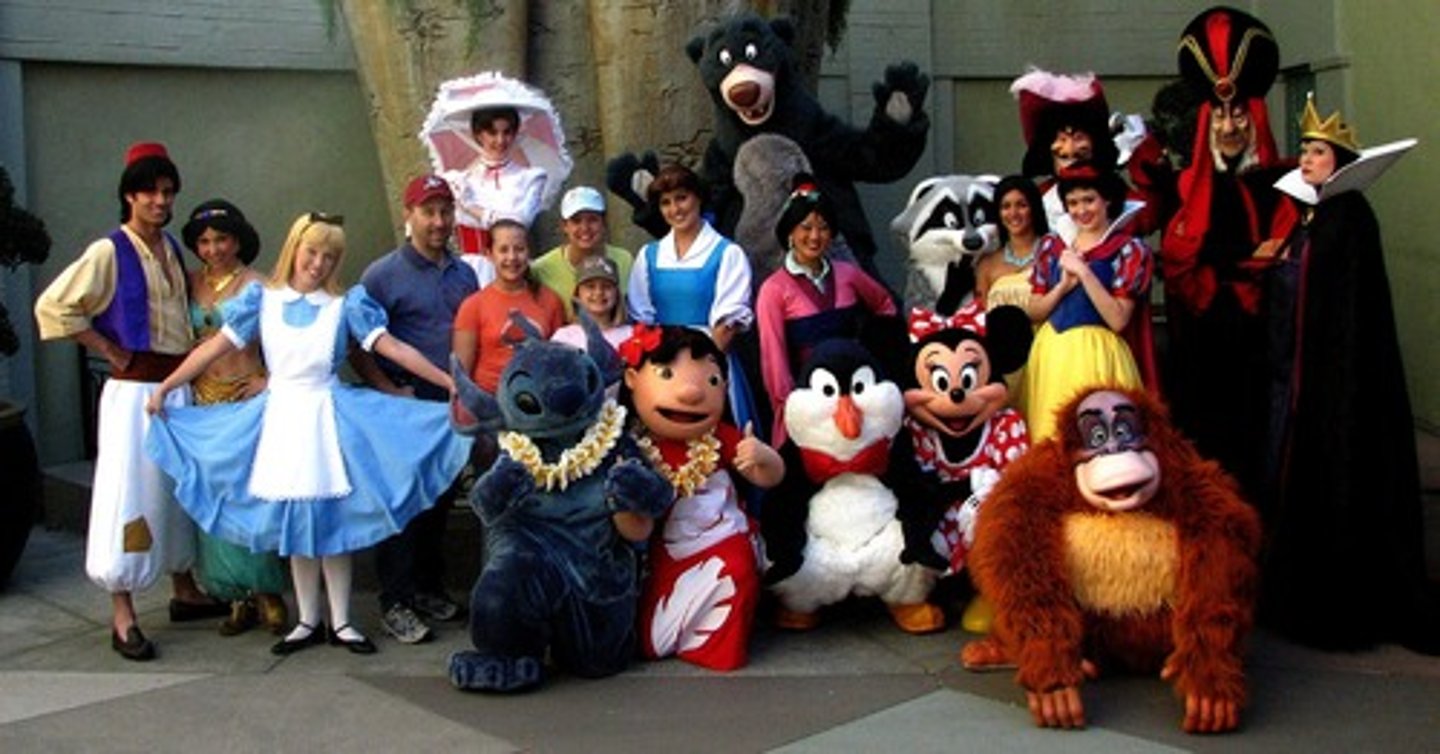
Characters
Who the story is about. The characters in the story can be humans, animals, or even fictional creatures depending on the type of text. Understanding the characters will help with determining important components of the story.
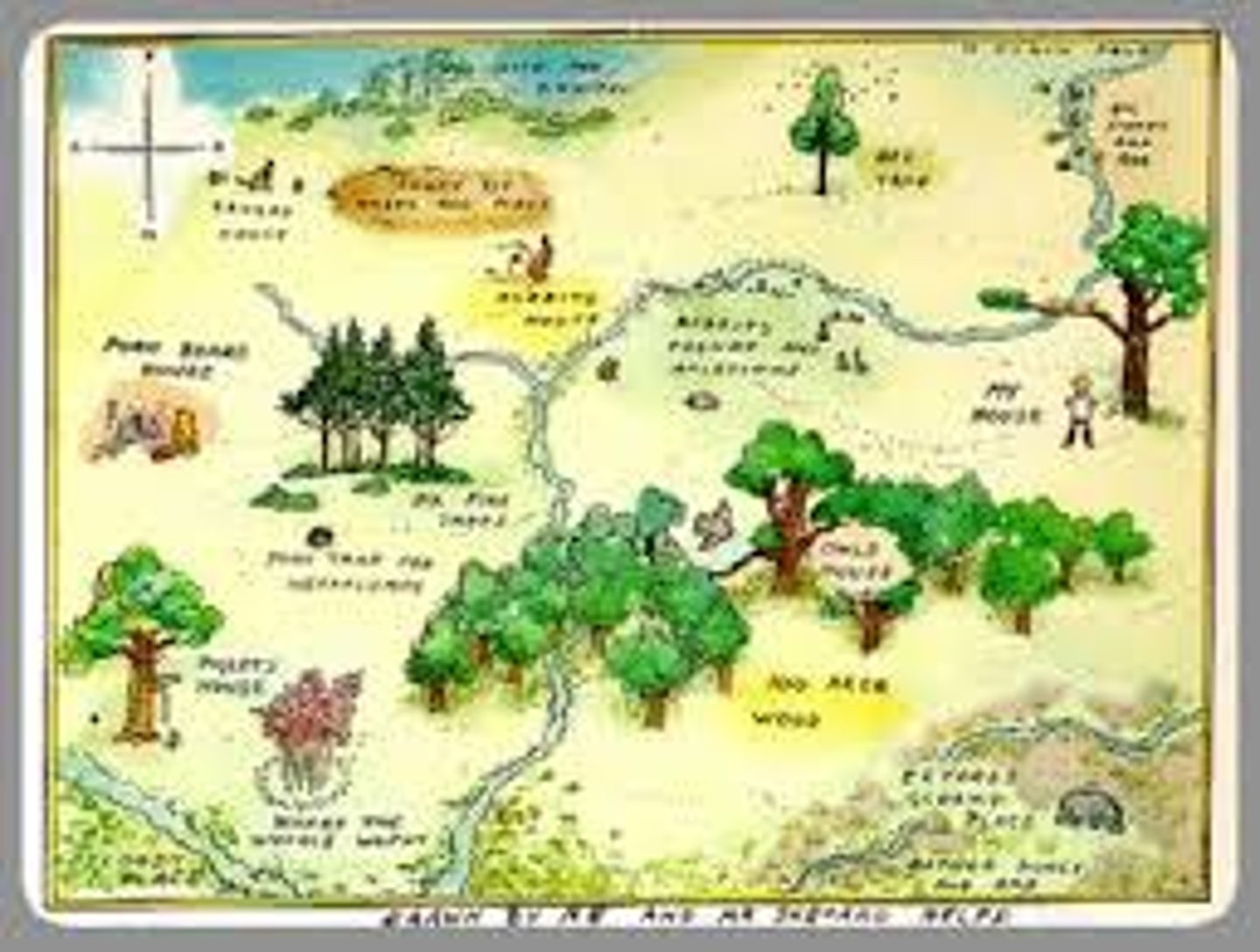
Setting
The place and time the story is taking place.
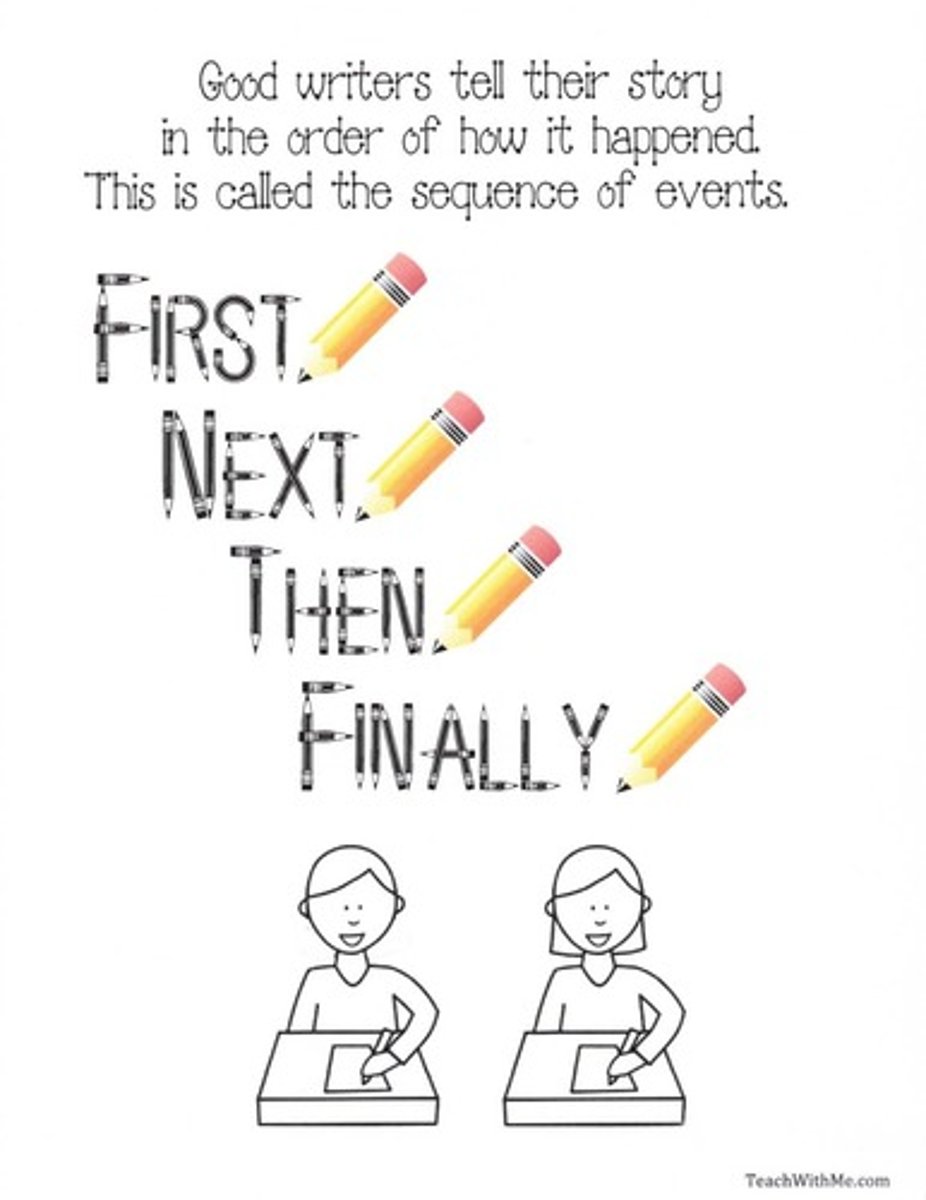
Sequencing
Understanding how a series of events occur in a specific and logical order. This is an important concept for students to develop because it allows students to recognize patterns that make the text and the world understandable and predictable.
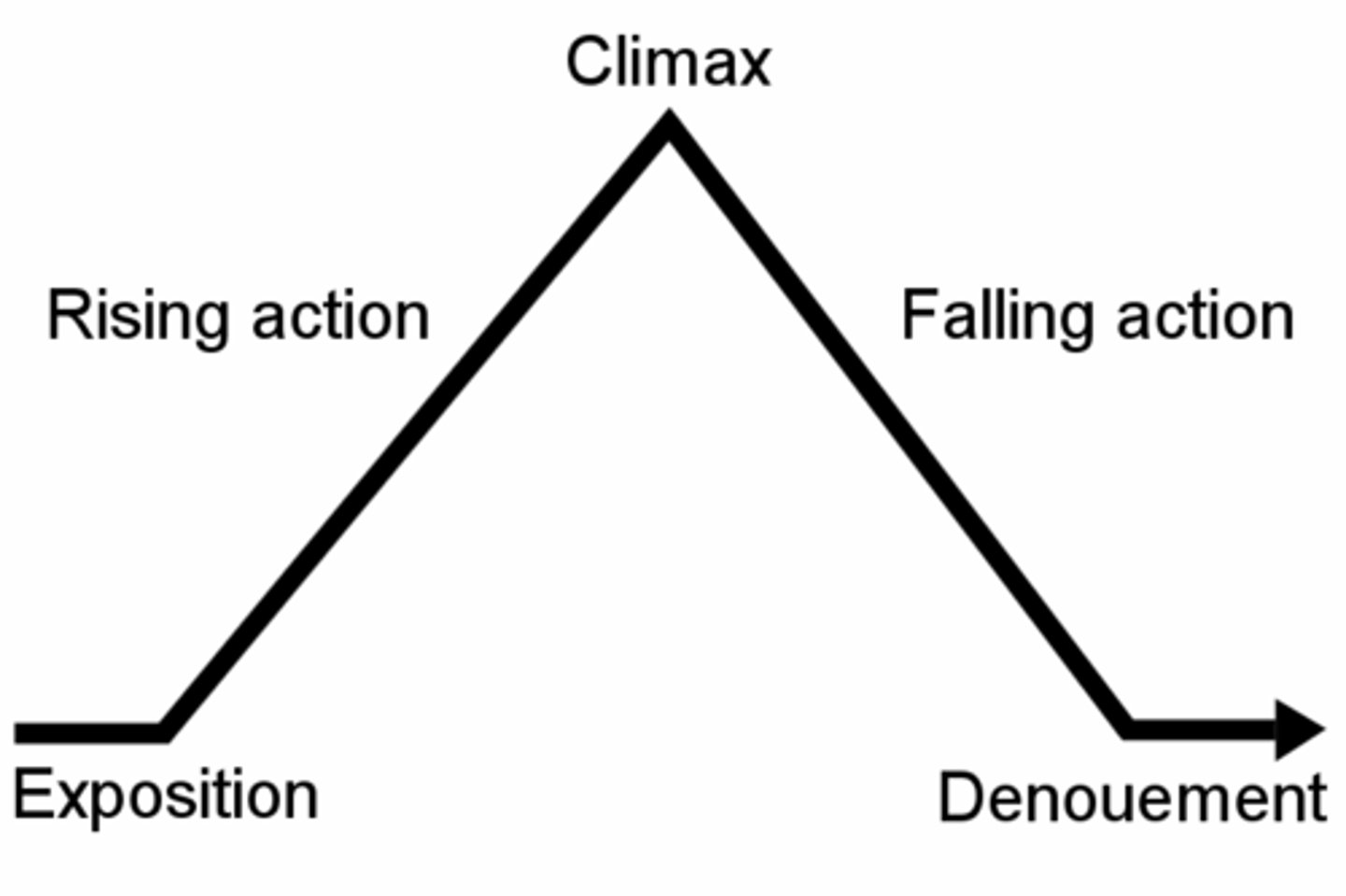
Plot structure
Allows readers and writers to visualize the key features of stories that help the student unfold important parts of the story.
Informational texts are written primarily to inform and include:
• Current events
• Literary non-fiction
• Historical/social science texts
• Technical texts
Literary texts are written primarily to entertain and include:
• Adventure
• Folklore
• Fables
• Fantasy
(genre - fiction)
Realistic fiction.
Fictional stories that could be true.
(genre - fiction)
Historical fiction.
Fictional stories set during a real event or time in history. These stories will have historically accurate events and locations.
(genre - fiction)
Science fiction.
Fictional stories that focus on space, the future, aliens, and other galaxies.
(genre - fiction)
Fantasy.
Fictional stories that include monsters, fairies, magic, and/or other fantasy elements.
(genre - nonfiction)
Informational text.
Text that informs the reader, such as a social science textbook or informational brochure.
(genre - nonfiction)
Biographies.
Text that tells the life of another person. The author is not the person in the biography.
(genre - nonfiction)
Autobiographies.
Text that describes one's own life. The author is the person in the autobiography.
(genre - nonfiction)
Expository nonfiction.
Text that informs the reader. The author is objective.
(genre - nonfiction)
Narrative nonfiction.
Text that presents a true story written in a style more closely associated with fiction.
(genre - poetry)
Limerick.
A humorous verse of three long and two short lines rhyming (AABBA).
(genre - poetry)
Sonnet.
A poem of 14 lines using any of a number of formal rhyme schemes.
(genre - poetry)
Epic.
A long narrative that focuses on the trials and tribulations of a hero or god-like character who represents the cultural values of a race, nation, or religious group.
(genre - poetry)
Haiku.
A Japanese poem consisting of 3 lines and 17 syllables. Each line has a set number of syllables: line 1 has 5 syllables; line 2 has 7 syllables; line 3 has 5 syllables.
(genre - folklore)
Fable.
A short story that includes animals who speak and act like humans. There is usually a moral at the end of a fable.
(genre - folklore)
Myth.
A story that showcases gods or goddesses and typically outlines the creation of something.
(genre - folklore)
Legend.
A story that may have once been true but is exaggerated, usually about extraordinary human beings.
(genre - folklore)
Fairy tale.
A story that has both human and magical creatures in it.
(genre - dramas)
Comedy.
Entertainment consisting of jokes and satirical sketches intended to make an audience laugh.
(genre - dramas)
Tragedy.
A play dealing with tragic events and having an unhappy ending, especially concerning the downfall of the main character.
Heading
Bold words or phrases that separate the text by main ideas.
Reptiles in the Wild
Reptiles are cold-blooded—they rely on heat from their surroundings to stay warm or to stay cool. Reptiles have lungs. Most species of reptiles eat other animals and lay eggs on land to breed.
Glossary
Used to find the meanings of important words in the text.
Cold-blooded - Having a body temperature varying with that of the environment; poikilothermic.
Reptile - A vertebrate animal of a class that includes snakes, lizards, crocodiles, turtles, and tortoises. They are distinguished by having dry, scaly skin and typically laying soft-shelled eggs on land.
Index
Used to reference certain aspects of the text using page numbers where those ideas are found. An index is in alphabetical order.
R
Rattlesnakes 23
Reptiles in the Wild 34
Respiratory Systems 15
Reproduction 44
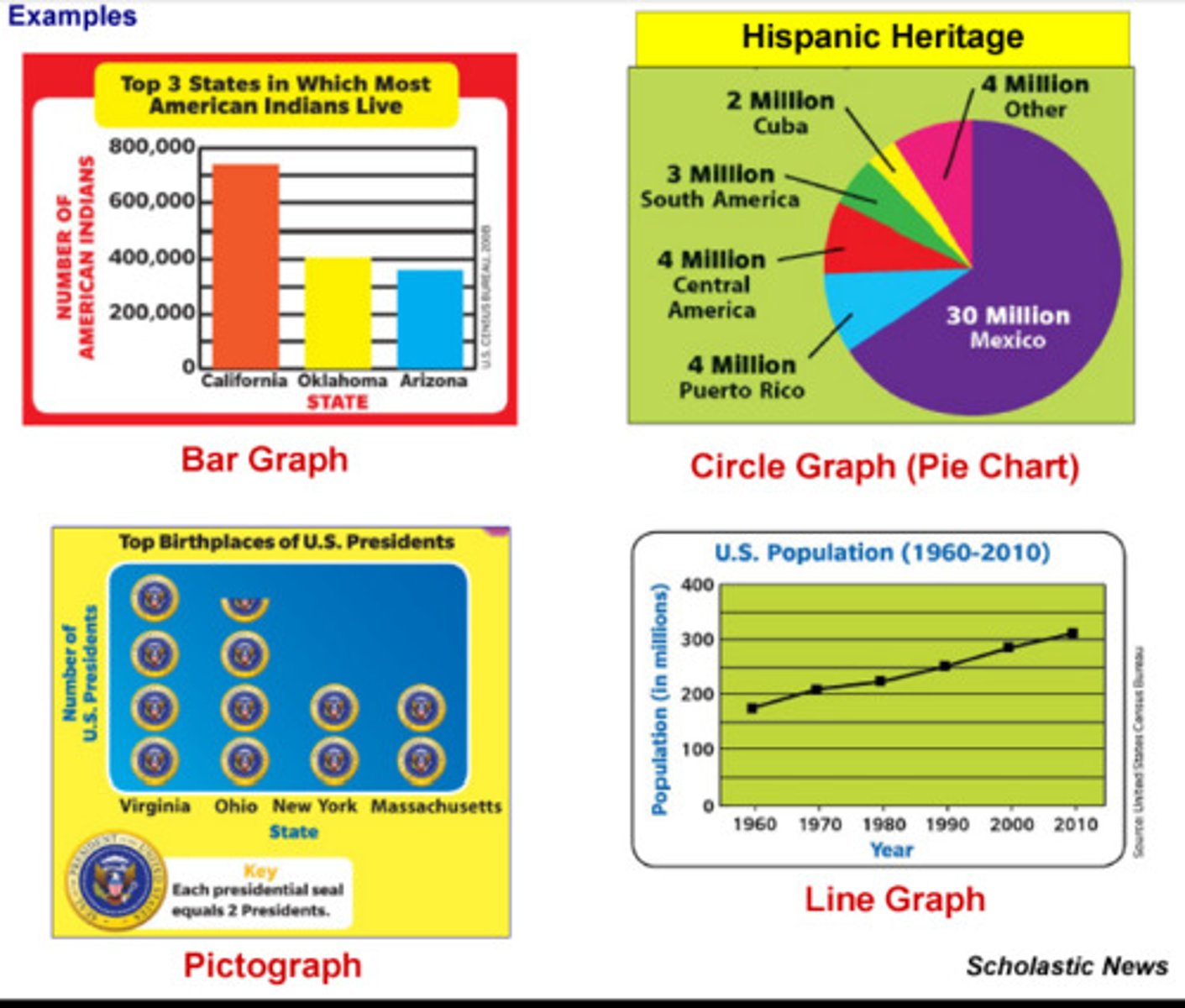
Graphs/ Charts
Representation of data in visual form.
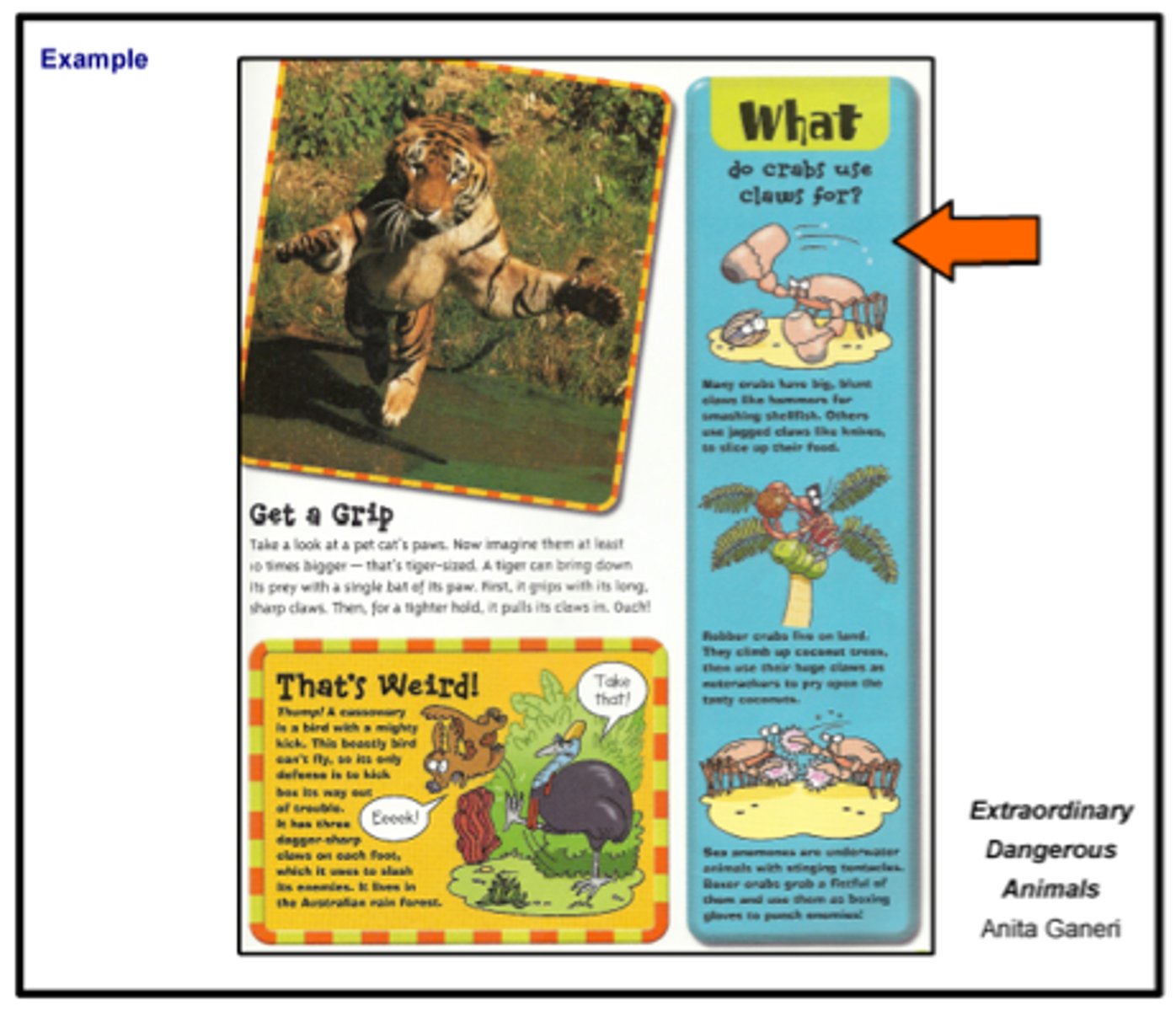
Sidebar
More information found on the side or bottom of a website.
Hyperlink
Used to point the reader to additional information. Brings the reader to another website or file and is usually indicated with a different color text that is underlined.

(text structure)
Main idea and details.
The story or passage has an overarching theme or idea and details throughout the text that support for that idea.
(text structure)
Compare and contrast.
The story or text highlights similarities and differences between and among people, places, and situations.
(text structure)
Chronological.
The story or passage is sequential or follows an order or timeline.
(text structure)
Cause and effect.
The story or passage presents something that happens and then the result or effect of an action.
(text structure)
Problem and solution.
The story or passage presents a problem and then possible solutions to the problem.
(text structure)
Inferences.
The reader draws a conclusion based on evidence and reasoning. The reader can make a logical "guess" based on something that is happening in the story.
(text structure)
Key details.
The reader uses words or phrases in the story or passage to answer questions about the text. Key details give information by asking questions like who, what, where, when, and why.
(point of view)
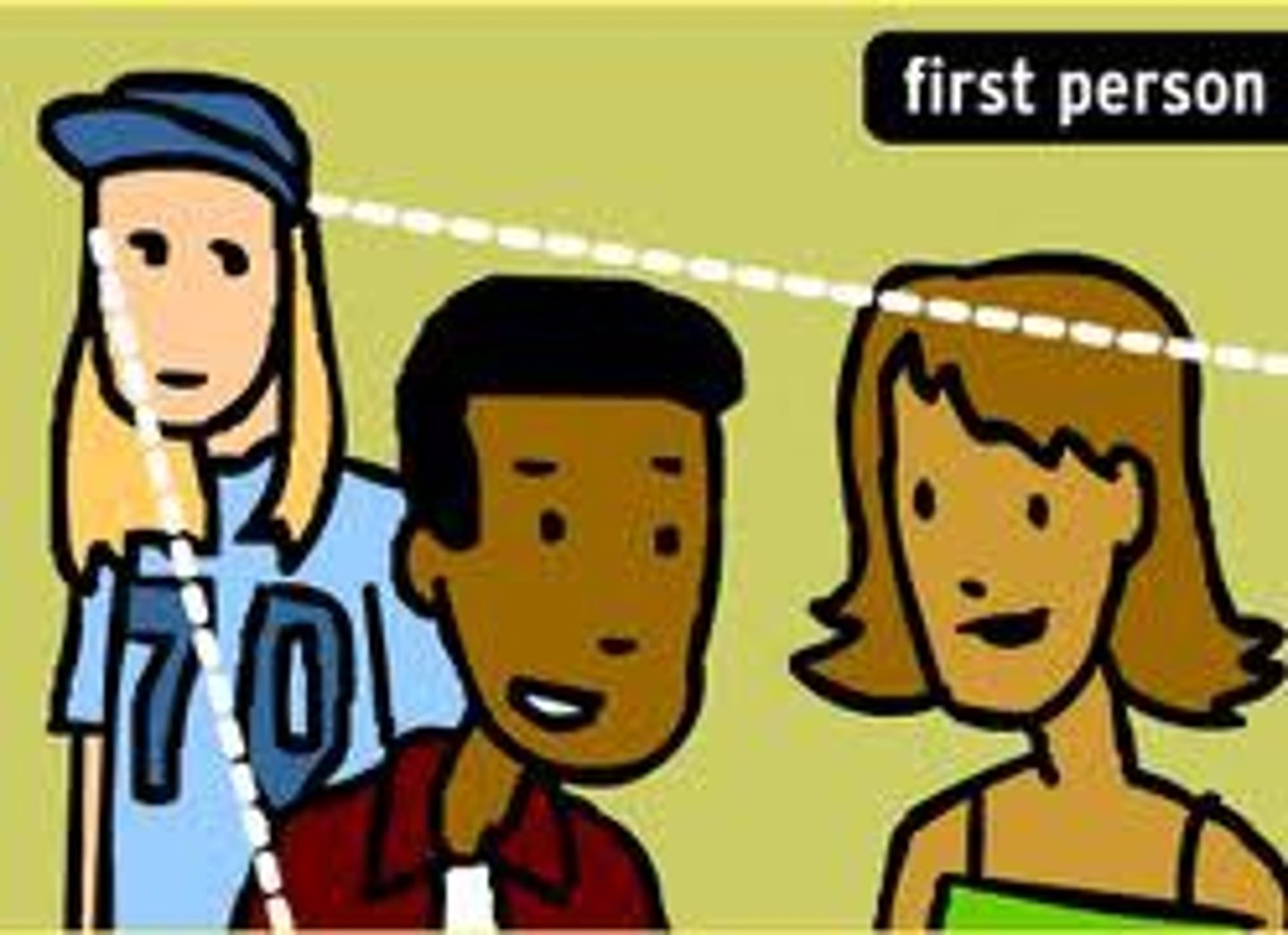
First person
A narrator in the story recounts his or her own perspective, experience or impressions. The pronouns I, we, me, us, are used in the text.
(point of view)
Second person
The story is written in the perspective of you.
(point of view)
Third person objective
The narrator remains a detached observer, telling only the story's action and dialogue.
(point of view)
Third person limited
The narrator tells the story from the viewpoint of one character in the story.
(point of view)
Third person omniscient
The narrator has unlimited knowledge and can describe every character's thoughts and interpret every character's behavior. Omniscient means allknowing.
Audiobooks
Used to help students follow along in a book as a narrator reads aloud. This is often done in centers. This practice is extremely helpful for students because they hear the reader's fluency and prosody, which helps with students' reading skills.
Basal reading
leveled texts students can use at the beginning of their reading acquisition. The old-fashioned Dick and Jane books are basal readers.
Graphic novels
They use visual illustrations to portray a story and require students to use inference skills to understand the meaning of the text.
Picture books
They help students with semantic cueing and aid in comprehension. Picture books are essential tools in helping students with their early reading.
(text complexity)
Qualitative
This type of data cannot be quantified. Instead, this data often comes in the form of anecdotal responses or scenarios.
Example: While a teacher is observing students as they read, she notices some students are struggling. She decides to intervene with a different text or targeted interventions.
(text complexity)
Quantitative
Data that can be quantified. When analyzing this type of data, teachers often look over reading levels, words per min and other measures that can be represented as numbers.
Example: A teacher uses students' correct words per minute to determine the Lexile levels of books they will use in the next lesson.
(text complexity)
Reader and task
These are the reader variables (motivation, knowledge, and experience) and task variables (purpose and complexity generated by the task assigned and the question posed). These variables can be measured both qualitatively and quantitatively.
Example: A teacher chooses books that students have expressed interest in. The teacher understands the students are more likely to engage in text they are motivated to read.