Mollusca* 🐌
 View linked note
 Call Kai
 Learn
Learn Practice Test
 Spaced Repetition
 Match
Match Flashcards
 Knowt Play
1/43

Earn XP
Name | Mastery | Learn | Test | Matching | Spaced | Call with Kai | Chat |
|---|
No analytics yet
Send a link to your students to track their progress
44 Terms
Phylum Mollusca Basic Info
~100,000 species, largest marine phylum, some terrestrial or freshwater
loss of diversity, true coleom, bilateral cephalization, no segmentation (as a group), all 3 kinds of support structures
Malacology
the study of molluscs
Biological Community
large biomass, calcium distribution
→ host for flatworm parasites
Human Interactions
food, money (art), housing material, medical research (venoms and antibiotics), damages ships (shipworms), agricultural pests, ecological indicators, invasive species
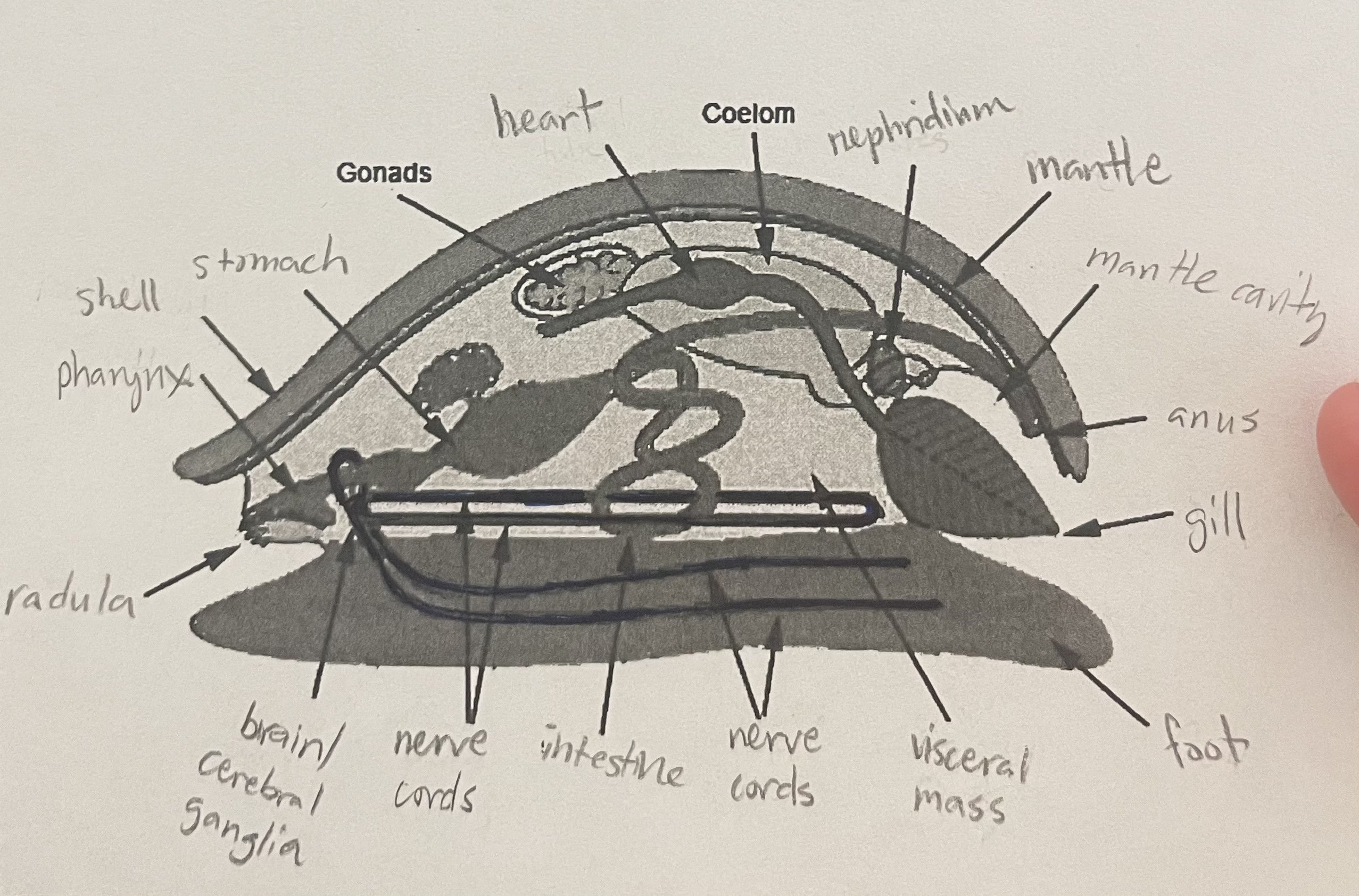
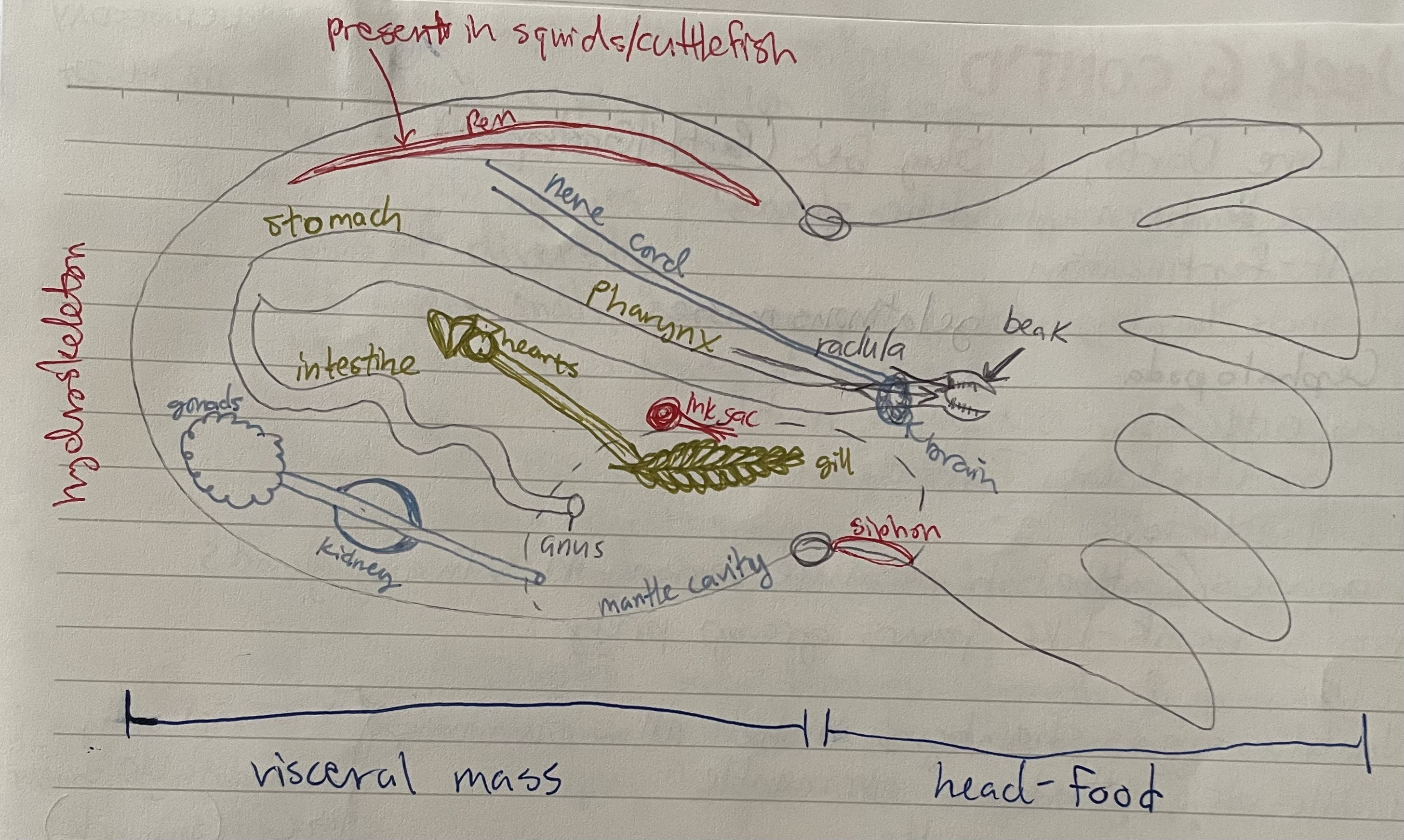
Head-foot Region
contains feeding, cephalic sensory, and locomotor organs
Visceral Mass
contains digestive, circulatory, respiratory, and reproductive organs
Head
well-developed w/mouth and sensory organs
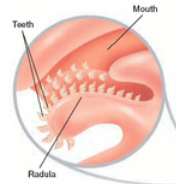
Radula
unique to molluscs, found in most (except bivalves)
rasping, tongue-like organ w/up to 250,000 teeth
Foot Functions
attachment - disc of limpets
digging - foot of bivalves
gliding - gastropods
siphon - jet/arms of cephalopods
Mantle
dorsal body wall, secretes shell and covers visceral mass
Mantle Cavity
houses gills/lungs (gas exchange), digestive and excretory waste, gametes empty into here
Periostracum
outer protein layer, thick in freshwater mollusks, and protects against acid from leaf decay
Prismatic Layer
main part of the shell w/closely packed calcium carbonate (CaCO3)
Nacre
innermost layer of the shell, secreted continuously throughout life, "mother of pearl
Digestion
radula; anus empties out into mantle cavity
Circulatory
open system, pumping heart, few vessels
Cephalopods - closed system
Respiratory
gill or lung (vascularized chamber)
Excretory
kidneys or nephridia
kidney ducts also discharge sperm and eggs
Nervous/Sensory
cerebral ganglia (brain) near pharynx
2 nerve cord pairs in foot and lower viscera
Reproduction & Development
most have separate sexes; some gastropods are hermaphroditic
some external and some internal fertilization
Trochophore Larvae
veliger = more developed larvae
glochidia = specialized parasitic larvae of many bivalves
Defense
shell, venom/poison, ink, mucus, camo, mutualism, etc.
Diversity
C. Gastropoda — snail
C. Cephalopoda — octopus
C. Bivalvia — clam
C. Polyplacophora — chiton
C. Scaphopoda — tusk shell
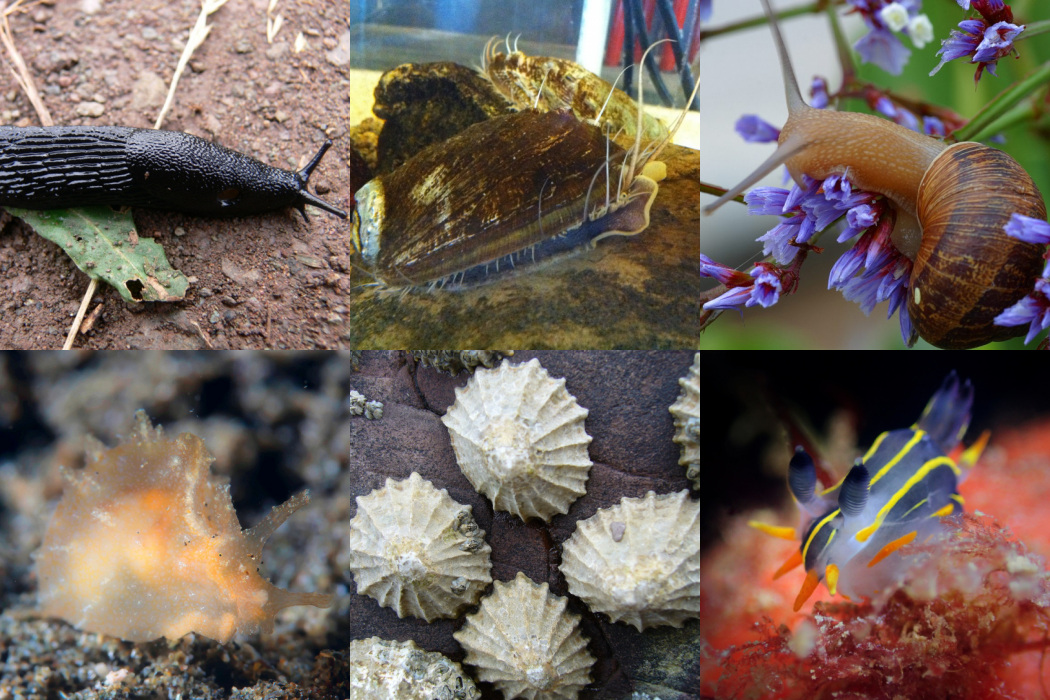
Class Gastropoda
most diverse class; 70,000 species
all environments - marine, freshwater, terrestrial
Gastropoda Shells
main defense, one-piece
ancestral shells flat spiral → helix
operculum = covers aperture to prevent water loss
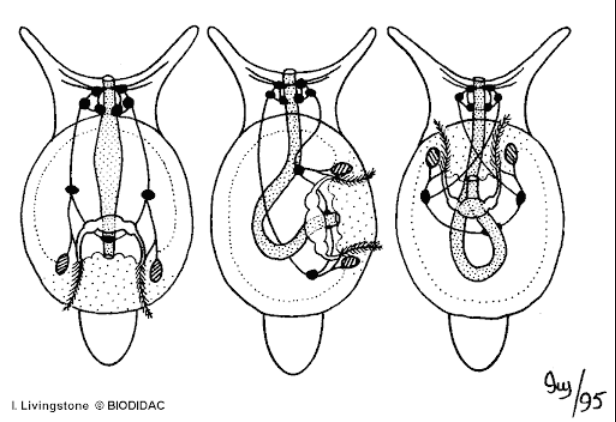
Gastropoda Torsion
mantle cavity and anus rotate
results: viscera shift left to right, nerve cords form figure 8
fouling = anus empties over mouth, sense organs → gill move
Gastropoda Feeding
radula adaptations = feeding variations
herbivore, carnivore, scavenger
Gastropoda Respiration
gill (mantle cavity) or “lung” (vascular area in mantle)
pneumostome = lung opening to outside
Gastropoda Reproduction
dioecious and hermaphroditic species
NO self-fertilization
land snails lay eggs in gelatinous masses
love darts 🙂
Gastropoda Anatomy
Class Cephalopoda
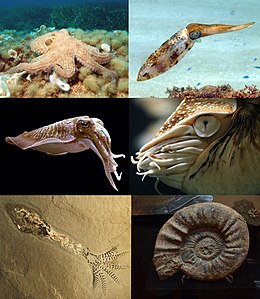
nautiluses, cuttlefish, squids, octopuses
foot modified into tentacles + funnel
ALL predators; strong beak-like jaws grasp prey
Cephalopoda Appendages
nautilus = 60-90 tentacles, no suckers
squid/cuttlefish = 8 arms w/suckers + 2 tentacles
octopuses = 8 arms w/suckers
Cephalopoda Shells
nautilus = gas chambers in shell allow swimming, animal inhabits last chamber, siphuncle extends through chambers and adjusts gases
cuttlefish = “cuttlebone” in mantle
squid = “pen” in mantle
octopus = completely lost
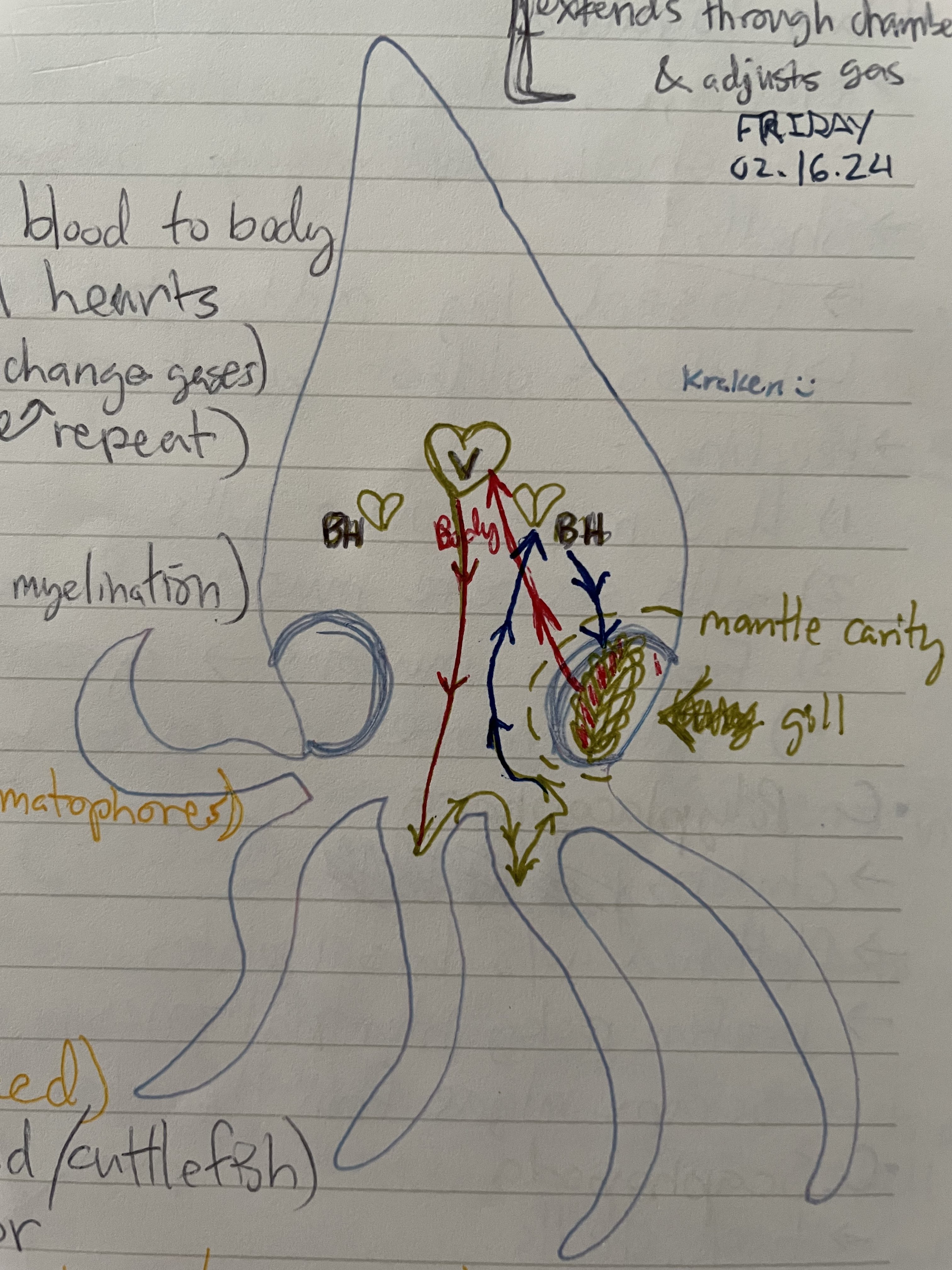
Cephalopoda Circulation/Respiration
increase in oxygen demands increase in size
1) ventricle contracts → oxygenated blood to body
2) deoxygenated blood returns to branchial hearts
3) branchial hearts contract to gills (exchange gases)
4) blood returns to ventricle
Cephalopoda Nervous/Sensory
large diameter nerve (speed w/o myelination)
brain w/cartilaginous cranium
sense organs: well-developed; complex eyes + photosensitive chromatophores
tool use!
Cephalopoda Movement
expel water through siphon; controls direction and force/speed
squid/cuttlefish: lateral fins act as stabilizers
octopus: crawls on sea floor or swims around with webbing
Cephalopoda Reproduction
sexes separate, internal fertilization, eggs are laid
some take care of the eggs until they die ☹
Cephalopoda Defense
color change/camouflage: skin texture changes, can imitate other animals
chromatophores = cells in skin expand and contract
ink: sac empties into rectum, secretes melanin, pseudomorph
octopuses & cuttlefish produce venom in salivary glands
Cephalopoda Anatomy
Class Bivalvia
clams, scallops, oysters, mussels, shipworms
2 shells, sedentary, suspension feeders
reduced head and no radula
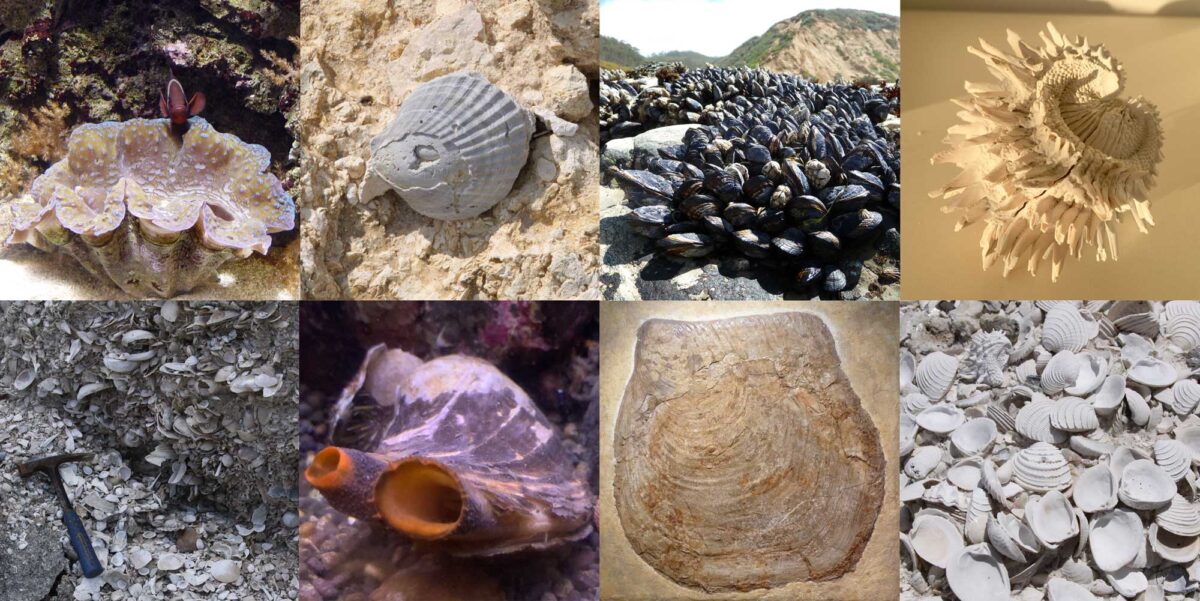
Bivalvia Shells
closed by adductor muscles
umbo = oldest part of shell, growth occurs outward in rings
Bivalvia Feeding
1) H2O moves over gills
2) gills secrete mucus and traps particles
3) food in mucus moves via grooves at gills’ edge
4) cilia move mucus to mouth
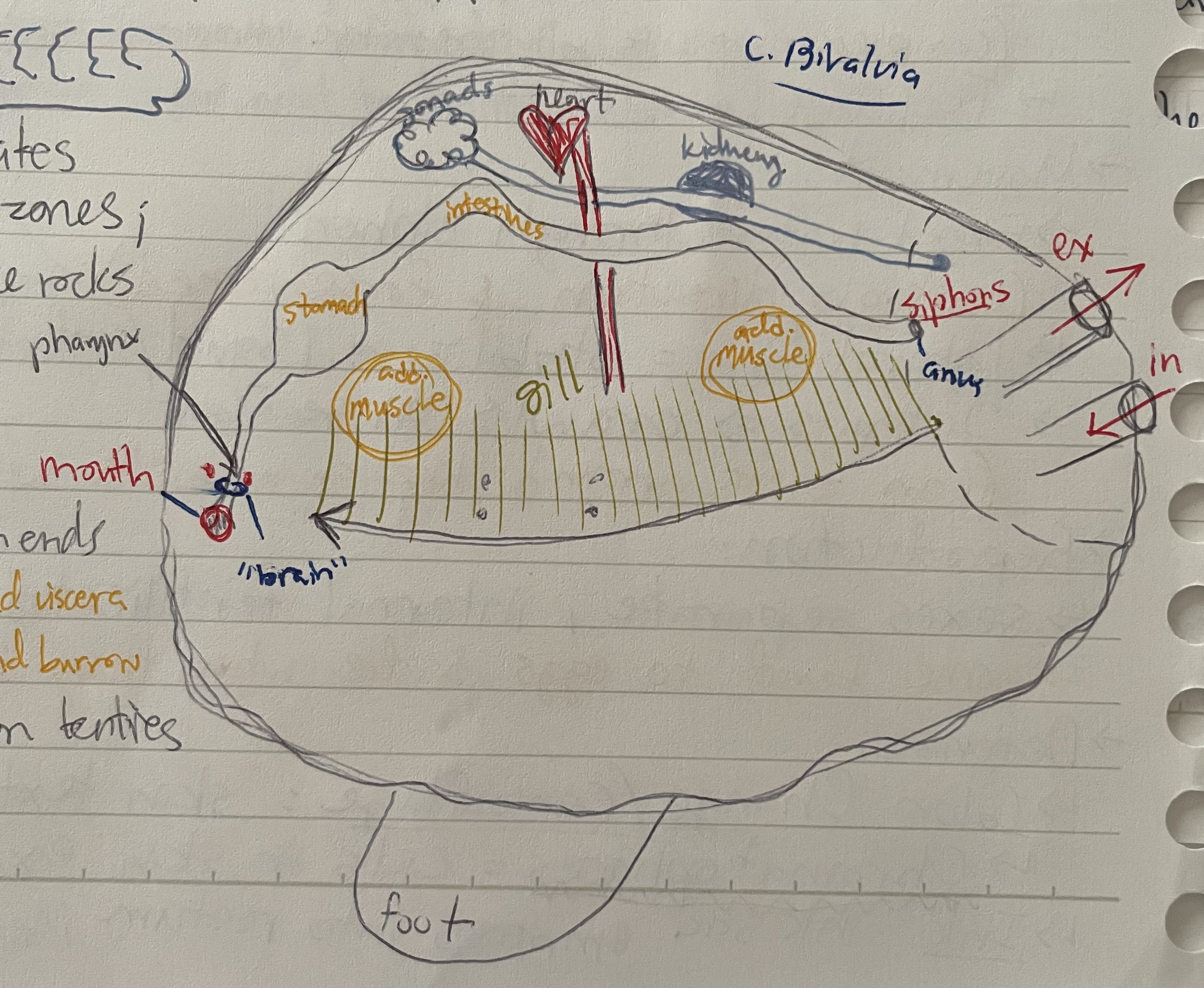
Class Polyplacophora
chitons
flattened with 8 dorsal plates
prefer rocky intertidal zones, scrape algae from the rocks
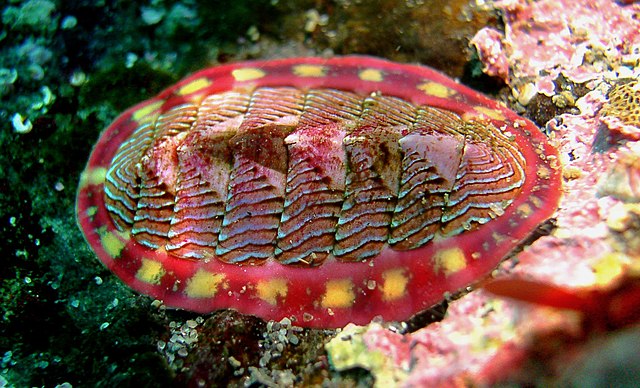
Class Scaphopoda
tusk shells
sedentary, marine
tubular shell, open both ends
mantle-fused → tube around viscera; foot/tentacles from larger end burrow
eats detritus caught on tentacles