NURS 370 Exam 1 - High-Risk Postpartum Care
 Call Kai
 Learn
Learn Practice Test
 Spaced Repetition
 Match
Match Flashcards
 Knowt Play
1/97

There's no tags or description
Looks like no tags are added yet.
Name | Mastery | Learn | Test | Matching | Spaced | Call with Kai | Chat |
|---|
No analytics yet
Send a link to your students to track their progress
98 Terms
maternal death
birthing person dies during pregnancy or up to 42 days after giving birth from health problems r/t pregnancy
pregnancy-related death
birthing person dies during pregnancy or within 42 days after giving birth from all deaths irrespective of cause
maternal morbidity
much more prevalent than maternal mortality
maternal mortality in black women
2x higher than white women
early postpartum hemorrhage
occurs within 24 hours of birth... cumulative blood loss of equal to or >1000mL or blood loss accompanied by s + s of hypovolemia
what blood loss requires additional surveillance
500-999mL or decreased hematrocrit of less than 10%
primary pph
within 24 hours, many caused by uterine atony
secondary pph
after 24 hours up to 6 weeks, usually caused by uterine infection, placental fragments, or delayed placental expulsion, subinvolusion
why do mothers have increased blood volume
maternal tissue, placenta, and third stage of labor
mothers don't quickly show symptoms of blood loss...
10-30% blood is lost before shock symptoms with a presence of tachycardia and hypotension
how to treat blood loss
give blood
4 t's
tone: uterine atony
tissue: retained products
trauma: lacerations, incisions, hematoma
thrombin: coagulopathies (DIC)
hypovolemic shock
shock resulting from blood or fluid loss
shock index (S1)
HR divided by systolic BP. anything >0.9 indicates a need for blood
signs of hypovolemic shock
tachycardia, hypotension, increased respiratory rate, decreased O2sat, cold and clammy skin
maternal assessment
after birth: assess every 15 mins for first hour, 30 minutes for 2 hours, and then every four-eight hours or as needed. assess blood pressure, heart rate, respiratory rate, o2 sat
once stable, how long should you assess vaginal versus c section
4 hours for 24 hours c section, 8 hours for vaginal
when to check vitals when active bleeding
every 5-15 minutes
always document
in a timely fashion to prevent delays in treatment
intrapartum maternal risk factors
•intrauterine fetal demise
•Induction
•Prolonged 1st or 2nd stage
•Precipitous birth (dangerous, difficult)
•Chorioamnionitis (intraamniotic infection)
•amniotic fluid embolism
•Failure to progress to 2nd stage
past medical maternal risk factors
history of pph, obesity, multiparity (usually past 4 or 5)
past surgical maternal risk factors
c section, previous uterine surgery
pregnancy complications maternal risk factors
•Hypertensive disorders
•Fibroids
•Uterine Overdistention
- Polyhydramnios
- Multiple Gestation
- Macrosomia
polyhydraminos
too much amniotic fluid
birth complications maternal risk factors
•Uterine atony
•Perineal or vaginal hematoma
•Lacerations
•Retained products
•Uterine inversion
•Instrumental birth
- Forceps
- Vacuum
placental abnormalities maternal risk factors
placental abruption, adherent placenta
placenta accreta
Improper implantation of placenta into the myometrium with little or no intervening decidua

placenta increta
deep penetration of myometrium
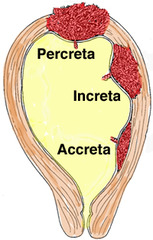
placenta percreta
perforation of uterus by placenta

placenta previa
implantation of the placenta over the cervical opening or in the lower region of the uterus

bleeding maternal risk factors
bleeding disorder, thrombocytopenia
Disseminated Intravascular Coagulation (DIC)
coagulation pathways are hyperstimulated and the body breaks down clots faster than they can be created. complication of anaphylactoid syndrome of pregnancy. can be asymptomatic, bleeding, massive bleeding, or cause organ failure
Anaphylactoid syndrome of pregnancy
Rare complication of pregnancy characterized by the sudden, acute onset of hypoxia, hypotension, or cardiac arrest and coagulopathy that can occur either during labor or during birth or immediately after birth; also known as amniotic fluid embolism
warning signs of pph
uncontrolled vaginal bleeding, swelling around vagina or perineum, change in vitals, symptoms of chock, decreased hematocrit
pph early recognition
evaluate risk factors and signs antepartum, intrapartum, and postpartum
stage 0 pph
usually blood loss is
stage 1 pph
>500mL for vaginal and 1000mL for c sec. consider etiologies and ensure fundal massage and an empty bladder. request a type and cross. monitor QBL and vitals. administer IM uterotonics and IV fluids, notify the provider
stage 2 pph
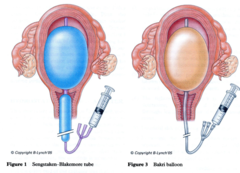
1000-1500mL blood loss. use uterotonics and potenial uterine tamponade balloon. might need blood transfusion. frequent QBL and vitals, fundal massage. start a 2nd IV and insert foley. notify provider.
Uterine Tamponade Balloon
stage 3 pph
>1500mL blood loss. monitor vitals and QBL. massive transfusion protocol. invasive surgical procedures likely. administer TXA Tranexamic Acid and notify provider
first line uterotonics
oxytocin
second line uterotonics
misoprostol, methylergonovine, carboprost
misoprostol (Cytotec)
prostaglandin medication for uterine tone
methylergonovine (Methergine)
Acts directly on the uterine muscle to stimulate forceful contractions. (WARNING IN HIGH BLOOD PRESSURE AND PREECLAMPSIA) (DIARRHEA SE)
carboprost (Hemabate)
oxytocic; Given to IM to produce sustained uterine contractions to control postpartum hemorrhage. Contraindicated in a patient who has asthma. Adhere to dosing and monitor closely when given with oxytocin (HEEEEM *sounds likehard breathing ASHTMA!!!!)
Tranexamic Acid (TXA)
Anti-fibrinolytic
Inhibits plasminogen activation
non-pharm management of pph
fundal massage, blood products, removal of retained products, bimanual uterine compression, balloon tamponade, surgical management
risk for hematoma
genital track lacerations, episiotomies, operative vaginal births, prolonged second stage of labor, precipitous birth, nulliparity... internal hematomas may be missed until signs of shock
symptoms of hematoma
depends on rate size.. pain, pressure, change in vitals
treatment of hematoma
surgical evacuation if >5cm, antibiotics. if not expanding, observation and ice packs, analgesia
mastitis
unilateral breast pain, streaks, redness, sore nipples, flu-like symptoms. treated with 10-14 days of oral antibiotics
metritis/endometritis
fever, tender uterus, lochia foul odor, flu like symptoms. can be related to septic pelvic thrombophlebitis or deep organ infections caused by infected hematoma or pelvic abcess. most of these are treated with 24 hours of IV antibiotics or more, but septic pelvic thrombophlebitis has 40% mortality
cystitis
freqency, urgency, dysuria, foul odor. treated with 7-14 days of oral antibiotics.
wound infections
c section incision, laceration, episiotomy... REEDA. keep under belly dry to help prevent with c section infection
risk factors for infection
•Poor intrapartum hygiene
•Primiparity
•Prolonged rupture of membranes
•Prolonged labor
•Multiple vaginal exams (more than 5)
•C/section
•Low socioeconomic status
management of infection and nursing actions
antibiotics, fluids, rest, antipyretics, pain management, assessments, patient teaching
call OB or provider if
fever 100.4 or greater, flu like symptoms or any infection related symptoms
DVT
swelling in leg, heavy aching or pain in one leg, warm skin, red skin. greatest risk up to 2 weeks postpartum and can even be in groin area. avoid crossing legs. move frequently.
PE
SOB, tachypnea, chest pain, lightheadedness or dizziness, rapid or irregular HR, clammy or cyanotic, recent pain or swelling or warmth in a leg, greatest risk up to 2 weeks postpartum
DVT management and actions
early ambulation (as soon as 2-6 hours postbirth), compression stockings, coagulation therapy with heparin, warfarin, lovenox, doppler USN. call 911 for PE symptoms
perinatal mental health
mental illness that complicate pregnancy or occur within one year postpartum: depression, anxiety, bipolar, PTSD, OCD, psychosis, postpartum rage... these disorders are as much as 1 in 5 prevalence.
what is the leading comorbidity in childbearing individuals
perinatal mood disorder
what is the first leading cause of perinatal death
suicide
most perinatal suicides occur between
9-12 months postpartum in which
maternal risk factors for mental health disorder
family history, history of premenstrual dysphoric disorder, limited support, complications regarding birth or pregnancy or breastfeeding, surviver of IPV, admission of newborn to NICU, stillbirth or neonatal loss, stressful life, adolescent or single parent
when are mental health risk factors (Depression screen) assessed
many organizations try to assess at prenatal visit and at 32 weeks, upon admission and at 6 week check (Edinburgh Perinatal Depression Scale)
baby blues
•Affects 4 out of 5 new parents
•Waves of sadness
•Occurs 2-3 days after birth
•Can last up to 2-weeks; resolve on there own
•Caused by a sudden decrease in hormones after birth
•Can be exacerbated by lack of sleep or emotional issues
postpartum depression
•Affects 1 in 8 new parents
•Feelings of sadness, anxiety, or rage
•Can affect care for self or baby
•Can interfere with maternal/newborn bonding
•Occurs within 1- 3 weeks after birth; needs treatment to resolve
•Classified as a medical condition
treatment for mental health disorders postpartum
cognitive behavioral therapy, SSRI's like Zoloft
mental health conditions
What is the number 1 cause of pregnancy-related deaths? (23%)
Cardiovascular conditions
What is the leading cause of pregnancy related deaths for black birthing people?
Cardiovascular changes
Blood loss
Auto-transfusion
Mobilization of fluid
and increased stroke volume and cardiac output by 80% in the first hour postpartum
10%
Hematocrit below ?% can be supportive data for PPH?
tone, trauma, tissue, thrombin
What are the 4 Ts?
DIC
widespread activation of clotting mechanisms exhausts the body's blood-clotting factors, causing simultaneous abnormal blood clotting and uncontrollable bleeding
Hypovolemic shock
S+S:
Tachycardia
Hypotension
INC rr
DEC O2 sat
cold, clammy skin
IUFD
medical term for a stillbirth or the death of a fetus in the womb at or after the 20th week of pregnancy
(fetus passed in utero)
Precipitous birth
extremely fast birth where the baby is delivered within three hours of regular contractions starting (can cause physical trauma)
chorioamnionitis
a bacterial infection of the membranes and amniotic fluid surrounding a fetus during pregnancy
AFE
amniotic fluid (the fluid surrounding the baby) or fetal cells enter the mother’s bloodstream. This triggers a severe, allergic-like immune reaction that can cause heart and lung collapse and dangerous bleeding issues
Fibroid
non-cancerous muscle growth that develops in or on the wall of the uterus during or before the childbearing years (if removed could lead to uterine rupture)
Uterine atony
muscle walls of the uterus fail to contract effectively after childbirth, leading to severe bleeding
Maternal warning signs
Uncontrolled heavy vaginal bleeding
swelling/ pain around vag*na/ perineum
Change in vital signs
symptoms of shock
decrease in hematocrit
tamponade ballloon
inserted into the uterus and filled with sterile fluid to compress bleeding blood vessels after childbirth when medications fail (first used in stage 2 PPH)
TXA
intravenous medication used to treat heavy bleeding after childbirth by preventing blood clots from breaking down
First line uterotonic
Oxytocin (Pitocin)
Second line uterotonics
Misoprostol (Cytotec)
Methylergonovine (methergine)
Carboprost (Hemabate)
Hematoma
Collection of blood that pools in the pelvis, vagina, or vulva due to damaged blood vessels and usually happens in traumatic birth
Infection
fever 100.4 or greater
flu like symptoms
abdominal pain or tenderness
foul smelling lochia
pain, urgency, frequency, or hesitation upon voiding
Breasts have red streaks, intense pain
DVT
symptoms:
swelling in legs
Heavy ache in affected area
Warm skin around the clot
red skin in the affected area
Can affect lower leg, thigh, or groin area
At greatest risk up to 2 weeks pp
PE
symptoms:
SOB
tachypnea
Chest pain
lightheaded and dizzy
clammy or cyanotic skin
pain, swelling, warmth, redness
greatest risk 2 weeks PP
DVT management
Early ambulation
compression stockings/ SCDs
Coagulation therapy (anticoagulants)
Dopper USN (identify vessel blockages)
Greater risk during first 2 weeks PP
1/5
Fraction of birthing people that experience a serious mood or anxiety disorder during the perinatal period
1-2/1000
Fraction that experience psychosis in the postpartum period
1/10
fraction of people that report trauma related to their childbirth experience
What is the leading cause of pregnancy-related death>
9-12
How many months post-partum do most perinatal suicides occur?