MCAT - Bio
 Call Kai
 Learn
Learn Practice Test
 Spaced Repetition
 Match
Match Flashcards
 Knowt Play
1/38

There's no tags or description
Looks like no tags are added yet.
Name | Mastery | Learn | Test | Matching | Spaced | Call with Kai | Chat |
|---|
No analytics yet
Send a link to your students to track their progress
39 Terms
What differentiates eukaryotic cells from prokaryotic cells?
eukaryotic
compartmentalization - cell divided into compartments to do diff functions (organelles)
organelles - membrane bound
nucleus
divide by mitosis
unique mechanism for processing mRNA - spliceosome-mediated intron splicing
in nucleus: pre mRNA with introns and exons → after transcription is RNA splicing where the spliceosome removes introns from pre mRNA → mature mRNA
mRNA → out of nucleus into cytoplasm → translated to protein
prokaryotes
no compartmentalization - just one room has to do it all
genetic material and everything floating around
divide by binary fission
True or false: Eukaryotic organisms are the only ones that can inherit genetic info from other individuals.
False, both eukaryotes and prokaryotes can inherit genetic info.
eukaryotes: offspring produced sexually via gamete fusion inherit genetic info (alleles) from parents
prokaryotes: conjugation allows transfer of genetic material from one cell to another
What is binary fission?
process by which unicellular organisms such as bacteria reproduce asexually - exponential growth
parental bacterial cell doubles in size
divides into 2 identical daughter cells
each daughter cell divides into 2 → 4
continue dividing
What is the generation/doubling time?
time needed for bacterial pop to double or for single bacterium to divide into 2
How to calculate the number of cells after binary fission?
og # of bacterial cells x 2^n
n = # of generations
What are the stages of a bacterial growth curve?
initial lag phase: transplanted bacteria become accustomed to local conditions and synthesize the components required for metabolism
log phase: bacterial pop grows exponentially as bacteria effectively metabolize nutrients
stationary
death
What does assuming unrestricted growth during incubation entail?
only log and lag phase
5 bacterial cells were incubated for 3 hours (180 min); these exhibited a 20 min lag phase and 40 min generation time. Assuming unrestricted growth during incubation, how many cells resulted after incubation?
unrestricted growth during incubation → lag and log
log phase:
180 min incubation - 20 min lag pase = 160 min log phase
160 min log phase / 40 min generation time = 4 generations
og # of bacterial cells x 2^n
5 bacterial cells x 2^4 = 80 cells
What organelles are in a eukaryotic cell?
nucleus - control center
mitochondria - power house
endoplasmic reticulum - folded membrane for protein synthesis factory (mRNA translated here)
Golgi apparatus - mail room of cell, proteins made in ER → Golgi → send to other parts of cell
lysosome - recycling center, break down no longer functional cellular components
peroxisome - reactive oxygen species are reduced to nontoxic cells
nucleus components
outer membrane + inner membrane - separate nucleus from cytoplasm
nucleoplasm - fluid inside nucleus
nuclear pore - integral protein, transport things in and out, very selective (reads signals)
nucleolus - center of nucleus, site of ribosome assembly, makes up rRNA
nuclear envelope - inner, outer membranes, nuclear pores
How is the nucleus related to the endoplasmic reticulum?
outer membrane is continuous with/becomes the ER membrane
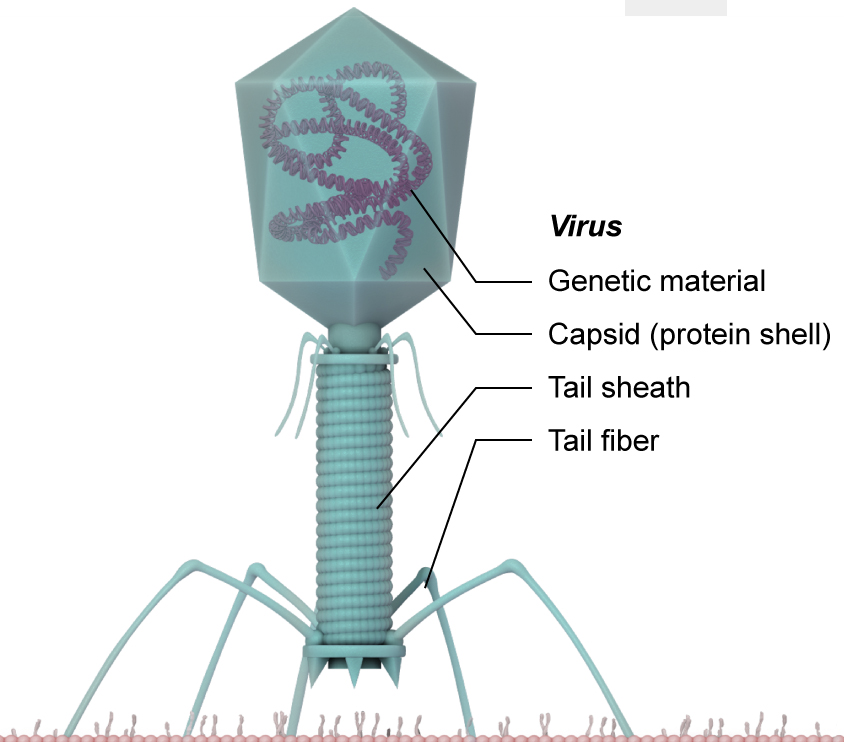
What are the components of viruses?
genetic material
capsid (protein shell)
tail sheath
tail fiber
What Is an encapsulin?
protein-encoded compartment, does not contain genetic material
What is the difference between a virus and encapsulin?
protein has genetic material, encapsulin does not
What is phagocytosis?
certain immune cells engulf pathogens inside a vesicle
What is a pathogen?
any organism or agent—such as a virus, bacterium, fungus, or parasite—that causes disease in its host (bad)
What are telomeres?
regions of repetitive nucleotide sequences at the ends of eukaryotic chromosomes that shorten with each round of cell division
present ONLY on linear eukaryotic chromosomes
What kind of chromosomes do archaea and bacteria have?
circular chromosomes
(lacking telomeres)
What is the difference btwn bacteria and archaea?
archaea do not have chemical peptidoglycan in their cell walls
What is loose DNA called?
euchromatin
What is condensed DNA wrapped around histone called?
heterochromatin
What is a small prokaryotic DNA molecule separate from chromosomal DNA?
plasmid
Centrioles contain 9 groups of ___ and they pull ___ apart.
microtubules, chromosomes
What is the pH of the cytosol of the cell?
physiological pH 7.4 —> few H+ outside in cytosol
Which of the following molecules is most likely found within the cell membranes of intestinal epithelial cells?
a. peptidoglycan
b. cholesterol
c. cytoskeletal filaments
d. cellulose
cell membrane = fluid mosaic model
cholesterol helps to regulate the fluidity of the phospholipidbilayer
How many functional eggs are produced per meiosis in females?
1 functional egg + 1 polar body
What are the function of polar bodies?
to discard extra sets of chromosomes
How many functional sperms are produced per meiosis in males?
4 sperms
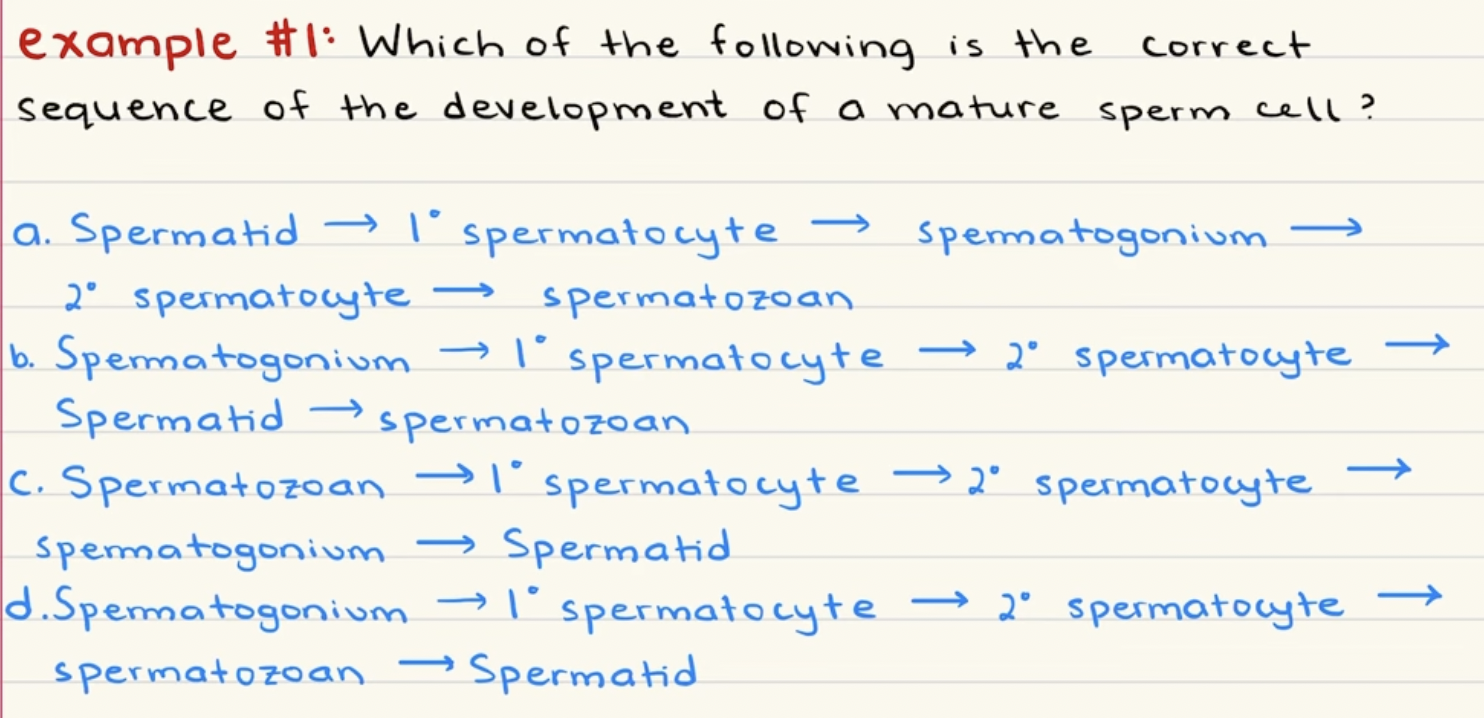
B
True or false: An secondary oocyte finishes meiosis II.
FALSE. An oocyte finishes meiosis II only after fertilization. Otherwise, a secondary oocyte remains arrested in metaphase II.
What phase is an oocyte in during metaphase II?
ovulation (secondary oocyte)
What part of the reproductive tract is most responsive to estrogen?
endometrium
incr in estrogen → endometrium lining thickens
Upon ovulation, the oocyte is first released into the:
abdominal cavity → fimbriae of fallopian tube sweep oocyte into site of fertilization
What male reproductive structure produces alkaline fructose containing secretions?
seminal vesicles
fructose in fluid to nourish sperm
alkaline neutralizes vaginal acidity
What male reproductive structure is the tube connecting the epididymis to the ejaculatory duct?
vas deferens
What male reproductive structure produces a fluid to clear traces of urine in the urethra?
Cowper’s glands
What male reproductive structure secretes a slightly alkaline fluid to activate sperm and enhance motility?
prostate gland
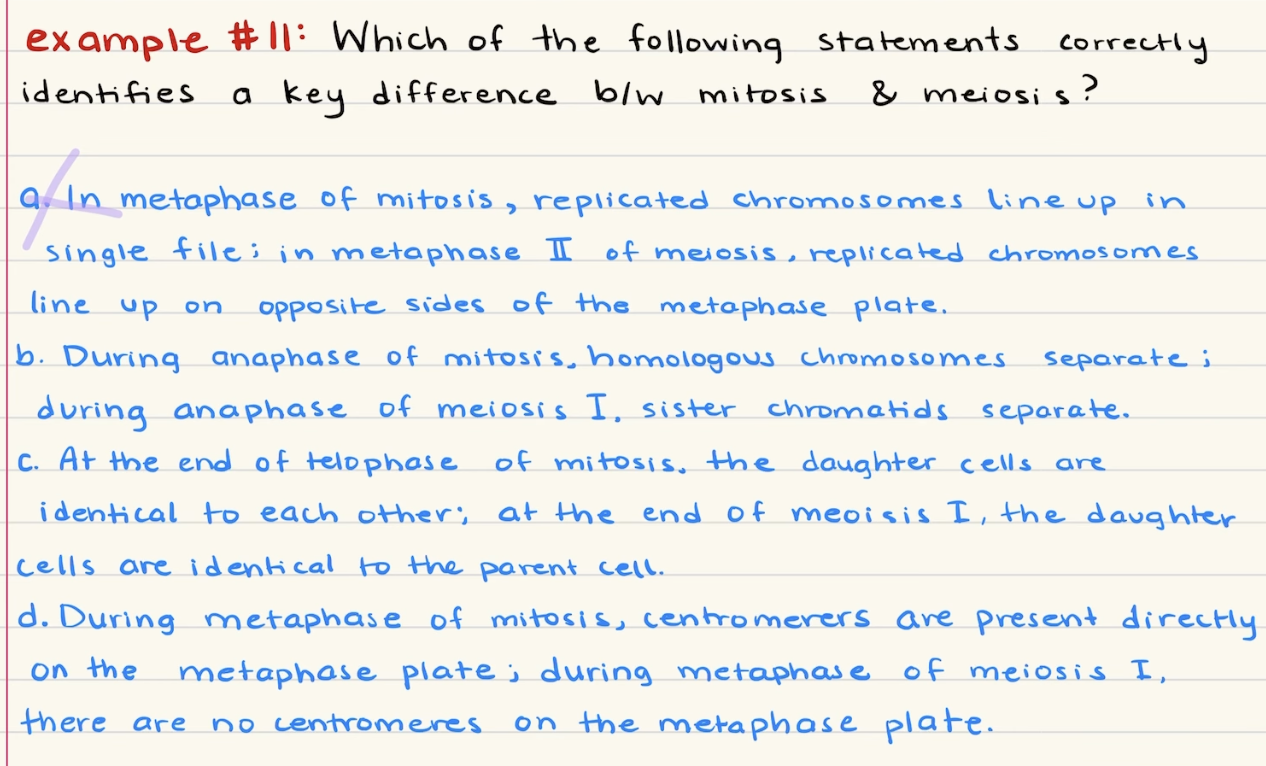
D
During which phase of the menstrual cycle does progesterone concentration peak?
luteal phase