H2 Chemistry: Lewis Structures
 Call Kai
 Learn
Learn Practice Test
 Spaced Repetition
 Match
Match Flashcards
 Knowt Play
1/19

There's no tags or description
Looks like no tags are added yet.
Name | Mastery | Learn | Test | Matching | Spaced | Call with Kai | Chat |
|---|
No analytics yet
Send a link to your students to track their progress
20 Terms
CO2
linear, 180
BF3
trigonal planar, 120
NH3
trigonal pyramid, 107
N has 1 lone pair, stronger repulsion than the 3 bond pairs
Explain VESPR theory.
Shape of molecule / ion determined by repulsions between e-
e- pairs around central atom will arrange themselves as far apart from each other as possible to minimise repulsion
Repulsion between LP & LP > LP & BP > BP & BP: LP is attracted to 1 nucleus, BP is attracted to 2 nuclei, so LP electron cloud is less elongated, take up more space around the nucleus, wider angle
BF3NH3
BF3: trigonal planar, 120
NH3: trigonal pyramid, 107
BF3 is electron-deficient, accepts lone pair from N in empty 2p orbital (dative bond)
H2O
bent, 104.5
2 lone pairs + no neutralisation by 2 electron deficient H atoms
H2S
bent, <104.5
BP repulsion weaker as S is located further from central atom than O
weaker repulsion, smaller bond angle between BP
CH4
tetrahedral, 109.5
SO42-
tetrahedral, 109.5
Since S is in Period 3, expansion of octet: use energetically accessible 3d orbitals to form > 4 bonds

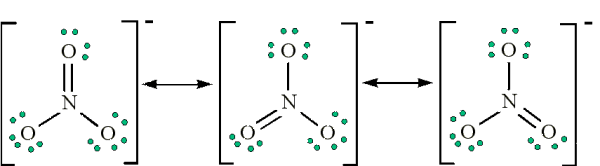
NO3-
trigonal planar, 120
resonance structure as N & O both cannot exceed octet (Period 2)
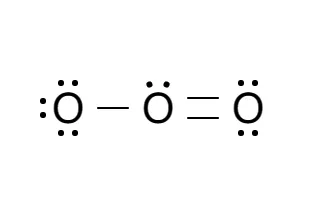
O3
bent, 118
Since O is in Period 2, cannot expand octet as 3d orbitals are not energetically accessible
dative bond between O atoms
NH4+
tetrahedral, 109.5
lone pair of N forms dative bond with 1 H+
N more electronegative, likely to give away electrons
PCl5
trigonal bypyramid, 90, 120

SF4
see-saw, <90
LP > BP

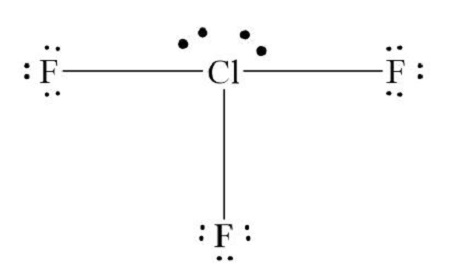
ClF3
T-shape, 90
2 lone pairs
IF2-
linear, 180 (3LP, 2BP)
dative bond from F to I (I only has 7 electrons in valence shell)

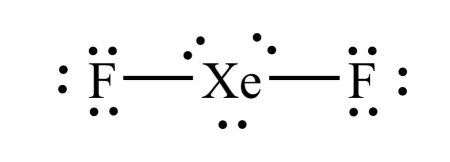
XeF2
linear, 180
Xe is a noble gas: 8 electrons in valence shell
SF6
octahedral, 90

ClF5
square pyramidal, ~90

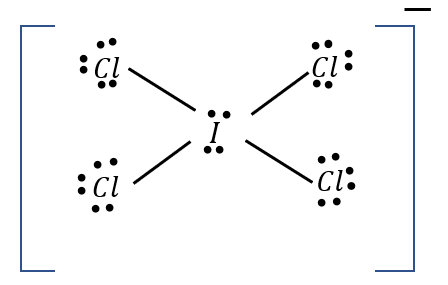
ICl4-
square planar, 90