Biology Chapter 4 - Carbon and the Molecular Diversity of Life
 Call Kai
 Learn
Learn Practice Test
 Spaced Repetition
 Match
Match Flashcards
 Knowt Play
1/55

Earn XP
Description and Tags
https://youtu.be/JjtzMQDdyuM?si=7Motr5DkE26ODC84 (Cis–trans) ----https://youtu.be/pg6GWz3zXas?si=Z8zwpk_8BWU4RUqD(Structural Isomers)----https://www.youtube.com/watch?v=V-2OTlRH65g(enantiomers)
Name | Mastery | Learn | Test | Matching | Spaced | Call with Kai | Chat |
|---|
No analytics yet
Send a link to your students to track their progress
56 Terms
What is the skeleton or backbone of life?
Carbon
Carbon
Chemical element with symbol C
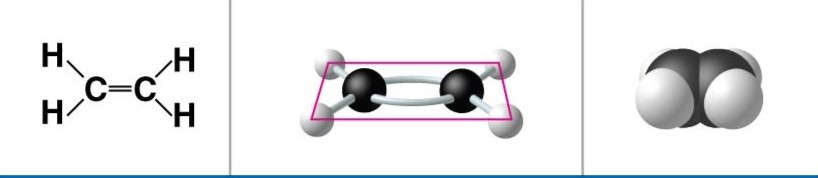
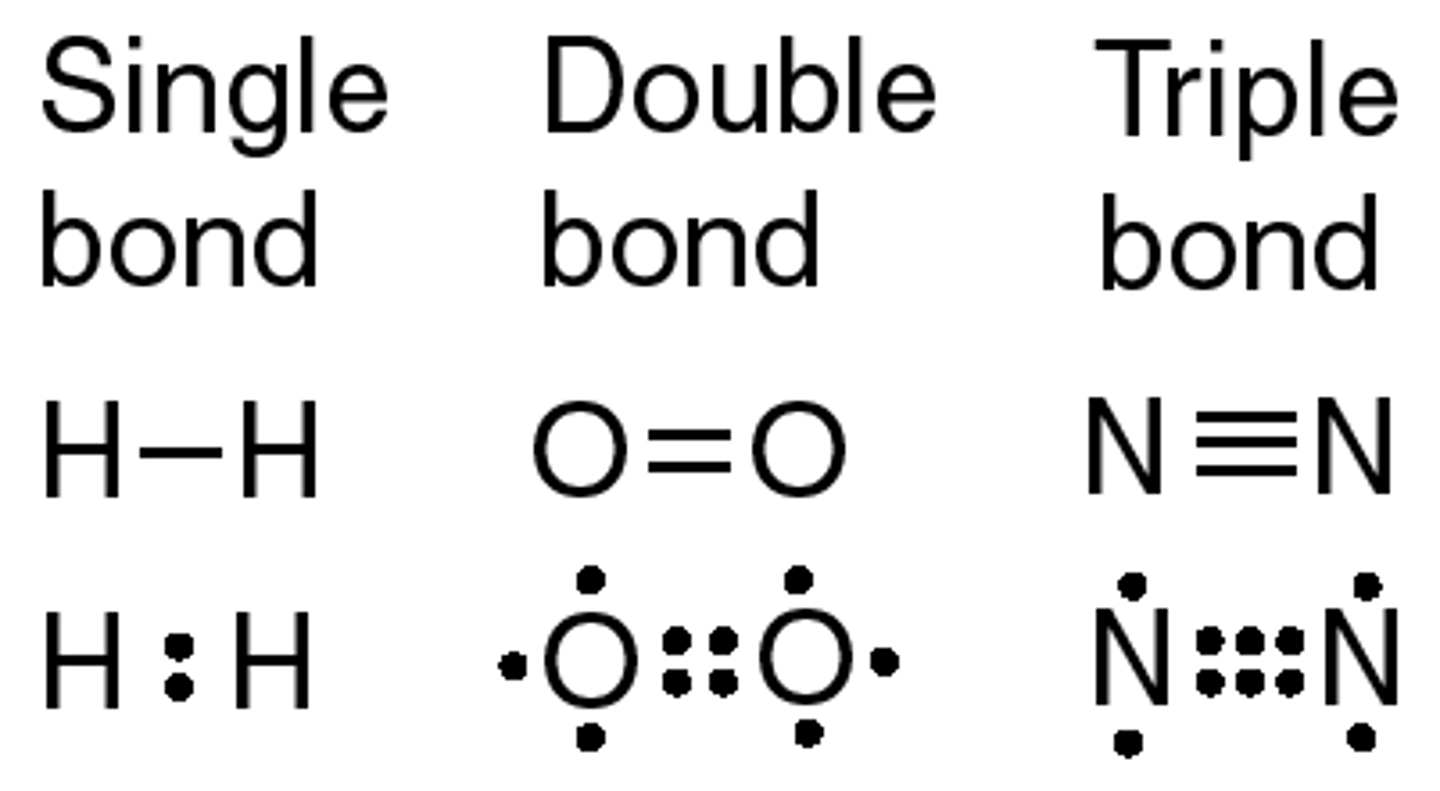
Double bonds create _________.
Planar structures
Triple bonds lead to _____________.
Linear shapes
What is adipose tissue?
A we way store energy as fat
Why is carbon so special?
It has the ability to form large, complex, and varied molecules
Organic Chemistry
The study of carbon-containing compounds, regardless of their origin.(carbon chemistry)
Stanely Miller experiment
Demonstrated the abiotic synthesis of organic compounds
Abiotic Synthesis
The formation of organic molecules without the involvement of living organisms,
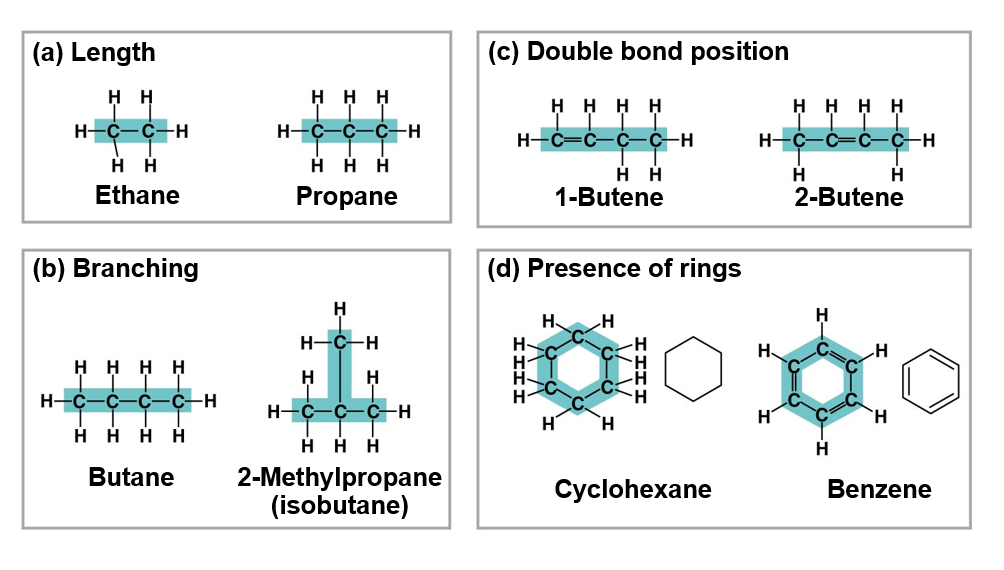
Four Carbon skeleton variations
1. Length
2. Branching.
3. Double bond position
4. Number of rings
How many bonds can carbon form?
Four bonds
Which three elements are described as carbon's "most frequent partners"?
Hydrogen, oxygen, and nitrogen
How many valence electrons does carbon have?
four valence electrons, allowing it to form four covalent bonds and make a wide variety of organic molecules.
Stanley Miller's experiments supports the idea that life could have started where?
Near volcanoes
Major Elements of Life
Carbon (C), hydrogen (H), oxygen (O), nitrogen (N), sulfur (S), and phosphorus (P), which are uniform across all living organisms.
Valence Electrons
Electrons in the outermost shell of an atom that participate in chemical bonding.
Covalent Bond
A chemical bond formed by the sharing of electron pairs between atoms.
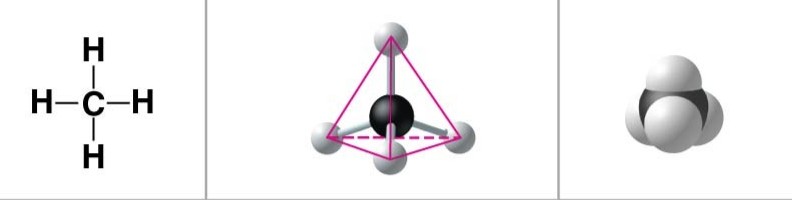
Tetrahedral Shape
The three-dimensional shape of a molecule when a carbon atom forms four single bonds.
Double Bond
A covalent bond involving two pairs of shared electrons between two atoms, causing atoms to lie in the same plane.
Carbon Skeleton
The chain or ring of carbon atoms that forms the backbone of an organic molecule.
Hydrocarbon
An organic molecule consisting only of carbon and hydrogen atoms (e.g., methane, propane).
FILL: Hydrocarbons can undergo reactions that release a lot of ______.
Energy
TRUE or FALSE: Hydrocarbons are fats
FALSE; hydrocarbons are parts of fats, but they are NOT fats themselves
Isomers
Compounds with the same molecular formula but different structures and properties.
Structural Isomers
Isomers that differ in the covalent arrangement of their atoms.
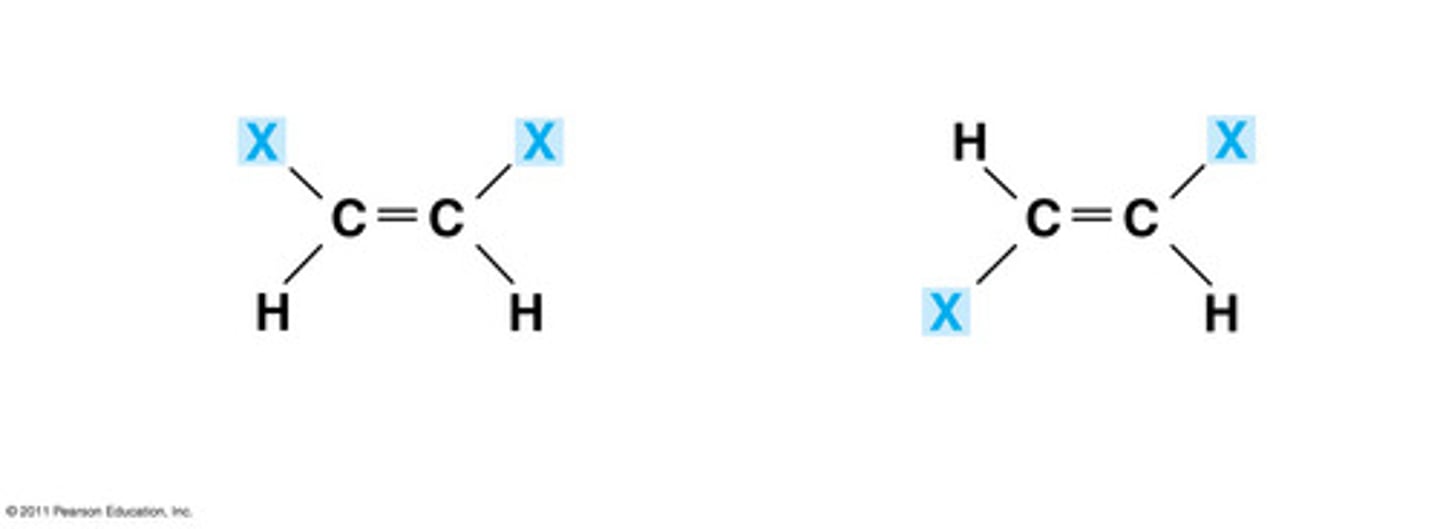
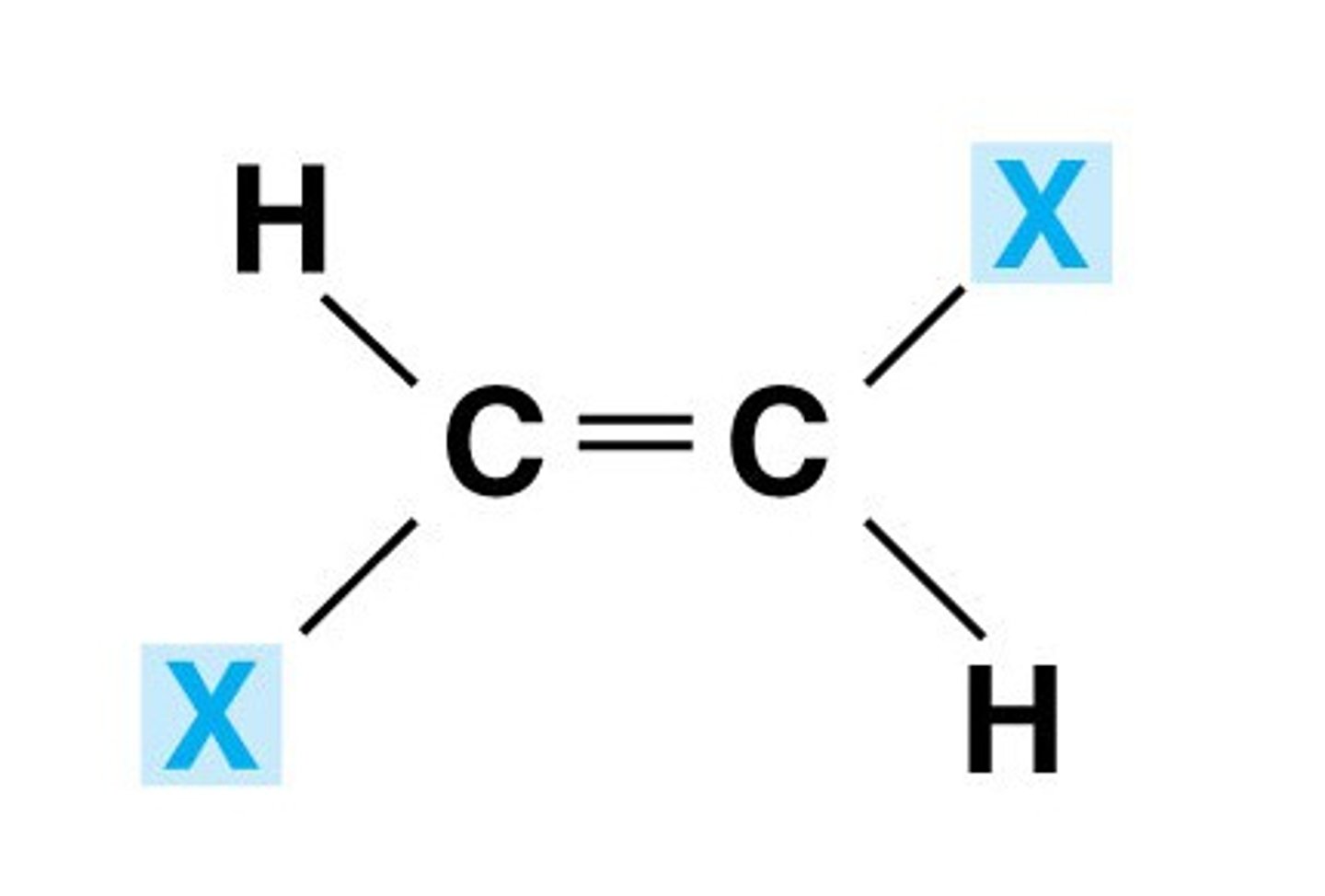
Cis-Trans Isomers
Isomers that differ in the spatial arrangement around a double bond.
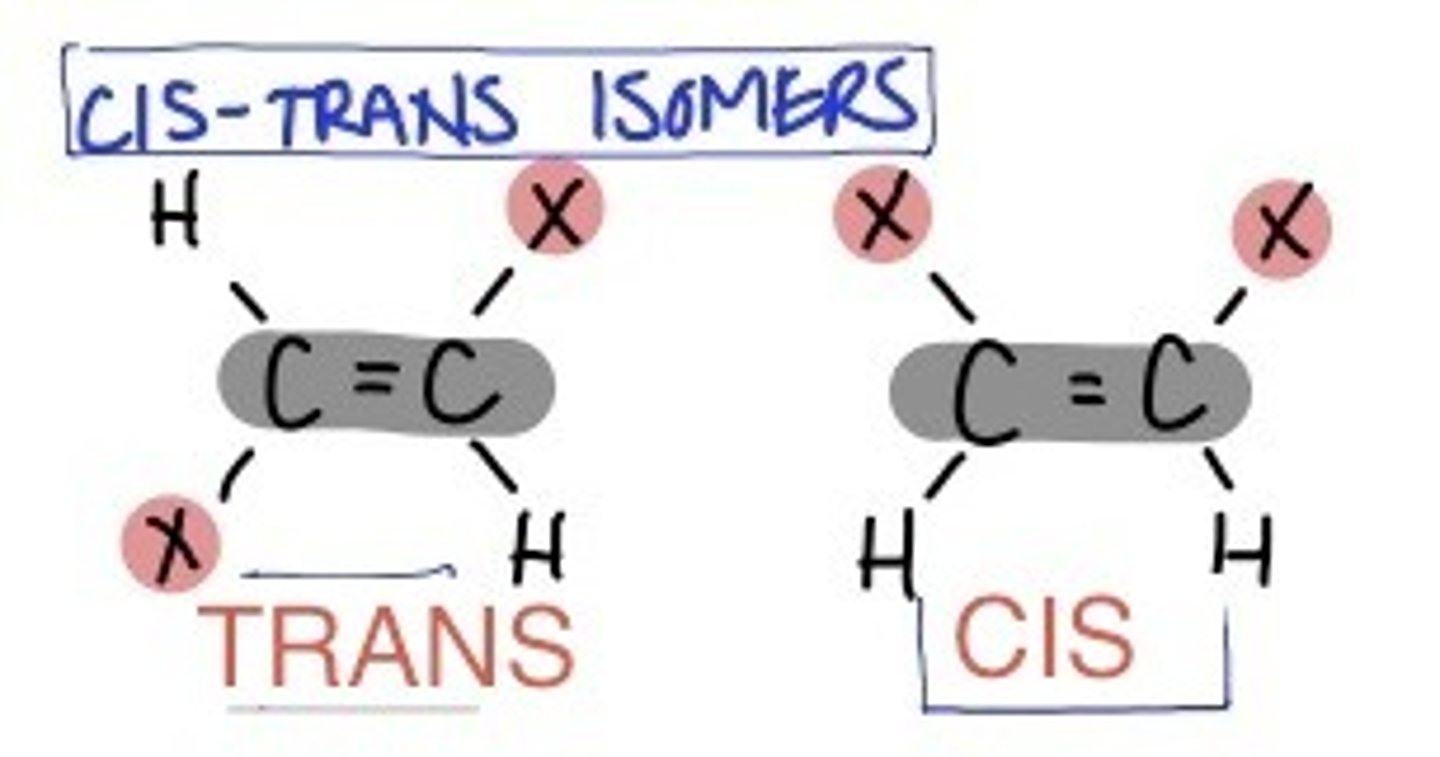
Cis-Trans Isomers ALWAYS have what type of bond?
Double bonds
Cis Isomers
the two Xs are on the same side
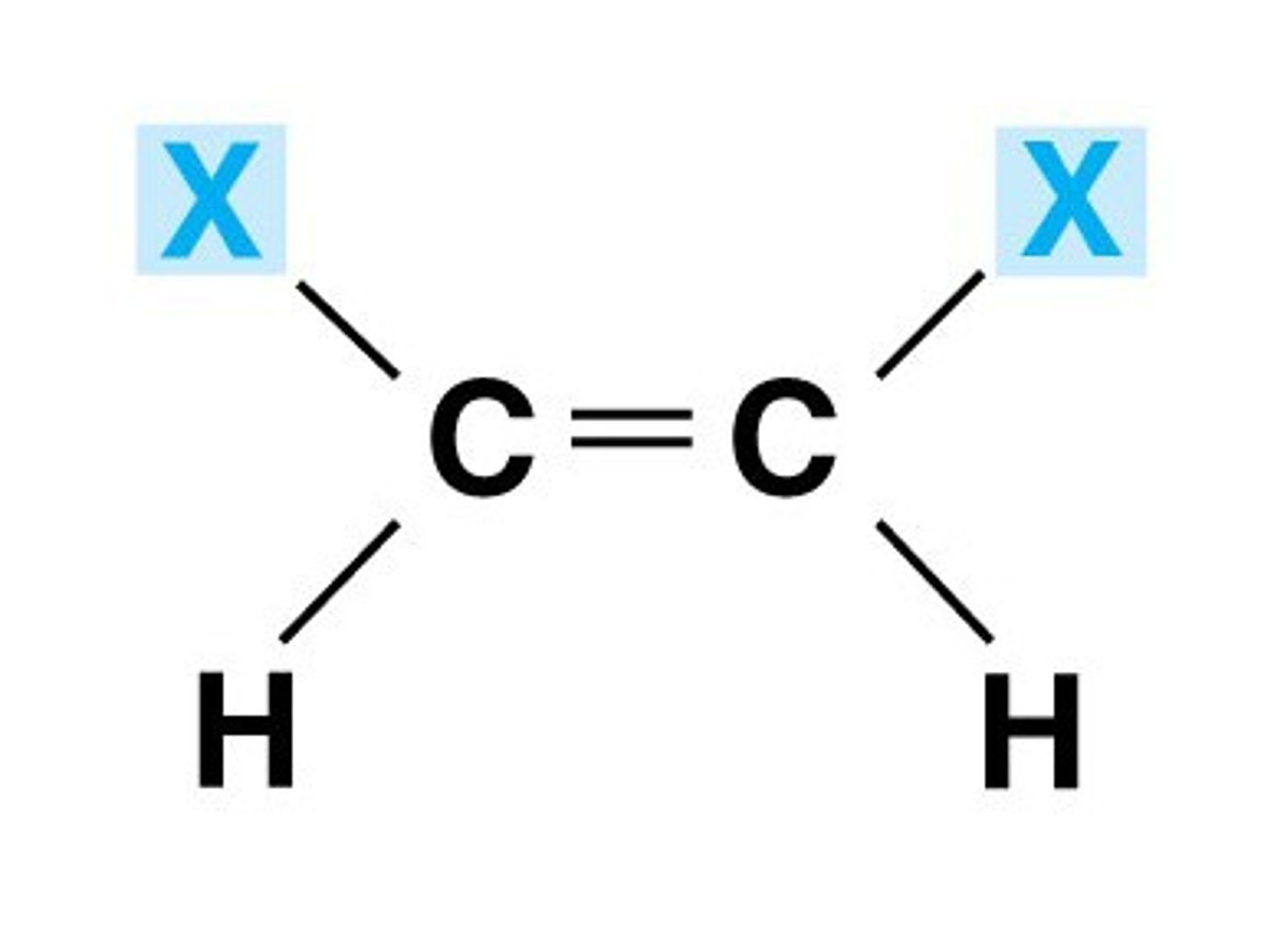
Trans Isomers
the two Xs are on opposite sides
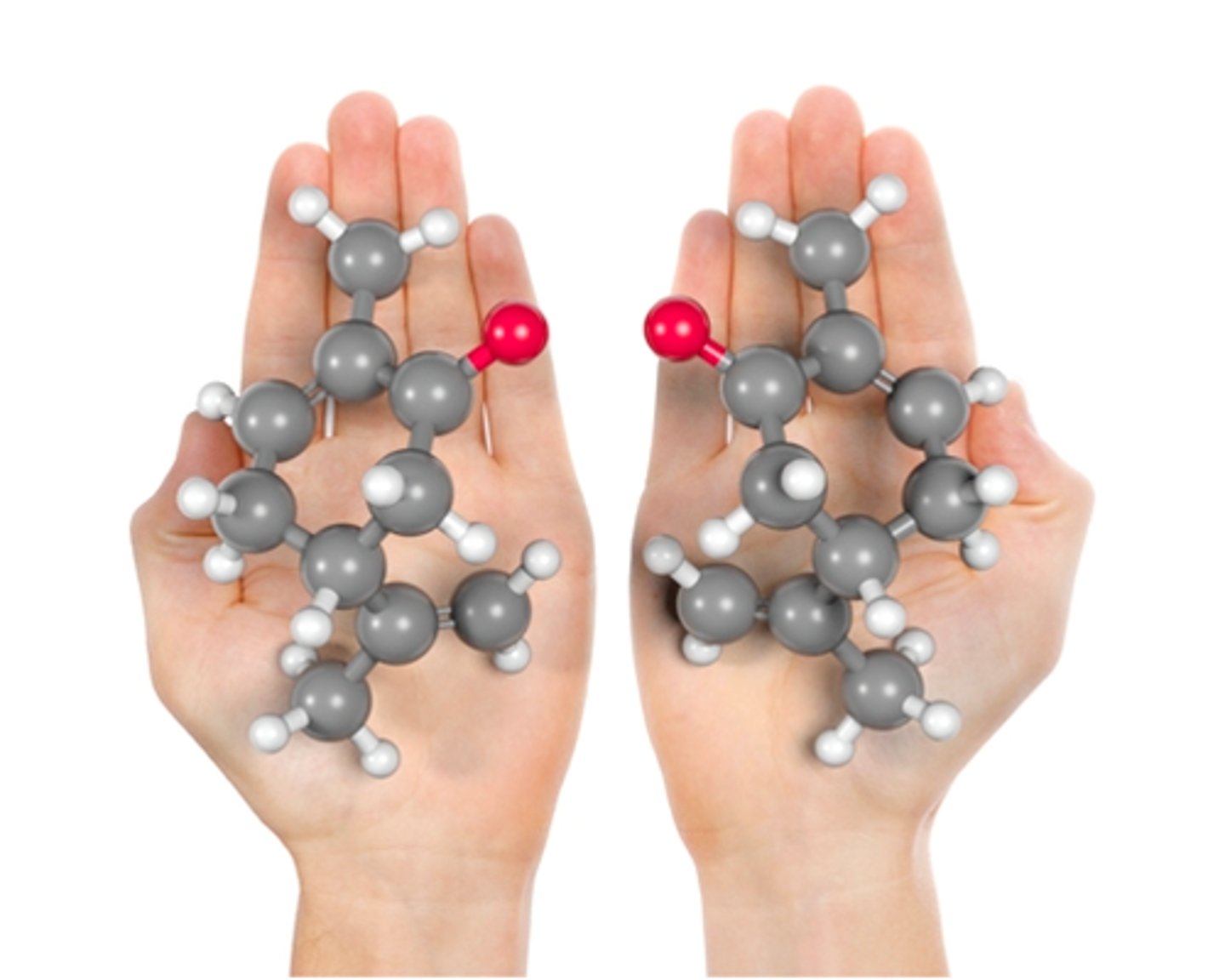
Enantiomers
Isomers that are mirror images of each other and cannot be superimposed.
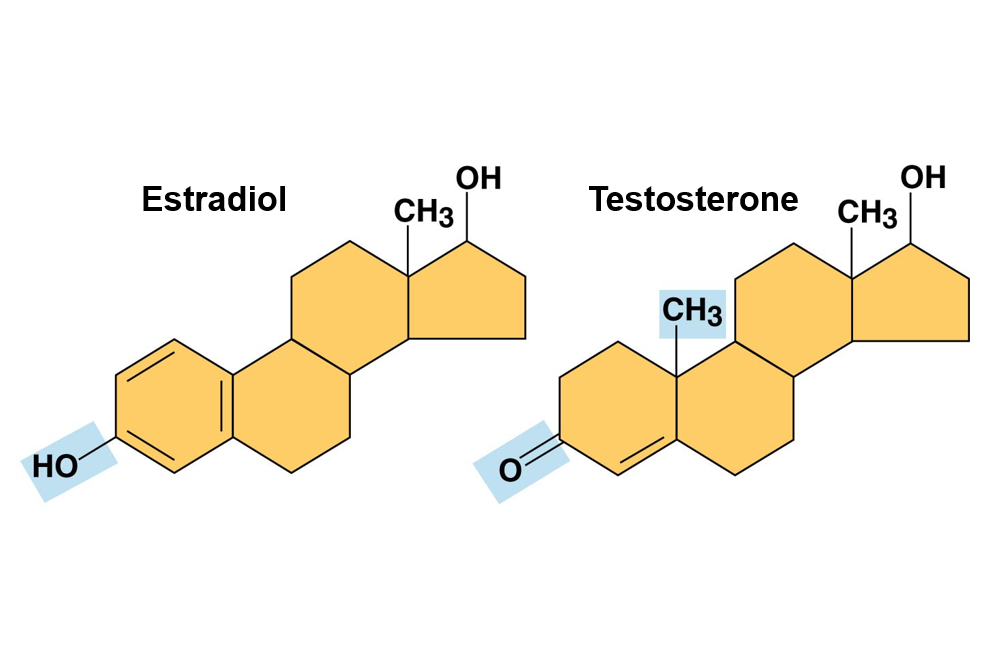
Functional Group
a specific group of atoms within a molecule that gives the molecule its unique properties and determines how it will react with other molecules
What gives each molecules its unique property?
The number and arrangement of functional groups
What components of organic molecules are most commonly involved in chemical reactions?
Functional groups
Hydroxyl Group (-OH)
A functional group found in alcohols; polar and hydrophilic.
Carbonyl Group (>C=O)
A functional group found in aldehydes and ketones.
Carboxyl Group (-COOH)
A functional group found in carboxylic acids; acidic properties.
Amino Group (-NH₂)
A functional group found in amines; basic properties.
Sulfhydryl Group (-SH)
A functional group found in thiols; important in protein structure.
Phosphate Group (-OPO₃²⁻)
A functional group found in ATP and nucleic acids; stores energy.
Methyl Group (-CH₃)
A functional group that affects gene expression and protein function.
What are the 7 most important functional groups?
Hydroxyl group
Carbonyl group
Carboxyl group
Amino group
Sulfhydryl group
Phosphate group
Methyl group
Adenosine Triphosphate (ATP)
Molecule that stores and transfers energy in cells.
What does ATP consist of?
composed of adenosine and three phosphate groups
What happens when ATP reacts with water?
the third phosphate is split off and energy is released to be come ADP
What process causes ATP to lose a phosphate group when it reacts with water?
Hydrolysis
What is hydrolysis?
A chemical reaction in which a molecule is broken down by water
Energy Release
The process by which ATP reacts with water, releasing energy that drives cellular processes.
Valence
The number of covalent bonds an atom can form, determined by its unpaired valence electrons.
FILL: The number of unpaired electrons in the valence shell of an atom is generally equal to its ________ , which determines the ________ it can form.
valence, number of covalent bonds
Oxygen has six valence electrons. How many covalent bonds can it form?
2 bonds
nitrogen has 5 valence electrons. How many more electrons does nitrogen need to satisfy the octet rule?
3 electrons
Hydrophobic
Water-repelling; a property of nonpolar molecules like hydrocarbons.
Hydrophilic
Water-attracting; a property of polar molecules like those with hydroxyl or carboxyl groups.
Polar Molecule
A molecule with an uneven distribution of charge, making it soluble in water.
Nonpolar Molecule
A molecule with an even distribution of charge, making it insoluble in water.
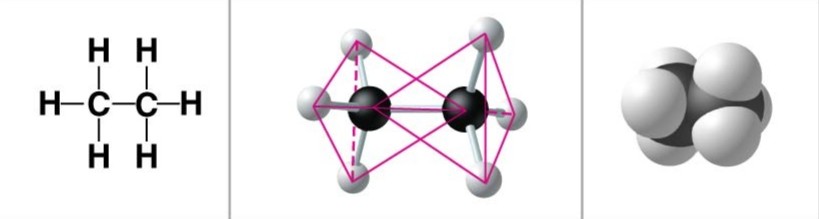
Single carbon bonds result in ___________.
Tetrahedral shapes