Mr Levy's Terms fro Unit 10&11
 Call Kai
 Learn
Learn Practice Test
 Spaced Repetition
 Match
Match Flashcards
 Knowt Play
1/42

There's no tags or description
Looks like no tags are added yet.
Name | Mastery | Learn | Test | Matching | Spaced | Call with Kai | Chat |
|---|
No analytics yet
Send a link to your students to track their progress
43 Terms
Weber analysis of industry location
The optimum location of a firm is determined by transport cost, labour cost and advantages of agglomeration.
Environmental laws
A collective term encompassing aspects of law that focus on protecting the natural environment, human health, and natural resources.
Labor availability and cost
The accessibility and affordability of a workforce
Access to markets
A nation or company's ability to trade goods and services, both domestically and internationally, and is influenced by factors like location, trade barriers, and infrastructure.
Bulk gaining
Industries that gain weight or volume during production
Bulk reducing
Industries that lose weight or volume during production
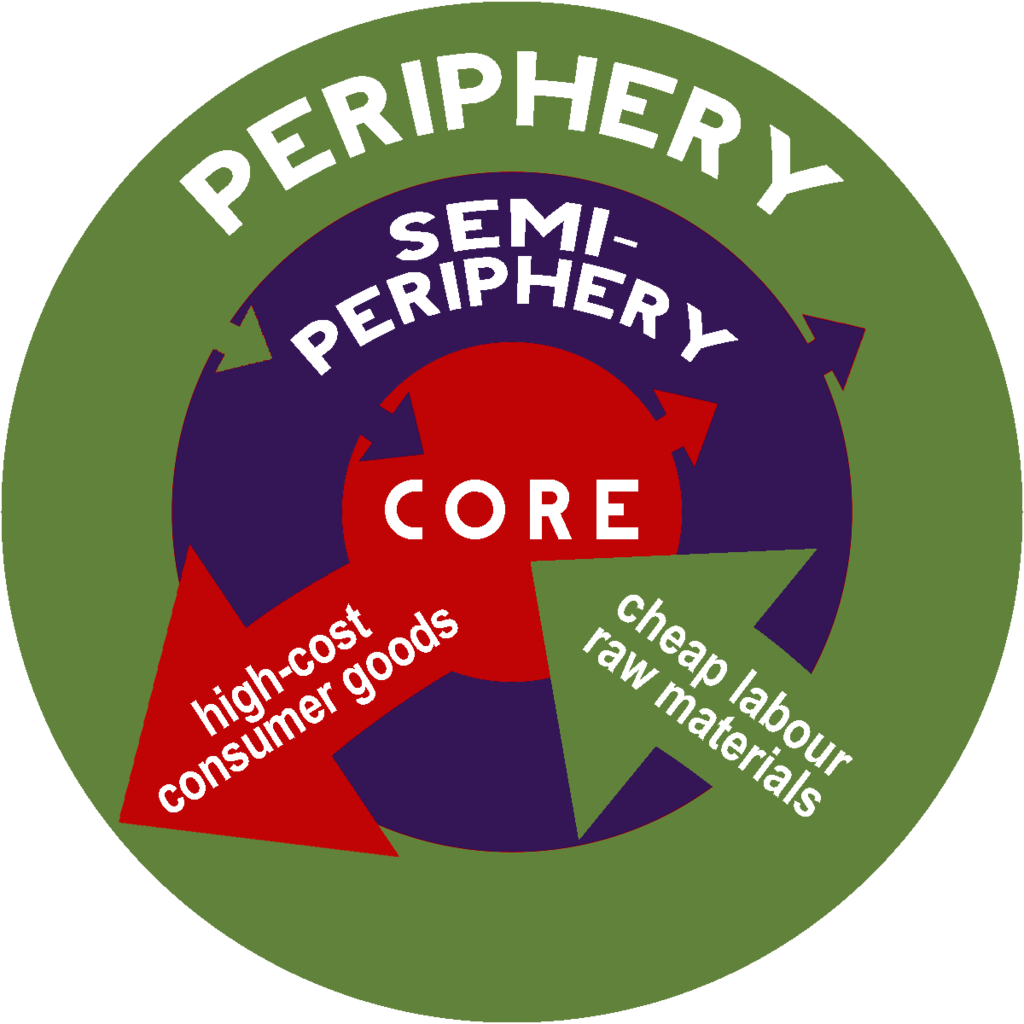
The Wallerstein Model
Categorizes countries into core, semi-periphery, and periphery based on their economic and political power.
The Wallerstein Model
Categorizes countries into core, semi-periphery, and periphery based on their economic and political power.
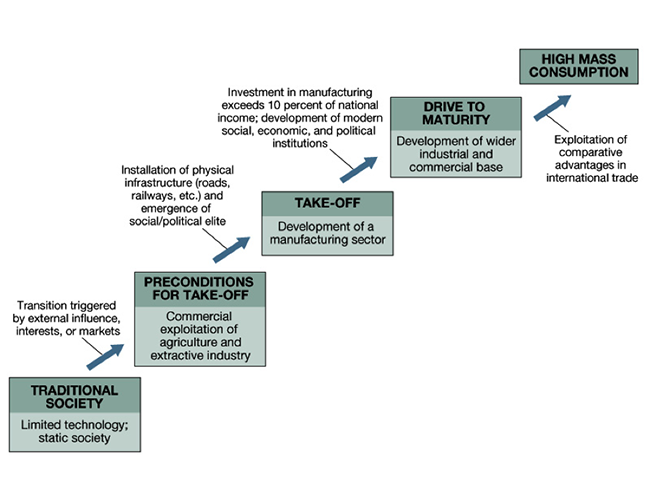
Rostow’s model of development - all stages
Traditional society, preconditions to take-off, take-off, drive to maturity, and age of high mass consumption
What are the flaws of Rostow’s model of development?
It does not account for the interdependence of some countries.
Free trade
Policies that allow the free flow of goods and services between countries, with minimal or no government intervention in the form of tariffs, quotas, or other trade barriers.
Tariffs
Taxes or duties imposed on imported goods, typically charged as a percentage of the product's value.
Break of bulk
Goods transported in individual units (like crates, bags, boxes, drums, or barrels) rather than in containers.
Alternative energies
Solar, wind, geothermal, hydropower, bioenergy.
Fossil Fuels
Non-renewable energy sources, including coal, oil, and natural gas, formed from the remains of ancient organisms and used for energy production.
Growth Poles
Specific locations within a country or region that are identified as having the potential for significant economic growth and development.
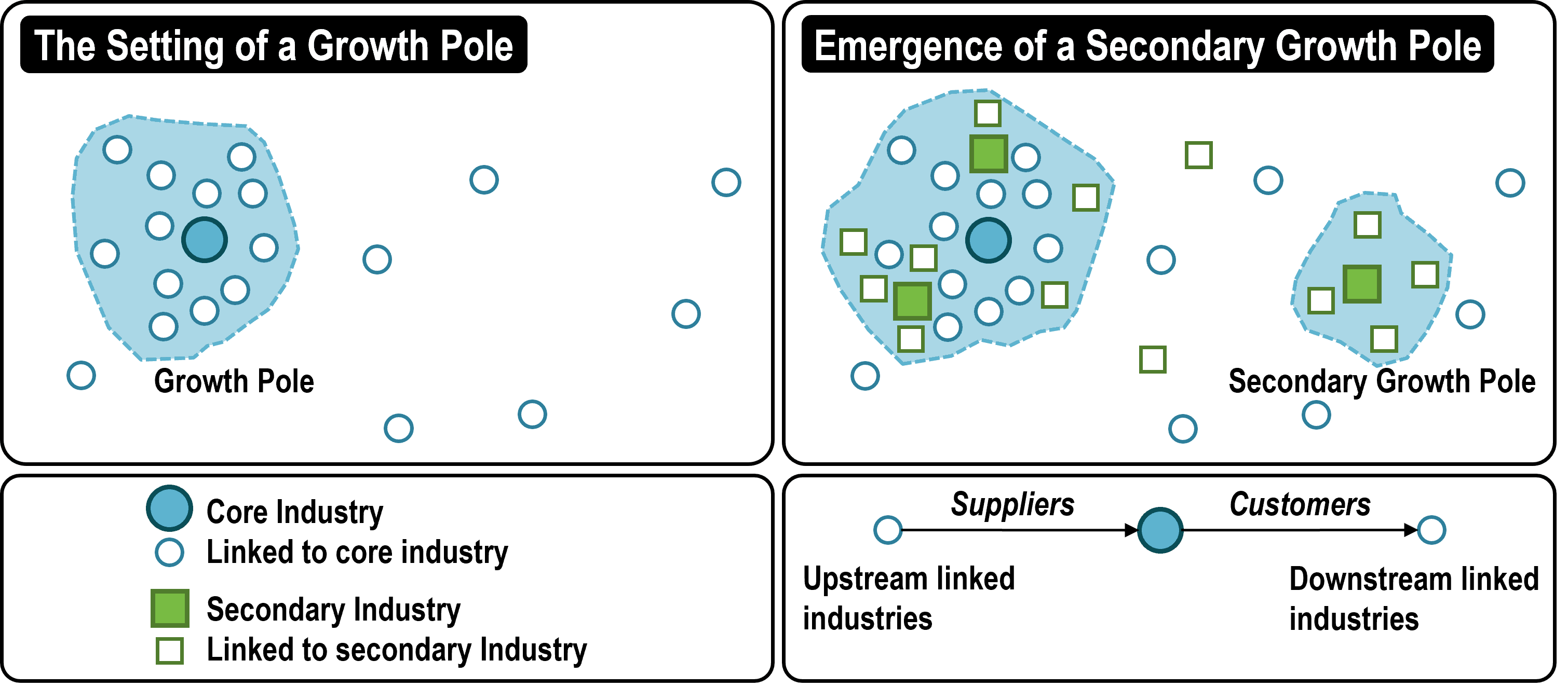
Agglomerations
The clustering of similar industries or businesses in a specific area, leading to benefits like shared resources, lower costs, and increased efficiency.
Where industry have shifted in America / globally
Globally, the industry has shifted away from China and is moving toward India, South Asia, Mexico, and North America. (They have moved toward the south in America)
Advantages of outsourcing for core and developing nations
Core nations potentially gaining cost savings and access to specialized skills, while developing nations can see job creation, economic growth, and technology transfer
Disadvantages of outsourcing for core and developing nations
Core nations facing job losses and economic downturns, while developing nations may experience exploitation and uneven development
Spatial disaggregation of production
The process of breaking down a production process into separate locations, often across different geographical regions, to optimize efficiency, costs, and labor resources
Comparative advantage
The ability of a country, individual, or business to produce a good or service at a lower opportunity cost than another.
Vertical integration
Manufacturing company will attempt to merge with another company that possesses forward or backward links in the supply or production process
Just in time delivery
A strategy where goods are received from suppliers only when they are needed in the production process, minimizing inventory and waste
Fordism
Characterized by mass production and standardized products.
Post fordism
Emphasizes flexibility, customization, and skilled labor, reflecting a shift in economic and social organization.
European Union
A group of 27 countries in Europe
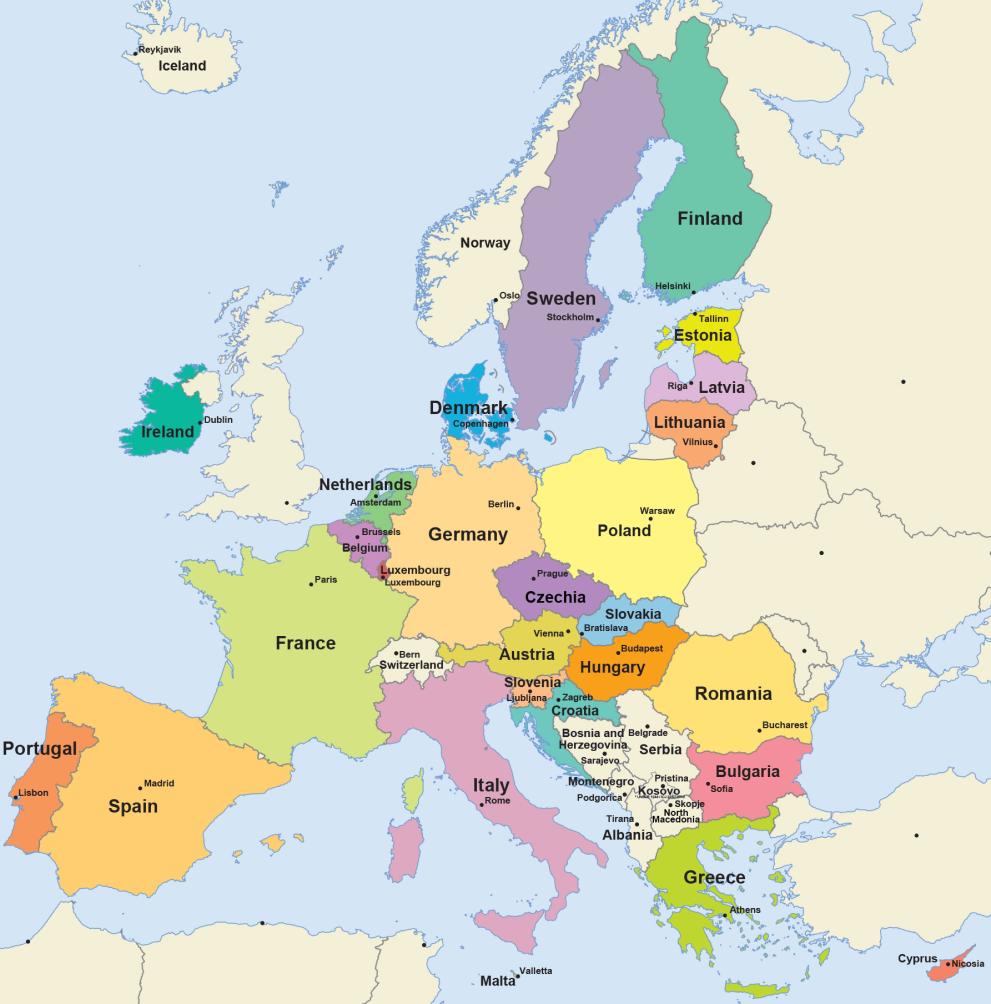
Countries in European Union
Austria, Belgium, Bulgaria, Croatia, Republic of Cyprus, Czech Republic, Denmark, Estonia, Finland, France, Germany, Greece, Hungary, Ireland, Italy, Latvia, Lithuania, Luxembourg, Malta, Netherlands, Poland, Portugal, Romania, Slovakia, Slovenia, Spain and Sweden
Links between development and birth rates
Fertility declines as a country becomes more developed
Deindustrialization of core countries
There has been a shift from industrial to service-based economies
How does industrialization affect urbanization?
Creating economic opportunities and job growth in urban areas, attracting people from rural areas and leading to population growth and the expansion of cities
Globalization
The increasing interconnectedness and interdependence of nations through the flow of goods, services, capital, people, and ideas across international borders, leading to both economic and cultural changes.
SEZs (special economic zones)
An area in a country that is designed to generate positive economic growth
Maquiladoras
A factory or manufacturing plant in Mexico
HDI (Human Development Index)
Health (Life expectancy at birth)
Knowledge (Mean years of schooling and expected years of schooling)
Standard of living (gross N)
GII (Gender Inequality Index)
Reproductive Health (maternal mortality ratio and adolescent fertility rate
Empowerment (proportion of parliamentary seats held by women and the attainment of secondary and higher education)
Labor Market Participation (labor force participation rate of women)
GDP (gross Domestic Product)
The value of all goods and services produced within a country.
GNI (Gross National Income)
The income received from abroad minus income paid to foreigners.
Microloans
Typically ranging from $100 to $25,000, provided to entrepreneurs and small business owners, often in developing countries, who lack access to traditional banking services.
How the internet is reshaping industry?
Creates global reach, Facilitates real-time communication, promotes digital marketing, and enables new business models. It also presents new challenges like cybersecurity threats and the need for constant innovation.
Overall: it has changed how consumers gather information, buy products, and interact with retailers !!
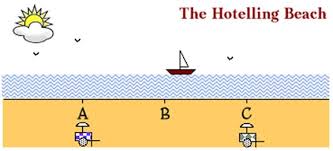
Hotelling
Explains how firms choose locations to minimize competition, often leading to a clustering of businesses in a market area, even if they offer similar products
Labor-Intensive
Industries that rely heavily on human labor are particularly sensitive to labor costs.
Capital-Intensive
Industries that rely more on machinery and technology may be less affected by labor costs.