Topic-2 (Atomic structure, Periodic table trends, mass spectrometry) IAL Chemistry
 Call Kai
 Learn
Learn Practice Test
 Spaced Repetition
 Match
Match Flashcards
 Knowt Play
1/29

There's no tags or description
Looks like no tags are added yet.
Name | Mastery | Learn | Test | Matching | Spaced | Call with Kai | Chat |
|---|
No analytics yet
Send a link to your students to track their progress
30 Terms
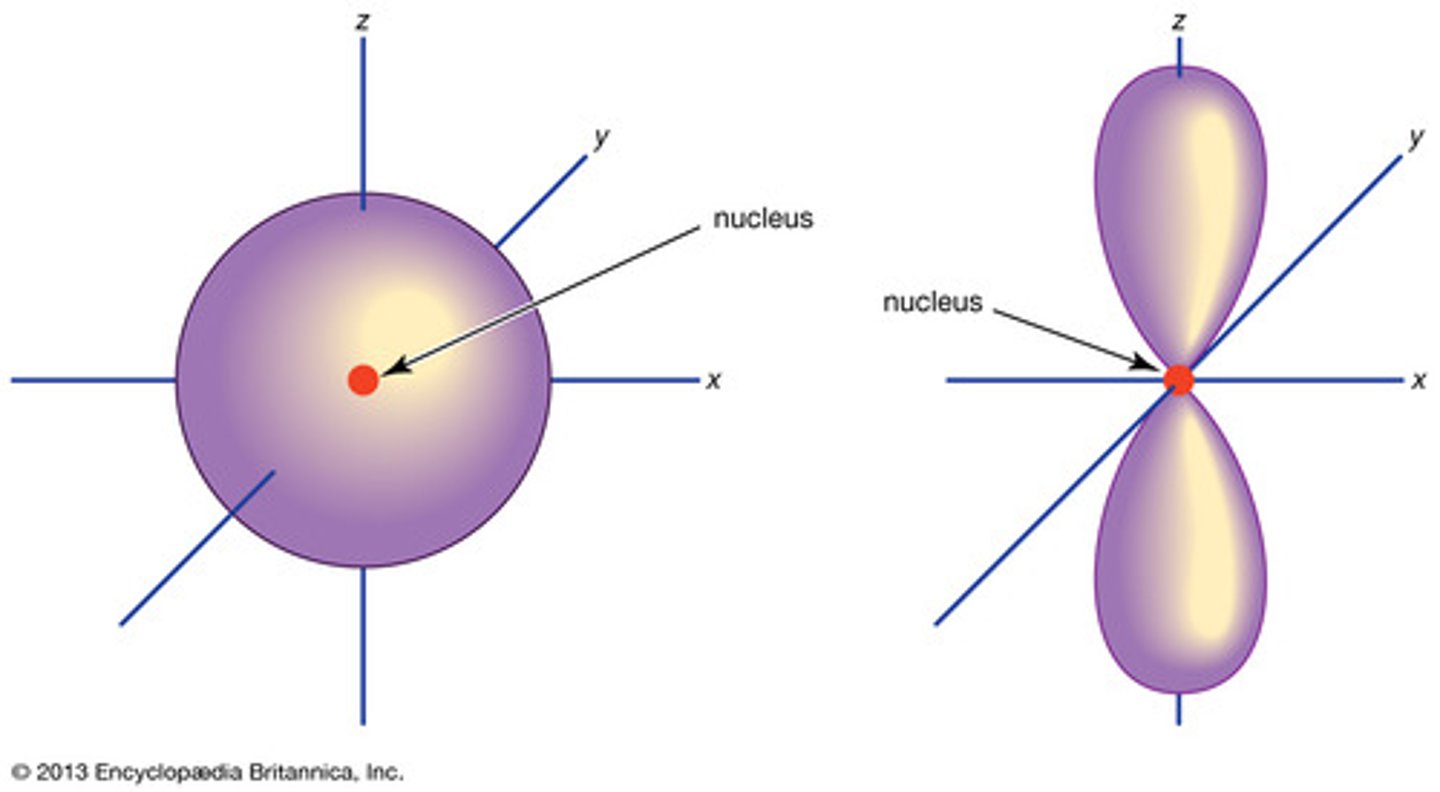
describe the shapes of s and p orbitals
- s orbitals are spherical shaped
- p orbitals are dumbbell shaped.
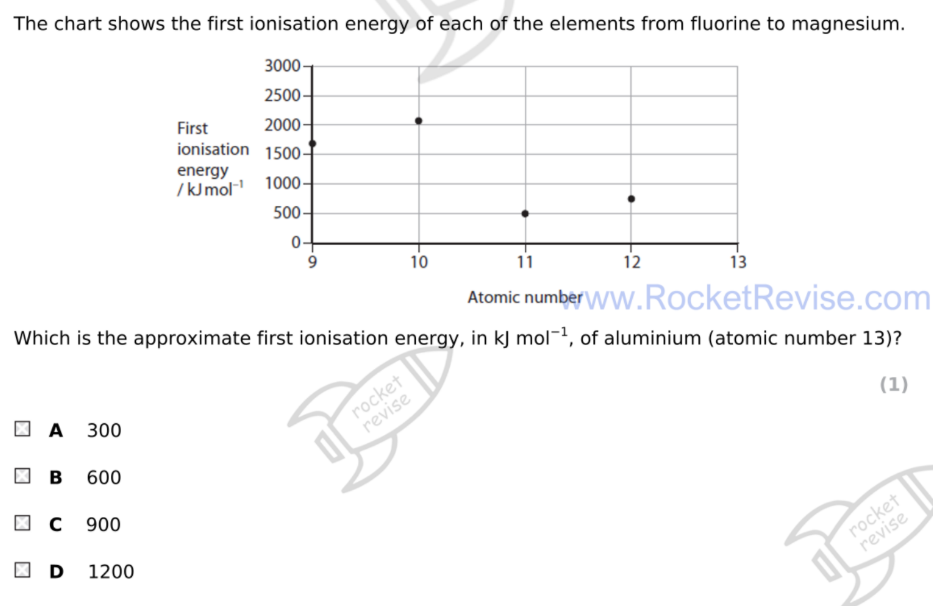
B, Al has lower First IE than Mg
because Al outermost electron is in a higher level 3p and so it experiences more shielding than Mg outermost electron in 3s
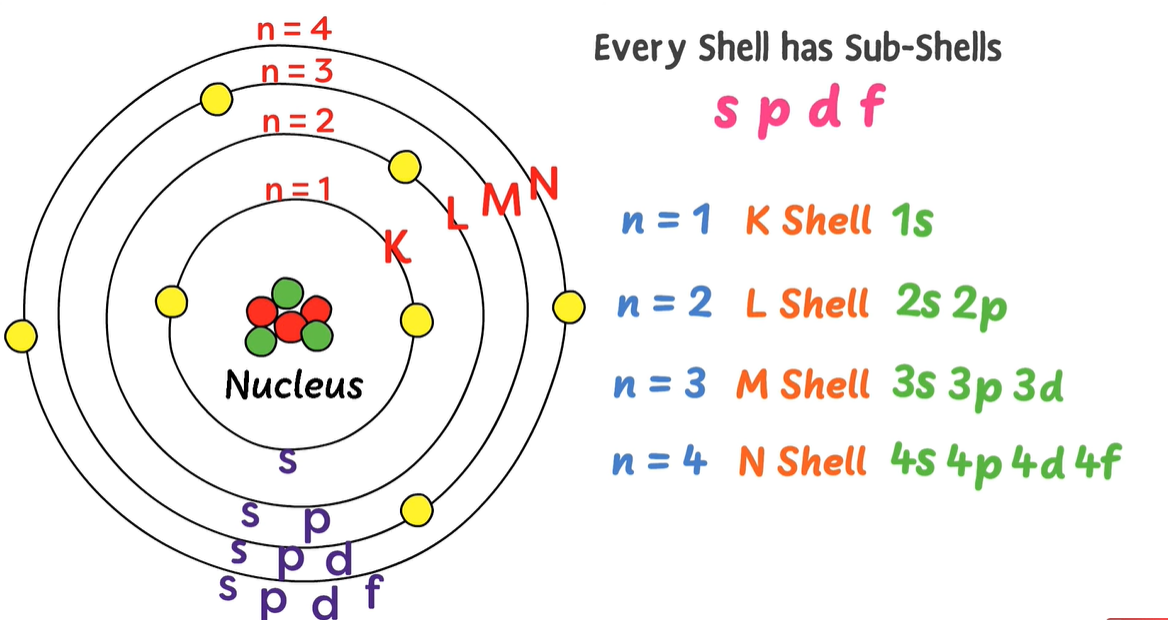
Give the energy level of orbitals (the pyramid) until
5th quantum shell/ principle level .
1s
2s, 2p
3s, 3p, 3d
4s, 4p, 4d, 4f
5s, 5p, 5d
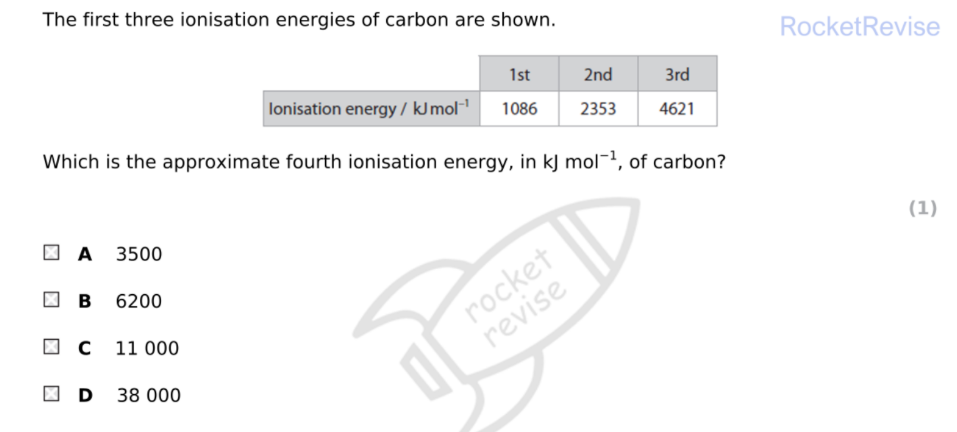
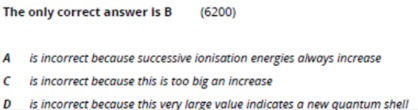
carbon has 4 outerelectrons, so first 4 has gradual increase
but then the 5th I.E shows a large jump because now electron is being removed from a new, lower quantum shell/energy level with much less shielding
1s2 2s2, 2p2 —> basically first 4 removed from energy level 2 but 5th is removed from energy level 1
State how many orbitals and electrons are there in s,p,d,f subshell
s = 1 orbital (2 electrons)
p = 3 orbitals (3x2 = 6 electrons)
[px, py, pz]
d = 5 orbitals (5x2 = 10 electrons)
f = 7 orbitals (7x2 = 14 electrons)
![<p>s = 1 orbital (2 electrons)</p><p>p = 3 orbitals (3x2 = 6 electrons)</p><p>[px, py, pz]</p><p>d = 5 orbitals (5x2 = 10 electrons)</p><p>f = 7 orbitals (7x2 = 14 electrons)</p>](https://assets.knowt.com/user-attachments/e2e9dd63-0ab9-4b52-9c11-9806dbcf70de.png)
Give the order of subshells in increasing energy
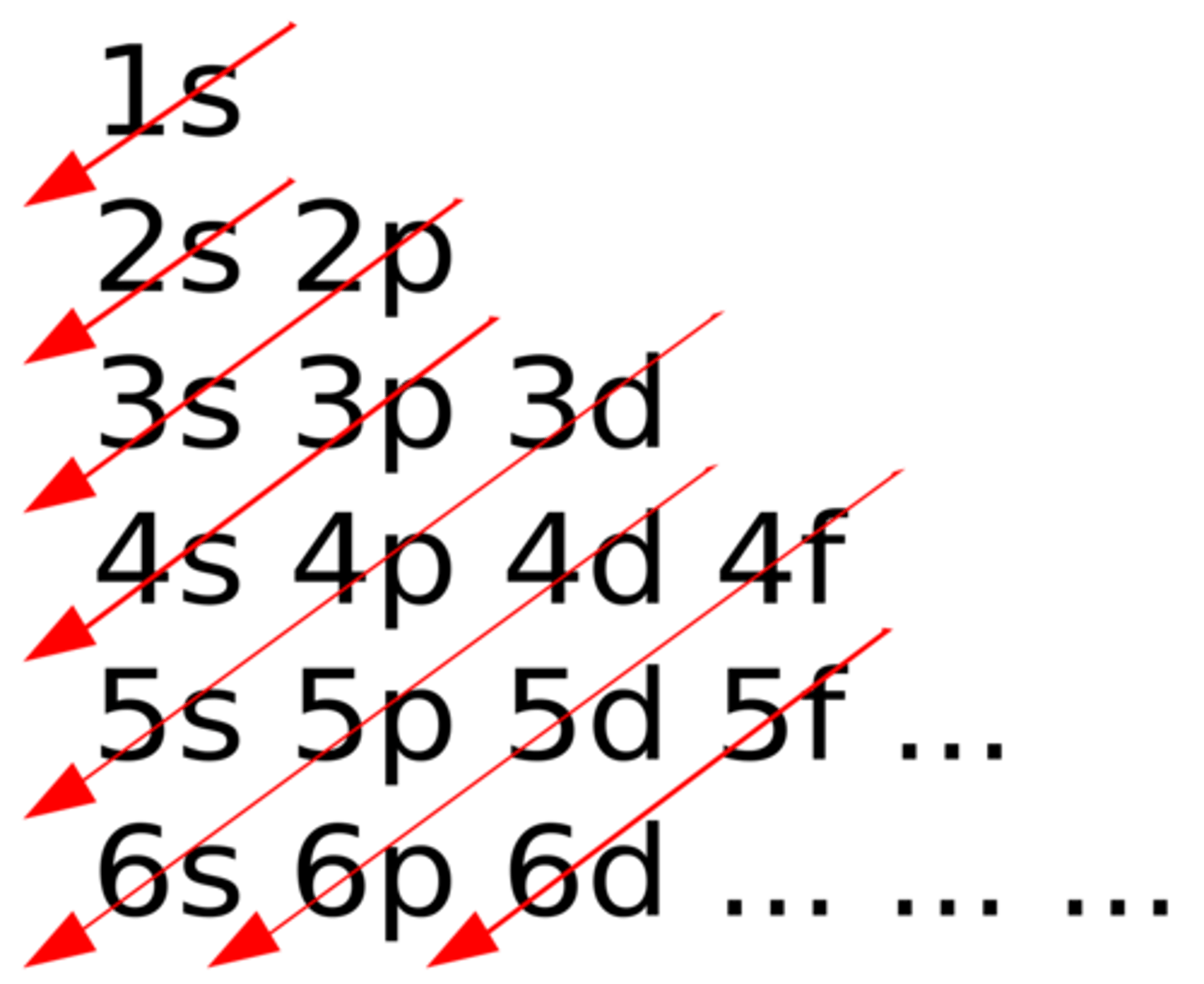
1s, 2s, 2p, 3s, 3p, 4s, 3d, 4p, 5s,4d, 5p
(note that 4s comes before 3d because it has lower energy. so its like 4s and 4p in between 3d.)
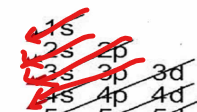
- Use the pyramid type diagram with arrows to help figure out energy levels
Give the electronic configuration of Ca atom (atomic no = 20)
1s2, 2s2, 2p6, 3s2, 3p6, 4s2
Give the electronic configuration of Fe 2+ ion (atomic no = 24)
step 1→ write Fe atom(26) configuration:
1s2, 2s2, 2p6, 3s2, 3p6, 4s2, 3d6
step 2 → Fe 2+ ion config:
remove the 2 electrons in 4s orbital to give final answer:
1s2, 2s2, 2p6, 3s2, 3p6, 3d6
(Because 4s orbital electrons are in the outermost shell & so they are removed first when forming +ve ions)
give configuration for Cl- ion (18)
cl atom (17)
1s2, 2s2, 2p6, 3s2, 3p5
so cl- ion: 1s2, 2s2, 2p6, 3s2, 3p6 (1 more electron added)
Give electronic configuration for the 2 atoms that are exceptions:
1. Cr (24)
2. Cu (29)
box notation electronic configuration for copper
An OH- ion has 9 protons. State how many neutrons and electrons it has.
neutron number = 8
( oxygen has 8 neutrons & hydrogen has 0 neutrons)
electron number = 10
(9 protons = 9 electrons initially and then add 1 as its negatively charged, so 9+1 = 10)
Explain why first Ionization energy of oxygen is less than nitrogen (3marks)
- the electron being removed in oxygen is paired in the 2p orbital
(while the electron being removed in nitrogen is unpaired electron)
- less energy is needed to remove a paired electron compared to an unpaired electron
- because paired electrons repel each other
Nitrogen (7) --> 1s2, 2s2, 2p3
(p orbital has 1 pair of e- and 1 unpaired electron)
Oxygen (8) --> 1s2, 2s2, 2p4
(p orbital has 2 pairs of electron)
state the variation/trend in ionic radius down the group for the 7 groups:
groups 1 to 6, ionic radius increases down the group
[NOTE → Down any group where ions are formed, ionic radius increases because:
more electron shells added
more shielding
outer electrons further from nucleus
(for group 7/0, since they are noble gases they don’t form ions)
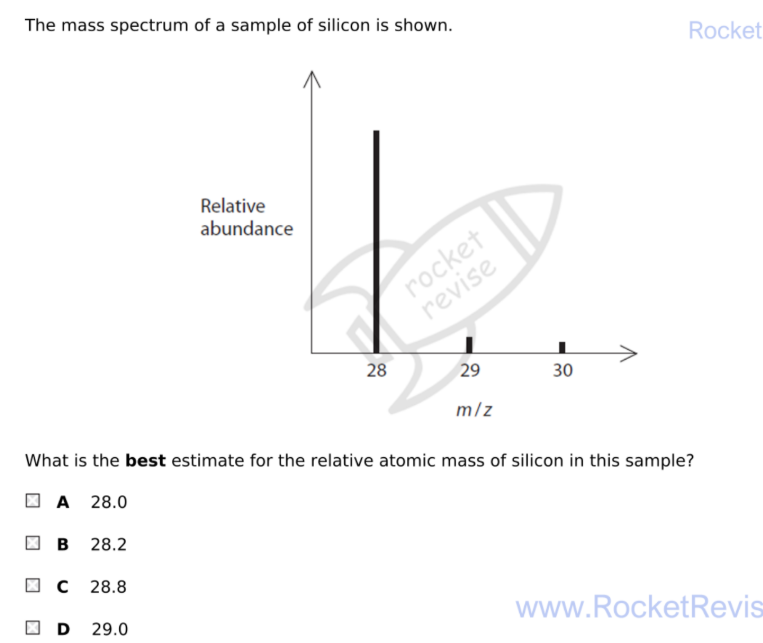
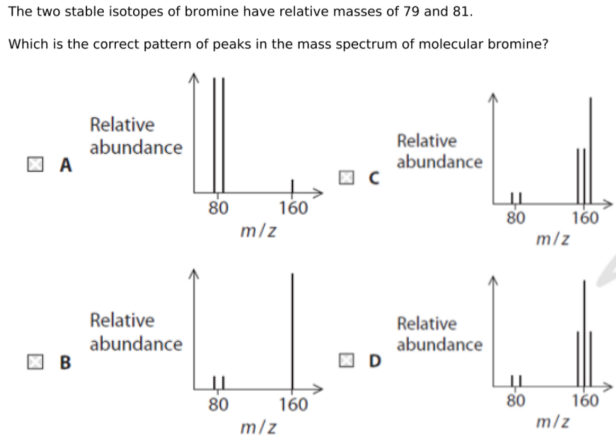
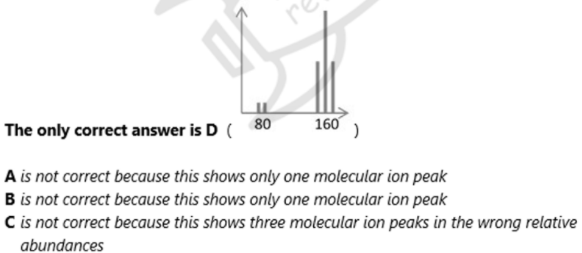
B
( biggest peak is at 28 but answer can't be 28.0 exactly, must be slightly higher as there are peaks at 29 and 30 also)
state the trend with IE and atomic radius across period 2 and 3
- IE increases across period 2 and 3
(so m.p also increases until Carbon for period 2 and Al for period 3, cuz after its gases and they have lower M.P)
- atomic radius decreases
( because across a period the nuclear charge increases, so the outer shell is pulled closerto the
nucleus)
state the trend for ionic radius of metal ions across Period 2 and 3
Metal ion radius decreases across the period (for period 2 and 3)
Na⁺ is largest
Mg²⁺ is smaller
Al³⁺ is smallest
(Number of protons increases across the period → stronger nuclear attraction
The ions have the same number of electron shells (isoelectronic)
More protons pull the electrons closer to the nucleus)
state the trend for ionic radius gaseous ions across a period (like Period 2 and 3)
Ionic radius of gaseous ions decreases across the period
In mass spectrometry, the ion with the greatest deflection is the one with the smallest m/z ratio
m/z= mass of ion/ charge of ion
out of F-, Na+, Mg2+ and O2-, which has smallest ionic radius?
notice they all have 10 electrons
For isoelectronic ions:
more positive charge → smaller radius
ans: Mg2+
State what is meant by the term orbital (2marks)
- a region within an atom
- where the probability of finding an electron is highest
Describe what can be deduced about the electronic structure of sodium from its successive ionisation energies.
[3 marks]
Define the term first ionization energy
[3marks]
- the energy needed to remove 1 electron
- from each atom in 1 mole of gasoeus atom
- to form 1 mole of gasous 1 + ion
(NOTE → IE is always endothermic)

Explain why the first IE of Lithium is less than Boron
[3marks]
- across the period shielding effect remains same, so Li and B has the same shielding effect
- however boron has more number of protons and greater nuclear charge than Li
- thus there is greater attraction between nuclues and outermost electrons for boron, and hence boron is smaller in size than lithium so more IE is needed than Li.
In summary:
Same shielding →(more protons) greater nuclear charge→ Stronger attraction between nuclues and outermost e-
→ Smaller atomic radius → Higher ionisation energy
Explain how atoms are ionised in the mass spectrometer (2marks)
- vaporized atoms are bombarded with high energy electrons (from an electron gun)
- these high energy electrons collide with the atoms, removing an electron to form positive ions.
State why four isotopes of Cr behave identically in chemical reactions
- they all have same electronic configuration
(same number of electrons may be REJECTED because Ne and Mg2+ both have 10 electrons and yet behave non-identically in reactions)
Explain why is the first IE of Al lower than Mg?
[2marks]
(Normally across the period IE increases due to same shielding but greater nuclear charge, this is an exception)
Al outermost electron is removed from a higher energy level, 3p or higher energy 3p orbital compared to 3s orbital in Mg
thus Al has lower first IE
Mg: 1s² 2s² 2p⁶ 3s²
Al: 1s² 2s² 2p⁶ 3s² 3p¹
NOTE: The two exceptions you must memorise
Be → B (or Mg → Al) ✅
Electron removed from a p orbital instead of an s orbital → IE decreases.
N → O (or P → S) ✅
Electron pairing occurs in a p orbital, causing electron-electron repulsion → IE decreases.
These are the only two exceptions to the general increase in first ionisation energy across Periods 2 and 3
Explain the the trends in M.P and B.P of the elements of Periods 2 and 3 in the Periodic Table
- both m.p and b.p increase until Carbon for period 2 and until Silicon for period 3
- m.p and b.p increases upto C and Si because metallic bonding becomes stronger and both C and Si have giant covalent structures
- after C and Si m.p & b.p decreases as the elements after have simple molecular structures which only have weak intermolecular forces between its molecules

Explain why the first ionisation energy of aluminium is lower than that of magnesium. (2 marks)
- for Al, the outermost electrons are removed from 3p subshell (whereas in Mg it is removed from a 3s subshell)
- 3p subshell electrons are higher in energy so they are easier to remove,
hence first I.E of Al is lower than Mg