Reversible Cell Injury I
 Call Kai
 Learn
Learn Practice Test
 Spaced Repetition
 Match
Match Flashcards
 Knowt Play
1/29

There's no tags or description
Looks like no tags are added yet.
Name | Mastery | Learn | Test | Matching | Spaced | Call with Kai | Chat |
|---|
No analytics yet
Send a link to your students to track their progress
30 Terms
Cell injury
A change in cell structure, metabolism, physio-chemical properties and function which leads to impairment of its vital activity
Reversible
A cell injury is considered ________ when environmental changes exceed the capacity of the cell to maintain normal homeostasis
irreversible
a cell injury is considered ________ if the injury persist or is severe that could lead to cell death
Depletion of ATP
Influx of Calcium
Oxidative Stress (Oxygen-Derived Free Radicals)
Damage to DNA and Proteins
What are the mechanisms of Cell injury?
Reduced supply of oxygen and nutrients
mitochondrial damage
toxins (like cyanide)
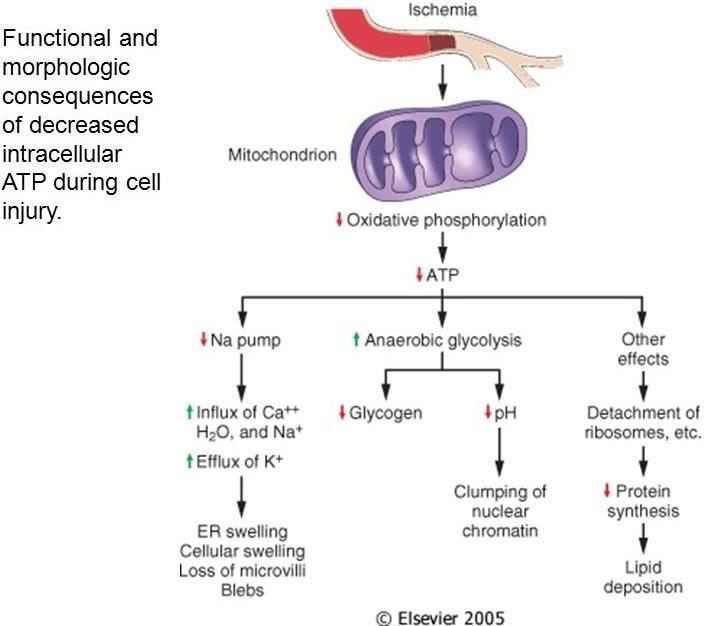
Major causes of ATP depletion
okie
Study the Diagram as it Explains the Consequences of Depletion of ATP
oke dokie
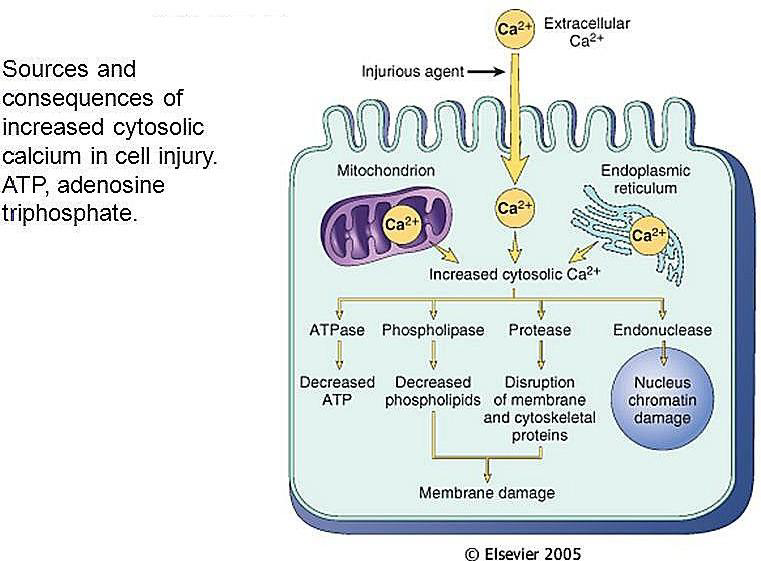
study the mechanism of Calcium Influx
Oxidative Stress
A condition called in increased production or decrease degradation of ROS (Reactive Oxygen Species/Free Radicals)
Absorption f radiant energy
Oxidation of Endogenous and Exogenous compounds
Oxidative Stress is generated by:
Molecular species with at least one oxygen atom and one or more unpaired electron available in an outer orbital.
What is an ROS?
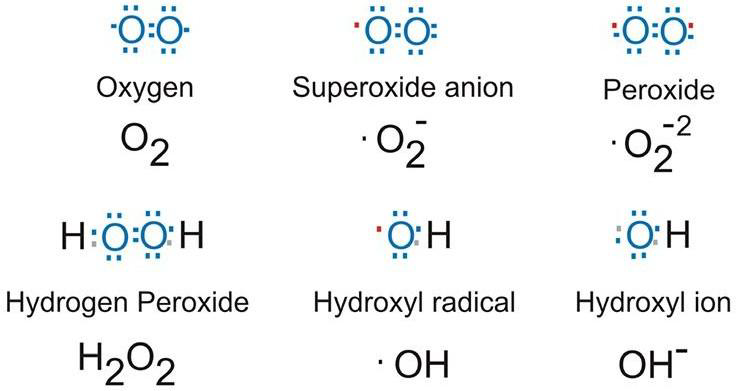
oxygen (O2)
Superoxide anion
peroxide
hydrogen peroxide (non-radical)
hydroxyl radical
hydroxyl ion
Examples of ROS
okie master
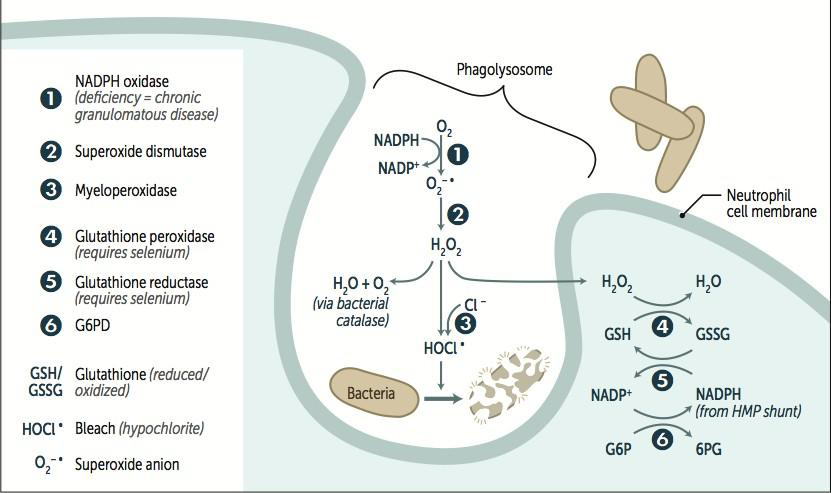
Study this Diagram about Respiratory Burst and ROS
site-specific amino acid modification
fragmentation of the peptide chain
aggregation of cross-linked reaction products
altered electric charge
enzyme inactivation
increased susceptibility of proteins to proteolysis
What does oxidative stress (high con. of ROS) do to protein?
Chain breakage
Increased in membrane fluidity and permeability
What does oxidative stress (high con. of ROS) do to lipds?
Deoxyribose oxidation
strand breakage
removal of nucleotides
modification of bases
DNA-protein crosslinks
What does oxidative stress (high con. of ROS) do to DNA?
Radiation injury
oxidative stress
inherited mutations
What are the 3 major cause of DNA and protein damage?
The cell initiates its suicide program ad dies by apoptosis
Cells have mechanisms that repair damage to DNA. What will happen if the damage is too severe?
ROS
Endogenous cause of DNA damage
errors in DNA repair
spontaneous cause of DNA damage
ionizing radiation such as gamma rays and x-rays
Ultraviolet, especially UV-C rays (260nm) that are absorbed strongly by DNA, and UV-B that penetrates the ozone shield
What kind of radiation exposure can cause DNA damage?
food additives
aflatoxin
nicotine
Examples of Mutagenic substances
sublethal, sustained
When cellular injury is _____ and _____, cells and tissues tend to accumulate substances in abnormal quantities.
exogenous or endogenous
Cellular degeneration can be _____ or ______
Intra and extra accumulation
intra and extra pigmentation
pathological mineralization
3 Patterns od morphological changes in Cellular Degeneration:
cloudy swelling
hydrophic change or vacuolar degeneration
ballooning degeneration
What physical change on the cell indicates acute cellular swelling?
acute cellular swelling
This type of cellular accumulation appear whenever cells are incapab;e of maintaining ionic and fluid homeostasis.
This is also the first manifestation of almost all forms of cell injury.
wet tissue; blisters
Gross lesion of Acute cellular swelling
clear vacuoles in the cytoplasm and progressive dilatation of the swollen cell
Histological appearance of Acute cellular accumulation in light microscopy
watery fluid in the dilated mitochondria and endoplasmic reticulum
Appearance of Acute cellular accumulation in electron microscopy
chemical or biologic toxins
viral or bacterial infections
ischemia
thermal injuries
Possible causes of Acute cellular Swelling