Chem lec. chapter 1
 Call Kai
 Learn
Learn Practice Test
 Spaced Repetition
 Match
Match Flashcards
 Knowt Play
1/53

There's no tags or description
Looks like no tags are added yet.
Name | Mastery | Learn | Test | Matching | Spaced | Call with Kai | Chat |
|---|
No analytics yet
Send a link to your students to track their progress
54 Terms
Macronutrients
Required in amounts
greater than 100 millihgram/day
• Na, Mg, K, Ca, Cl
Micronutrients:
Required in amounts less
than 100 mg/dayi/
• I, F, Fe, Zn, and other elements
Compound
A substance composed of 2 or more element
• Elements are chemically bonded
• Elements are combined in fixed proportions
Key property
• Compounds can only be separated into their elements by chemical means
Examples of Compounds
H20, NaCl, C02
chemical formula
and example
identifies which elements and how many atoms of each
element are present in a compound
• Example:
– Water (H2O): two hydrogen atoms and one oxygen atom
– Table salt (NaCl): one sodium and one chlorine.
1.2 Elements, Compounds, and the Periodic Table
Mixture
A combination of two or more substances
• Each substances retains its identity
physical Change
• Change in state or appearance
• No change in chemical identity
Example:
H₂O (ice) ⇄ H₂O (liquid water)
chemical change
A chemical change produces a new substance
• The chemical identity changes
• Also called a chemical reaction
Evidence of a Chemical Change
Formation of a new substance
• Energy change
(heat or light released or absorbed)
• Color change
• Gas production
• Formation of a solid (precipitate)
Law of
Conservation of Mass
During a reaction, matter is conserved
– Atoms are rearranged, but not created or
destroyed
coefficients in balancing
change the amount of substance, not the identity of the substance
giga
1,000,000,000
mega
1,000,000
kilo
1,000
deci
.10
centi
.01
milli
10^-3
micro
10^-6
nano
10^-9
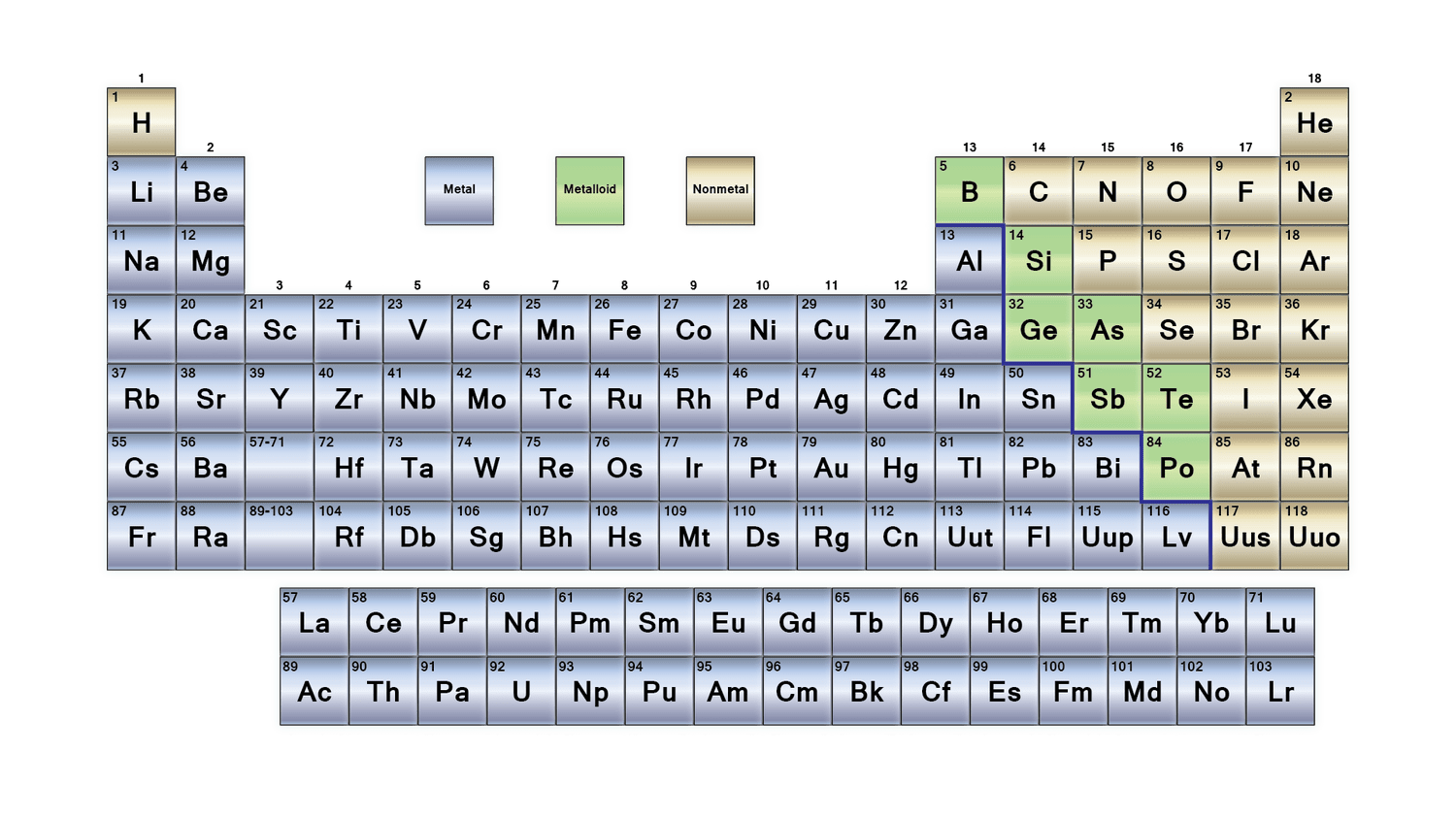
Groups
vertical columns on periodic table
Periods
the 7 horizontal rows of the periodic table

identify non metals and metalloids and metals
…
atom
smallest unit of matter
element
simplest type of matter
specific gravity equation
density of object/desity of water
specific heat equation
heat/mass*Delta T
specific heat
amount of heat required to raise the temp. of 1 gram of a substance by 1 degree Celsius
high specific heat
absorbs and retains large amounts of heat
ex: water
low specific heat
changes temp fast, doesn’t retain a lot of heat
coastal areas temp range vs inland
milder, more extreme
hyperthermia
temp>40 celcius (104F) (HIGH)
can cause convulsion, coma, and permanent brain damage
hypothermia
temp<35 degrees celcius core temp below (95F) LOW
irregular heartbeat and slow breathing
accuracy
your measurements are close to the actual value
precision
measurements are similar in value, but may not be close to the actual value
flow of heat
from higher temp to lower temp until thermal equilibrium is reached
1 fl oz to ml
29.6ml
1tsp
4.93ml
1 mi to km
1.6km
1 inch to cm
2.54cm
1 fl oz to tsp
6tsp
1 mi
5280ft
gtt
drop unit
cc cubic centimeter conversion
also cm³: 1mL
1tsp
5mL
alkaline earth metals
Beryllium (Be)
Magnesium (Mg)
Calcium (Ca)
Strontium (Sr)
Barium (Ba)
Radium (Ra)

alkali metals
lithium, sodium, potassium, rubidium, cesium, and francium.

transitional metals
Ti to Zn columns

increase in Specific heat leads to what rate change in temperature
slower change in temperature
absolute zero
0K
1mL to mg
.0250mg
hecto
100
pico
10^-12
1Qt
4 cups