UNIT 5 MOD 30 Urbanization and Effects
 Studied by 0 people
 Call Kai
 Learn
Learn Practice Test
 Spaced Repetition
 Match
Match Flashcards
 Knowt Play
1/32

There's no tags or description
Looks like no tags are added yet.
Name | Mastery | Learn | Test | Matching | Spaced | Call with Kai |
|---|
No analytics yet
Send a link to your students to track their progress
33 Terms
Urbanization
Process of increasing population density in areas.
Urban areas
Regions with over 386 people per km².
Suburbs
Residential areas surrounding metropolitan centers.
Exurbs
Communities outside urban areas, not densely populated.
How many people live in suburban or exurban communities?
Abt 2/3
Urban sprawl
Expansion of urban areas into rural regions with clusters of housing, retail shops, office parks, and miles of road separating them.
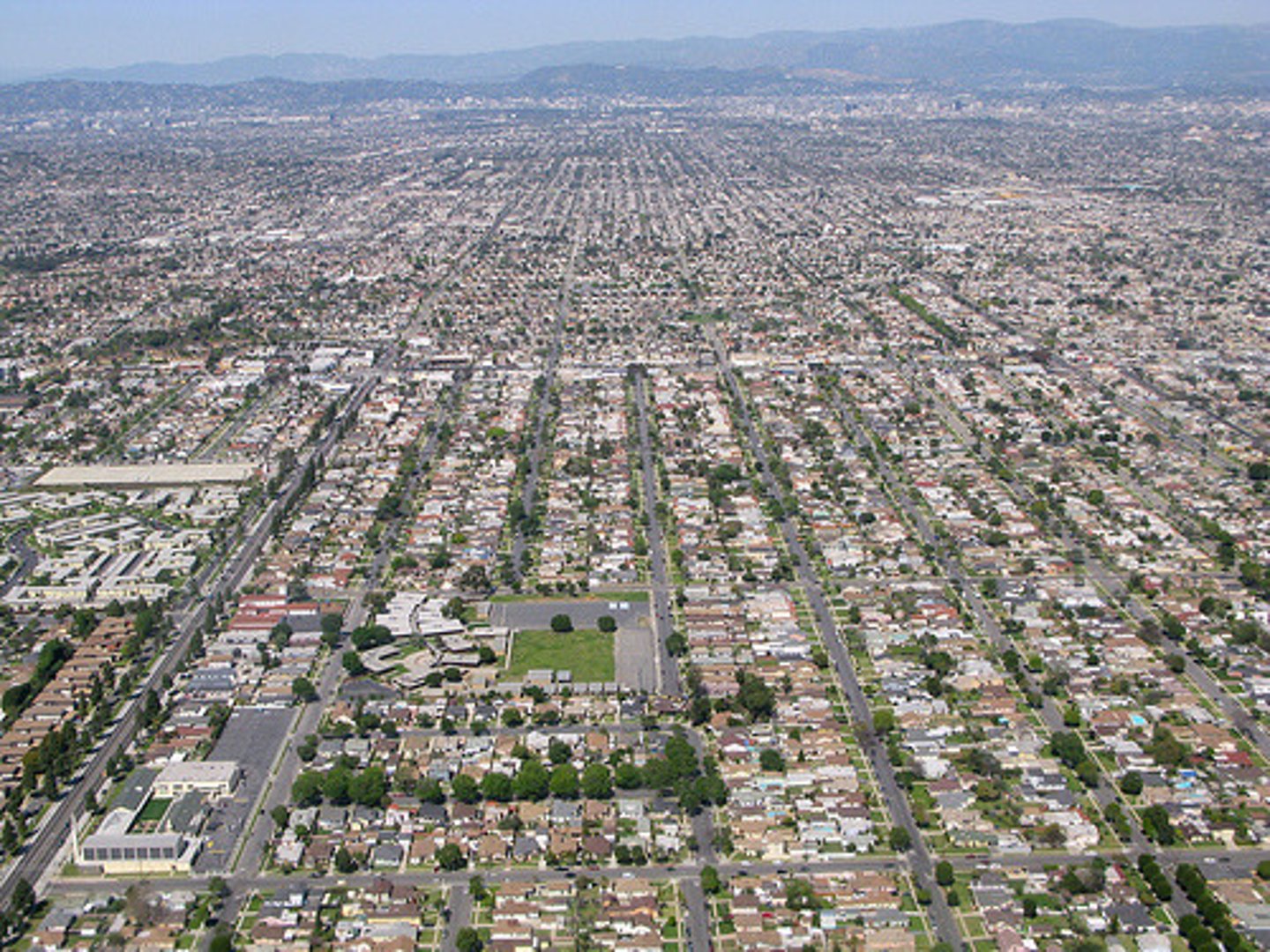
Main causes of urban sprawl
Increased availability of automobiles and highways
Reasonable living costs in the suburbs
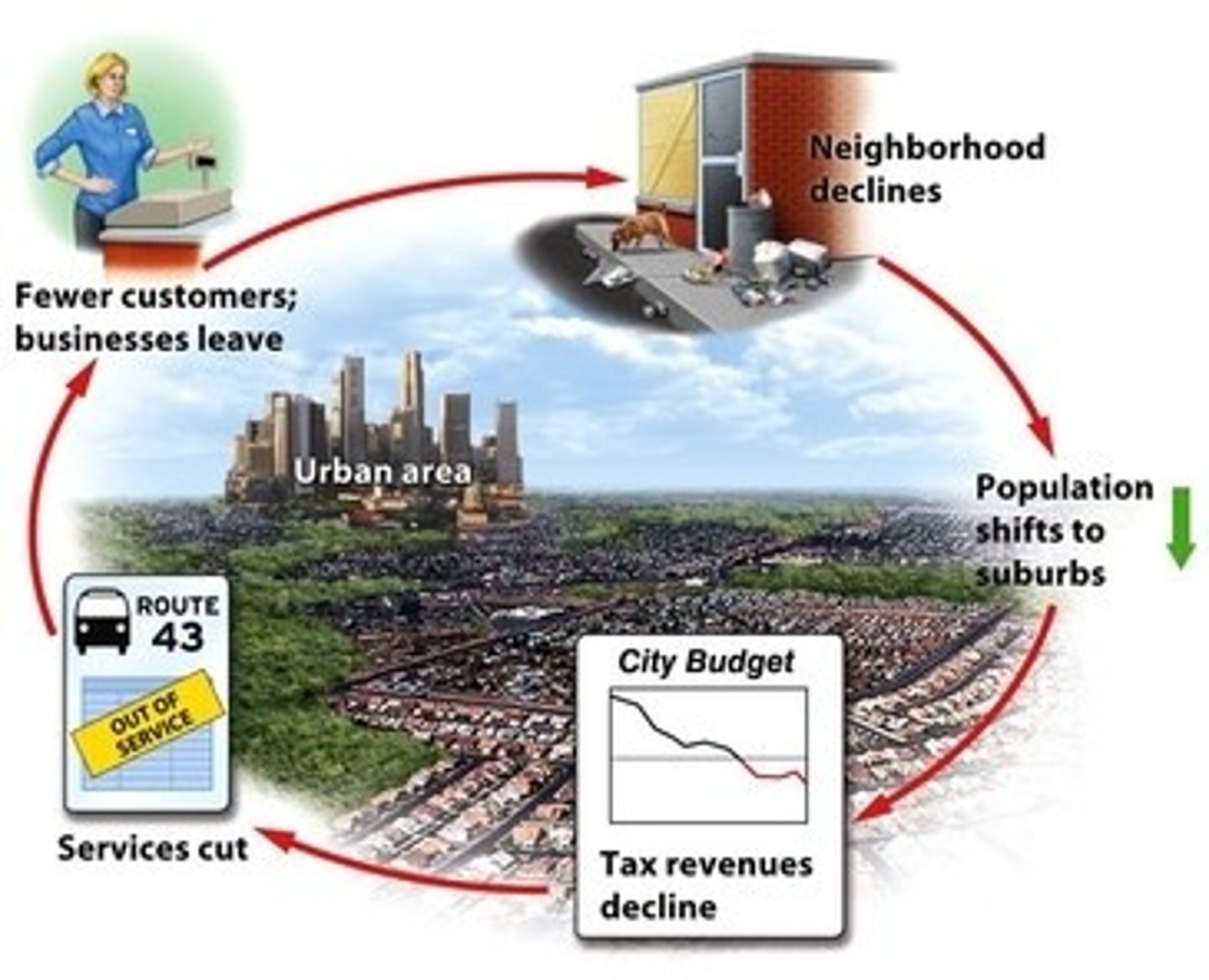
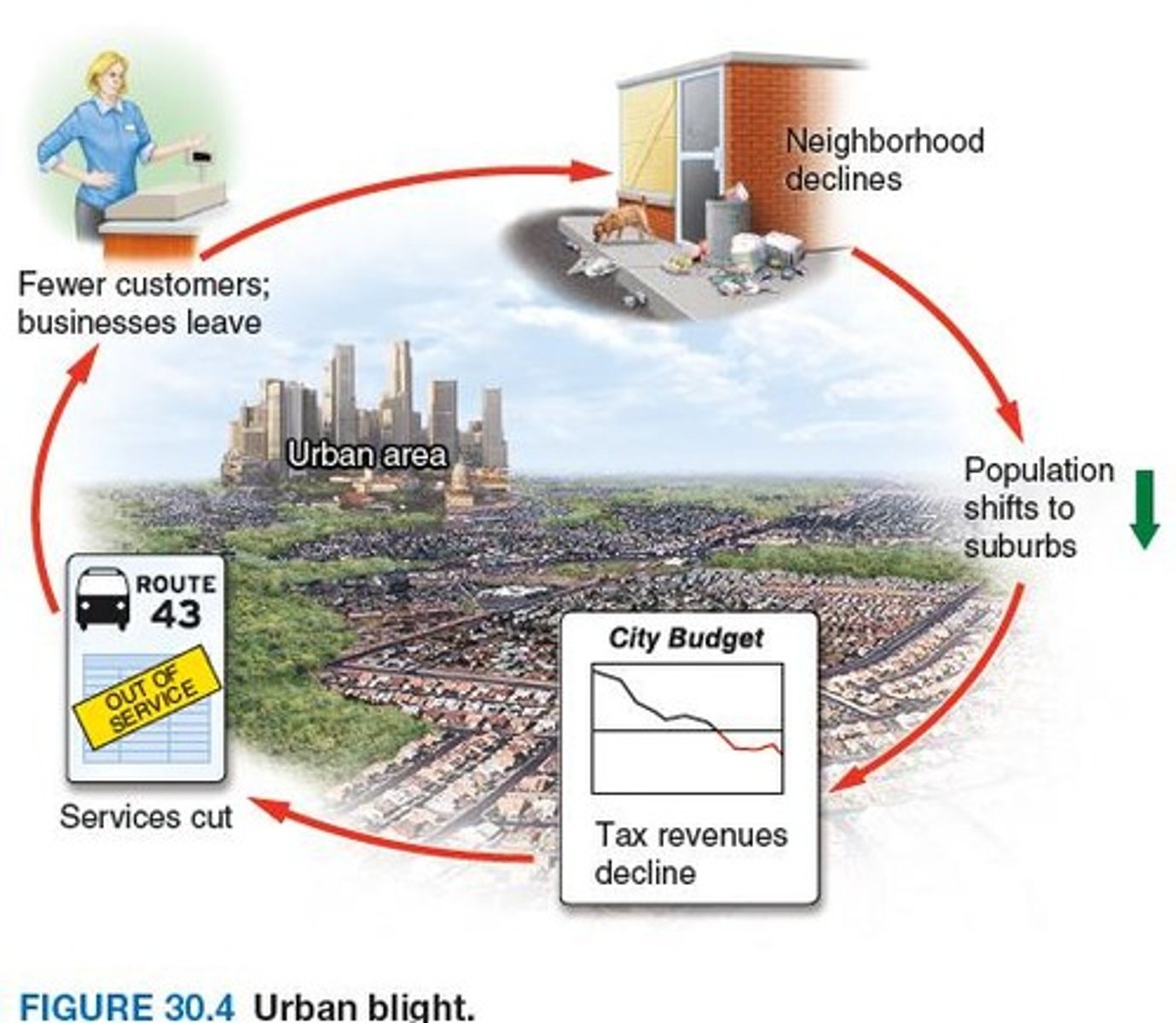
Lack of support for urban communities (urban blight)
Government policies funding highways and subsidizing mortgages in suburban areas
Explain urbanization and its effects on the environment
Smart growth
Sustainable community development strategies.
EPA list when considering smart growth
Walkable neighborhoods
Mixing residential, retail, recreational, and business land use
Encouraging stakeholder collaborations
Preserving open spaces and natural beauty
Environmental Protection Agency (EPA)
U.S. agency focused on environmental protection.
The greater the population there is in a urban and surburban areas,
the greater the need there is for water, transportation, and disposal of refuse.
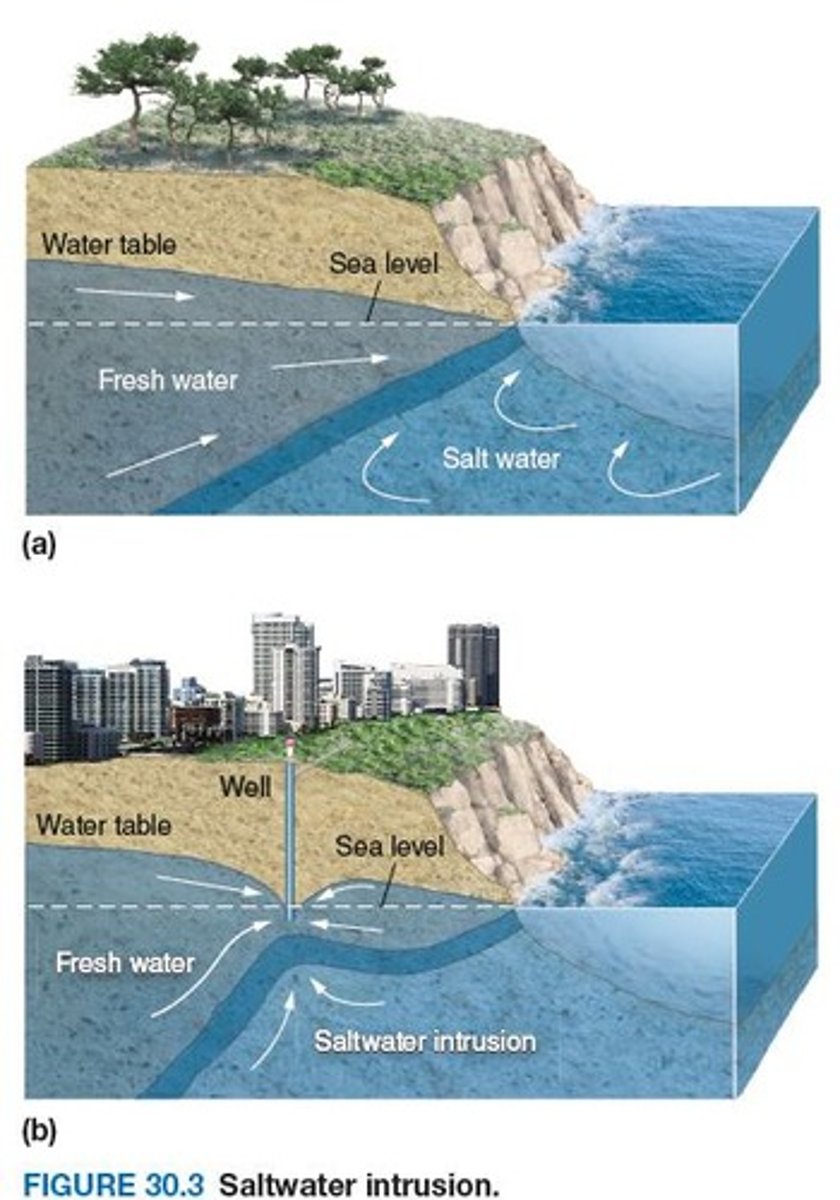
Cone of depression
Area of reduced groundwater levels around wells.
Saltwater intrusion
Invasion of saltwater into freshwater aquifers.
Impervious surfaces
Surfaces that prevent water infiltration.
Urban runoff
Water that flows over urban surfaces without infiltration.
Prevent runoff
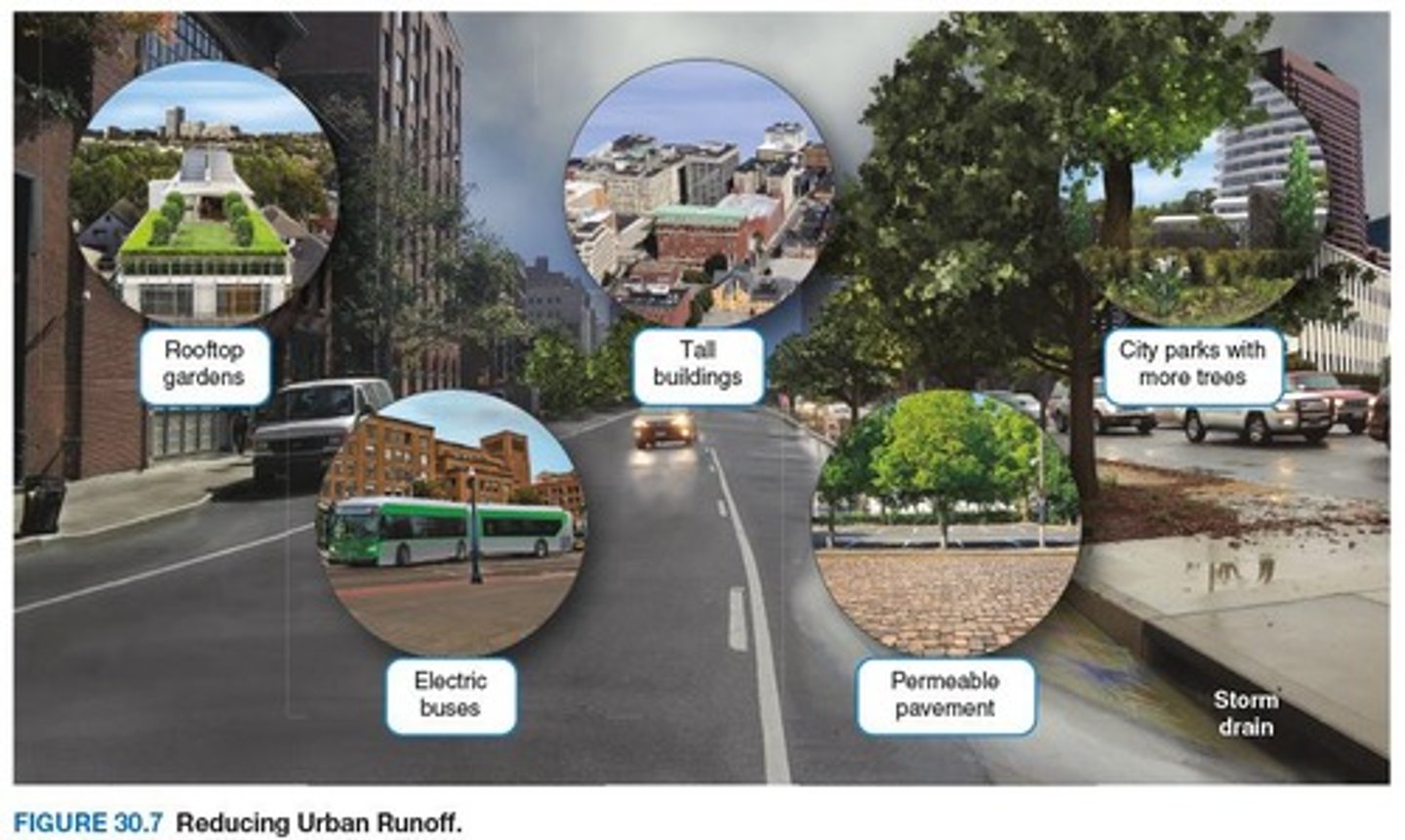
more rooftop gardens, tall buildings, permeable pavement, more trees in parks, storm drains, and more places where water can flow rather than remain in one area and cause flooding.
Aquifers
Underground layers storing freshwater.
Walkable neighborhoods
Areas designed for easy pedestrian access.
Land use mixing
Combining residential, retail, and recreational spaces.
Stakeholder collaborations
Partnerships among community members and organizations.
Open spaces preservation
Protecting natural areas within urban settings.
Increased congestion
Higher traffic density in urban areas.
Longer commutes
Extended travel times to reach destinations.
Urban blight
Decline of urban areas due to neglect.
Automobile availability
Access to cars facilitating suburban living.
Highway funding
Government support for road infrastructure.
Flooding due to runoff
Excess water causing overflows in urban areas.
Rainwater collection
Capturing rain for reuse in landscaping.
Rural to urban migration
Movement of populations from countryside to cities.
Resource consumption
Use of natural resources by populations.
Suburban communities
Residential areas with lower density than cities.
 Note
Note  Flashcards (78)