Types and Function of Receptors
 Studied by 0 people
 Call with Kai
 Learn
Learn Practice Test
 Spaced Repetition
 Match
Match Flashcards
 Knowt Play
1/35

There's no tags or description
Looks like no tags are added yet.
Name | Mastery | Learn | Test | Matching | Spaced | Call with Kai |
|---|
No study sessions yet.
36 Terms
Definition of Pharmacology
The science of drugs and how they act in a biological system
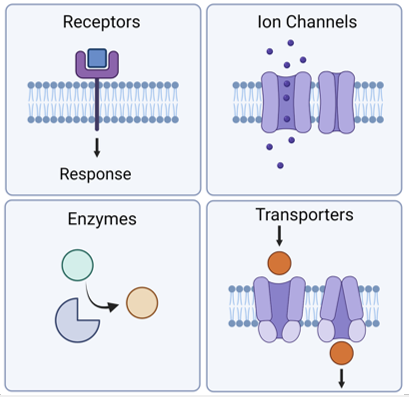
What are the four main protein drug targets?
Receptors
Ion channels
Enzymes
Transporters

What are ion channels?
Membrane proteins that open in response to a cue and allow specific ions to move down their concentration gradient.
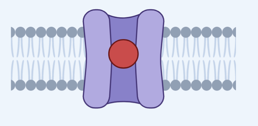
Ion Channel Blockers
Blocks the ion channel
Prevents ion movement
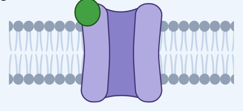
Ion Channel Modulators
Increases/decreases chance of the ion channel opening
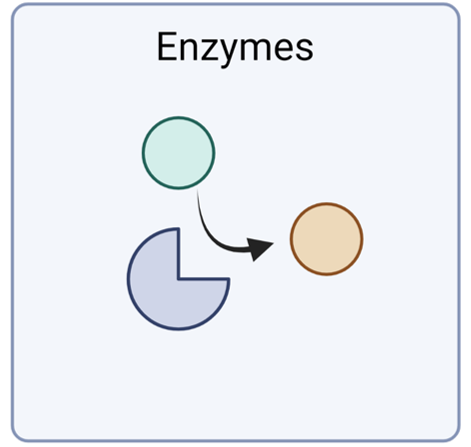
What are enzymes?
Biological catalysts that mediate biochemical reactions.
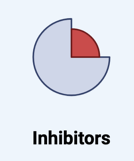
Enzyme inhibitors
Prevents activity
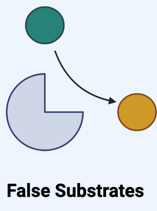
False substrates
Abnormal metabolite produced
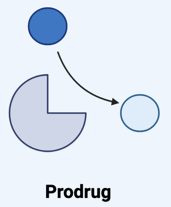
Prodrug
Activation of drug molecule
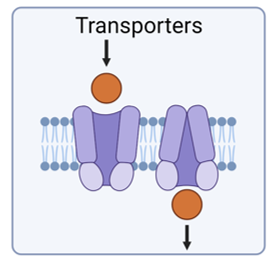
What are transporters?
Proteins that carry substances across membranes
Transporters can move substances against a gradient (active transport).
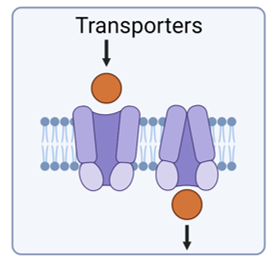
How are transporters different from ion channels?
Transporters are not pores, they are not open to both sides of the membrane at once. They bind to the solute and undergo a conformational change to move it across
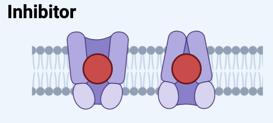
Transporter inhibitor
Transporter inhibitors block transport
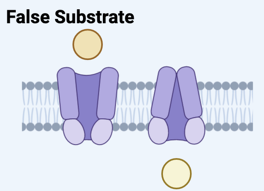
Transporter false substrate
False substrates leads to an abnormal compound accumulating
What is a receptor?
A protein (usually on the cell surface) that responds to exogenous cue and relay signal into a cell to produce a response.
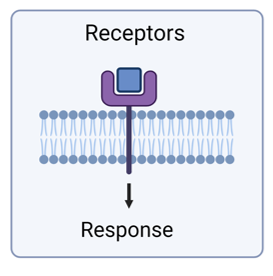
What do receptors allow for?
Receptors allows fine tuning of physiological function
Definition of Ligand
Something that binds to a receptor
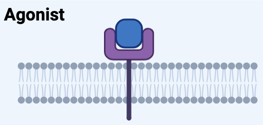
Definition of Agonist
Something that binds and induces a response
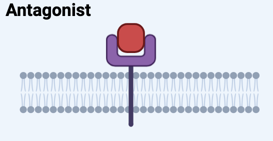
Definition of Antagonist
Something that binds and produces no response
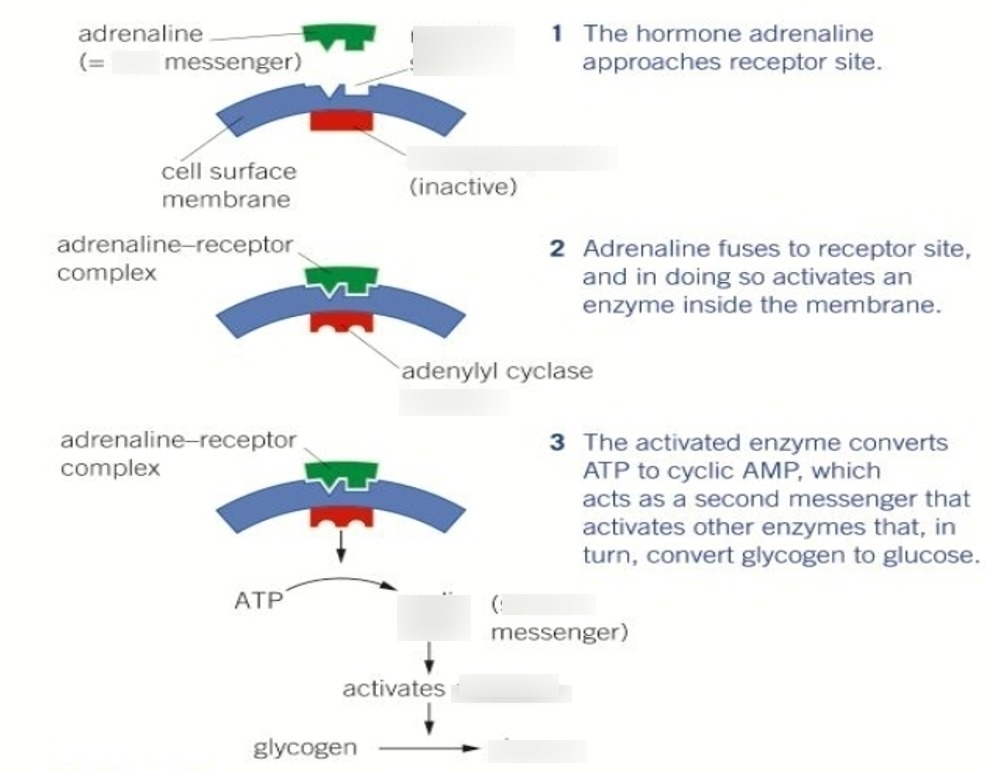
What is a second messenger?
An intracellular signalling molecule that relays the signal from receptor to effector.
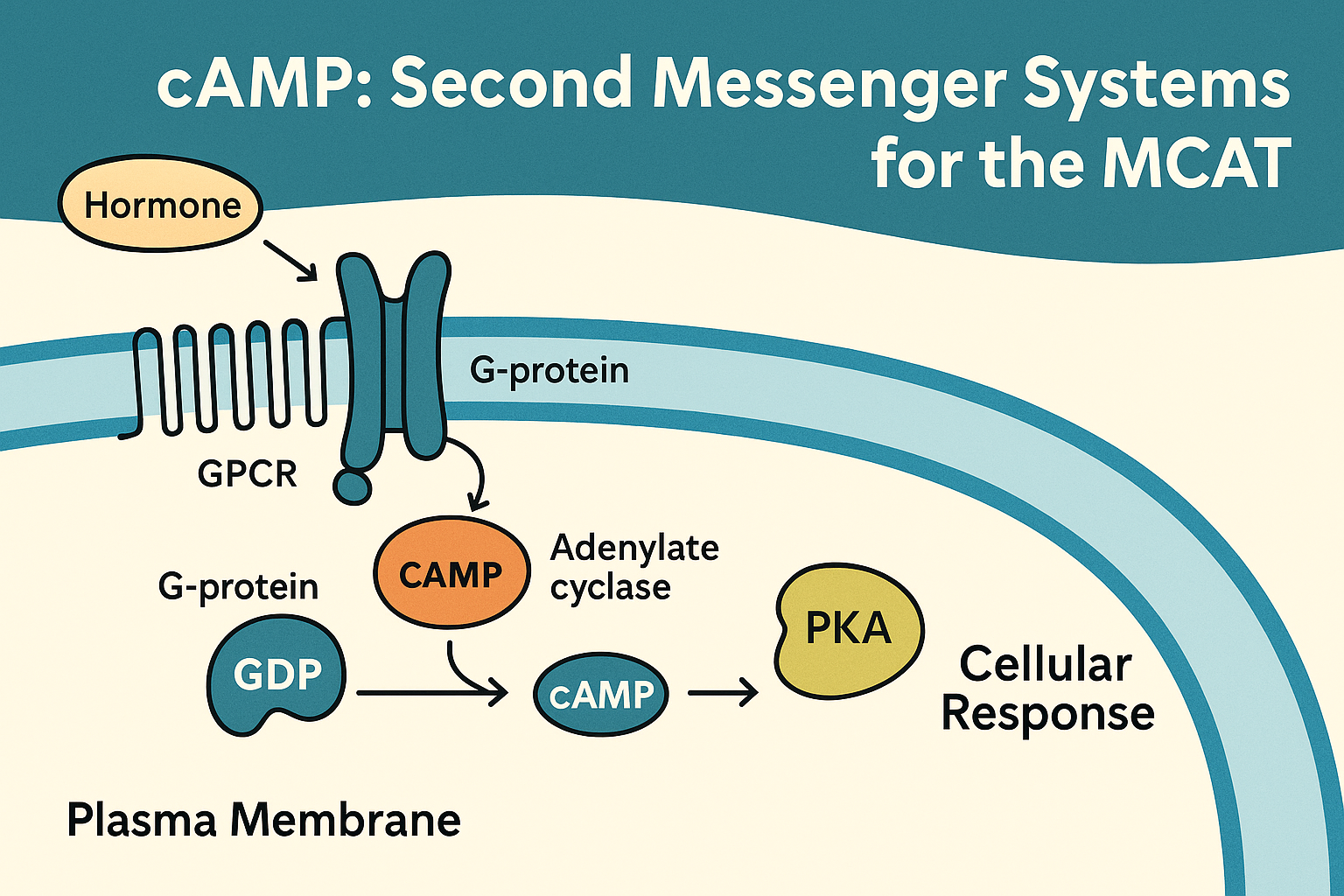
What is signal transduction?
A sequence of events/secondary messengers that leads to a biological response.
What happens when a ligand binds to a receptor?
A ligand binds to receptor
This binding causes conformational change of receptor protein
Conformational change results in cellular effect, for example:
- Opening of channel
- Activation of linked enzyme
- Recruitment of effector protein
- Intracellular transport
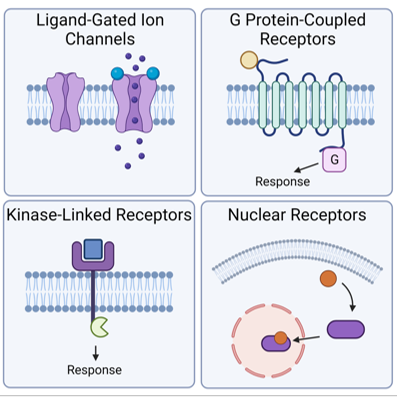
What are the 4 main families of receptors?
Ligand gated ion channels
G protein-coupled receptors (GPCRs)
Kinase-linked receptors
Nuclear receptors
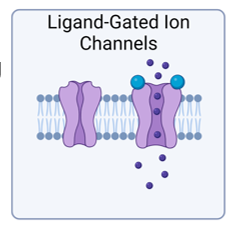
What are Ligand-Gated Ion Channels?
Receptors that open an ion channel directly when a ligand binds.
What’s the difference between ligand gated ion channels and ion channels in general?
The channel opens only when a ligand binds. Ion channels are always open.
What is a kinase?
An enzyme that uses ATP to phosphorylate targets, acting as an on/off switch.
Are kinases second messengers?
Yes
How are kinase-linked receptors activated?
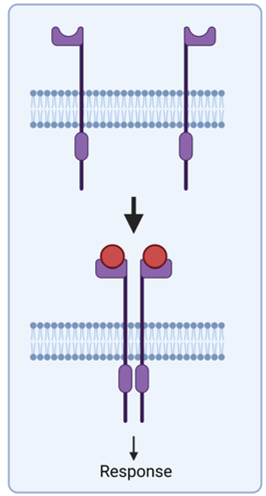
There’s a receptor in 2 halves in the membrane (monomer)
Ligand-receptor engagement brings the 2 receptor proteins (the 2 halves) together in the membrane (dimer)
This activates the kinase-linked receptor
The activation initiates a downstream cascade and biological response
What does EGFR stand for?
Epidermal growth factor receptor
Why is EGFR important clinically?
EGFR are a type of kinase-linked receptor
Some types of lung cancer express more EGFR proteins, leading to more growth
These cancers are therefore susceptible to drugs that target EGFR
What defines a GPCR?
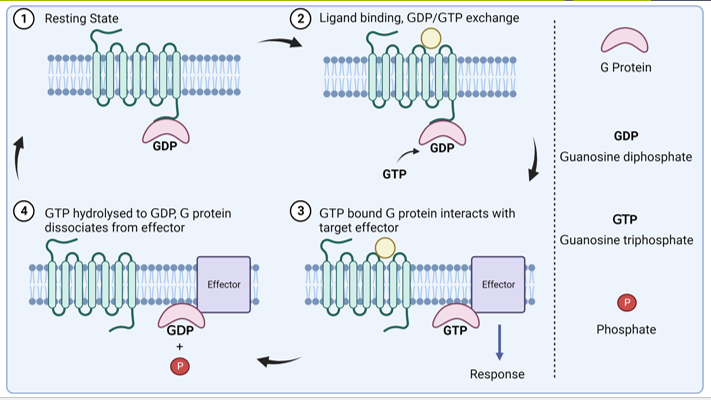
A receptor with 7 transmembrane domains and is coupled to G protein
Ligand binding activates G protein which interacts with effector
Different GPCRs coupled to different G proteins. These elicit different effects
How are GPCRs activated?
Ligand binding activates the G-protein, which interacts with the effector
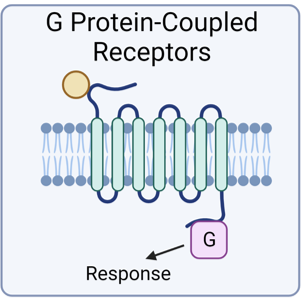
Are different GPCRs coupled to different G proteins?
Yes, and different G proteins have different effects
What are nuclear receptors?
Intracellular receptors that regulate gene expression.
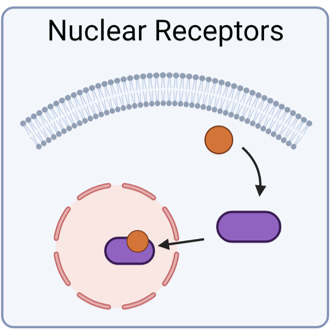
How are nuclear receptors activated?
The ligand enters the cell and binds to the receptor in the cytoplasm.
This forms a ligand-receptor complex
The ligand-receptor complex then moves into the nucleus and acts on gene expression
What does “signal – action – response” mean?
Ligand binding → receptor activation → intracellular signalling → biological effect.
Match receptor type to activation mechanism.
Ligand-gated ion channel
GPCR
Kinase-linked receptor
Nuclear receptor
/
→ G-protein activation
→ gene expression
→ phosphorylation cascade
→ channel opening
Ligand-gated ion channel → channel opening
GPCR → G-protein activation
Kinase-linked receptor → phosphorylation cascade
Nuclear receptor → gene expression