kinesiology
 Call Kai
 Learn
Learn Practice Test
 Spaced Repetition
 Match
Match Flashcards
 Knowt Play
1/48

There's no tags or description
Looks like no tags are added yet.
Name | Mastery | Learn | Test | Matching | Spaced | Call with Kai | Chat |
|---|
No analytics yet
Send a link to your students to track their progress
49 Terms
Superior
Toward head
Inferior
Toward feet
Anterior
Toward front
Posterior
Toward back
Medial
Toward midline
Lateral
Away from midline
Proximal
Closer to point of attachment
Distal
Farther from point of attachment
Superficial
Closer to the surface
Deep
Farther from the surface

Supine

Prone

Transverse
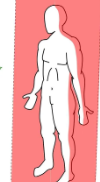
Frontal
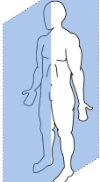
Sagittal
Sagittal Plane Movements
Flexion, extension
Frontal Plane Movements
Abduction, adduction
Horizontal Plane Movements
Internal and external rotation
Rotation
A bone/joint turns around its longitudinal axis
Inversion
sole of the foot turns inward toward the body’s midline
Eversion
the sole of the foot turns outward away from the midline
Pronation
radius rotates over the ulna, palm facing posteriorly
Supination
radius and ulna are parallel, palm facing anteriorly
Dorsiflexion
Bringing the top of the foot towards the shin
Plantar Flexion
pointing the food downwards away from the shin
Radial Deviation
Moving the wrist towards the thumb
Ulnar Deviation
moving the wrist towards the pinky
Anterior Pelvic Tilt
Front of the pelvis rotates downward and forward while the back of the pelvis rises
Posterior Pelvic Tilt
the pelvis rotates backward (tucking the tailbone) and the front of the pelvis rises up
Synovial Fluid
Reduces friction, helps with shock absorption, and nourishes the tissue
Synovial Membrane
encloses the entire joint surface
Ligaments
connect bone to bone to stabilize synovial joints
Tendons
connect muscle to bone to produce movement
Gliding Joint
Allows for limited movement in multiple directions, typically sliding or gliding over one another
Condyloid Joint
allows for movement in two planes , flexion and extension, adduction and abduction
Pivot Joint
Allow for rotational movement as well as pronation/supination
Ball and Socket Joint
Allow for a wide range of movement in all directions [flexion, extension, adduction, abduction, circumduction
Hinge Joint
Allow for movement in one direction [flexion and extension]
Saddle Joint
One articulating surface is concave while the other is convex and allows for biaxial movement
The skeletal is broken into two main sections
Axial
Skull, rib cage, vertebral column
Appendicular
Upper and lower extremities
Shoulder and pelvic girdle
Skeletal System also includes…
Cartilage: flexible connective tissue that covers the ends of bones at joints to reduce friction and absorb shock
Ligaments: connects bone to bone (stabilizes joints)
Tendons: connects muscle to bone (allows for movements)
Mechanical Functions
Support
Protection
Movement
Physiological Functions
Blood cell production
Mineral storage
Long
Long, hollow
Designed for large movements
Short
Short bones are small, solid and blocklike
Good for transferring force and shock absorption
Flat
Large flat surfaces, thin
Designed for protection
Irregular
Do not fit in any other category
Designed for support, protection and leverage
Sesamoid
Bones that develop within tendons to decrease stress or increase leverage