C9.6 Extraction of metals
 Call Kai
 Learn
Learn Practice Test
 Spaced Repetition
 Match
Match Flashcards
 Knowt Play
1/6

There's no tags or description
Looks like no tags are added yet.
Name | Mastery | Learn | Test | Matching | Spaced | Call with Kai | Chat |
|---|
No analytics yet
Send a link to your students to track their progress
7 Terms
What is a metal ore?
A rock that contains enough of a metal to make it worthwhile extracting
Many of them are oxides, making extraction a reduction process
Examples of oxide ores and how they are extracted
Iron ore: haematite → blast furnace
Aluminium ore: bauxite → electrolysis
What are native metals and some examples?
Native metals are very unreactive metals which are found as uncombined elements, since they don’t react easily with other substances
Examples: gold and platinum
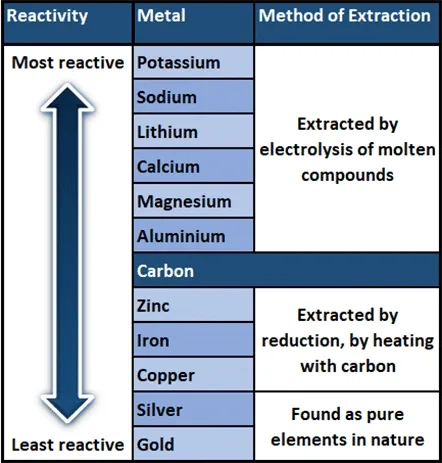
What is the relation between metals in the reactivity series and their extraction methods?
Higher metals in reactivity series = more difficult to extract
Metals above carbon must be extracted using electrolysis
Metals below carbon can be extracted by heating with carbon or carbon monoxide (blast furnace)
Lower metals in reactivity series = easier to obtain
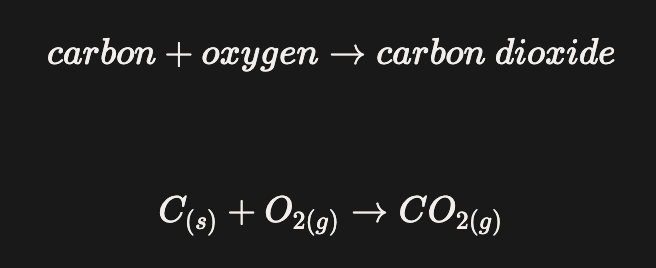
Describe what occurs in zone 1 of a blast furnace (include chemical equations)
Coke (carbon) burns in the hot air to form carbon dioxide
Exothermic reaction which provides heat for the furnace
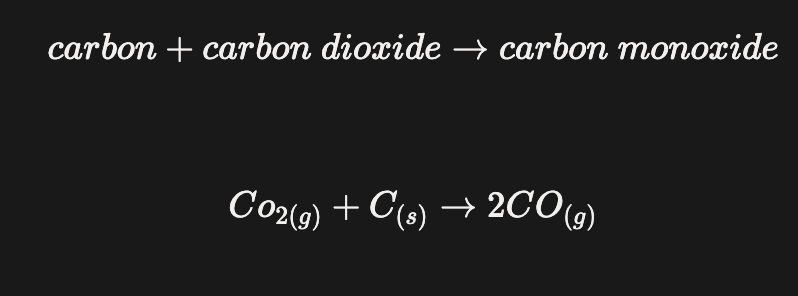
Describe what occurs in zone 2 of a blast furnace (include chemical equations)
At high temperatures, coke reacts with carbon dioxide to form carbon monoxide
Main reducing agent in the furnace
Describe what occurs in zone 3 of a blast furnace (include chemical equations)
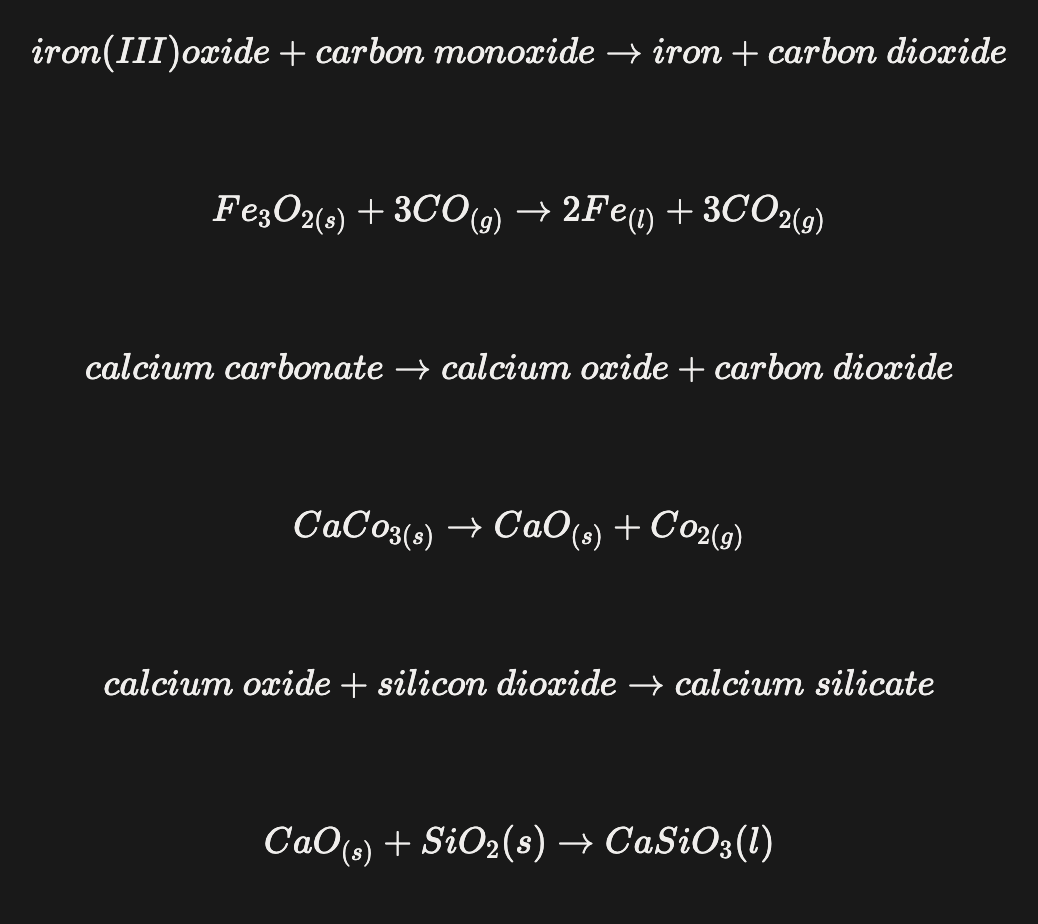
Carbon monoxide reduces the iron (III) oxide to iron
Iron extracted by reduction because oxygen is removed from iron (III) oxide
Molten iron collects at bottom of furnace and is tapped off
Limestone (calcium carbonate) is added to the furnace to remove impurities in the ore
Calcium carbonate in limestone thermally decomposes to form calcium oxide
Calcium oxide formed reacts with silicon dioxide—an impurity in the iron ore—to form calcium silicate
This melts and collects as a molten slag floating on top of the molten iron, which is tapped off separately