Lesson 04-01: Intrinsic Muscles of the Larynx
 Studied by 0 people
 Call Kai
 Learn
Learn Practice Test
 Spaced Repetition
 Match
Match Flashcards
 Knowt Play
1/26

There's no tags or description
Looks like no tags are added yet.
Name | Mastery | Learn | Test | Matching | Spaced | Call with Kai |
|---|
No analytics yet
Send a link to your students to track their progress
27 Terms
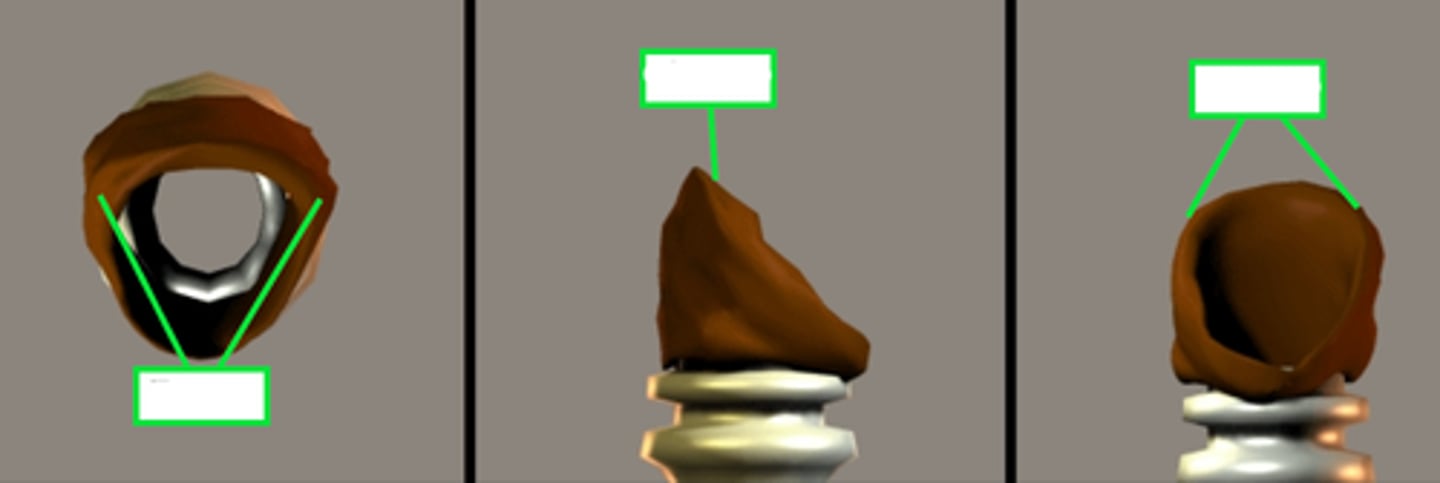
Cricoid Cartilage
lowest and most stable part of the larynx - shaped something like a signet ring and is mounted on the top of the last ring of the trachea.
wide part is toward the back
Facets for Arytenoids
on both sides - serves to hold the thyroid in place.
also has a pair on top which holds the next part we install
Arytenoid Cartilage
pyramid shaped structures that form anchors for the vocal folds
Corniculate Cartilage
horn like cartilage - behave as part of the arytenoids with no real independent movement
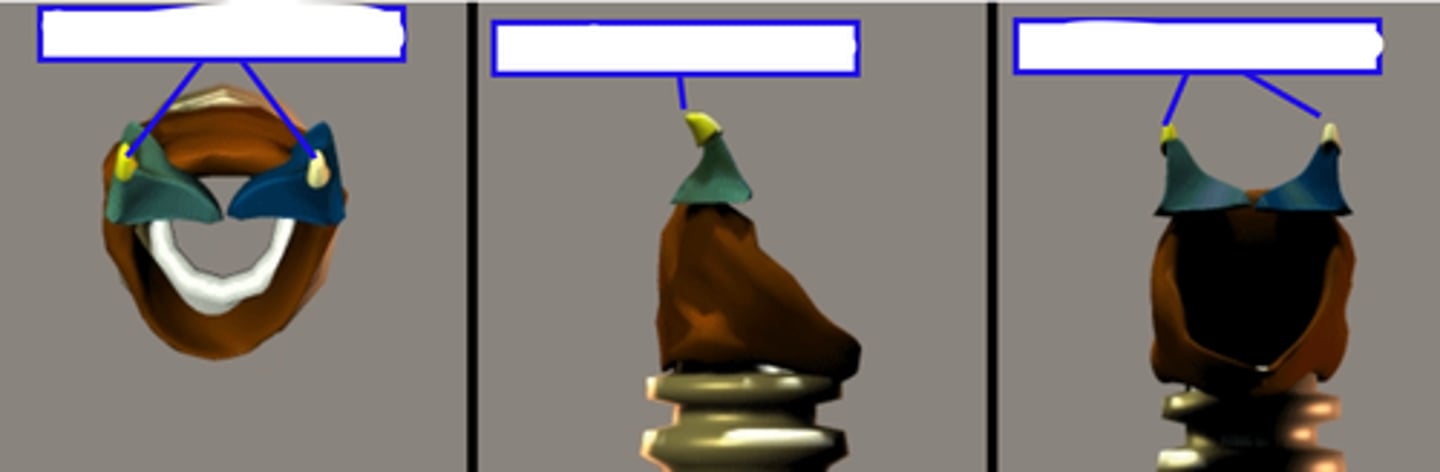
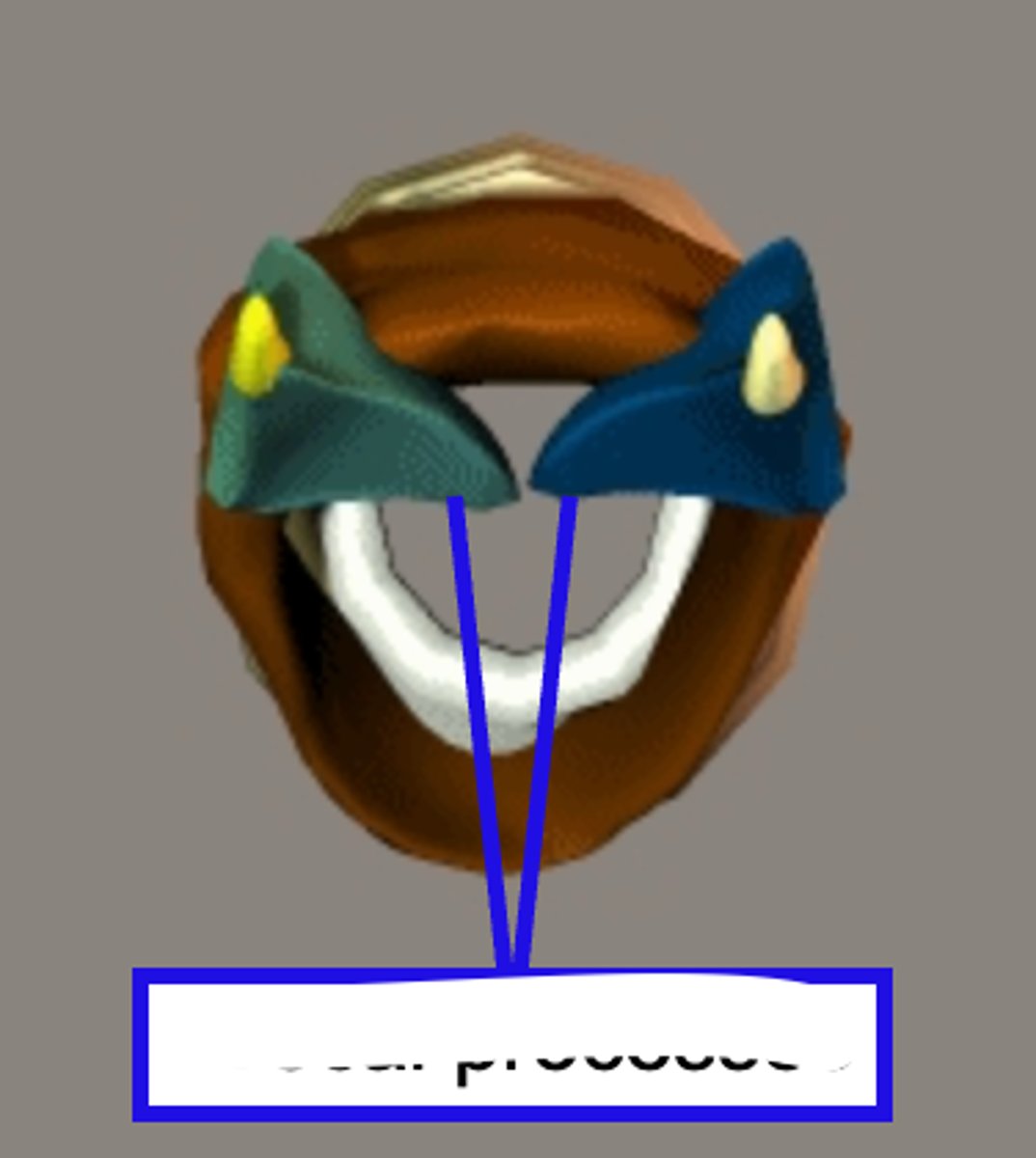
Vocal Process
holds one end of each vocal fold
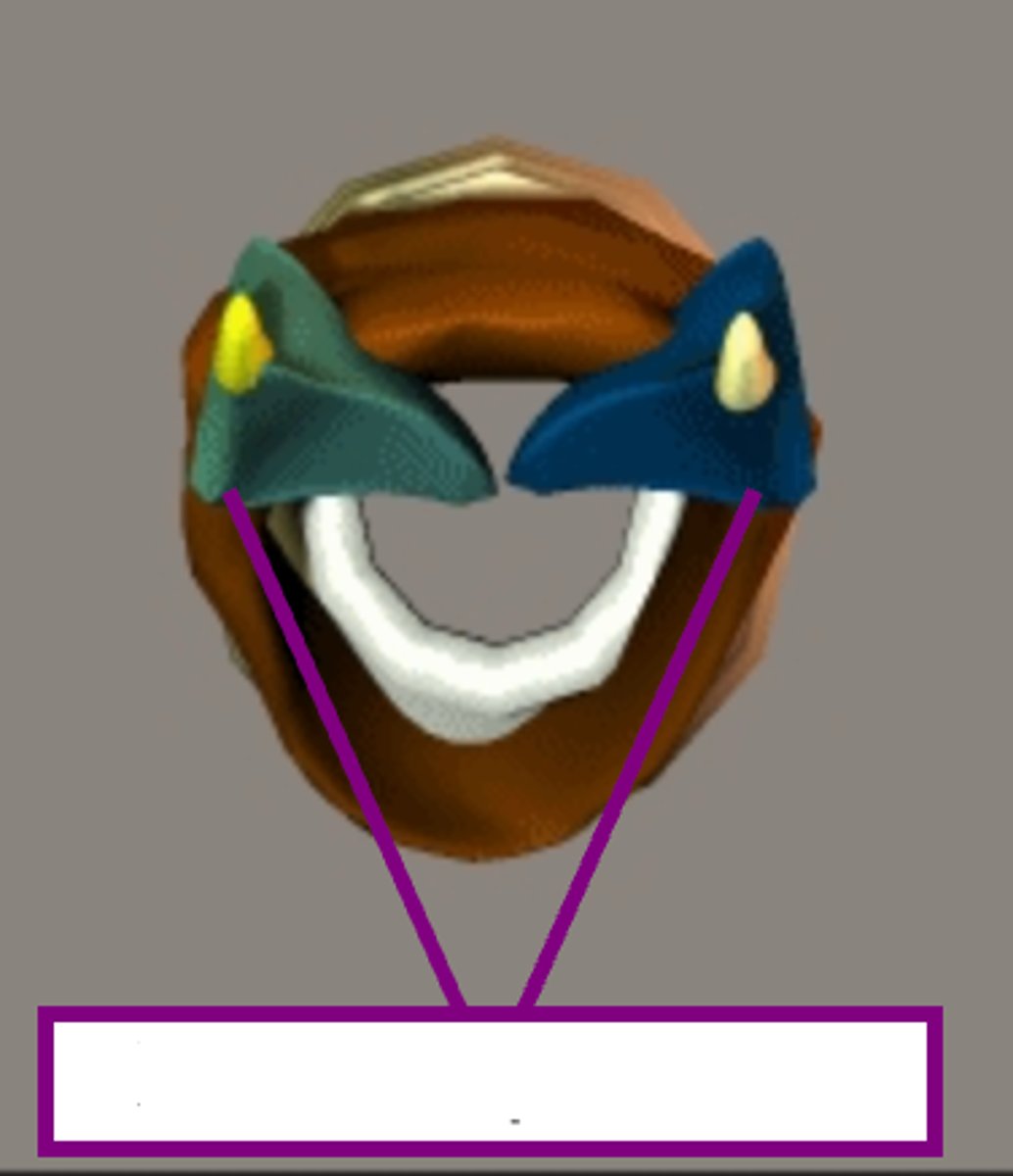
Muscular Process
holds one end of the muscle pair that acts in concert with the folds
Thyroid Cartilage
largest part of the laryngeal cartilages, articulating with the cricoid cartilage blow by means of paired processes that let it rock forward and backward at the joint
Inferior Horns (inferior cornua)
grasp the side of facers of the cricoid
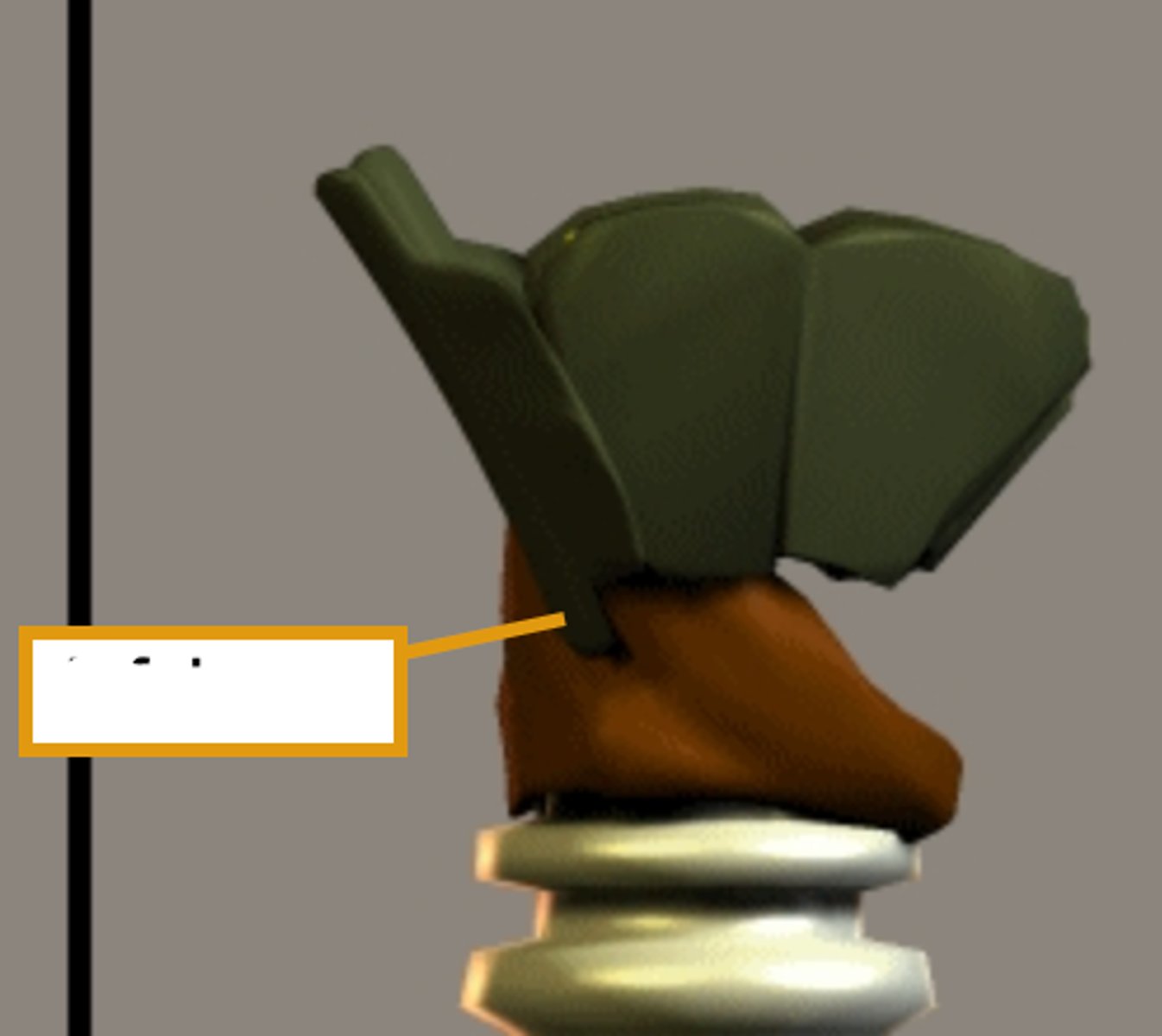
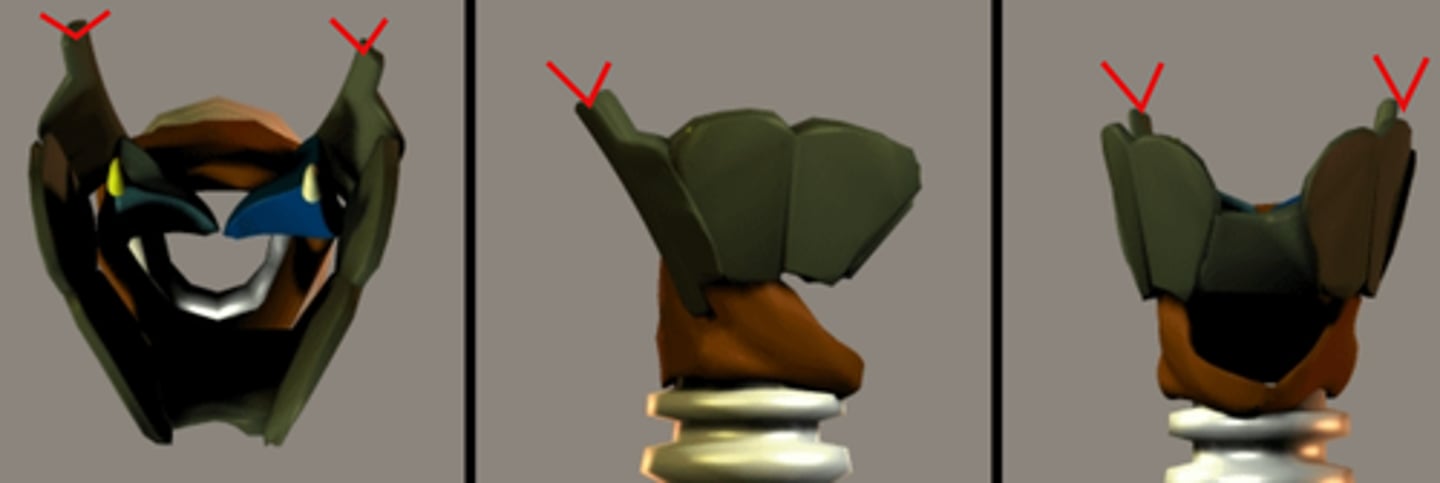
Superior Horn
holds up the hyoid bone
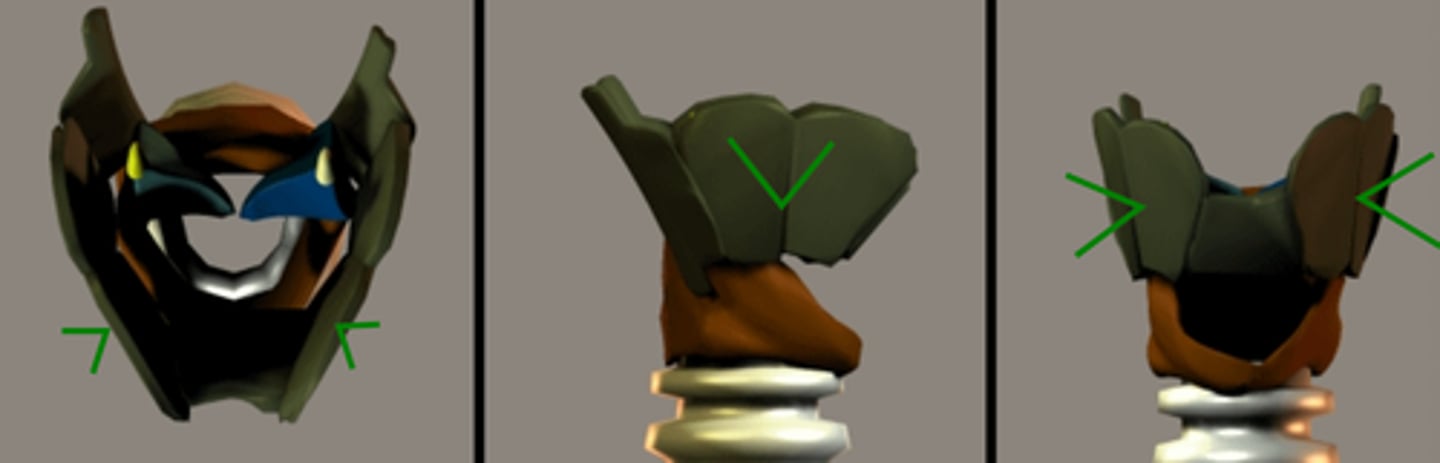
Lamina
each side
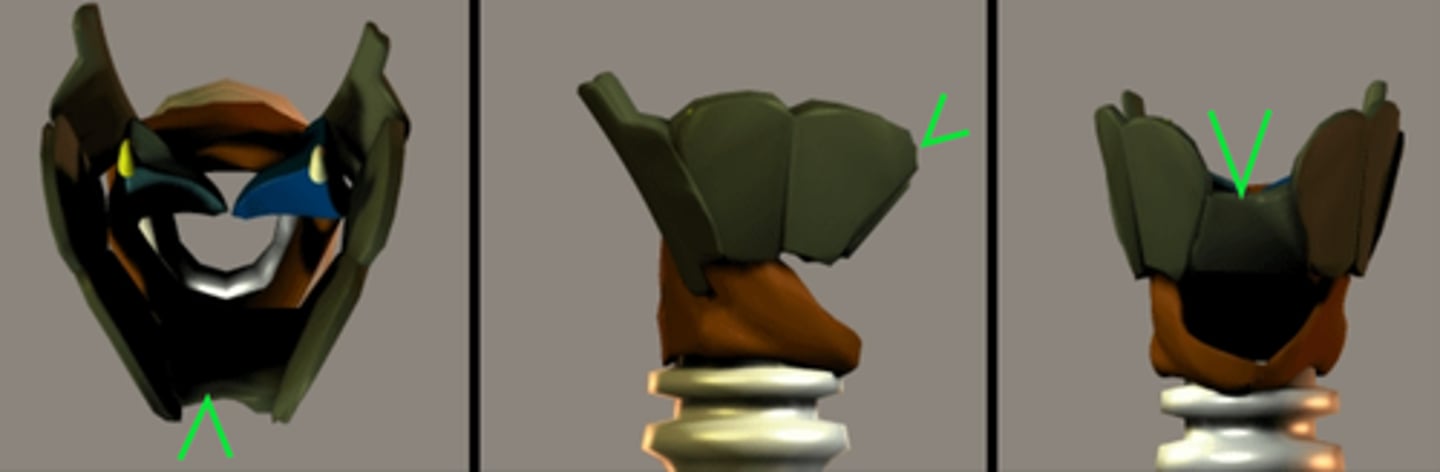
Notch
in front is where the vocal folds are attached
Pars Recta
runs more or less vertically - straight part
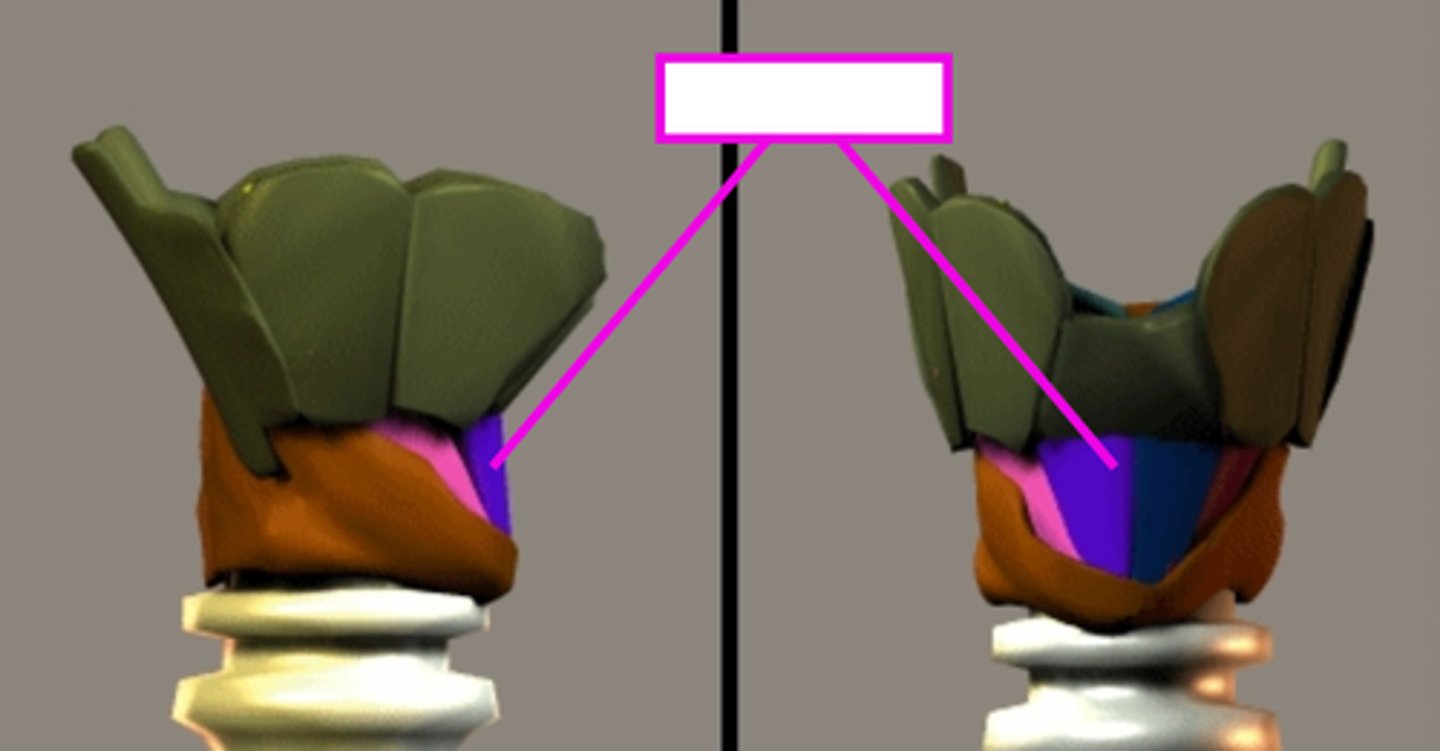
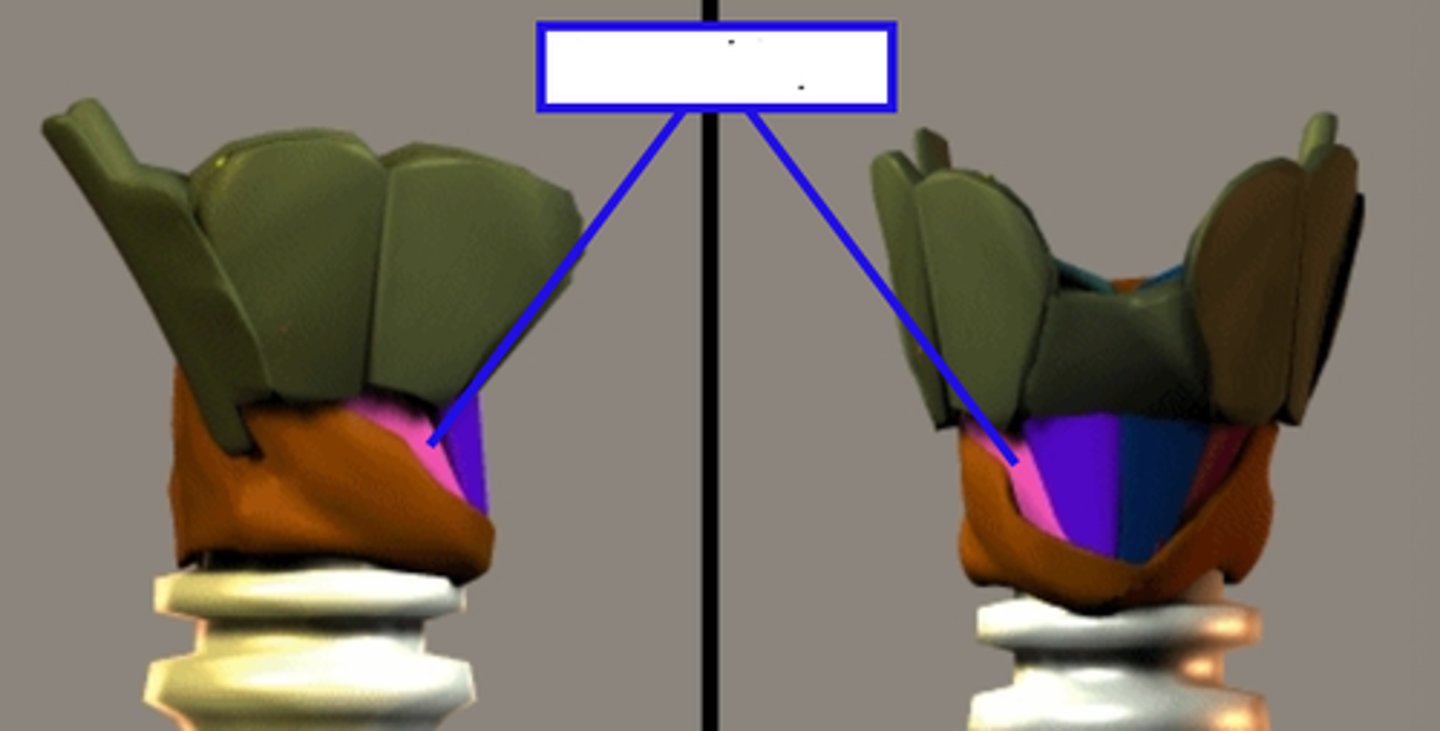
Pars Oblique
runs more toward the posterior of the thyroid cartilage - slanted part
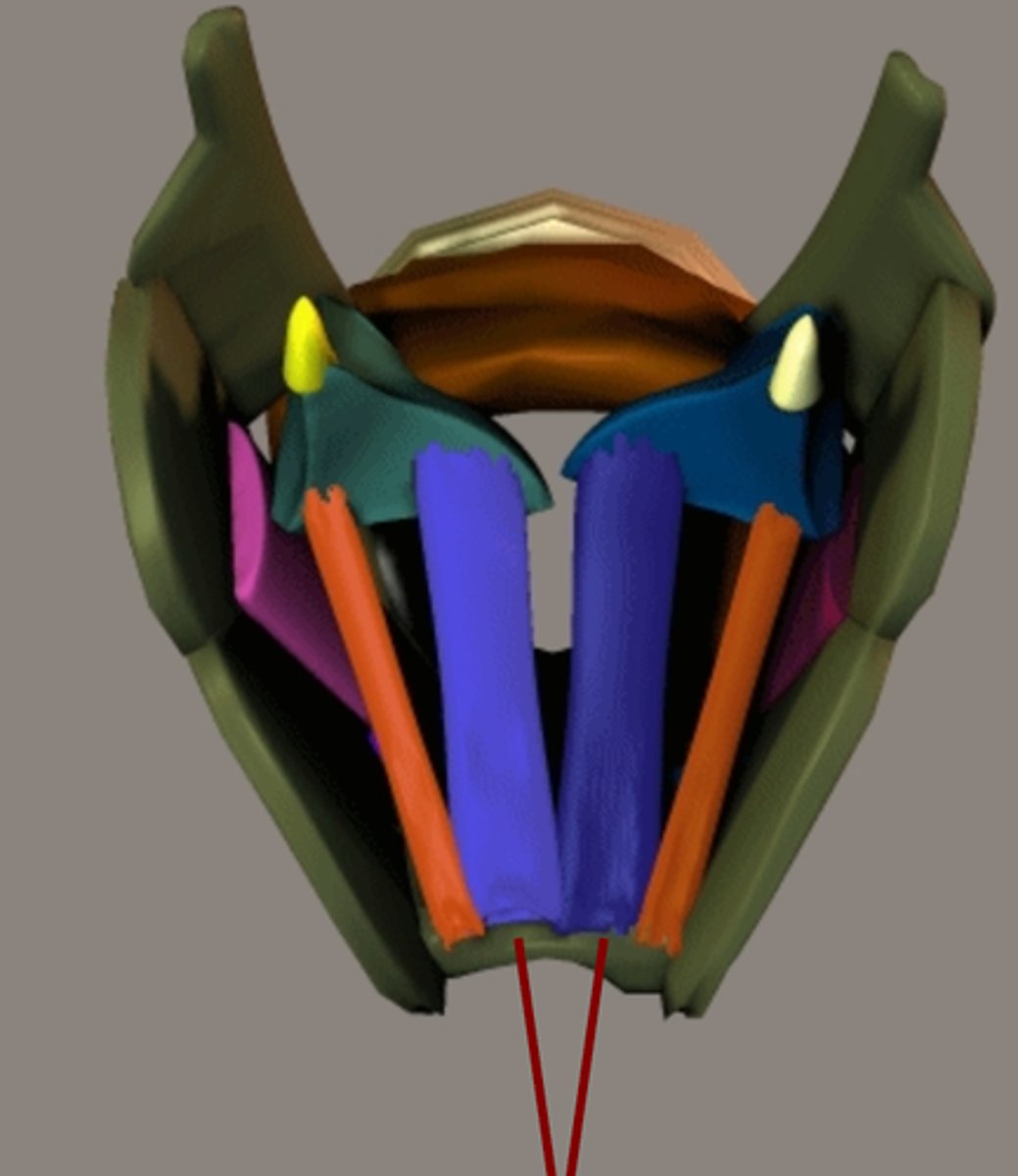
Thyrovocalis Muscles
the inner pair and are the main tensor folds
contract - the folds become tense and ready to vibrate, and the arytenoid cartilages rotate inward
vocal folds
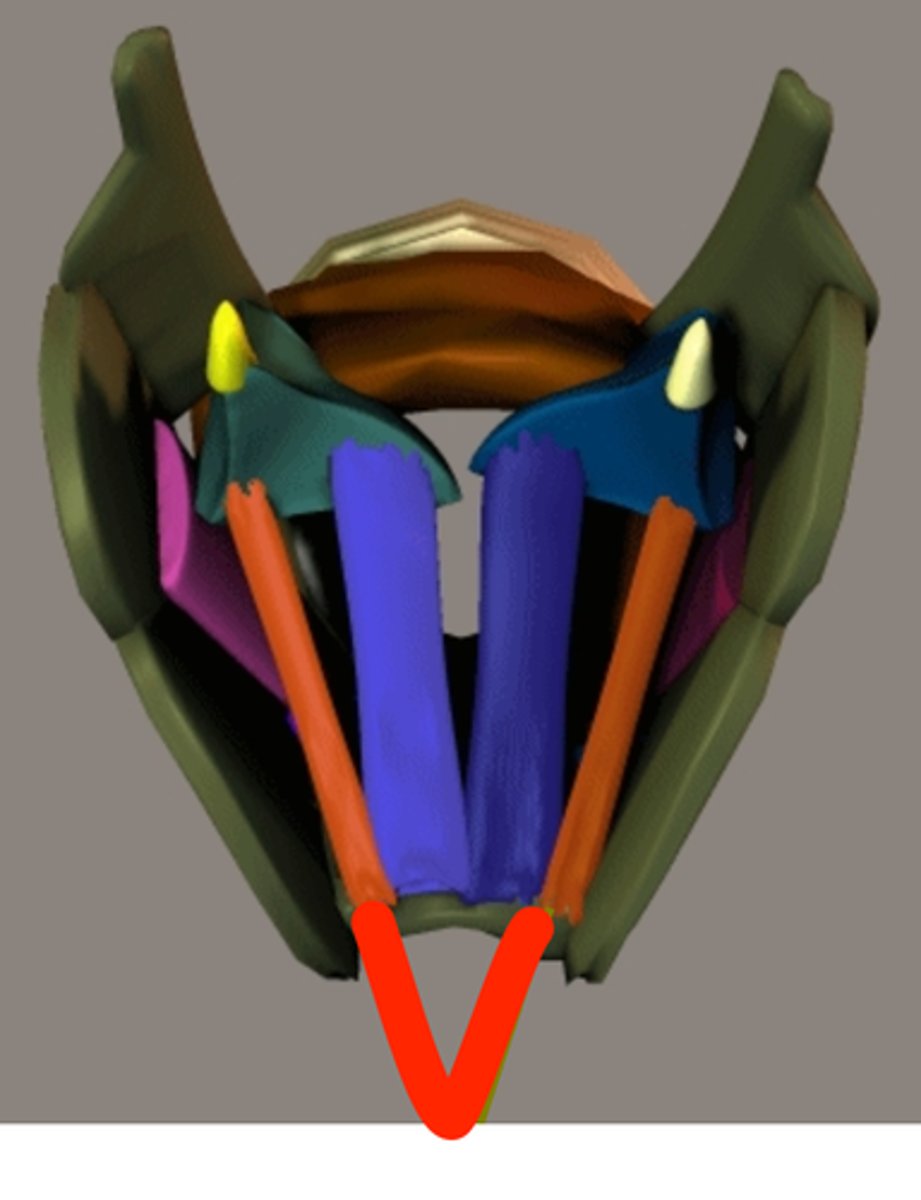
Thyromuscularis Muscles
oppose the thyrovocalis; when the thyromuscularis is contracted by itself, it rotates the arytenoid outward, leaving the folds more relaxed. The thyromuscularis is thus considered to be a relaxer for the folds.
originate from the notch of the thyroid cartilage and run to the muscular process of the arytenoid cartilages.
Abductt the fold
gliding outward serves to open
Adduct the folds
gliding inward (medially) serves to close
Arytenoids
rock forward and back on the facets of the cricoid; this action serves mainly for fine adjustments.
Glottis
Opening between vocal folds
Posterior Cricoarytenoid Muscles
are the only laryngeal muscles that act to exclusively ABduct or pull the folds apart. They also help in rocking the arytenoids back and outward.
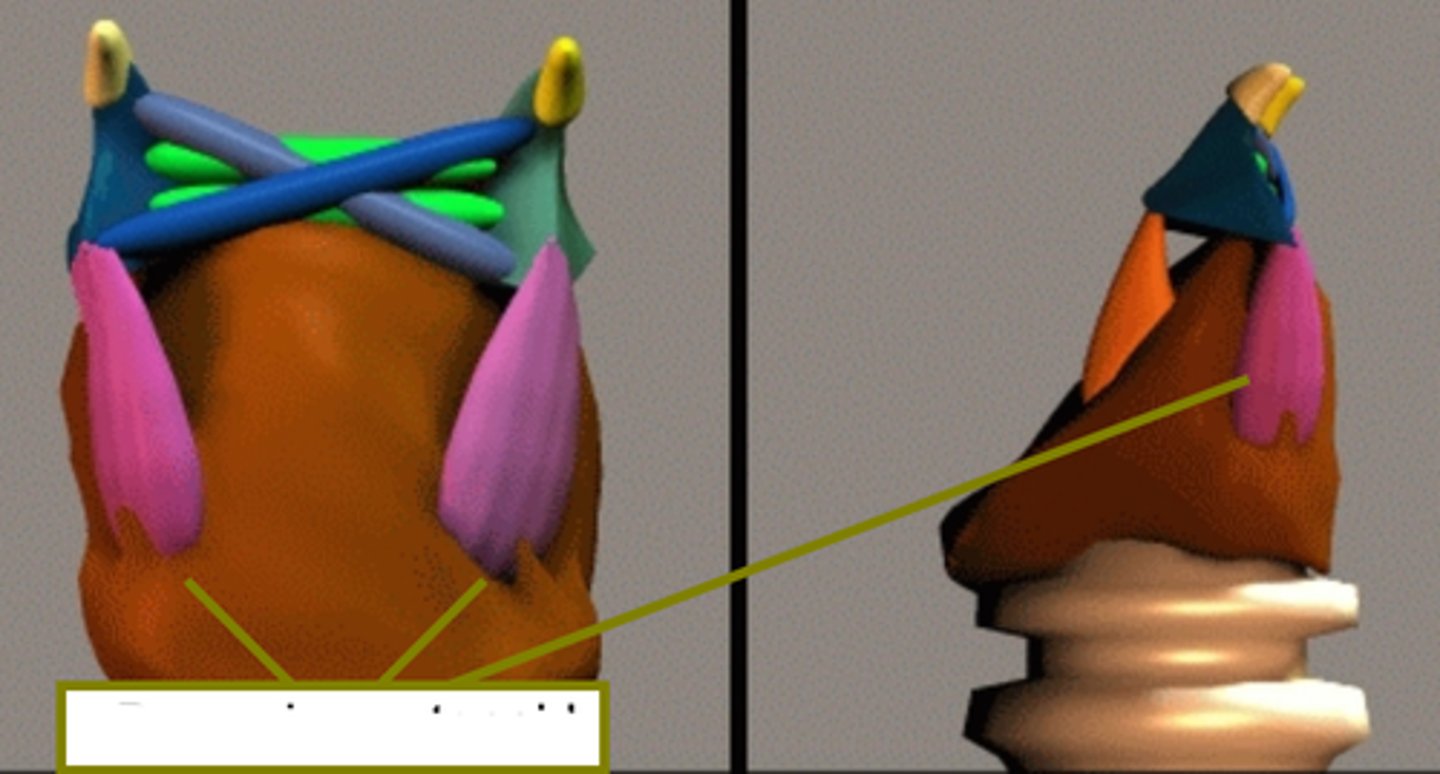
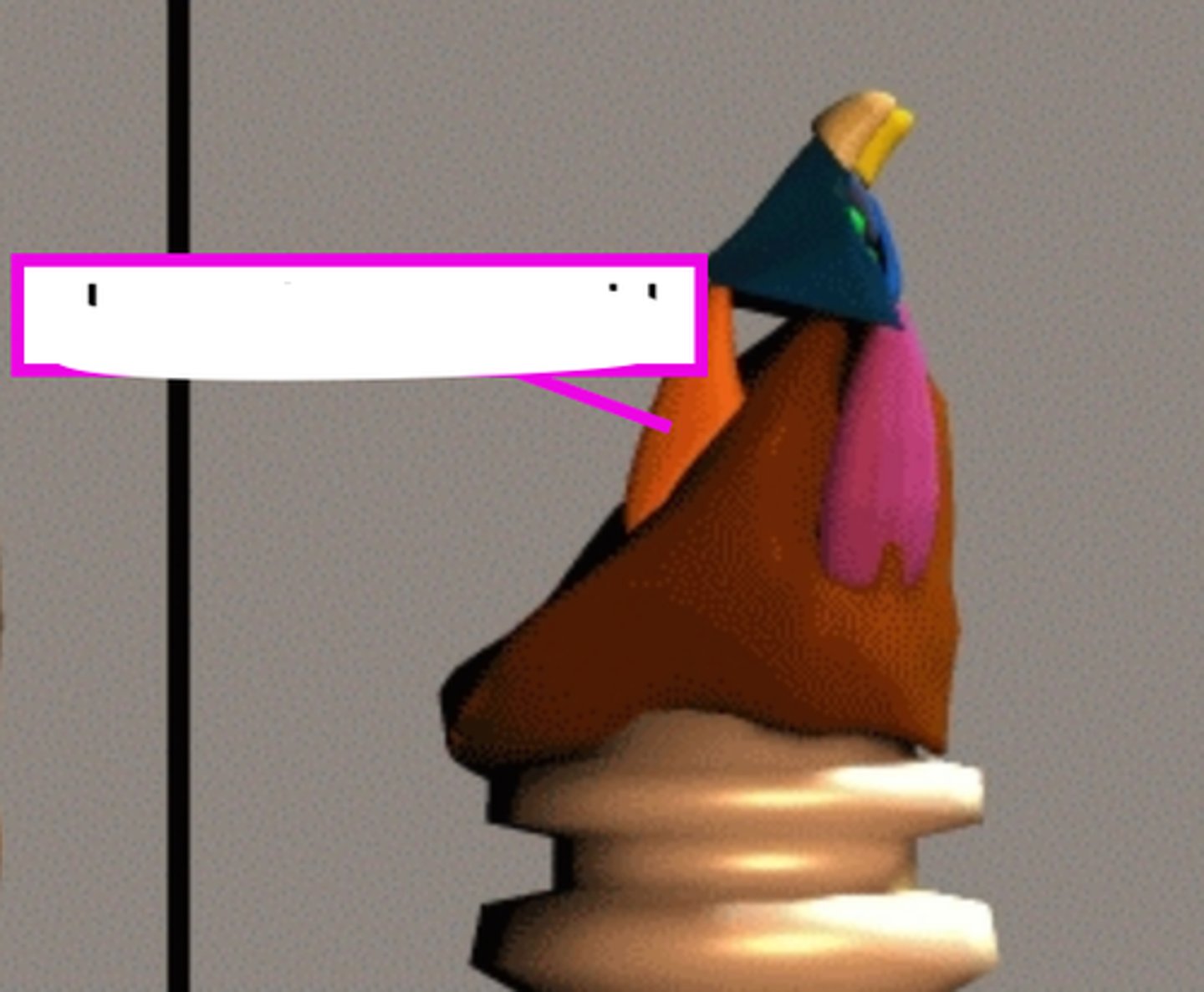
Lateral Cricoarytenoid Muscles
ADduct (bring together) the folds, but they are not the only muscles of adduction.
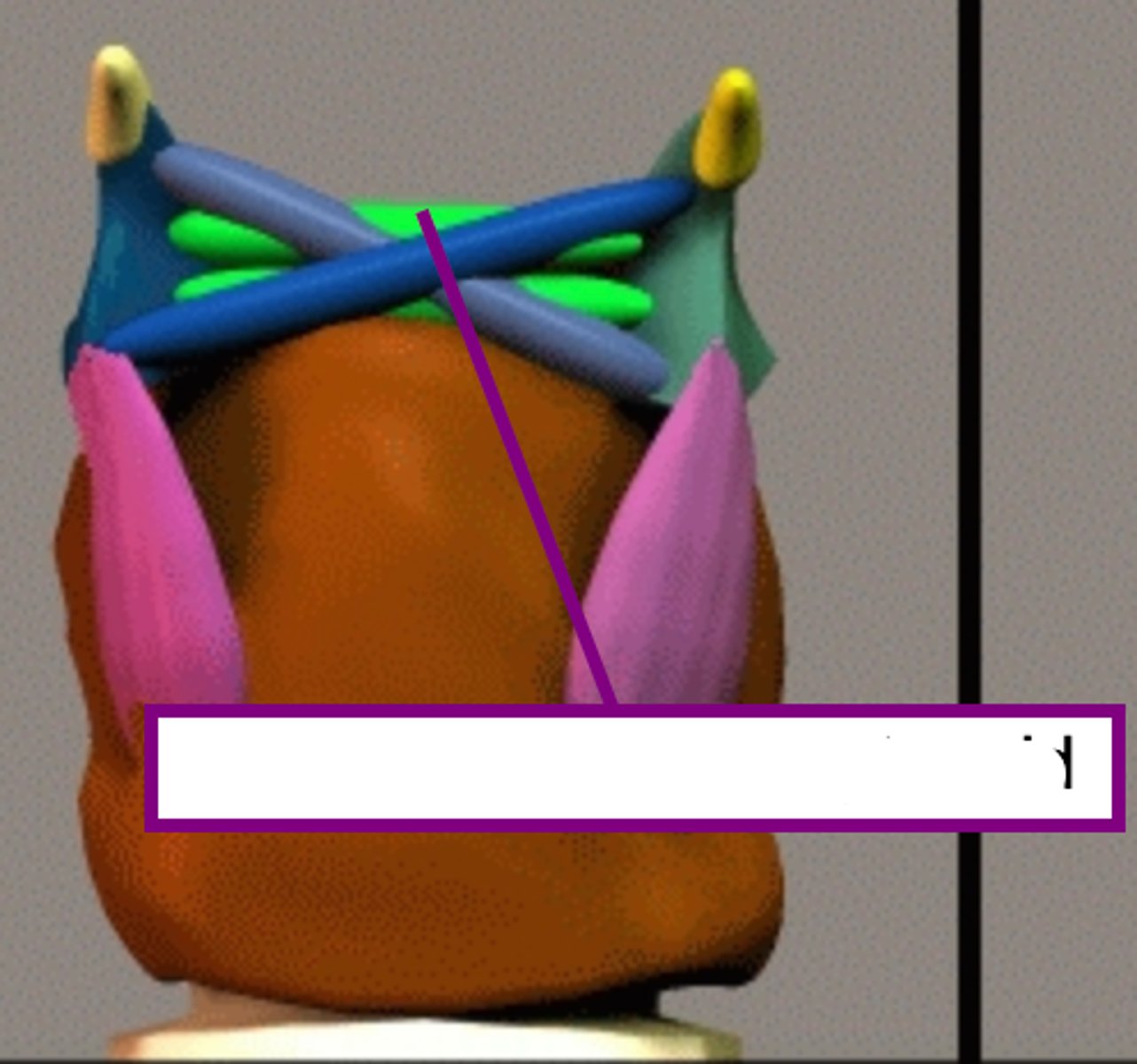
Transverse Interarytenoid Muscle
run horizontally between the two arytenoid cartilages
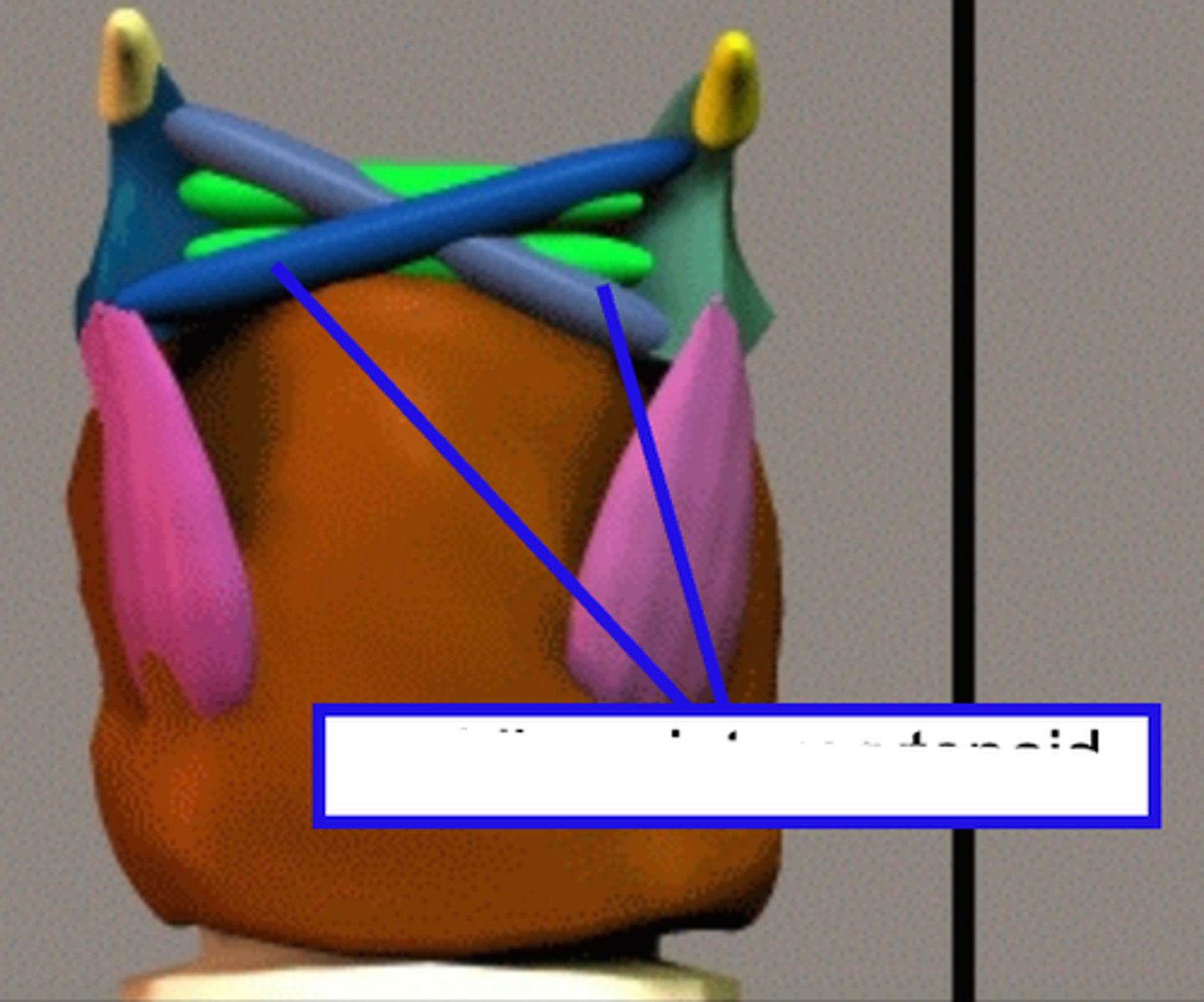
Oblique Interarytenoids
runs from the posterior process of one arytenoid to the apex of the other.
Triticial Cartilages
create a flexible joint from the hyoid to the superior horns of the thyroid cartilage.
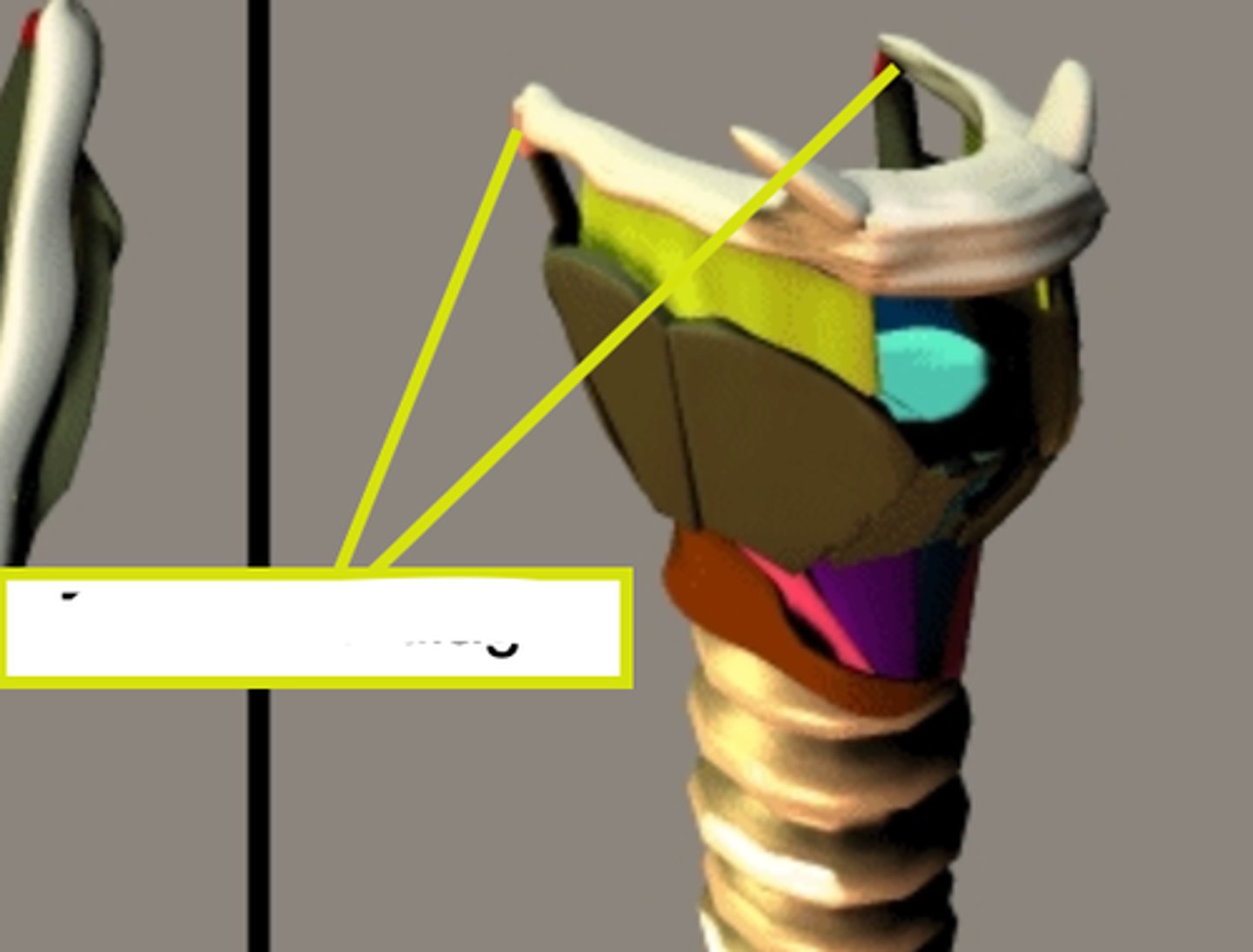
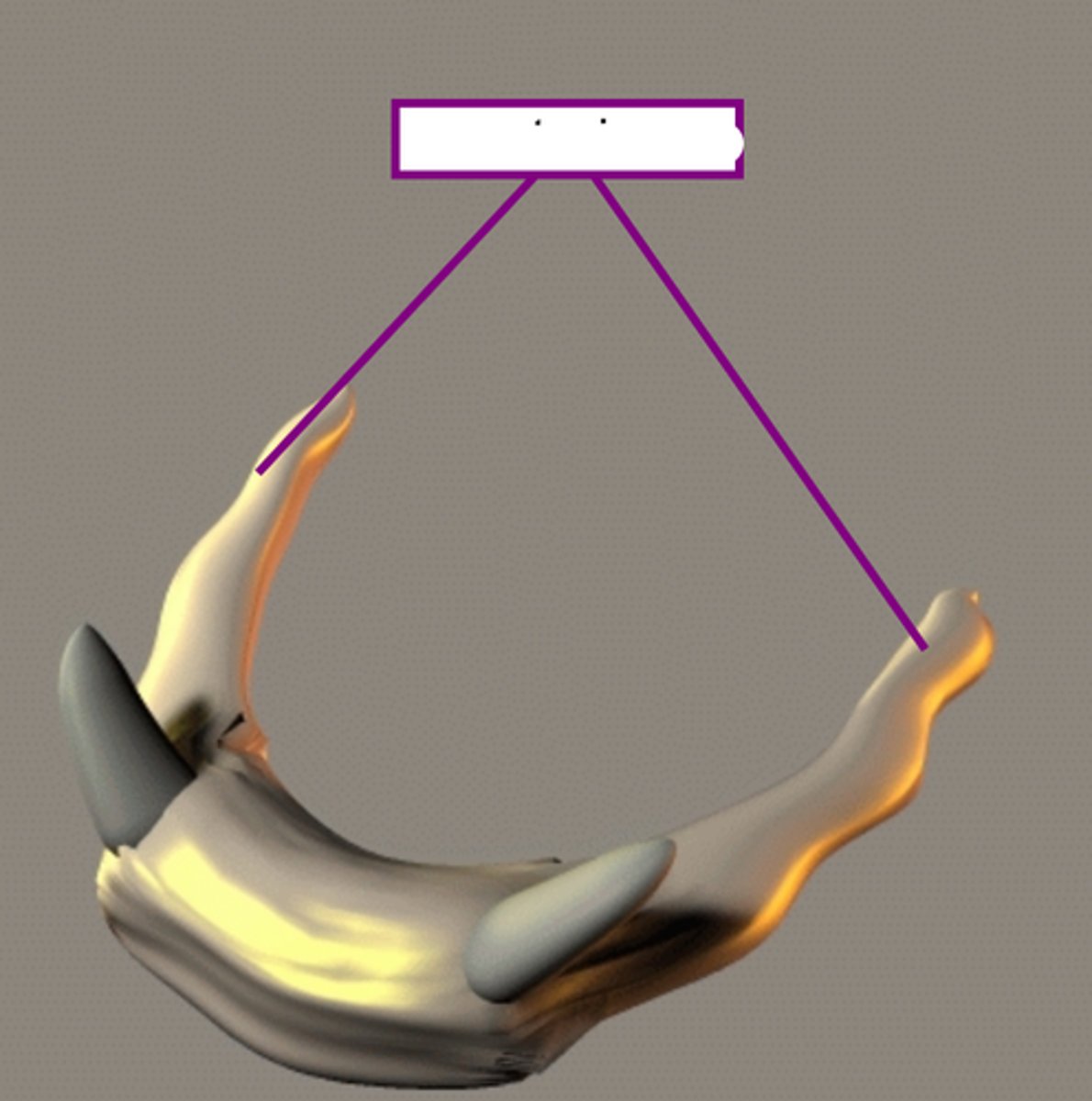
Greater Cornua
long set of two horns that project posteriorly from the hyoid bone
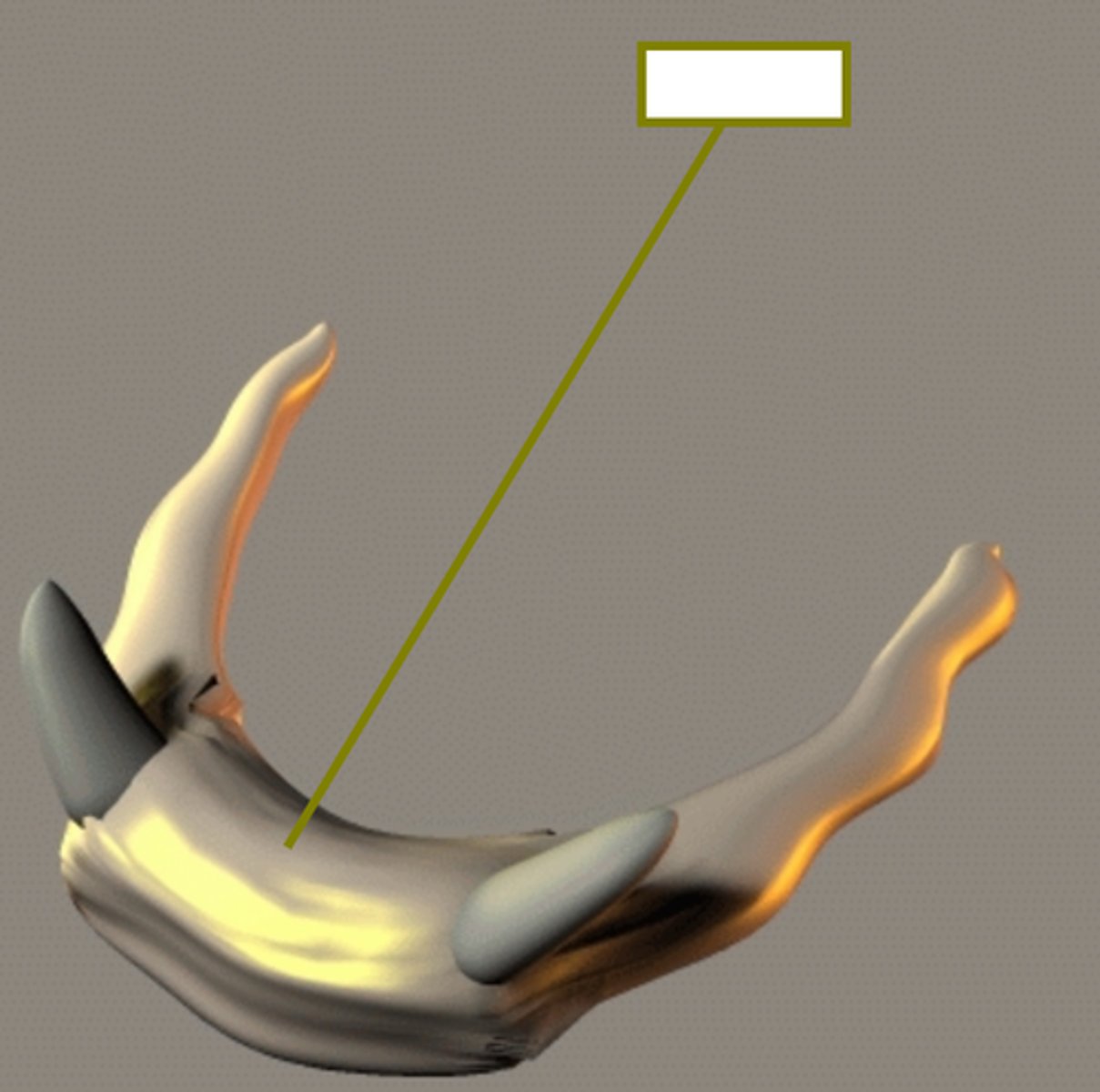
Corpus
large central portion of the uterus
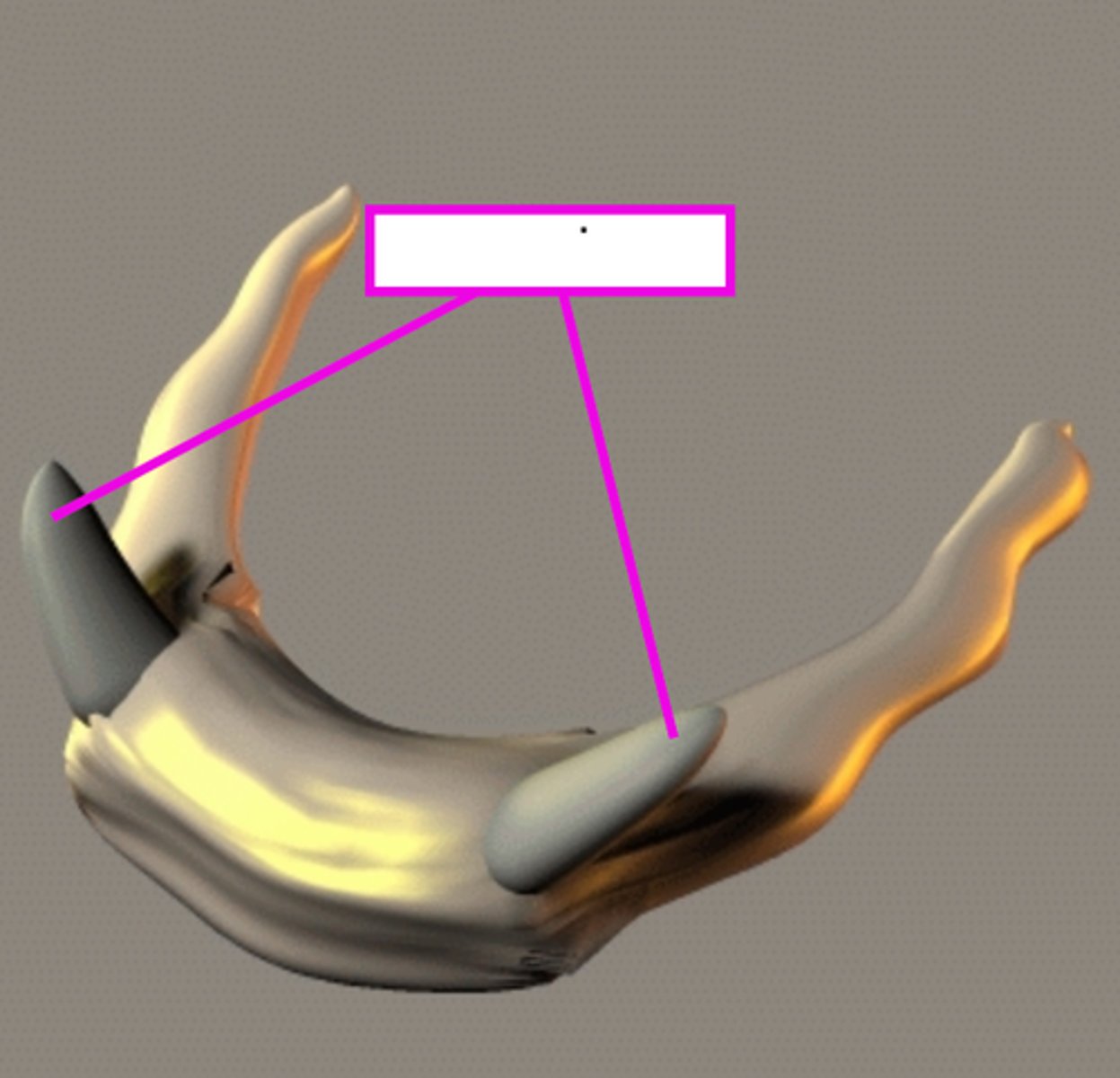
Lesser Cornua
small set of horns that project superiorly from the hyoid bone
 Note
Note  Flashcards (34)