Lids III: Infection and inflammation

0.0(0)
studied byStudied by 0 people
0.0(0)
full-widthCall Kai
learnLearn
examPractice Test
spaced repetitionSpaced Repetition
heart puzzleMatch
flashcardsFlashcards
GameKnowt Play
Card Sorting

1/26

encourage image

There's no tags or description

Looks like no tags are added yet.

Study Analytics
Name
Mastery
Learn
Test
Matching
Spaced

No study sessions yet.

27 Terms

1
New cards

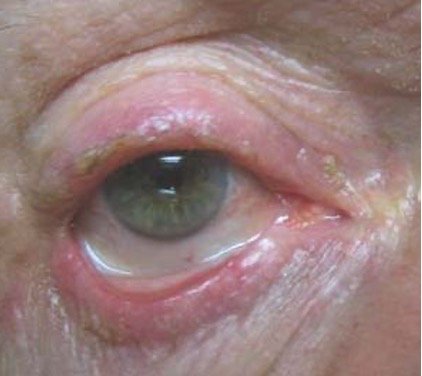
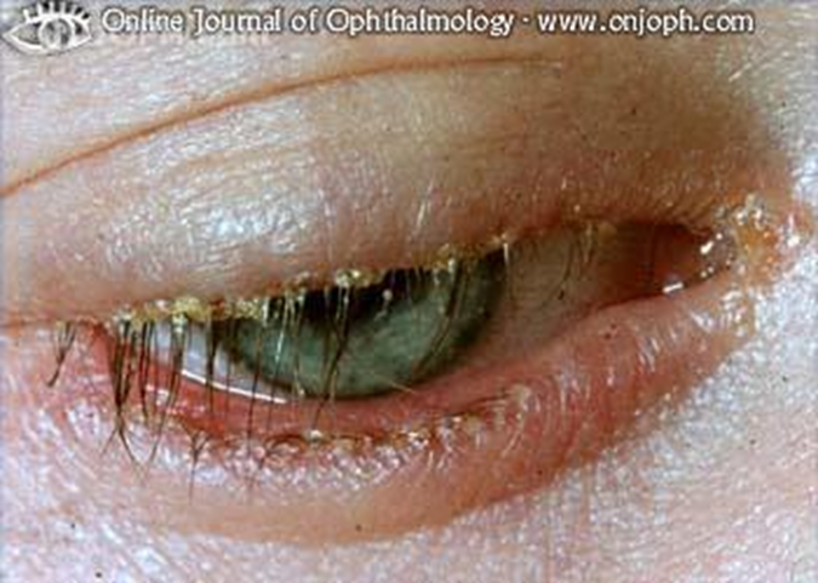
What is blepharitis?

  • inflammation of eyelid margins

  • extremely common

  • chronic /relapsing

  • typically bilateral (both eyes)

itis= inflammation

belpharo - lids
<ul><li><p><mark data-color="red" style="background-color: red; color: inherit;">inflammation of eyelid margins</mark></p></li><li><p>extremely <mark data-color="red" style="background-color: red; color: inherit;">common</mark></p></li><li><p><strong>chronic /relapsing</strong></p></li><li><p>typically <mark data-color="red" style="background-color: red; color: inherit;">bilateral (both eyes)</mark></p></li></ul><p></p><p>itis= inflammation</p><p>belpharo - lids</p><p></p>
2
New cards

what are the predisposing/risk factors for blepahritis?

  • seborrheic dermatitits (dandruff)

  • ocular rosacea —> skin condition effecting checks , nose and eyes

  • long term Contact lens wear

  • topical eye medication (glaucoma)

  • demodex - hair mite follicle

3
New cards

what glands are involved in anterior blepharitis ?

> Zeiss + Moll

anterior blepharitis occurs where eyelash follicles are (base of eyelashes)

4
New cards

what glands are involved in posterior blepharitis?

> meibomian glands 

5
New cards

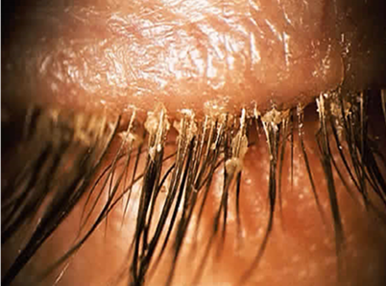
what is the aetiology for anterior blepharitis?

> Bacterial - staphylococcal

> Sebhorrheic —> excess lipid - Gland of Zeiss

> demodex - mite
<p>&gt;<mark data-color="red" style="background-color: red; color: inherit;"> Bacterial</mark> - staphylococcal</p><p></p><p>&gt; <strong>Sebhorrheic</strong> —&gt; excess lipid - Gland of Zeiss</p><p></p><p>&gt; <strong>demodex - mite</strong></p>
6
New cards

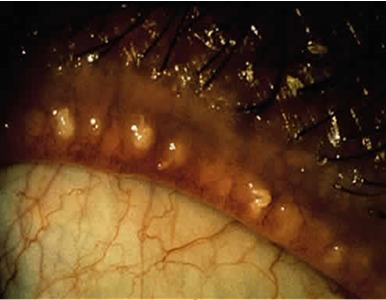
what is the aetiology for posterior blepharitis?

> Meibomian gland Dysfunction

MGD - thickened secretions which block duct
<p>&gt; Meibomian gland Dysfunction</p><p></p><p>MGD -<strong> thickened secretions</strong> which block duct</p>
7
New cards

How are the symptoms of blepharitis?

  • similar in all types

  • very variable 

  • chronic (months-years)

  • doesn’t always correspond well with signs 

8
New cards

What are the symptoms of blepharitis

  • ocular discomfort

  • soreness

  • burning

  • itching

  • grittiness

  • photophobia

  • CL intolerance

9
New cards

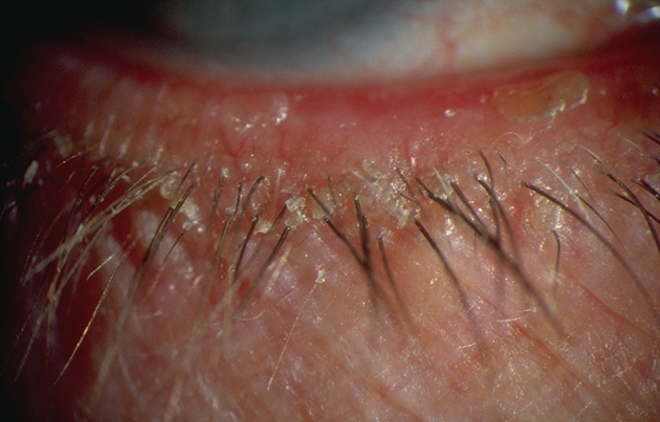
what are the signs of anterior blepharitis - bacterial ?

Bacterial - staphylococcal —> most common cause of blepharitis

  • crusting/collarettes/scales - yellow deposits at base of lashes

  • talengiectasia (dilated blood vessels)

  • lash misdirection/loss

<p>Bacterial - staphylococcal —&gt; most common cause of blepharitis</p><p></p><ul><li><p><strong><u>crusting/collarettes/scales</u></strong> - yellow deposits at base of lashes</p></li></ul><p></p><ul><li><p><mark data-color="red" style="background-color: red; color: inherit;">talengiectasia (dilated blood vessels)</mark></p></li></ul><p></p><ul><li><p><strong><mark data-color="red" style="background-color: red; color: inherit;">lash misdirection/loss</mark></strong></p></li></ul><p></p>
10
New cards

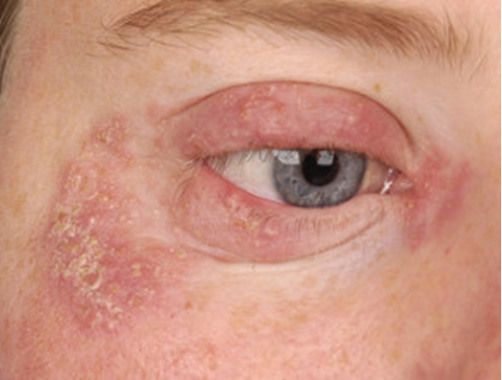
what are the signs of anterior blepharitis - seborrheic ?

seborrheic (gland of Zeiss): associated with seborrheic dermatitis - dandruff

→ disease of sebaceous gland

  • greasy deposits at base of lashes

  • associated with dermatitis rosacea

<p>seborrheic (<strong>gland of Zeiss</strong>): associated with seborrheic dermatitis - dandruff</p><p>→ disease of <strong>sebaceous gland</strong></p><p></p><ul><li><p><u>greasy deposits</u> at base of lashes</p></li></ul><p></p><ul><li><p>associated with <strong>dermatitis rosacea</strong></p></li></ul><p></p>
11
New cards

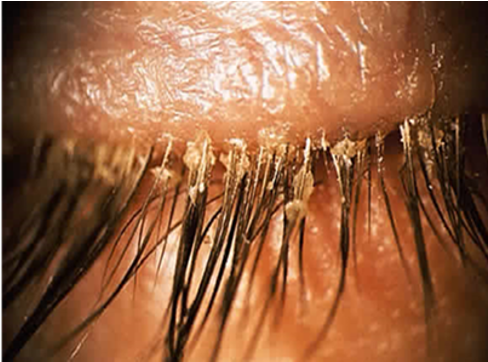
what are the signs for anterior blepharitis - demodex?

  • less common, very itchy

demodex:

  • cylindrical deposits extending up lashes

  • lash misdirection/loss , general redness

  • itching

<ul><li><p>less common, <strong><u>very itchy</u></strong></p></li></ul><p></p><p>demodex:</p><ul><li><p><strong>cylindrical deposits</strong> extending up lashes</p></li></ul><p></p><ul><li><p><strong>lash misdirection/loss</strong> , general redness</p></li></ul><p></p><ul><li><p>itching</p></li></ul><p></p>
12
New cards

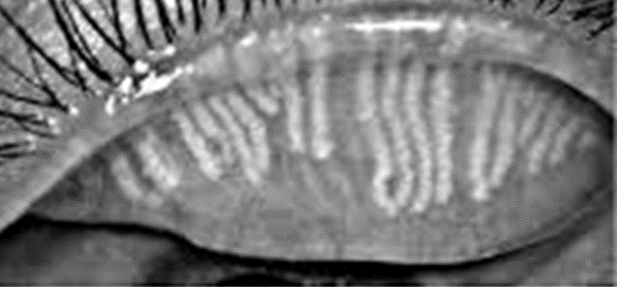
what are the signs of posterior blepharitis?

  • thickened meibomian secretions

  • microliths - plaques

  • meibomianitis - passive retention of secretions (chalazion, styes)

  • foam in tear meniscus

  • unstable tear film -evaporative tear deficiency

  • —> meibomian glands secrete oily lipid layer of tear film so reduced
<ul><li><p><strong>thickened</strong> meibomian secretions</p></li></ul><p></p><ul><li><p><strong>microliths</strong> - plaques</p></li></ul><p></p><ul><li><p>meibomianitis - <mark data-color="green" style="background-color: green; color: inherit;">passive retention of secretions</mark> (chalazion, styes)</p></li></ul><p></p><ul><li><p><mark data-color="yellow" style="background-color: yellow; color: inherit;">foam in tear meniscus</mark></p></li></ul><p></p><ul><li><p><strong>unstable tear film</strong> -<u>evaporative tear deficiency</u></p></li><li><p>—&gt; meibomian glands secrete oily lipid layer of tear film so reduced</p></li></ul><p></p>
13
New cards

what are the secondary signs of all blepharitis?

  • chronic red eye - lid margin & conjunctival hyperaemia 

  • punctate epithelial erosion (lower 1/3rd of cornea) →purple dots in image 

  • conjunctival staining - fluorescein etc

  • marginal keratitis + scarring 

  • neovascularisation —> new blood vessels + pannus (opacification of cornea)
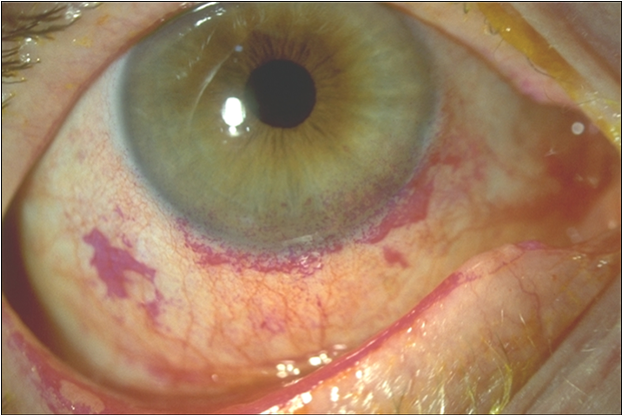
<ul><li><p><mark data-color="red" style="background-color: red; color: inherit;">chronic red eye</mark> - lid margin &amp; <mark data-color="red" style="background-color: red; color: inherit;">conjunctival hyperaemia</mark>&nbsp;</p></li></ul><p></p><ul><li><p><mark data-color="green" style="background-color: green; color: inherit;">punctate epithelial erosion</mark> (lower 1/3rd of cornea) →purple dots in image&nbsp;</p></li></ul><p></p><ul><li><p><mark data-color="green" style="background-color: green; color: inherit;">conjunctival staining</mark> - fluorescein etc</p></li></ul><p></p><ul><li><p>marginal keratitis + scarring&nbsp;</p></li></ul><p></p><ul><li><p><mark data-color="green" style="background-color: green; color: inherit;">neovascularisation</mark> —&gt; new blood vessels + <strong>pannus </strong>(opacification of cornea)</p></li></ul><p></p><p></p>
14
New cards

what is the optometric management of blepharitis?

All cases: Lid hygiene

  • needs to be daily + long term

  • warm compress, lid massage + clean/wipe

  • lid scrubs/ wipes , or washes/gels

clean flannel + warm water → hold on closed eyelids for 2 mins so warming up secretions (MG)→ so flow better

eyelid margin massage → help blocked glands express + clean away debris
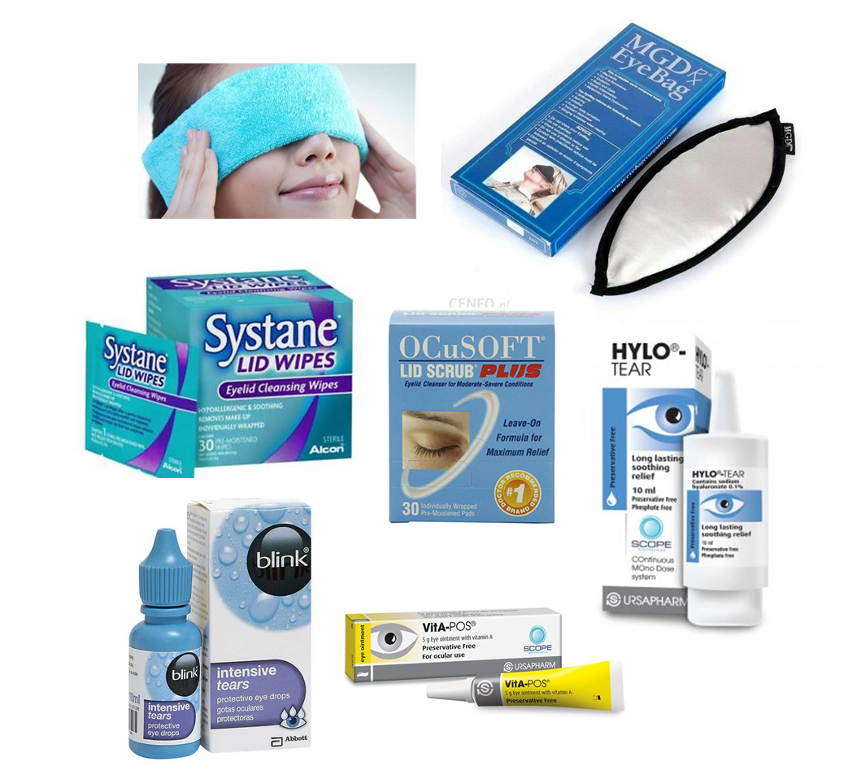
<p>All cases:<u> Lid hygiene</u></p><p></p><ul><li><p>needs to be <strong>daily + long term</strong></p></li><li><p><strong>warm compress</strong>, lid <strong>massage</strong> + clean/wipe</p></li><li><p>lid scrubs/ wipes , or washes/gels</p></li></ul><p></p><p><strong>clean flannel + warm water</strong> → hold on closed eyelids for <strong>2 mins</strong> so warming up secretions (MG)→ so flow better</p><p></p><p>eyelid margin massage → help blocked glands express + clean away debris</p><p></p>
15
New cards

what other managements are there for blepharitis ?

> ocular lubricants 

> drops/ointments 

> vitamin supplements 

> omega 3/fish oils 

BlephEx→ tool

demodex→ tea tree oil (experienced clinician)

16
New cards

what treatments for refractory cases - resistant to treatment ?

  • topical antibiotic ± steroid

  • oral tetracycline (3months/12) e.g Doxycycline
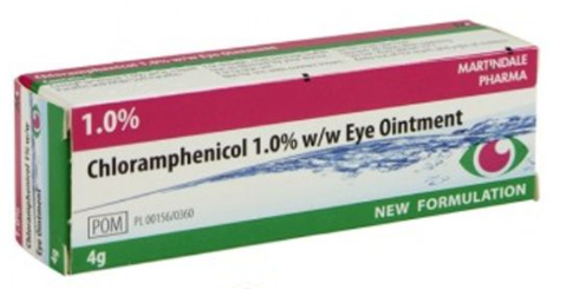
<ul><li><p><strong><u>topical antibiotic ± steroid</u></strong></p></li></ul><p></p><ul><li><p><strong>oral tetracycline</strong> (3months/12) e.g Doxycycline</p></li></ul><p></p>
17
New cards

what is hordeolum ?

  • acute bacterial infection (staphylococcal) of an eyelid gland

  • 24-48 hours red swelling

  • tender eyelid lump 

  • may spontaneously express itself with a purulent material 

  • often associated with blepharitis

image = external hordeolum
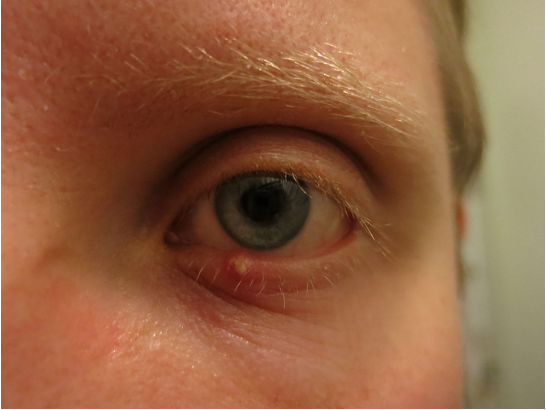
<ul><li><p><strong>acute bacterial infection</strong> (staphylococcal) of an eyelid gland</p></li></ul><p></p><ul><li><p><mark data-color="red" style="background-color: red; color: inherit;">24-48 hours red swelling</mark></p></li></ul><p></p><ul><li><p><mark data-color="red" style="background-color: red; color: inherit;">tender eyelid lump</mark>&nbsp;</p></li></ul><p></p><ul><li><p>may spontaneously express itself with a <mark data-color="red" style="background-color: red; color: inherit;">purulent material</mark>&nbsp;</p></li></ul><p></p><ul><li><p>often <strong><u>associated with blepharitis</u></strong></p></li></ul><p></p><p>image = external hordeolum</p>
18
New cards

what are the two types of hordeolum ?

  • External hordeolum (stye)

—> lash follicle + associated with gland of Zeiss or Moll - bass of eyelash

  • internal hordeolum - further in lid (image)

—> meibomian gland - tarsal plate

treat as per blepharitis
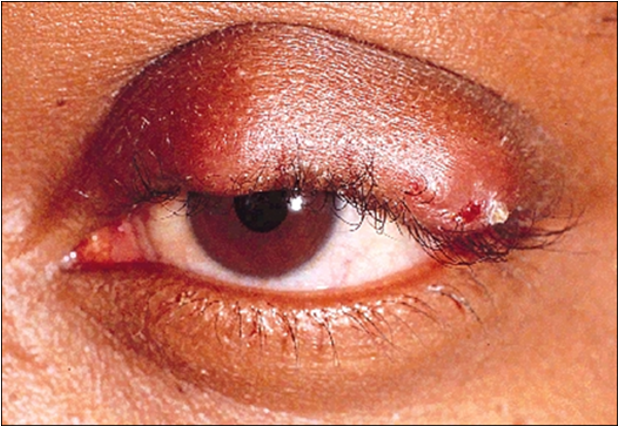
<ul><li><p>External hordeolum (stye)</p></li></ul><p>—&gt; lash follicle + associated with gland of<strong> Zeiss or Moll</strong> - bass of eyelash</p><p></p><ul><li><p>internal hordeolum - further in lid (image)</p></li></ul><p>—&gt;<strong> meibomian gland</strong> - tarsal plate</p><p>treat as per blepharitis</p><p></p>
19
New cards

what is the aetiology of a chalazion?

  • common, chronic lid lump

  • Blockage of meibomian gland duct

  • inflammatory response —> stagnate secretions + inflammatory cells

  • spontaneous or follow hordeolum

  • typically less acute + occur over a period of weeks
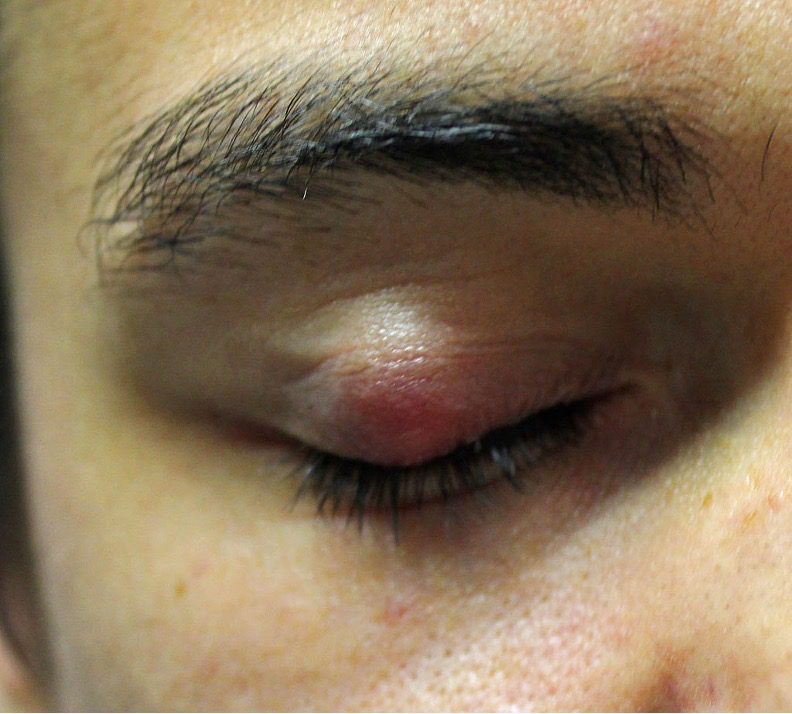
<ul><li><p><strong>common, chronic lid lump</strong></p></li></ul><p></p><ul><li><p><u><mark data-color="#fbfc97" style="background-color: rgb(251, 252, 151); color: inherit;">Blockage of meibomian gland duct</mark></u></p></li></ul><p></p><ul><li><p>inflammatory response —&gt; stagnate secretions + inflammatory cells</p></li></ul><p></p><ul><li><p>spontaneous or <strong>follow hordeolum</strong></p></li></ul><p></p><ul><li><p>typically <strong>less acute</strong> + occur over a <strong>period of weeks</strong></p></li></ul><p></p>
20
New cards

what are the symptoms of a chalazion?

  • usually painless lid lump 

  • single or multiple, may be recurrent 

21
New cards

what are the signs of a chalazion?

  • well-defined , 2-8mm subcutaneous nodule in tarsal plate

  • may be associated with blepharitis and astigmatism
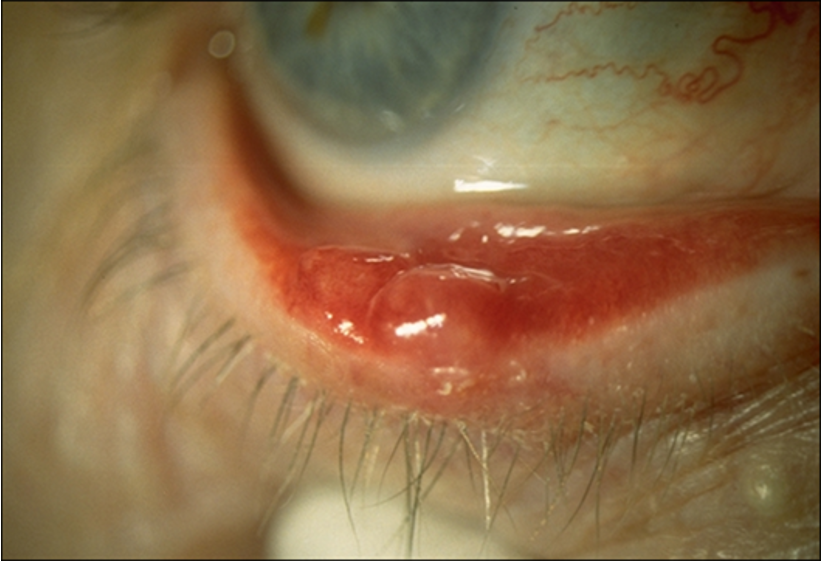
<ul><li><p>well-defined ,<strong> 2-8mm subcutaneous nodule in tarsal plate</strong></p></li></ul><p></p><ul><li><p>may be associated with <strong>blepharitis and astigmatism</strong></p></li></ul><p></p>
22
New cards

what is the management for a chalazion?

  • tend to resolve on their own

  • lid hygiene as per bleph - warm compress, massage + clean lids

  • resolution may take several weeks

  • occasionally may be surgically removed → if persistent and hasn’t resolved for 6 months

23
New cards

what is herpes simplex virus ?

> swollen lids + conjunctivitis 
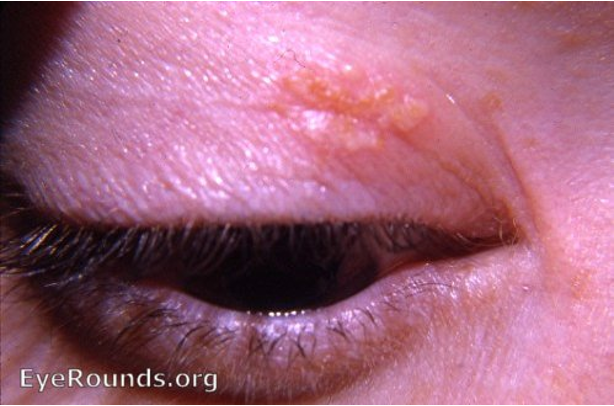
<p>&gt; swollen lids + conjunctivitis&nbsp;</p>
24
New cards

what is herpes zoster virus (shingles)

  • Varicella (chicken pox vius)

  • herpesvirus-3

  • pain/neuralgia (tingling pain) - one sided

  • vesicular rash

  • lesion tip on nose (hutchingsons sign)- higher risk of ocular complications

  • oral acyclovir within 72 hours of vesicles starting ,reduces eye disorders from 50% to 20-30% + reduces pain
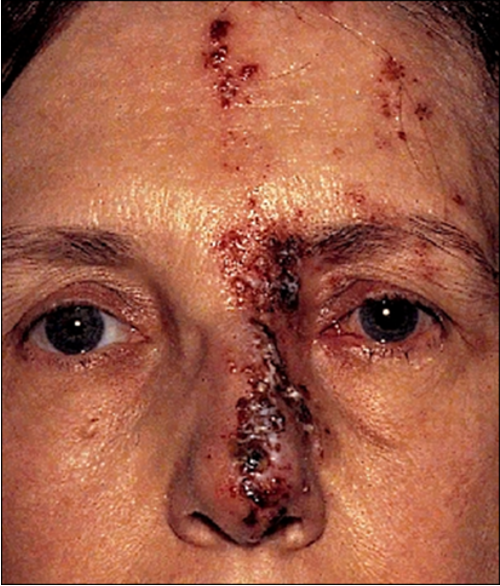
<ul><li><p>Varicella (<strong>chicken pox vius)</strong></p></li></ul><p></p><ul><li><p>herpesvirus-3</p></li></ul><p></p><ul><li><p>pain/neuralgia (<strong>tingling </strong>pain) - one sided</p></li></ul><p></p><ul><li><p><mark data-color="purple" style="background-color: purple; color: inherit;">vesicular rash</mark></p></li></ul><p></p><ul><li><p><mark data-color="purple" style="background-color: purple; color: inherit;">lesion tip on nose</mark> (hutchingsons sign)- higher risk of ocular complications</p></li></ul><p></p><ul><li><p><mark data-color="purple" style="background-color: purple; color: inherit;">oral acyclovir within 72 hours</mark> of vesicles starting ,reduces eye disorders from 50% to 20-30% + reduces pain</p></li></ul><p></p>
25
New cards

what is molluscum contagiosum?

  • poxvirus

  • mildly contagious (skin to skin)

  • umbilicated skin nodule → 2-3mm

  • viral toxins may cause follicular conjunctivitis

  • curette lesions → local or general anaesthetic

—> moluscumi scraped out 
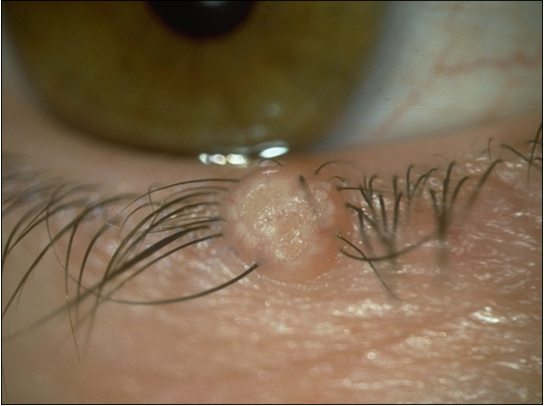
<ul><li><p><strong>poxvirus</strong></p></li></ul><p></p><ul><li><p>mildly <strong>contagious</strong> (skin to skin)</p></li></ul><p></p><ul><li><p><mark data-color="green" style="background-color: green; color: inherit;">umbilicate</mark>d skin nodule → 2-3mm</p></li></ul><p></p><ul><li><p>viral toxins may cause follicular conjunctivitis</p></li></ul><p></p><ul><li><p><mark data-color="green" style="background-color: green; color: inherit;">curette</mark> lesions → local or general anaesthetic</p></li></ul><p>—&gt; moluscumi scraped out&nbsp;</p><p></p>
26
New cards

what is Tinea faciei ?

  • fungal infection - Rare 

<ul><li><p>fungal infection - Rare&nbsp;</p></li></ul><p></p>
27
New cards

what is impetigo?

  • Staph infection

  • rash

  • occasionally blisters on skin

  • common in children younger than 14yrs of age

—> can lead to orbital cellulitis

<ul><li><p>Staph infection</p></li></ul><p></p><ul><li><p><mark data-color="blue" style="background-color: blue; color: inherit;">rash</mark></p></li></ul><p></p><ul><li><p>occasionally <strong>blisters on skin</strong></p></li></ul><p></p><ul><li><p>common in <mark data-color="blue" style="background-color: blue; color: inherit;">children </mark><strong><mark data-color="blue" style="background-color: blue; color: inherit;">younge</mark>r than <mark data-color="blue" style="background-color: blue; color: inherit;">14yrs</mark></strong> of age</p></li></ul><p></p><p>—&gt; can lead to <strong><mark data-color="blue" style="background-color: blue; color: inherit;">orbital cellulitis</mark></strong></p><p></p>