Ch. 27 LEC - Female Reproductive System
 Call Kai
 Learn
Learn Practice Test
 Spaced Repetition
 Match
Match Flashcards
 Knowt Play
1/74

Earn XP
Description and Tags
Lecture Exam 5
Name | Mastery | Learn | Test | Matching | Spaced | Call with Kai | Chat |
|---|
No analytics yet
Send a link to your students to track their progress
75 Terms
Define ovaries
Female gonads that produce gametes known as ova and secrete hormones like estrogen and progesterone
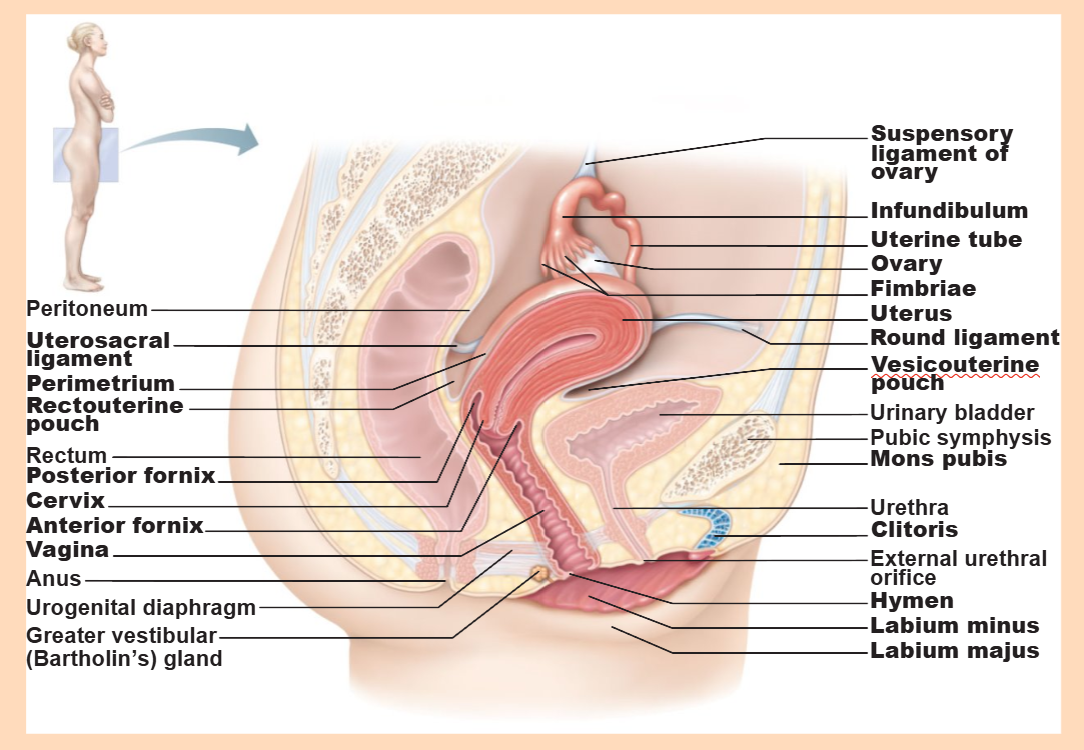
List the components of the female internal genitalia
Ovaries, uterine tubes, uterus, and vagina
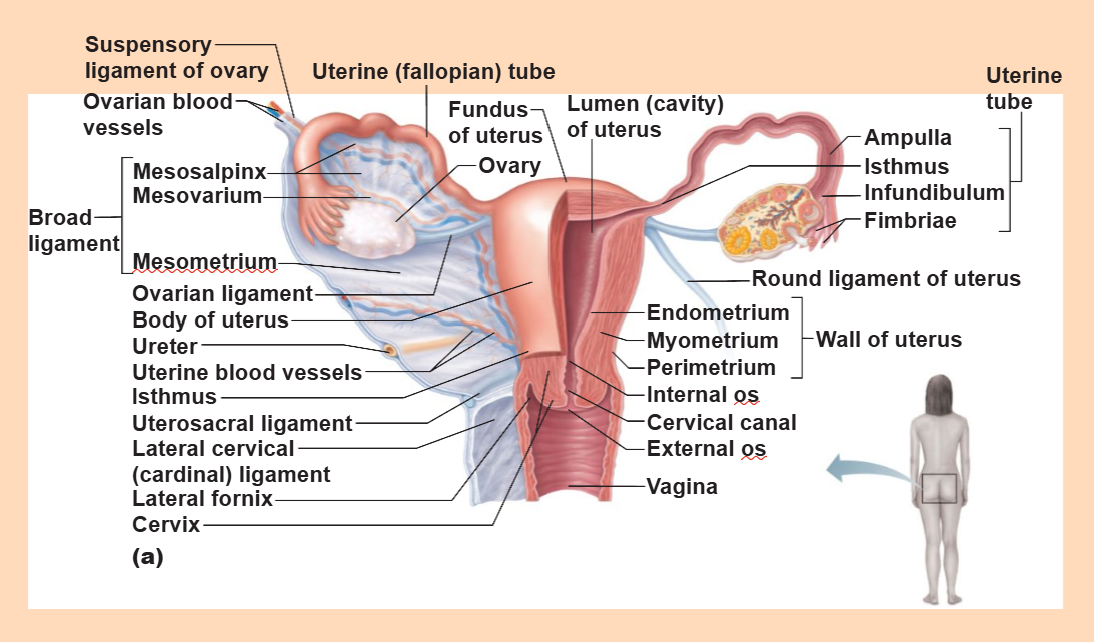
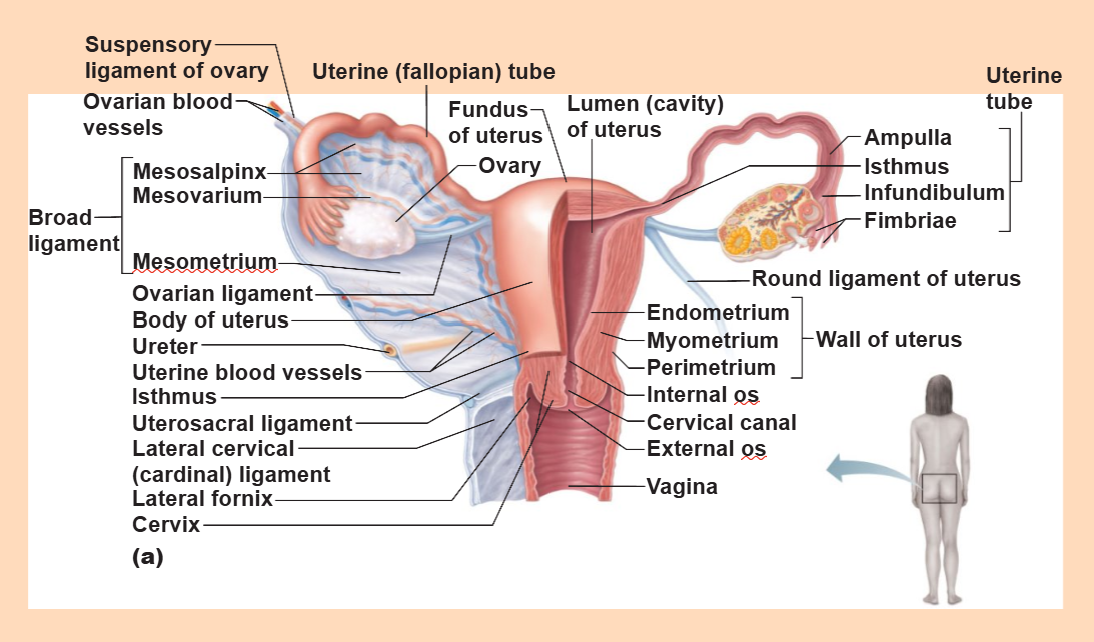
Identify the ligament that anchors the ovary medially to the uterus
Ovarian ligament
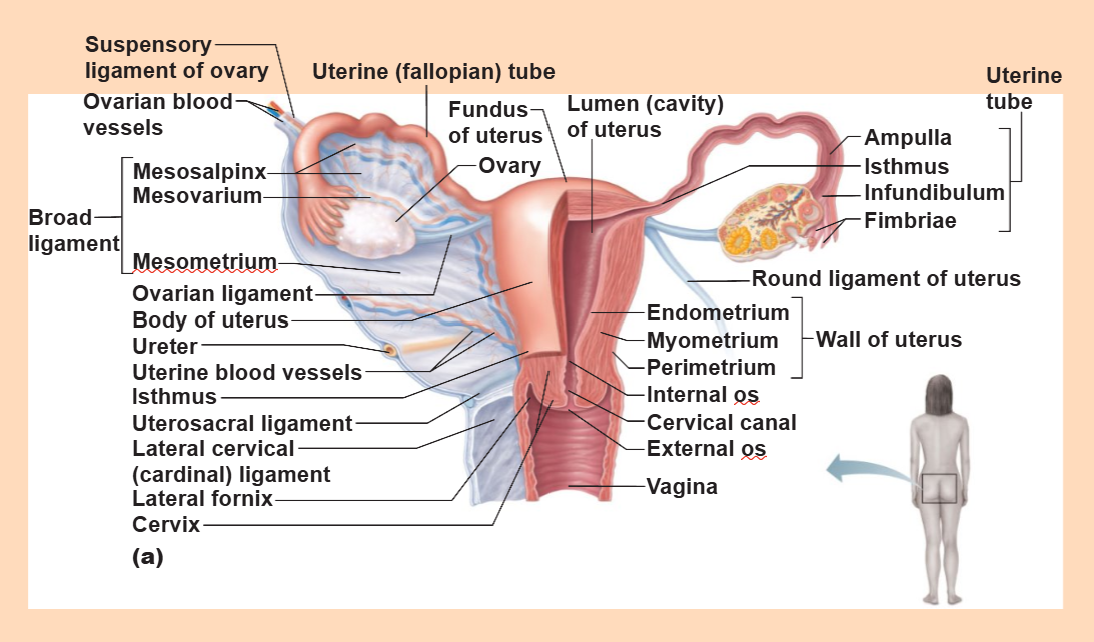
Identify the ligament that anchors the ovary laterally to the pelvic wall
Suspensory ligament
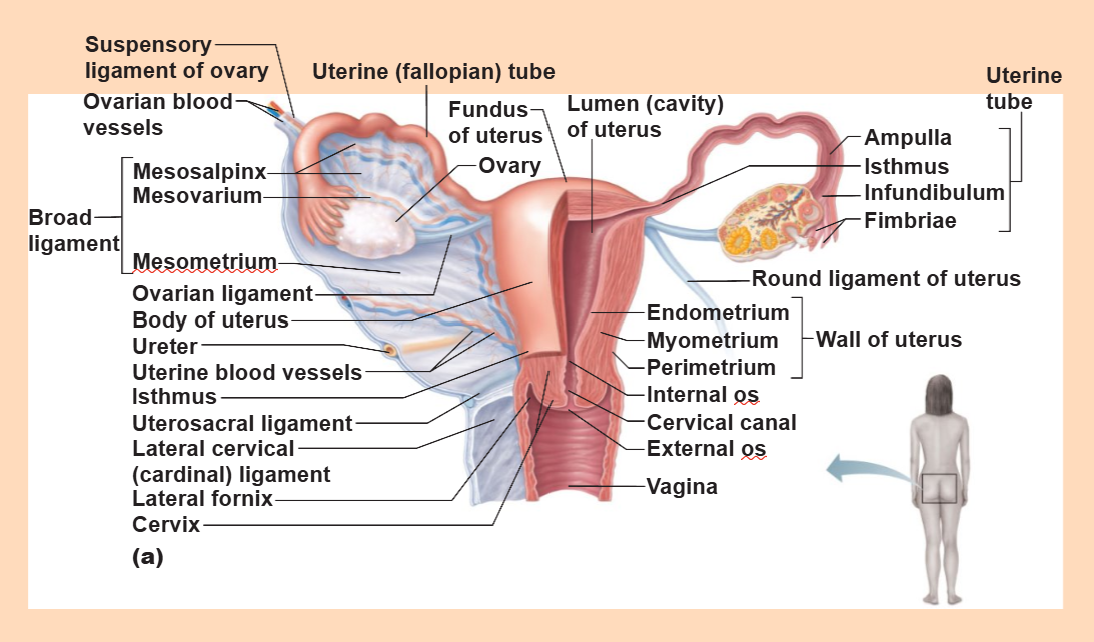
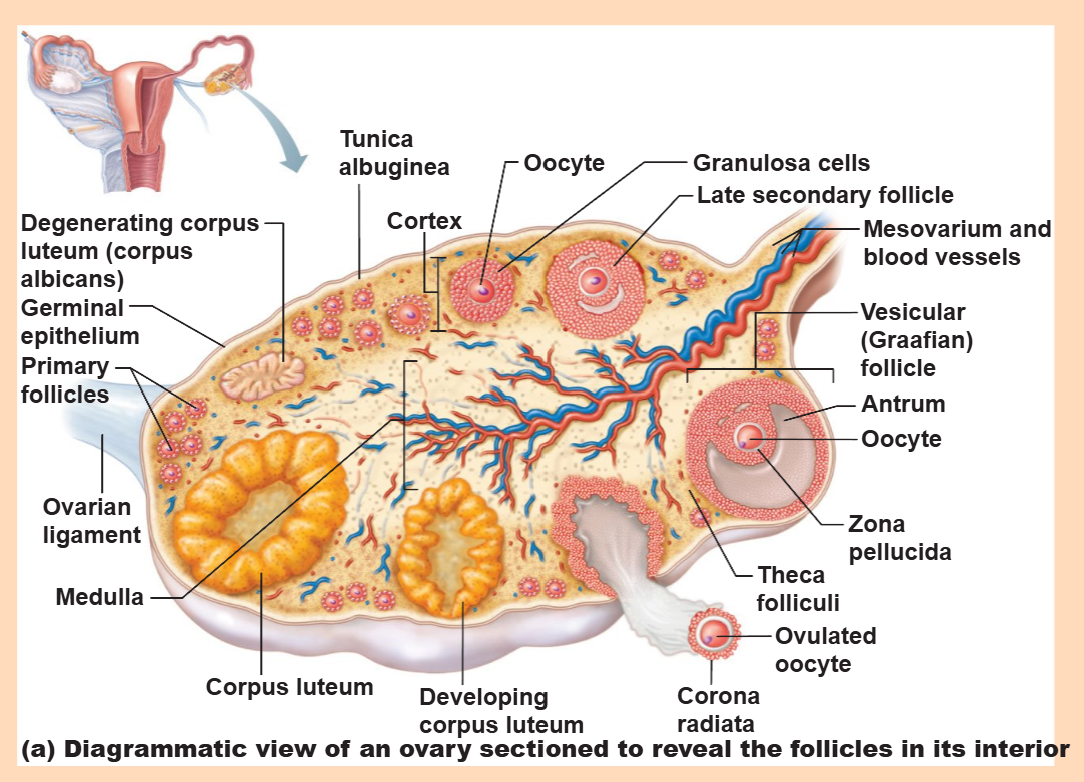
Describe the role of the mesovarium
It is a part of the broad ligament that suspends the ovary
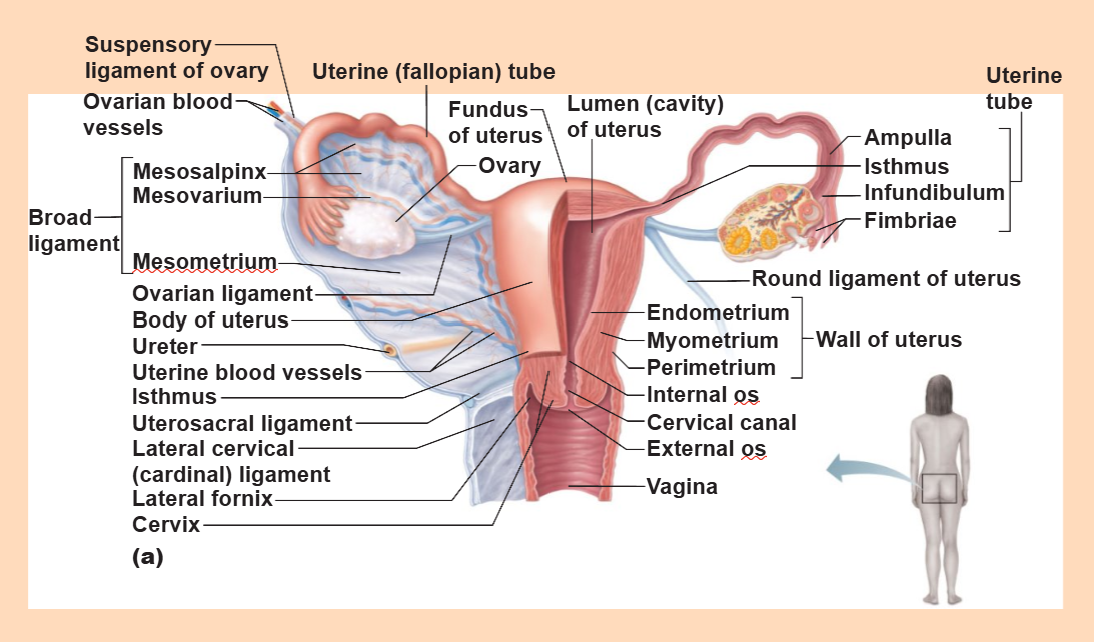
Name the large ligament that supports the uterine tubes, uterus, and vagina while containing the suspensory ligament and mesovarium
Broad ligament
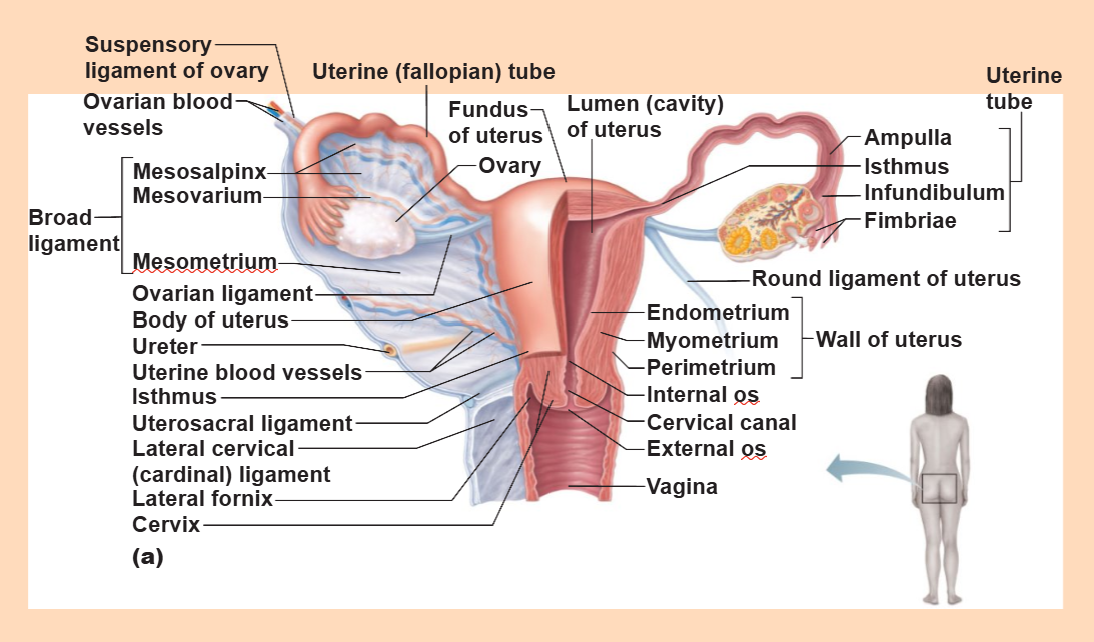
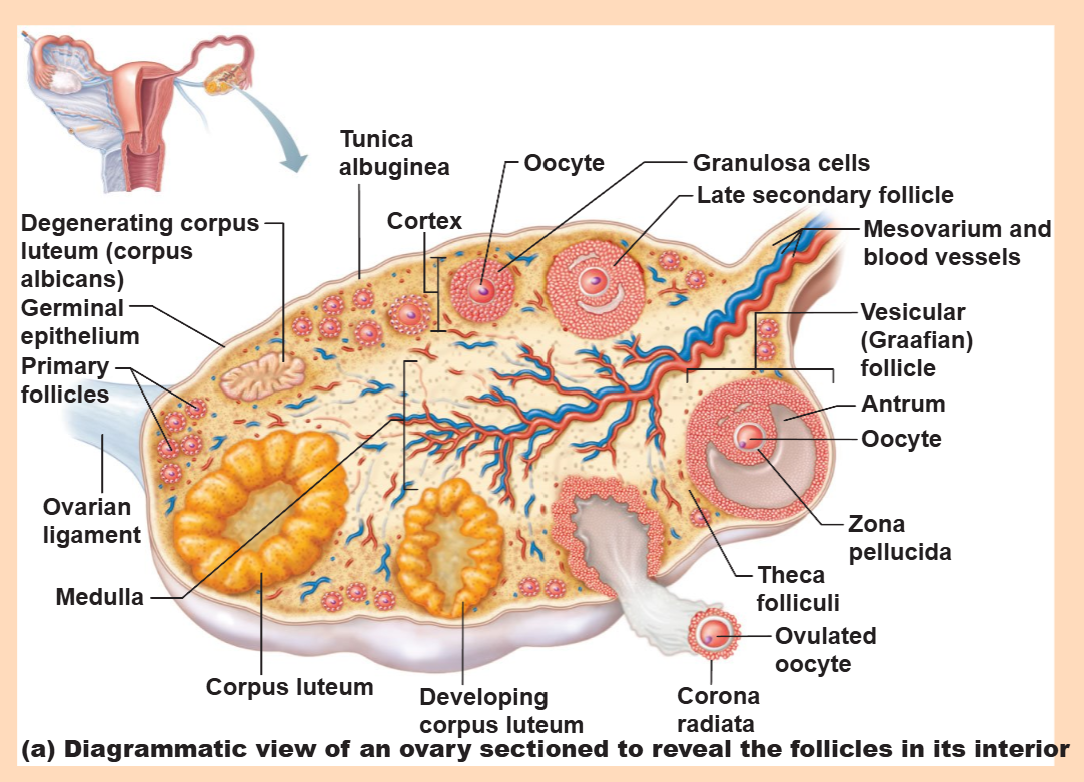
Differentiate between the ovarian cortex and medulla
The cortex contains ovarian follicles while the medulla contains large blood vessels and nerves
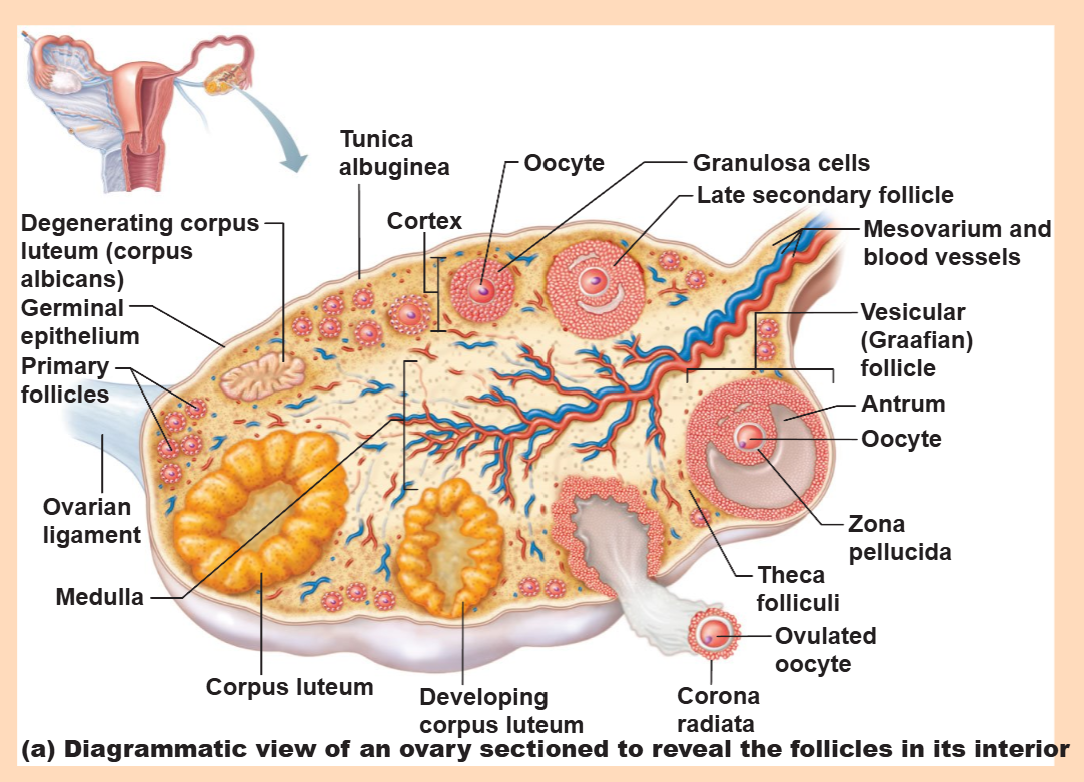
Define an ovarian follicle
An immature egg called an oocyte surrounded by either follicle cells or granulosa cells
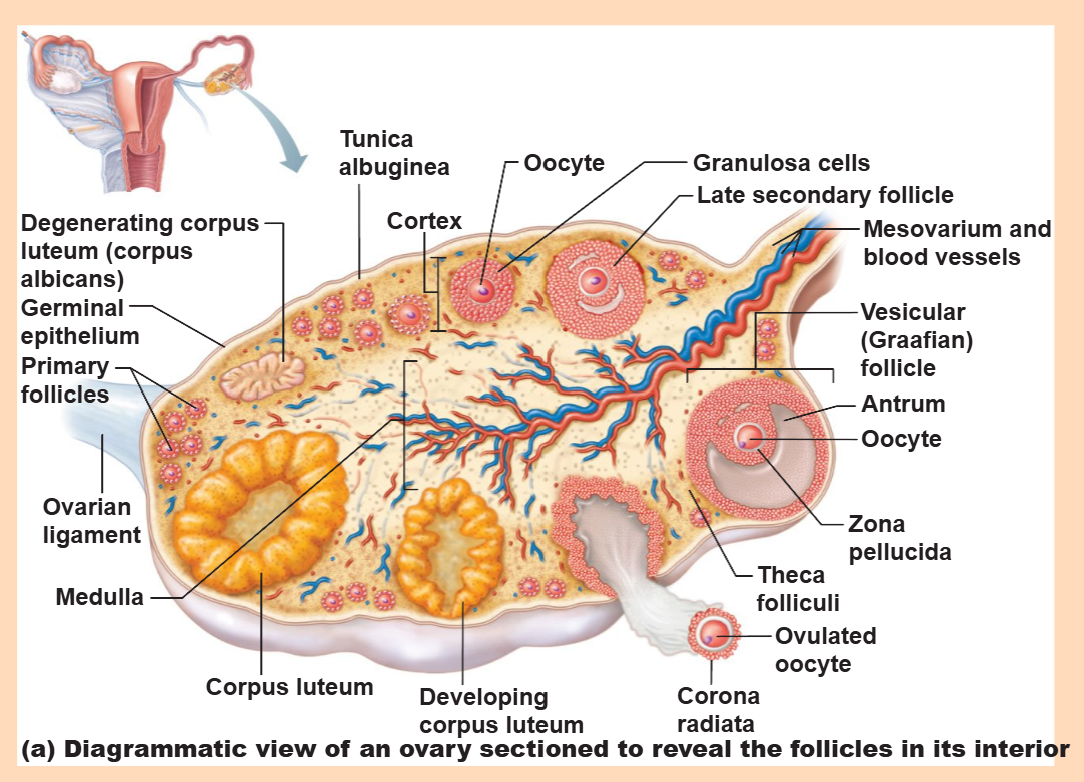
Complete the statement regarding follicle layers - Surrounding cells are called follicle cells if one layer is present and granulosa cells when
More than one layer is present
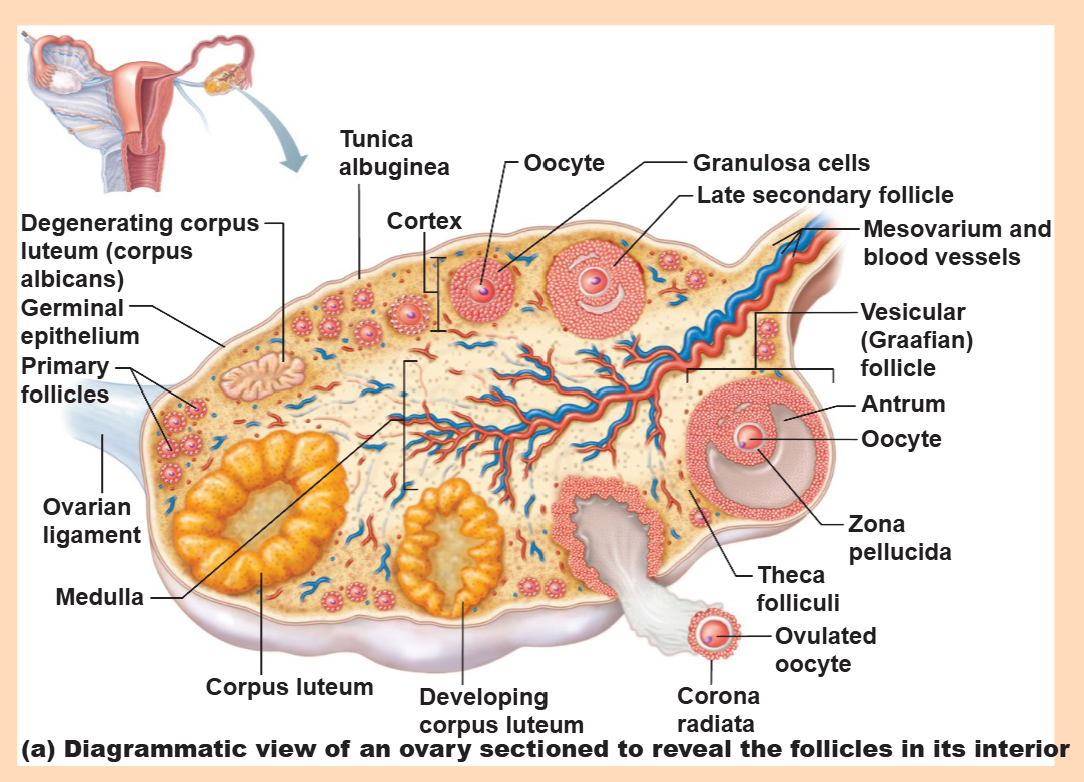
List the stages of follicle development in order from least to most mature
Primordial follicle, primary follicle, secondary follicle, late secondary follicle, and vesicular or Graafian follicle
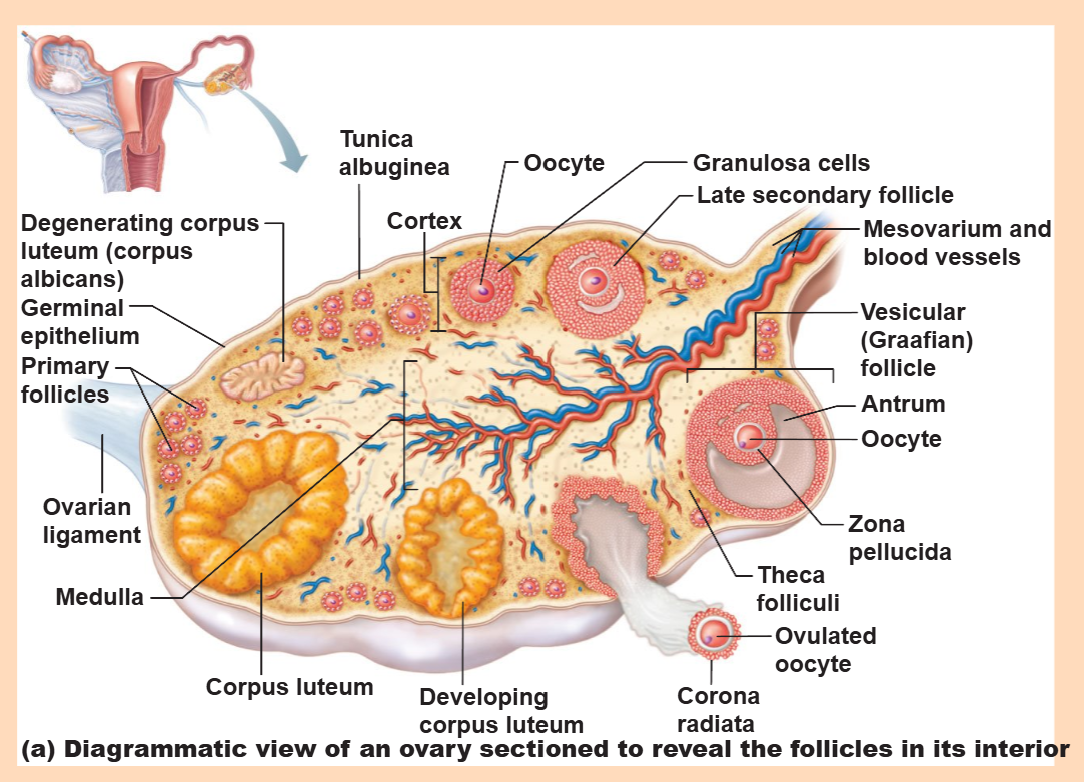
Identify the structure that develops from the ruptured follicle after ovulation occurs
Corpus luteum
Identify the specific part of the uterine tube that is the usual site of fertilization
Ampulla
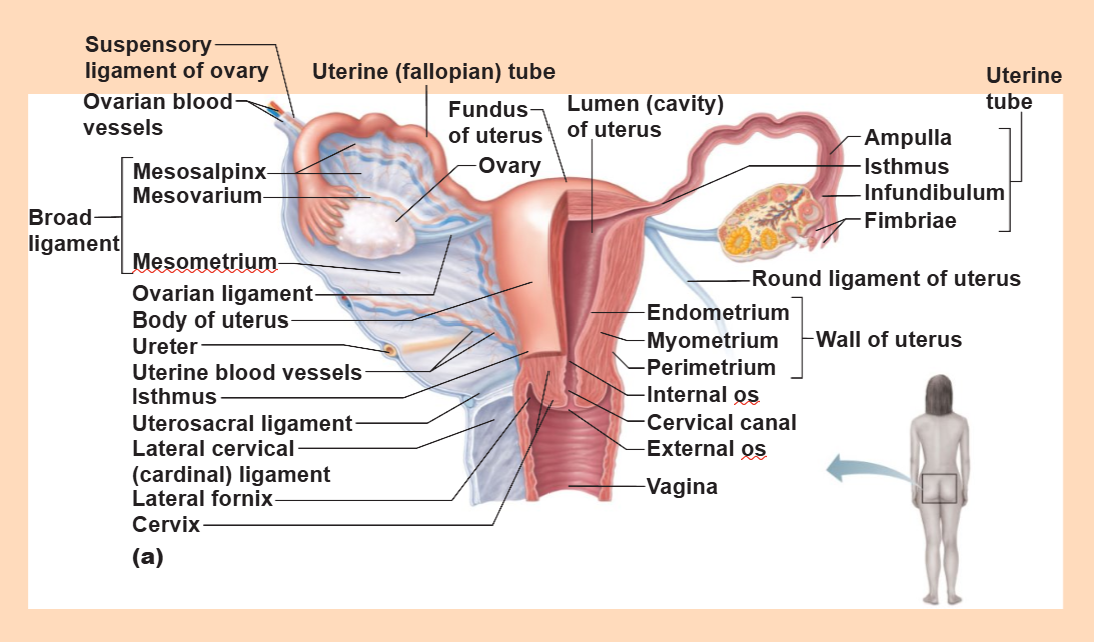
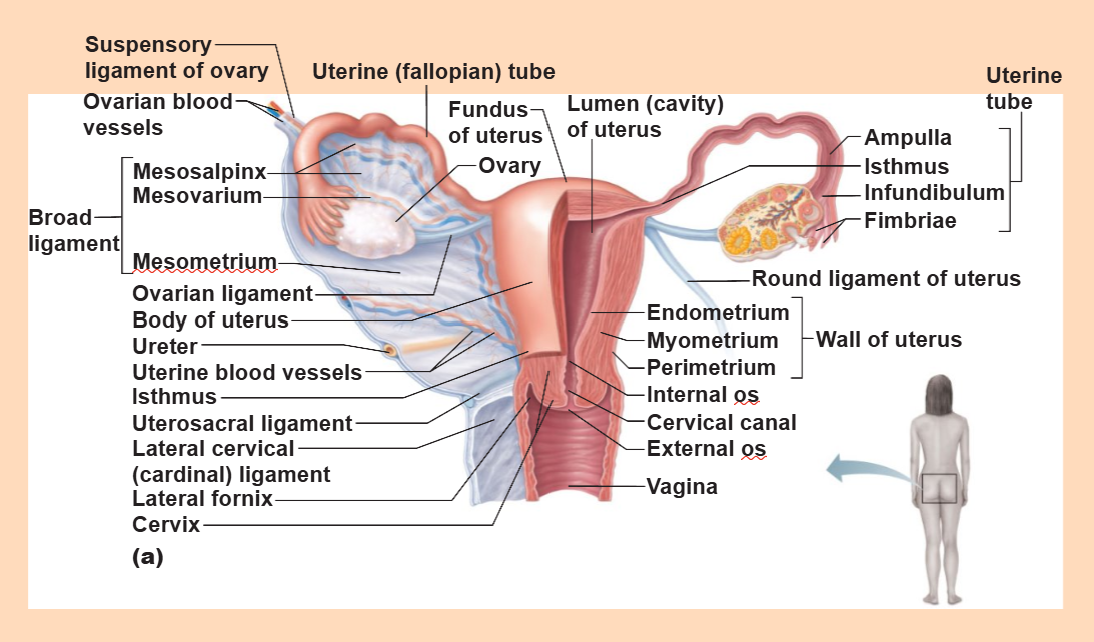
Describe the function of the ciliated fimbriae of the infundibulum
They create currents to move the oocyte into the uterine tube
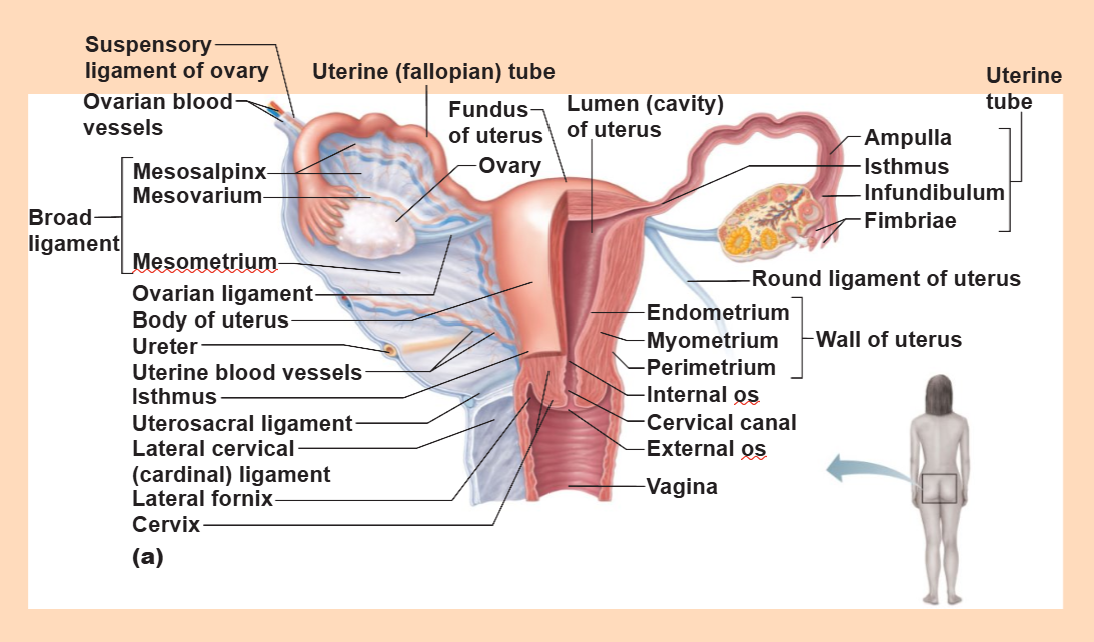
Name the constricted region where the uterine tube joins the uterus
Isthmus
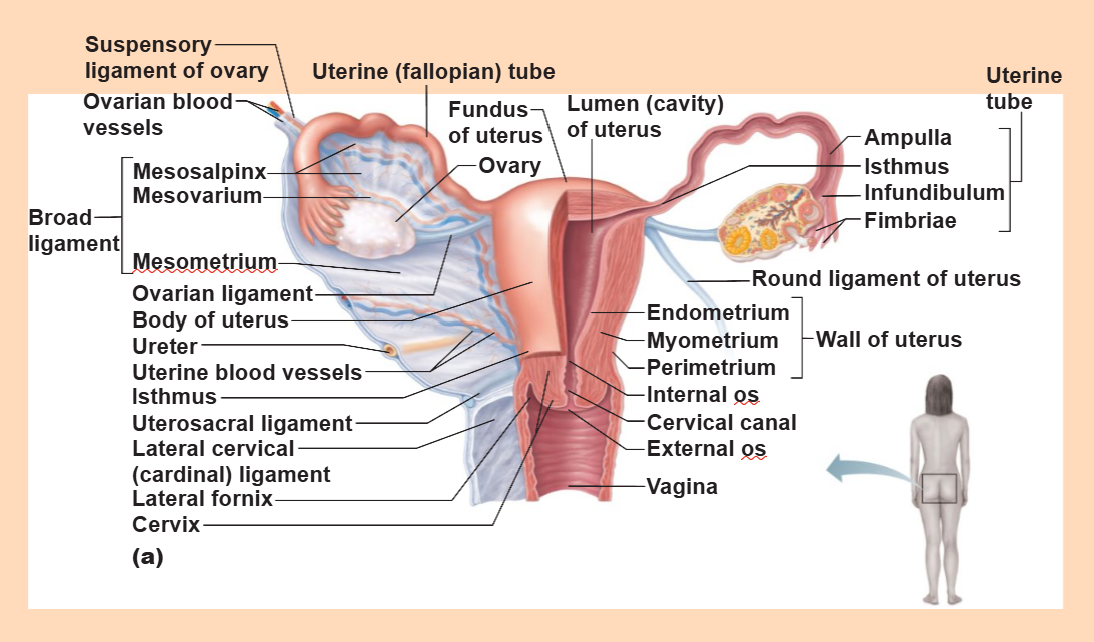
Name the three major regions of the uterus
Body, fundus, and isthmus
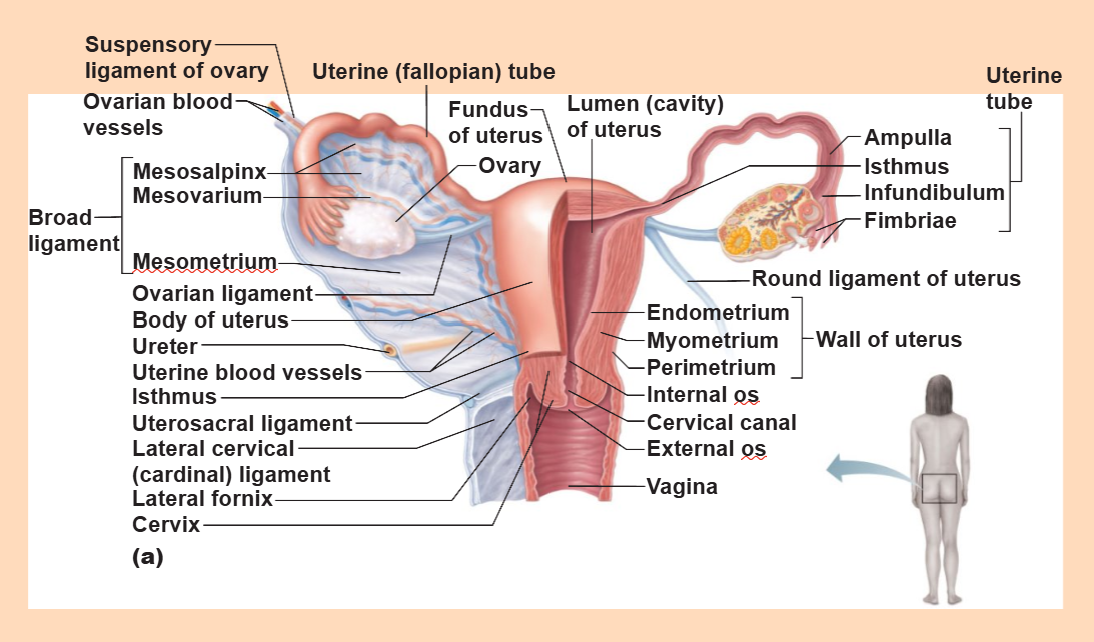
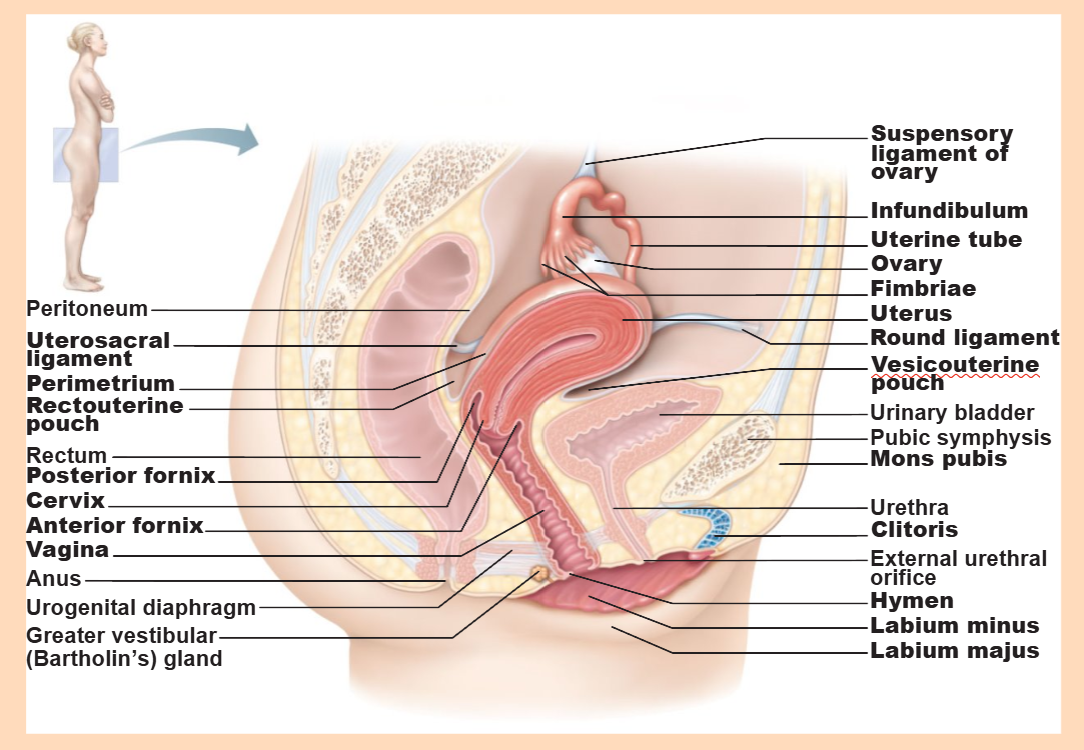
Define the cervix
The narrow neck or outlet of the uterus that projects into the vagina
State the function of the mucus secreted by cervical glands
It blocks sperm entry except during midcycle
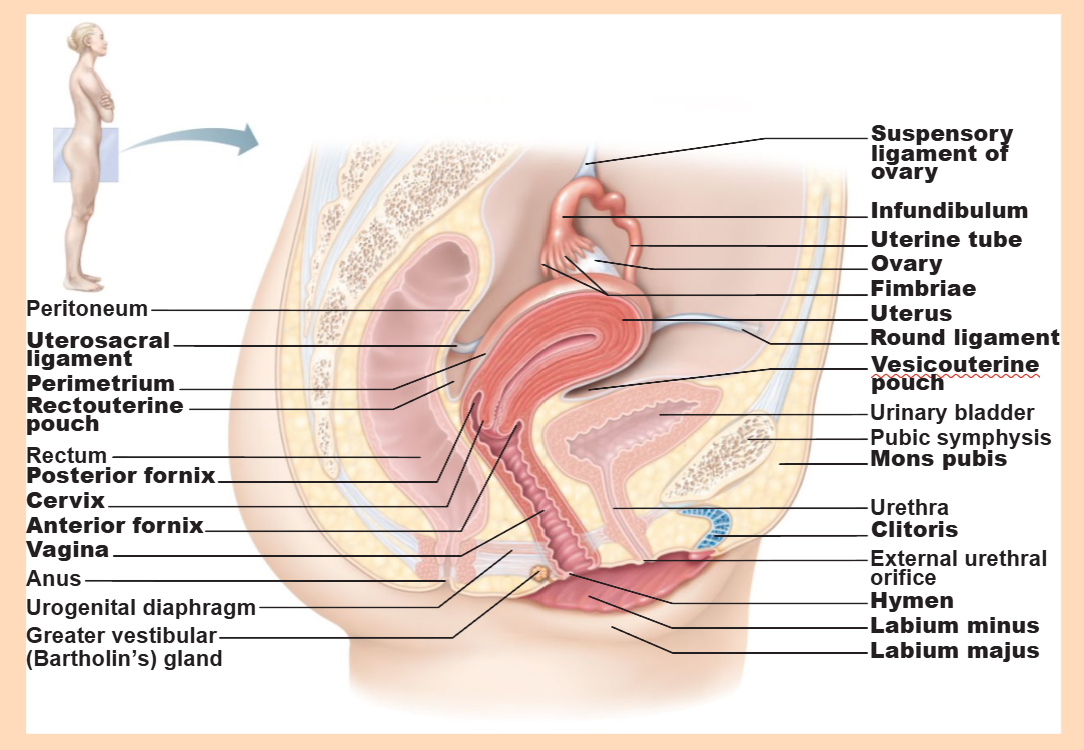
Identify the peritoneal pouch located between the bladder and the uterus
Vesicouterine pouch
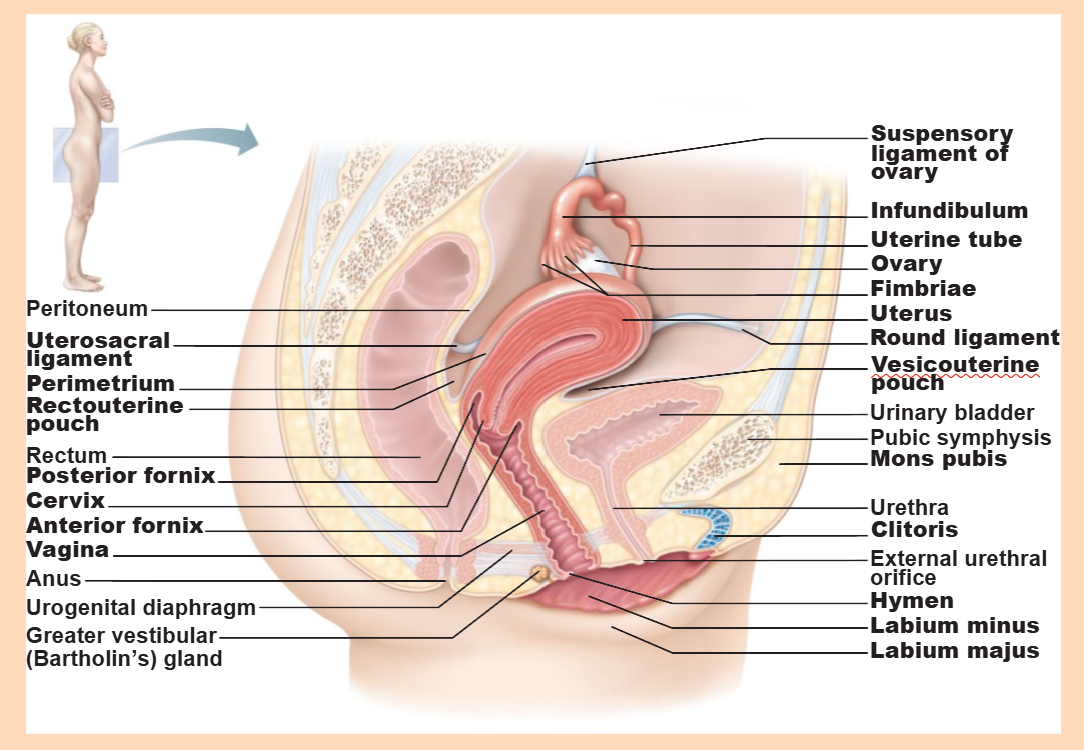
Identify the peritoneal pouch located between the rectum and the uterus
Rectouterine pouch
List the three layers of the uterine wall from superficial to deep
Perimetrium, myometrium, and endometrium
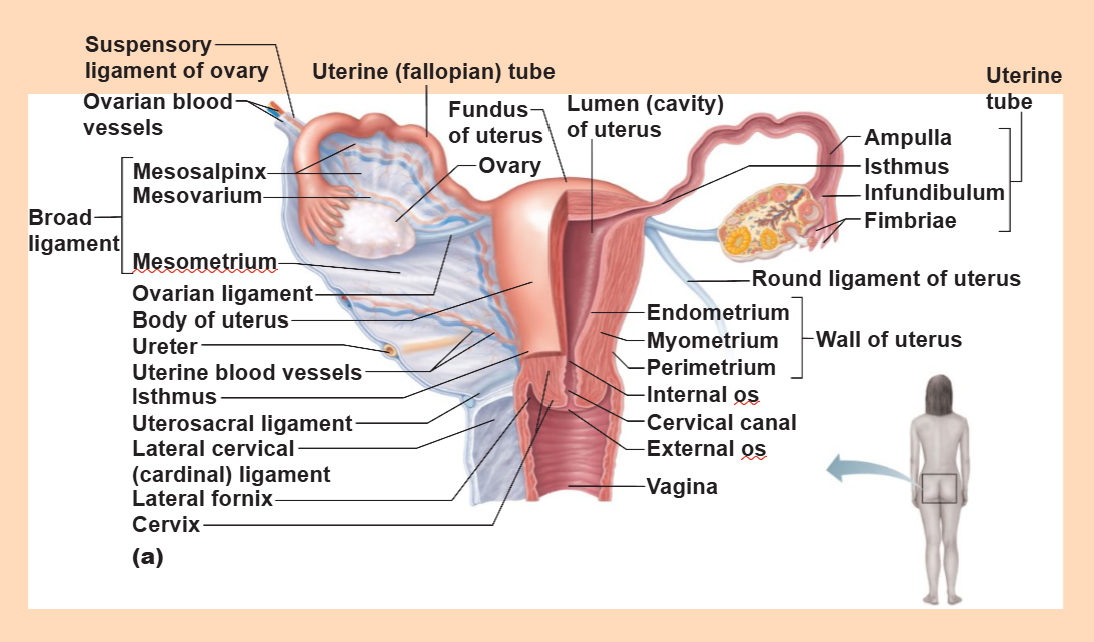
Identify the uterine layer composed of interlacing layers of smooth muscle
Myometrium
Differentiate between the stratum functionalis and the stratum basalis
The functionalis sheds during menstruation and responds to hormones, while the basalis forms a new functionalis and is unresponsive to hormones
Identify the structure that is embedded in the anterior wall of the vagina
Urethra
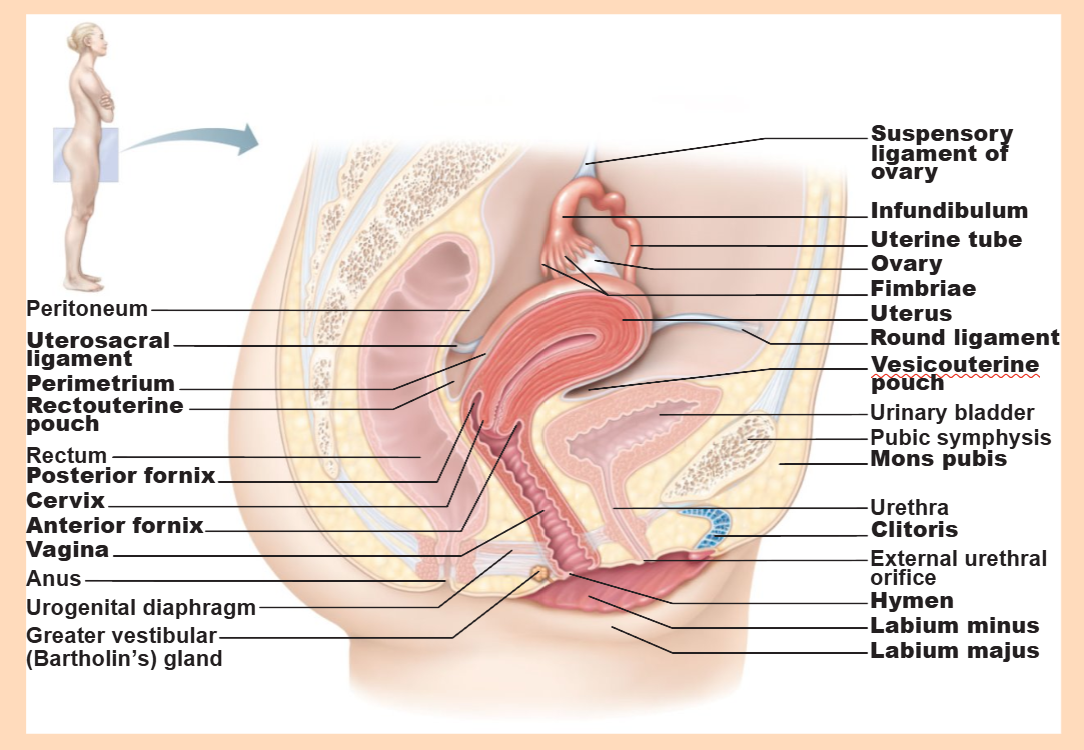
Define the vestibule of the external genitalia
The recess located between the labia minora
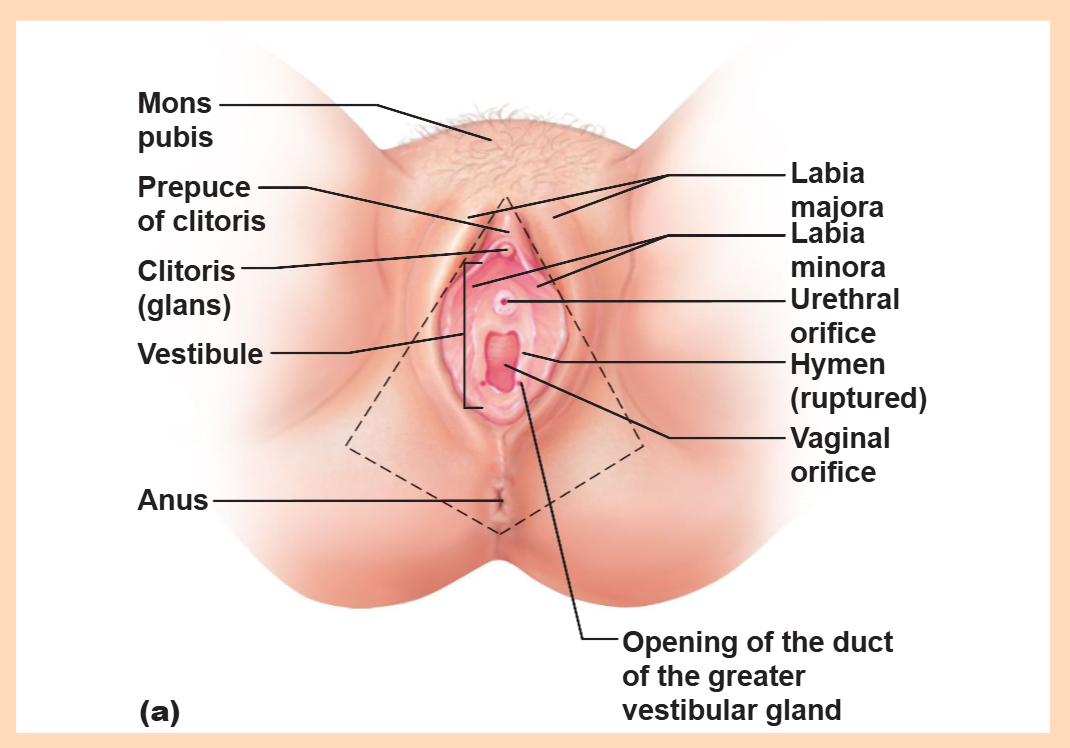
Name the glands homologous to the male bulbourethral glands that release mucus for lubrication
Greater vestibular glands
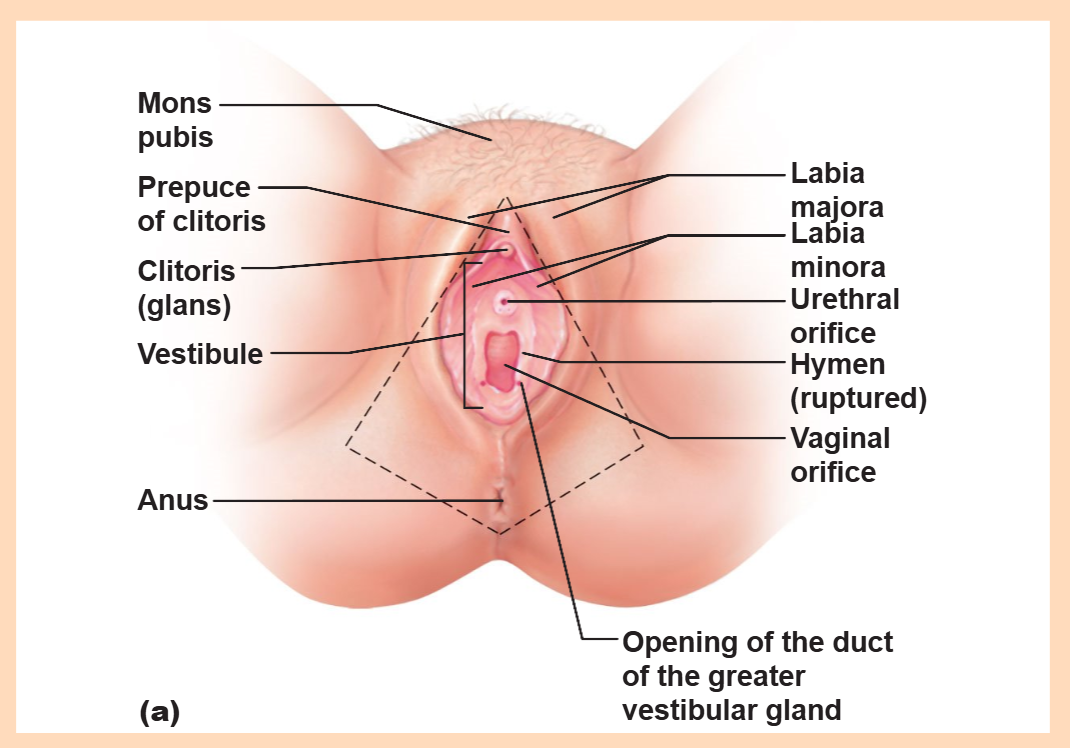
Trace the pathway of milk in the mammary glands starting from the glandular alveoli
Alveoli to lactiferous ducts to lactiferous sinuses to the nipple
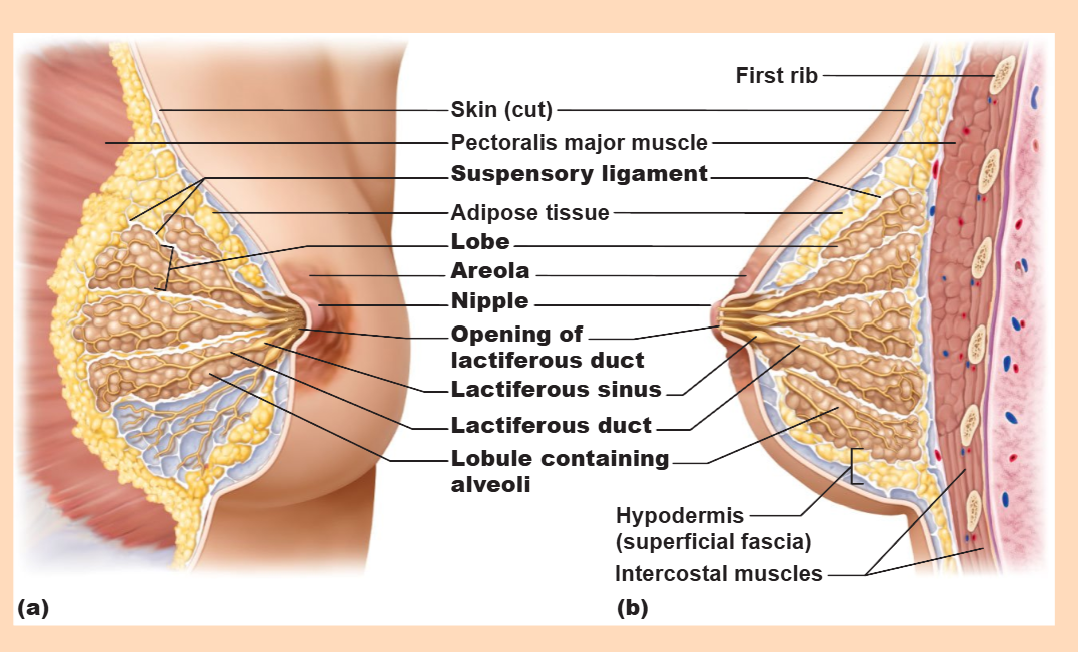
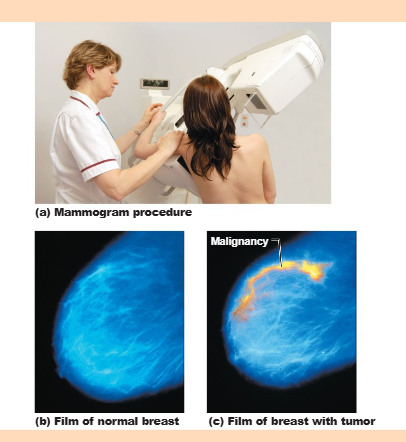
List four risk factors for breast cancer
Early onset of menses, late menopause, no or late first pregnancy, and family history
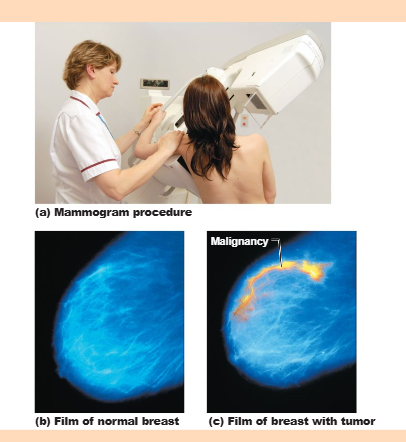
Identify the two genes whose mutations are linked to hereditary breast cancer
BRCA1 and BRCA2
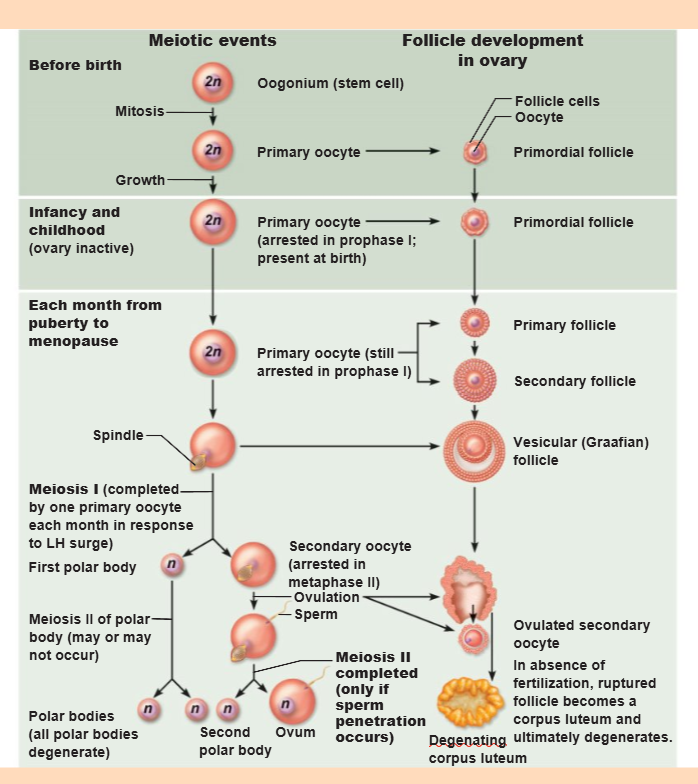
Define oogenesis
The production of female gametes
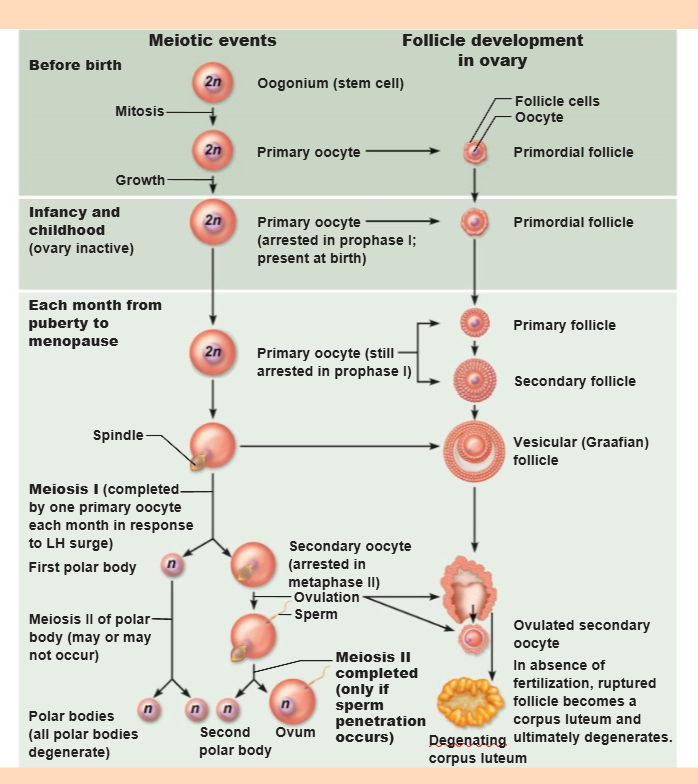
Predict the stage of meiosis in which primary oocytes are arrested until puberty
Prophase I
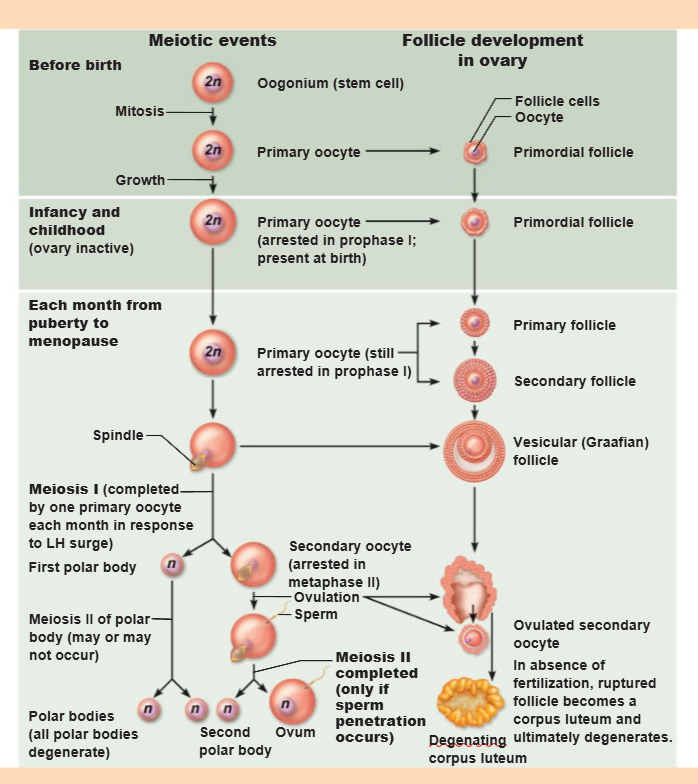
State the two haploid cells resulting from the completion of meiosis I each month
Secondary oocyte and first polar body
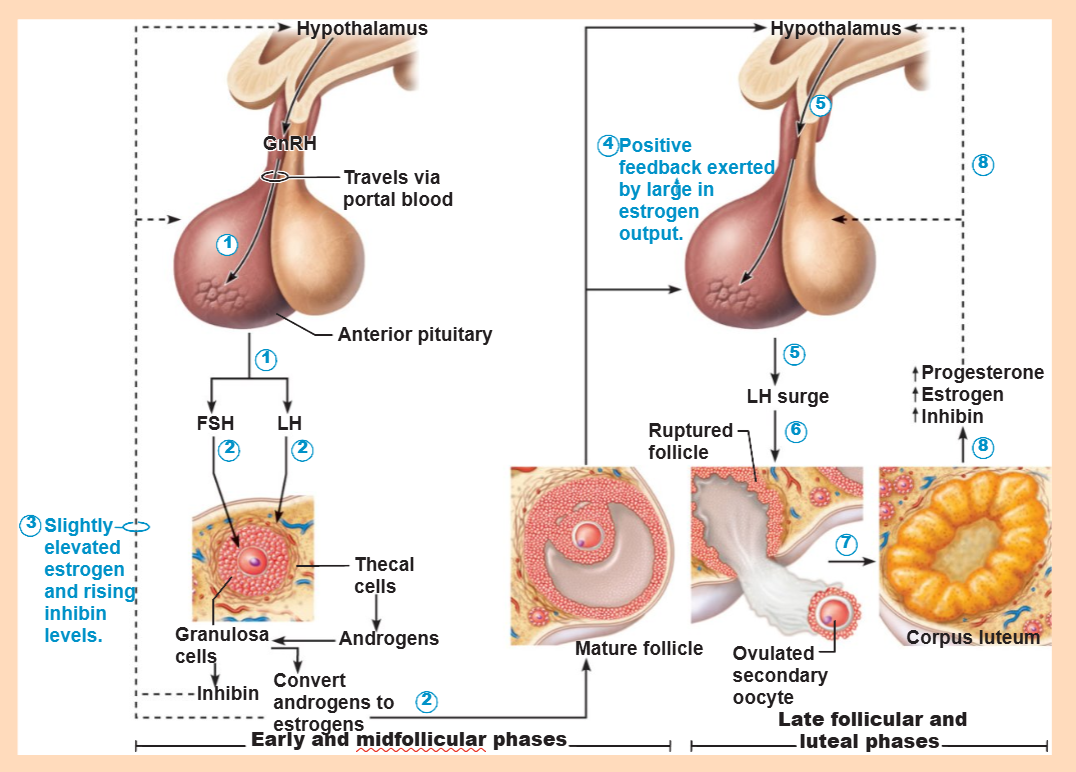
Predict the stage of meiosis in which the secondary oocyte arrests after ovulation
Metaphase II
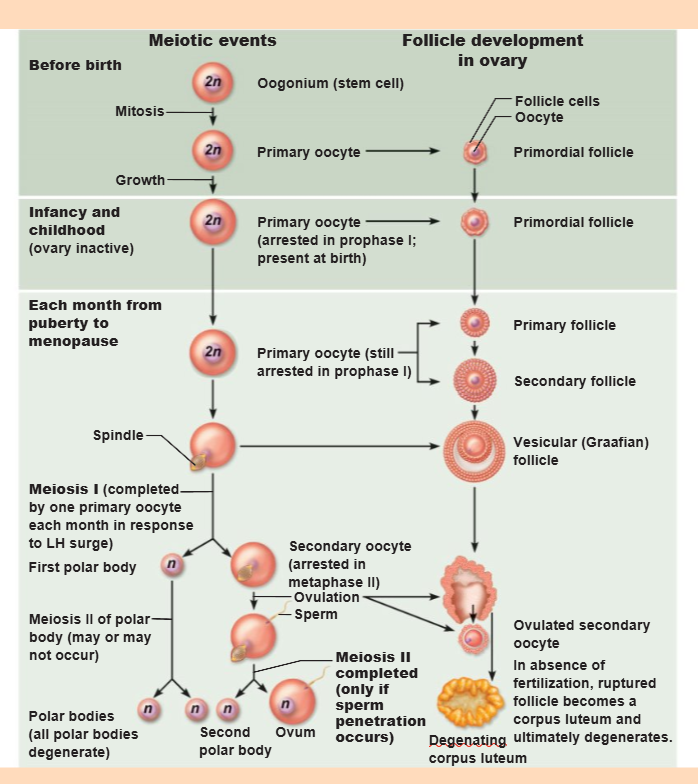
State the condition required for a secondary oocyte to complete meiosis II
Penetration by a sperm
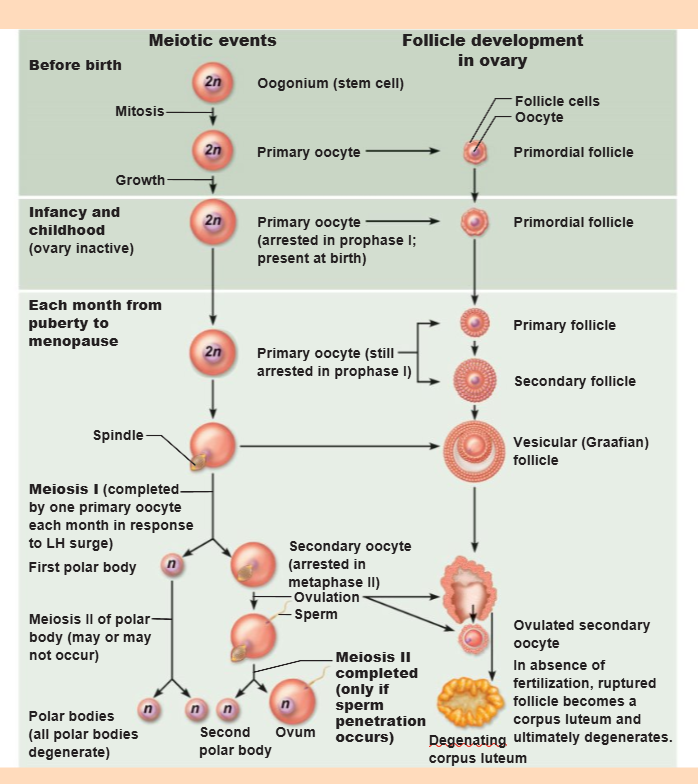
Name the functional gamete and the non-functional cell produced after the completion of meiosis II
Ovum and second polar body
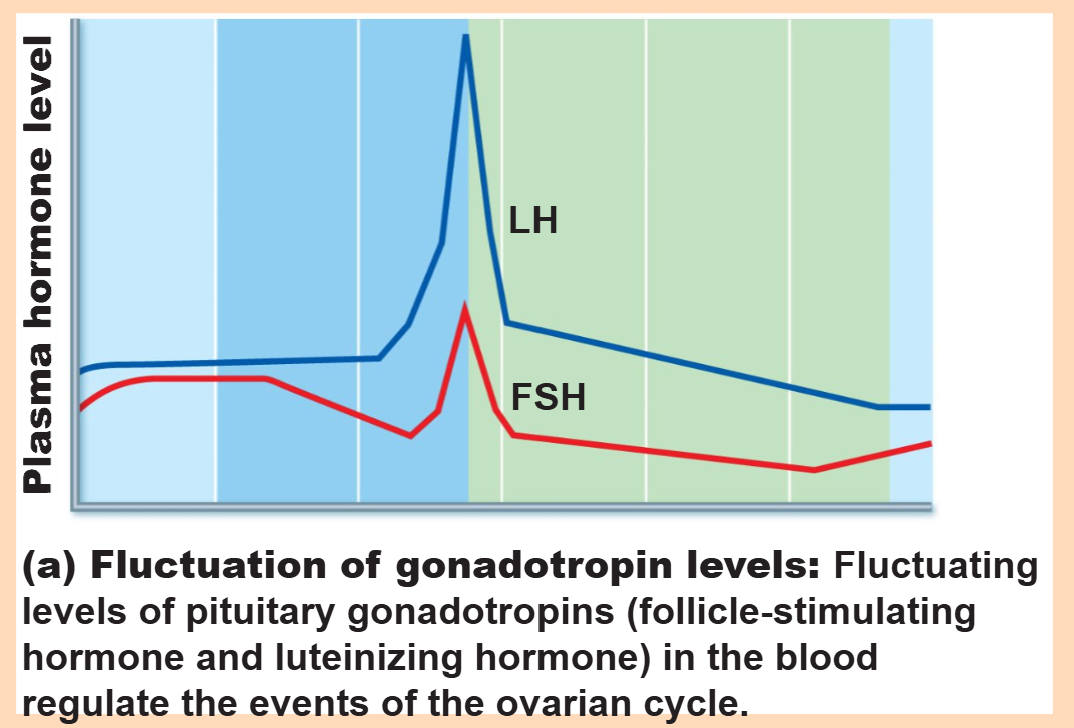
Compare the follicular phase and the luteal phase of the ovarian cycle
The follicular phase is a period of follicle growth from days 1 to 14, while the luteal phase is a period of corpus luteum activity from days 14 to 28
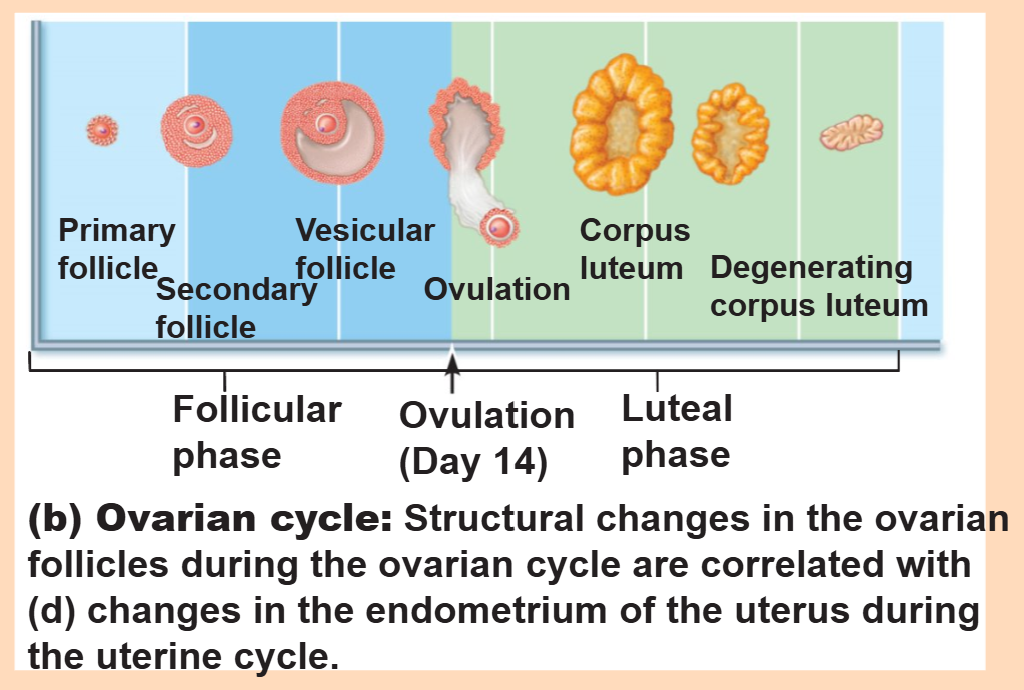
List three major effects of the LH surge on the ovary
Completion of meiosis I, triggering of ovulation, and transformation of the ruptured follicle into the corpus luteum
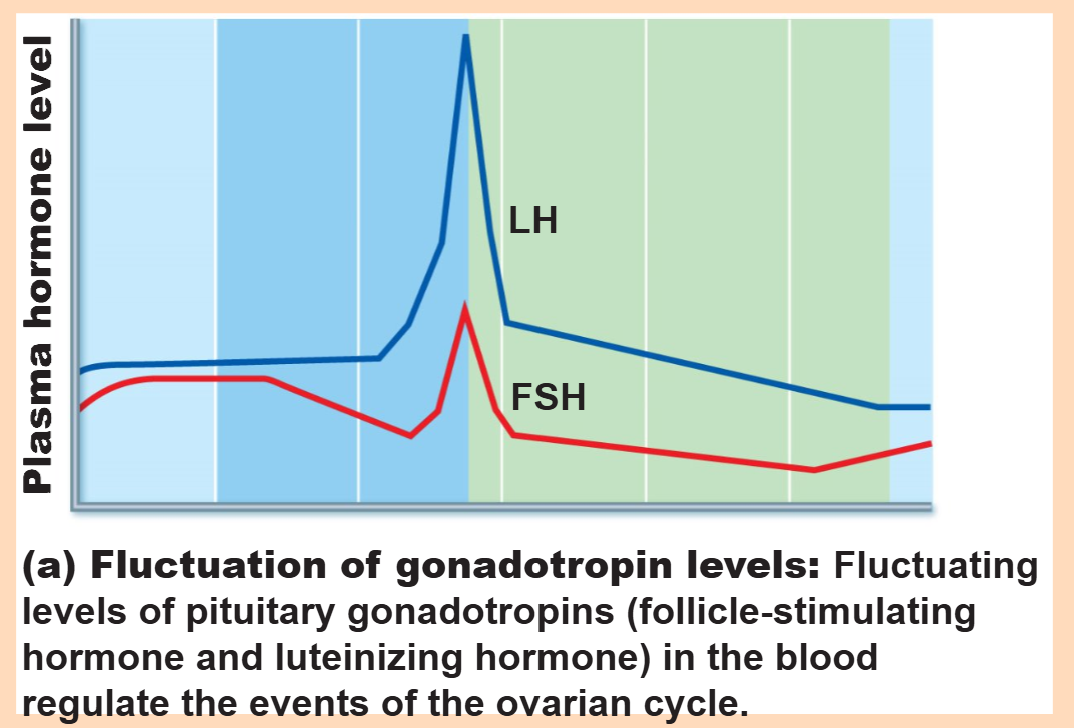
List the hormones that inhibit FSH and LH release during the luteal phase
Inhibin, progesterone, and estrogen
List the three phases of the uterine cycle in chronological order
Menstrual phase, proliferative phase, and secretory phase
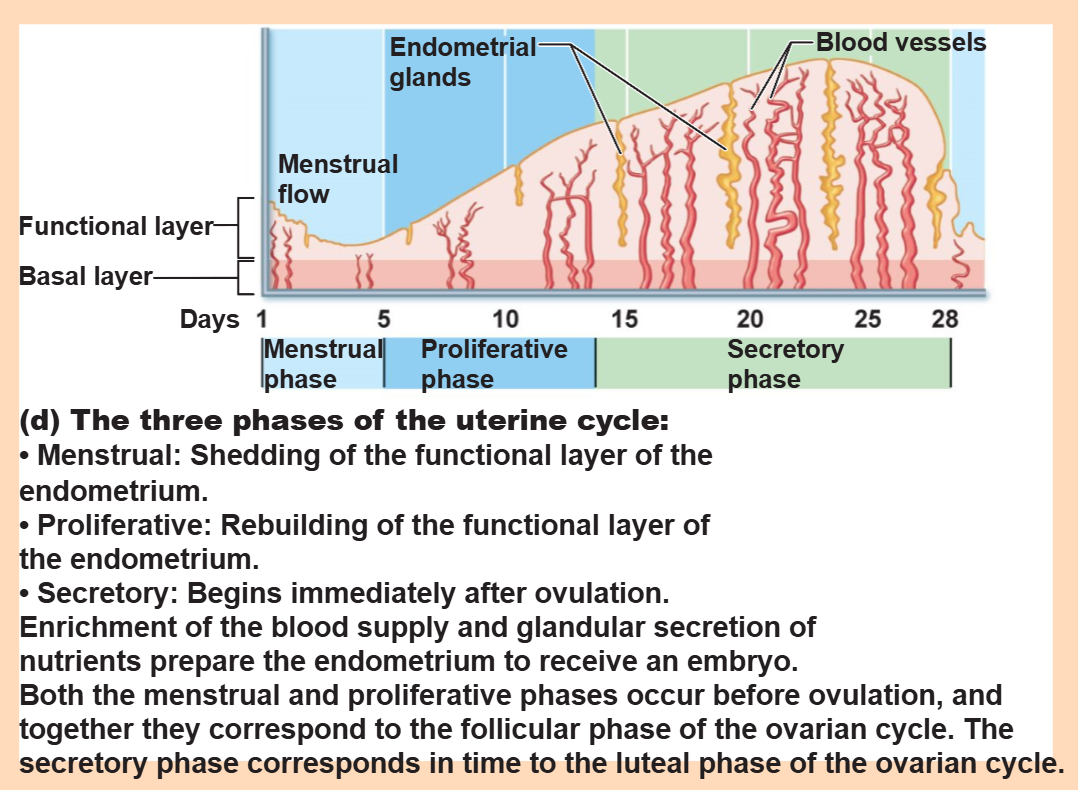
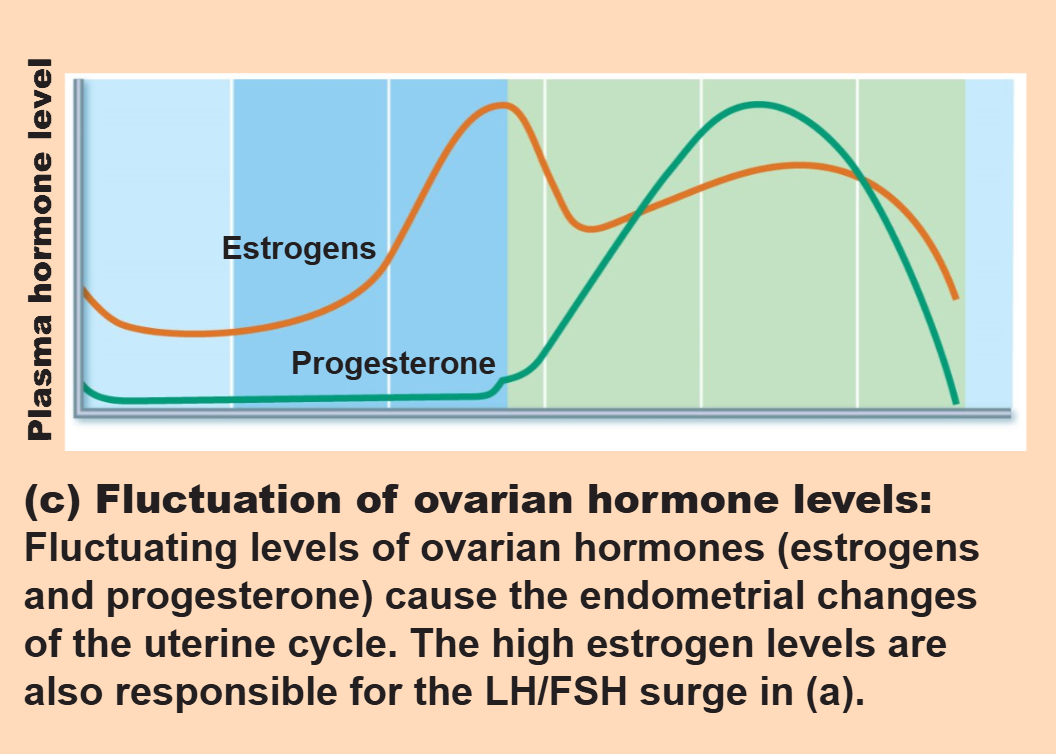
Describe the hormonal state and physical event of the menstrual phase
Ovarian hormones are at their lowest levels and the stratum functionalis is shed
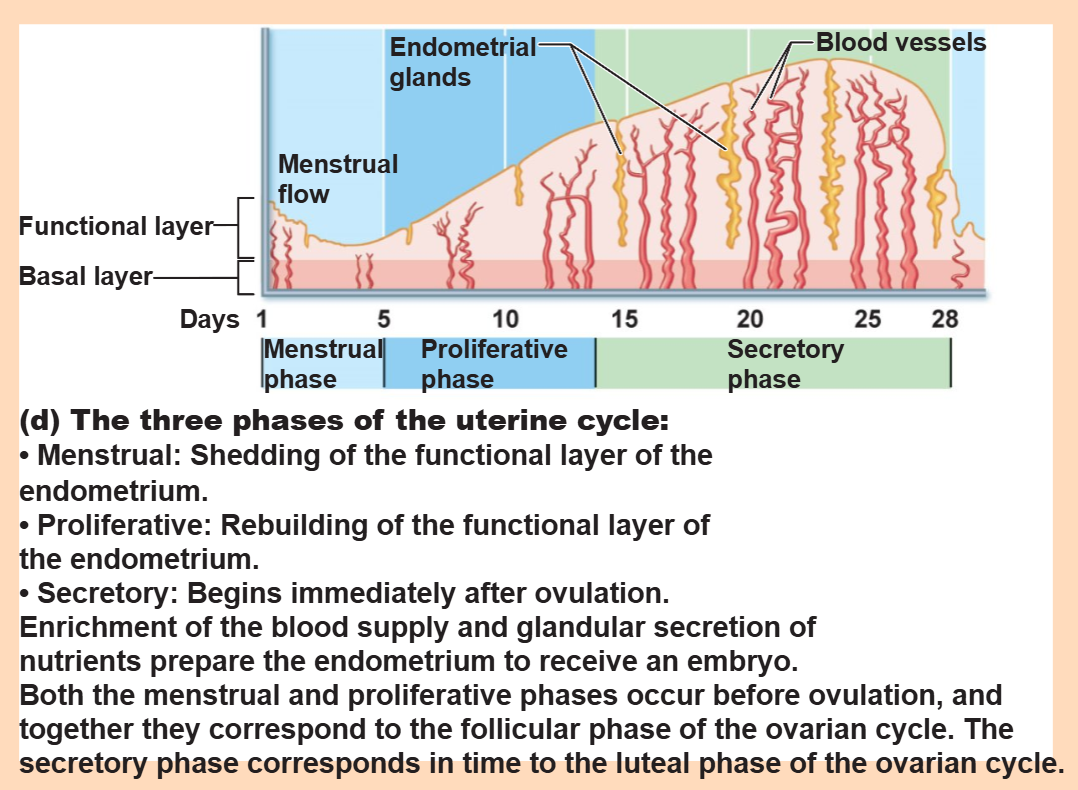
Describe the main events of the proliferative phase of the uterine cycle
Estrogen prompts the generation of a new functional layer and increases spiral artery number
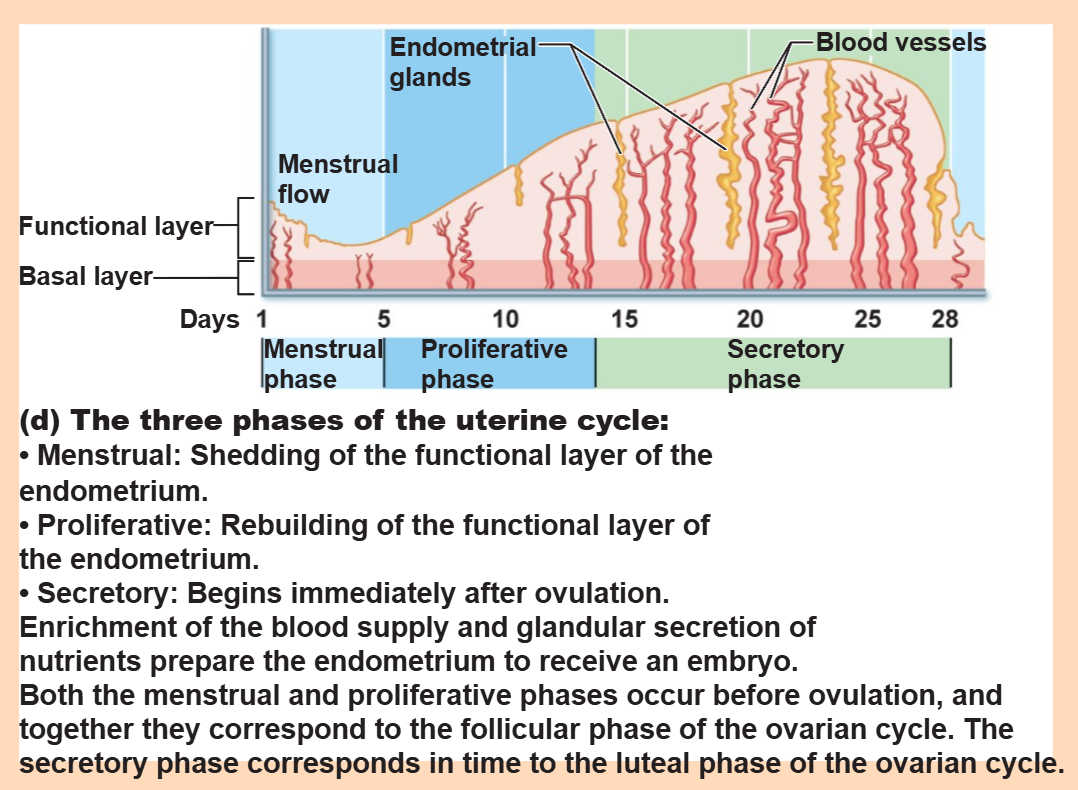
Explain the role of progesterone in the secretory phase
It prompts further endometrial development, glandular secretion of glycogen, and formation of the cervical mucus plug
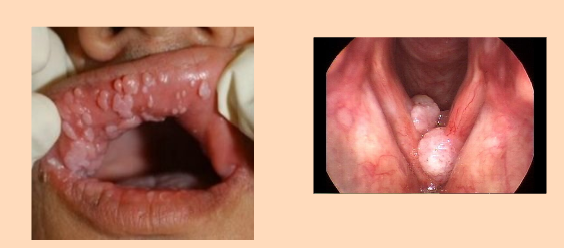
Identify the virus responsible for genital warts and increased cancer risk
Human papillomavirus or HPV