OCHEM Ch. 2 IUPAC Nomenclature
 Call Kai
 Learn
Learn Practice Test
 Spaced Repetition
 Match
Match Flashcards
 Knowt Play
1/49

Earn XP
Description and Tags
Name | Mastery | Learn | Test | Matching | Spaced | Call with Kai | Chat |
|---|
No analytics yet
Send a link to your students to track their progress
50 Terms
meth-
1 carbon prefix
eth-
2 carbon prefix
prop-
3 carbon prefix
but-
4 carbon prefix
pent-
5 carbon prefix
hex-
6 carbon prefix
hept-
7 carbon prefix
oct-
8 carbon prefix
non-
9 carbon prefix
dec-
10 carbon prefix
alkane
hydrocarbon with no carbon-carbon double or triple bonds
“-ane”
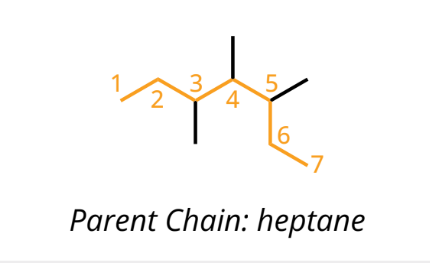
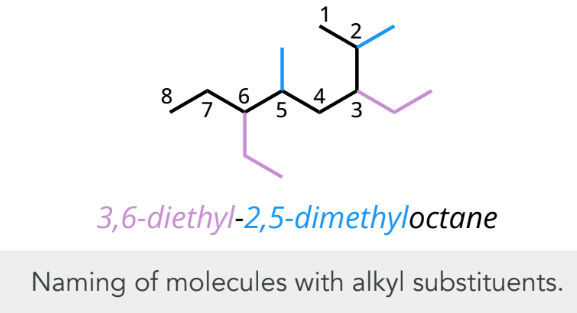
akyl substituents
count the carbon atoms, use the correct prefix, and add “-yl”
multiple substituents: list in alphabetical order
multiple of the same substituent: use prefixes “di”, “tri”, “tetra”,”penta”
Fluro-
halogen substituents: fluorine (F)
Chloro-
halogen substituents: chlorine (Cl)
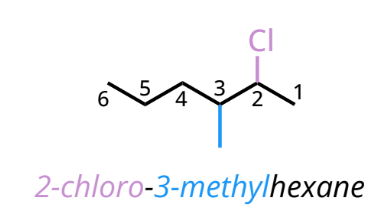
Bromo-
halogen substituents: bromine (Br)
Iodo-
halogen substituents: iodine (I)
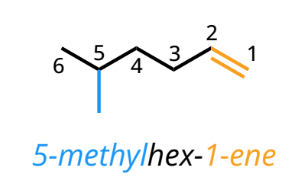
alkene
molecule with at least one carbon-carbon double bond
“-ene”
alkyne
molecule with at least one carbon-carbon triple bond
“-yne”
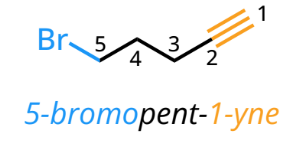
cyclic alkane
“cyclo-”
spiro compounds
compounds with two rings connected by a single carbon
spiro[#,#]alkane
count number of carbons in each ring except the spiro center, list numbers lowest to highest inside the bracket, what alkane parent chain name after the bracket
![<ul><li><p>compounds with two rings connected by a single carbon</p></li><li><p>spiro[#,#]alkane</p></li><li><p>count number of carbons in each ring except the spiro center, list numbers lowest to highest inside the bracket, what alkane parent chain name after the bracket</p></li></ul><p></p>](https://assets.knowt.com/user-attachments/17bc7a99-332a-4fc6-bc78-e081da2edfd3.png)
bicyclic compounds
compounds with two or more rings linked together by two bridgehead carbons
bicyclo[#,#,#]alkane
count number of carbons in each ring excluding the bridgehead carbons, list numbers highest to lowest inside the bracket, write the alkane parent chain name after the bracket
cyclic carboxylic acid derivatives
“-carboxylic acid”
“-carboxamide”
ranking priority
carboxylic acid*
acid anhydride*
ester*
acid halide*
amide*
nitrile*
aldehyde
ketone
alcohol
amine
alkene
alkyne
alkyl, halogen, alkoxy, nitro
*carboxylic acid derivatives
carboxylic acid (-COOH)
name the parent chain and number the carbons
carbonyl carbon is always top priority
“-oic acid”
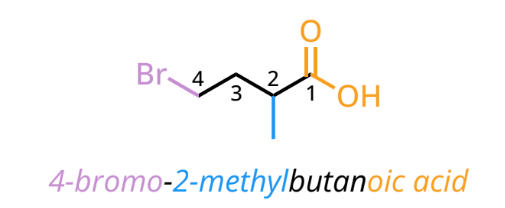
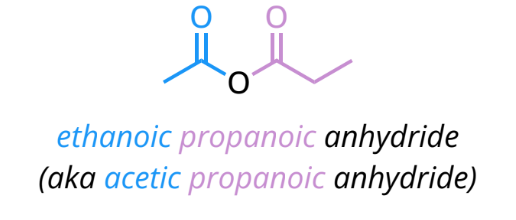
acid anhydride (-CH3CO)2O
list the components in alphabetical order without the word “acid”
add “anhydride” at the end of the name
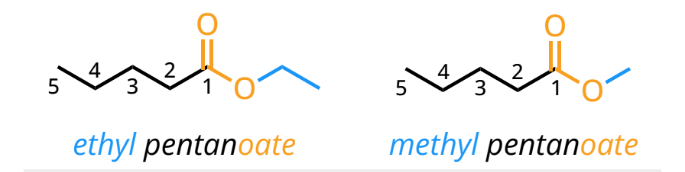
ester (-COOR)
“-oate”
alkyl group bonded to the ester oxygen has suffix “-yl”
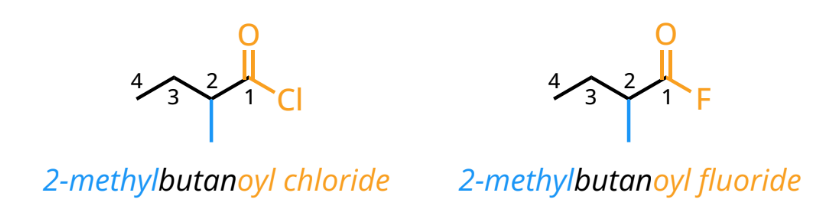
acid halide (-COX)
“-oyl halide”
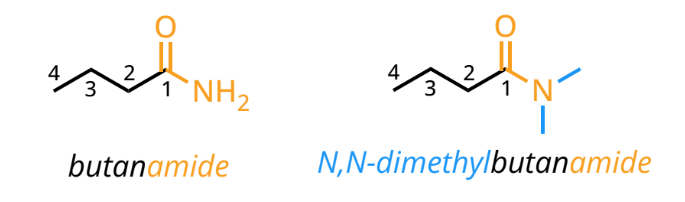
amide (-CONH2)
“-amide”
if alkyl groups are bonded to the amide nitrogen, they are specifiecd with the locant “N”
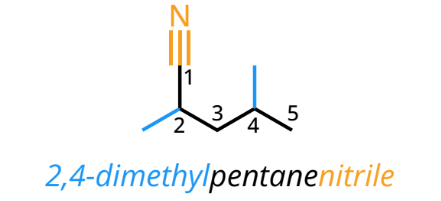
nitrile (-CN)
“-nitrile” after the “-e” ending of parent chain name
don’t contain carbonyl group, but still considered carboxylic derivative
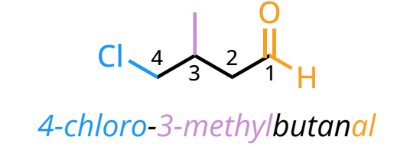
aldehyde (-CHO)
highest priority suffix “-al”
prefix “-oxo”
bonded to hydrocarbon rings “carbaldehyde”
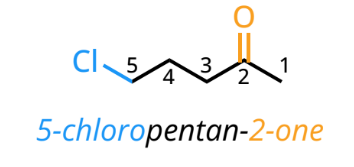
ketone (-C=O)
highest priority suffix “-one”
prefix “-oxo-”
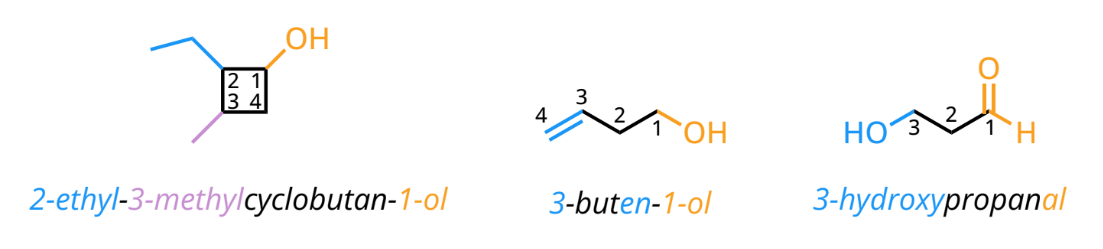
alchol (-OH)
highest priority suffix “-ol”
prefix “-hydroxy”
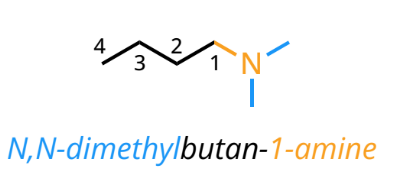
amine (-NH3)
highest priority suffix “-amine”
prefix “-hydroxy-”
can be primary, secondary, or tertiary amine
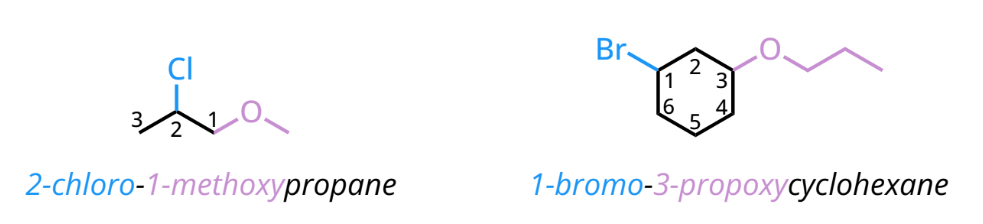
ether (-ROR’)
prefix “-alkoxy-”
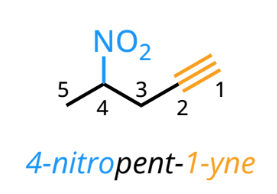
nitro (-NO2)
-prefix “-nitro-”
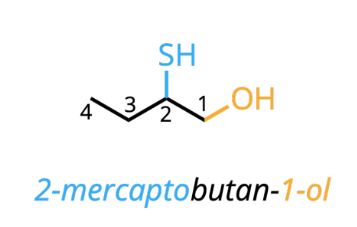
thiol (-SH)
highest priority suffix “-thiol”
prefix “mercapto-”
can be primary, secondary, or tertiary amine
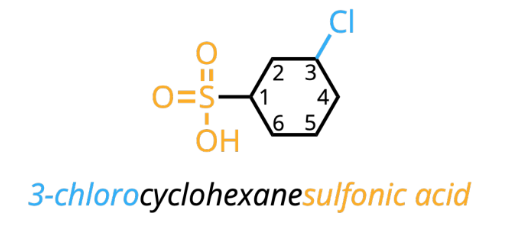
sulfonic acid (-SO2H)
highest priotiry suffix “sulfonic acid”
suffix “sulfo”
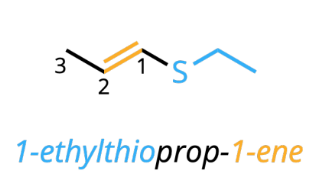
sulfide (RST’)
prefix “alkylthio”
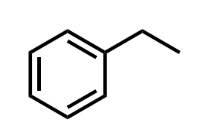
ethylbenzene
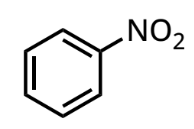
nitrobenzene
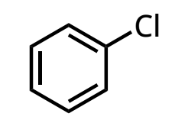
chlorobenzene
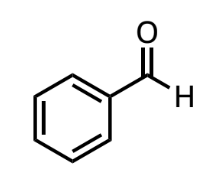
benzaldehyde
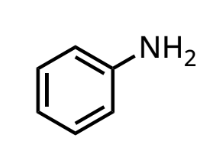
aniline (aminobenzene)
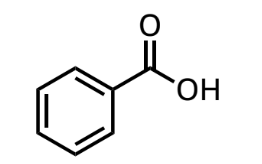
benzoic acid
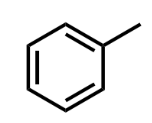
toulene (methylbenzene)
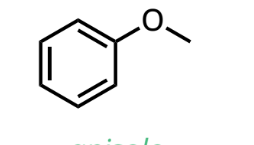
anisole (methoxybenzene)
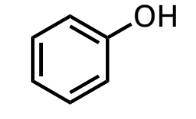
phenol (hydroxybenzene)
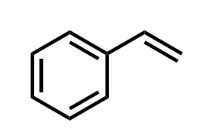
styrene (vinylbenzene)
multiple substituents on benzene
higher priority substituent determines the name of the parent chain and is placed on carbon 1
the other substituents follow the usual nomenclature rules
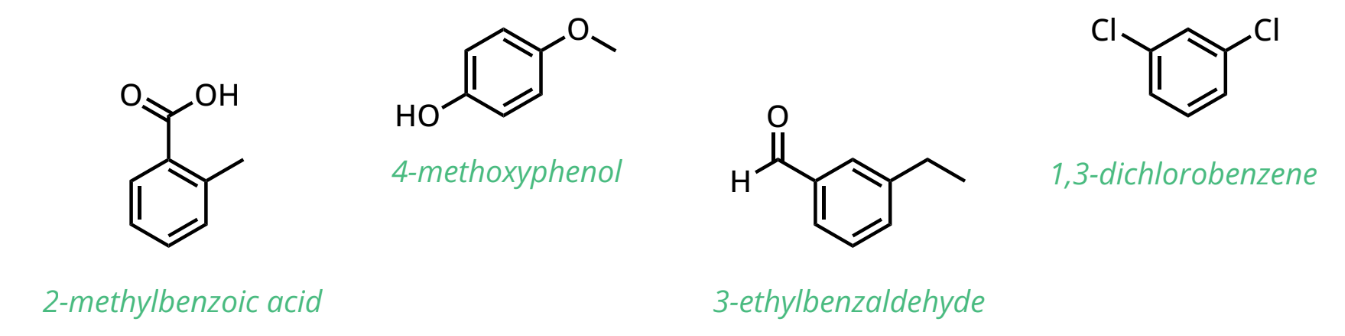
guide to nomenclature
identify the parent chain (longest continuous carbon chain w/ highest/most substituents")
number the parent chain (lowest possible locants to priority functional groups and alphabetical substituents)
assemble full IUPAC name