LING 333 W2: Hypothesis and Judgement Data
 Call Kai
 Learn
Learn Practice Test
 Spaced Repetition
 Match
Match Flashcards
 Knowt Play
1/68

There's no tags or description
Looks like no tags are added yet.
Name | Mastery | Learn | Test | Matching | Spaced | Call with Kai | Chat |
|---|
No analytics yet
Send a link to your students to track their progress
69 Terms
Hypothesis
an educated guess/prediction or proposed explanation of how a system will behave based on the available evidence
why do we need hypothesis
to make facts sound more interesting
without hypothesis…
your numbers are often unrelated facts; maybe very boring
what does a hypothesis need to be
falsifiable, constrained, testable
falsifiable
can be false
constrained
needs to be more narrow, specific to make it interesting
testable
can be measured
when is it not testable
when the concept involved do not have physical correlated to be measured
can something be testable but not falsifiable
YES
what is RQ
research question
central inquiry guiding the study
interrogative statement
open-ended
RQ usually start off as ‘WH’ questions and then become more constrained
hypothesis (relating to RQ)
a ‘tentative’ answer to the RQ (educated guess)
abstract statement about a possible world
prediction
concrete, measurable outcome
tied to experiment and dataset
doesn’t talk about abstract things
T/F: can one hypothesis, have many predictions
True
judgement data
when we ask people whether some construct is acceptable to them
which term is preferred? grammaticality or acceptability judgement data
acceptability judgment data
why would someone choose “blick”
respects the phonotactic constraints/patterns
why not choose ‘bnick’?
it violates the phonotactic constraints of English
what does acceptability judgement inform us of?
about the underlying grammatical knowledge in a person
judgement takes advantage of language users’ ability to report their perceived acceptance of a linguistic construct
what was the complaint mentioned?
that its looking at what people are thinking and not measuring the construct directly
self-reported data is the worst to collect
peoples thoughts change overtime
can we have data about utterances that have never been naturally produced
yes because even if its not in the corpus, its not evidence for ungrammaticality
just because we heard someone say it, does it make it ‘grammatical"‘?
nope because of production error
what are the types of judgement tasks?
forced-choice MCQ
yes/no
likert-scale
magnitude estimation
forced-choice task
you can ask for direct comparisons b/w multiple items

yes/no task
you can ask questions for one item at a time

liker-scale task
ask questions on one item at a time, but you collect responses on a scale
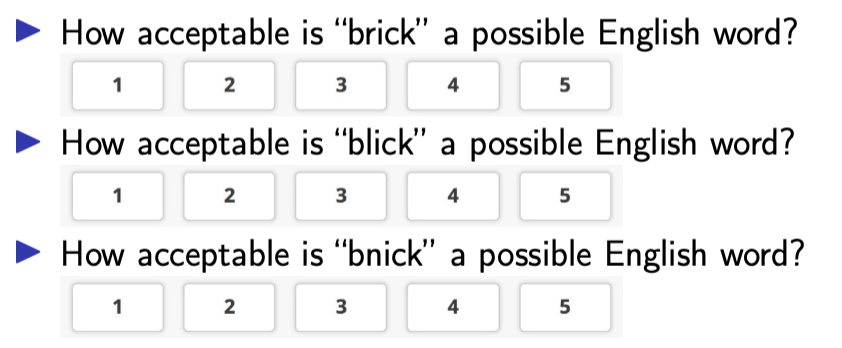
what did Warner et al. (2013) investigate
collected emotional valence of English words
rate the positivity or negativity of words on a scale from 1 to 9 (emotional valence)
magnitude estimation
you ask questions about one item at a time. but your strategy is different
you provide people a reference point/value
how is magnitude estimation different from likert scales?
Likert-scales are more active/think more
ME has no visualisation of a scale
“choice of task is relatively inconsequential”
measuring the same thing, just switching things up
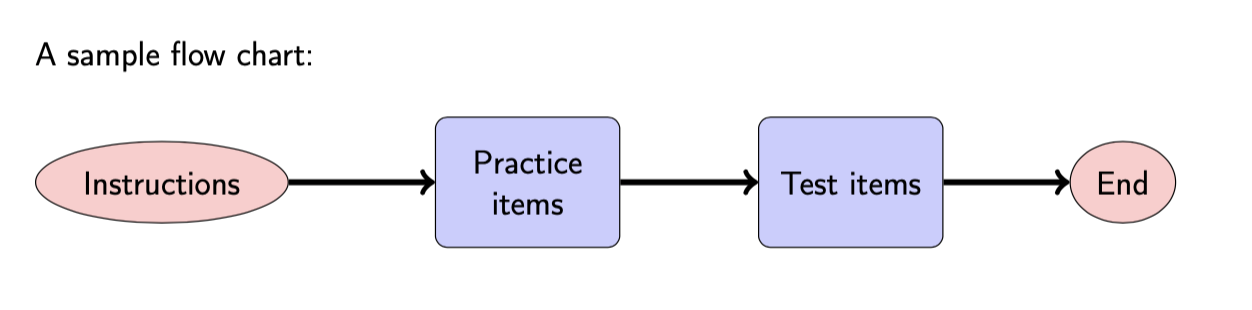
hows the judgement experiment design chart?
practice items: have them understand the task
test items: add in filler items to ‘confuse’ the subjects
Cowart’s (1997)
used a scale from A to J
didnt use it like a likert scale
1st sentence is reference
then following are test sentences
whether the data presented sounded English
(can be forgiving of the grammar at times)
report data in terms of percentages %
for yes/no tasks
complex analyses can include logistic mixed-effects models
can report average values
the scale and ME
complex analyses can include linear mixed-effects models
sampling
the act of selecting a subset of data points from a a bigger set of data
why do we do sampling
bc to collect data from the whole population is simply impartial
when is a sample representative?
accurately reflects the characteristics of the populations it was drawn from
the more similar the sample to the population, the more representative it is
why do we need representativeness
so our data can be meaningfully generalisable to the population of interest
ex: the mean should be relatively the same for the population mean
what are the 4 probability methods of sampling
simple random sample
systematic sample
stratified sample
clustered sample
(simple) random sample?
every member in the chosen sampling universe has an equal chance of being included (same probability of getting picked)

pro - random sampling
maximises the likelihood of a representative sample by eliminating selection bias
cons - random sampling
requires a comprehensive sampling frame (complete list of the population)
costly and logistically challenging to implement
whats the reality check for random sampling
true random sampling is virtually impossible in most linguistic studies
stratified random sampling
population is divided into strata and a random sample is taken from within each category or stratum

how to do stratified sampling
divided your subgroups (with the same trait)
then randomly chooses within that group
systematic sample
participants are picked according to a pre-determined rule
ex: every 3rd person
you can randomise where you start
cluster sampling
population is divided into natural groups (clusters) ex: schools, cities or dialect regions

t/f: clusters need to be internally diverse, really mini-representations of the total population
true
how is a subset of clusters chosen?
by using random sampling
single staged cluster sampling
survey all the individuals in the chosen clusters
multistaged cluster sampling
sample individuals within the chosen clusters using another method
ex: you choose 5 schools, and within them, you randomly selected a few (not surveyed all of them)
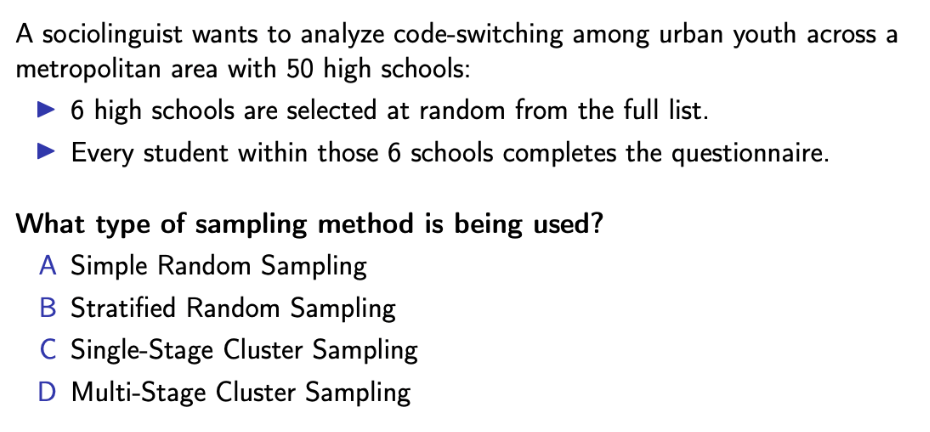
C

B
what are the 4 non-probability methods?
convenience sample
voluntary response sample
purposive sample
snowfall sample
convenience sampling
selecting participants based on availability and ease of access
pros - convenience sampling
fast, cheap, practical
low logistical overhead
cons - convenience sampling
high, unknown selection bias
weak generalisability
Purposive sampling
selecting specific participants based on expert judgement of who provides the most informative data
pros - purposive sampling
high relevance to research aims
targets rare, specific criteria
cons - purposive sampling
researcher judgement bias
cannot generalise to population
what are key differences between/w convenience sampling and purposive
Convenience is anyone readily available can participate
Purposive is participants are vetted against strict, pre-defined traits
snowball sampling
participants recruit further contacts from their own networks (chain-referral)
pros - snowball sampling
accesses hard-to-reach groups
builds trust via insider referral
cons - snowball sampling
strong network / homophile bias (always introduces biases)
rarely representative
whats the typical linguistic application for snowball sampling
speakers of endangered dialects, stigmatised vernaculars, or closed sociolects

A